Notice to Creditors of an Insolvent Estate
About this form
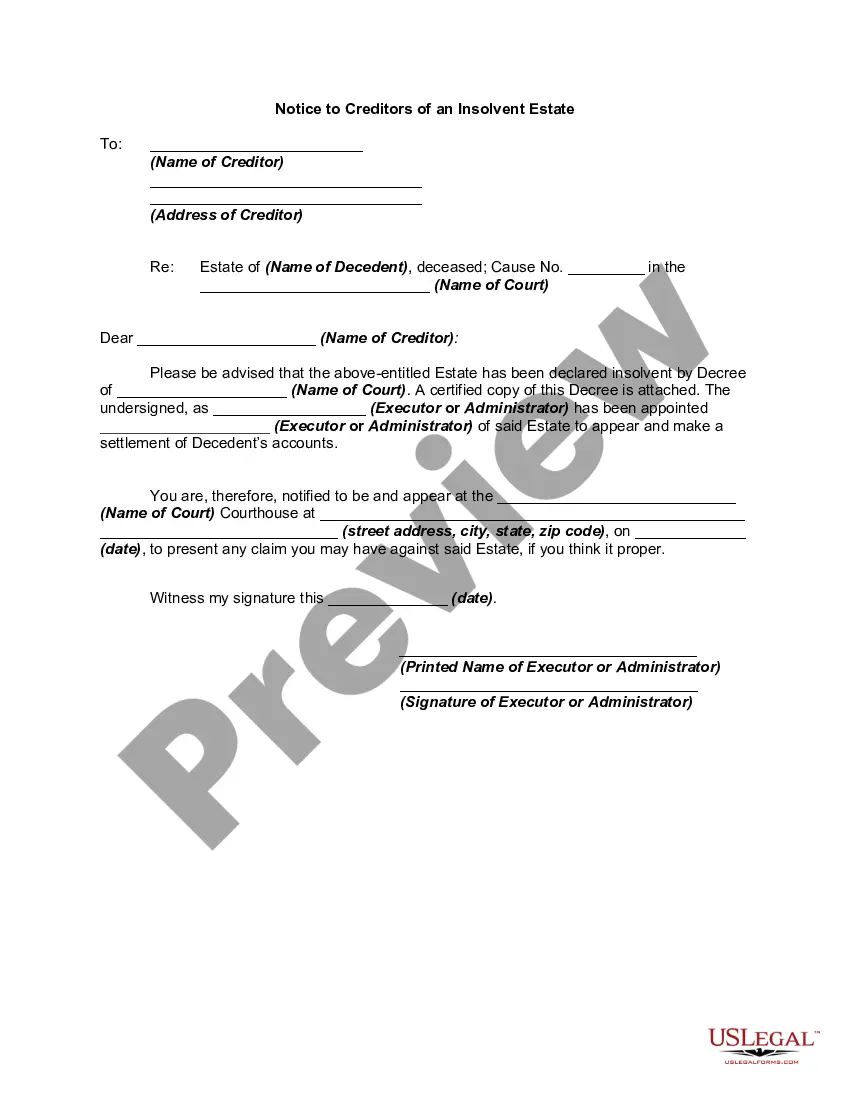
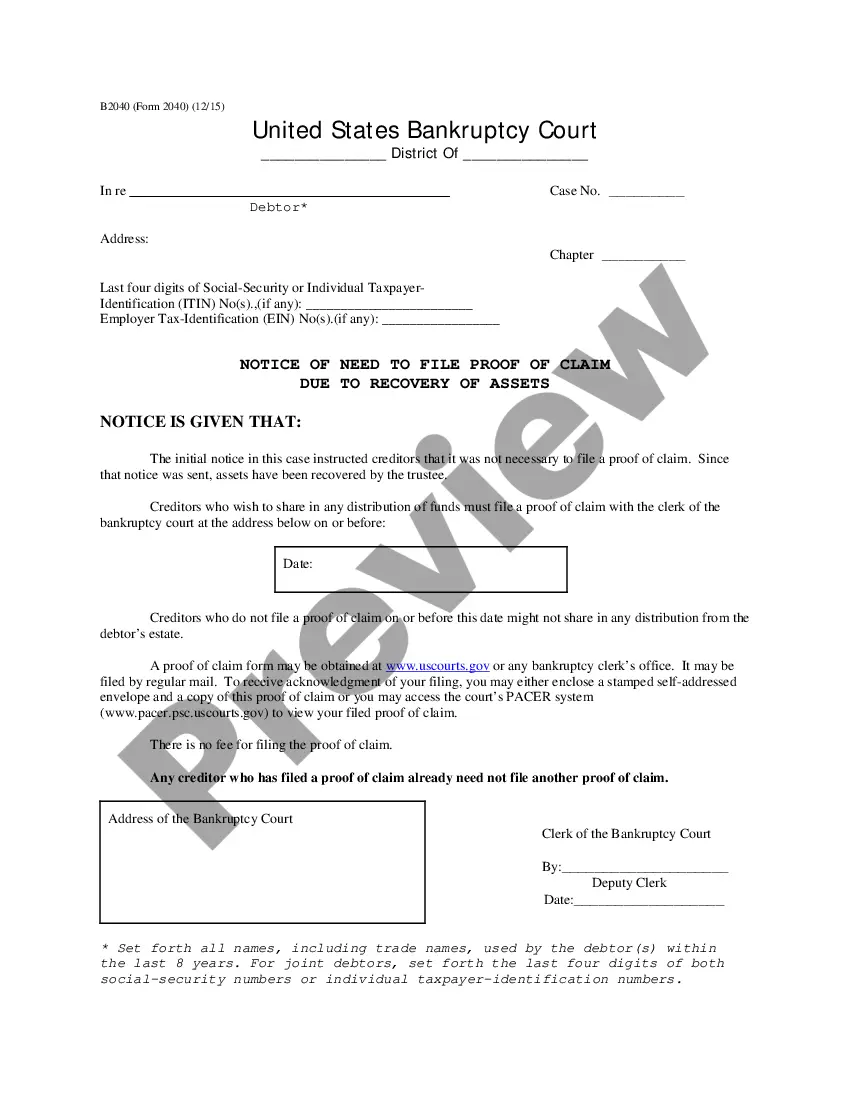
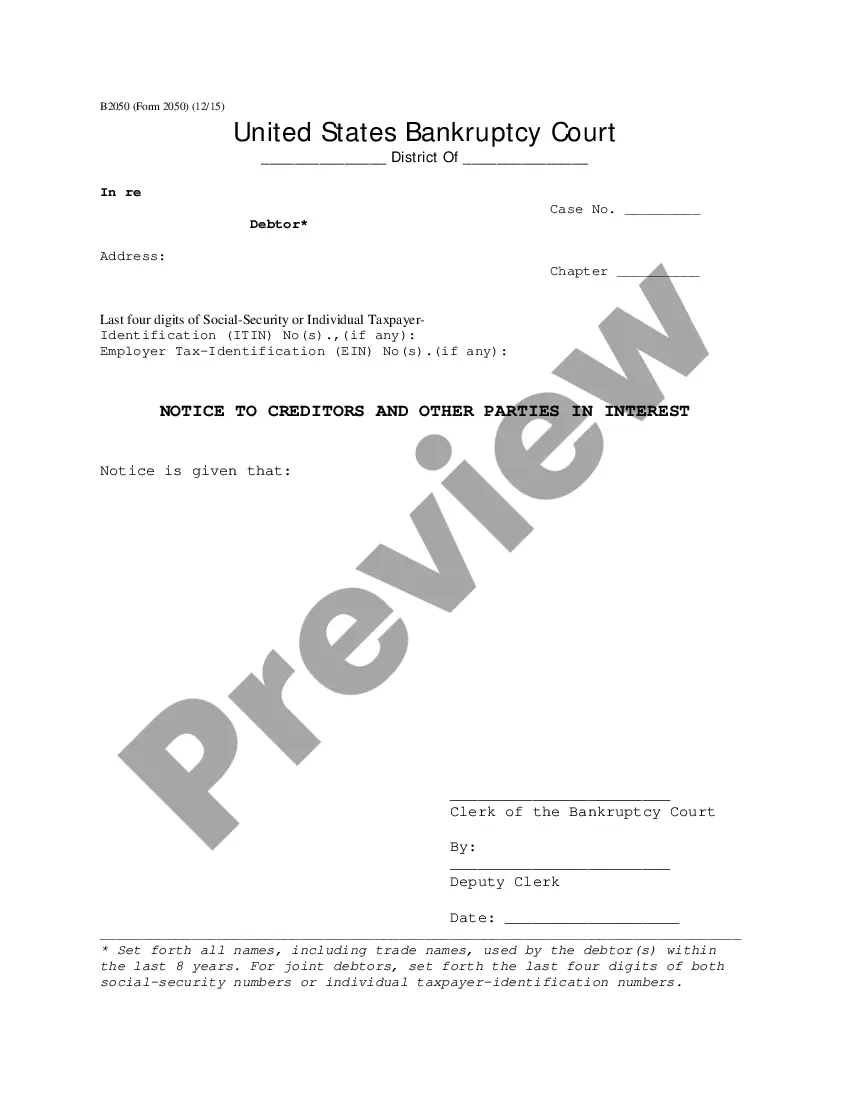
The Notice to Creditors of an Insolvent Estate is a legal document used to inform creditors that a decedent's estate has been declared insolvent. This form helps ensure that all creditors are notified of the estate's status and provides them with an opportunity to present their claims. Unlike solvent estates, where debts are paid in full, creditors of an insolvent estate may have to share the available assets, making this form critical for managing creditor rights and claims fairly.
Main sections of this form
- Header section including creditor's name and address.
- Reference to the estate of the decedent and the court involved.
- Details of the insolvency decree and its attachment.
- Instructions for creditors on how and when to submit their claims.
- Signature lines for the executor or administrator of the estate.
When this form is needed
This form should be used when a decedent's estate has been determined to be insolvent. It is essential to notify all creditors so they can assert their claims appropriately. Using this notice can help prevent disputes between creditors and ensure the estate is administered according to legal requirements. It is particularly important when creditors need to appear in court to present their claims against the estate.
Who this form is for
The following individuals should use this form:
- Executors or administrators of an insolvent estate managing the distribution of assets.
- Creditors seeking to present claims against an insolvent estate.
- Legal representatives involved in estate administration.
How to prepare this document
- Identify the creditor by filling in their name and address at the top of the notice.
- Specify the estate's name and the relevant court information.
- Include the date of the decree declaring the estate insolvent and attach a certified copy of the decree.
- Provide details about the time and place where creditors should present their claims.
- Sign and date the document as the executor or administrator of the estate.
Notarization guidance
This form does not typically require notarization unless specified by local law. However, having the document notarized can add an extra layer of authenticity and may be advisable in certain jurisdictions. Always verify local requirements for additional procedural steps.
Get your form ready online
Our built-in tools help you complete, sign, share, and store your documents in one place.
Make edits, fill in missing information, and update formatting in US Legal Forms—just like you would in MS Word.
Download a copy, print it, send it by email, or mail it via USPS—whatever works best for your next step.
Sign and collect signatures with our SignNow integration. Send to multiple recipients, set reminders, and more. Go Premium to unlock E-Sign.
If this form requires notarization, complete it online through a secure video call—no need to meet a notary in person or wait for an appointment.
We protect your documents and personal data by following strict security and privacy standards.

Make edits, fill in missing information, and update formatting in US Legal Forms—just like you would in MS Word.

Download a copy, print it, send it by email, or mail it via USPS—whatever works best for your next step.

Sign and collect signatures with our SignNow integration. Send to multiple recipients, set reminders, and more. Go Premium to unlock E-Sign.

If this form requires notarization, complete it online through a secure video call—no need to meet a notary in person or wait for an appointment.

We protect your documents and personal data by following strict security and privacy standards.
Typical mistakes to avoid
- Failing to attach a certified copy of the insolvency decree.
- Neglecting to include complete and accurate creditor information.
- Not providing proper court details for the claim submission.
- Missing the deadline for notifying creditors.
Benefits of completing this form online
- Convenience of completing the form at any time from your home.
- Editability allows you to customize the form to fit specific legal requirements.
- Access to templates drafted by licensed attorneys ensures the form is compliant with legal standards.
- Quickly download and print the form for immediate use.
Looking for another form?



Form popularity
FAQ
If the estate runs out of money (or available assets to liquidate) before it pays all of its taxes and debts, then the executor must petition the court to declare the estate insolvent. At that point, the estate must pay off as much debt as possible in the order determined by the court.
Step 1: Identify Both Parties. Date the letter and address it to to your debt collector. Step 2: Explain That You Can't Pay. Get right to the point. Step 3: Include Any Garnishment Information. Step 4: Ask the Creditor to Cease Contact.
Your full name and address. The collections agency's name and address. A request for the amount of the debt claimed to be owed. A request for the name of the original creditor. A request for the judgment information (if applicable) A request for proof of the company's license.
If the estate runs out of money (or available assets to liquidate) before it pays all of its taxes and debts, then the executor must petition the court to declare the estate insolvent. At that point, the estate must pay off as much debt as possible in the order determined by the court.
Collectors are allowed to contact third parties (such as a relative) to get the name, address, and telephone number of the deceased person's spouse, executor, administrator, or other person authorized to pay the deceased's debts.
When writing a debt settlement letter, it's important to be explicit and detailed. Treat the letter as a contract between you and your creditor. Include your personal information and account number for easy identification. You'll need to outline the amount you can pay and what you expect in return.
Inform the creditor that the deceased passed away; reference the prior call you made. Ask the creditor to place a formal death notice on the deceased credit file and to close the account. Provide information about the decedent, such as his full name, address, Social Security number, birth date and account number.
How to Notify Creditors of Death. Once your debts have been established, your surviving family members or the executor of your estate will need to notify your creditors of your death. They can do this by sending a copy of your death certificate to each creditor.