Arizona Order to Personal Representatives
Understanding this form
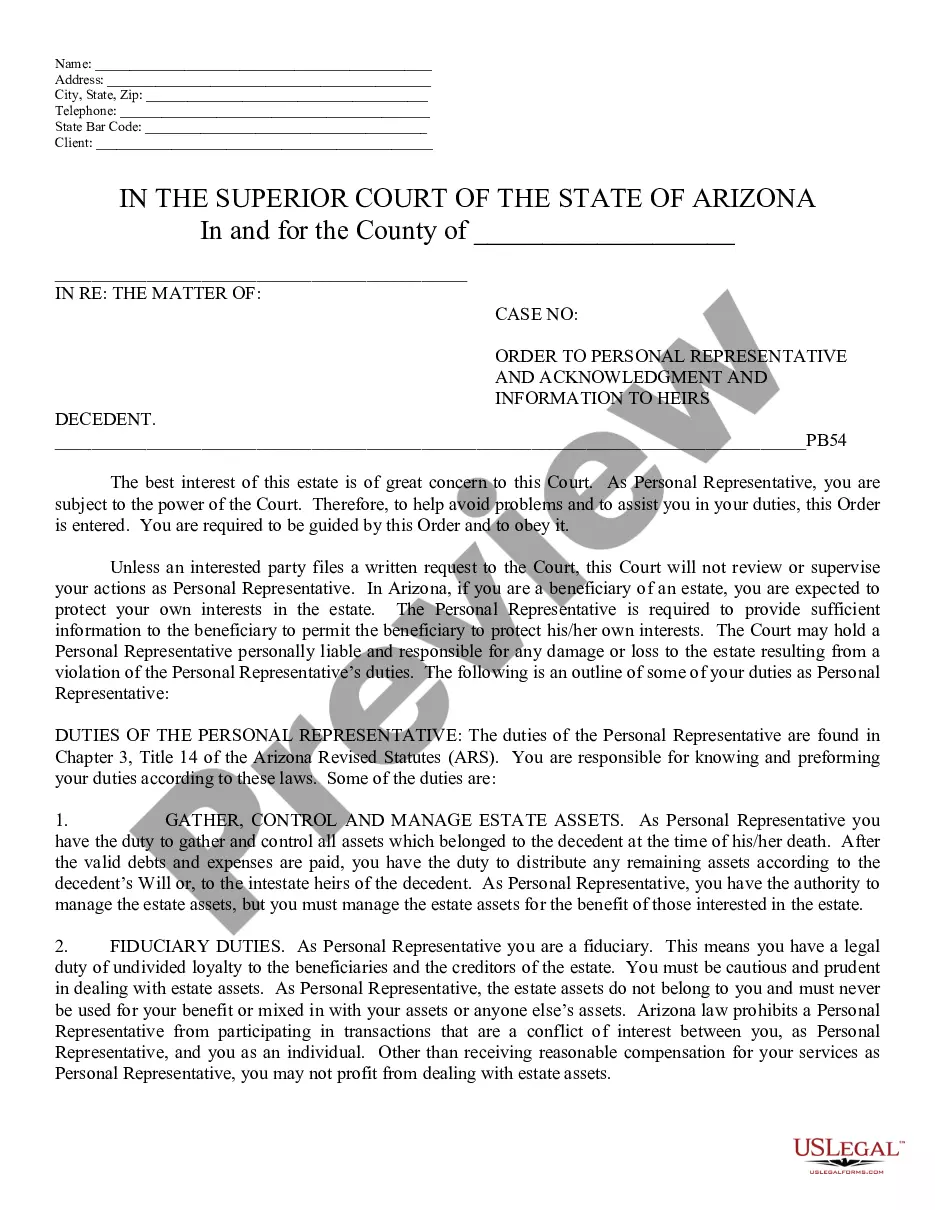
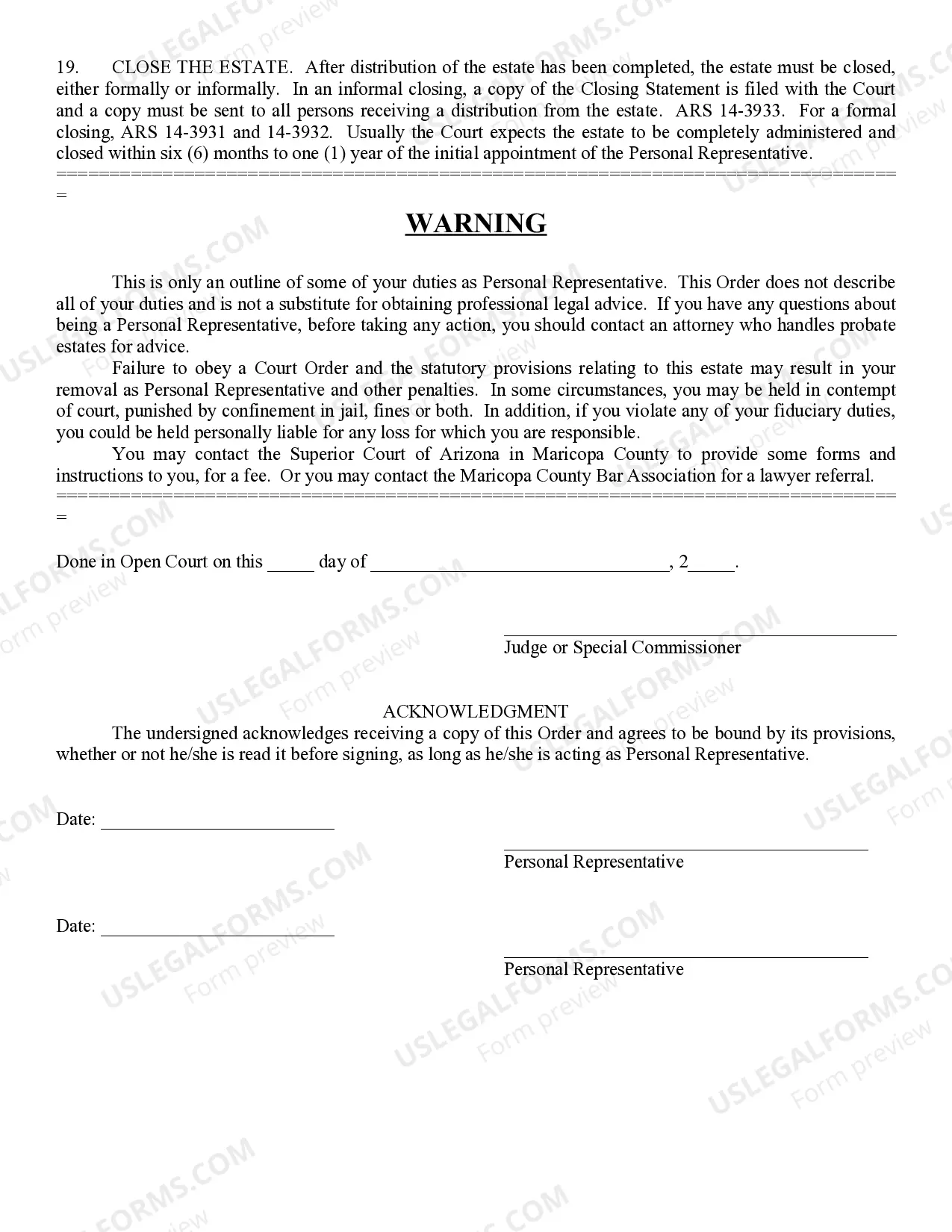
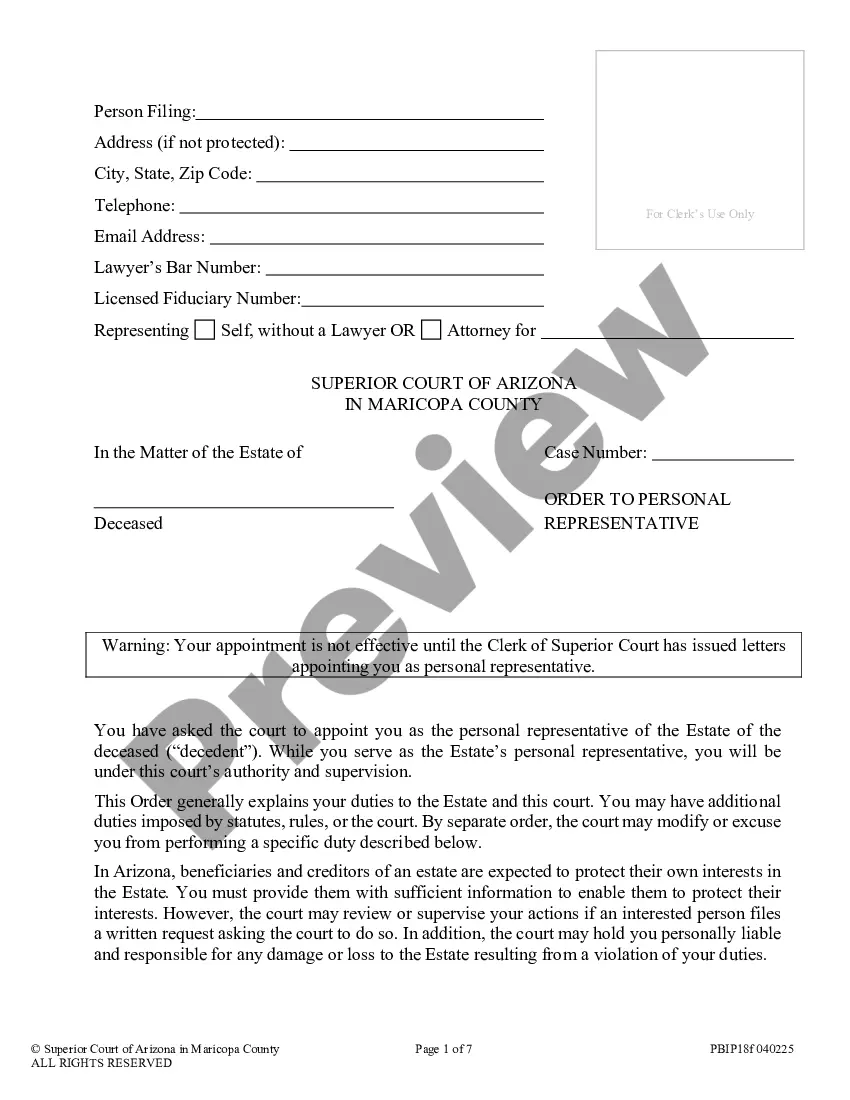
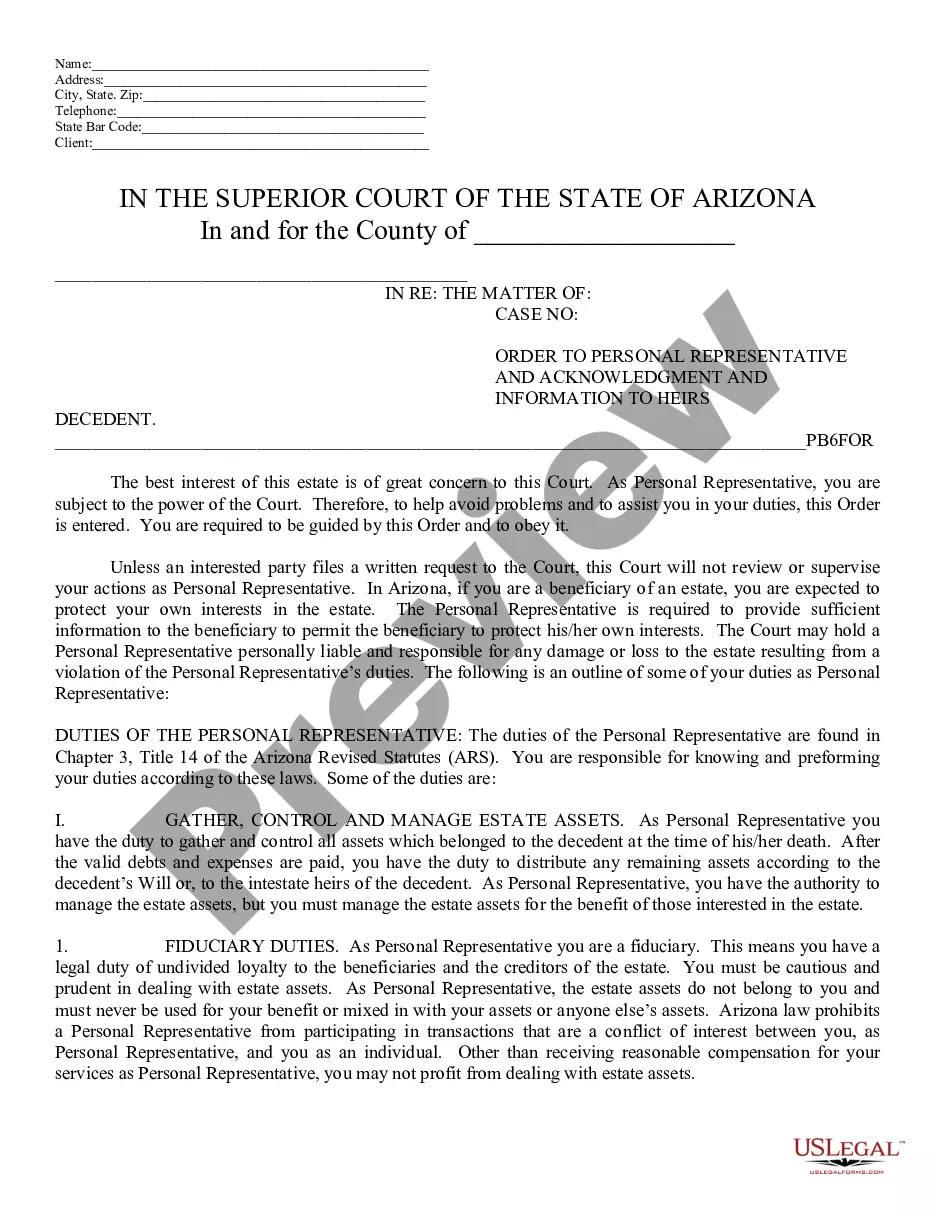
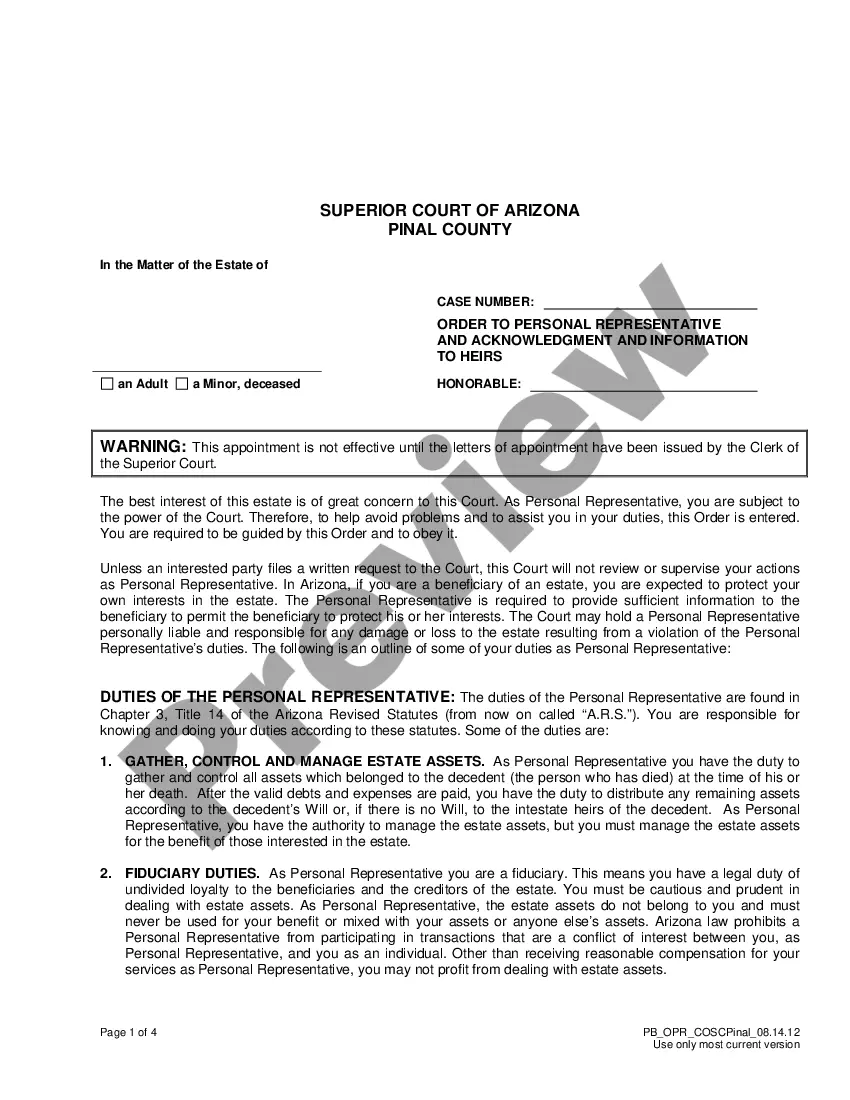
The Order to Personal Representatives is a court-issued document that mandates a personal representative to perform specific duties in managing a deceased individual's estate. This document is crucial as it outlines the responsibilities and powers granted to the representative by the court, ensuring proper administration of the estate in compliance with Arizona law. Unlike other estate management forms, this order serves as an authoritative directive, aimed at avoiding potential conflicts and ensuring the executor's obligations are clear and legally binding.
Main sections of this form
- Identification of the court and case number.
- The appointment of the personal representative.
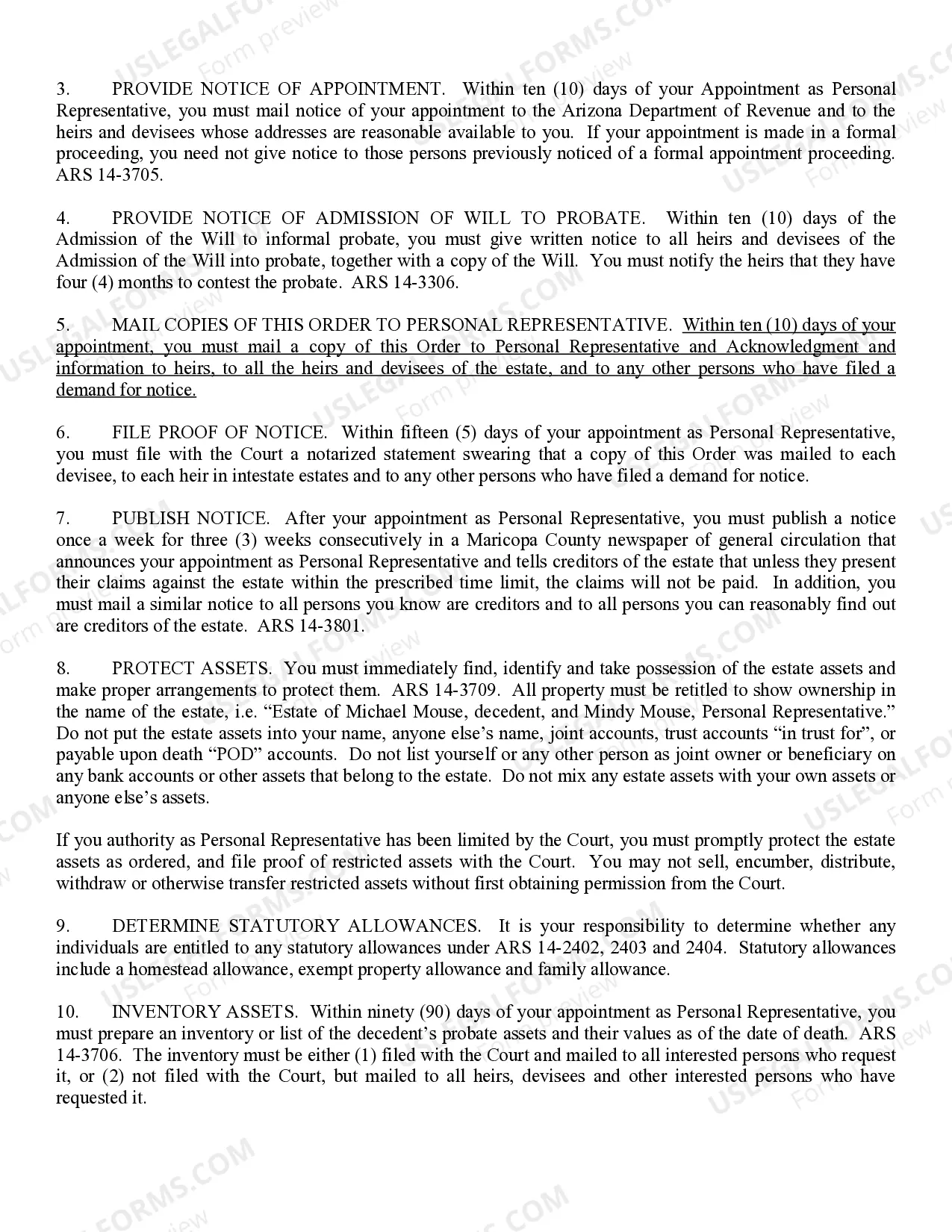
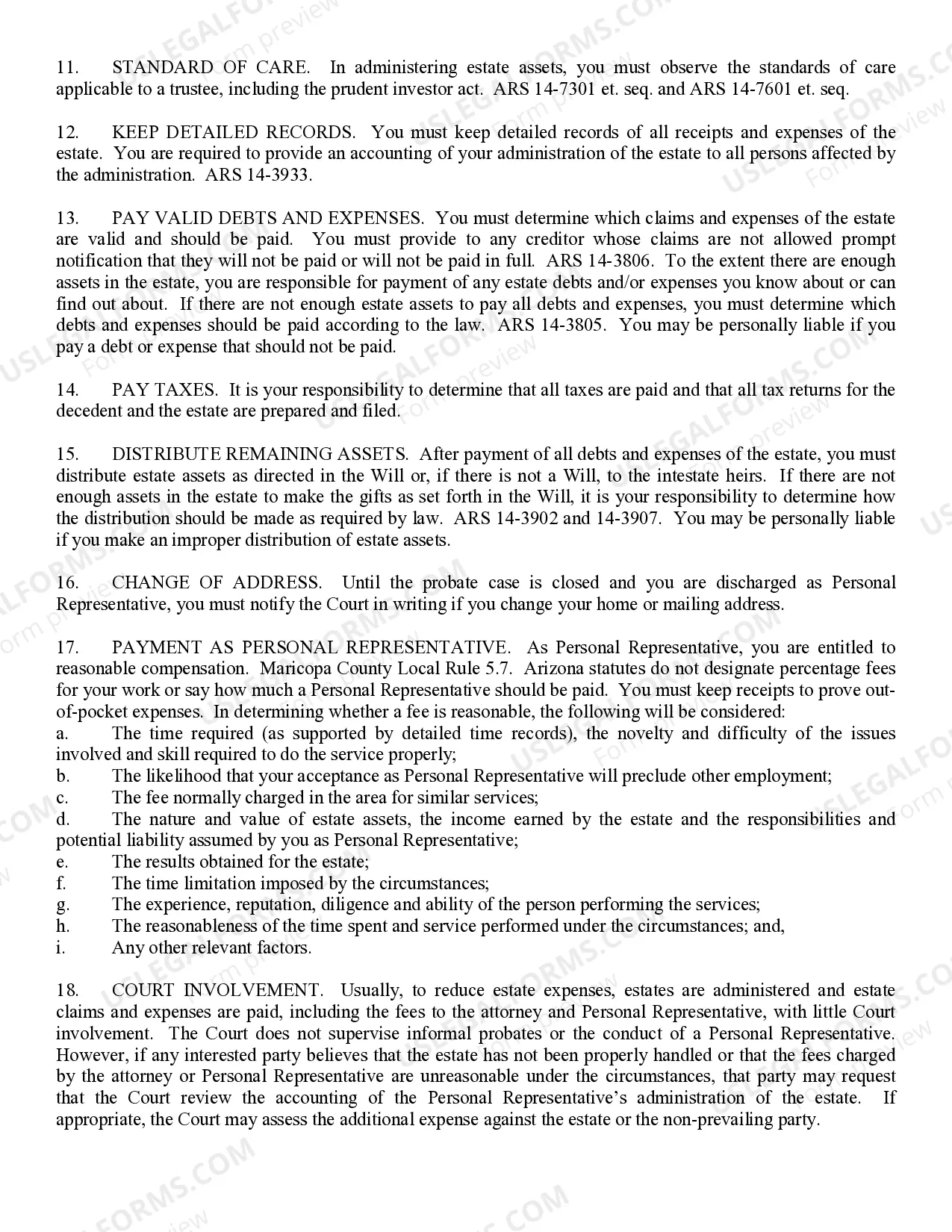
- Definition of the representative's duties and required actions.
- Updated contact information for all heirs and notice provisions.
- Legal implications of failing to comply with the order.
- Instructions for filing proof of notice and actions taken.
When to use this form
This form should be used in probate proceedings within the state of Arizona when a personal representative has been appointed following the death of an individual. It is essential to utilize this order to clarify the scope of authority granted to the representative and outline their responsibilities regarding the management of the decedent's estate. Situations that necessitate this form include the initiation of the probate process or the specified duties in court proceedings related to estate administration.
Who this form is for
- Individual appointed as the personal representative of a decedent's estate.
- Heirs and beneficiaries involved in the probate process seeking clarity on the administrator's duties.
- Attorneys specializing in probate law assisting clients with estate administration.
Instructions for completing this form
- Provide the court's address and the case number at the top of the document.
- Identify the personal representative by entering their name and contact information.
- Outline the duties of the personal representative as stipulated in the order.
- Ensure all heirs and interested parties receive a copy of the order within the specified timeframe.
- File proof of notice with the court, confirming that all required notifications were sent.
Does this form need to be notarized?
To make this form legally binding, it must be notarized. Our online notarization service, powered by Notarize, lets you verify and sign documents remotely through an encrypted video session.
Get your form ready online
Our built-in tools help you complete, sign, share, and store your documents in one place.
Make edits, fill in missing information, and update formatting in US Legal Forms—just like you would in MS Word.
Download a copy, print it, send it by email, or mail it via USPS—whatever works best for your next step.
Sign and collect signatures with our SignNow integration. Send to multiple recipients, set reminders, and more. Go Premium to unlock E-Sign.
If this form requires notarization, complete it online through a secure video call—no need to meet a notary in person or wait for an appointment.
We protect your documents and personal data by following strict security and privacy standards.

Make edits, fill in missing information, and update formatting in US Legal Forms—just like you would in MS Word.

Download a copy, print it, send it by email, or mail it via USPS—whatever works best for your next step.

Sign and collect signatures with our SignNow integration. Send to multiple recipients, set reminders, and more. Go Premium to unlock E-Sign.

If this form requires notarization, complete it online through a secure video call—no need to meet a notary in person or wait for an appointment.

We protect your documents and personal data by following strict security and privacy standards.
Common mistakes
- Failing to notify all heirs and interested parties within the required timeframe.
- Not providing accurate information regarding the personal representative's contact details.
- Overlooking the necessity to file proof of notice with the court.
- Neglecting to adhere to the fiduciary duties outlined in the order.
Advantages of online completion
- Immediate access to legally vetted templates prepared by licensed professionals.
- Convenience of downloading and completing forms at your own pace.
- Editability allows for easy customization to fit specific estate needs.
- Reliability with up-to-date legal language that meets Arizona requirements.
Legal use & context
- The Order to Personal Representatives is legally binding and must be respected by the appointed representative.
- Failure to comply with the order can result in penalties or removal from their duties.
- It serves as a legal safeguard for both the estate and the beneficiaries, outlining clear responsibilities.
Key takeaways
- The Order to Personal Representatives is essential for managing an estate in Arizona.
- Clear understanding of duties can prevent legal complications during estate administration.
- Timely communication with all heirs and the court is crucial for compliance.
- Online access provides an efficient way to obtain and complete necessary legal forms.
Looking for another form?


Form popularity
FAQ
A personal representative is an individual appointed to manage the estate of a deceased person, and this role is often formalized through an Arizona Order to Personal Representatives. To be considered a personal representative, you must be legally eligible and in many cases, this involves being a spouse, a close relative, or a trusted friend of the deceased. Your primary responsibilities include settling debts, distributing assets, and ensuring that all legal obligations are met. By utilizing platforms like US Legal Forms, you can easily navigate the process and ensure that you fulfill your duties accurately and efficiently.
In Arizona, a personal representative can be an individual or a qualified institution. Generally, the person should be at least 18 years old and legally competent. Arizona law allows individuals named in a will to serve, as well as heirs or anyone who has a valid claim against the estate. If you aim to navigate the process smoothly, consider exploring the Arizona Order to Personal Representatives on the US Legal Forms platform for detailed guidance and necessary documentation.
To become a personal representative in Arizona, start by reviewing the deceased's will, if available. You must then file a petition for probate with the appropriate court and provide necessary documentation. By following the Arizona Order to Personal Representatives, you can ensure that your actions are compliant and that the estate is handled correctly.
The priority for appointment as a personal representative in Arizona typically follows a specific order: first, the surviving spouse or domestic partner; second, other family members such as adult children or parents; and third, any individual named in the will. When managing this process, it’s essential to follow the guidelines set by the Arizona Order to Personal Representatives to avoid potential disputes.
In most cases, the highest priority for appointment as a personal representative in Arizona goes to the deceased's surviving spouse or domestic partner. If the deceased left a will, the named executor would also be prioritized. Understanding these preferences helps ensure that the Arizona Order to Personal Representatives is respected during the appointment process.
To become a personal representative in Arizona, you need to be appointed by the court. Eligibility often includes being a resident of Arizona or a family member of the deceased. Following the Arizona Order to Personal Representatives process, you must file a petition in probate court to seek your appointment officially.
In Arizona, a personal representative generally has up to one year to settle an estate. However, this timeline can vary based on the complexity of the estate, pending tax matters, or disputes among heirs. To navigate this process smoothly, the personal representative should adhere to the Arizona Order to Personal Representatives and establish a detailed plan for settling the estate.
In Arizona, a personal representative manages the estate of a deceased person. This role includes gathering assets, paying debts, and distributing the remaining property according to the will or state law. It's essential for the personal representative to follow the Arizona Order to Personal Representatives guidelines to ensure proper administration of the estate.