Lease of Commercial Building with Lessor to Construct Building
What this document covers
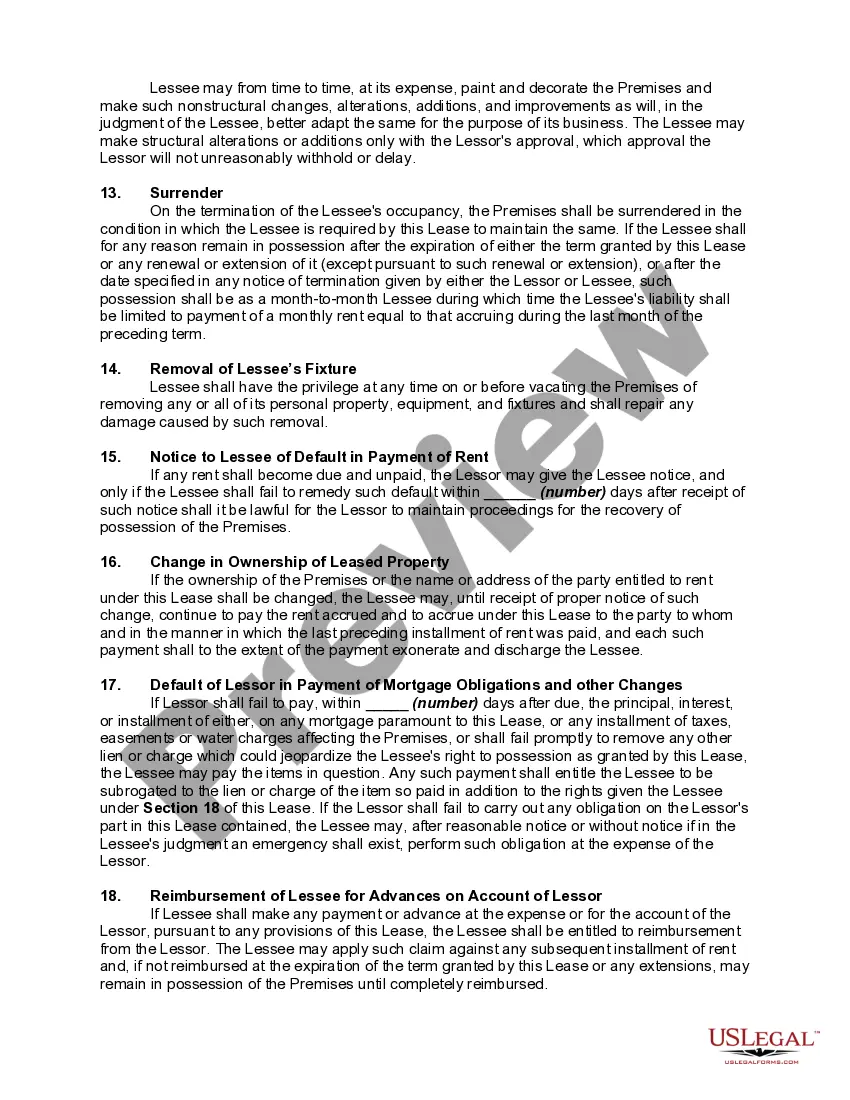
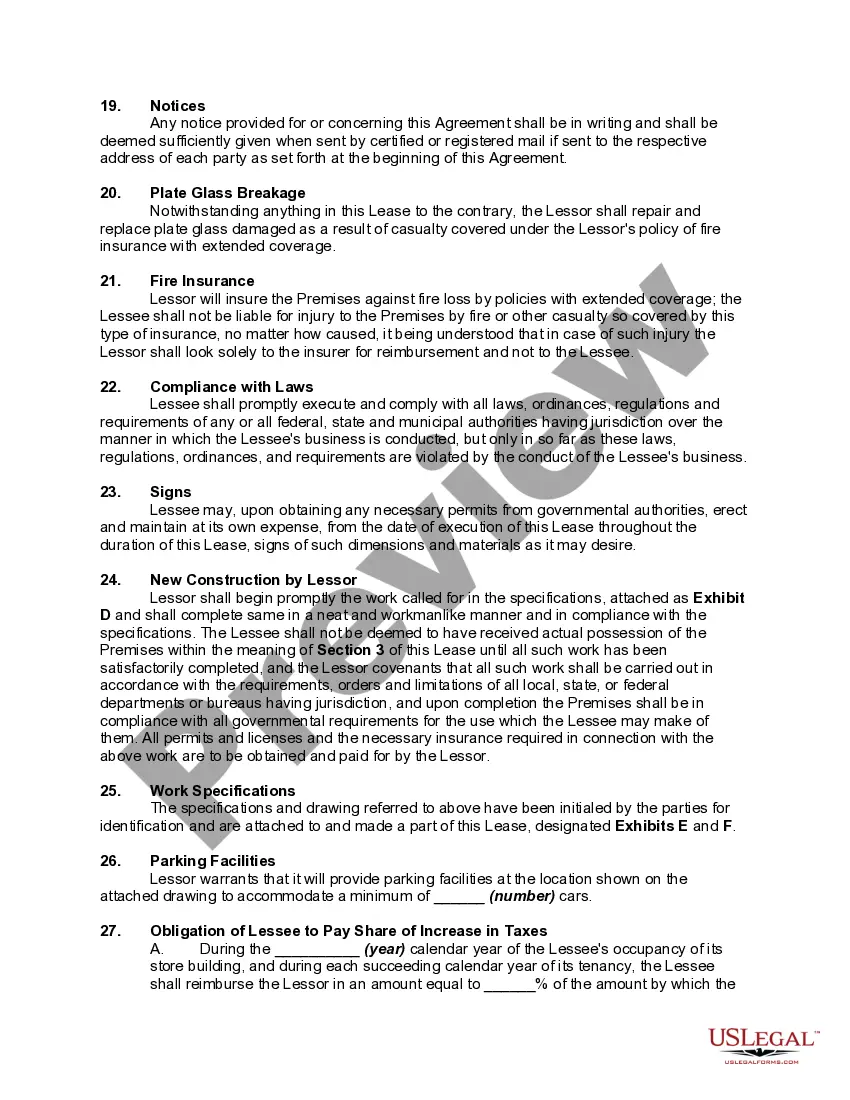
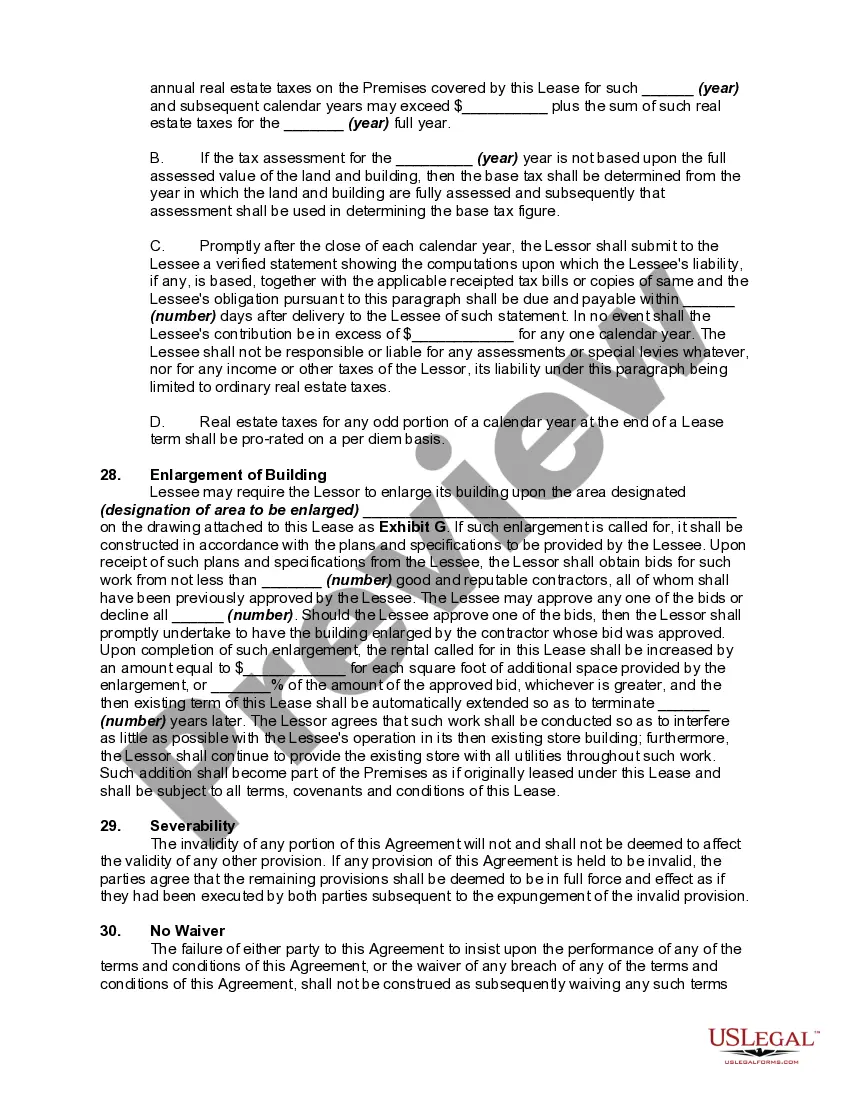
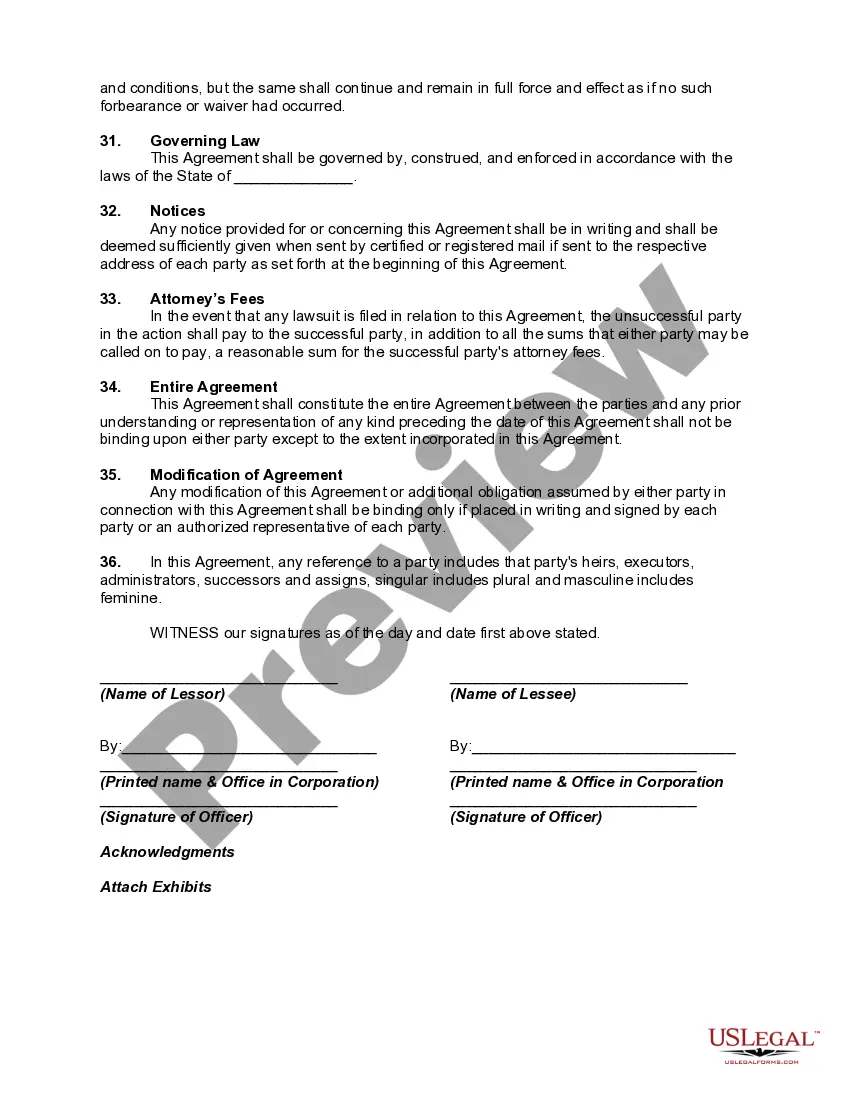
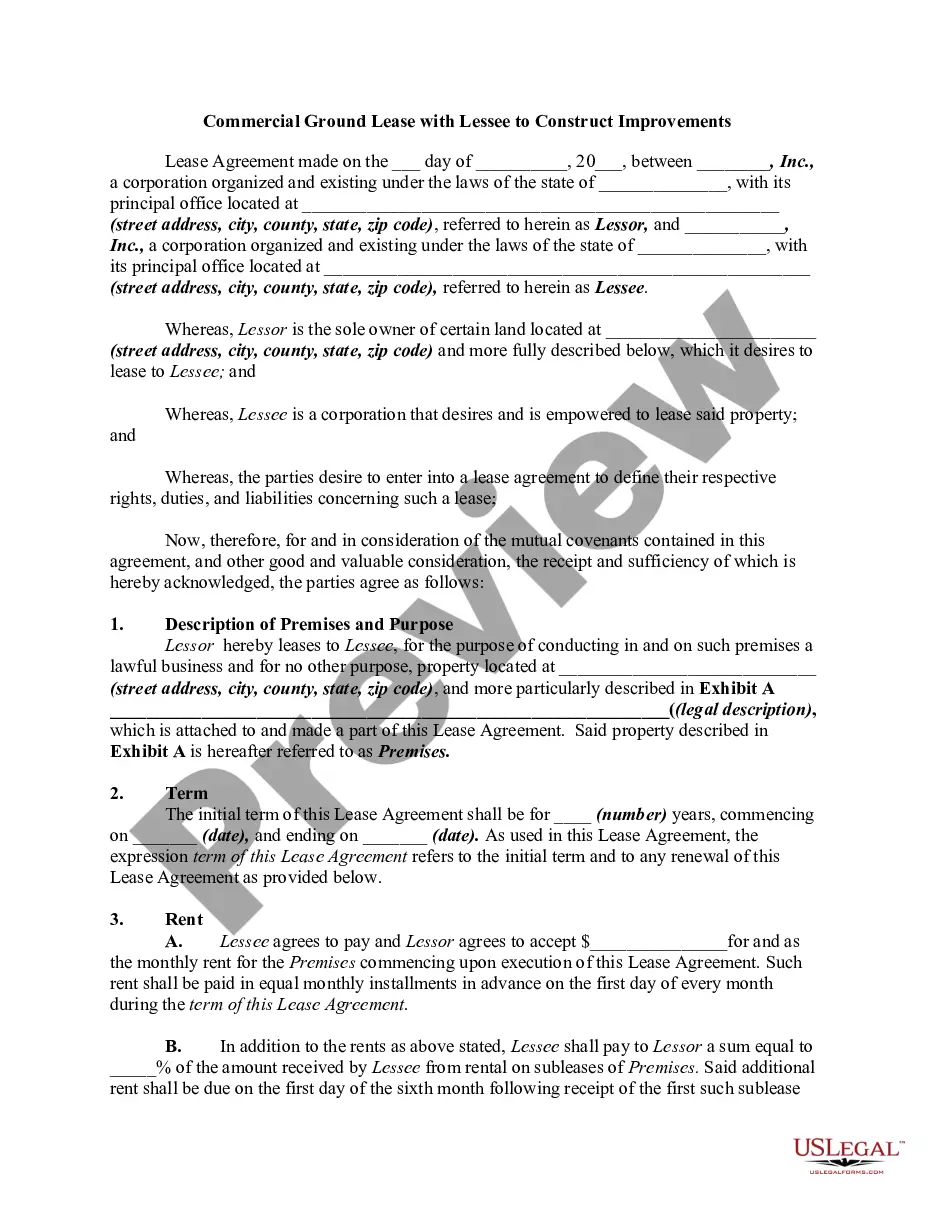
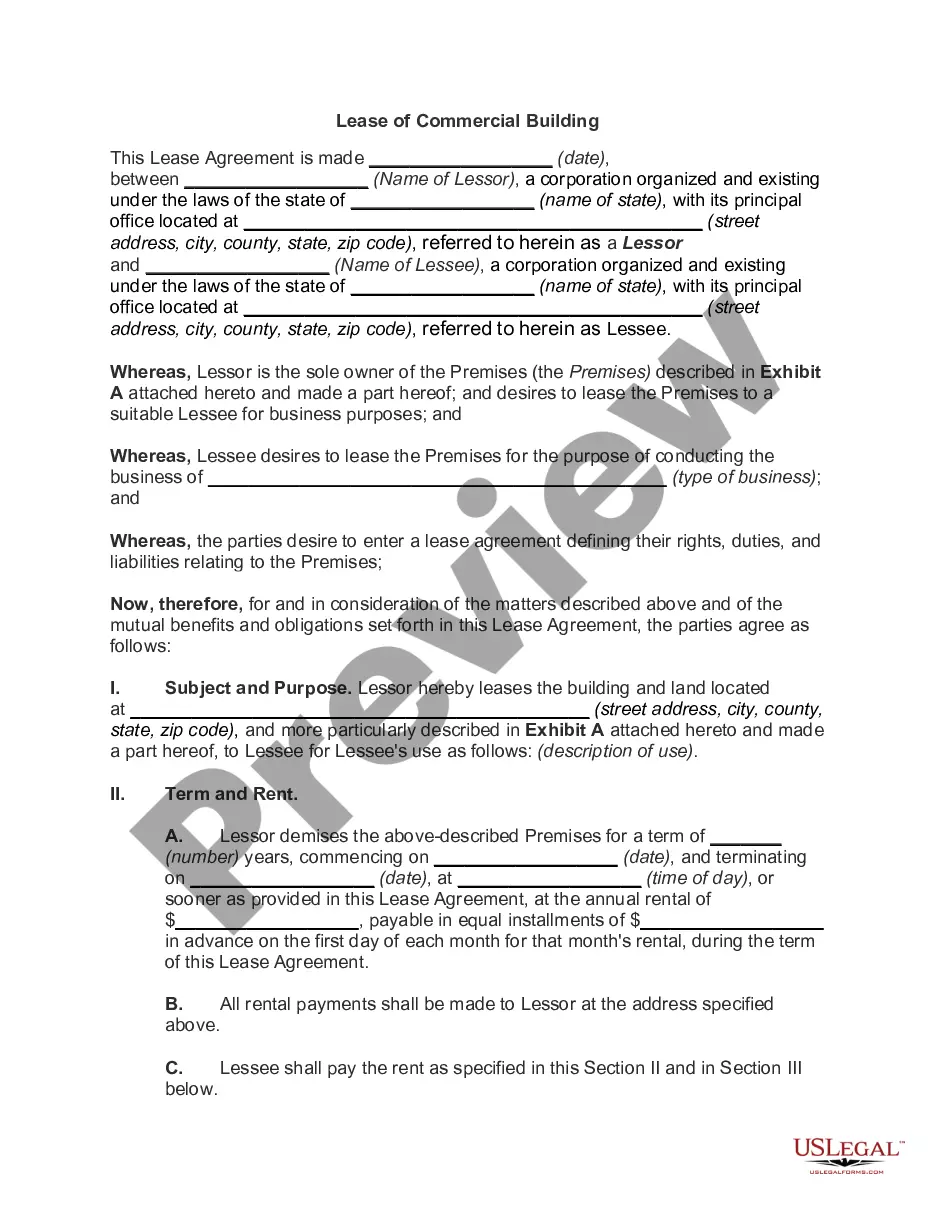
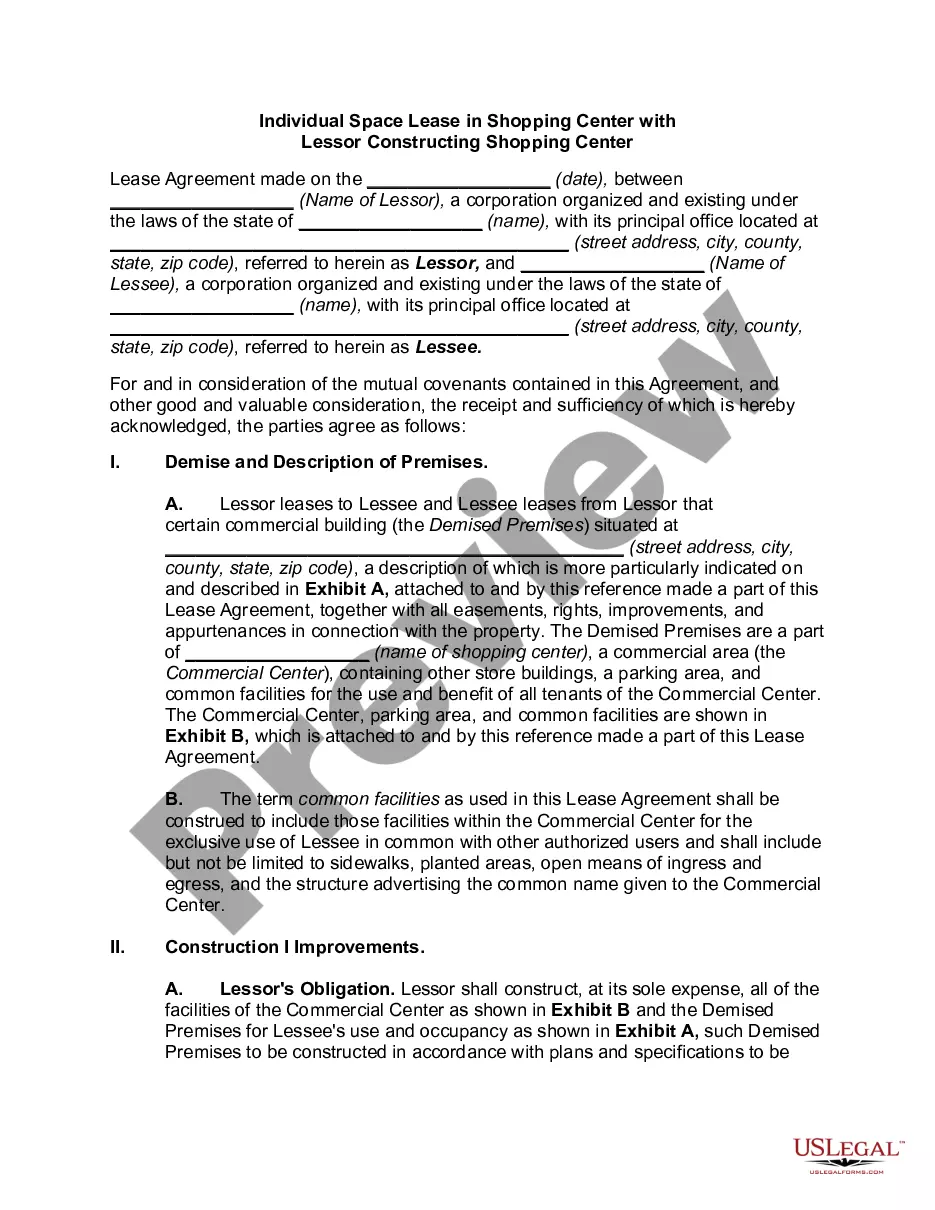
This Lease of Commercial Building form is a legal agreement allowing a lessor to construct a building on leased property. It outlines the terms, conditions, and responsibilities for both the lessor and lessee, distinguishing it from standard lease agreements by focusing on new construction. This form is essential for both parties in a commercial leasing scenario, ensuring clarity about occupancy, construction details, and rent obligations.
Key parts of this document
- Date and parties involved: Includes names and addresses of the lessor and lessee.
- Description of premises: Details the property boundaries and construction specifications.
- Term and rent: States the lease duration and payment schedule.
- Occupancy terms: Defines possession rights and obligations concerning occupancy delivery.
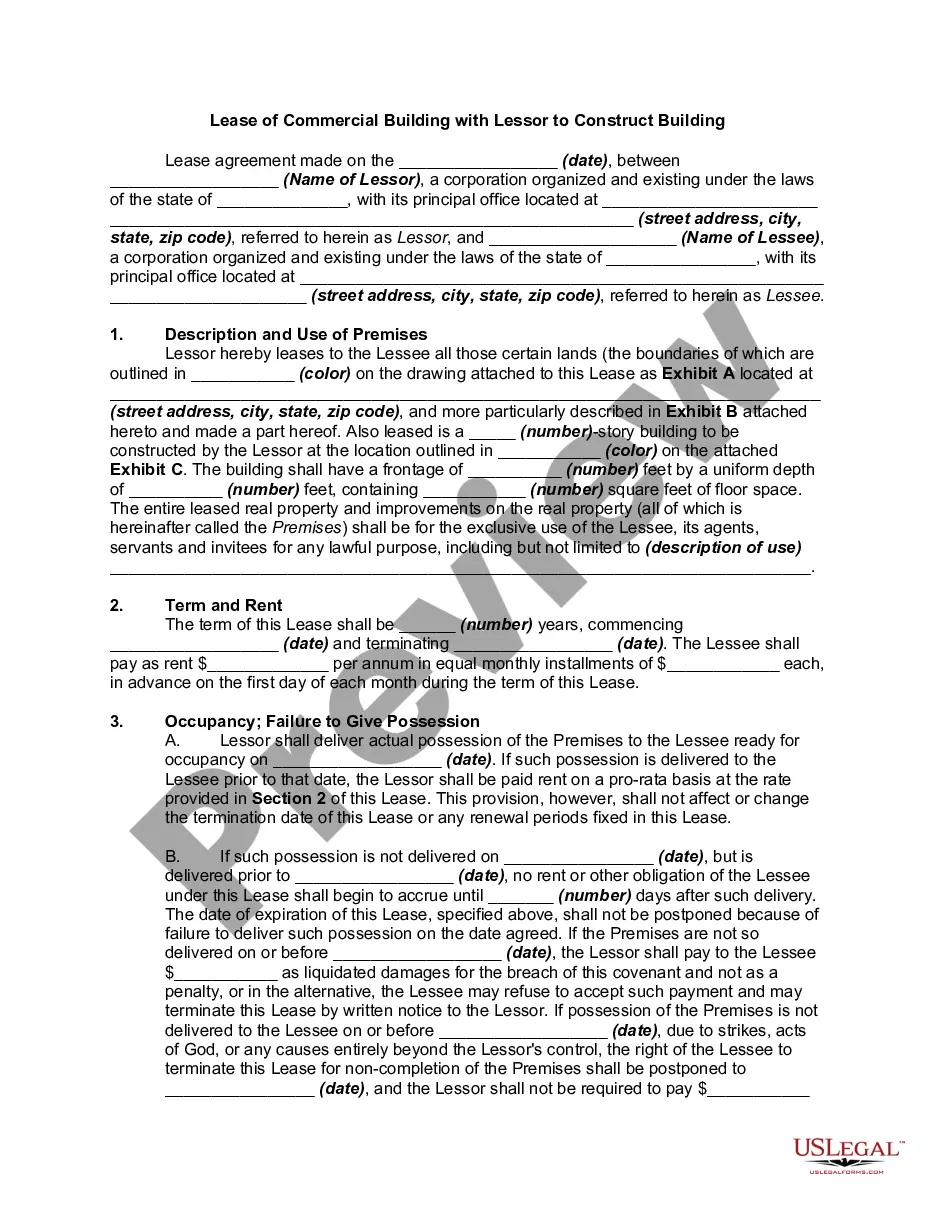
- Repairs and maintenance: Assigns responsibilities for repairs and utilities to the lessor and lessee.
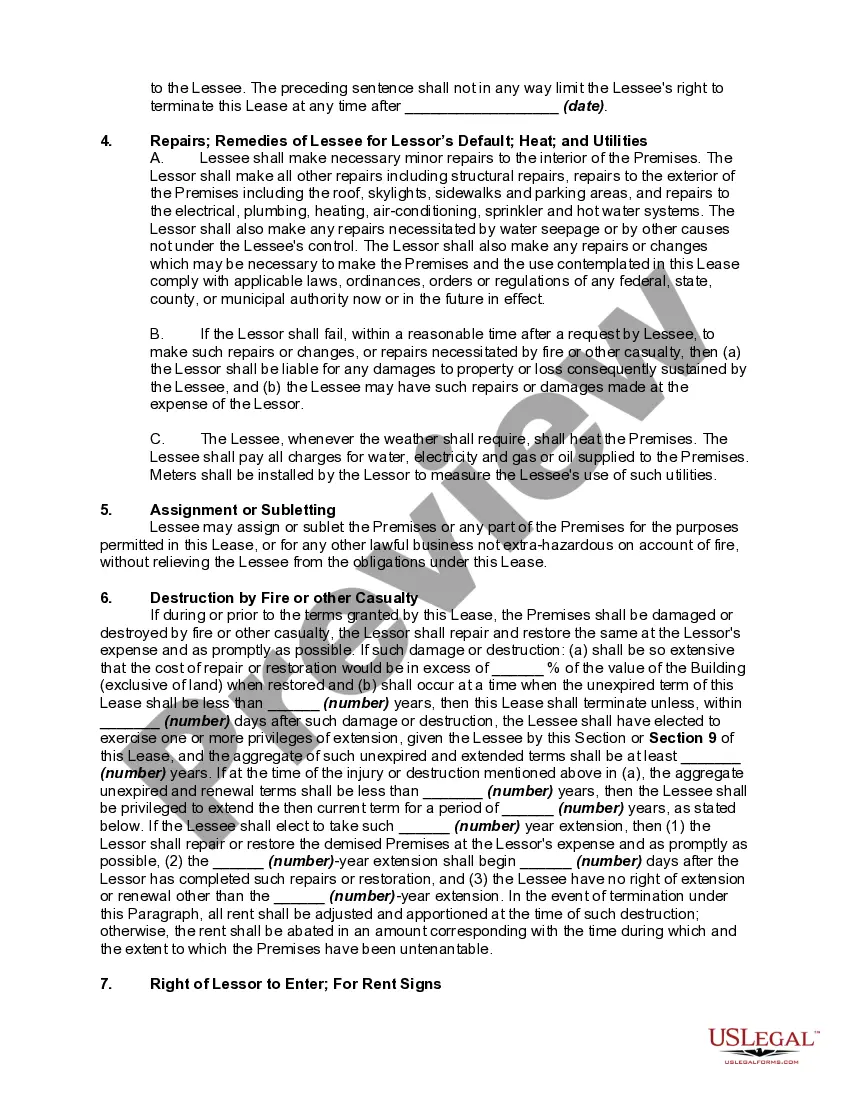
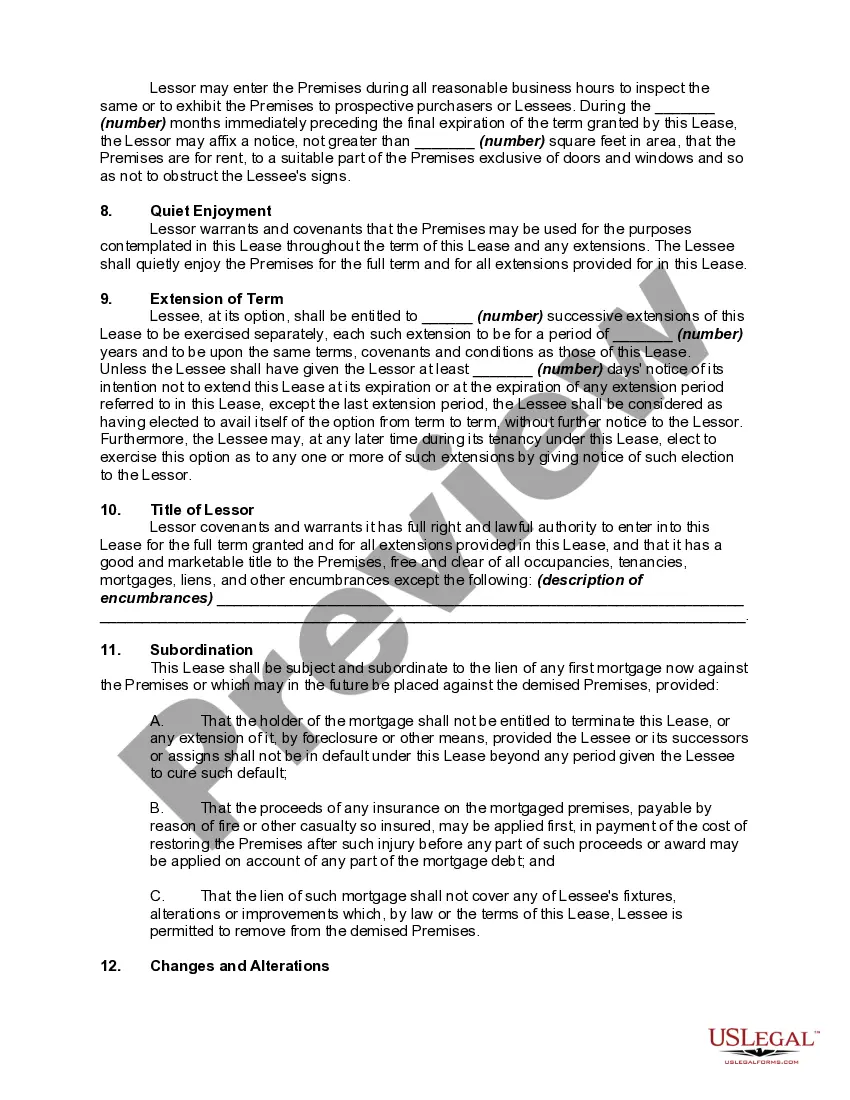
- Extension options: Offers terms for renewing the lease upon expiration.
Common use cases
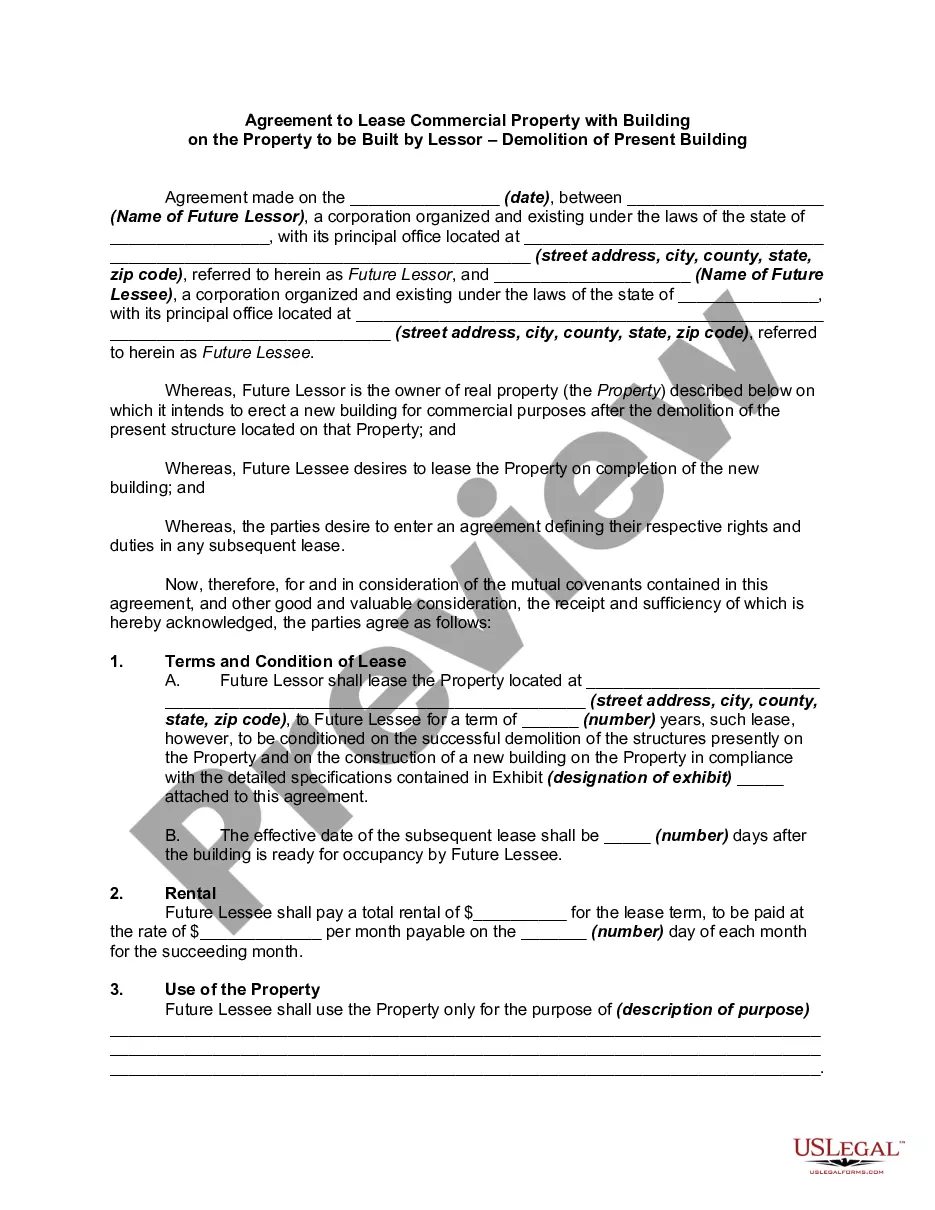
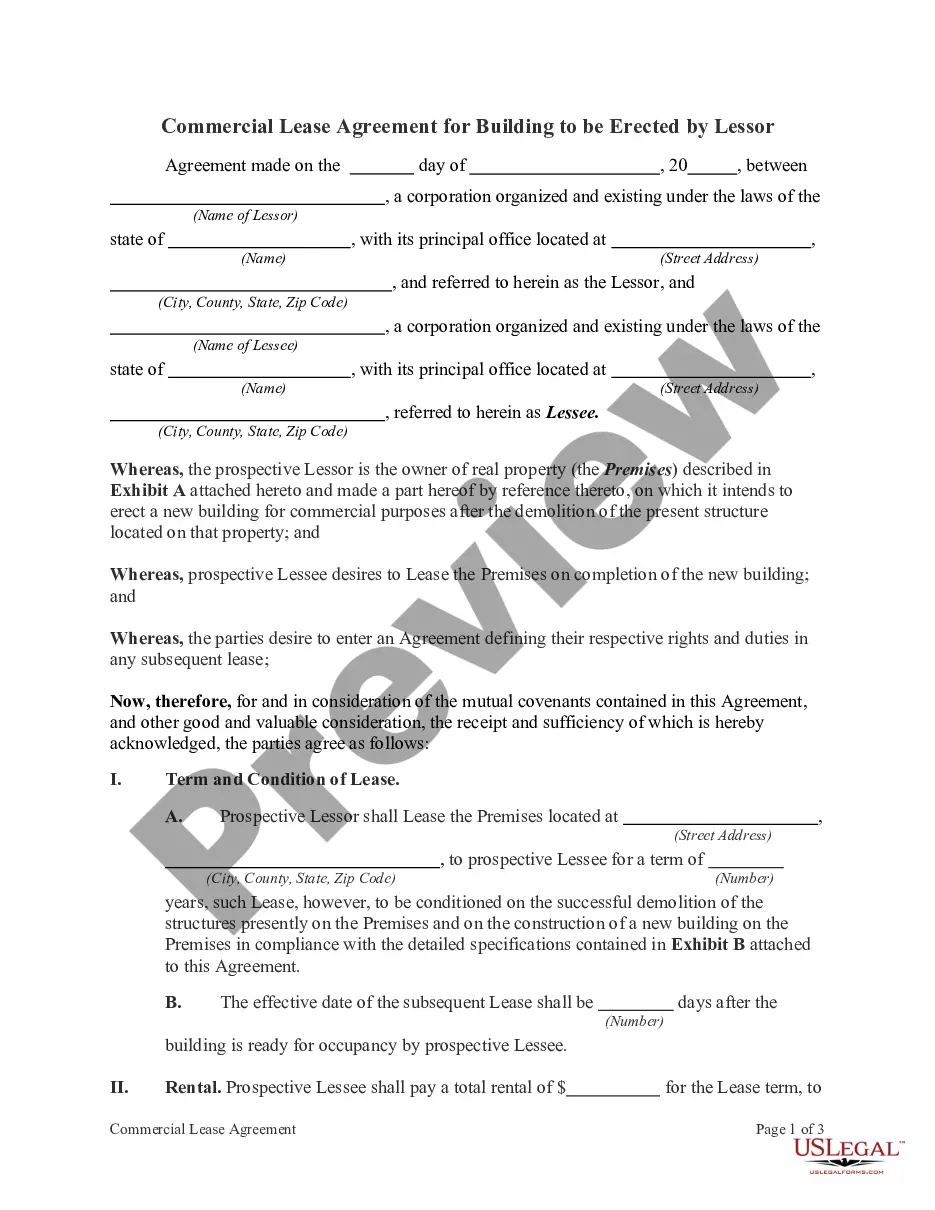
This form is suitable when two parties enter a commercial lease agreement that involves the construction of a new building. It should be utilized when the lessor agrees to build the premises to suit the lessee's requirements, making it essential for businesses that need a custom facility tailored for their operations.
Intended users of this form
- Business owners looking to lease a property for operations requiring custom construction.
- Landlords offering commercial properties who are willing to build to suit a lessee's needs.
- Legal professionals drafting lease agreements for commercial real estate transactions.
Steps to complete this form
- Identify the parties: Fill in the names and addresses of the lessor and lessee.
- Specify the property: Describe the location and boundaries of the leased premises.
- Enter construction specifications: Detail the size and design of the building to be constructed.
- State the lease terms: Document the lease duration, commencement, and rent payments.
- Include repair responsibilities: Clarify who is responsible for maintenance and repairs.
Does this form need to be notarized?
To make this form legally binding, it must be notarized. Our online notarization service, powered by Notarize, lets you verify and sign documents remotely through an encrypted video session.
Get your form ready online
Our built-in tools help you complete, sign, share, and store your documents in one place.
Make edits, fill in missing information, and update formatting in US Legal Forms—just like you would in MS Word.
Download a copy, print it, send it by email, or mail it via USPS—whatever works best for your next step.
Sign and collect signatures with our SignNow integration. Send to multiple recipients, set reminders, and more. Go Premium to unlock E-Sign.
If this form requires notarization, complete it online through a secure video call—no need to meet a notary in person or wait for an appointment.
We protect your documents and personal data by following strict security and privacy standards.

Make edits, fill in missing information, and update formatting in US Legal Forms—just like you would in MS Word.

Download a copy, print it, send it by email, or mail it via USPS—whatever works best for your next step.

Sign and collect signatures with our SignNow integration. Send to multiple recipients, set reminders, and more. Go Premium to unlock E-Sign.

If this form requires notarization, complete it online through a secure video call—no need to meet a notary in person or wait for an appointment.

We protect your documents and personal data by following strict security and privacy standards.
Common mistakes
- Failing to specify detailed construction requirements in the lease.
- Not including clear terms for rent payment schedules.
- Neglecting to define the consequences of late rent or possession delivery delays.
- Overlooking local laws that may affect lease terms and rights.
Why complete this form online
- Convenience of accessing and completing the form at any time.
- Ease of editing to fit specific business needs without legal jargon.
- Reliable templates created by licensed attorneys to ensure legal validity.
Looking for another form?
Form popularity
FAQ
As long as the contract spells out specific details and both parties have signed that they agree to the contract's terms, a handwritten contract is legally binding and enforceable in court.
Under California law, a lease does have to be in writing to be enforceable, but only when the lease is for a period of more than a year.There is, however, an additional legal doctrine called partial performance which does make oral contracts enforceable even if they are covered by the Statute of Frauds.
Can the landlord refuse consent to an Assignment? Most leases will say that the Landlord cannot unreasonably withhold consent. According to section 19 (1A) of the Landlord and Tenant Act 1927 the landlord can insert conditions in the lease, which need to be met in the case of an assignment.
The cost of registering a lease is generally paid by a tenant. Leases with a lease period of more than three years, including any option period, must be registered. This helps to protect the tenant's interests. The tenant pays their own legal costs.
Under a typical lease assignment, you transfer all of your space to someone else for the entire remaining term of the lease, and the new tenant pays rent directly to the landlord.Once your landlord has agreed to allow a full assignment, you'll need to secure what the law so often requires: a piece of paper.
Name the parties. A simple rental agreement form needs to name the parties signing the lease and where they live. Describe the premises. Define the term of the lease. Set how much rent is owed. Assign a security deposit amount. Finalize the lease.
The Introduction. The beginning of the lease agreement should contain the name of the landlord and tenant, as well as a statement of the agreement into which they are entering. Rent. Deposit. Taxes. Property Insurance. Utilities and Amenities. Remodeling and Improvements. Repairs and Maintenance.
Most often, the lease won't permit assignment without the landlord's approval, but leases often state that the landlord cannot unreasonably withhold consent. As long as you produce a tenant who's shown a history of payment under prior leases and has been a model tenant, a landlord should consent to assignment.