Escrow Agreement for Sale of Real Property with regard to Deposit of Earnest Money
About this form
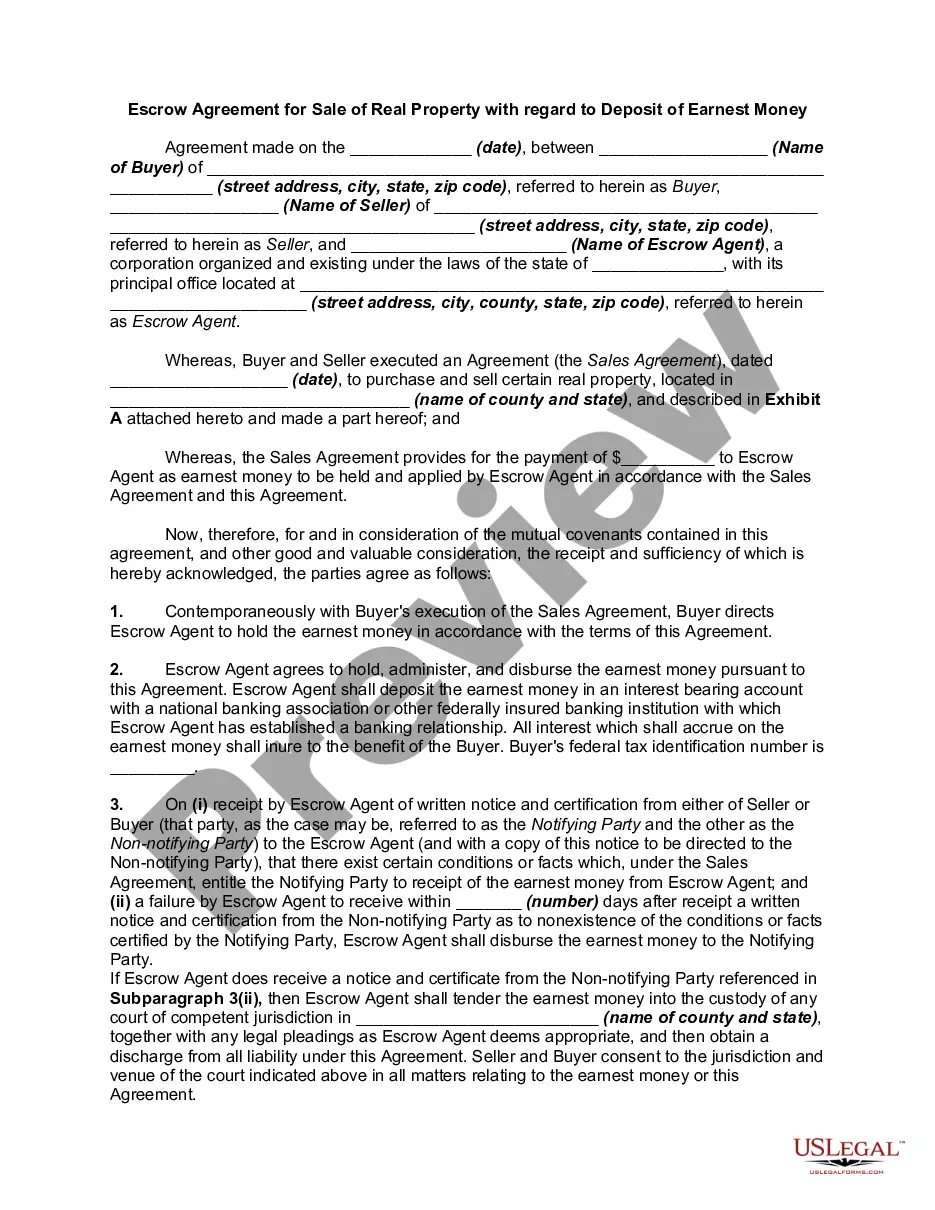
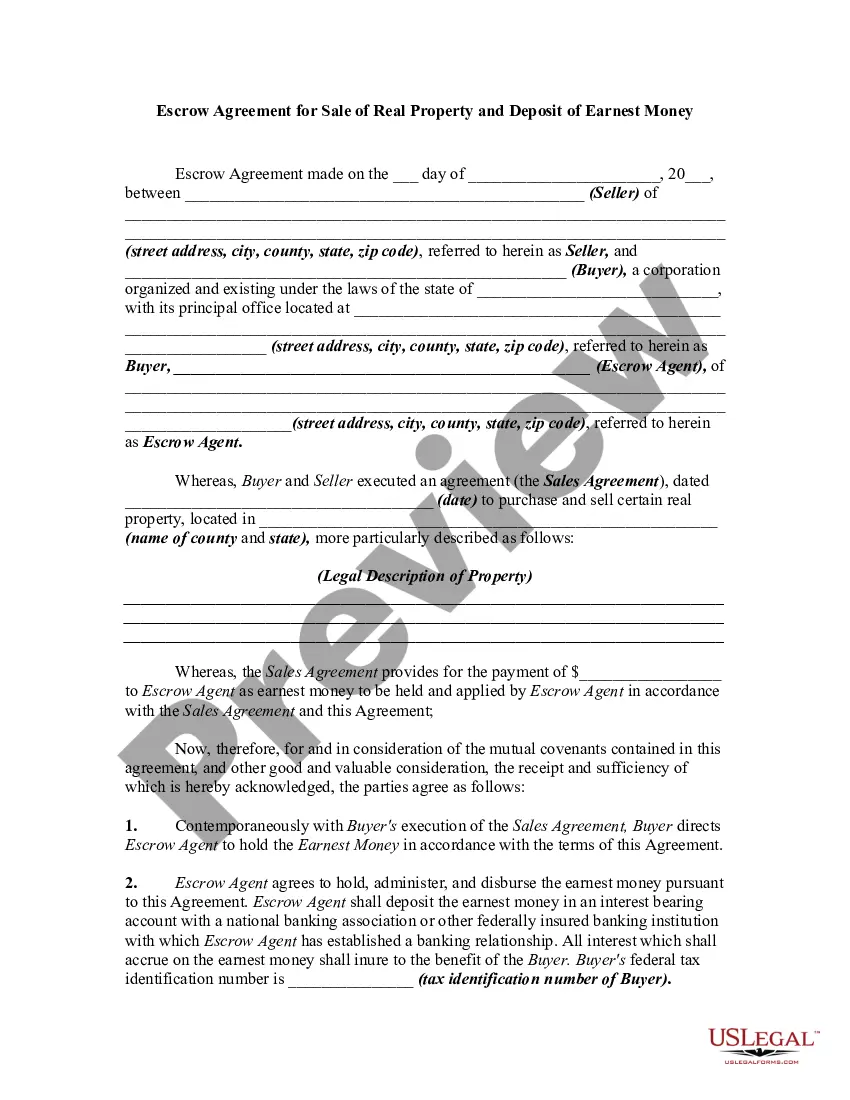
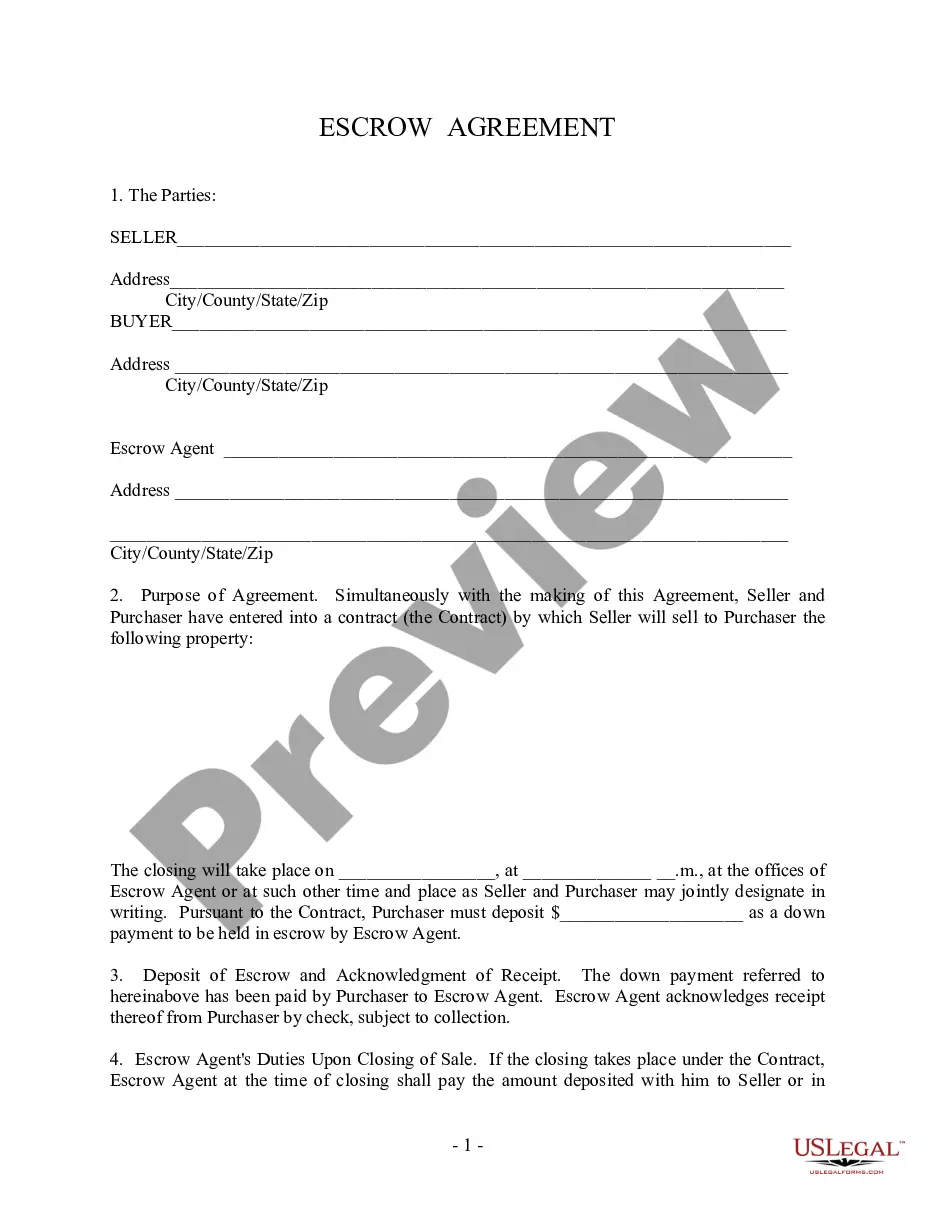
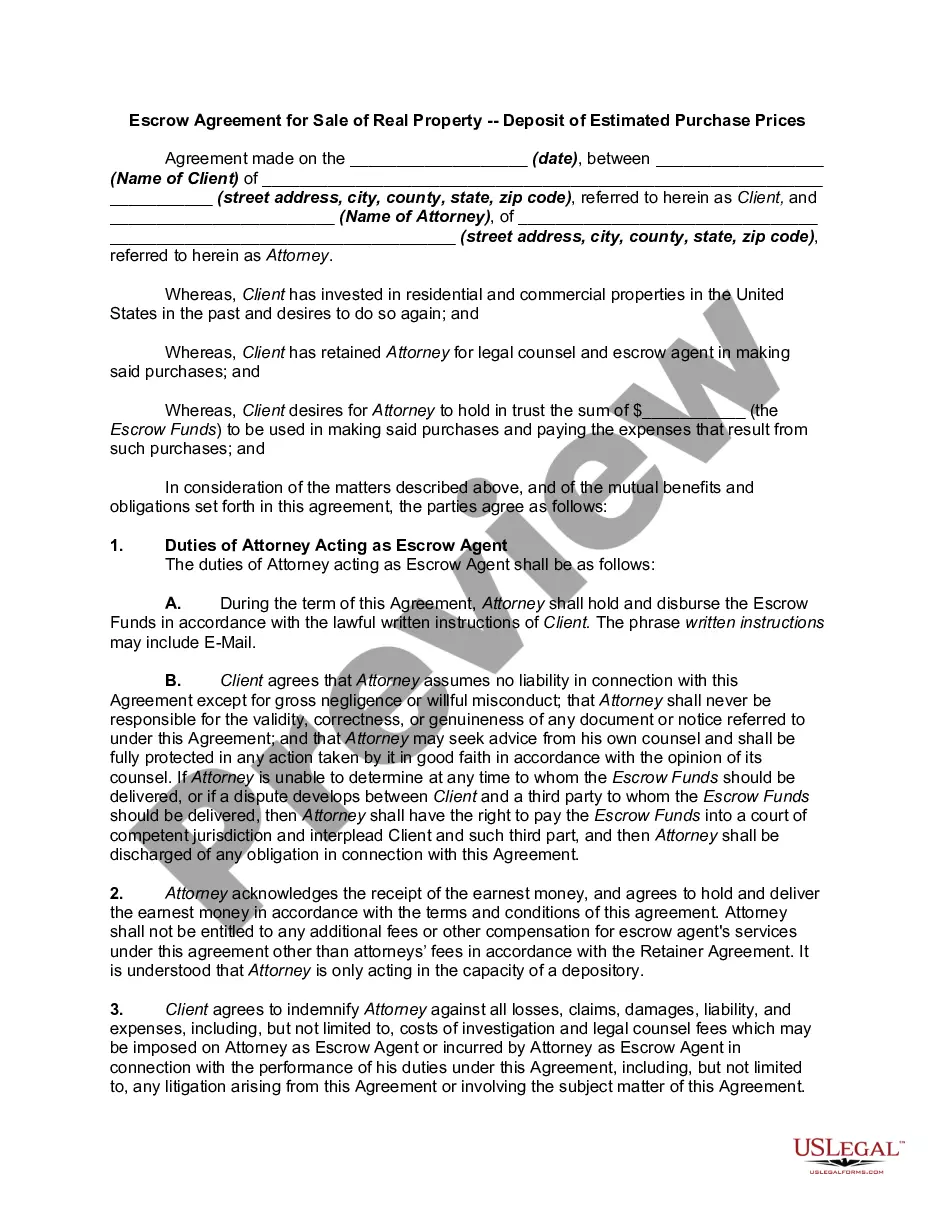
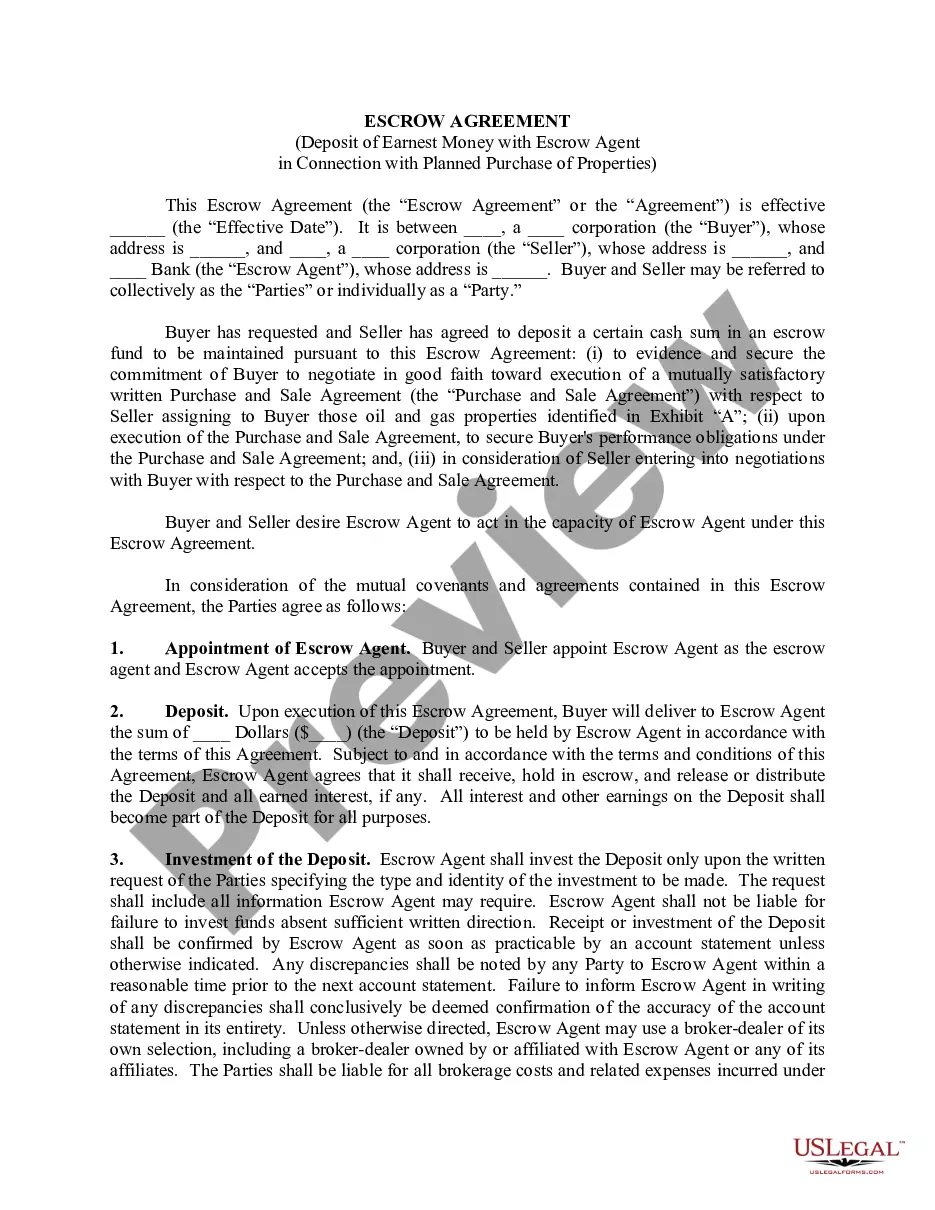
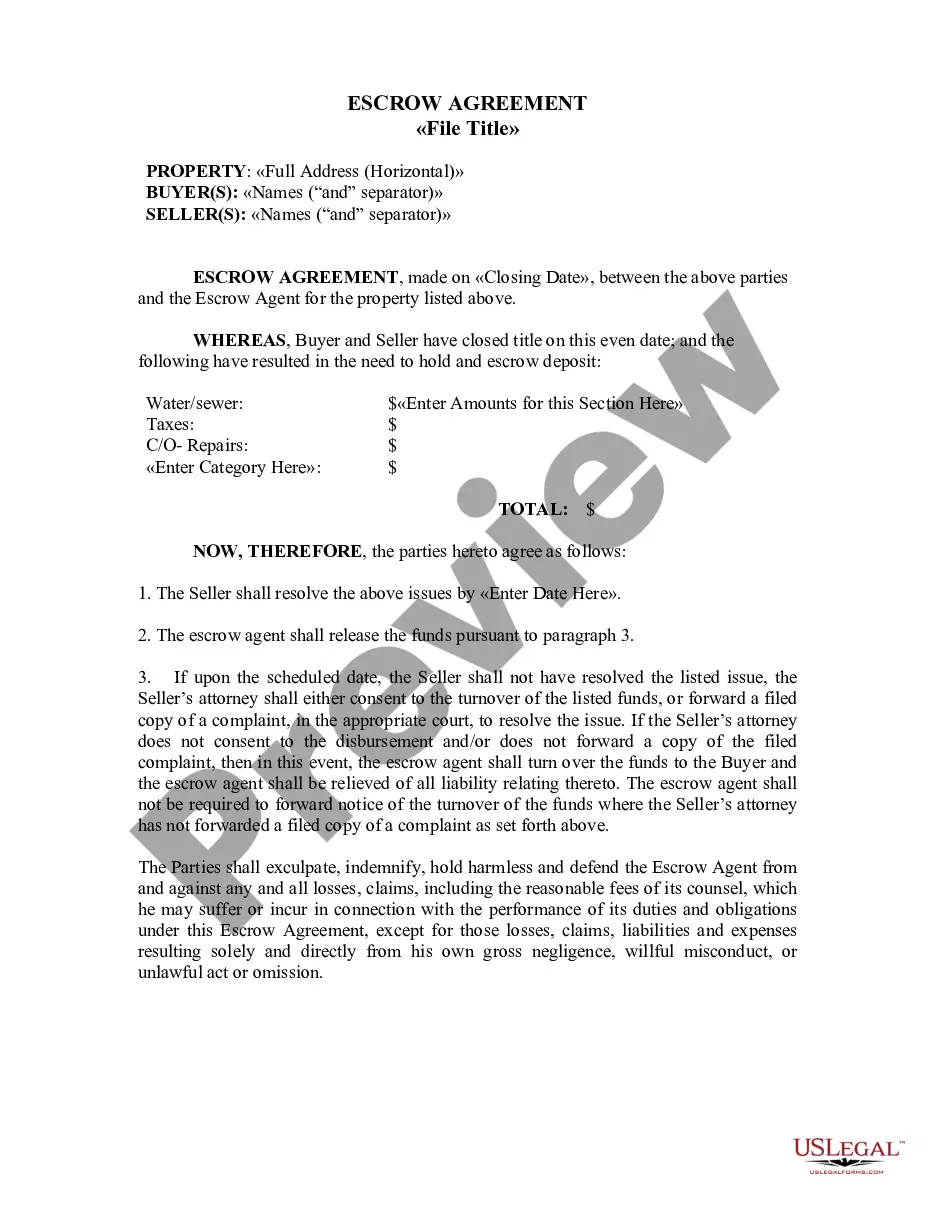
The Escrow Agreement for Sale of Real Property with regard to Deposit of Earnest Money is a legal contract that sets the terms under which an escrow agent holds funds involved in the purchase of real property. This agreement ensures that the earnest money deposit is safeguarded and only released once specific conditions outlined in the Sales Agreement are met. It is distinct from other real estate contracts because it primarily focuses on the management and disbursal of the earnest money, acting as a neutral third party to facilitate trust between the buyer and seller.
Main sections of this form
- Date of the agreement and identification of parties (Buyer, Seller, Escrow Agent).
- Details of the earnest money deposit including amount and escrow instructions.
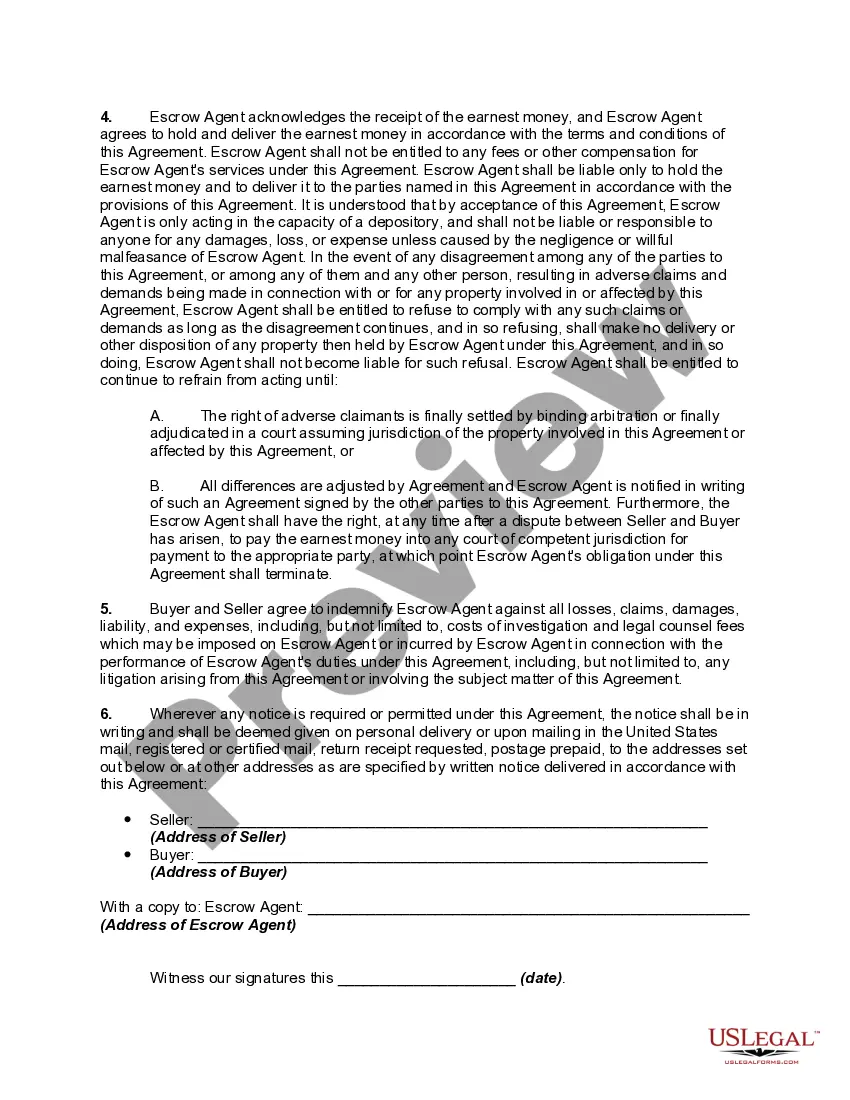
- Responsibilities of the escrow agent for holding and disbursing funds.
- Procedures for notifying the escrow agent regarding conditions for disbursing earnest money.
- Indemnification clauses to protect escrow agent from liabilities.
- Addressing conflicts and the process for handling disputes regarding the earnest money.
Situations where this form applies
This form is necessary when a real estate transaction involves an earnest money deposit that needs to be held by a neutral party. Buyers and sellers utilize this agreement during property sales to ensure that funds are securely managed until all contingencies and requirements of the sales agreement are satisfied. It is particularly useful in competitive real estate markets where earnest money is a common practice to show good faith in an offer.
Who should use this form
- Home buyers looking to secure a property through earnest money.
- Home sellers who wish to ensure the earnest money is held securely during the sale process.
- Real estate agents facilitating transactions that involve earnest money deposits.
- Escrow agents managing the funds during the property sale.
Instructions for completing this form
- Identify and list the parties involved: Buyer, Seller, and Escrow Agent.
- Specify the date of the agreement and the property being sold.
- Enter the amount for the earnest money deposit that will be held in escrow.
- Include the conditions under which the escrow agent will disburse the earnest money.
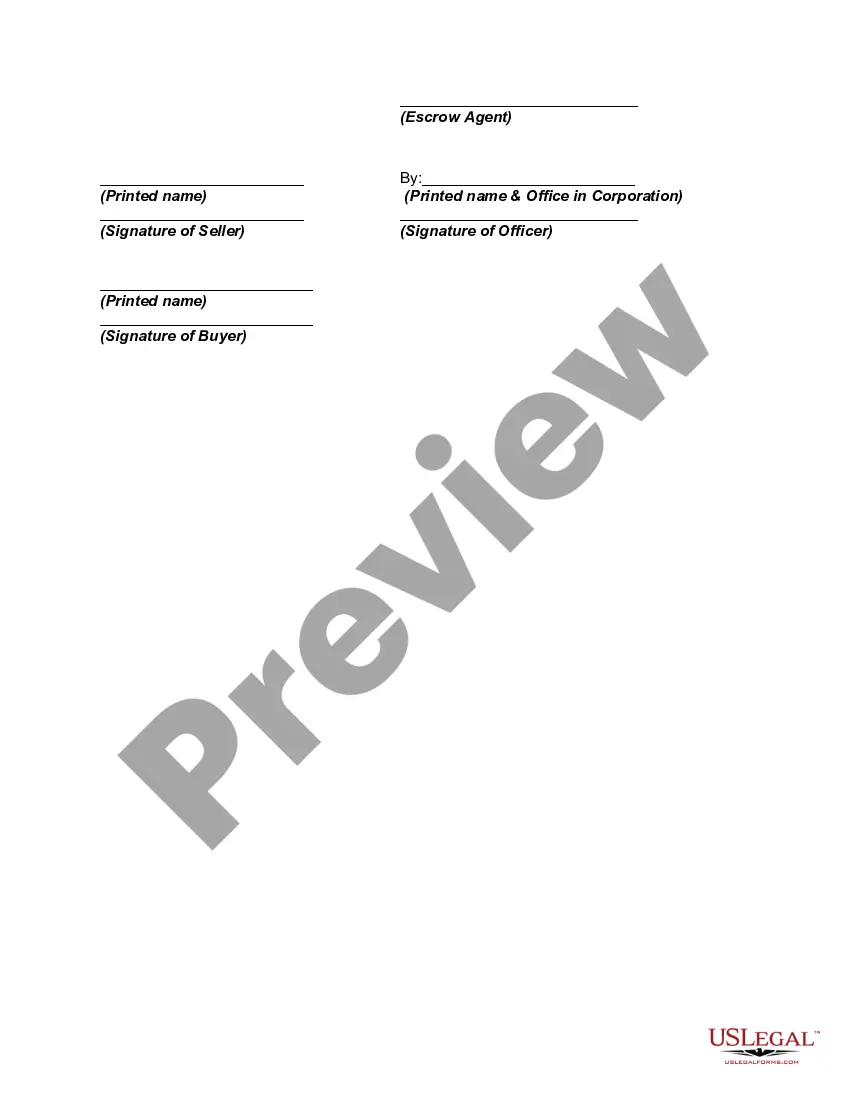
- Collect all required signatures from the Buyer, Seller, and Escrow Agent.
Is notarization required?
To make this form legally binding, it must be notarized. Our online notarization service, powered by Notarize, lets you verify and sign documents remotely through an encrypted video session.
Get your form ready online
Our built-in tools help you complete, sign, share, and store your documents in one place.
Make edits, fill in missing information, and update formatting in US Legal Forms—just like you would in MS Word.
Download a copy, print it, send it by email, or mail it via USPS—whatever works best for your next step.
Sign and collect signatures with our SignNow integration. Send to multiple recipients, set reminders, and more. Go Premium to unlock E-Sign.
If this form requires notarization, complete it online through a secure video call—no need to meet a notary in person or wait for an appointment.
We protect your documents and personal data by following strict security and privacy standards.

Make edits, fill in missing information, and update formatting in US Legal Forms—just like you would in MS Word.

Download a copy, print it, send it by email, or mail it via USPS—whatever works best for your next step.

Sign and collect signatures with our SignNow integration. Send to multiple recipients, set reminders, and more. Go Premium to unlock E-Sign.

If this form requires notarization, complete it online through a secure video call—no need to meet a notary in person or wait for an appointment.

We protect your documents and personal data by following strict security and privacy standards.
Typical mistakes to avoid
- Failing to specify the correct amount of earnest money.
- Not providing complete details for all parties involved.
- Overlooking the requirement for signatures from all parties.
- Neglecting to clarify the conditions for the release of funds.
Benefits of completing this form online
- Convenience of downloading and filling out the form at your own pace.
- Easy access to legal form templates drafted by licensed attorneys.
- The ability to edit and customize the form based on specific needs.
- Immediate availability without the need for physical paperwork.
Looking for another form?

Form popularity
FAQ
It's typically around 1% 3% of the sale price and is held in an escrow account until the deal is complete.The practice of depositing earnest money can decrease the likelihood of a buyer placing offers for multiple homes, then walking away after the seller takes the home off the market.
If the deal falls through, the seller has to relist the home and start all over again, which could result in a big financial hit. Earnest money protects the seller if the buyer backs out. It's typically around 1% 3% of the sale price and is held in an escrow account until the deal is complete.
You are entitled to a full refund of the earnest money if you and the seller agree to cancel the deal without incurring any third-party costs that require reimbursement. California homebuyers typically have 21 days to complete all inspections and property investigations, obtain financing and determine whether to move
You should put down anywhere from 1 percent to 2 percent of the purchase price in earnest money. It will be held in an escrow and applied to the rest of your down payment at closing. If your offer to purchase is $250,000 your typical earnest money amount would range from $2,500 to $5,000.
When is the earnest money check cashed? Once your offer is accepted, the earnest money check is usually deposited into an escrow account, where it is held until closing. That money is collateral that guarantees your promise to purchase the house.
How much you'll have to pay in earnest money varies, but you can usually count on having to come up with 1% 2% of your home's final purchase price. If you've agreed to pay $200,000 for your new home, you'll typically have to deposit $2,000 $4,000 in earnest money into an escrow account.
Final Thoughts on Earnest Money DepositsIf a buyer defaults on one of their commitments or time frames, they will lose their money. If, however, the buyer backs out of the transaction due to one of their contingencies, the seller will not be able to keep the earnest money.
Get it in writing A contingency clause allows the buyer to receive full written approval from the lender, before moving forward to the closing. So, if your loan is denied for whatever reason, you can exit the contract and get your deposit back.
As with all aspects of purchasing a home, a real estate professional with experience in your residential real estate market can help you determine an appropriate good faith deposit. In general, many buyers put down 1-2% of the purchase price in earnest money.