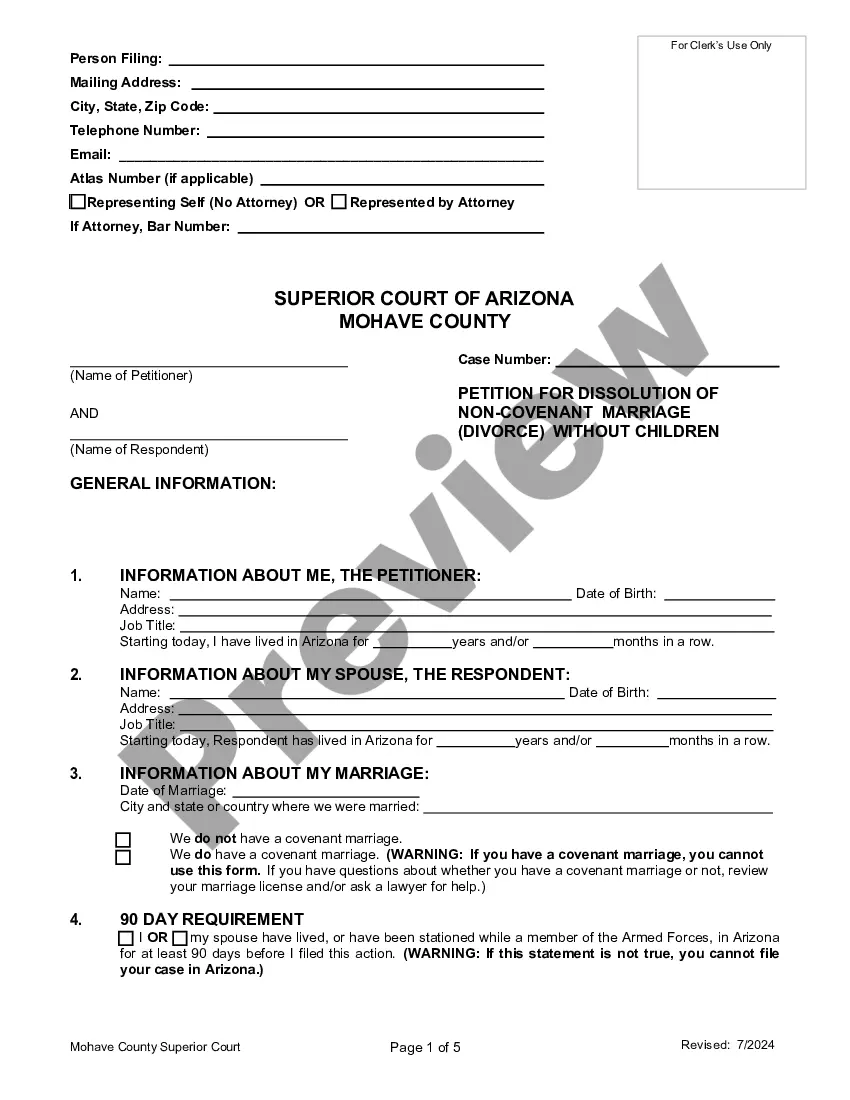
Contract for Specific Period of Time between Veterinarian and Assistant who is also a Licensed Veterinarian
What is this form?
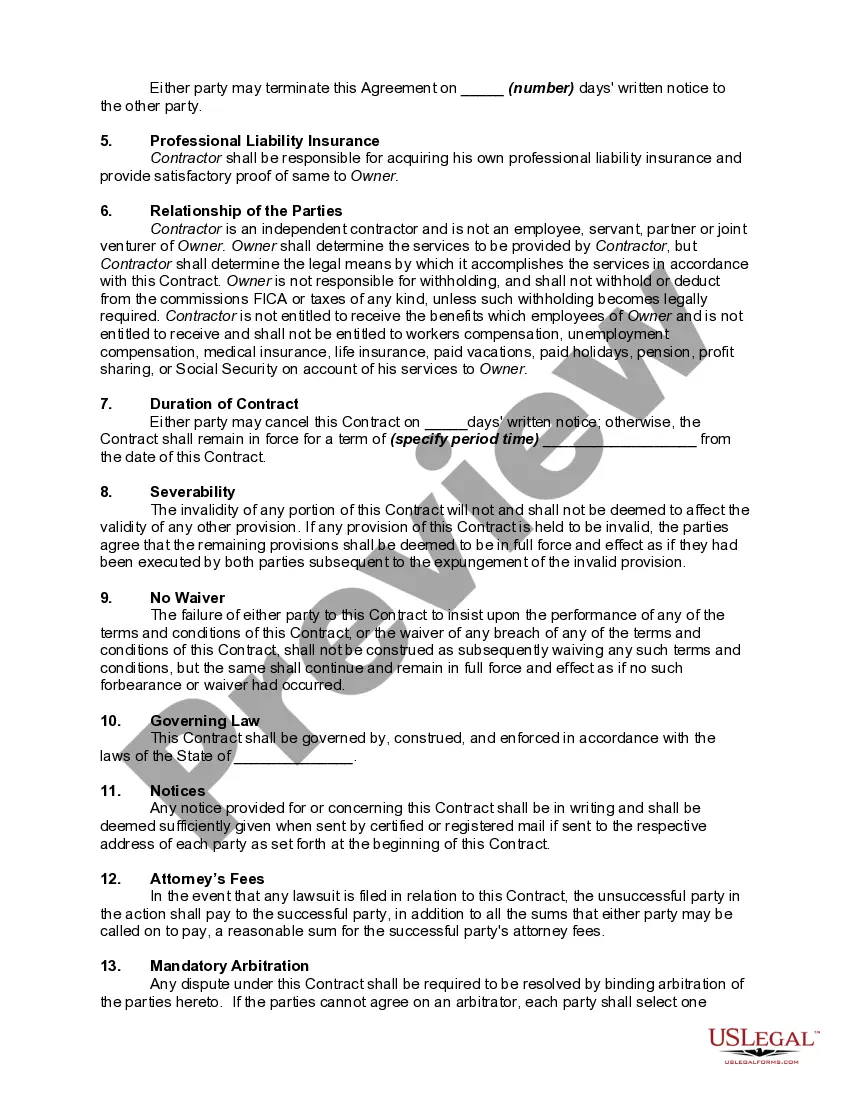
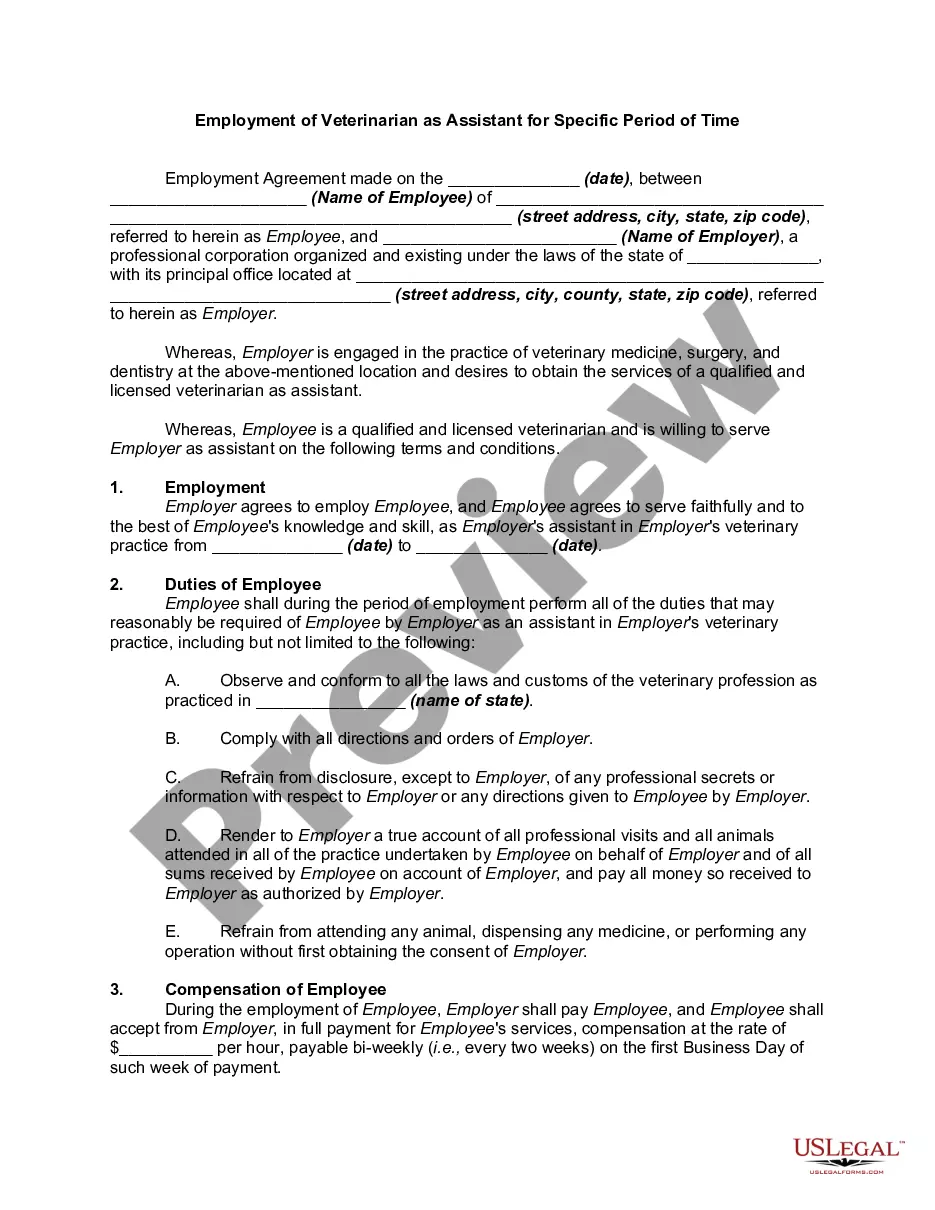
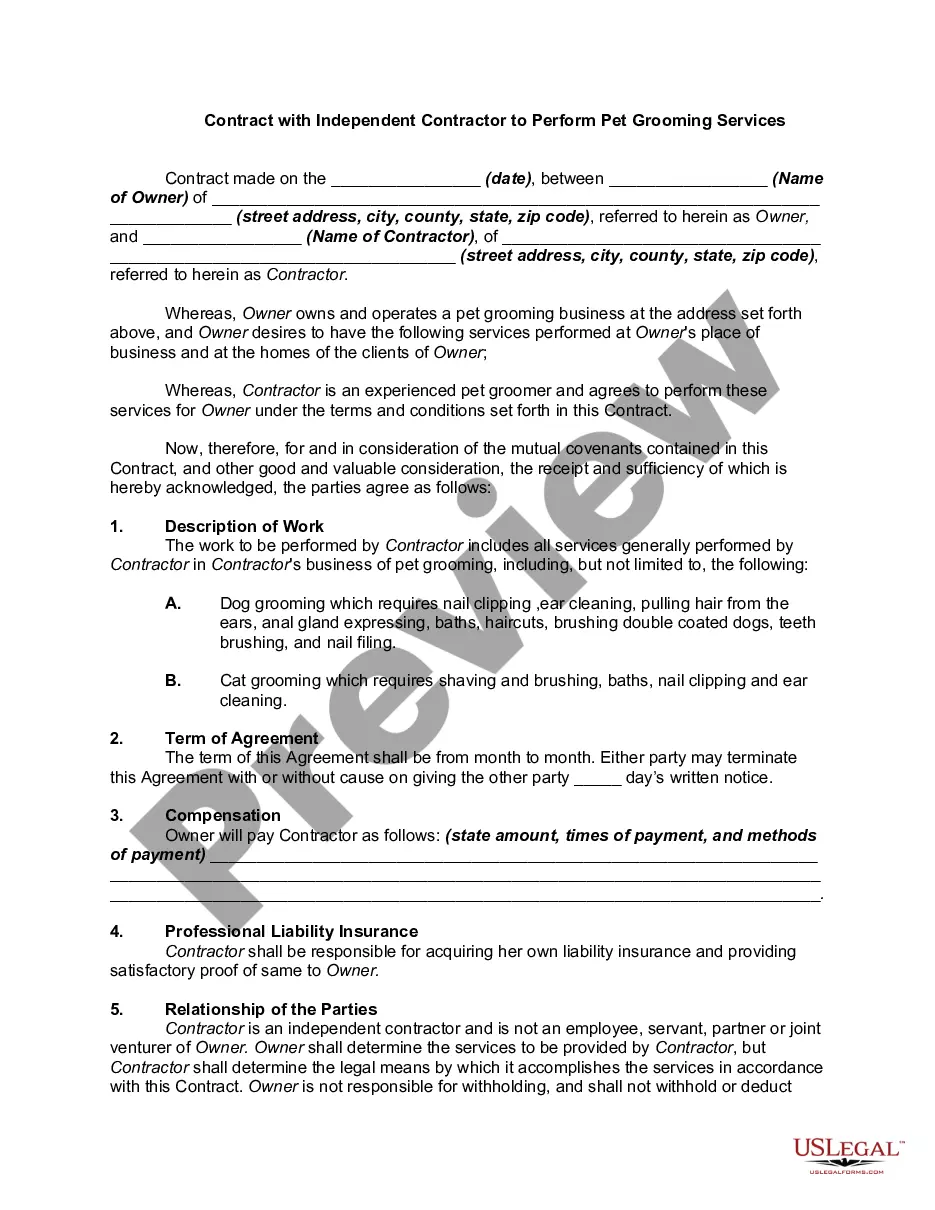
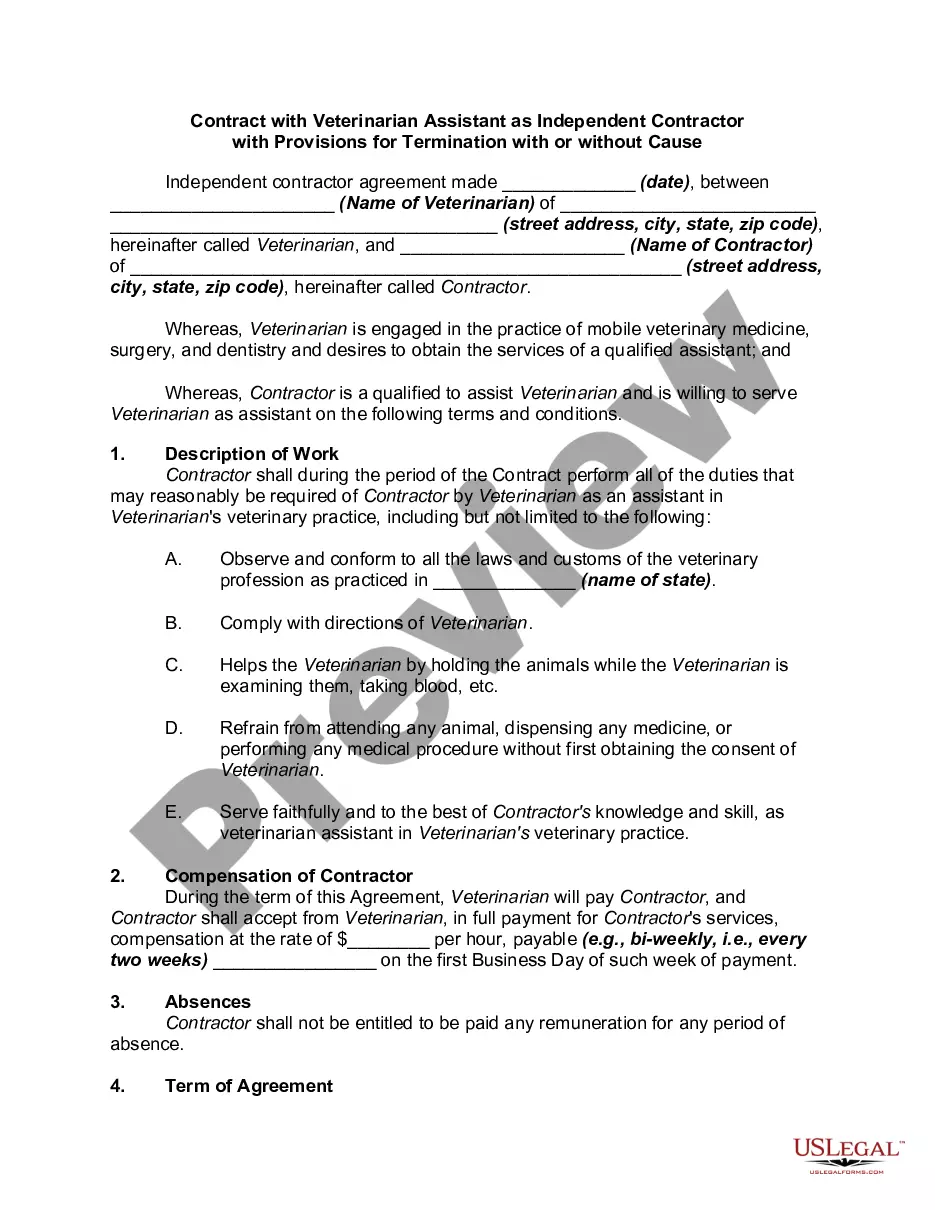
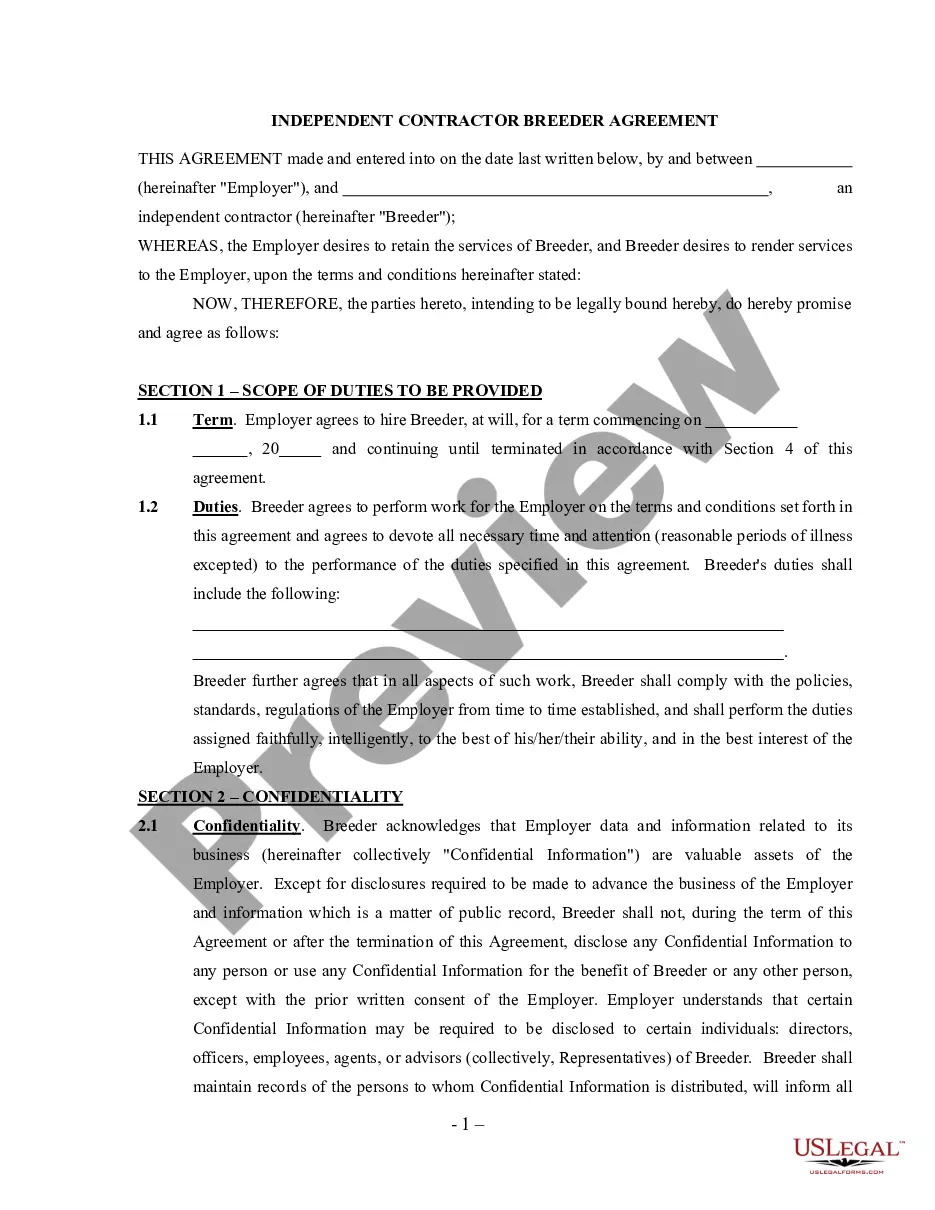
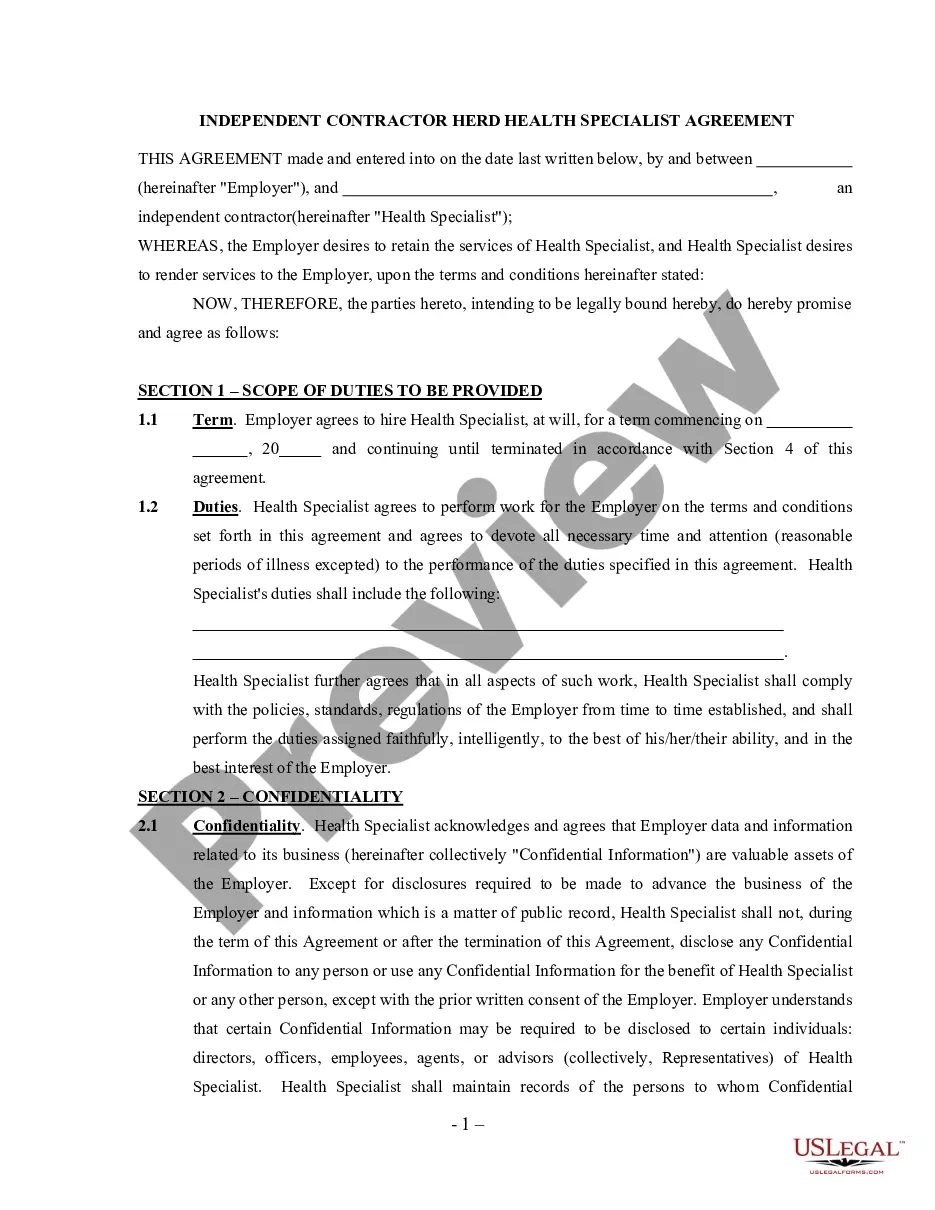
The Contract for Specific Period of Time between Veterinarian and Assistant who is also a Licensed Veterinarian is a legal document that establishes a working relationship between a veterinarian and a licensed veterinary assistant. This contract outlines the terms of engagement, including the nature of responsibilities, compensation, and the independent contractor status of the assistant. It is important for ensuring clarity in roles and expectations while differentiating the contractor from an employee relationship, which is governed by different legal statutes.
Form components explained
- Date of contract initiation
- Names and addresses of both parties (Owner and Contractor)
- Description of work and duties of the Contractor
- Compensation details including pay rate and payment schedule
- Conditions for termination and notice period
- Insurance requirements for the Contractor
- Legal provisions regarding the relationship between the parties
- Governing law and dispute resolution methods
When to use this document
This form should be utilized when a licensed veterinarian intends to engage another licensed veterinarian as an independent contractor in their practice. It is particularly important for clarifying employment conditions for temporary or project-based assistance, ensuring that both parties understand their rights and obligations under this contract. Scenarios may include coverage for a veterinarian on leave, assistance during busy seasons, or specific projects that require additional veterinary expertise.
Who should use this form
This form is suitable for:
- Veterinarians looking to hire a licensed assistant for a specified period
- Licensed veterinary professionals entering into a contract for independent work
- Practice owners who want to outline specific terms of employment for assistants
Completing this form step by step
- Enter the date of the contract and the names of both the Owner and Contractor.
- Fill in the specific duties and responsibilities that the Contractor will perform.
- Specify the compensation rate and payment schedule.
- Outline the terms for termination, including notice period requirements.
- Include details regarding professional liability insurance that the Contractor must obtain.
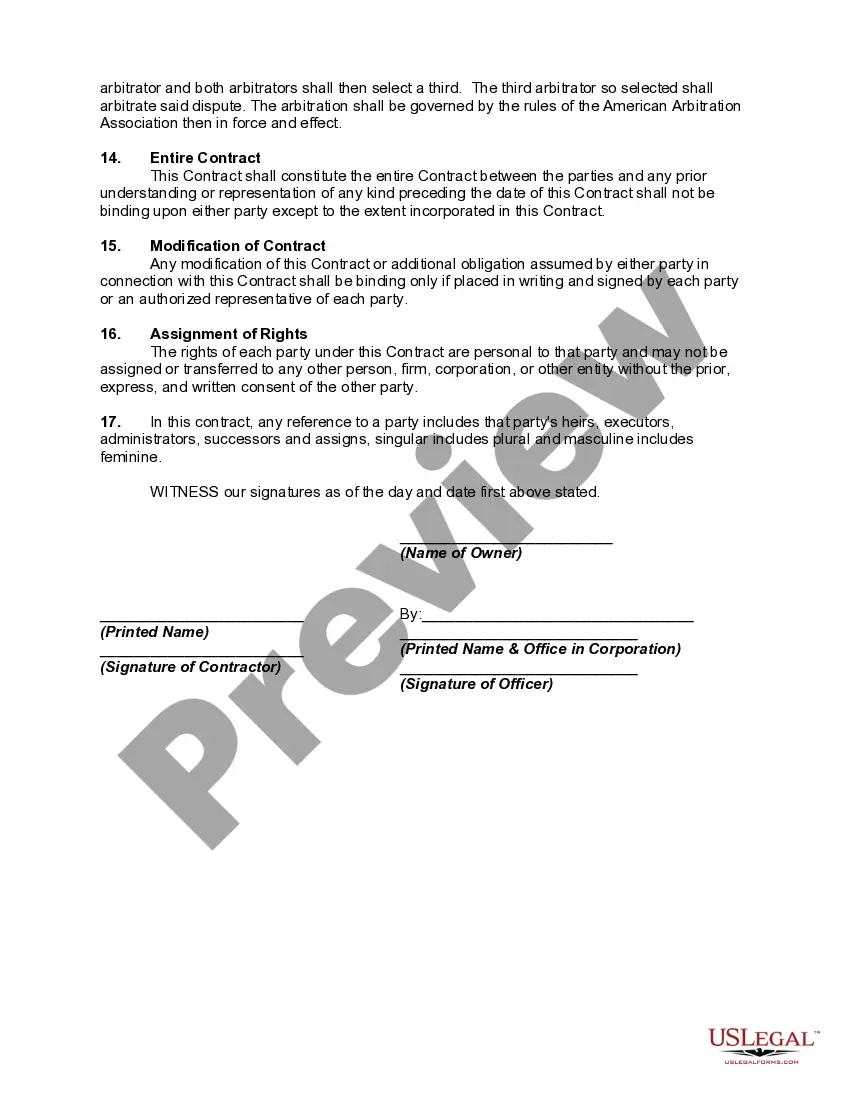
- Ensure both parties sign and date the contract to make it legally binding.
Notarization guidance
Notarization is generally not required for this form. However, certain states or situations might demand it. You can complete notarization online through US Legal Forms, powered by Notarize, using a verified video call available anytime.
Get your form ready online
Our built-in tools help you complete, sign, share, and store your documents in one place.
Make edits, fill in missing information, and update formatting in US Legal Forms—just like you would in MS Word.
Download a copy, print it, send it by email, or mail it via USPS—whatever works best for your next step.
Sign and collect signatures with our SignNow integration. Send to multiple recipients, set reminders, and more. Go Premium to unlock E-Sign.
If this form requires notarization, complete it online through a secure video call—no need to meet a notary in person or wait for an appointment.
We protect your documents and personal data by following strict security and privacy standards.

Make edits, fill in missing information, and update formatting in US Legal Forms—just like you would in MS Word.

Download a copy, print it, send it by email, or mail it via USPS—whatever works best for your next step.

Sign and collect signatures with our SignNow integration. Send to multiple recipients, set reminders, and more. Go Premium to unlock E-Sign.

If this form requires notarization, complete it online through a secure video call—no need to meet a notary in person or wait for an appointment.

We protect your documents and personal data by following strict security and privacy standards.
Common mistakes to avoid
- Failing to clearly define the scope of work and responsibilities.
- Not specifying compensation details, leading to payment disputes.
- Omitting the termination clause, causing confusion over contract duration.
- Underestimating the importance of insurance requirements.
Benefits of completing this form online
- Instant access to professionally drafted templates for ease of use.
- Editable content allows customization to meet specific needs.
- Quick download and storage for future reference and compliance.
Legal use & context
- This contract establishes a clear understanding of the independent contractor relationship, protecting both parties.
- It minimizes legal disputes regarding employment status and responsibility for taxes and insurance.
- Compliance with state-specific regulations can enhance enforceability in case of a dispute.
What to keep in mind
- Establish a clear contractual relationship between veterinarian and assistant.
- Define roles and responsibilities to avoid misunderstandings.
- Ensure compliance with state-specific regulations regarding veterinary practices.
- Facilitate clear compensation arrangements to promote transparency.
Looking for another form?
Form popularity
FAQ
The veterinarian shall not prescribe a drug for a duration longer than one year from the date the veterinarian examined the animal(s) and prescribed the drug.
Gross revenue: The average full-time equivalent (FTE) veterinarian produces roughly $550,000 to $600,000 a year. In a three-FTE practice, I'd expect my doctor-driven gross revenue to be around $1.8 million. Net income: 8 to 10 percent of gross revenue. Top-performing hospitals can see net income as high as 24 percent.
A VMD is the exact same degree as Doctor of Veterinary Medicine; however, the letters VMD stand for the Latin terminology, Veterinariae Medicinae Doctoris. A VMD degree is currently only conferred on veterinarians who have attended the University Of Pennsylvania School Of Veterinary Medicine in Philadelphia, PA.
We also know from industry standards that the average owner of a veterinary practice earns approximately $282,000 per year. Therefore, it is clear that the average owner makes approximately $200,000 more than the average associate.
A veterinarian shall respect the law and also recognize a responsibility to seek changes to laws and regulations which are contrary to the best interests of the patient and public health. A veterinarian should obey all laws of the jurisdictions in which they reside and practice veterinary medicine.
As the owner of a practice you might be able to earn at a rate of 21% on production, which can mean a salary of $120,000 to $160,000 a year. You can factor in hospital profits. For example, if your practice produces $1.2 million and your profit margin is 15%, you could be taking home another $180,000 in income.
An article in Veterinary Practice News found that the cost of starting a stationary small animal clinic (including most standard equipment) was approximately $1,000,000. A mobile clinic's startup cost came in at a much more affordable $250,000.
Duties of Veterinarians Examine animals to diagnose their health problems. Treat and dress wounds. Perform surgery on animals. Test for and vaccinate against diseases. Operate medical equipment, such as x-ray machines.
Vets make decent money if they practice in areas with enough of a client pool and clients with the resources to take their pets to the vet 2026 so the vet would have enough to invest , which could generate enough to eventually become a millionaire .