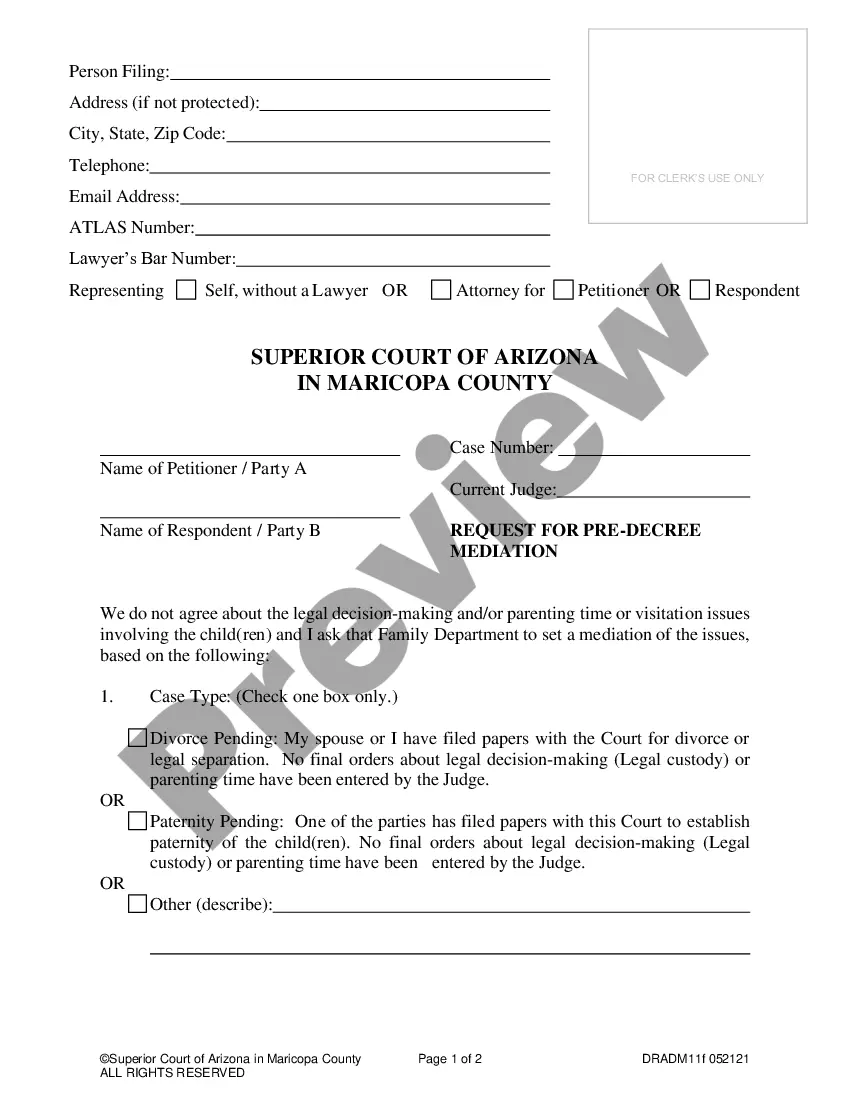
Sample Letter for Date of Trial
What this document covers
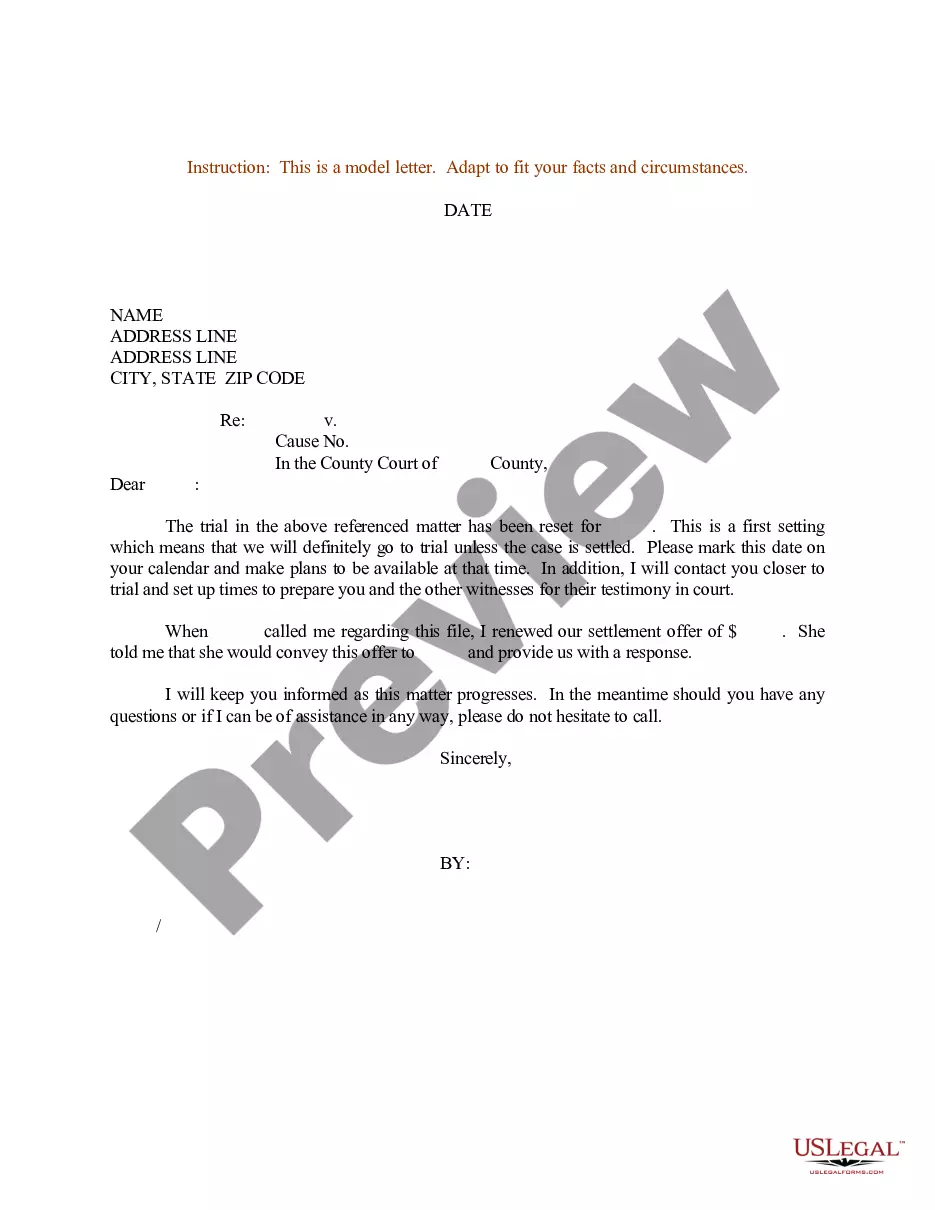
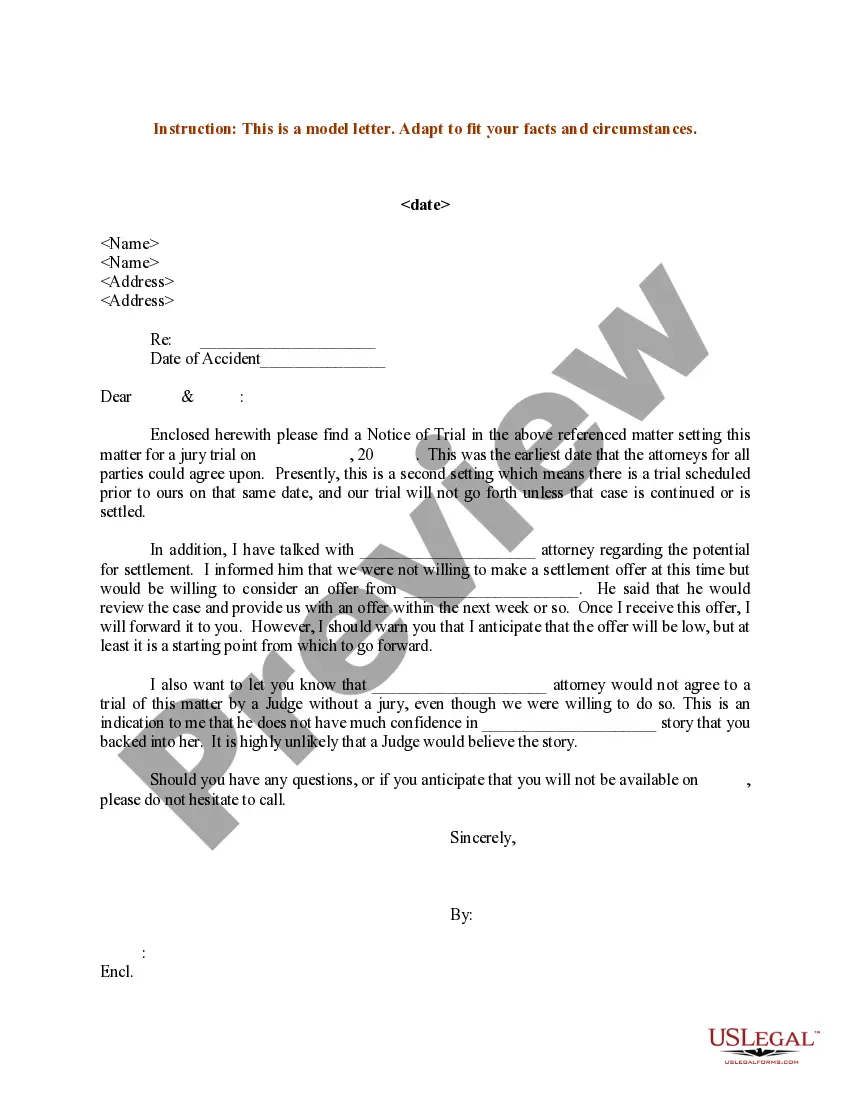
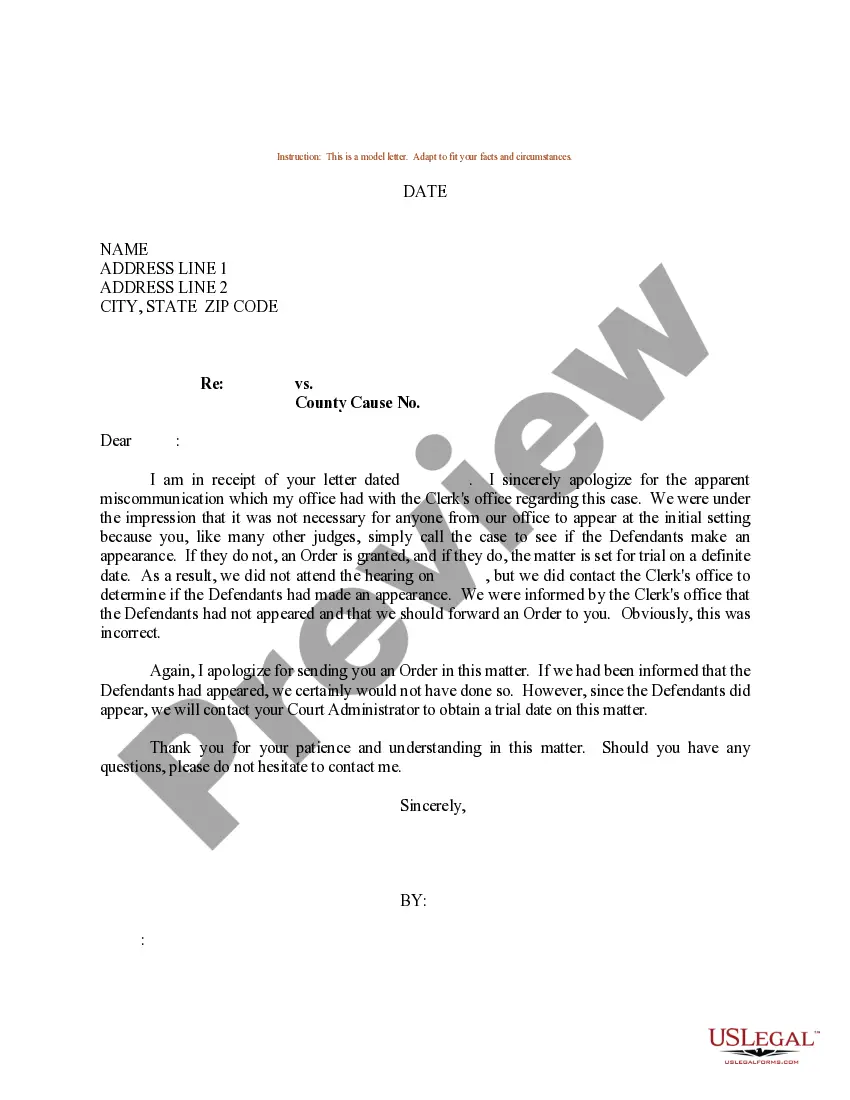
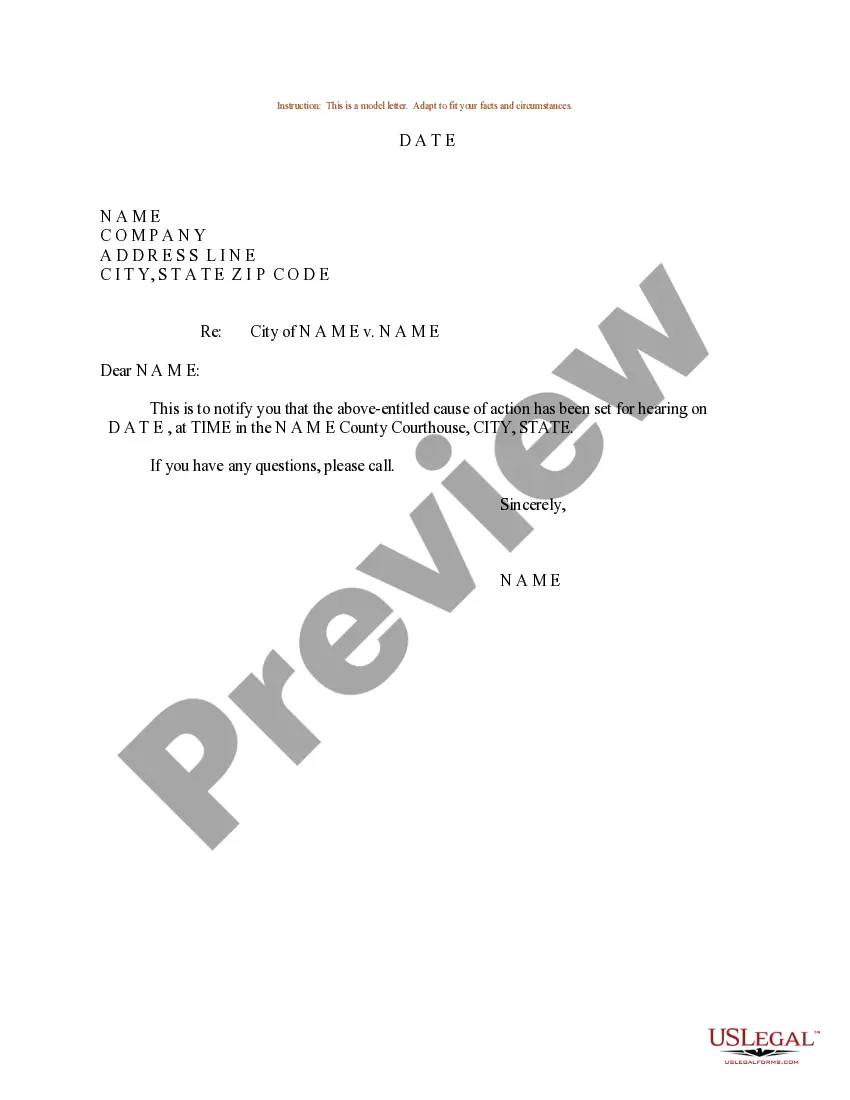
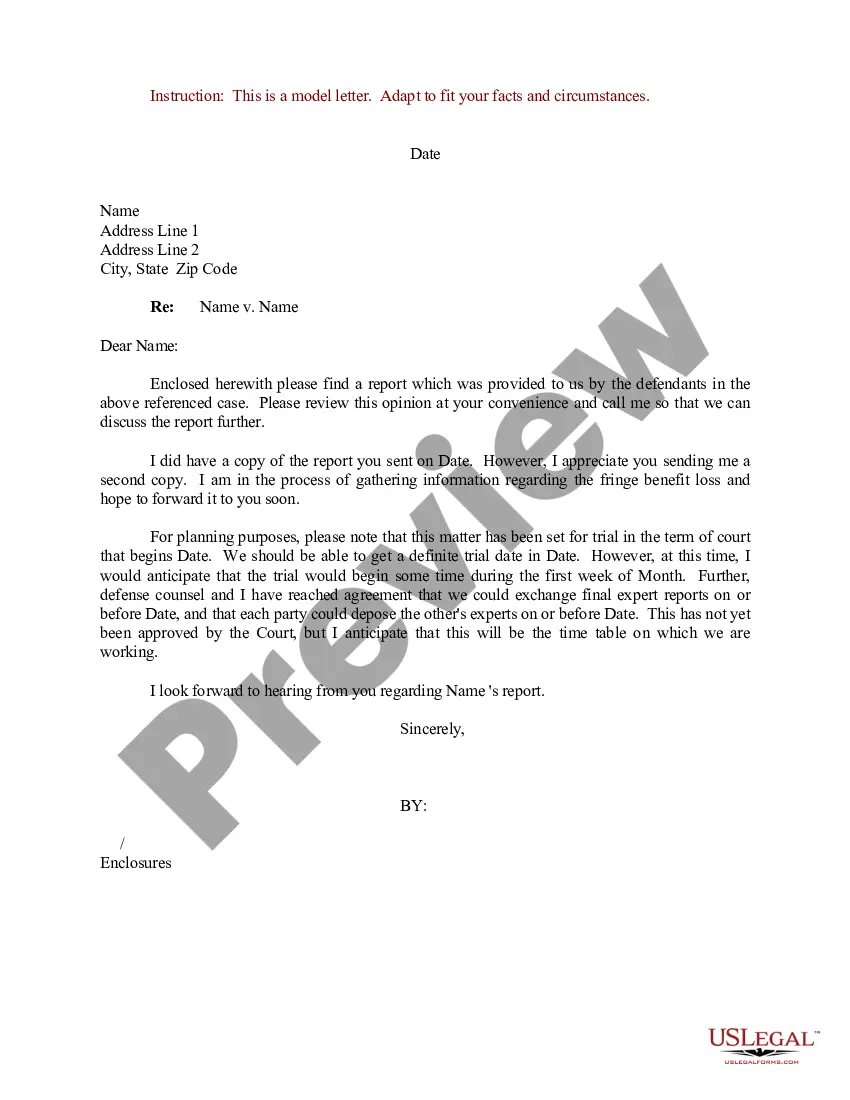
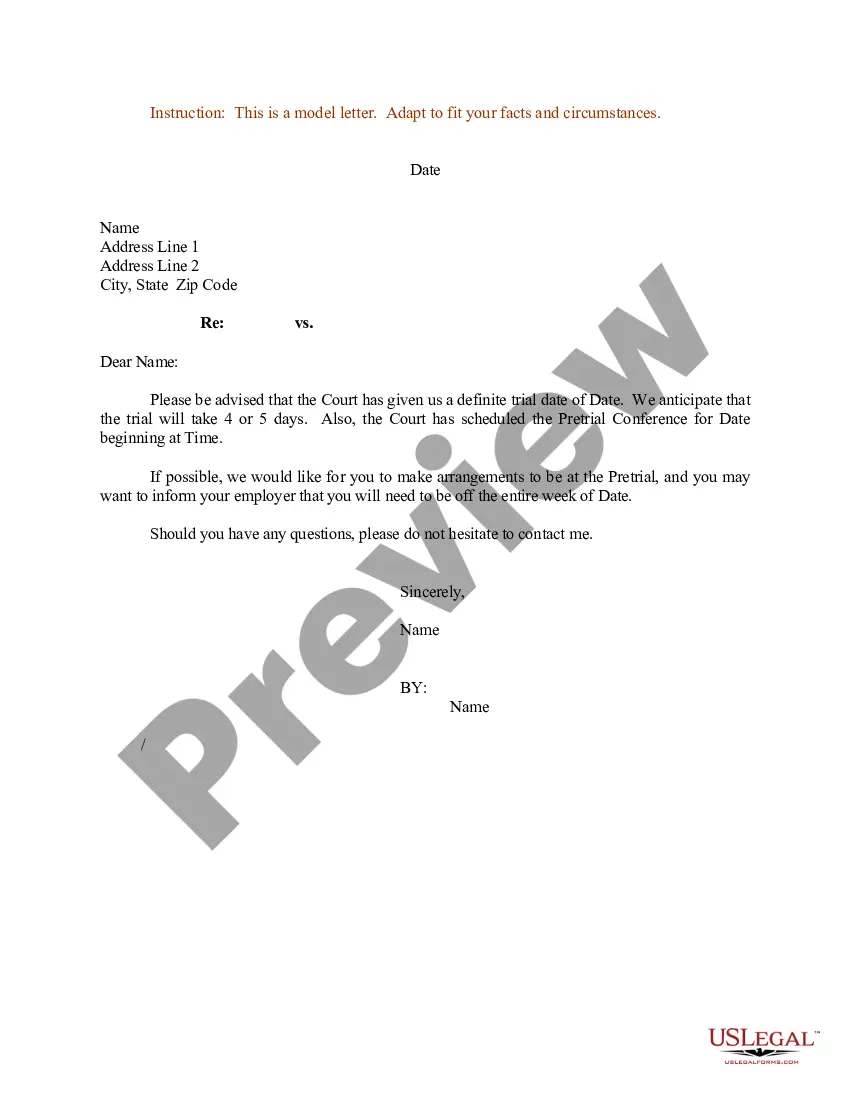
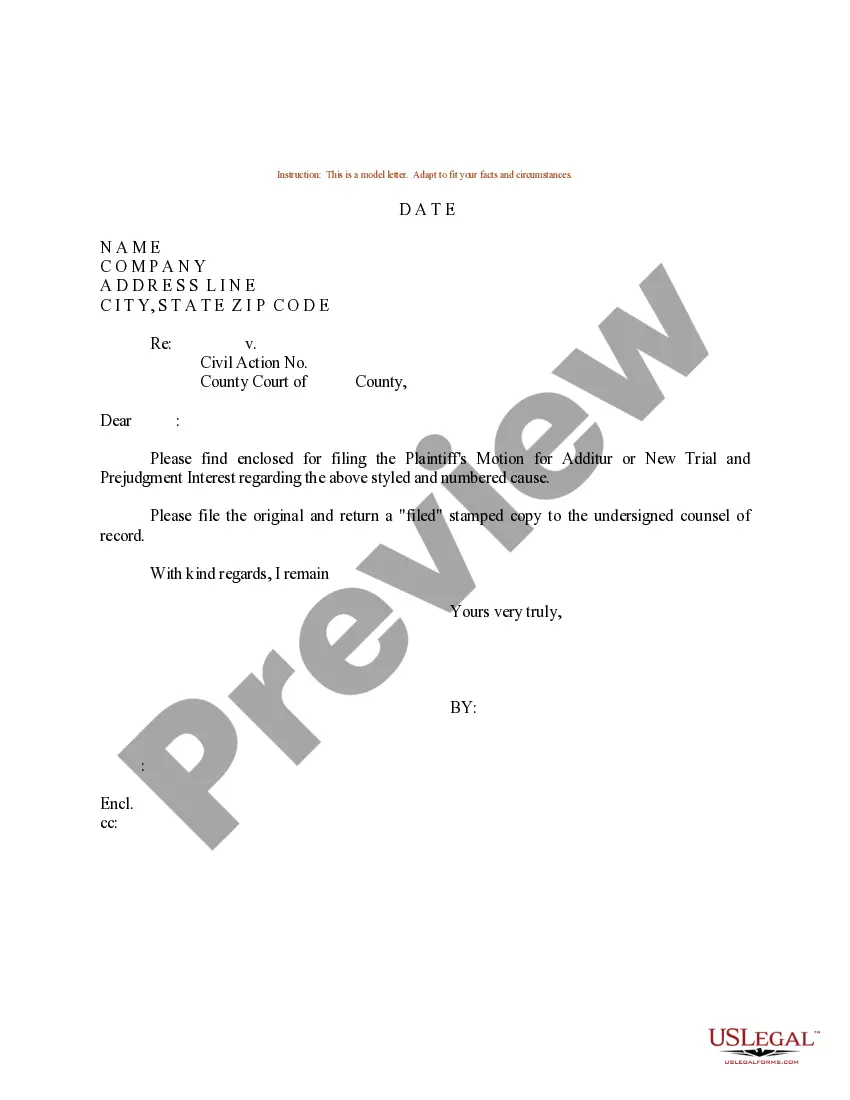
The Sample Letter for Date of Trial is a template designed to assist individuals in notifying relevant parties about the scheduled trial date. This letter serves as a formal communication regarding trial arrangements and helps clarify expectations. Unlike other general correspondence, this form is specifically tailored for use in legal contexts, ensuring that your communication meets necessary standards.
Key components of this form
- Date of trial: Clearly indicate the scheduled date for the trial.
- Recipient information: Provide the name and address of the intended recipient.
- Sender details: Include your contact information to ensure a response can be obtained.
- Personalized message: Adapt the body of the letter to fit your specific circumstances and requirements.

When to use this document
This form is useful in various scenarios, including when you need to ensure that all parties are informed of the trial date for any legal proceedings. It helps prevent miscommunication and ensures that everyone involved is prepared for the trial. For example, if you are a plaintiff or defendant in a civil case, sending this letter can confirm the trial schedule and clarify any procedural details.
Who needs this form
- Individuals involved in legal cases seeking to inform others about trial dates.
- Attorneys who are preparing to communicate important trial information to clients or opposing counsel.
- Anyone needing to document the trial schedule formally and ensure compliance with court requirements.
Steps to complete this form
- Identify the date of the trial and clearly write it at the top of the letter.
- Enter the recipient's full name followed by their address information.
- Provide your own name and address details, ensuring correct formatting.
- Customize the body text of the letter to reflect your specific situation or legal needs.
- Review the completed letter for accuracy and ensure all necessary information is included.
Does this document require notarization?
This form does not typically require notarization to be legally valid. However, some jurisdictions or document types may still require it. US Legal Forms provides secure online notarization powered by Notarize, available 24/7 for added convenience.
Get your form ready online
Our built-in tools help you complete, sign, share, and store your documents in one place.
Make edits, fill in missing information, and update formatting in US Legal Forms—just like you would in MS Word.
Download a copy, print it, send it by email, or mail it via USPS—whatever works best for your next step.
Sign and collect signatures with our SignNow integration. Send to multiple recipients, set reminders, and more. Go Premium to unlock E-Sign.
If this form requires notarization, complete it online through a secure video call—no need to meet a notary in person or wait for an appointment.
We protect your documents and personal data by following strict security and privacy standards.

Make edits, fill in missing information, and update formatting in US Legal Forms—just like you would in MS Word.

Download a copy, print it, send it by email, or mail it via USPS—whatever works best for your next step.

Sign and collect signatures with our SignNow integration. Send to multiple recipients, set reminders, and more. Go Premium to unlock E-Sign.

If this form requires notarization, complete it online through a secure video call—no need to meet a notary in person or wait for an appointment.

We protect your documents and personal data by following strict security and privacy standards.
Common mistakes to avoid
- Failing to include the correct date of the trial.
- Not personalizing the message to fit specific circumstances.
- Overlooking recipient details or incorrectly formatting addresses.
- Neglecting to proofread for grammatical errors or typos before sending.
Advantages of online completion
- Convenience: Easily download and edit the form from home.
- Editability: Customize the template to suit your needs without needing legal assistance.
- Reliability: Use a professionally drafted template by licensed attorneys to enhance your communication.
Main things to remember
- The Sample Letter for Date of Trial is essential for clear communication in legal contexts.
- Customizing the letter to fit your situation enhances its effectiveness.
- Ensure accurate information is provided to prevent miscommunication regarding trial dates.
Looking for another form?
Form popularity
FAQ
Open with a salutation.Write "Dear Judge (last name)," to start your letter. Note that you use "the Honorable" when referring to the judge, but use "Judge" when addressing him or her in person. The title still applies even if the judge has retired.
A valid emergency can serve as an excuse for missing a court date. Some examples of legitimate emergencies include: An emergency room visit for a sudden, debilitating medical condition. A sick child.
Recap the main points of why you feel you should be released from probation early in your final paragraph. Mention that you have suffered mental anguish and feel very remorseful for the crime you committed. Thank the judge for reading your letter. Ask him to take it into consideration when he makes his decision.
Dear Name, I am writing this letter to you to ask for a sincere apology for failing to attend my court date Mention Date. I accept that I have committed a mistake which is not acceptable in any way. However, I request you to understand that since Mention Reason, I couldn't show up to court on that day.
Use "Re:" (an abbreviation for "regarding" or "with reference to"), followed by a brief identifying phrase. Begin with a salutation. Write "Dear Judge (last name)," to start the message of your letter. Note that you should use "the Honorable" when referring to the judge, but use "Judge" addressing him or her directly.
You cannot write the judge a personal letter or email, and you cannot speak to the judge unless you are in a hearing. Why can't I communicate directly with the judge on my case? Judges are not allowed to communicate with individual parties on their own. This is what the law calls an ex-parte communication.
However, when a person is awaiting trial, writing a letter to the judge will not help. At best, the letter will go unread by the judge, and will be of no help. In a worst-case scenario, the letter will end up being used by the prosecution as evidence against that person.
Address the letter to 'Your Honour' Make sure it is typed or handwritten neatly, as well as signed and dated. Explain why you are writing the letter. Accept responsibility for your actions. Give a bit of background information about yourself, and mention a clean driving record, or lack of previous criminal convictions.
You can't write to the judge. You can hire your own attorney to make your case to the court.