Answer or Response to Petition or Complaint for Dissolution of Marriage or Divorce
About this form
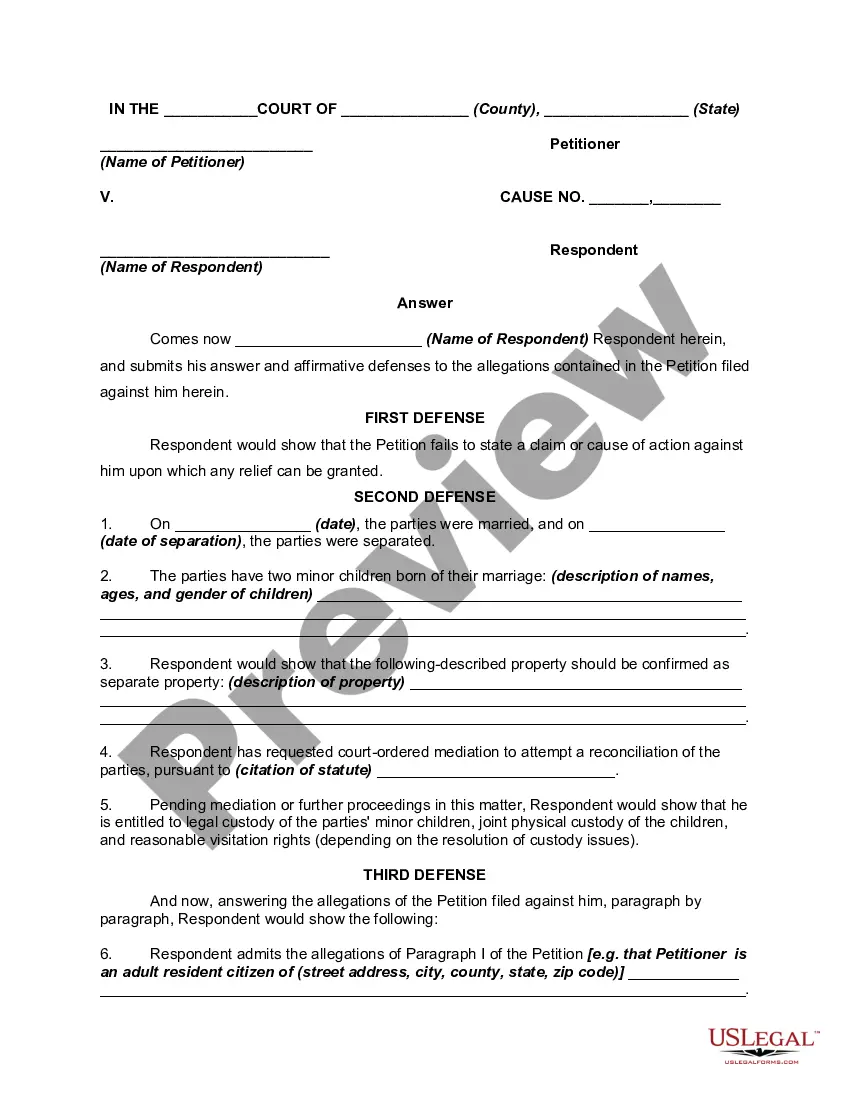
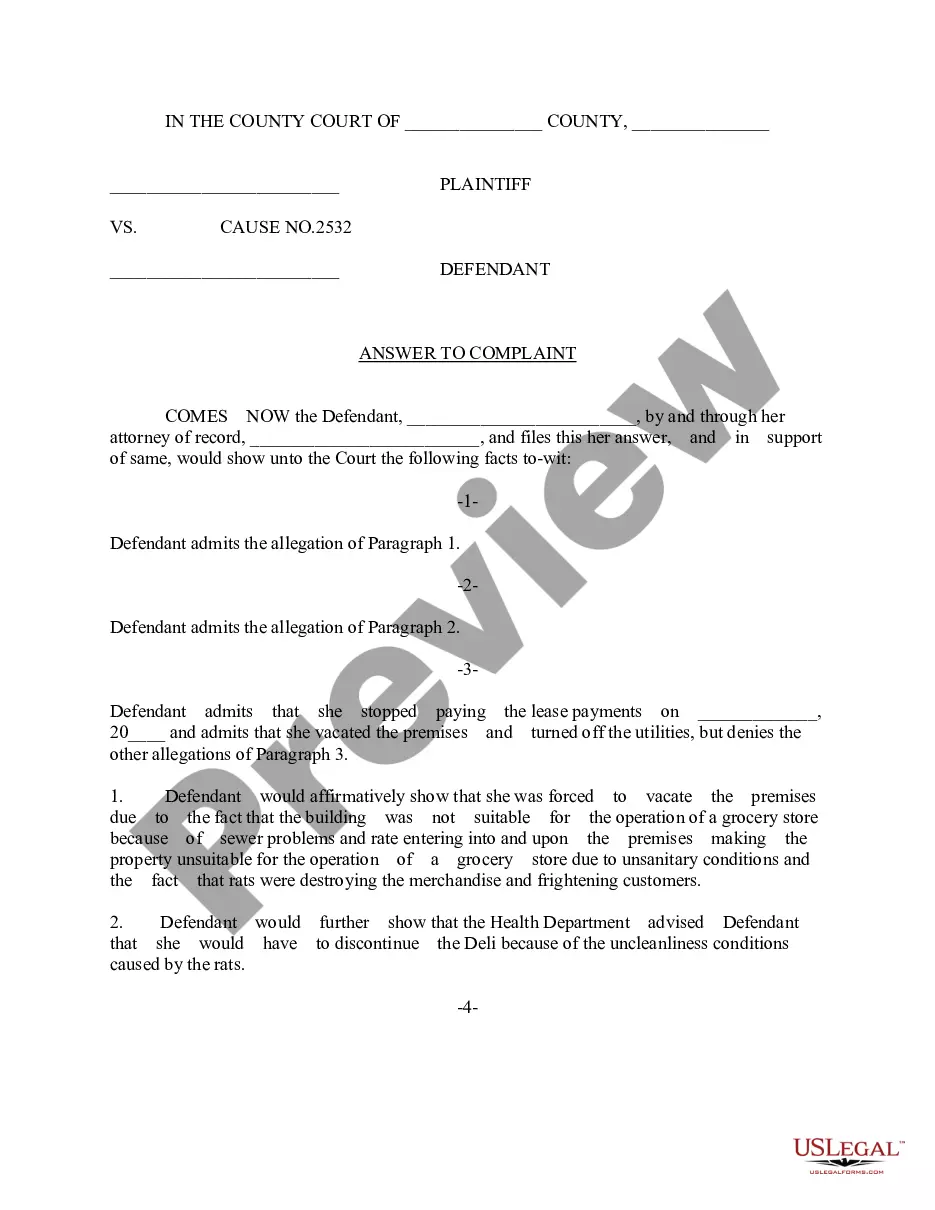
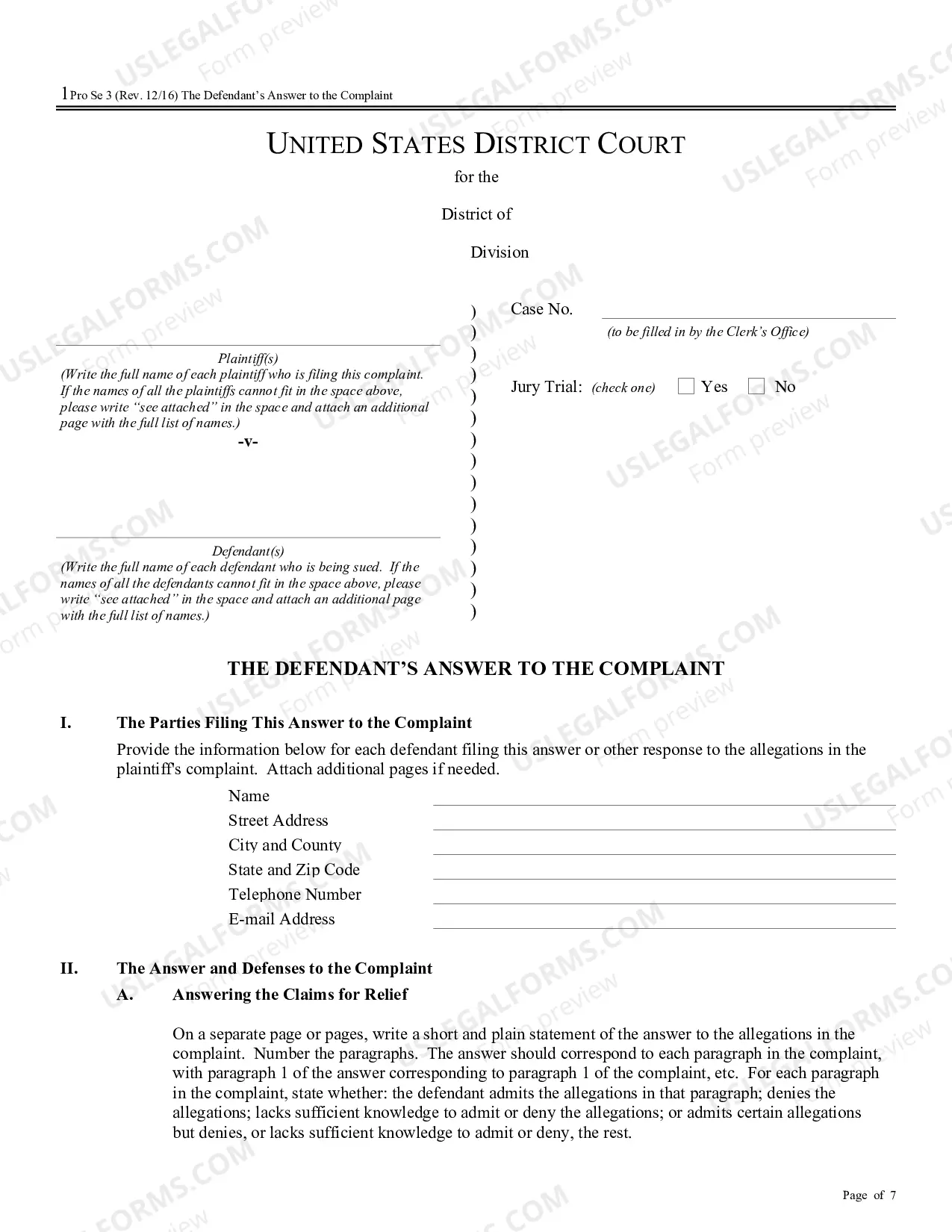
The Answer or Response to Petition or Complaint for Dissolution of Marriage or Divorce is a legal form that allows the respondent to present their side of the case in a divorce proceeding. This form differs from other forms by focusing on responding to allegations made by the petitioner, allowing the respondent to admit or deny facts, and outline defences. It is essential for protecting the respondent's interests during divorce proceedings and preventing default judgments.
What’s included in this form
- Identification of parties: Names and addresses of both petitioner and respondent.
- Defences: Statement of facts denying allegations from the petition and presenting the respondentâs perspective.
- Custody and support requests: Provisions for child custody, visitation, and spousal support.
- Affirmation of property claims: Descriptions of property claimed as separate during the divorce.
- Certification of service: A declaration that a copy of the answer has been sent to the petitioner.

When this form is needed
This form is used in response to a divorce petition filed by a spouse. It is necessary when the respondent wishes to contest the allegations or assert their own claims regarding custody, support, or property arrangements. Filing this form is critical to prevent a default judgment, which could result from failing to respond within the designated timeframe.
Intended users of this form
- Individuals served with divorce papers who wish to respond formally.
- Respondents aiming to dispute specific claims made by the petitioner in the divorce petition.
- Parents seeking legal custody arrangements in a divorce involving children.
- Those needing to clarify property rights in a divorce settlement.
Instructions for completing this form
- Identify the parties by entering the names and addresses of both the petitioner and the respondent.
- State the date of marriage and the date of separation clearly.
- Detail any minor children involved by providing their names, ages, and genders.
- Outline your defences to each allegation listed in the petition.
- Sign and date the form in the presence of a witness or notary if required by your state.
Notarization guidance
This form does not typically require notarization unless specified by local law. However, having a notary witness your signature can add an additional layer of authenticity to your response.
Get your form ready online
Our built-in tools help you complete, sign, share, and store your documents in one place.
Make edits, fill in missing information, and update formatting in US Legal Forms—just like you would in MS Word.
Download a copy, print it, send it by email, or mail it via USPS—whatever works best for your next step.
Sign and collect signatures with our SignNow integration. Send to multiple recipients, set reminders, and more. Go Premium to unlock E-Sign.
If this form requires notarization, complete it online through a secure video call—no need to meet a notary in person or wait for an appointment.
We protect your documents and personal data by following strict security and privacy standards.

Make edits, fill in missing information, and update formatting in US Legal Forms—just like you would in MS Word.

Download a copy, print it, send it by email, or mail it via USPS—whatever works best for your next step.

Sign and collect signatures with our SignNow integration. Send to multiple recipients, set reminders, and more. Go Premium to unlock E-Sign.

If this form requires notarization, complete it online through a secure video call—no need to meet a notary in person or wait for an appointment.

We protect your documents and personal data by following strict security and privacy standards.
Common mistakes
- Failing to file the answer within the required timeframe, risking a default judgment.
- Not clearly denying or admitting allegations, leading to confusion.
- Omitting relevant details regarding children or property claims.
Benefits of completing this form online
- Accessibility: Downloadable forms can be filled out at your convenience.
- Editability: Easily change and customize your responses before finalizing the document.
- Reliability: Forms are drafted by licensed attorneys, ensuring compliance with legal standards.
Looking for another form?



Form popularity
FAQ
You answer the divorce petition to let the court know your position in the divorce case.If you don't answer the divorce petition and you don't go to a hearing, it's still possible that the judge can grant the divorce. If that happens, the judge also can make other decisions in the divorce.
Step 1: Determine your response deadline. Step 2: Fill out these forms. Step 3: Take your original forms to the Clerk's Office and file. Step 4: Have the other party served. Step 5: You and your spouse/registered domestic partner must go to a. Step 6: Follow your Case Schedule. Step 7: Complete your final documents.
Typically, they will have at least 20 days to respond. States have different laws and requirements regarding what can and/or should be filed. In some states you may just need to file a piece of paper acknowledging receipt of the petition.
Answer only. An "Answer" tells the judge and your spouse what parts of the complaint you agree with and disagree with. Answer with a Counterclaim.
Answer only. An "Answer" tells the judge and your spouse what parts of the complaint you agree with and disagree with. Answer with a Counterclaim.
You will want to file a response whether or not you agree with what is written in the divorce papers. Your deadline to file the response is 20 days after you were served (30 days if you were served outside of Arizona). If you agree with everything in the divorce papers, you may file a consent decree .
Answer only. An "Answer" tells the judge and your spouse what parts of the complaint you agree with and disagree with. Answer with a Counterclaim.
Pull the header information from the plaintiff's petition. Title your Answer Answer to Plaintiff's Petition/Complaint. Center this title and make it bold. Introduce yourself. Admit, deny, or claim that you lack sufficient knowledge to admit or deny each of the plaintiff's numbered allegations.