Employment Agreement of Part Time Employee
About this form
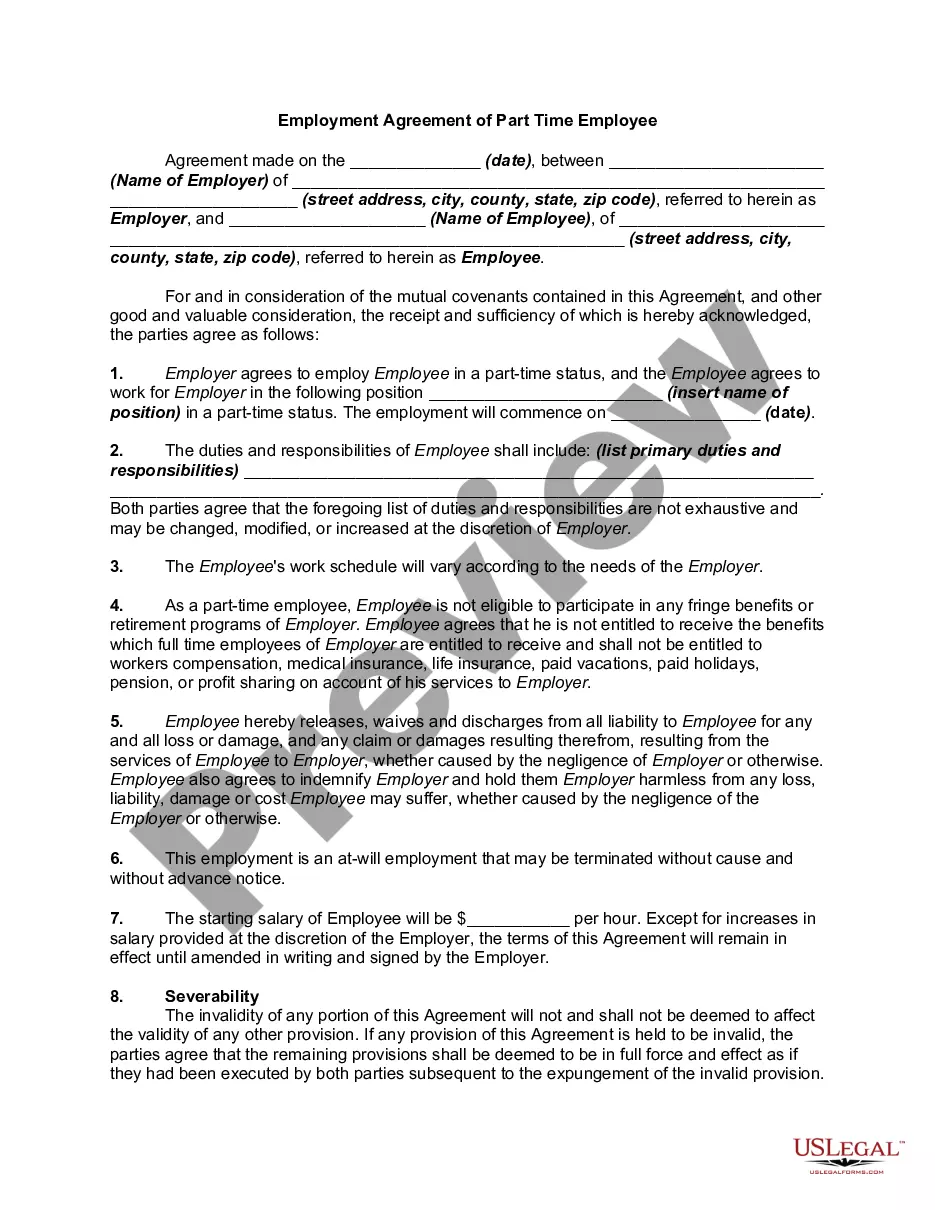
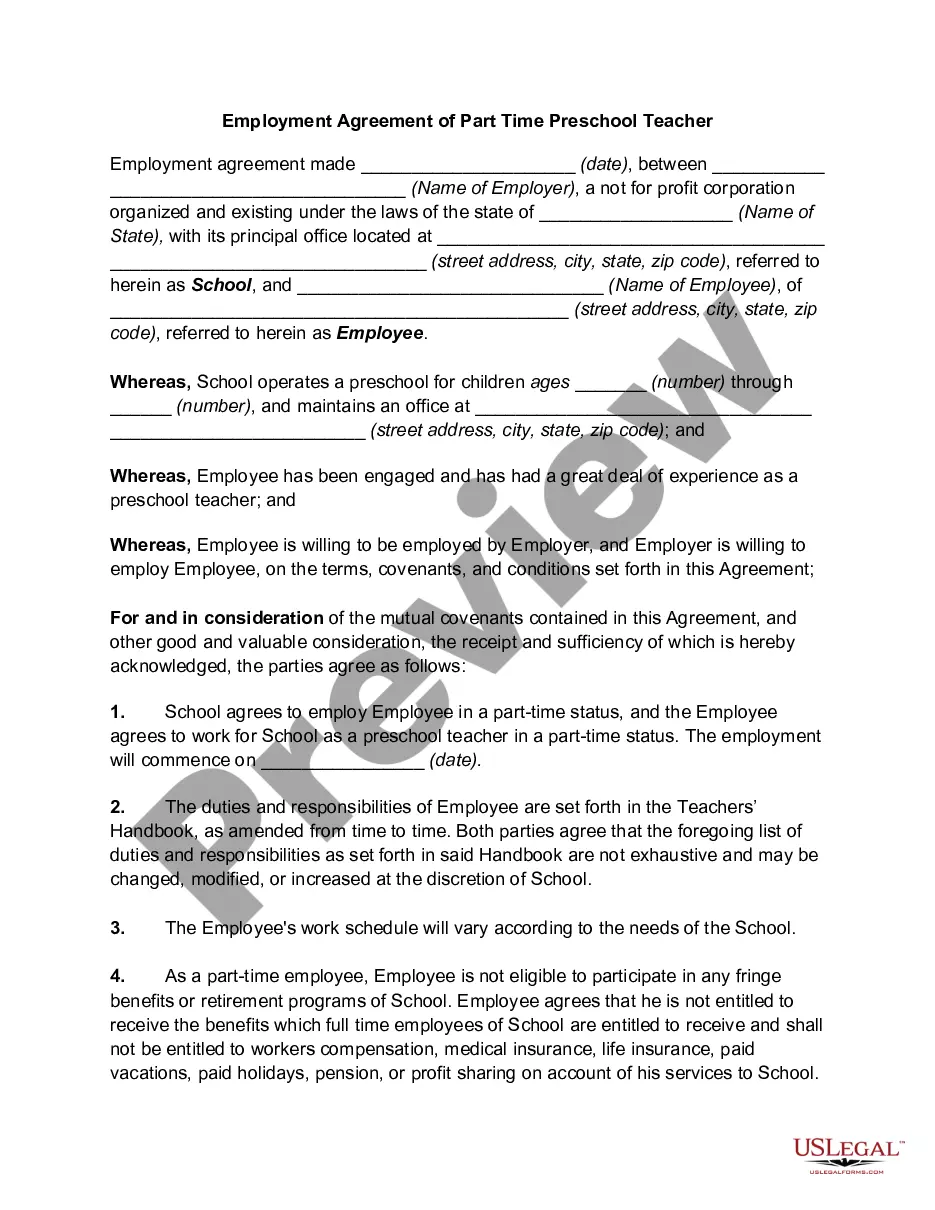
The Employment Agreement of Part Time Employee is a legal document that outlines the terms of employment between an employer and a part-time employee. It specifically details the employee's role, responsibilities, and compensation while clarifying the limitations associated with part-time status. This agreement is distinct from full-time employment contracts, particularly in how benefits and obligations are structured.
What’s included in this form
- Date of agreement and party information including names and addresses
- Position and duties of the employee
- Variable work schedule details
- Compensation and salary information
- At-will employment clause
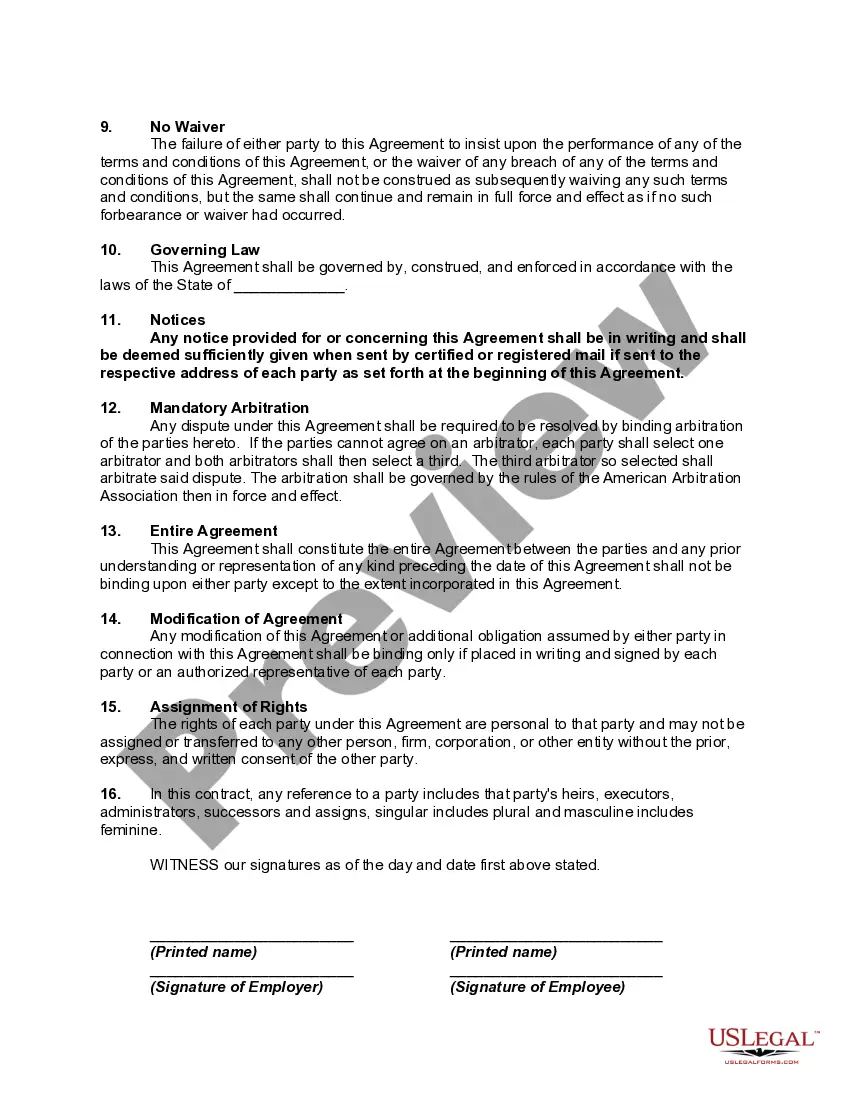
- Legal provisions including severability and arbitration
Situations where this form applies
This form is essential for employers who wish to formalize the hiring of part-time employees. It should be used when establishing clear guidelines about work hours, job responsibilities, and compensation. Additionally, it serves to protect both the employer's and employee's rights by providing a mutual understanding of employment terms.
Who needs this form
- Employers looking to hire part-time employees
- Part-time employees who require clear terms of their job role
- Companies needing to outline specific duties and schedules for part-time positions
How to prepare this document
- Identify and fill in the names and addresses of both the employer and employee.
- Specify the position and primary duties of the part-time employee.
- Enter the starting date of employment and the hourly wage.
- Review and discuss any varying work schedules that may apply.
- Ensure both parties sign and date the agreement to make it legally binding.
Does this form need to be notarized?
Notarization is not commonly needed for this form. However, certain documents or local rules may make it necessary. Our notarization service, powered by Notarize, allows you to finalize it securely online anytime, day or night.
Get your form ready online
Our built-in tools help you complete, sign, share, and store your documents in one place.
Make edits, fill in missing information, and update formatting in US Legal Forms—just like you would in MS Word.
Download a copy, print it, send it by email, or mail it via USPS—whatever works best for your next step.
Sign and collect signatures with our SignNow integration. Send to multiple recipients, set reminders, and more. Go Premium to unlock E-Sign.
If this form requires notarization, complete it online through a secure video call—no need to meet a notary in person or wait for an appointment.
We protect your documents and personal data by following strict security and privacy standards.

Make edits, fill in missing information, and update formatting in US Legal Forms—just like you would in MS Word.

Download a copy, print it, send it by email, or mail it via USPS—whatever works best for your next step.

Sign and collect signatures with our SignNow integration. Send to multiple recipients, set reminders, and more. Go Premium to unlock E-Sign.

If this form requires notarization, complete it online through a secure video call—no need to meet a notary in person or wait for an appointment.

We protect your documents and personal data by following strict security and privacy standards.
Mistakes to watch out for
- Failing to clearly define the job duties can lead to misunderstandings.
- Not specifying the start date may cause confusion about employment status.
- Overlooking the necessity of both parties' signatures to validate the agreement.
Why use this form online
- Conveniently download and customize your employment agreement.
- Editable templates allow quick adjustments as needed.
- Access reliable forms crafted by licensed attorneys.
Summary of main points
- The Employment Agreement of Part Time Employee establishes a formal relationship between the employer and employee.
- It outlines employment specifics such as duties, compensation, and employment conditions.
- This agreement protects both parties by defining their rights and responsibilities clearly.
Looking for another form?





Form popularity
FAQ
It is a part-time employment contract that sets the employee’s role, duties, and compensation while clarifying the limits of part-time status. It’s used when an employer hires a part-time worker to formalize hours, schedule, and pay, and to establish a mutual understanding with provisions like at-will status and basic legal clauses (severability, arbitration).
Yes. The Employment Agreement of Part Time Employee is a contract that outlines the part-time employee’s position, duties, and work schedule, plus compensation and the at-will relationship. It also provides basic legal provisions such as severability and arbitration, helping both employer and employee have a clear, mutually understood set of terms before work begins.
To write a part-time contract, fill in the date and party information, specify the employee’s position and duties, outline the variable work schedule, and state the compensation. Include the at-will clause and the listed legal provisions (severability, arbitration). Have both parties review and sign to formalize the terms before employment starts.
Part-time workers are governed by terms that specify hours, duties, and compensation. This form helps by documenting the job’s schedule and responsibilities, and by including an at-will status with basic legal provisions such as severability and arbitration, ensuring the terms are clear and enforceable for the part-time role.
Part-time contracts can limit access to some benefits and create less predictable hours. This Employment Agreement of Part Time Employee helps by clearly detailing the hours, duties, and compensation and by including at-will status and basic legal provisions to reduce ambiguity. For benefits or overtime specifics, refer to employer policy and applicable law.
This form is tailored to part-time employment, emphasizing a variable work schedule and explicit limits of part-time status, along with an at-will clause and basics like severability and arbitration. A full-time agreement typically centers on different benefits eligibility and may not emphasize variable scheduling to the same extent.