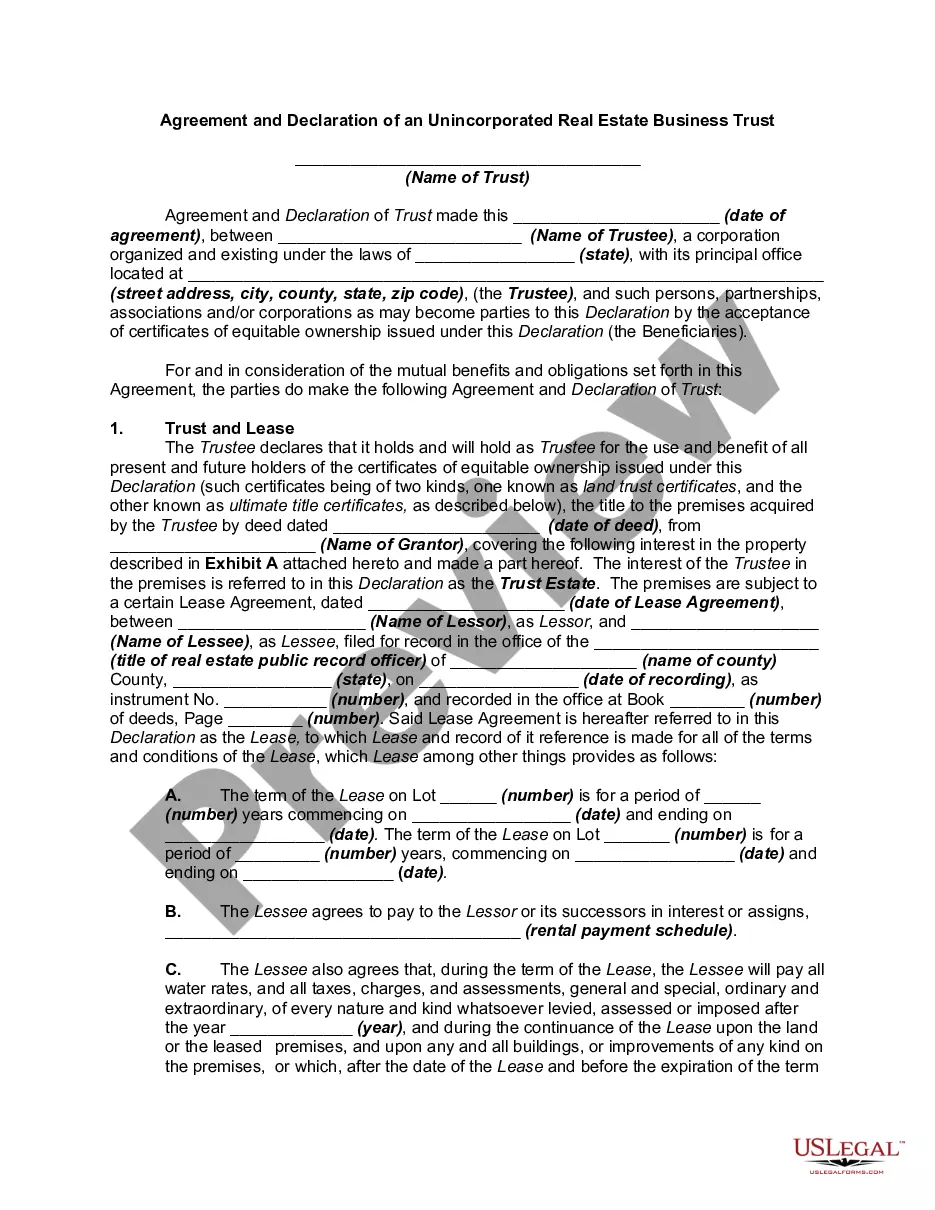
Agreement and Declaration of Real Estate Business Trust - Massachusetts Nominee Realty Trust - Trustees to Act only as Directed by Beneficiaries
Understanding this form
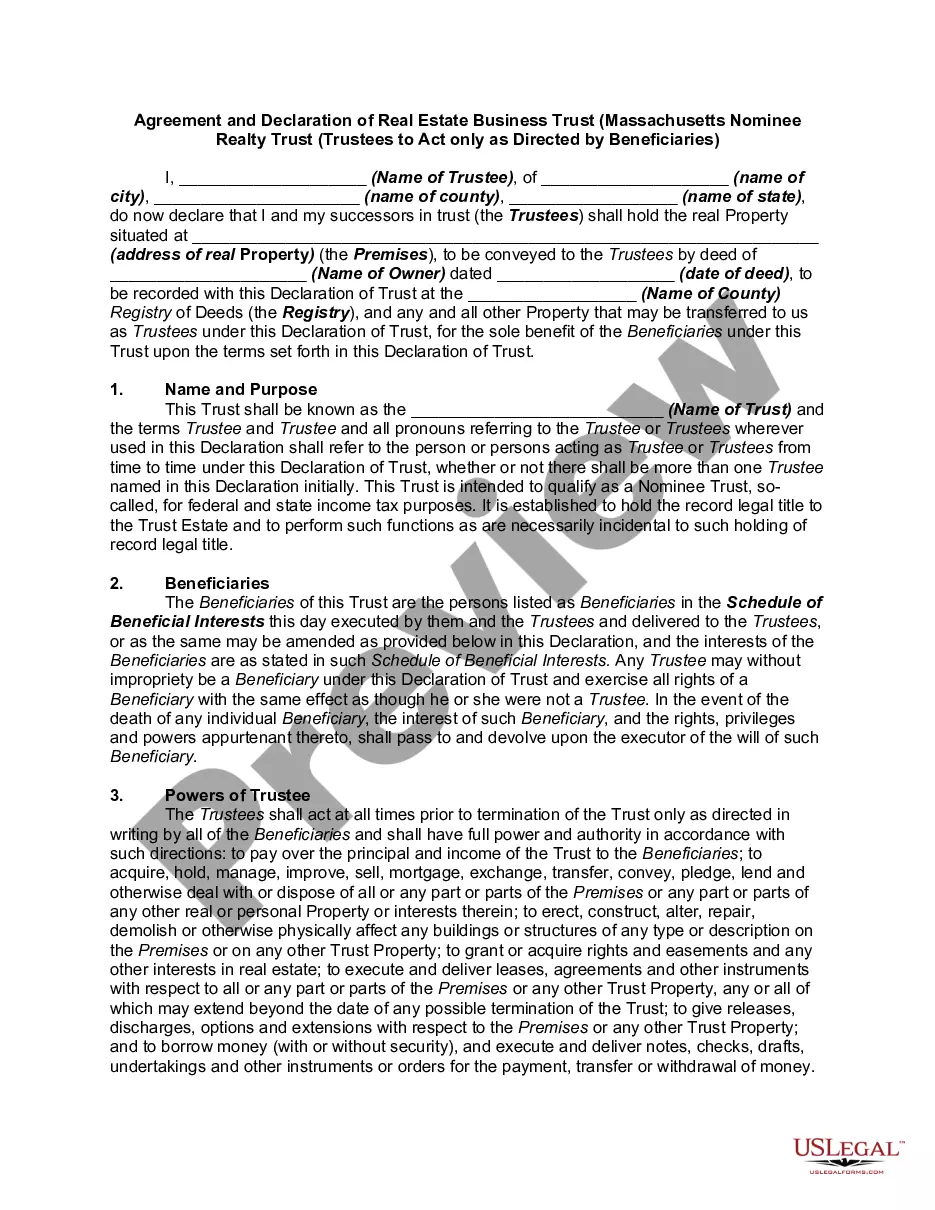
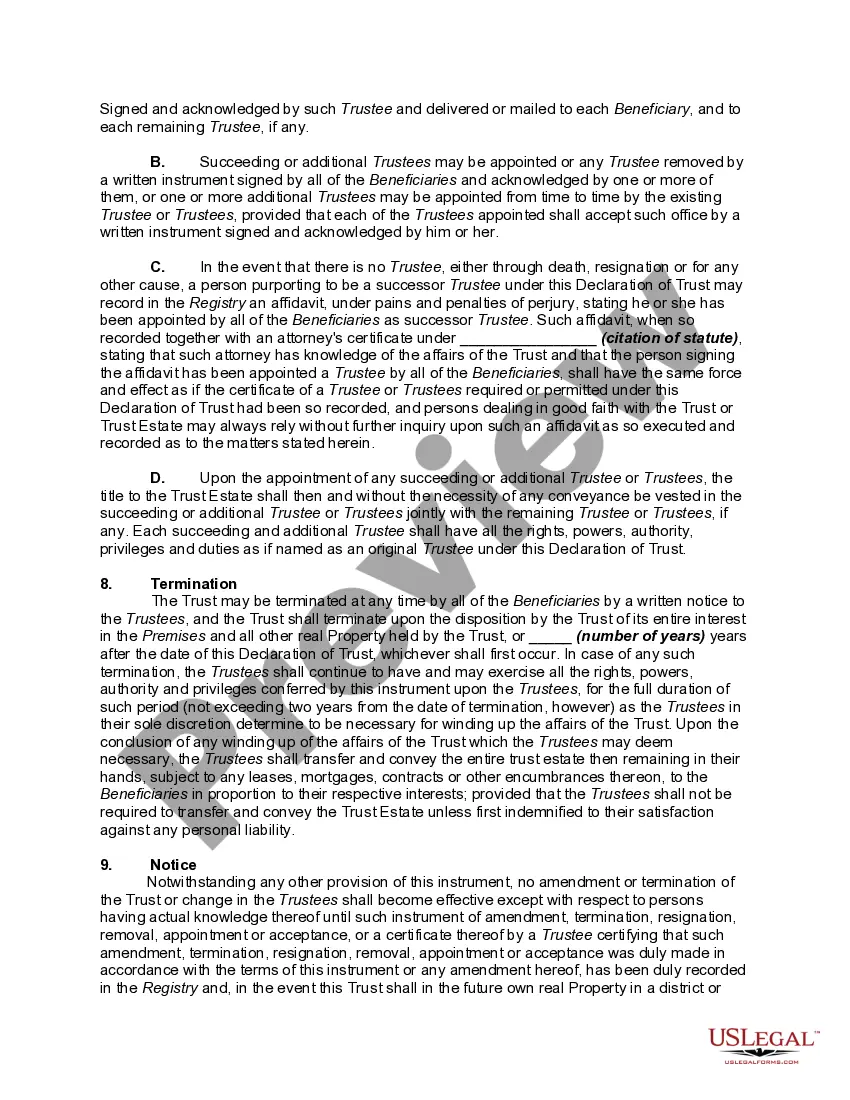
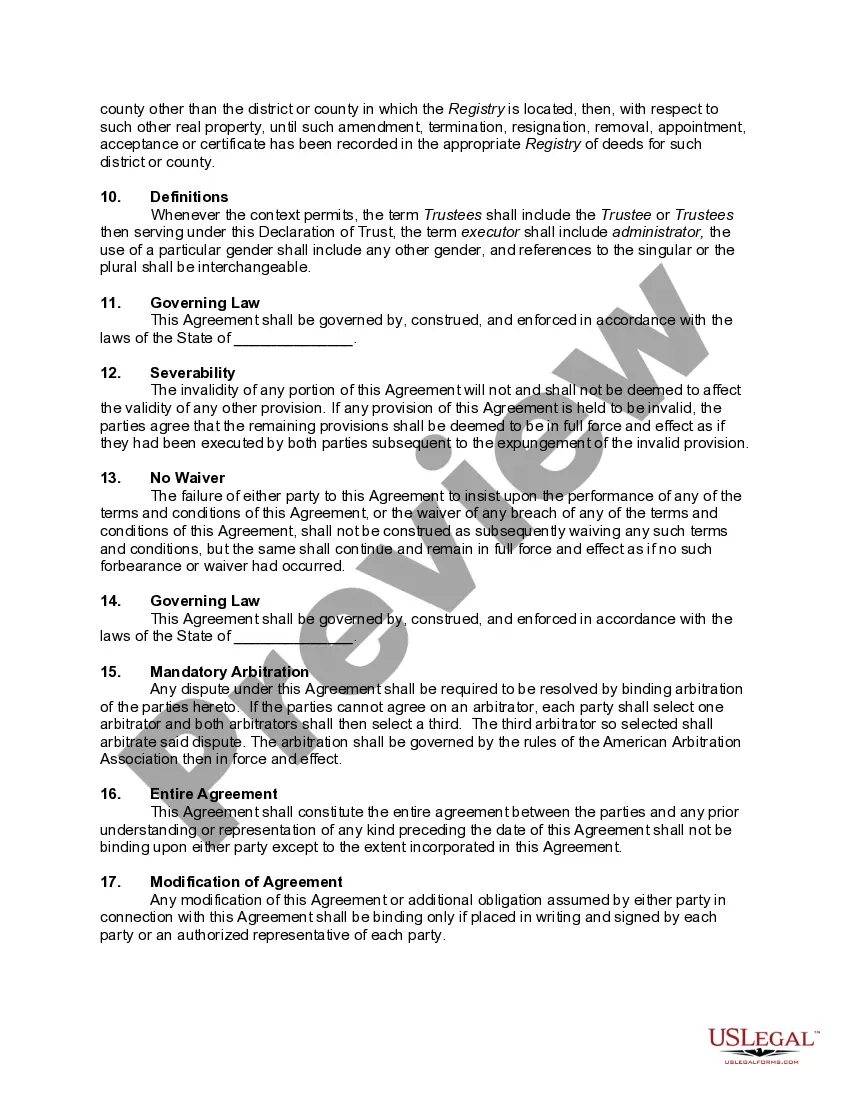
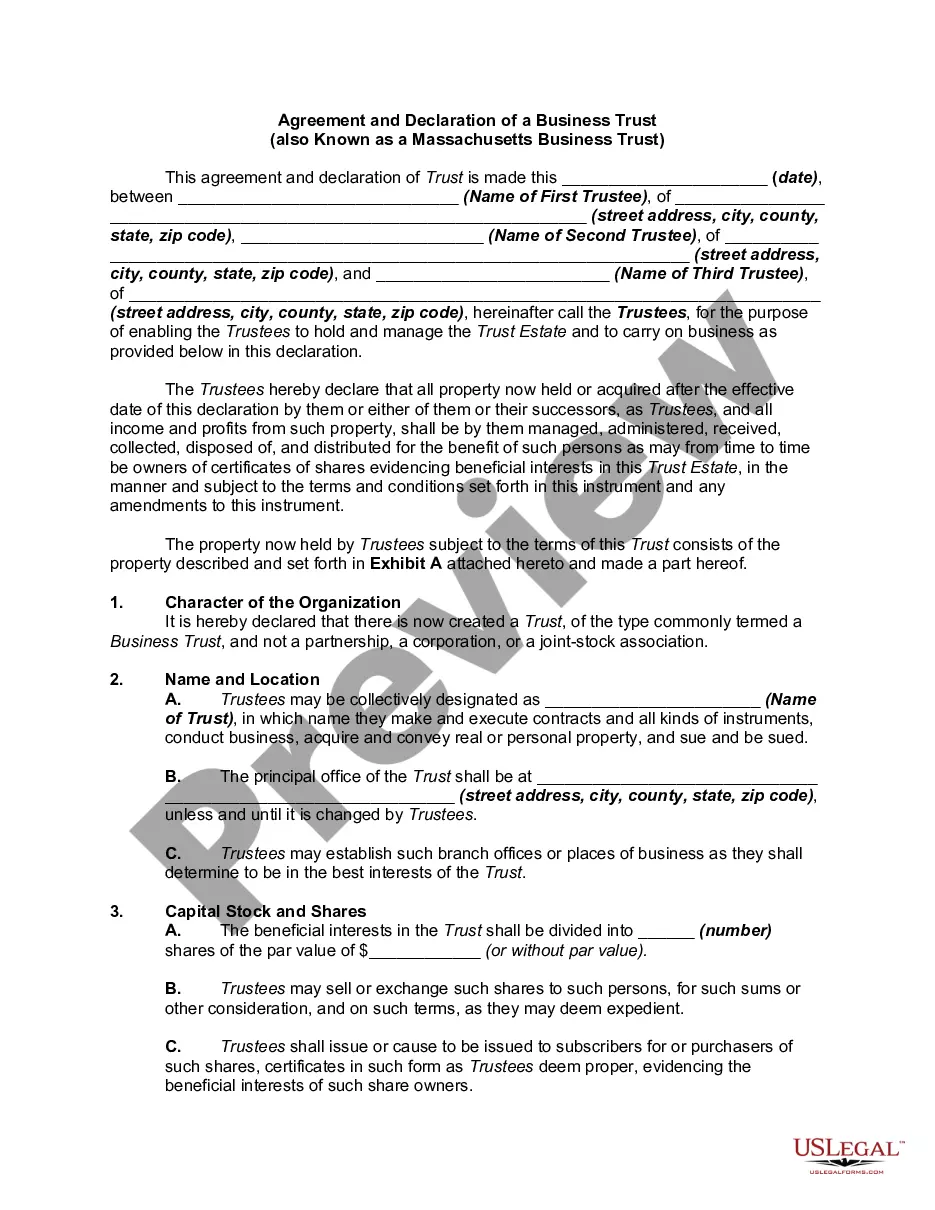
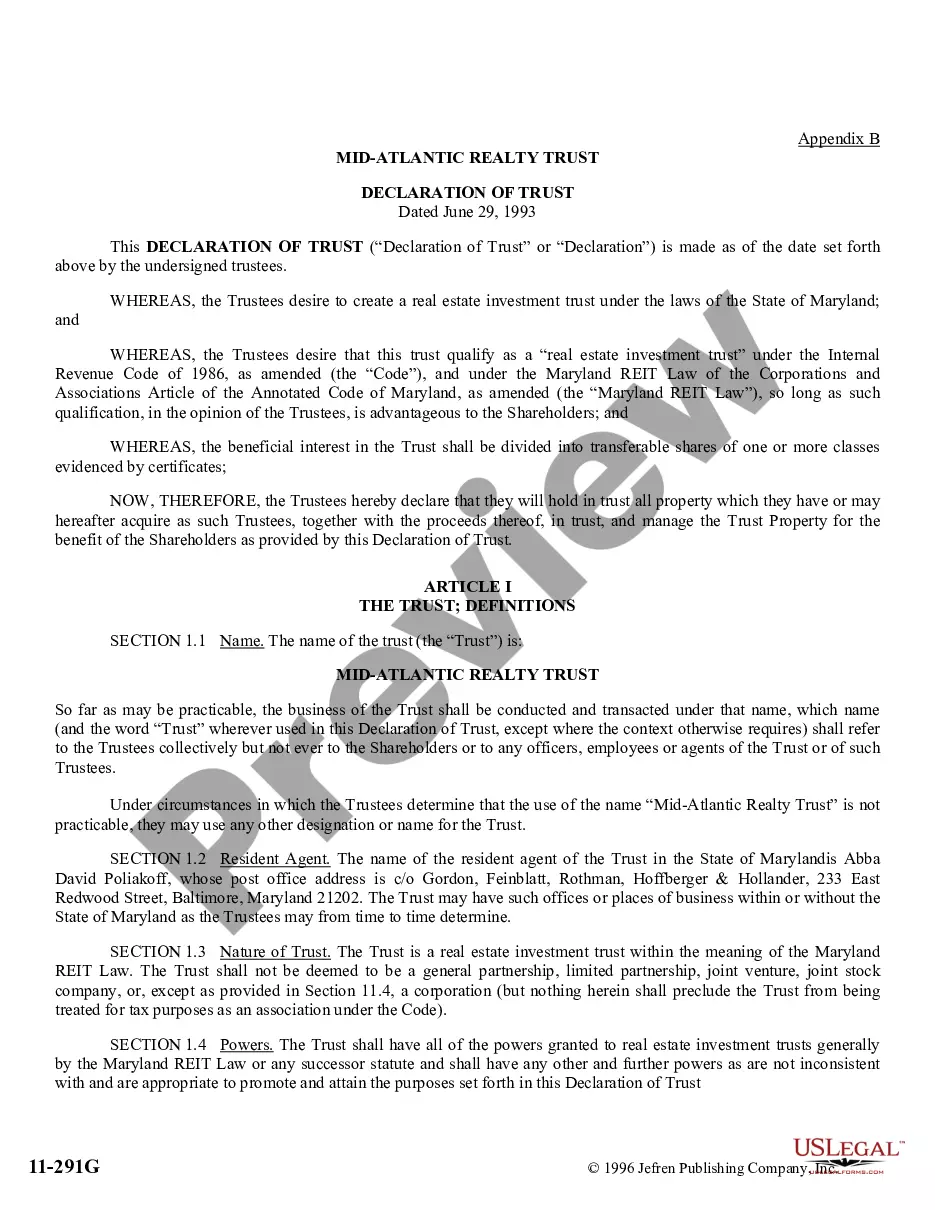
The Agreement and Declaration of Real Estate Business Trust - Massachusetts Nominee Realty Trust provides a legal framework for establishing a nominee trust in Massachusetts. This form allows for the transfer of real estate without public disclosure of beneficiaries, ensuring privacy while facilitating estate planning. It differs from traditional trusts by emphasizing the principal-agent relationship, where beneficiaries direct trustees in managing the trust assets.
Main sections of this form
- Name and purpose of the trust, identifying it as a nominee trust.
- A schedule listing the beneficiaries and their respective interests.
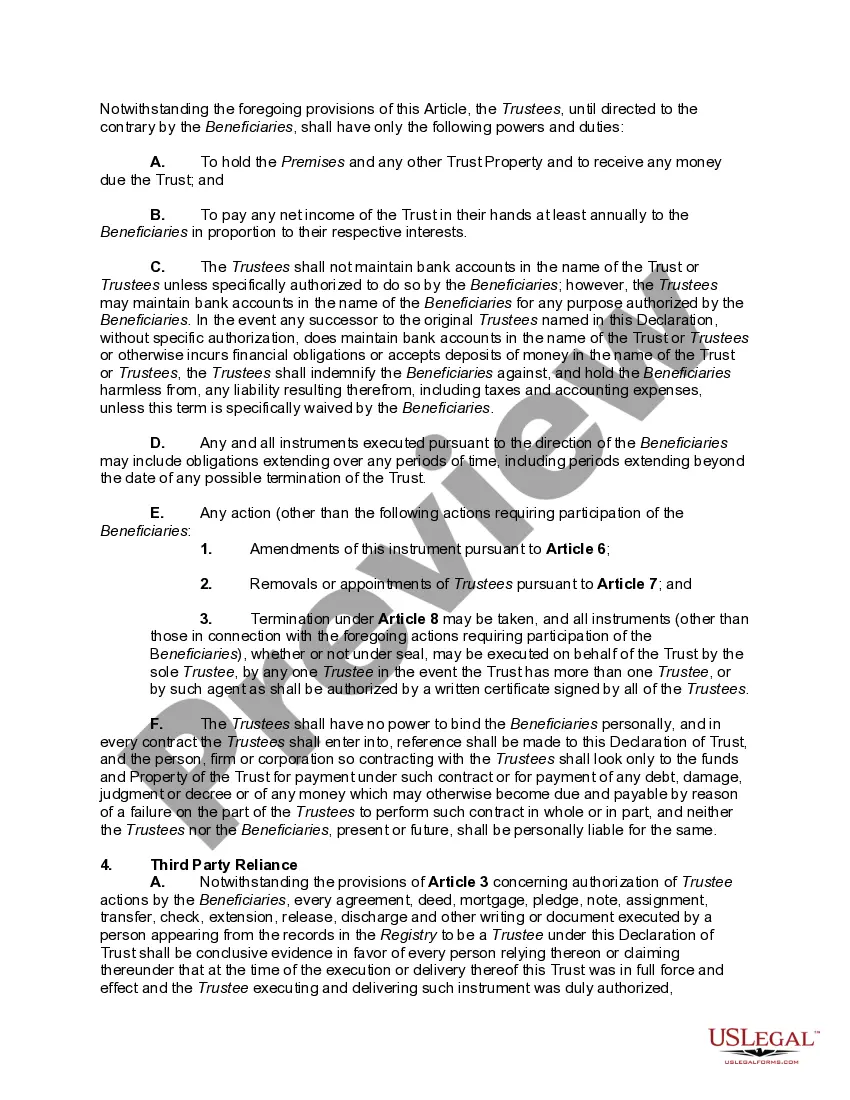
- Powers of the trustees, detailing their responsibilities and limitations.
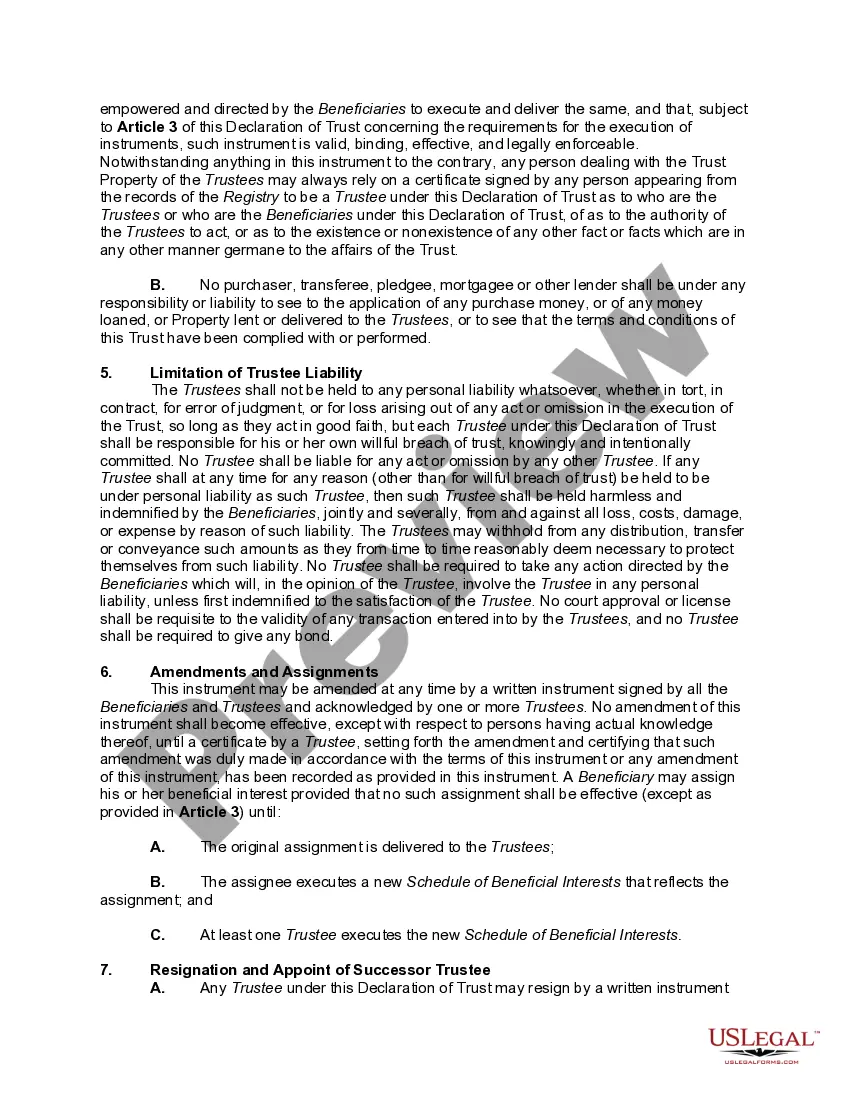
- Provisions for successor trustees and the process for resignation or appointment.
- Clauses addressing liability and the indemnification of trustees.
- Termination conditions for the trust and the handling of assets upon termination.


Common use cases
This form is needed when individuals or entities wish to establish a nominee trust in Massachusetts for estate planning purposes. It is particularly useful when protecting assets from probate and ensuring the privacy of beneficiaries' identities. Use this form when you want to delineate the roles of trustees and beneficiaries clearly while managing real estate investments.
Who should use this form
This form is suitable for:
- Property owners wanting to designate a nominee trust for estate planning.
- Trustees who will be managing real estate on behalf of beneficiaries.
- Individuals seeking to maintain the privacy of their investment interests.
Steps to complete this form
To complete this form, follow these steps:
- Identify the name of the trust and include the designated trustees.
- Specify the property details, including the address and ownership information.
- List the beneficiaries in the Schedule of Beneficial Interests, stating their interests.
- Complete the powers of the trustees section, noting any limitations on their authority.
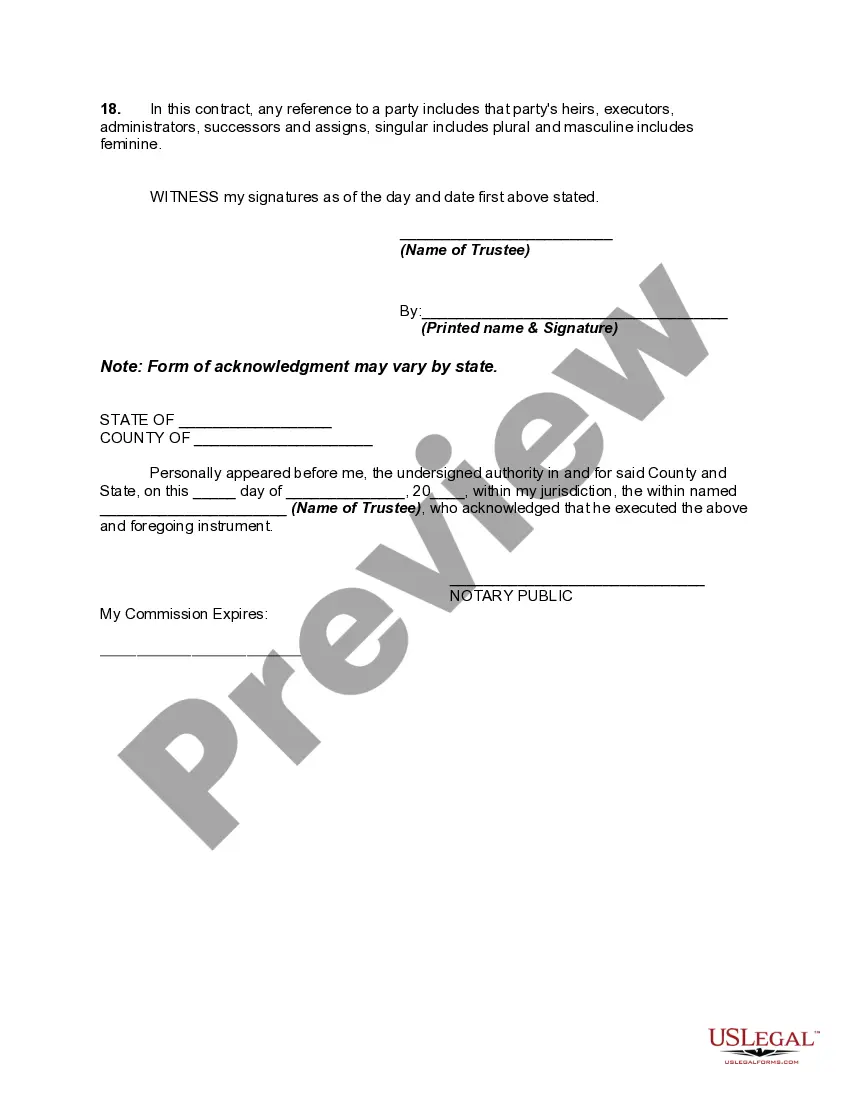
- Ensure all required signatures are obtained and the document is properly executed.
Is notarization required?
Yes, this form must be notarized to be legally valid. US Legal Forms offers integrated online notarization, allowing you to secure a notary via a secure video call, available twenty-four hours a day, ensuring your documents are legally recognized without the need for in-person visits.
Get your form ready online
Our built-in tools help you complete, sign, share, and store your documents in one place.
Make edits, fill in missing information, and update formatting in US Legal Forms—just like you would in MS Word.
Download a copy, print it, send it by email, or mail it via USPS—whatever works best for your next step.
Sign and collect signatures with our SignNow integration. Send to multiple recipients, set reminders, and more. Go Premium to unlock E-Sign.
If this form requires notarization, complete it online through a secure video call—no need to meet a notary in person or wait for an appointment.
We protect your documents and personal data by following strict security and privacy standards.

Make edits, fill in missing information, and update formatting in US Legal Forms—just like you would in MS Word.

Download a copy, print it, send it by email, or mail it via USPS—whatever works best for your next step.

Sign and collect signatures with our SignNow integration. Send to multiple recipients, set reminders, and more. Go Premium to unlock E-Sign.

If this form requires notarization, complete it online through a secure video call—no need to meet a notary in person or wait for an appointment.

We protect your documents and personal data by following strict security and privacy standards.
Common mistakes to avoid
- Failing to clearly identify all beneficiaries, which can lead to disputes.
- Not including the full property details, risking legal challenges.
- Inadequately defining the powers and responsibilities of the trustees, leading to confusion.
Benefits of completing this form online
- Convenient online access to legal forms saves time and effort.
- Editable templates allow users to customize the form to their specific needs.
- Reliability, with forms drafted by licensed attorneys to ensure compliance with state laws.
Quick recap
- The agreement serves as a framework for managing real estate through a nominee trust in Massachusetts.
- Beneficiaries exert control over the trust, unlike conventional trust structures.
- Proper completion and notarization are essential for the validity of the trust.
Looking for another form?
Form popularity
FAQ
The simple answer is yes, a Trustee can also be a Trust beneficiary. In fact, a majority of Trusts have a Trustee who is also a Trust beneficiary. Being a Trustee and beneficiary can be problematic, however, because the Trustee must still comply with the duties and responsibilities of a Trustee.
A trust's primary beneficiary is the first party to benefit from the trust. For example, if a trust names the trustor's spouse as the primary beneficiary, the assets in the trust would go to her when the trustor dies or otherwise loses his rights to the trust's holdings. There can be more than one primary beneficiary.
And if a Beneficiary dies before the Settlor dies, then the Beneficiary's share of the Trust assets pass to whomever is specific in the Trust.If a Trust does not have a survival requirementas in all my estate passes to Bobthen even if Bob predeceases the Settlor, his share of the Trust will pass to Bob's estate.
In simple words, a nominee is somebody who will receive the asset upon the death of the owner/holder.According to the Indian law, the nominee will receive and hold the property of the deceased until the nominee is legally bound to transfer or distribute it to the legal heirs of the deceased.
Living trusts, Totten trusts, and nominee trusts are the main types of revocable trusts. They can be revoked, amended, or terminated by the trust grantor, the person who creates the trust, any time before his or her death.
Trustee is the person who take care of the money payout based on your trust deed. Nominee is the person you nominate to claim the death payout from your life insurance. Beneficiary is the person who can use and enjoy the death payout from your life insurance.
As the term suggests, nominee is a person who is nominated or appointed by the policyholder to look after his/her financial accounts, assets, etc., after his death. A beneficiary is an individualwho has a financial interest in the life of the policyholder.
It only takes effect after the grantor passes away and during the probate process. Because the grantor has passed away by the time the trust is created, it is irrevocable.
The simple answer is yes, a Trustee can also be a Trust beneficiary.Nearly every revocable, living Trust created in California starts with the settlor naming themselves as Trustee and beneficiary.