Job Description Worksheet
What is this form?
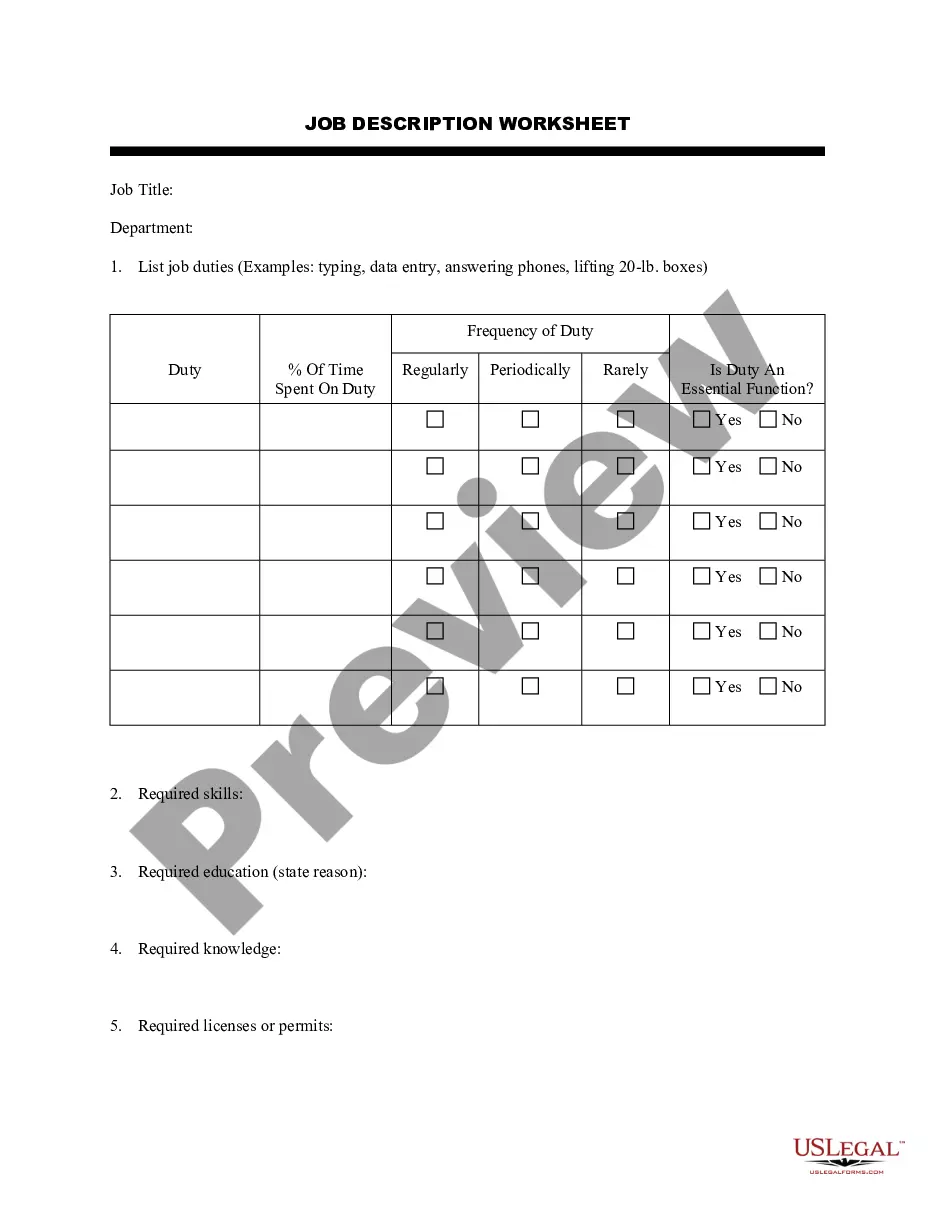
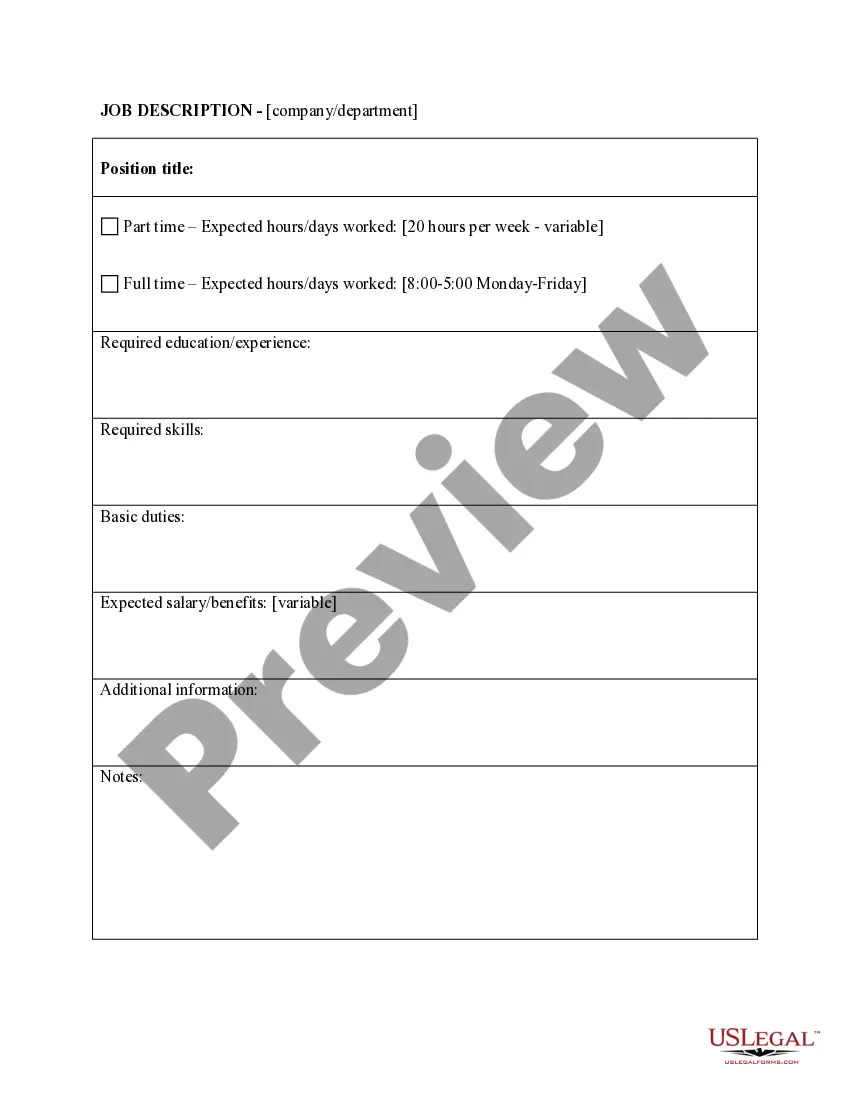
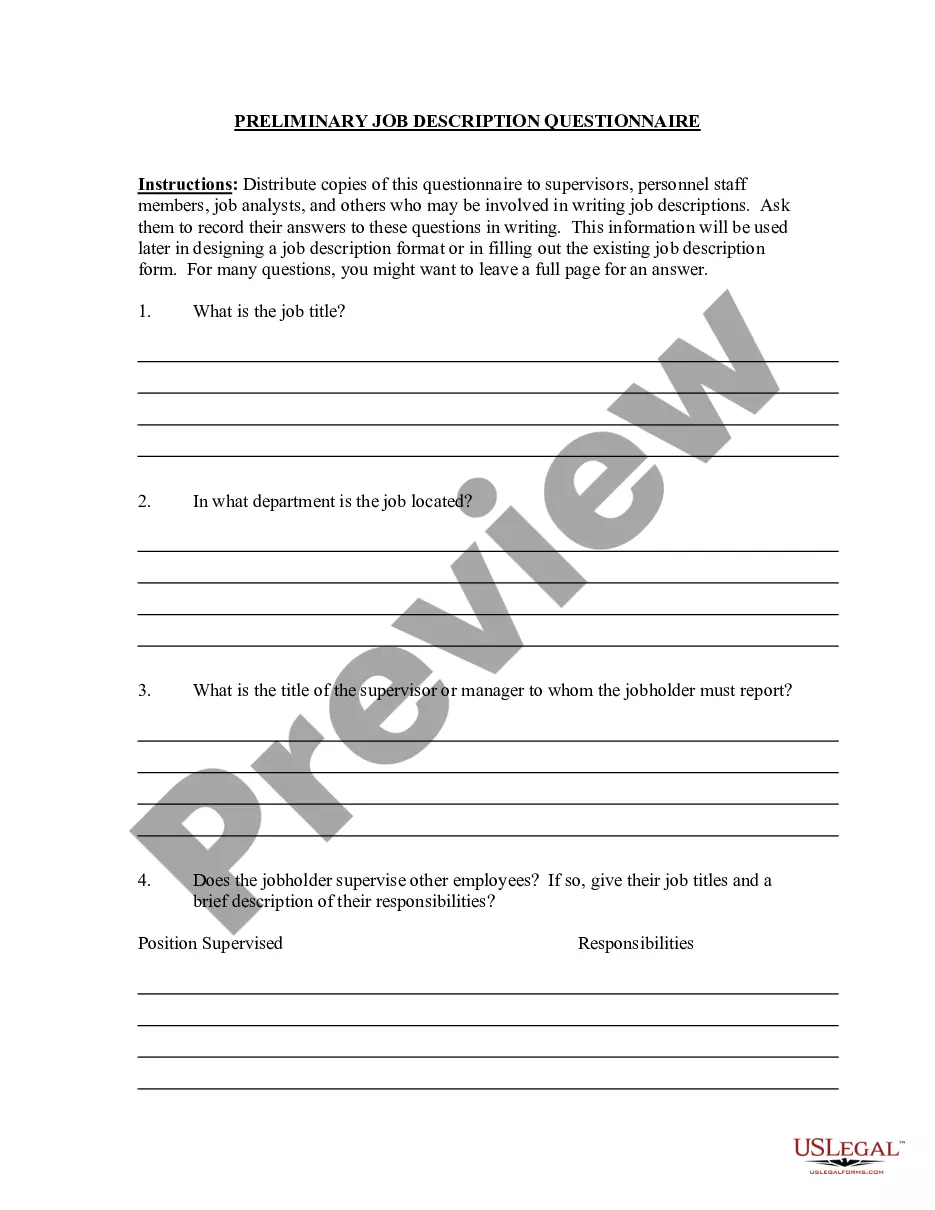
The Job Description Worksheet is a vital tool for employers designed to outline the duties, required skills, and qualifications for a specific position within a company. This form differs from other employment-related documents by focusing specifically on the delineation of job responsibilities and expectations, which is crucial for recruitment, performance evaluations, and compliance with legal requirements.
Form components explained
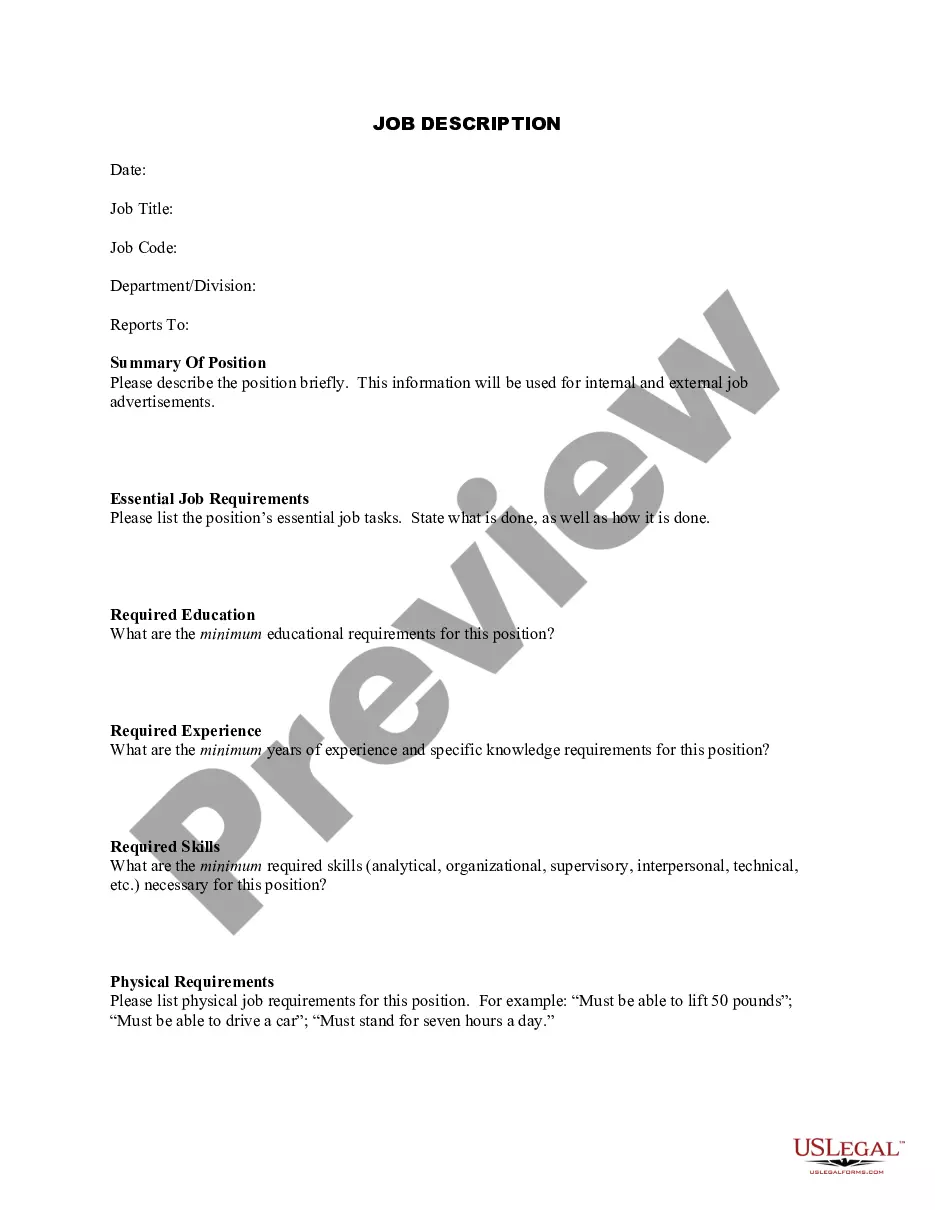
- Job Title: Clearly specify the title of the position being described.
- Department: Identify the department in which the role is situated.
- Job Duties: List all essential job responsibilities and tasks.
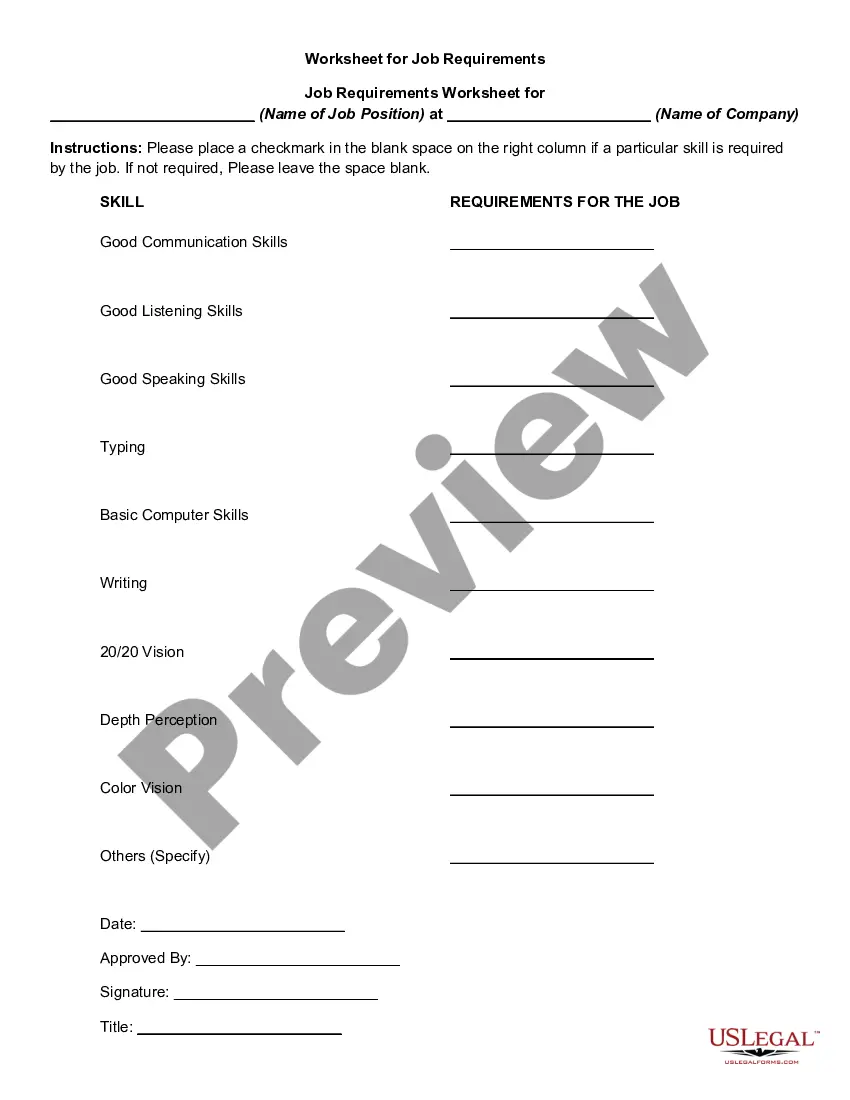
- Required Skills: Detail the skills needed to successfully perform the job.
- Required Education: Specify necessary educational qualifications and certifications.
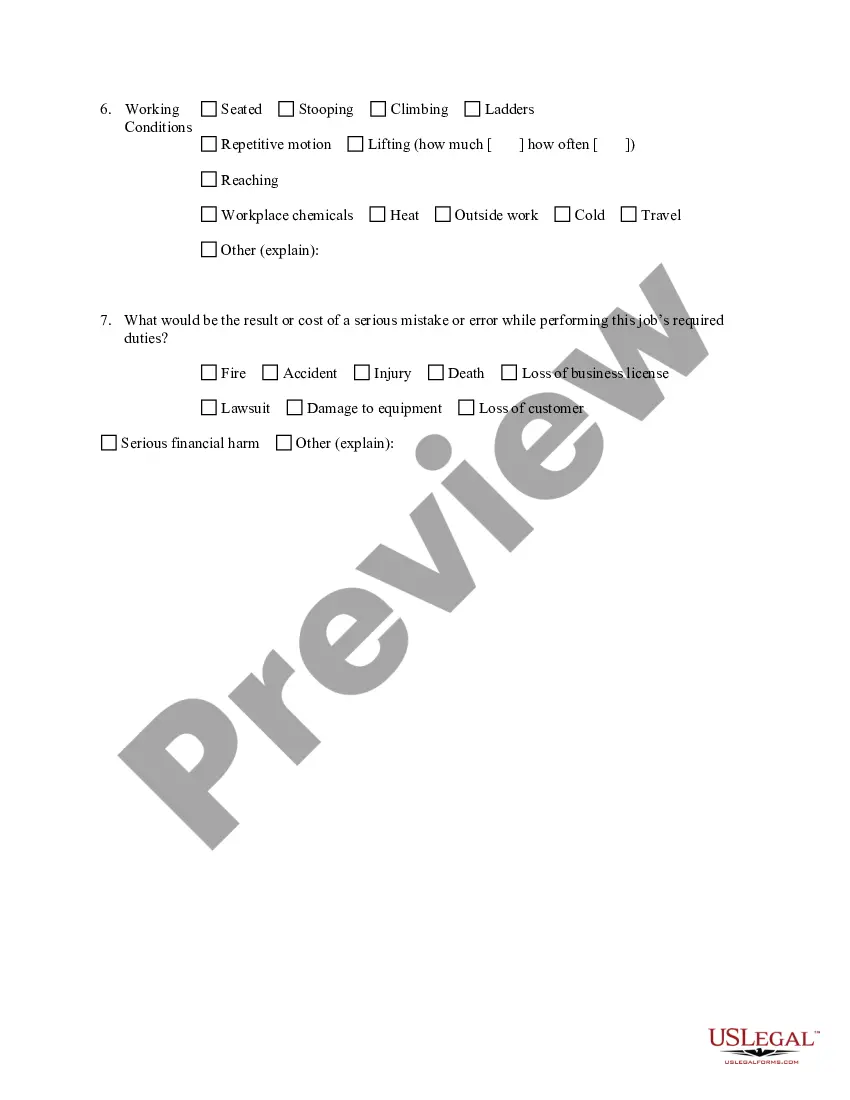
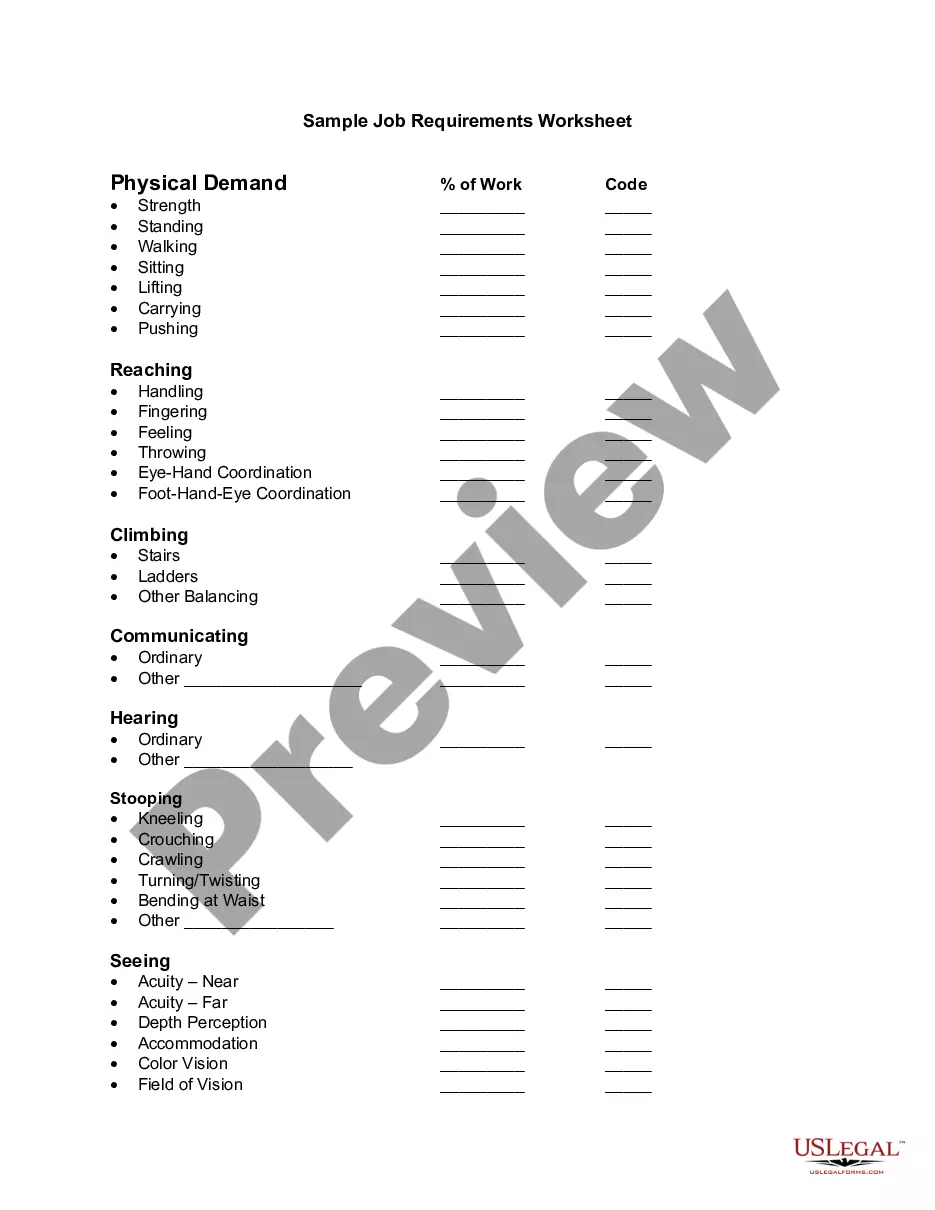
- Work Environment: Discuss any physical requirements or work conditions.
Situations where this form applies
This form should be used when establishing new job positions, updating existing job descriptions, or as part of a broader HR strategy to organize employee roles and responsibilities. It is especially useful during recruitment processes to attract suitable candidates based on clearly defined qualifications and expectations.
Who should use this form
Intended users include:
- Human Resources professionals responsible for job postings and recruitment.
- Hiring managers seeking to document requirements for new positions.
- Business owners aiming to clearly outline team roles and responsibilities.
- Compliance officers ensuring adherence to employment laws and job classifications.
Completing this form step by step
- Identify the Job Title and Department for the position.
- List the specific Job Duties that the individual will be responsible for.
- Detail the Required Skills necessary for the position.
- Specify any Required Education credentials and relevant licenses.
- Outline any additional Work Environment considerations that apply to the job.
- Review the completed worksheet to ensure clarity and completeness.
Notarization requirements for this form
Notarization is not commonly needed for this form. However, certain documents or local rules may make it necessary. Our notarization service, powered by Notarize, allows you to finalize it securely online anytime, day or night.
Get your form ready online
Our built-in tools help you complete, sign, share, and store your documents in one place.
Make edits, fill in missing information, and update formatting in US Legal Forms—just like you would in MS Word.
Download a copy, print it, send it by email, or mail it via USPS—whatever works best for your next step.
Sign and collect signatures with our SignNow integration. Send to multiple recipients, set reminders, and more. Go Premium to unlock E-Sign.
If this form requires notarization, complete it online through a secure video call—no need to meet a notary in person or wait for an appointment.
We protect your documents and personal data by following strict security and privacy standards.

Make edits, fill in missing information, and update formatting in US Legal Forms—just like you would in MS Word.

Download a copy, print it, send it by email, or mail it via USPS—whatever works best for your next step.

Sign and collect signatures with our SignNow integration. Send to multiple recipients, set reminders, and more. Go Premium to unlock E-Sign.

If this form requires notarization, complete it online through a secure video call—no need to meet a notary in person or wait for an appointment.

We protect your documents and personal data by following strict security and privacy standards.
Common mistakes to avoid
- Failing to include essential duties that provide a complete picture of the role.
- Overestimating the required educational qualifications.
- Using jargon or unclear language that may confuse potential applicants.
Benefits of using this form online
- Convenience of downloading and customizing the form as needed.
- Editability allows for easy updates and adjustments as job requirements evolve.
- Access to attorney-drafted templates ensures legal reliability and clarity.
Legal use & context
- Helps in establishing clear job descriptions for compliance with labor laws.
- Provides a framework for consistent performance evaluations and assessments.
- Can be used as evidence in disputes related to job performance or termination.
Main things to remember
- Having a clear job description aids in attracting qualified candidates.
- This worksheet serves as a fundamental document for HR processes.
- Regular updates to the job description help maintain its relevance.
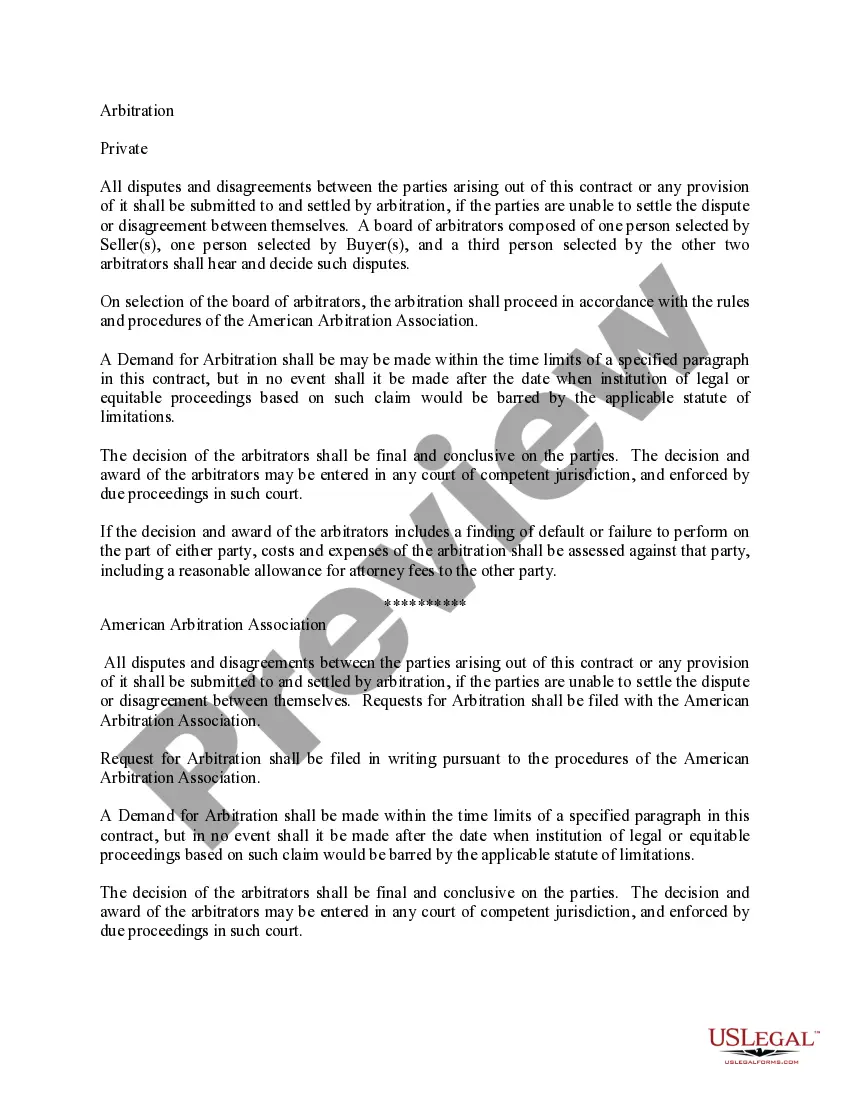
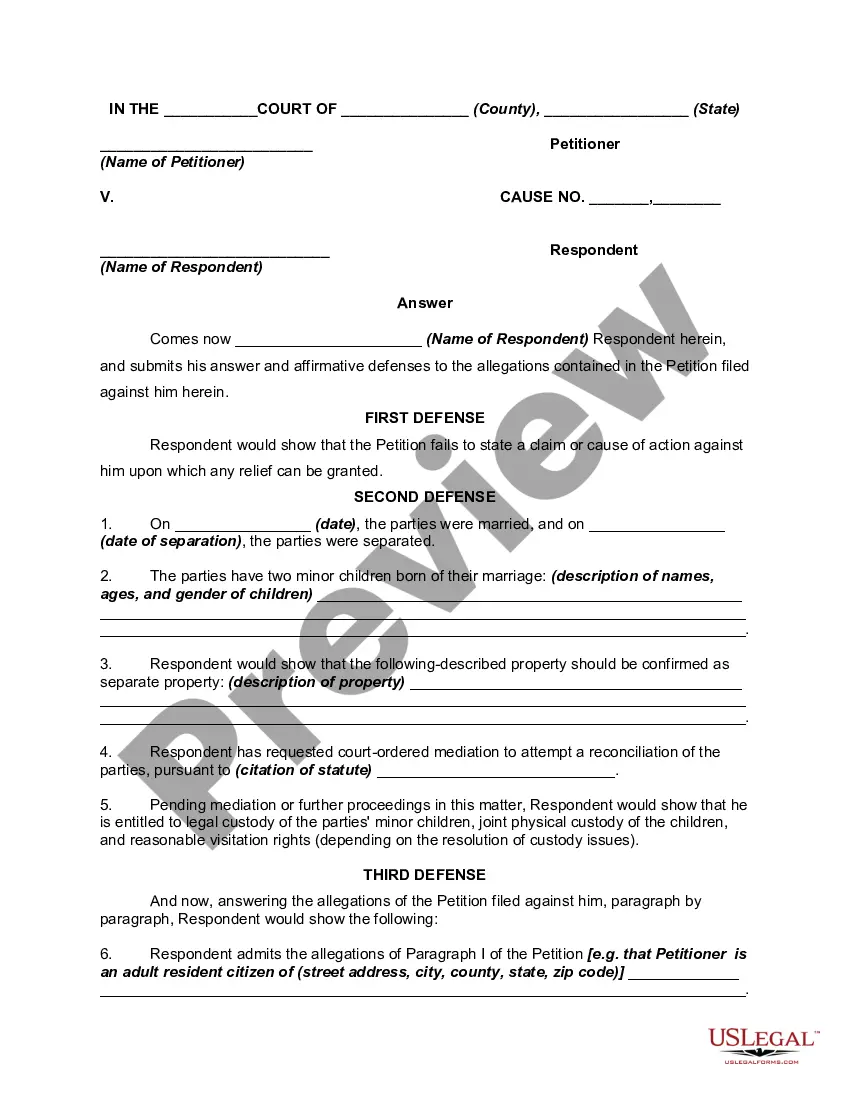
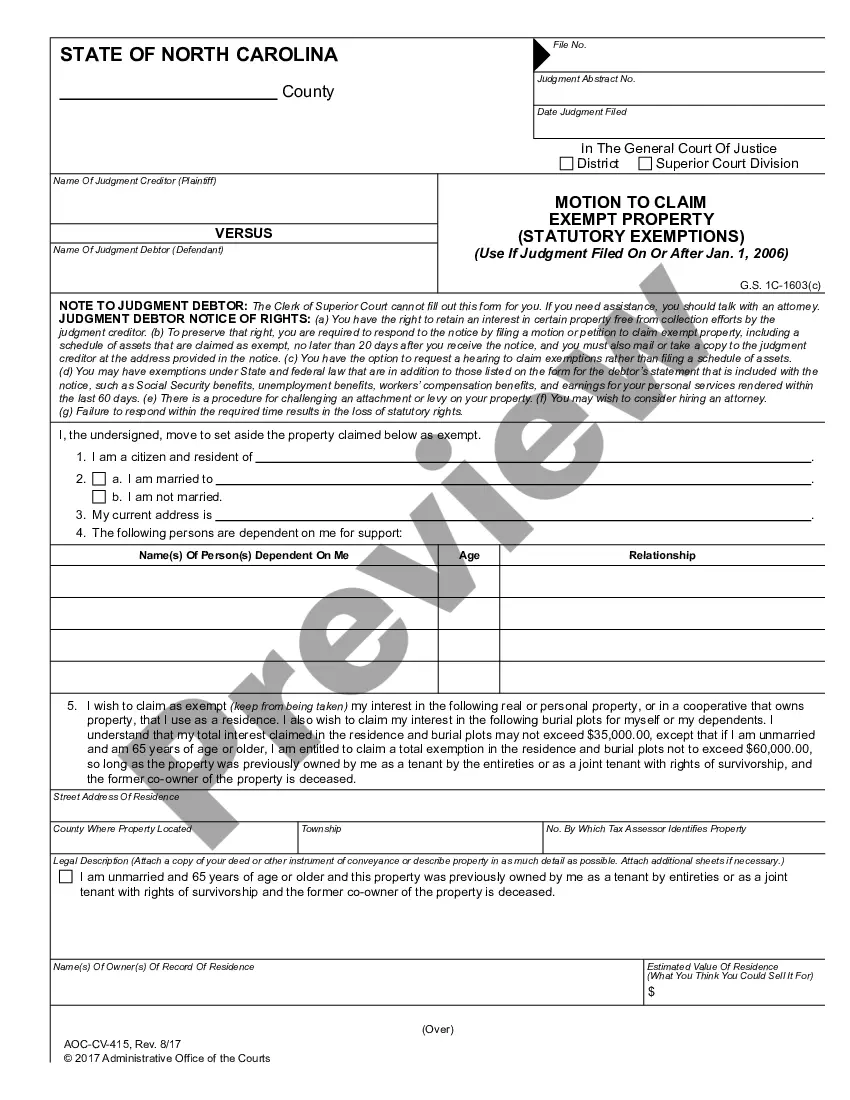
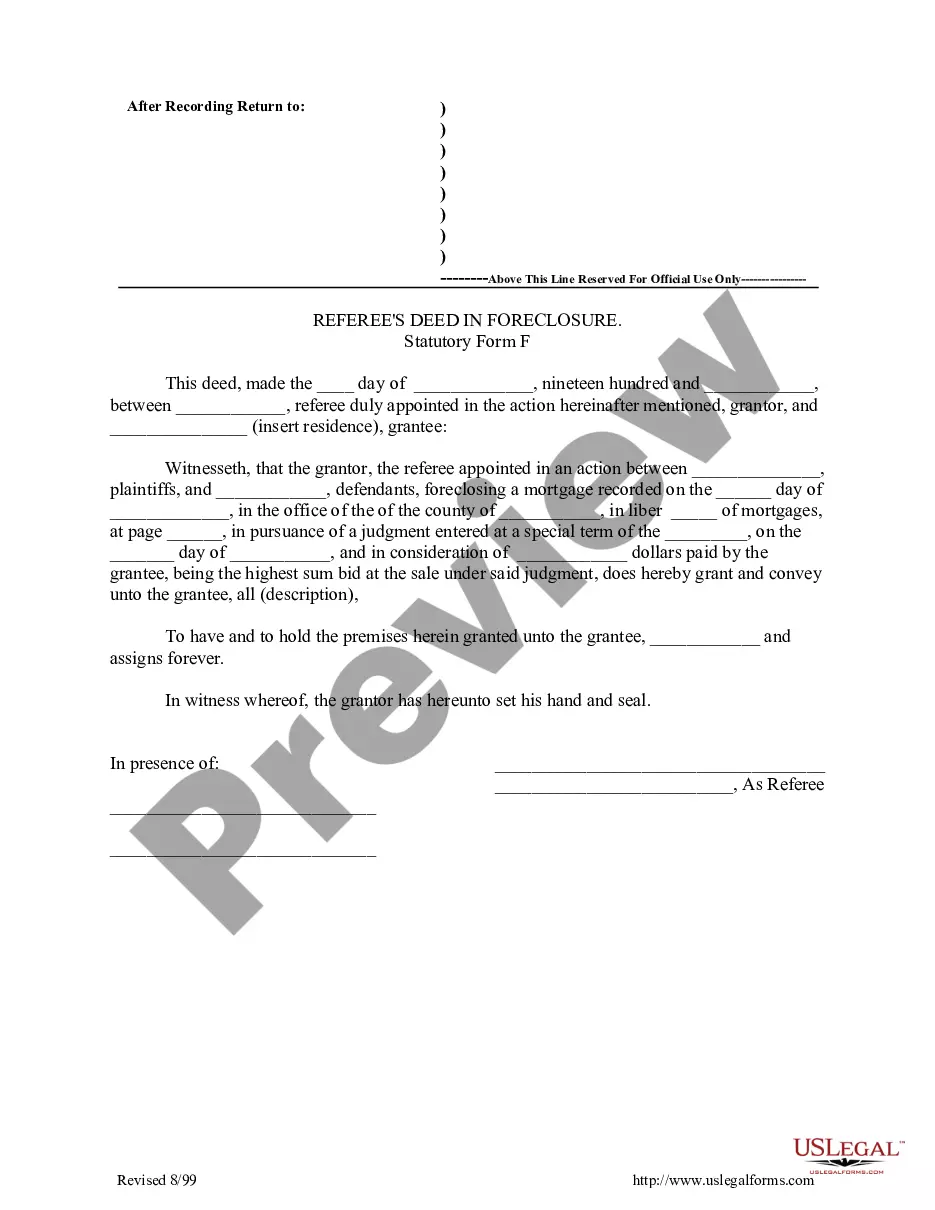
Looking for another form?

Form popularity
FAQ
A job description or JD lists the main features of a specific job. The description typically includes the person's main duties, responsibilities, and working conditions. It also includes the job title and to whom the person holding that job has to report.
Lead a team of sales associates. Provide quality customer service. Create and coordinate sales associates' schedules. Facilitate tasks for the sales associates. Keep the store looking clean and organized. Handle cash and card transactions.
In the job description section, write a brief paragraph or two that gives an overview of the job role. Include some key responsibilities, what a qualified candidate looks like and why the position is important for the company. Make this section easy to understand and include their overall duties.
Job responsibilities are what an organization uses to define the work that needs to be performed in a role and the functions that an employee is accountable for.
Job Title. Make your job titles specific. Job Summary. Open with a strong, attention-grabbing summary. Responsibilities and Duties. Outline the core responsibilities of the position. Qualifications and Skills. Include a list of hard and soft skills. Salary and Benefits. Include a salary range.
Get the job title right. Start with a short, engaging overview of the job. Avoid superlatives or extreme modifiers. Focus responsibilities on growth and development. Involve current employees in writing job descriptions. Create urgency for the position. Culture, culture, culture. Bust biases in your ads.
Write a brief summary paragraph that provides an overview of the job. Define what success looks like in the position after 30 days, the first quarter, and the first year. Write only the job responsibilities that are necessary for this job, not every job. List essential qualifications.
Decide what it is that you want to do. Determine how the new position will help support corporate goals and objectives. Plan for your replacement. Break the job description into four parts: summary, responsibilities, qualifications, and competencies. Get the green-light from your mentor. Pitch yourself.