Renunciation and Disclaimer of Interest in Life Insurance Proceeds
What this document covers
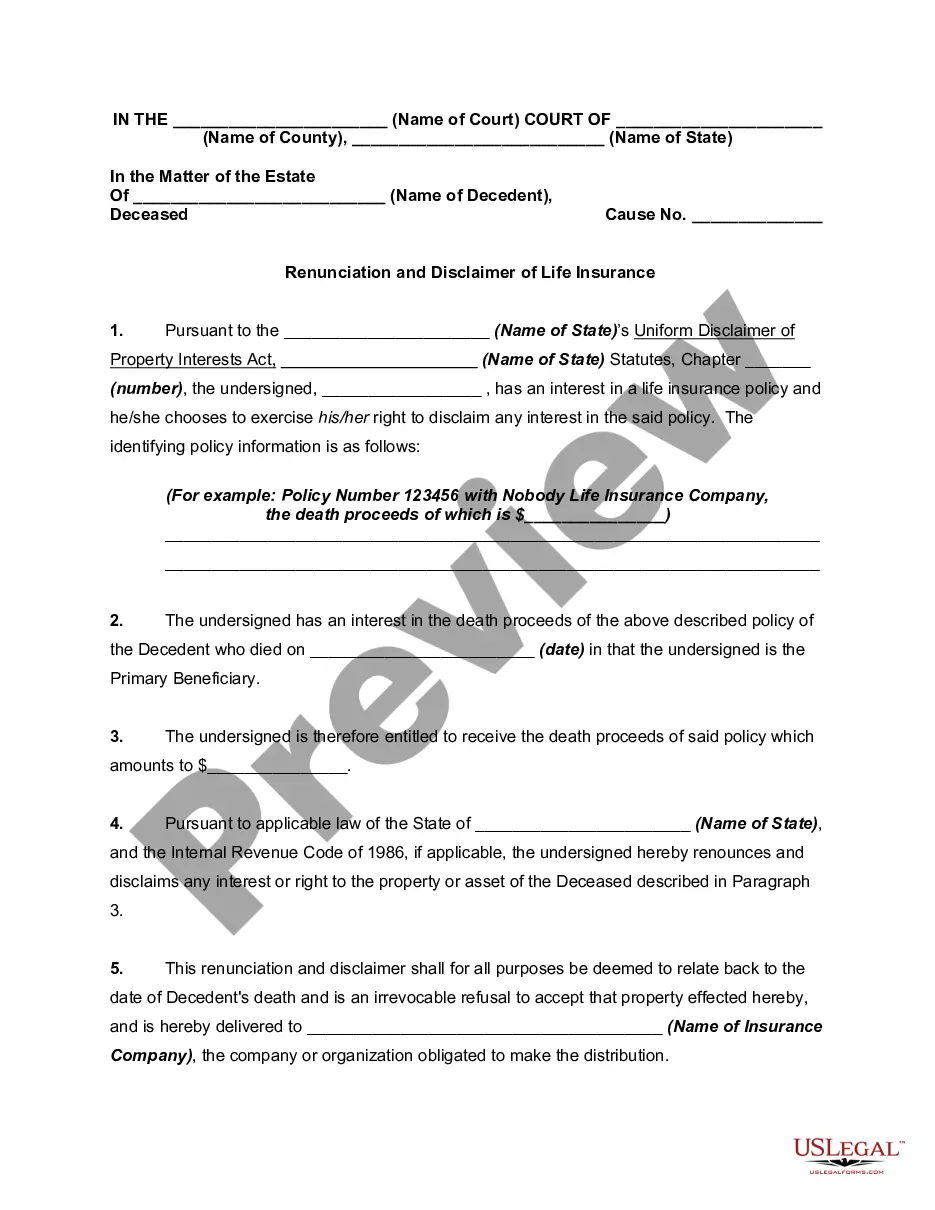
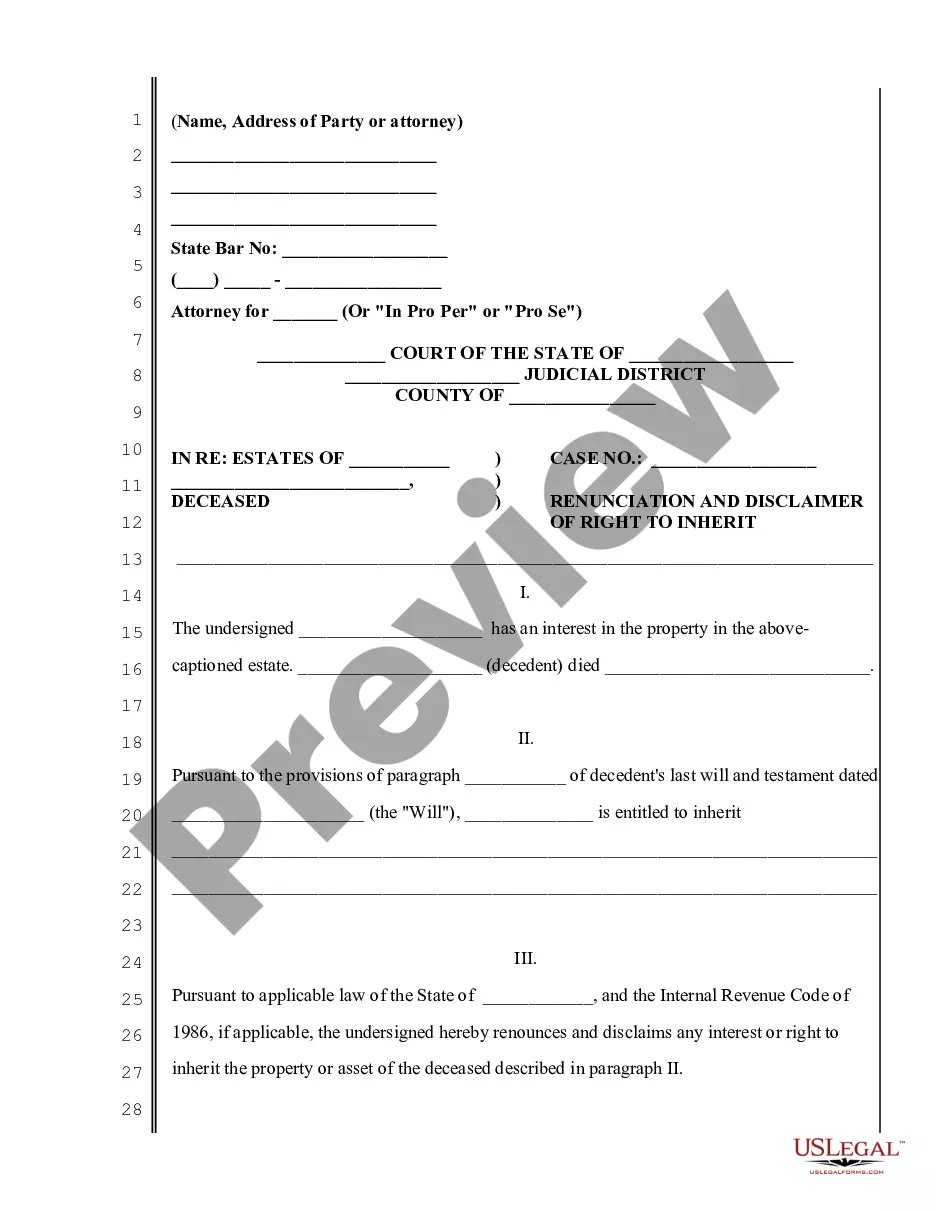
The Renunciation and Disclaimer of Interest in Life Insurance Proceeds is a legal document that allows a primary beneficiary to formally decline their right to receive death benefits from a life insurance policy. By submitting this disclaimer, beneficiaries can ensure that the disclaimed interest is treated as if it never existed, which can help in avoiding taxes or protect the interests of other heirs. This form is distinct from other estate planning documents, as it specifically addresses life insurance proceeds rather than other types of property or assets.
Key parts of this document
- Header detailing the estate and cause number.
- Statement declaring the beneficiary's intention to disclaim their interest in the life insurance policy.
- Identification of the life insurance policy and the company responsible for distribution.
- Confirmation of the decedent's date of death and the amount of the death proceeds.
- Legal acknowledgment of the irrevocability of the disclaimer, relating back to the date of death.
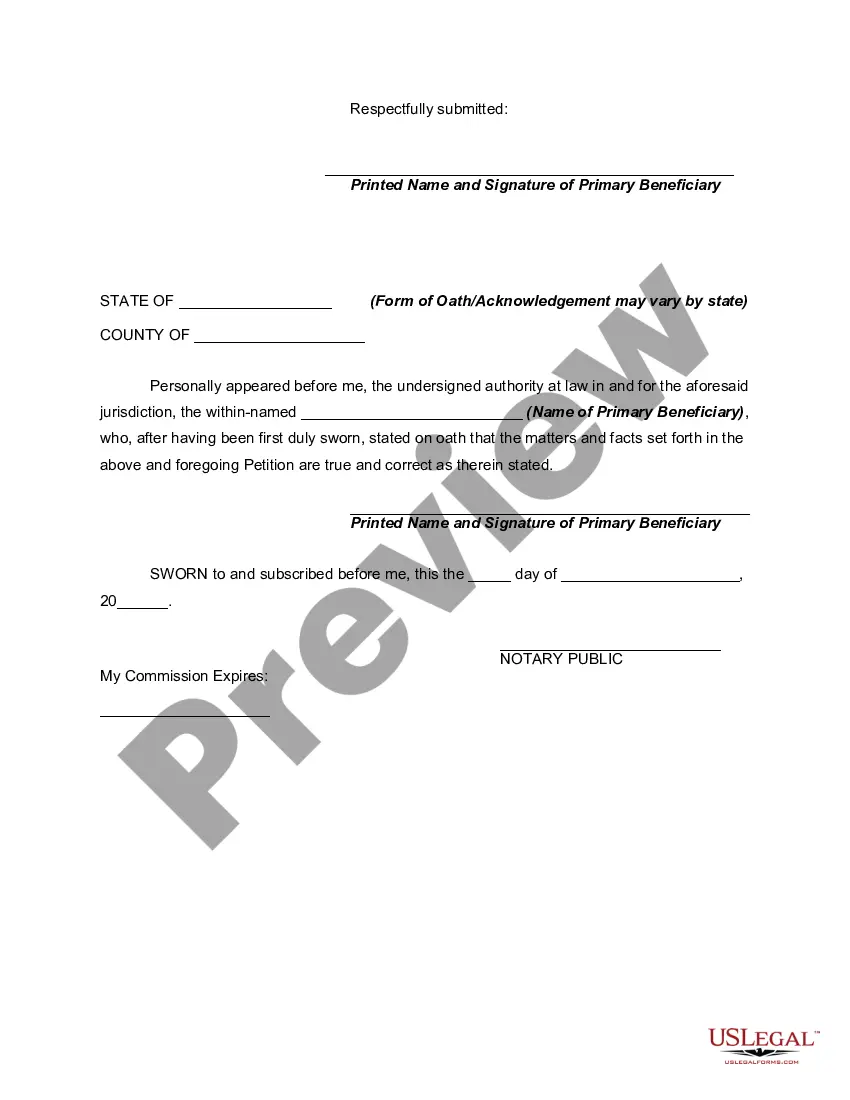
- Notarization section to validate the declaration.
When this form is needed
This form should be used when a primary beneficiary of a life insurance policy decides to renounce their right to receive death proceeds. Common scenarios include instances where the beneficiary wishes to redirect the funds to another heir, is facing potential tax implications, or simply does not wish to accept the benefits for personal reasons. It is crucial to act promptly, as there are often deadlines for submitting disclaimers based on state regulations.
Who should use this form
- Primary beneficiaries of life insurance policies who wish to disclaim their interests.
- Individuals involved in estate planning or management who need to facilitate the transfer of assets according to their beneficiaries' wishes.
- Heirs or legatees who may need to disclaim an interest in a property for financial reasons or to comply with personal or family preferences.
How to prepare this document
- Identify the parties involved, including the name of the decedent and the primary beneficiary.
- Specify the identifying information of the life insurance policy, including the policy number and insurer's name.
- Confirm the date of the decedent's death and the total amount of death proceeds.
- Include any statements required by state law that affirm the disclaimer.
- Sign and date the form in the presence of a notary public, if required.
Does this document require notarization?
Yes, this form must be notarized to be legally valid. Notarization confirms the identity of the signer and the authenticity of the document. US Legal Forms provides integrated online notarization services, allowing users to complete the entire process securely via video call.
Get your form ready online
Our built-in tools help you complete, sign, share, and store your documents in one place.
Make edits, fill in missing information, and update formatting in US Legal Forms—just like you would in MS Word.
Download a copy, print it, send it by email, or mail it via USPS—whatever works best for your next step.
Sign and collect signatures with our SignNow integration. Send to multiple recipients, set reminders, and more. Go Premium to unlock E-Sign.
If this form requires notarization, complete it online through a secure video call—no need to meet a notary in person or wait for an appointment.
We protect your documents and personal data by following strict security and privacy standards.

Make edits, fill in missing information, and update formatting in US Legal Forms—just like you would in MS Word.

Download a copy, print it, send it by email, or mail it via USPS—whatever works best for your next step.

Sign and collect signatures with our SignNow integration. Send to multiple recipients, set reminders, and more. Go Premium to unlock E-Sign.

If this form requires notarization, complete it online through a secure video call—no need to meet a notary in person or wait for an appointment.

We protect your documents and personal data by following strict security and privacy standards.
Common mistakes to avoid
- Failing to include specific policy information, which can lead to processing delays.
- Not signing the form in front of a notary, if applicable, resulting in an invalid disclaimer.
- Missing deadlines for filing the disclaimer after the decedent's death.
Benefits of using this form online
- Immediate access to downloadable forms, which saves time and effort.
- Easy editing capabilities to personalize the form swiftly and conveniently.
- Reliability of attorney-drafted templates, ensuring compliance with legal standards.
Main things to remember
- The form allows a life insurance beneficiary to legally disclaim their interest in the policy proceeds.
- It is essential to thoroughly understand state-specific laws before submission.
- Notarization is required for the form to be valid.
- Using this form online offers convenience, reliability, and ease of use.
Looking for another form?
Form popularity
FAQ
You generally cannot sue an individual for the death benefit proceeds unless the beneficiary is part of the case. If you are suing someone who has just received a death benefit, you may sue that person and receive money from them, which may include part or all of a death benefit settlement.
Using Life Insurance Trusts to Avoid Taxation A second way to remove life insurance proceeds from your taxable estate is to create an irrevocable life insurance trust (ILIT). To complete an ownership transfer, you cannot be the trustee of the trust and you may not retain any rights to revoke the trust.
The way to disclaim insurance proceeds will vary among insurance companies. However, a person must contact the life insurance company and make it aware of their desire not to receive the proceeds.
What is considered a valid reason for an insurer's refusal to pay policy proceeds directly to a minor?A policyowner fell behind on the premium payments of a whole life policy and is now in the grace period.
Put the disclaimer in writing. Deliver the disclaimer to the person in control of the estate usually the executor or trustee. Complete the disclaimer within nine months of the death of the person leaving the property. Do not accept any benefit from the property you're disclaiming.
The beneficiary can disclaim only a portion of an inherited IRA or asset, allowing some to flow to the contingent beneficiary(s). Partial disclaiming is either a specific dollar or percentage amount as of the date of death.The balance will go to the next beneficiary(s).
There are plenty of reasons you might refuse to take the payout from a life insurance policy. You have the right to waive your claim to the proceeds, and the insurance company will then pay out as if you had died immediately before the insured.
The answer is yes. The technical term is "disclaiming" it. If you are considering disclaiming an inheritance, you need to understand the effect of your refusalknown as the "disclaimer"and the procedure you must follow to ensure that it is considered qualified under federal and state law.
Disclaim, in a legal sense, refers to the renunciation of an interest in, or an acceptance of, inherited assets, such as property, by way of a legal instrument. A person disclaiming an interest, right, or obligation is known as a disclaimant.