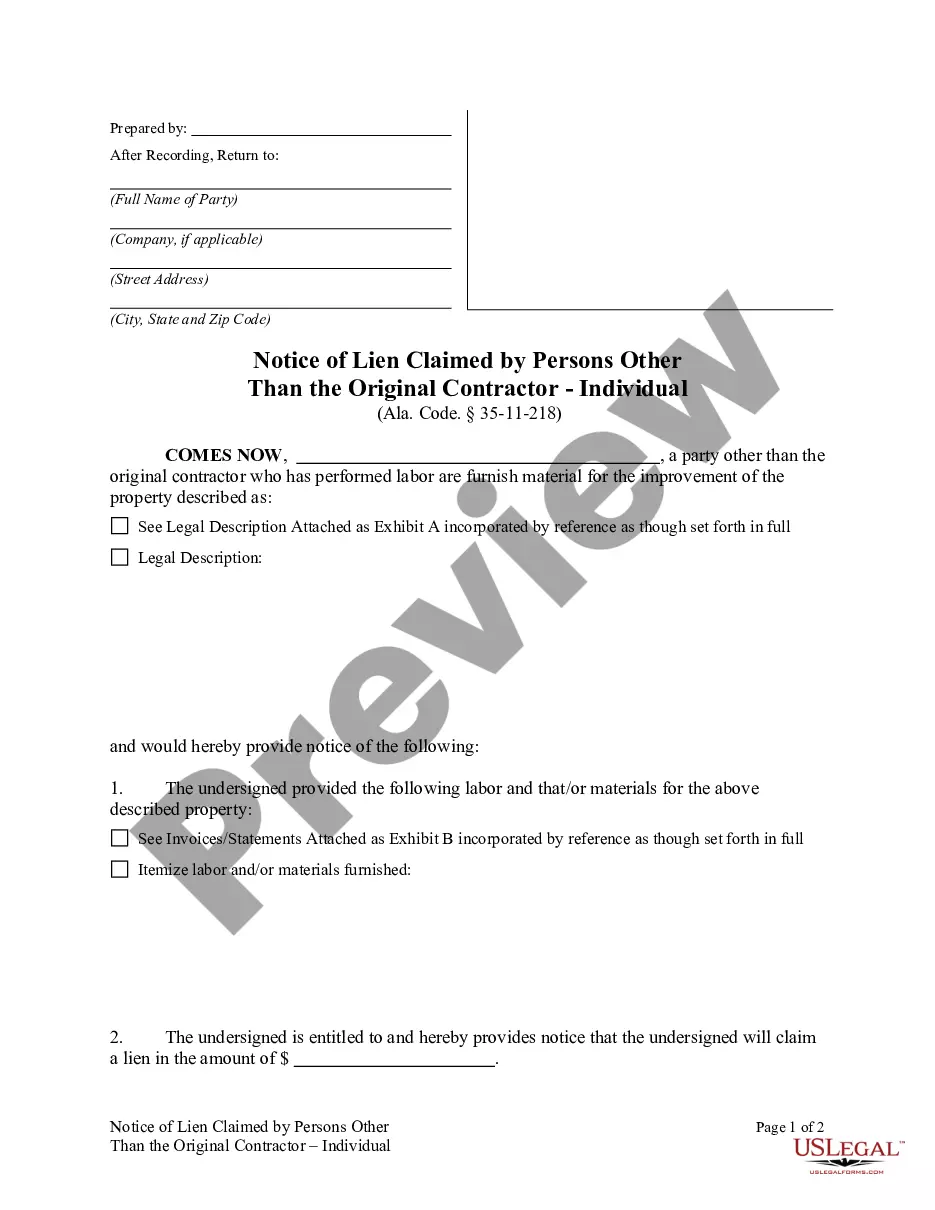
Complaint in Small Claims Court for Failure or Refusal to Return Money Deposited for Apartment
What this document covers
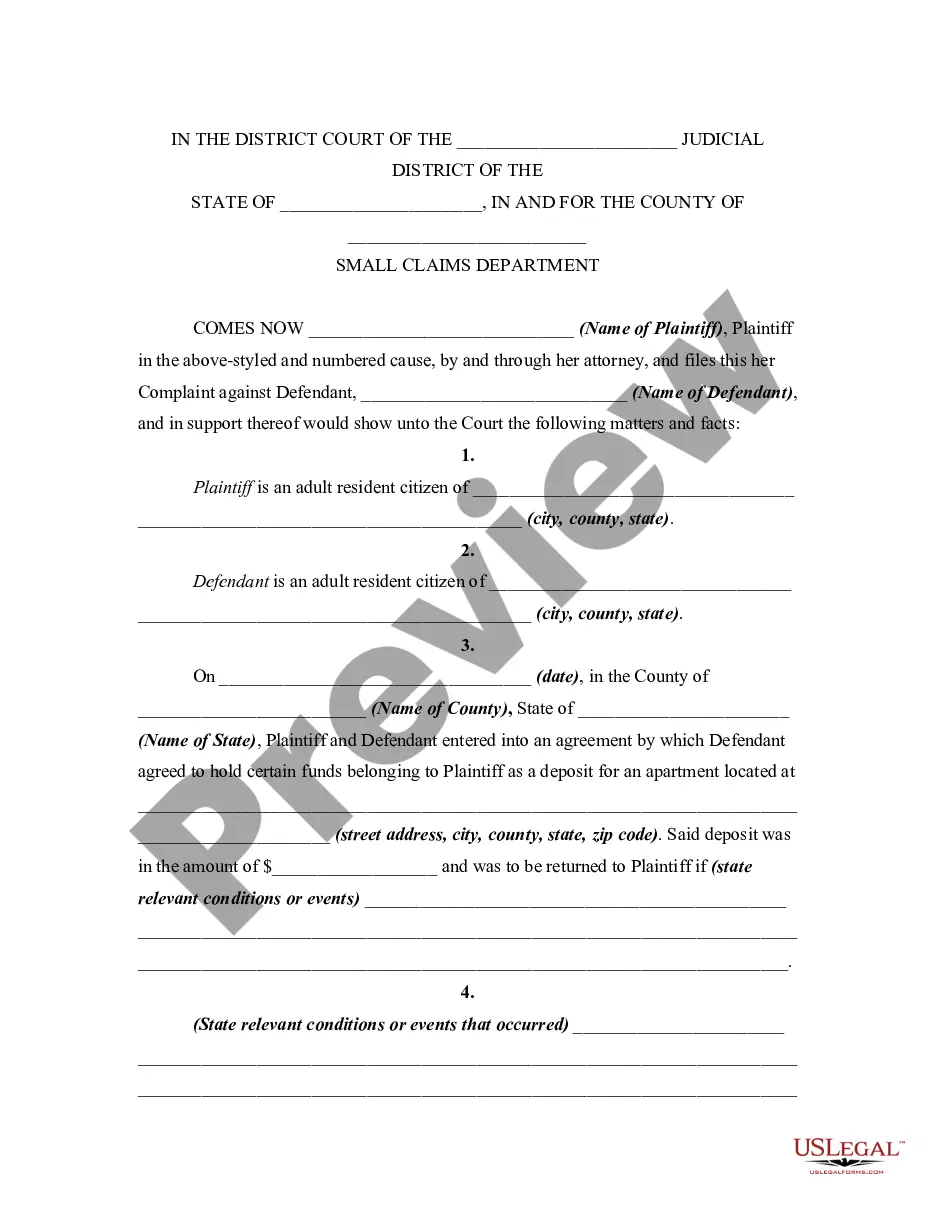
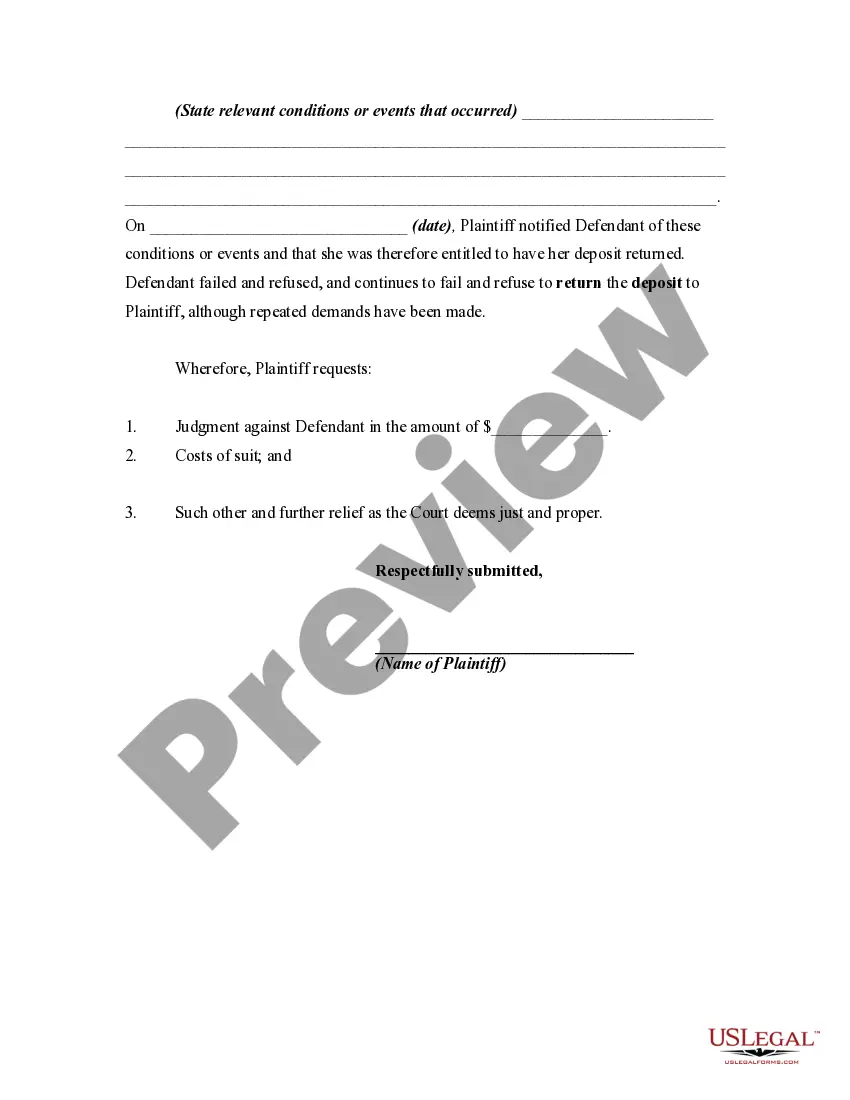
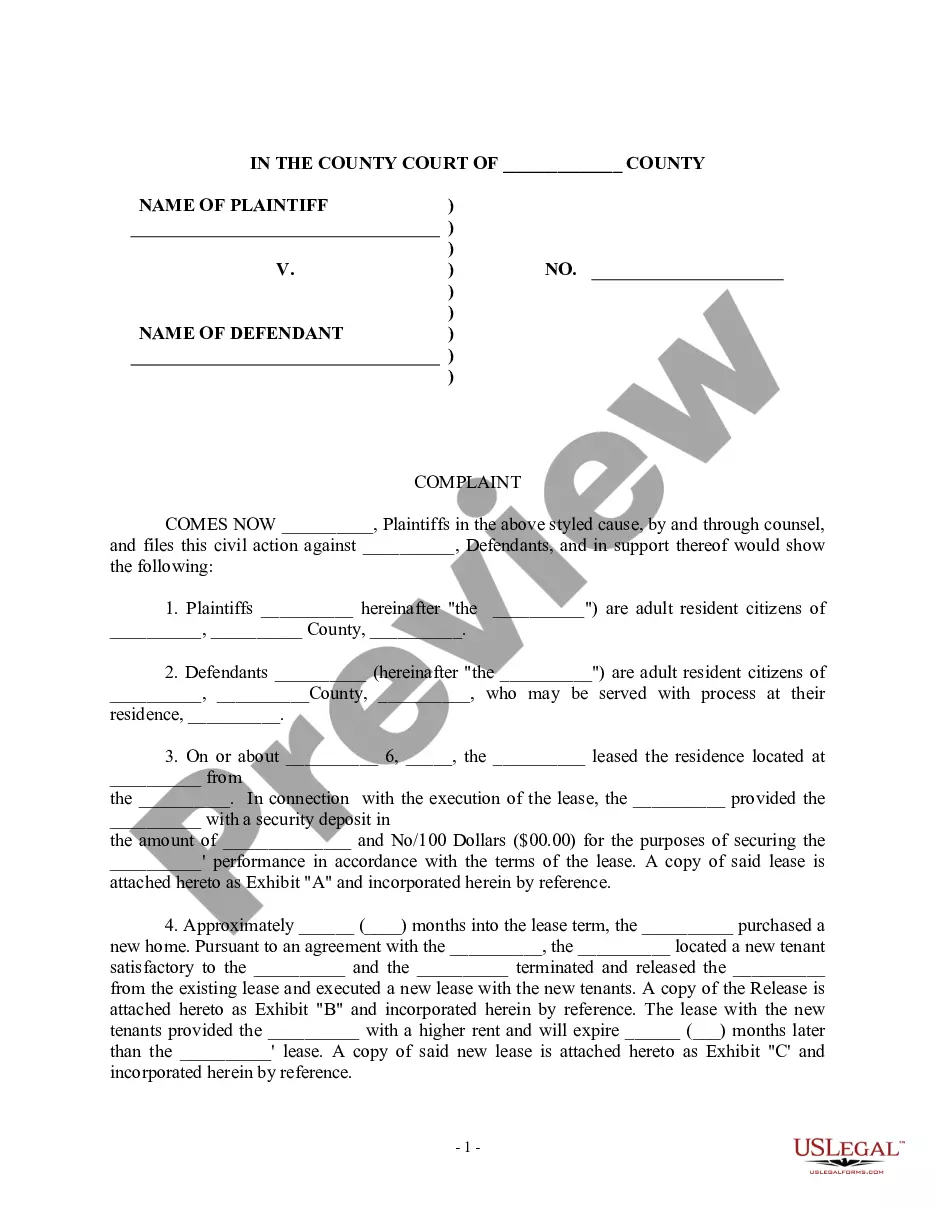
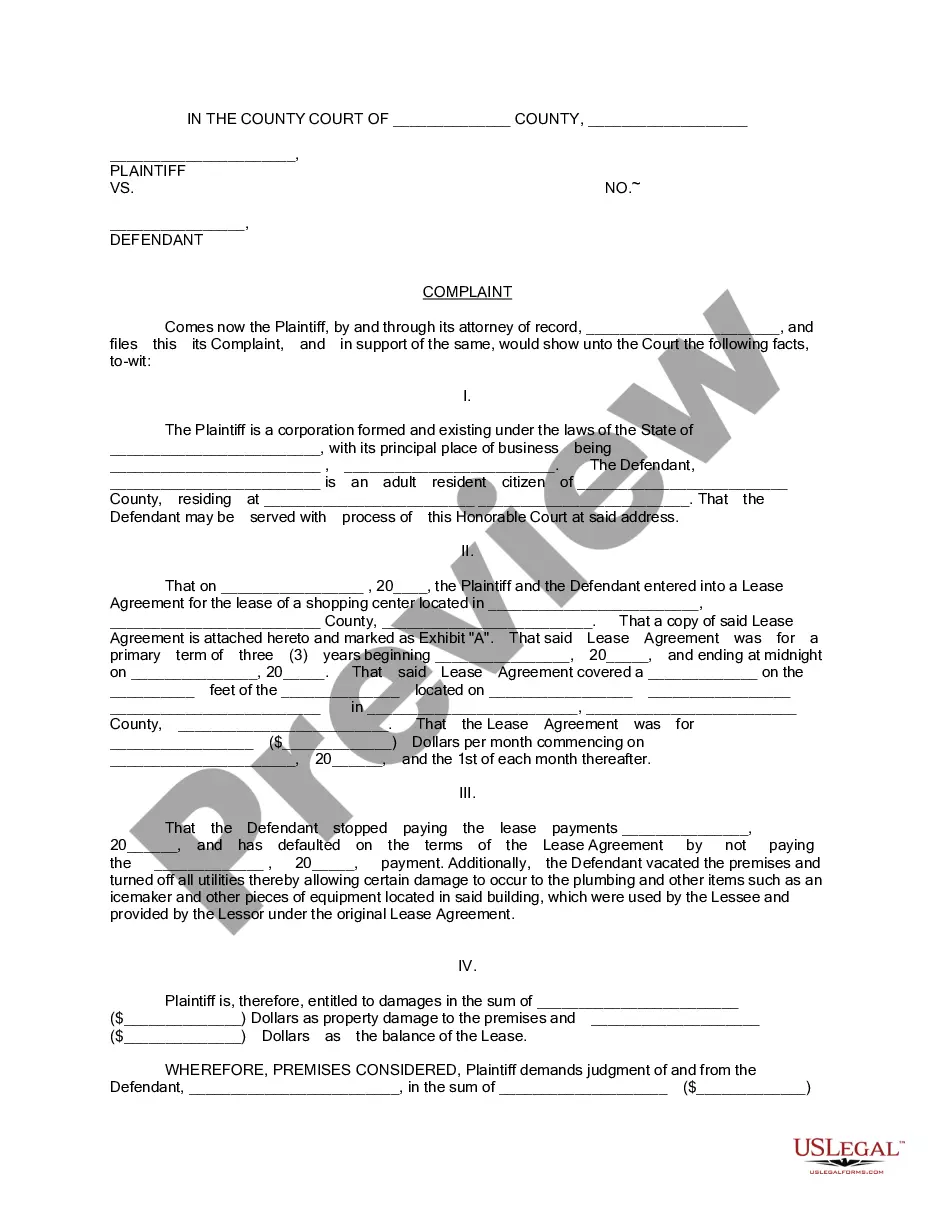
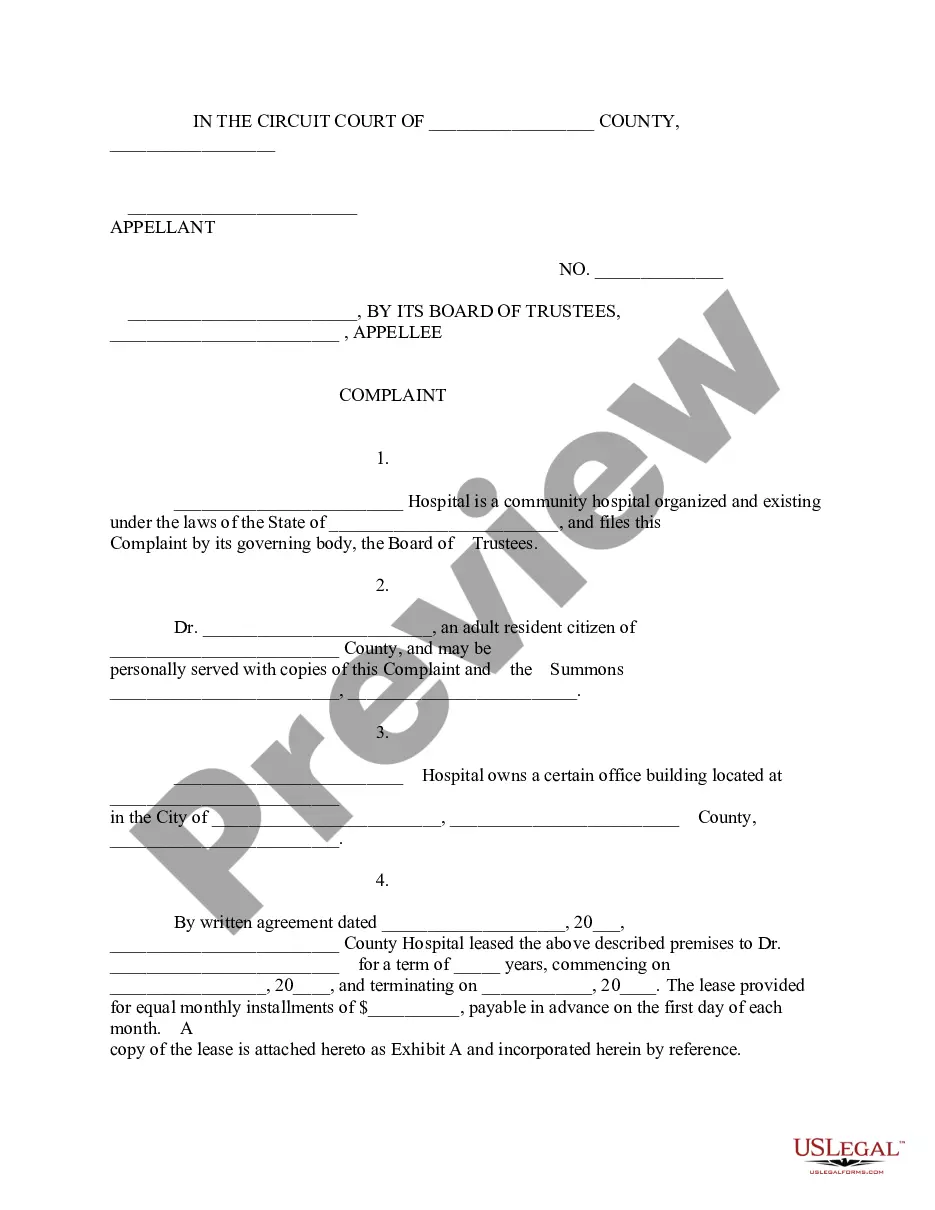
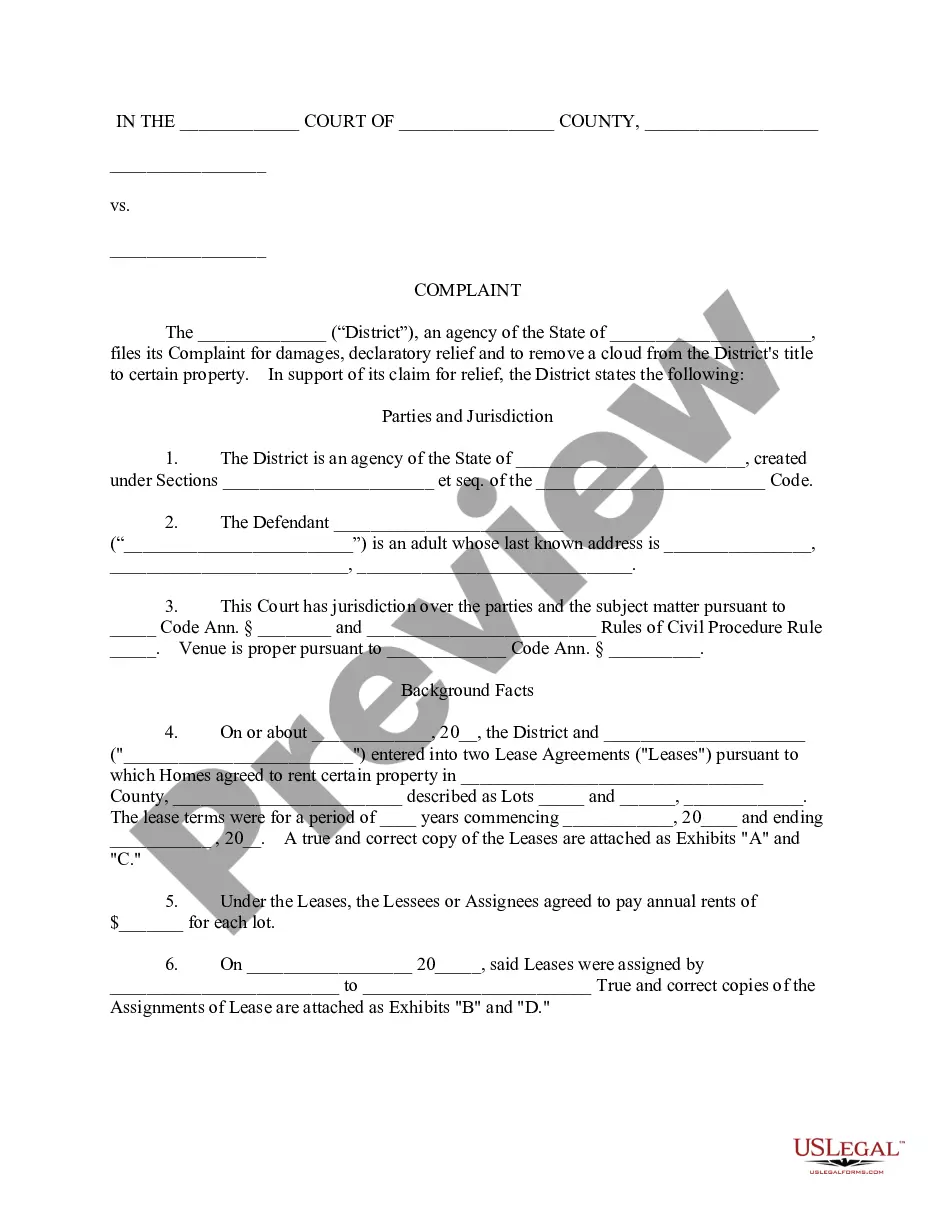
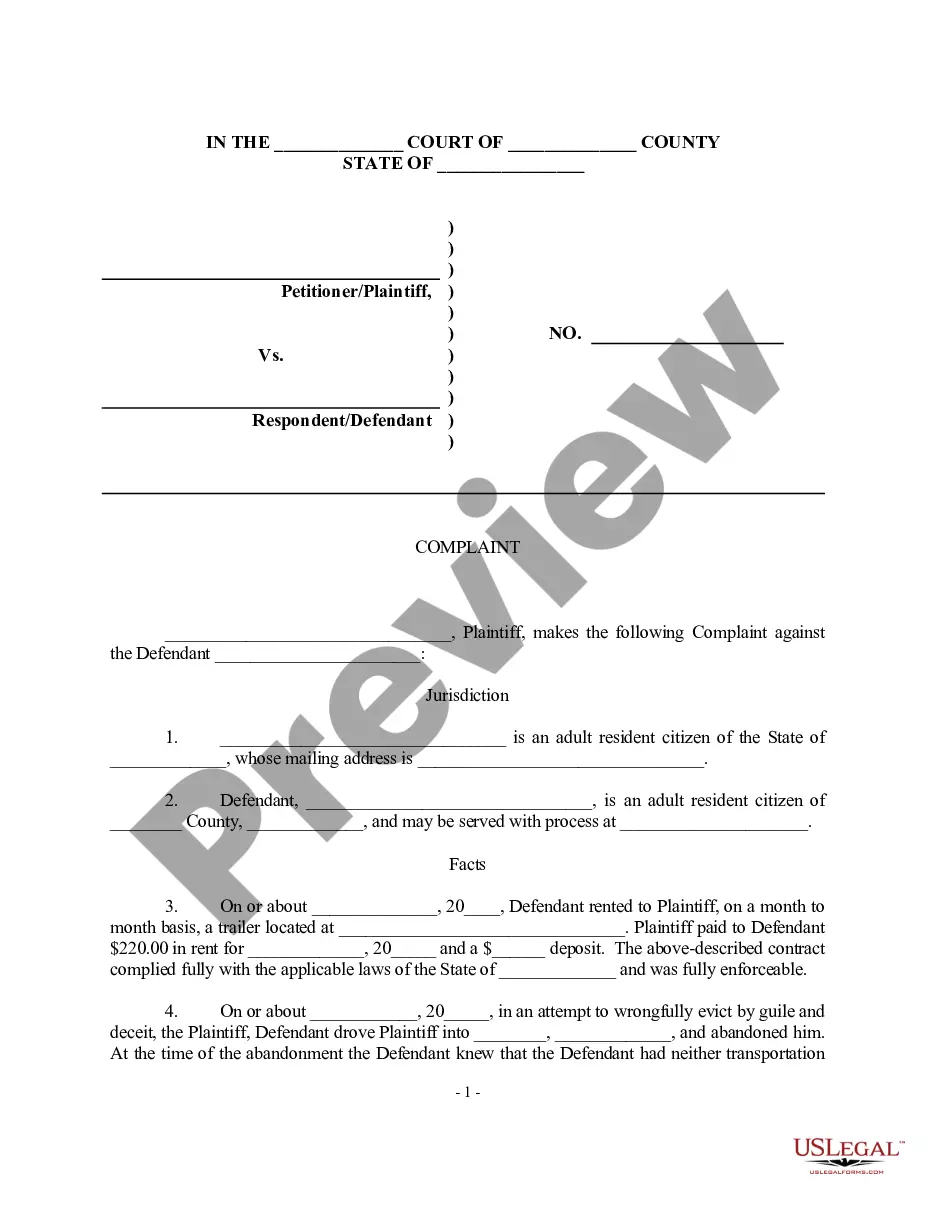
This Complaint in Small Claims Court for Failure or Refusal to Return Money Deposited for Apartment is a legal document used to formally initiate a lawsuit against a landlord or property manager who has failed to return a security deposit. This form follows the notice pleadings format of the Federal Rules of Civil Procedure, making it suitable for most states. Unlike other complaints, this form is specifically designed for small claims and focuses on issues related to rental deposits, ensuring a streamlined approach to seeking restitution.
What’s included in this form
- Name and address of the plaintiff and defendant.
- Date of the agreement regarding the deposit which includes its amount.
- Specific conditions under which the deposit was to be returned.
- Explanatory details regarding the failure to return the deposit.
- Requested judgment amount and costs associated with the suit.
Common use cases
This form is used when a landlord or property manager refuses to return a security deposit after the lease has ended or when stipulated conditions have been met. It is appropriate in cases where informal requests for the return of the deposit have failed, and the tenant seeks to recover the money through formal legal proceedings in small claims court.
Who can use this document
- Tenants who have paid a security deposit for an apartment.
- Individuals seeking to recover their money due to a landlord's refusal to return the deposit.
- Anyone looking to resolve disputes over rental agreements regarding deposits in small claims court.
How to prepare this document
- Identify the parties involved by entering the names and addresses of both the plaintiff and defendant.
- Specify the date when the deposit agreement was made and the amount of the deposit.
- Clearly state the conditions that warranted the return of the deposit.
- Provide detailed explanations of any events that justifiably required the deposit to be returned.
- Enter the date the defendant was notified and summarize their failure to return the deposit.
- Complete the demand for judgment by specifying the amount to be recovered and any associated costs.
Is notarization required?
This form does not typically require notarization to be legally valid. However, some jurisdictions or document types may still require it. US Legal Forms provides secure online notarization powered by Notarize, available 24/7 for added convenience.
Get your form ready online
Our built-in tools help you complete, sign, share, and store your documents in one place.
Make edits, fill in missing information, and update formatting in US Legal Forms—just like you would in MS Word.
Download a copy, print it, send it by email, or mail it via USPS—whatever works best for your next step.
Sign and collect signatures with our SignNow integration. Send to multiple recipients, set reminders, and more. Go Premium to unlock E-Sign.
If this form requires notarization, complete it online through a secure video call—no need to meet a notary in person or wait for an appointment.
We protect your documents and personal data by following strict security and privacy standards.

Make edits, fill in missing information, and update formatting in US Legal Forms—just like you would in MS Word.

Download a copy, print it, send it by email, or mail it via USPS—whatever works best for your next step.

Sign and collect signatures with our SignNow integration. Send to multiple recipients, set reminders, and more. Go Premium to unlock E-Sign.

If this form requires notarization, complete it online through a secure video call—no need to meet a notary in person or wait for an appointment.

We protect your documents and personal data by following strict security and privacy standards.
Common mistakes
- Failing to provide accurate names and addresses of the parties involved.
- Not including specific details about the lease agreement and conditions for deposit return.
- Omitting relevant documentation or evidence to support your claim.
- Neglecting to request the appropriate judgment amount or costs.
Benefits of using this form online
- Quick and easy access to download the form from anywhere.
- Editability allows you to customize the form according to your specific situation.
- Reliability with templates drafted by licensed attorneys ensures legal compliance.
Looking for another form?
Form popularity
FAQ
A holding deposit can be retained if the tenant:withdraws from the property (unless the landlord has acted in such a way that the tenant couldn't reasonably be expected to wish to proceed with the tenancy); or. fails to take all reasonable steps to enter into a tenancy agreement.
Fill out the Request for Return of Security Deposit form (not interactive; you must print, then fill out the form). Send the form to your former landlord. Keep a photo-copy of the form for yourself. Hold on to the Return Receipt when it comes back in the mail.
Alerting state or local health and building inspectors. Suing your landlord in small claims court.
The property has been damaged. the rent hasn't been paid. items are missing. the property needs to be cleaned. you left before the end of your tenancy.
5 Times a Landlord Does Not Have to Return a Tenant's Security Deposit. Breaking or Terminating a Lease Early. Nonpayment of Rent. Damage to the Property. Cleaning Costs. Unpaid Utilities.
You owe rent. you've damaged the property - this could be something like a spill on the carpet or a mark on the wall where you've hung a picture. you've lost or broken some items from the inventory, like some cutlery or mugs.
1. You ought to have issued legal notice to the landlord before vacating the premises. Issue a lawyer's notice now to him expressing your intention to vacate and claim the recovery of the advance deposit.If he refuses to refund the deposit then you may file a lawsuit for recovery along with interest against him.
If your deposit didn't need to be protected and your landlord refuses to give it back, you might have to take them to court. Going to court can be expensive and stressful. You'll have to pay court costs upfront but you might get them back if you win your case.