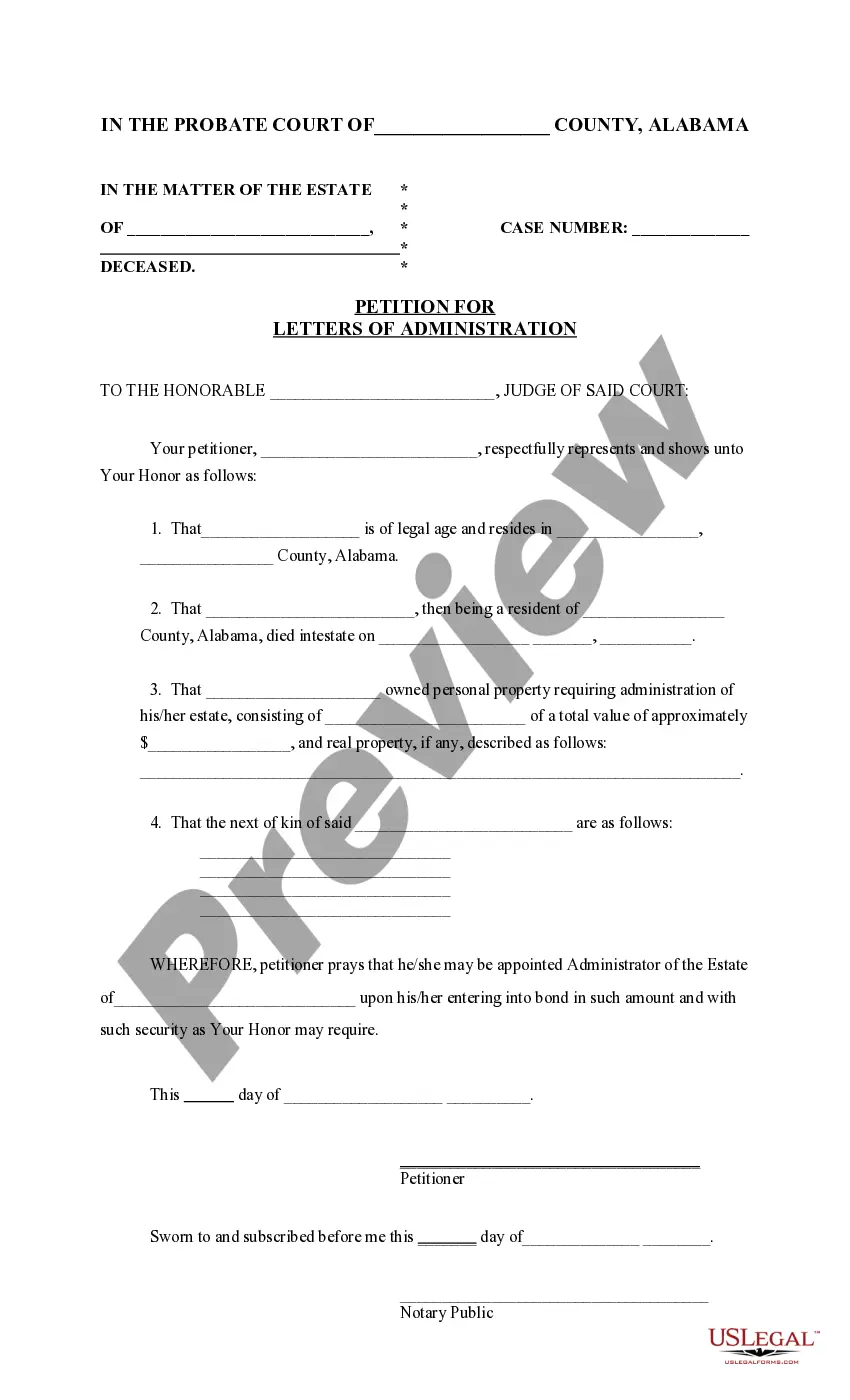
Agreement of Employee Service Provider to Maintain Workers Compensation Insurance
What this document covers
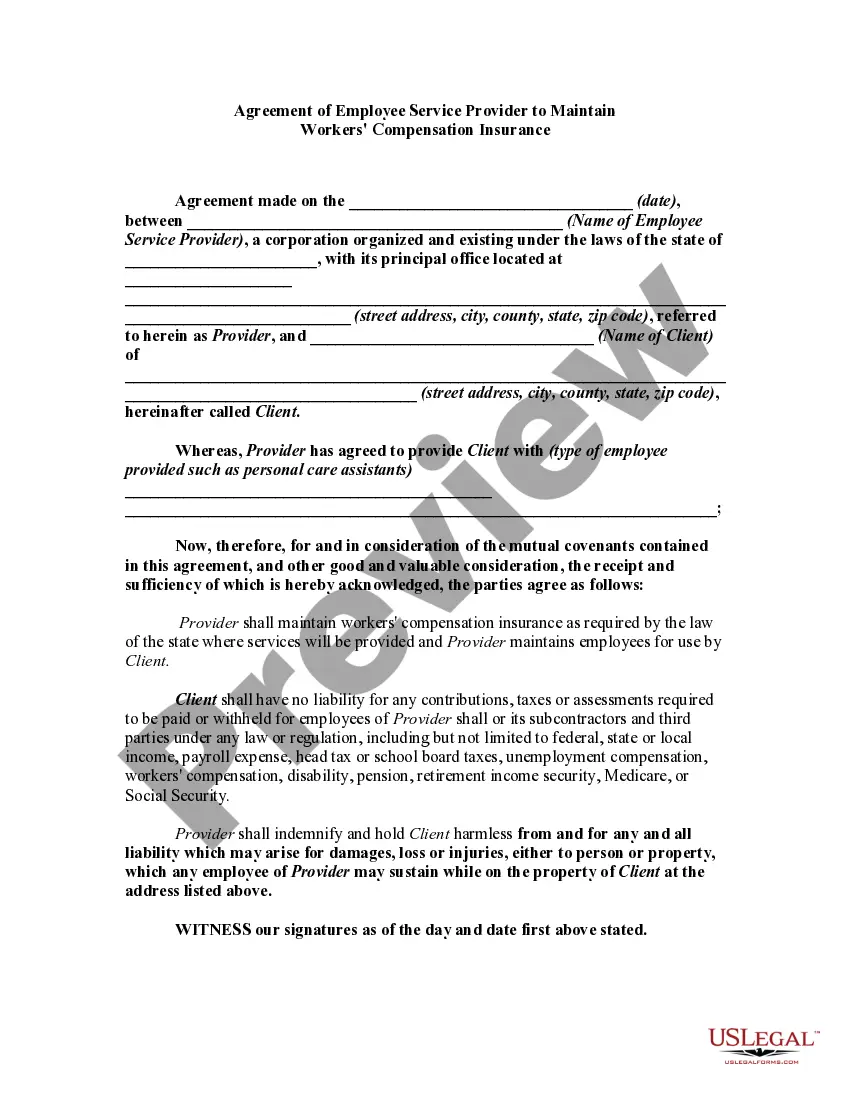
The Agreement of Employee Service Provider to Maintain Workers Compensation Insurance is a legal document that outlines the responsibilities of an employee service provider to maintain workers' compensation insurance for their employees. This form ensures that clients are not liable for any payroll-related taxes or assessments related to the provider's employees. It differs from other employment agreements by specifically addressing workers' compensation insurance requirements and client liability concerns.
Key components of this form
- Date of the agreement.
- Name and address of the Employee Service Provider.
- Name and address of the Client.
- Description of the type of employees being provided.
- Clause describing the Provider's obligation to maintain workers' compensation insurance.
- Indemnification clause protecting the Client from liability related to Provider's employees.
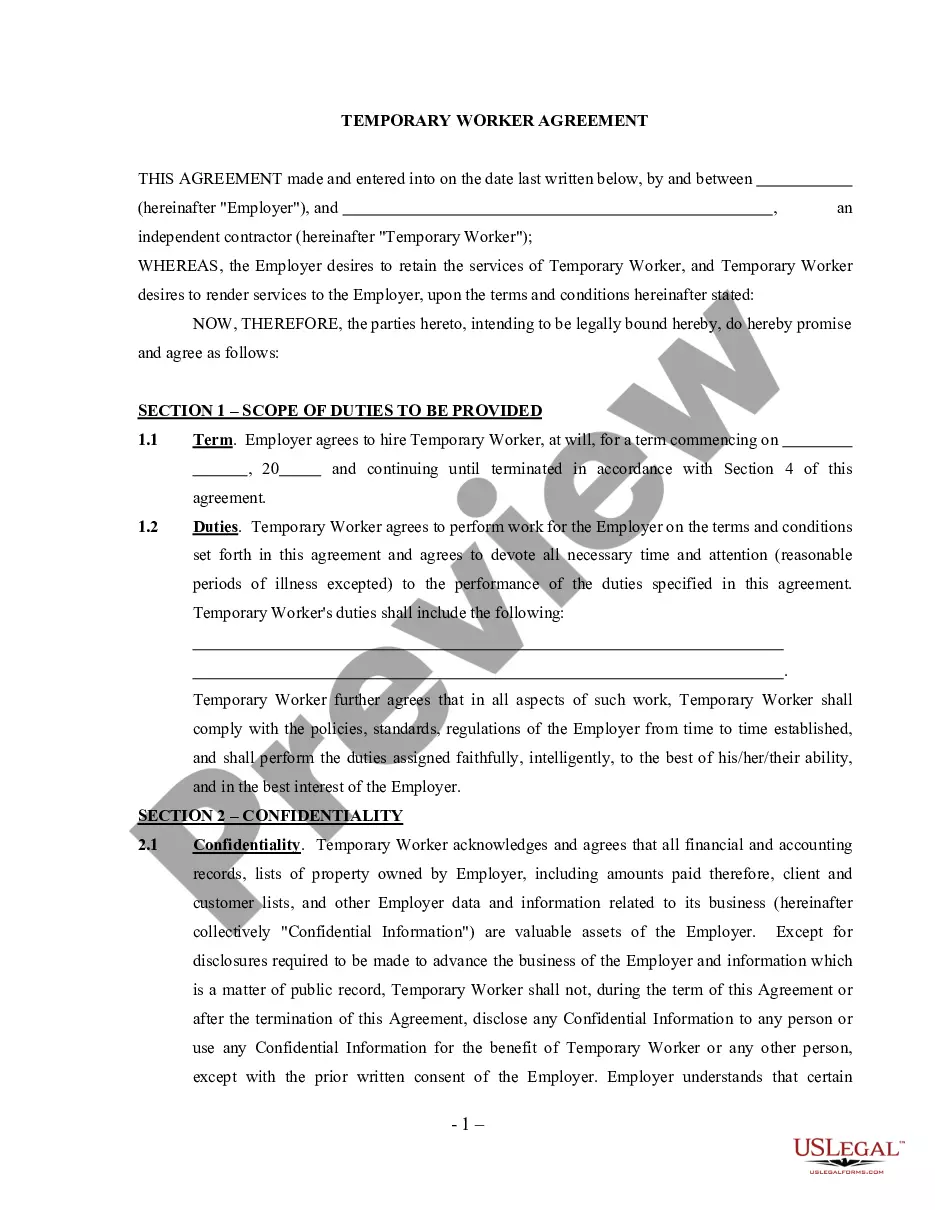
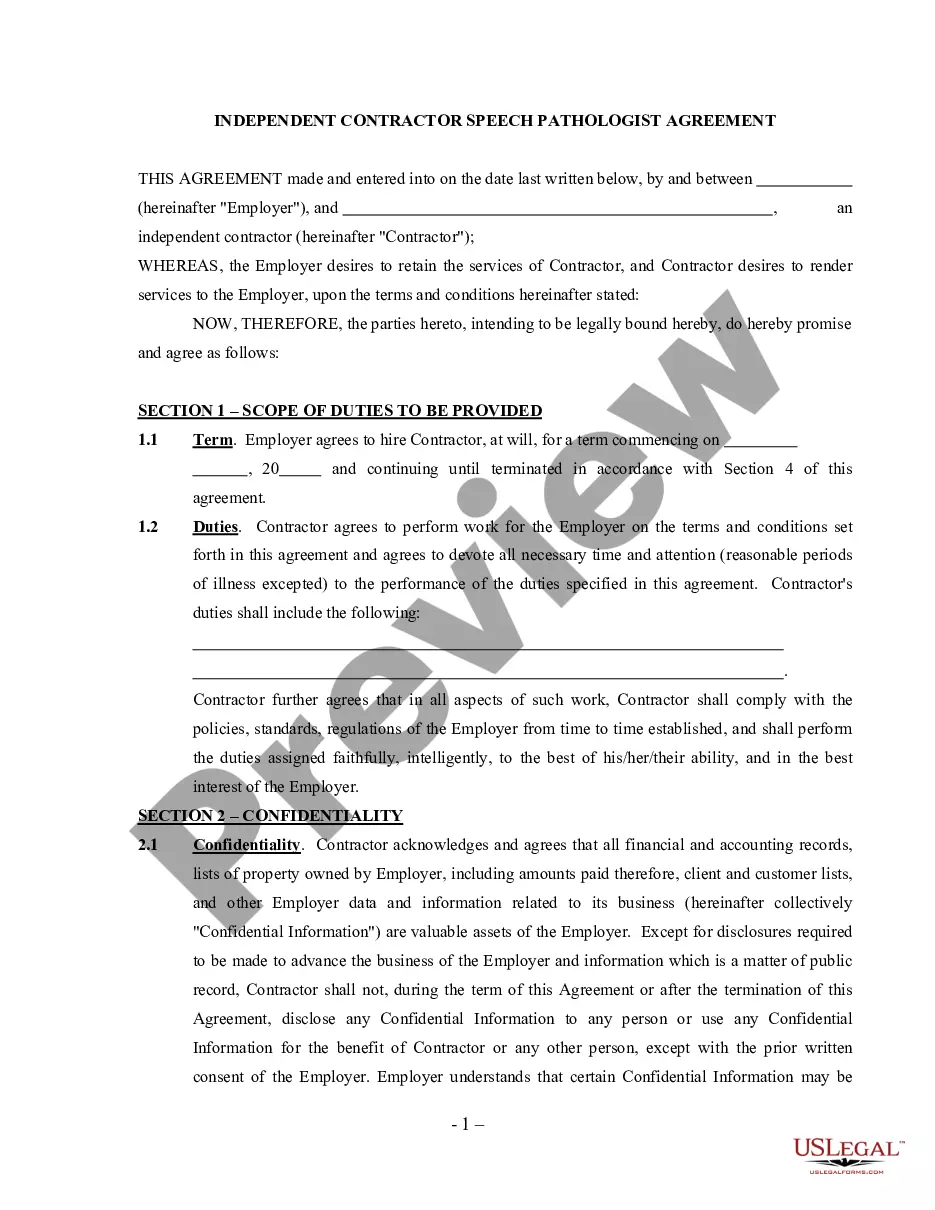
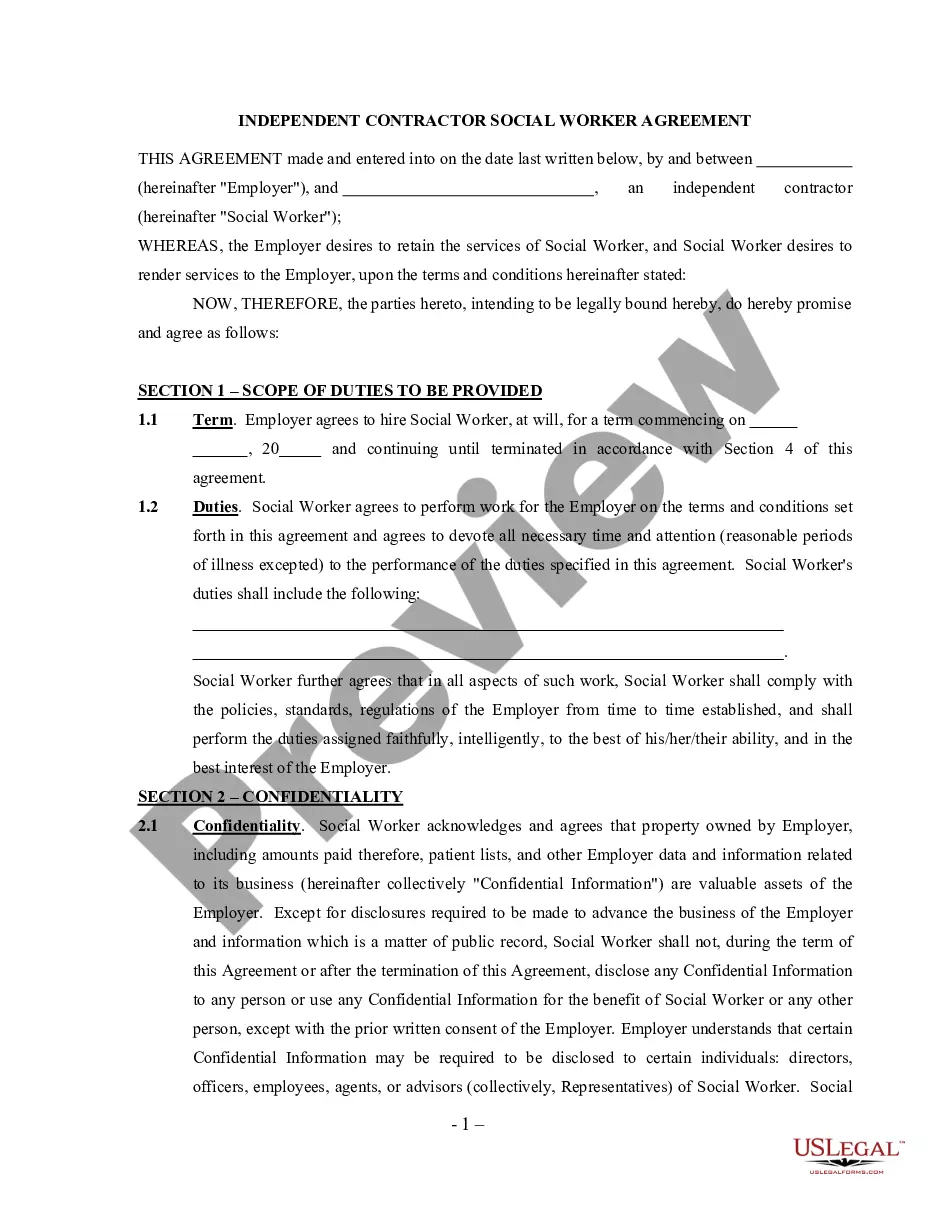
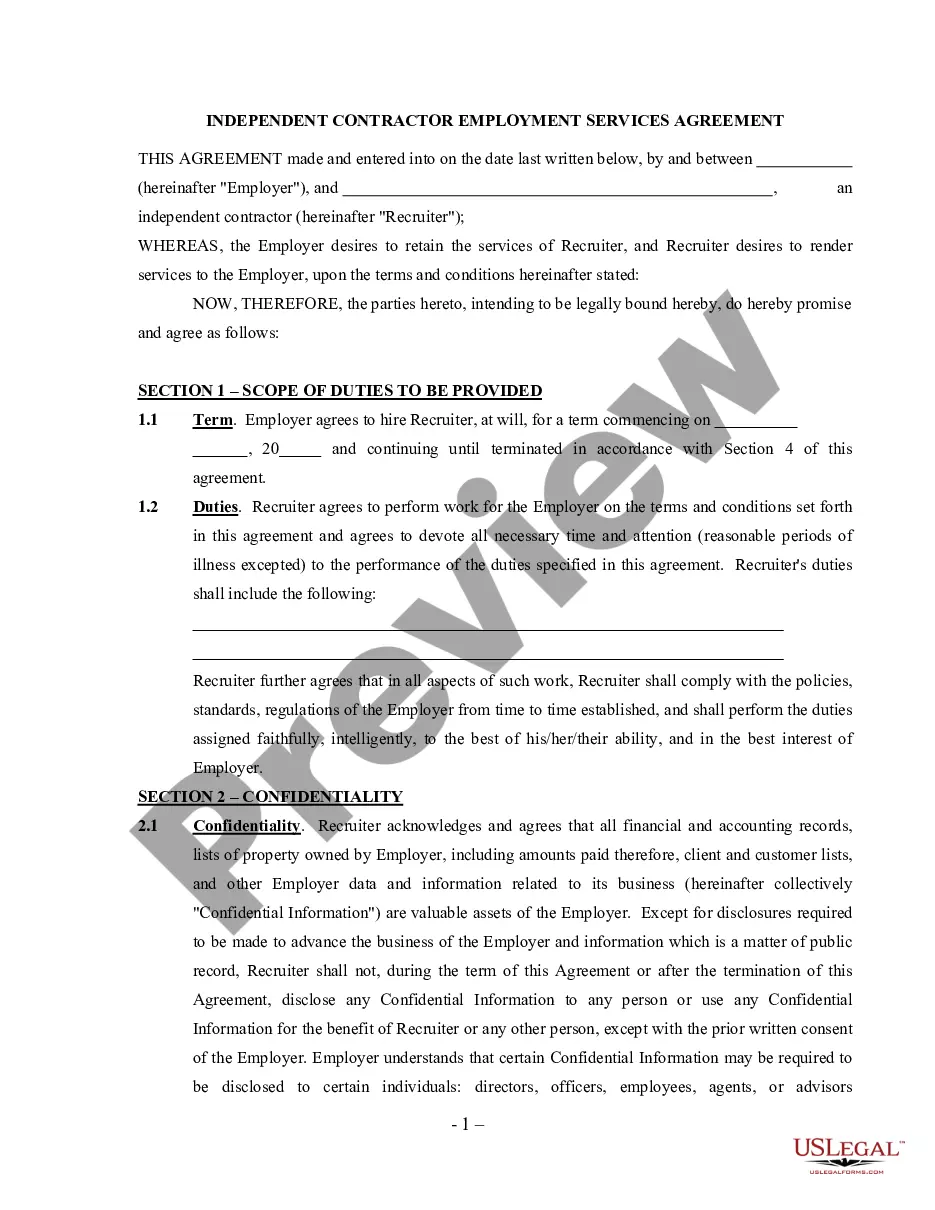
Common use cases
This form should be used when an employee service provider is hired to provide employees to a client. It is essential when the provider must legally maintain workers' compensation insurance and needs to clarify that the client is not responsible for any related taxes or assessments. Utilizing this agreement can help prevent potential legal and financial responsibilities for the client concerning the provider's workforce.
Who should use this form
- Employee service providers who supply workers to clients.
- Businesses hiring employee service providers for specific worker needs.
- Clients who want legal protection from liabilities associated with the provider's employees.
Steps to complete this form
- Identify and enter the date of the agreement.
- Fill in the name and address of the Employee Service Provider.
- Provide the name and address of the Client.
- Specify the type of employee or services being provided.
- Review the agreement clauses to ensure compliance with state laws.
- Both parties should sign and date the agreement to finalize the document.
Notarization requirements for this form
This form does not typically require notarization unless specified by local law. It is advisable to check jurisdictional requirements to ensure proper execution.
Get your form ready online
Our built-in tools help you complete, sign, share, and store your documents in one place.
Make edits, fill in missing information, and update formatting in US Legal Forms—just like you would in MS Word.
Download a copy, print it, send it by email, or mail it via USPS—whatever works best for your next step.
Sign and collect signatures with our SignNow integration. Send to multiple recipients, set reminders, and more. Go Premium to unlock E-Sign.
If this form requires notarization, complete it online through a secure video call—no need to meet a notary in person or wait for an appointment.
We protect your documents and personal data by following strict security and privacy standards.

Make edits, fill in missing information, and update formatting in US Legal Forms—just like you would in MS Word.

Download a copy, print it, send it by email, or mail it via USPS—whatever works best for your next step.

Sign and collect signatures with our SignNow integration. Send to multiple recipients, set reminders, and more. Go Premium to unlock E-Sign.

If this form requires notarization, complete it online through a secure video call—no need to meet a notary in person or wait for an appointment.

We protect your documents and personal data by following strict security and privacy standards.
Typical mistakes to avoid
- Failing to enter the correct date or details of the parties involved.
- Not specifying the type of employees or services provided, leading to ambiguity.
- Overlooking state-specific insurance requirements, which can lead to non-compliance.
- Not obtaining signatures from both parties to make the agreement enforceable.
Why complete this form online
- Quick and convenient access to a legally compliant template.
- Editable fields allow for customization to meet specific needs.
- Drafted by licensed attorneys to ensure legal robustness.
- Instant downloads make it easy to start using the form immediately.
- Legally binds both parties in a clear agreement regarding worker's compensation insurance responsibilities.
- Protects clients from potential liabilities that may arise from employee-related claims.
What to keep in mind
- The form transfers liability for worker's compensation insurance from the client to the provider.
- Clear identification of all parties and services is crucial.
- This form is tailored for the unique relationship between a business and its employee service provider.
Looking for another form?
Form popularity
FAQ
Salary/wages. overtime, shift and other allowances. over award payments. bonuses, commissions. payments to working directors (including directors' fees) payments to pieceworkers. payments for sick leave, public holidays and the associated leave loadings. value of any substitutes for wages.
Employer Responsibilities If an employee is injured, you are responsible for making sure that a First Report of Injury, or other similar document, is completed and forwarded to your workers' compensation carrier. You are responsible for making sure that you do not violate any laws or rights of the injured employee.
Managers assist safety investigators in evaluating compensation claims. Investigations can include the evaluation of medical treatment and interviews with the injured workers. The manager also uses the agency's fraud detection process to uncover false claims for compensation.
Get your weekly disability check started, if you're not receiving it already. Maximize your weekly benefit check. Report all super-added injuries. Seek psychological care, when appropriate. Seek pain management care, when appropriate. Don't refuse medical procedures. Be very careful what you tell the doctor.
The Heart of Workers' Comp At Genex, case managers manage the entire continuum of care for injured workers, from injury through return to work. They are responsible for assessing, planning, coordinating, implementing, and evaluating injured workers through the medical case management process.
Injury Reporting Process- Employers should have an injury reporting plan in place. Injured Employees- A plan should be established to provide prompt medical attention to any injured employee. Claim Reporting- Claims should be reported to the carrier the same day as the occurrence.
Your obligations Under NSW workers compensation legislation every employer is required to: have workers compensation insurance. display the If you get injured at work poster. have a documented return to work program describing the steps you will take if a worker is injured.
As a general rule of thumb, you should never discuss anything except the basic facts of the accident, including where it occurred, the date and time it occurred, what type of accident it was, and which body parts were injured.
What Is an Independent Medical Exam? What Happens at an IME? Exaggerating Your Symptoms. Lying About Symptoms You Don't Have. Leaving Out Past Injuries. Omitting Details About the Accident. Saying Negative Things About Your Employer.