Sample Letter containing additional Responses or Clarifications to Requests for Production of Documents
Understanding this form
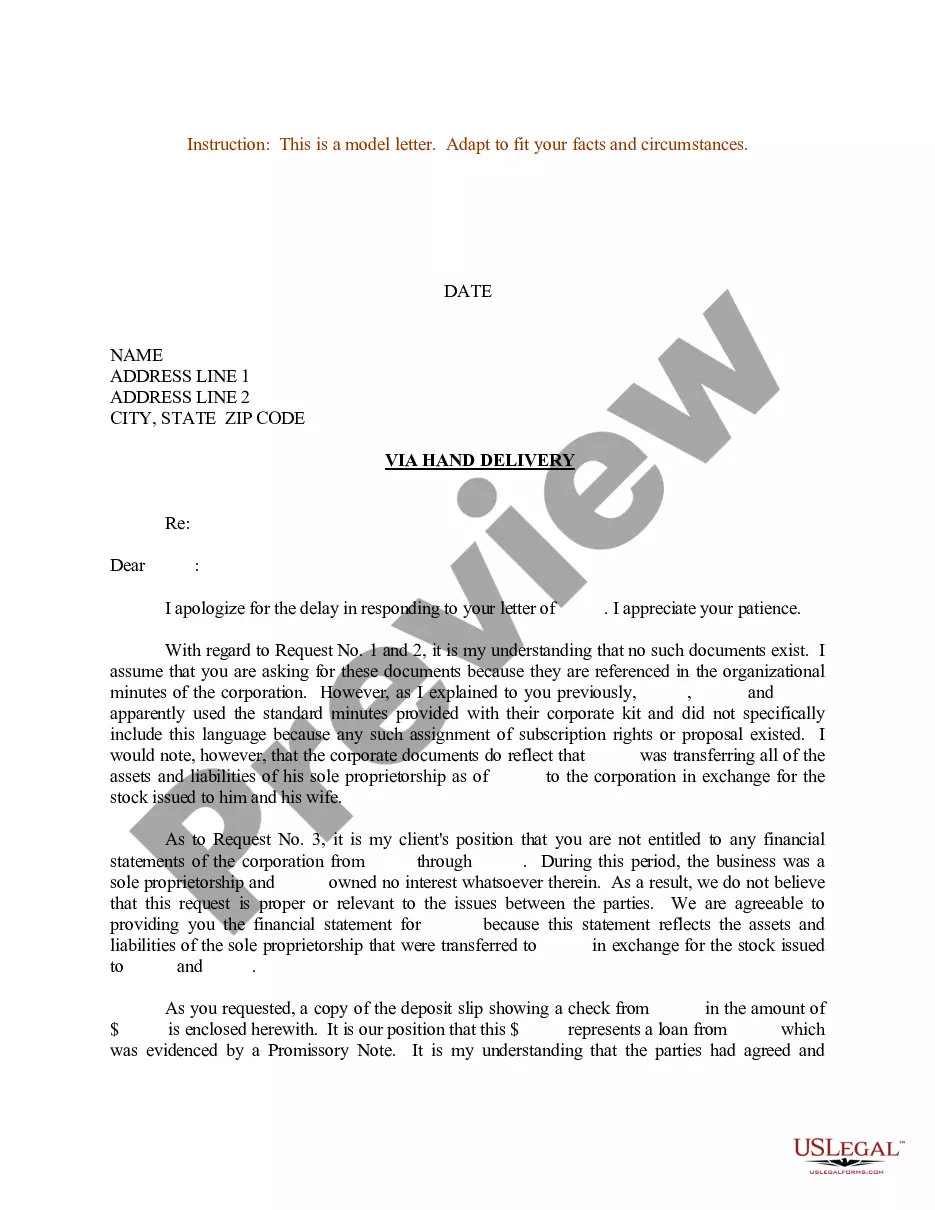
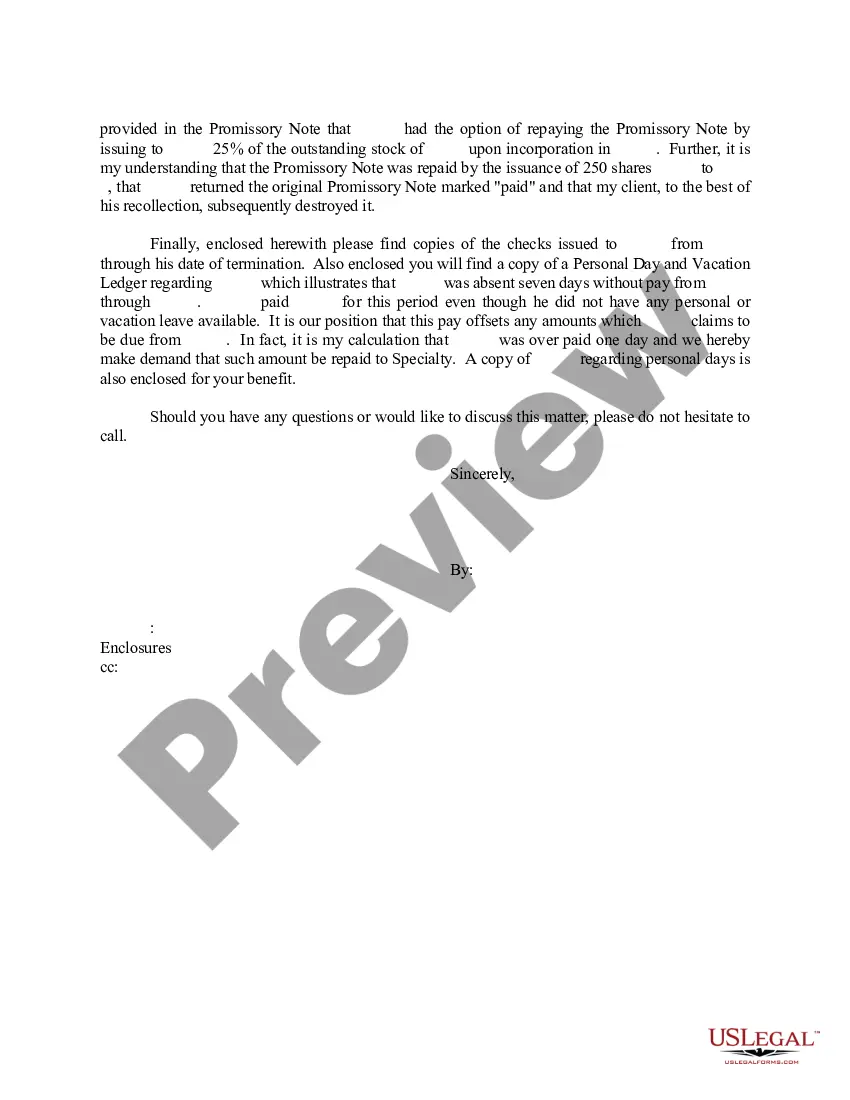
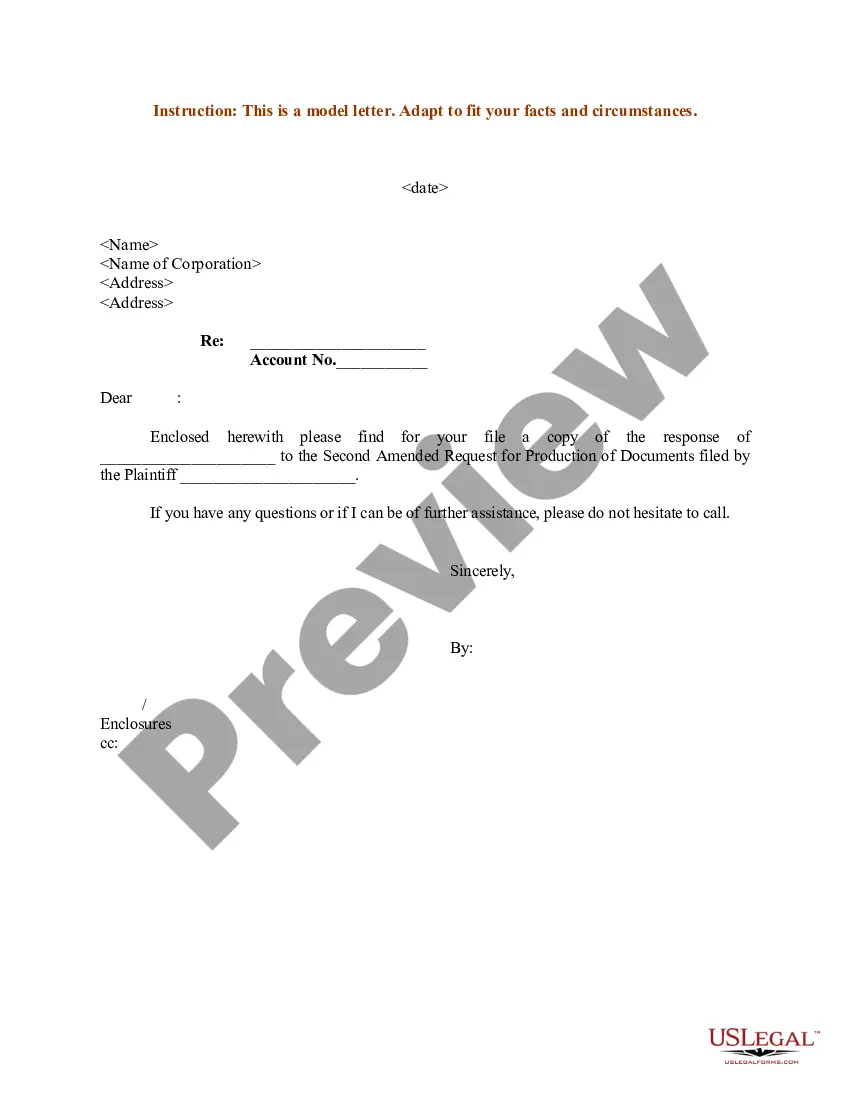
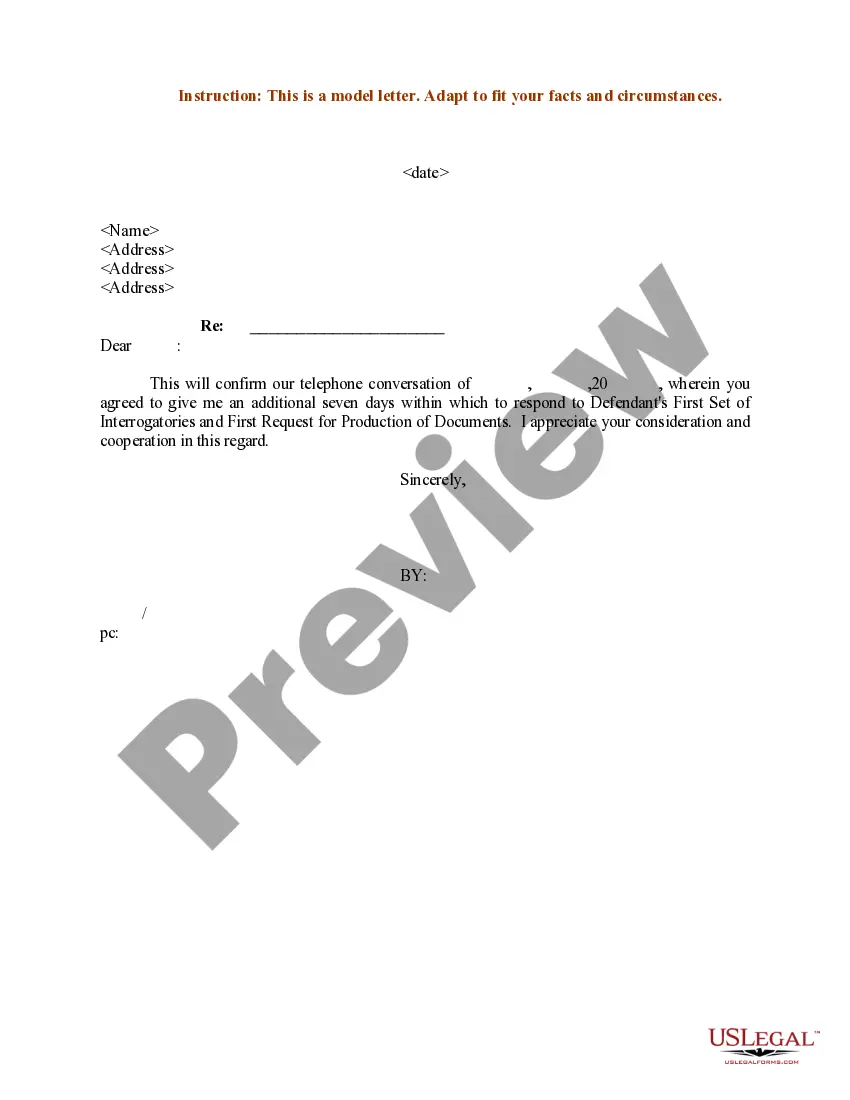
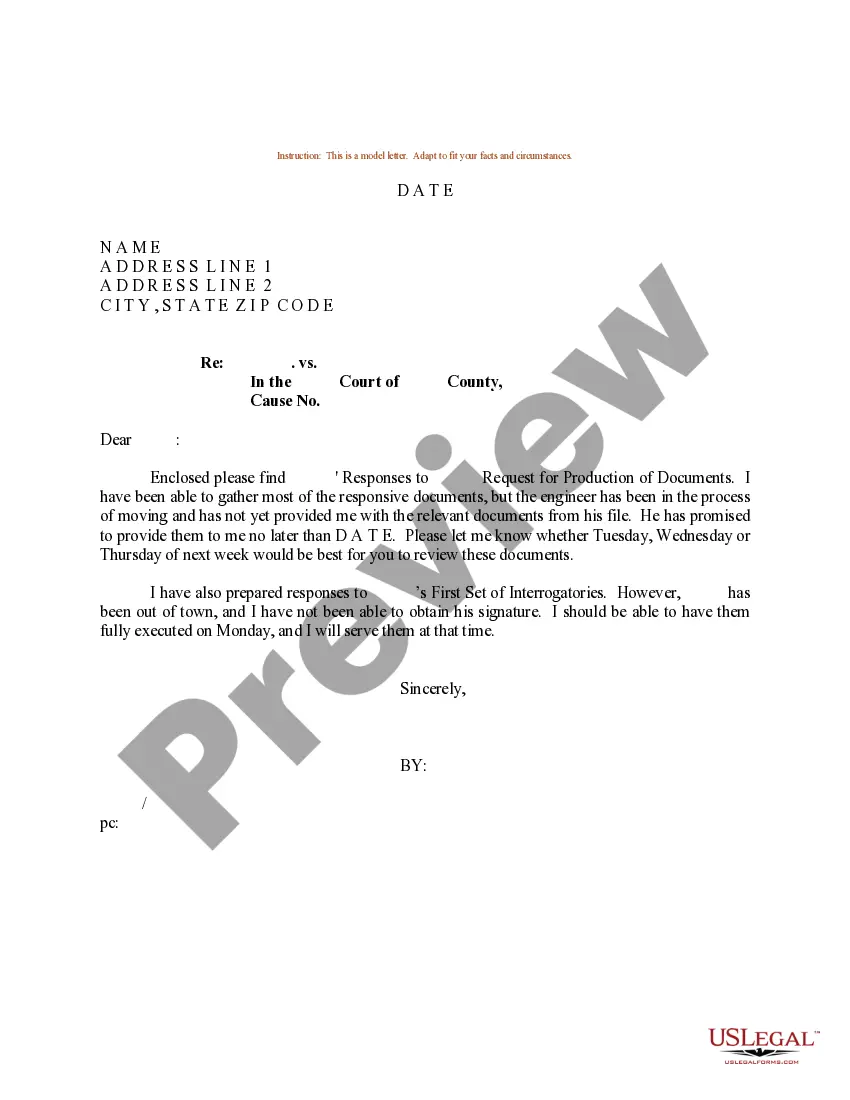
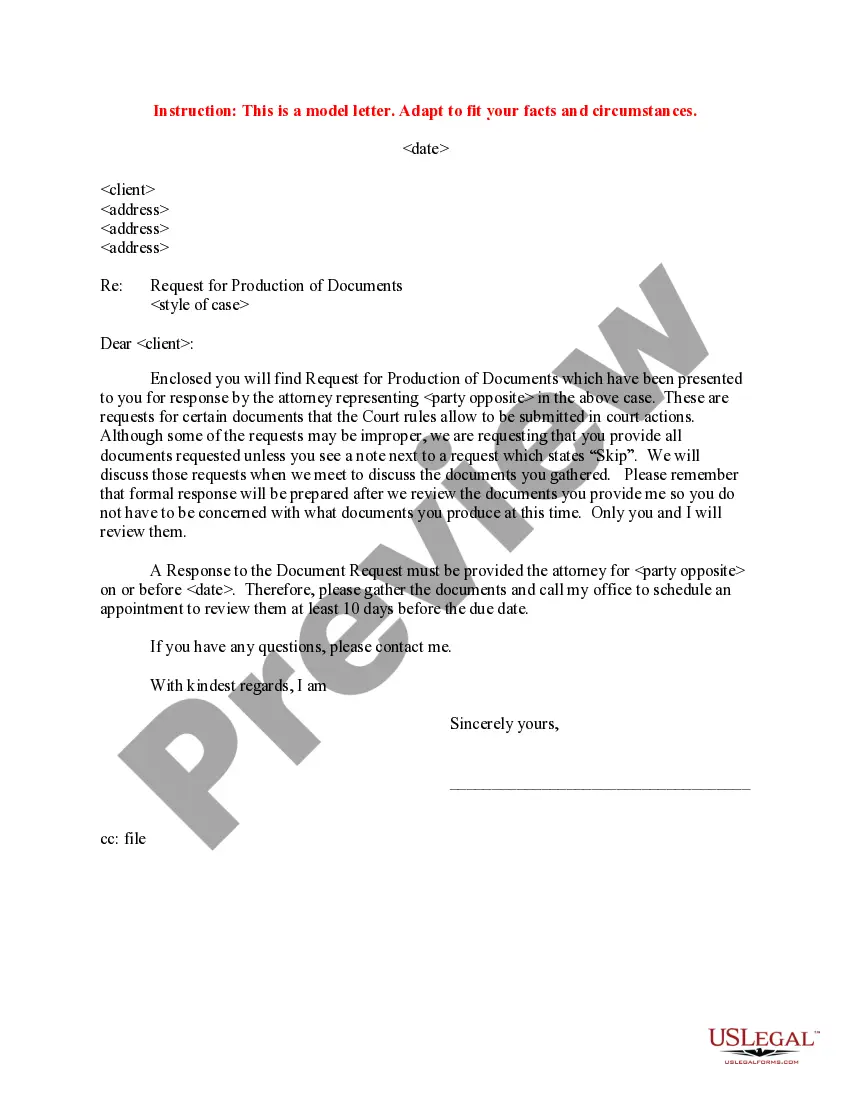
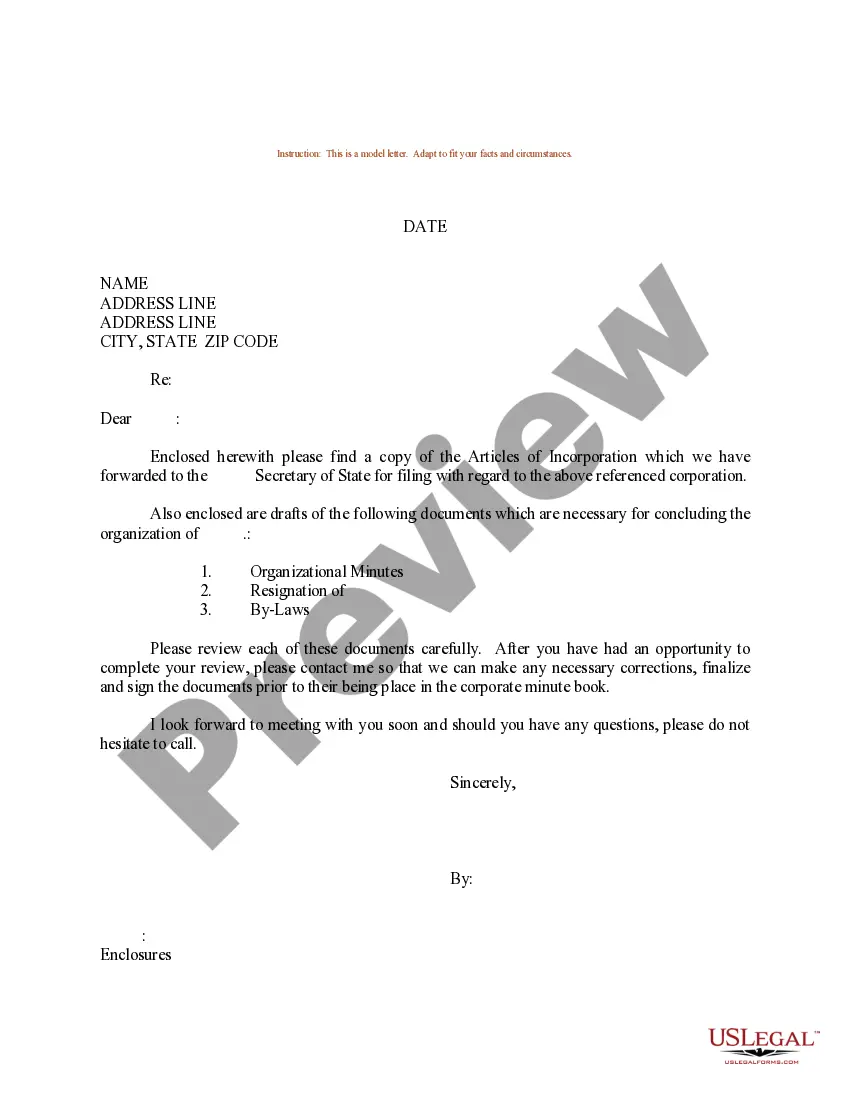
The Sample Letter containing additional Responses or Clarifications to Requests for Production of Documents is a formal correspondence template. This document serves to respond to requests for the production of documents in a legal context. It helps clarify any points or provide additional information that may be required during legal proceedings. This form is especially useful for ensuring responsive communication with opposing counsel while maintaining professionalism and compliance with legal standards.
Key parts of this document
- Date line to indicate when the letter is written.
- Recipient's name and address for proper identification.
- Clear subject line indicating the nature of the document request.
- Body of the letter containing specific responses or clarifications.
- Signature line for the sender's confirmation.

When to use this form
This form should be utilized when you receive a request for the production of documents in a legal matter. It is appropriate in settings such as litigation or discovery processes, where responding accurately and fully is crucial to your case. Use this letter to ensure that you meet the deadlines set by the court or opposing party while also offering any additional information or clarifications that may support your position.
Intended users of this form
This form is intended for use by:
- Individuals or businesses involved in legal disputes.
- Attorneys working on behalf of clients who need to respond to document requests.
- Any party participating in legal proceedings that require the submission of documents.
Steps to complete this form
- Enter the date at the top of the letter.
- Fill in the recipient's name and address accurately.
- Craft the subject line to reference the document request explicitly.
- Clearly articulate your responses or clarifications in the body of the letter.
- Sign the letter and include your typed name underneath.
Is notarization required?
This form does not typically require notarization unless specified by local law. Always check relevant state regulations to confirm whether notarization is necessary for your specific situation.
Get your form ready online
Our built-in tools help you complete, sign, share, and store your documents in one place.
Make edits, fill in missing information, and update formatting in US Legal Forms—just like you would in MS Word.
Download a copy, print it, send it by email, or mail it via USPS—whatever works best for your next step.
Sign and collect signatures with our SignNow integration. Send to multiple recipients, set reminders, and more. Go Premium to unlock E-Sign.
If this form requires notarization, complete it online through a secure video call—no need to meet a notary in person or wait for an appointment.
We protect your documents and personal data by following strict security and privacy standards.

Make edits, fill in missing information, and update formatting in US Legal Forms—just like you would in MS Word.

Download a copy, print it, send it by email, or mail it via USPS—whatever works best for your next step.

Sign and collect signatures with our SignNow integration. Send to multiple recipients, set reminders, and more. Go Premium to unlock E-Sign.

If this form requires notarization, complete it online through a secure video call—no need to meet a notary in person or wait for an appointment.

We protect your documents and personal data by following strict security and privacy standards.
Common mistakes
- Failing to include all requested documents or clarifications.
- Not addressing the letter to the correct recipient.
- Missing the response deadline specified in the request.
- Using unclear language that may confuse the recipient.
Why use this form online
- Convenience of instant download, allowing for immediate use.
- Editability to tailor content based on specific situations.
- Access to templates drafted by licensed attorneys, ensuring legal compliance.
- Time-saving features that help streamline the response process.
Key takeaways
- This sample letter is useful for providing additional responses to document requests.
- It is essential for maintaining compliance during the discovery process.
- Proper completion involves clear communication and attention to detail.
Looking for another form?
Form popularity
FAQ
Requests for production may be used to inspect and copy documents or tangible items held by another party. Although these requests are most commonly used to obtain copies of documents, they can also be used to test, measure, photograph, etc., any type of physical evidence in the other party's possession or control.
If a request asks for a document, make a copy of the document; in your response, describe the document and say that a copy is attached; and attach a copy of the document to the responses you send back to the other side.
When you respond to a discovery request, you should make sure to do it within the timeframe listed in the discovery request or in the scheduling order if the judge issued one. In some cases, the judge will hold a court conference to establish a timeframe for discovery, motions, and the trial.
The making available by a party of documents in his possession, custody or power for inspection by the other party or for use as evidence at trial.
Thank you for your inquiry regarding our product or service. Thank you for your interest in our product or service. We would like to thank you for your letter inquiring about our product. We truly appreciate your letter asking for information about our service.
When responding to Requests for Admissions, remember to answer as follows: Admit: If any portion of the Request for Admission is true then you must admit to that portion of the request. You are also allowed to have a hybrid response admit the part of the request that is true while denying another part.
A request for production is a discovery device used to gain access to documents, electronic data, and physical items held by an opposing party in a legal matter. The aim is to gain insight into any relevant evidence that the opposing party holds.