Agreement By Natural Father to Support Child Born out of Lawful Wedlock with Father to Obtain Life Insurance to Protect Support Payments
Overview of this form
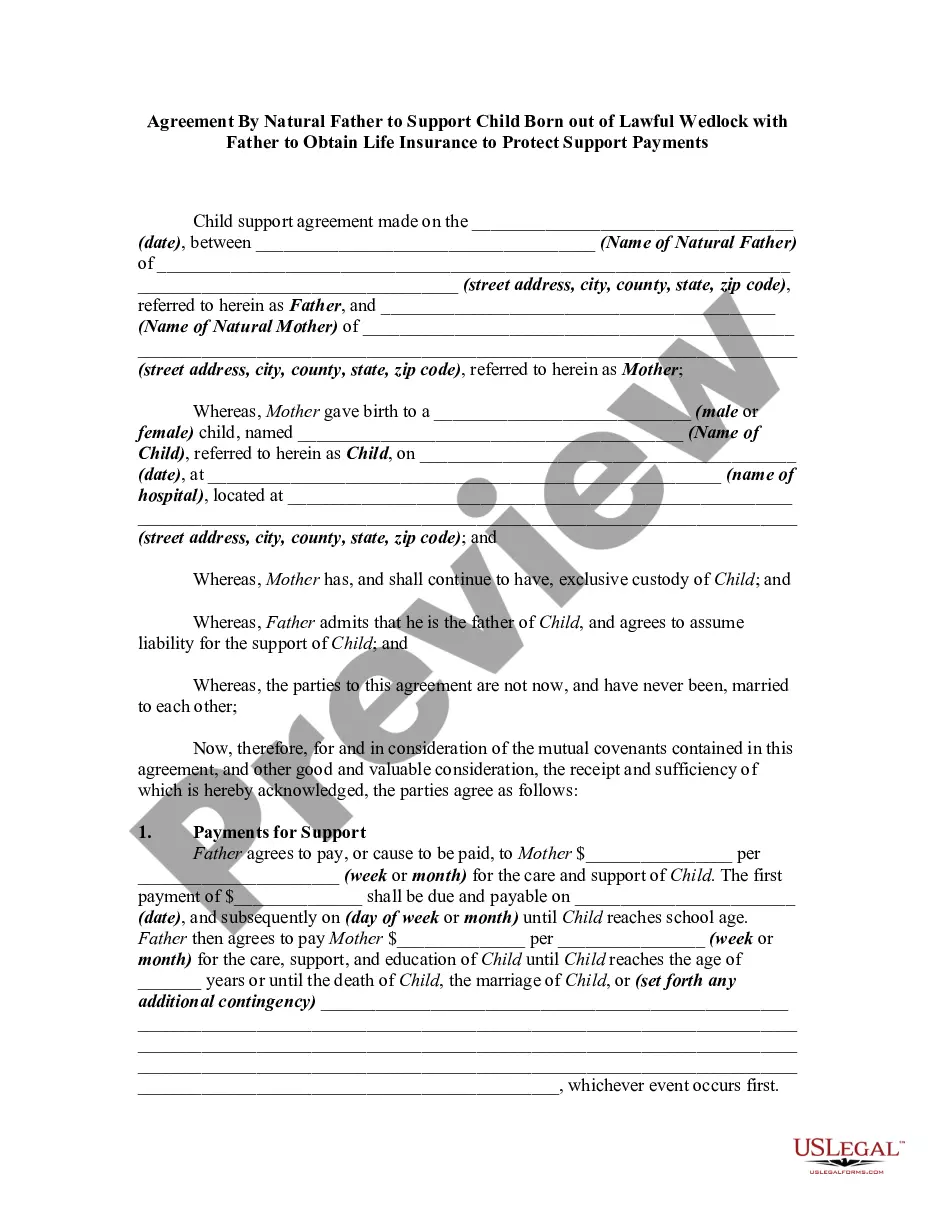
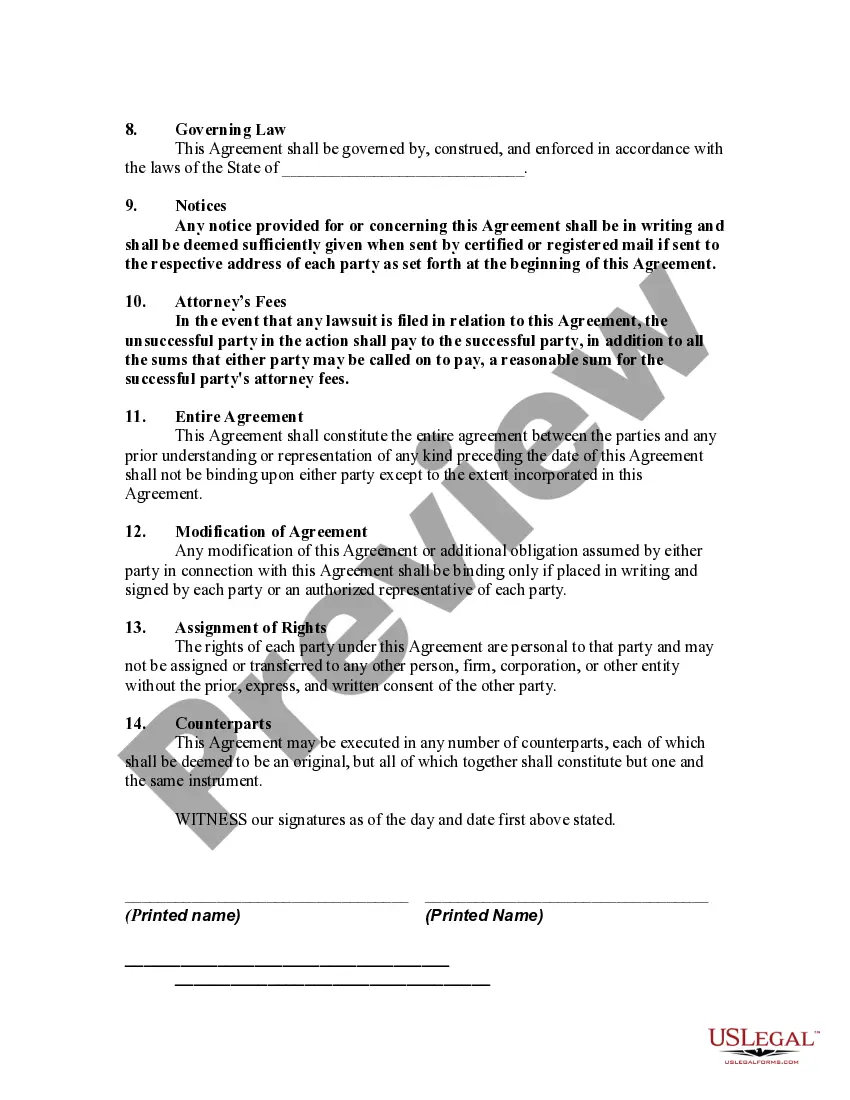
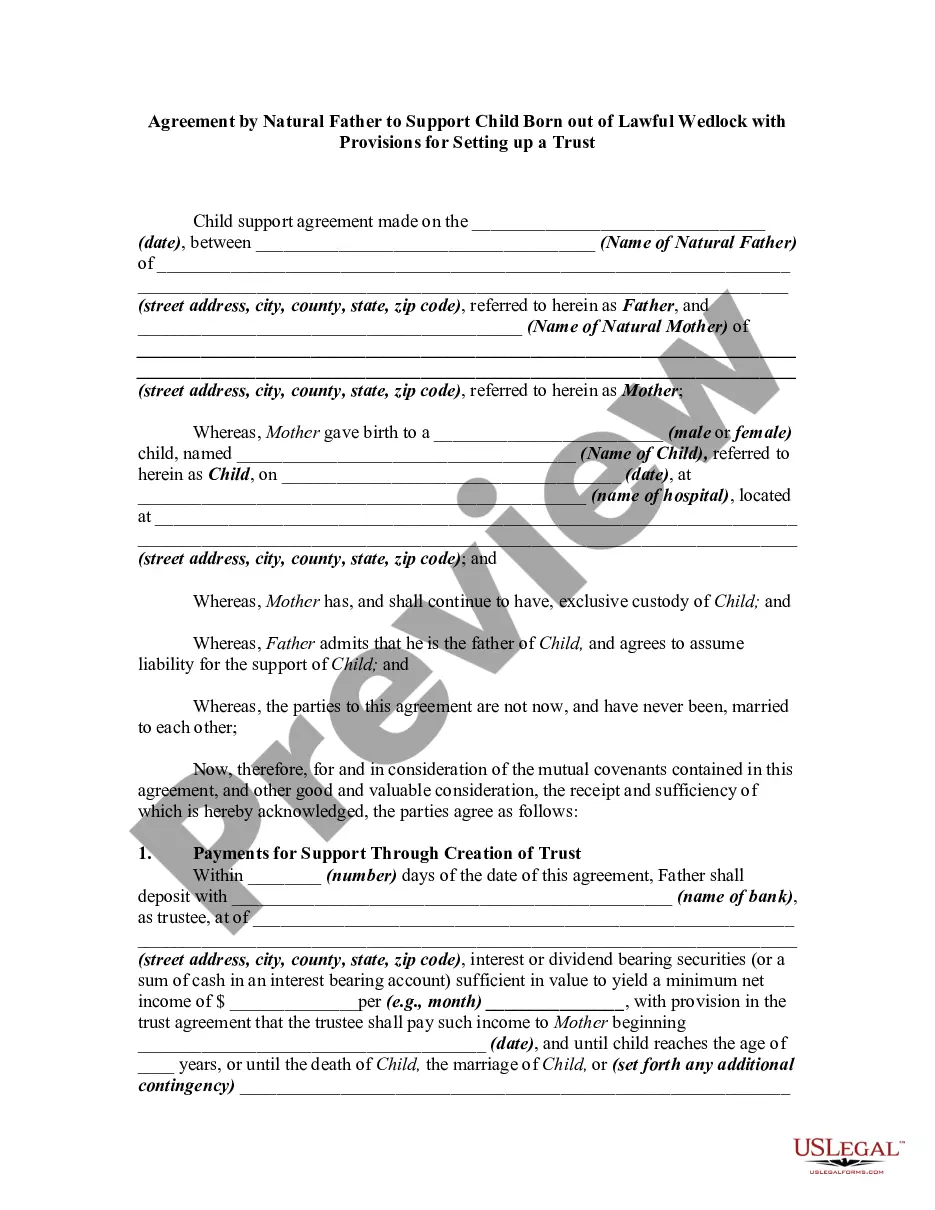
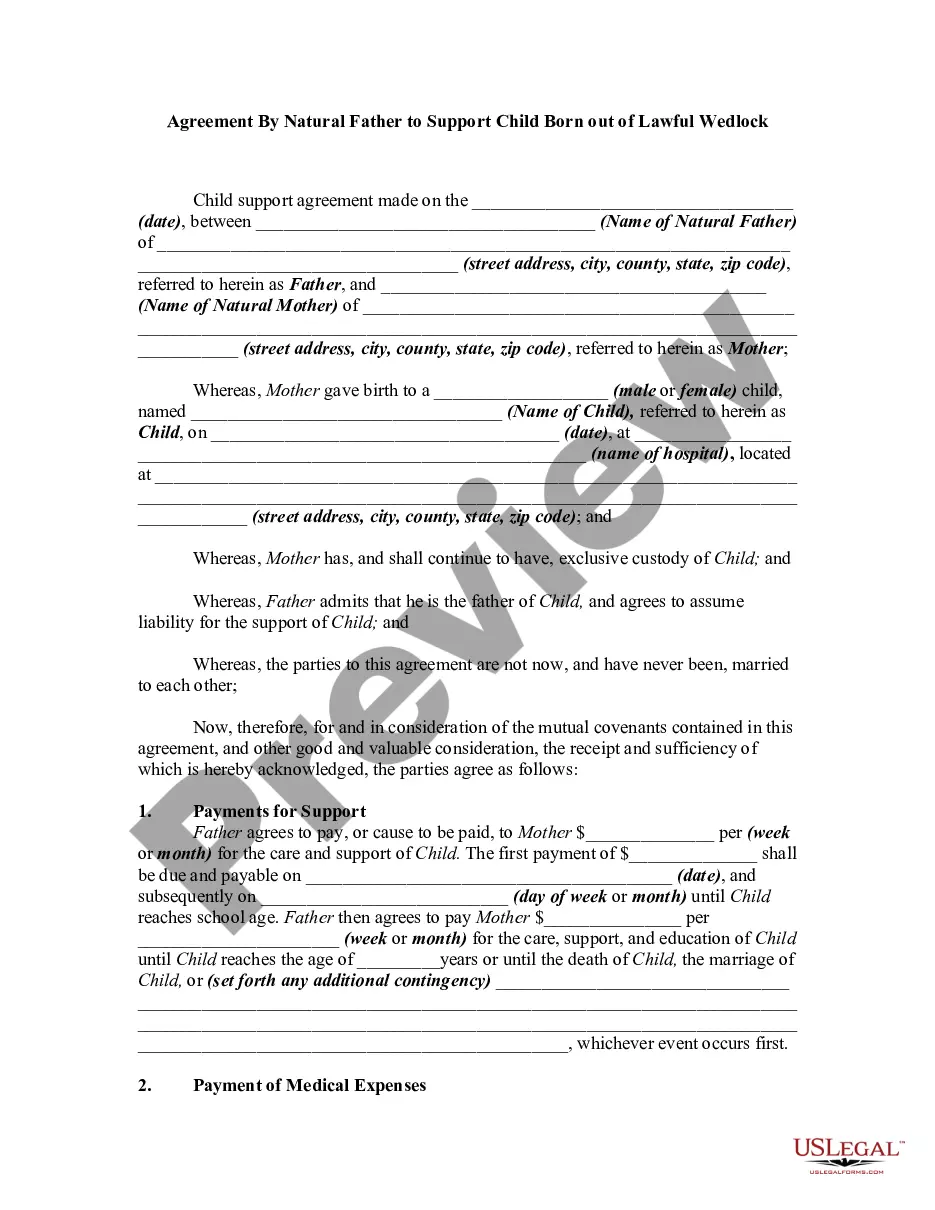
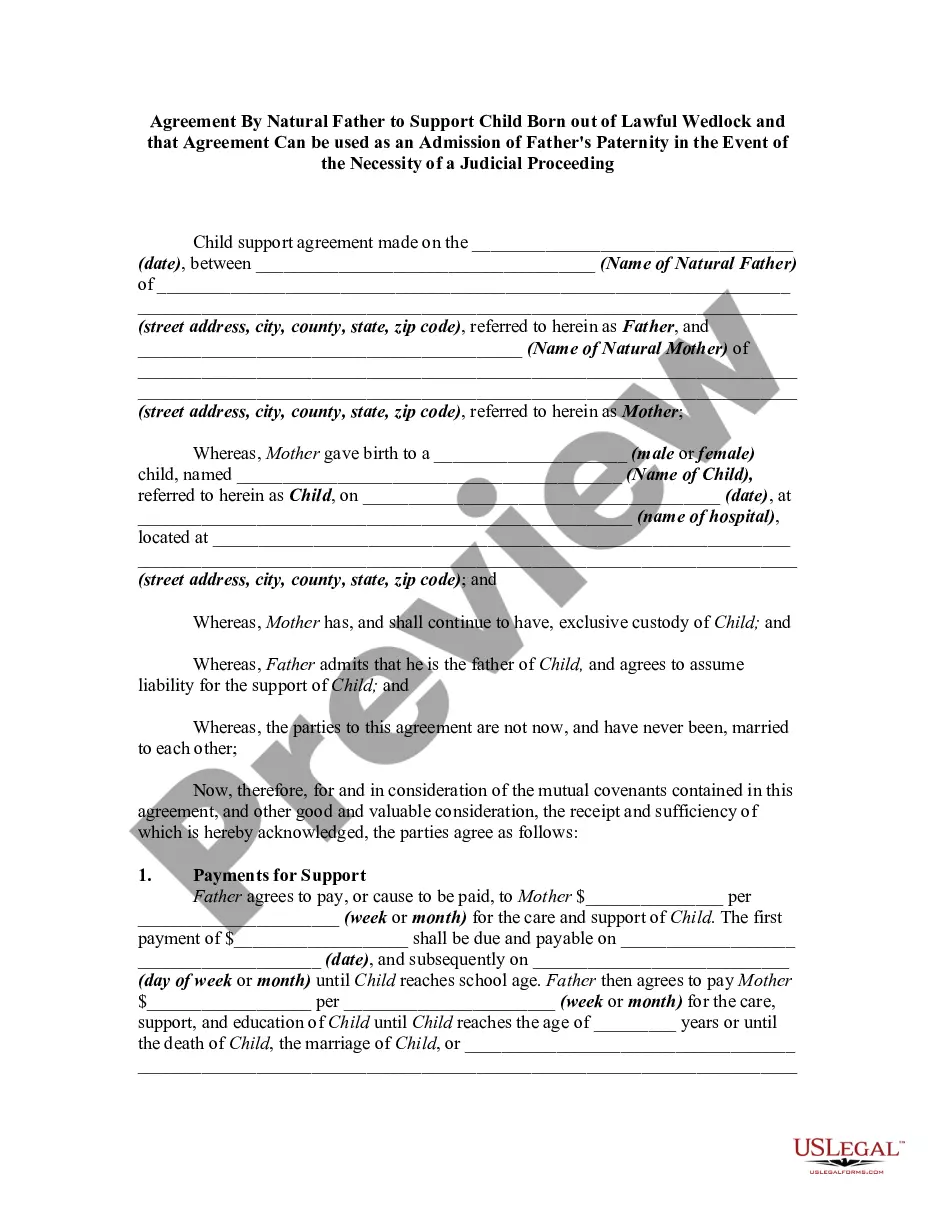
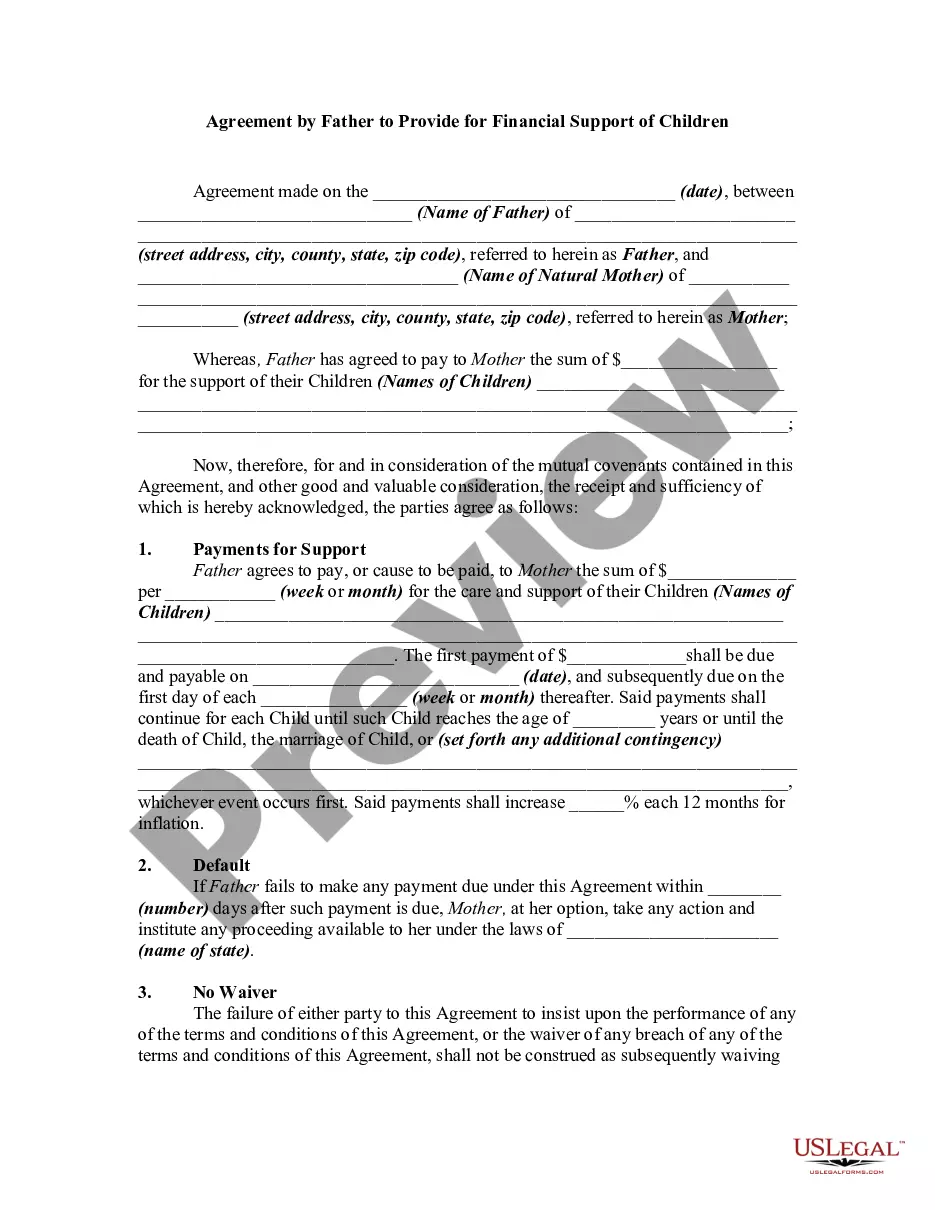
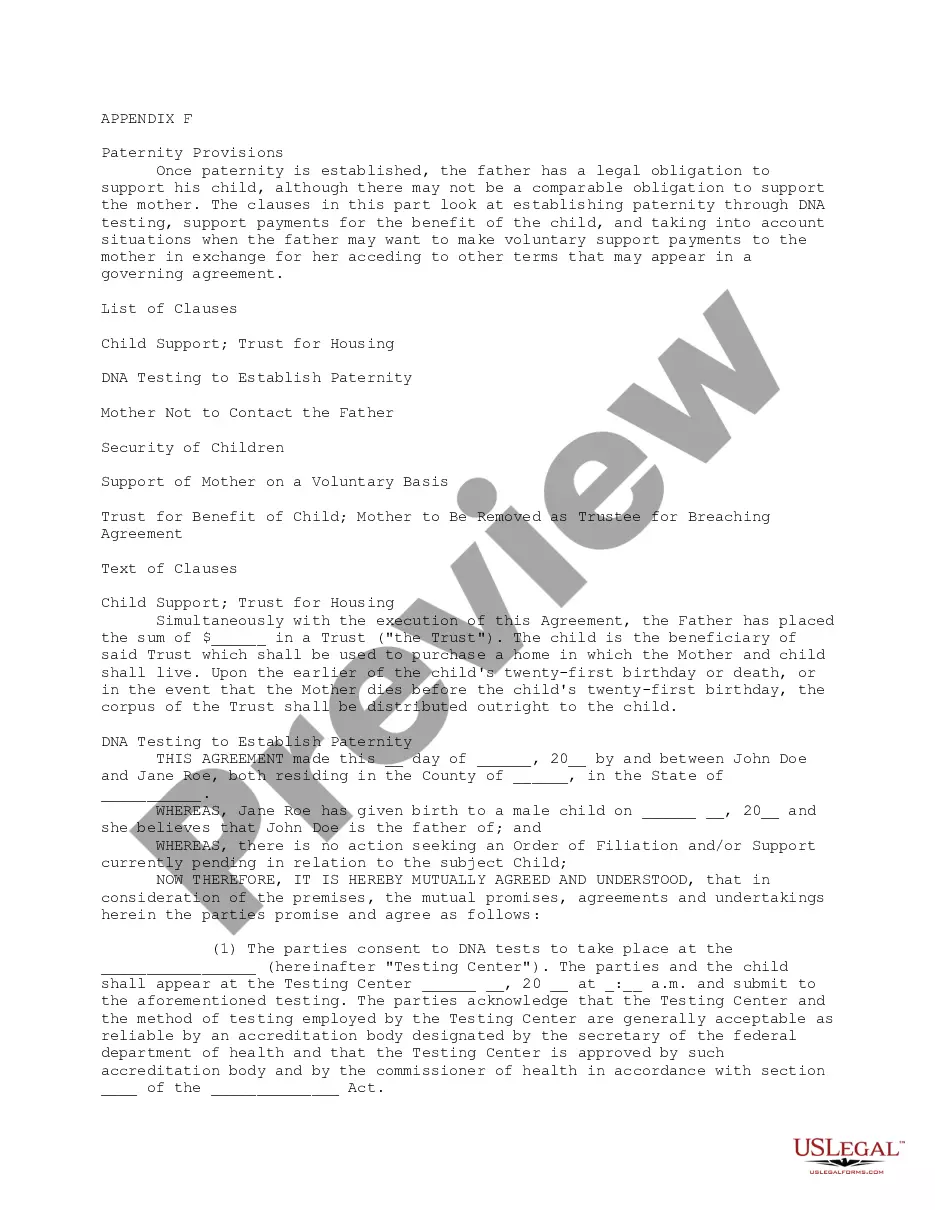
This form is an agreement by a natural father to support a child born out of lawful wedlock and to secure life insurance to protect these support payments. It outlines the obligations of the father towards the child and specifies financial arrangements for child support and medical expenses, as well as visitation rights. This form is essential for establishing paternity and formalizing support arrangements where no marriage exists between the parents.
Key components of this form
- Details of the parties involved, including names and addresses.
- Child's information, including name and birth date.
- Payment terms for child support, including amounts and frequency.
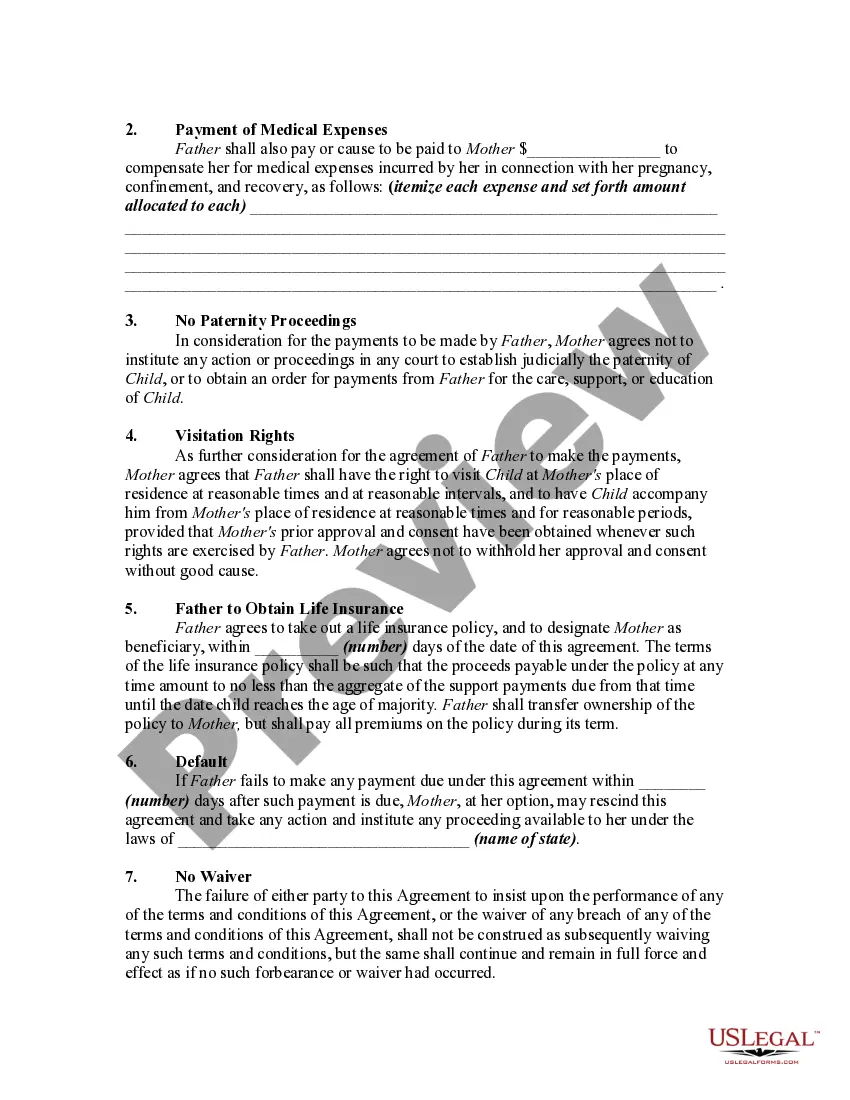
- Allocation of medical expenses related to the pregnancy and childbirth.
- Visitation rights for the father.
- Requirement for the father to obtain life insurance for the benefit of the mother and child.

Common use cases
This form should be used when an unmarried father wishes to establish a legal and financial commitment to support his child born outside of marriage. It is particularly relevant after the birth of the child when the father acknowledges paternity and agrees to provide financial support and healthcare coverage.
Who can use this document
This form is intended for:
- Unmarried fathers who acknowledge their paternity.
- Natural mothers seeking formal child support agreements.
- Parties looking to establish custody and financial responsibilities regarding their child born out of wedlock.
Instructions for completing this form
- Identify the mother and father's names and addresses at the beginning of the agreement.
- Provide the child's name and birth details, including the hospital name.
- Specify the payment amount for child support, including due dates and frequency of payments.
- List any medical expenses incurred by the mother that the father is responsible for.
- Include provisions related to visitation rights and any requested life insurance details.
Notarization requirements for this form
This form does not typically require notarization unless specified by local law. However, both parties should consider signing in the presence of a witness to ensure its legal standing.
Get your form ready online
Our built-in tools help you complete, sign, share, and store your documents in one place.
Make edits, fill in missing information, and update formatting in US Legal Forms—just like you would in MS Word.
Download a copy, print it, send it by email, or mail it via USPS—whatever works best for your next step.
Sign and collect signatures with our SignNow integration. Send to multiple recipients, set reminders, and more. Go Premium to unlock E-Sign.
If this form requires notarization, complete it online through a secure video call—no need to meet a notary in person or wait for an appointment.
We protect your documents and personal data by following strict security and privacy standards.

Make edits, fill in missing information, and update formatting in US Legal Forms—just like you would in MS Word.

Download a copy, print it, send it by email, or mail it via USPS—whatever works best for your next step.

Sign and collect signatures with our SignNow integration. Send to multiple recipients, set reminders, and more. Go Premium to unlock E-Sign.

If this form requires notarization, complete it online through a secure video call—no need to meet a notary in person or wait for an appointment.

We protect your documents and personal data by following strict security and privacy standards.
Common mistakes to avoid
- Failing to clearly state the amount and frequency of child support payments.
- Not including specific visitation details, leading to future disputes.
- Omitting necessary identification details about the child or parents.
- Not reviewing the agreement for compliance with state-specific laws.
Why use this form online
- Convenient access to legally drafted forms tailored for various situations.
- Immediate download allows prompt action without lengthy wait times.
- Editable templates make it easy to customize details specific to your situation.
- Reliable legal language drafted by licensed attorneys.
Looking for another form?


Form popularity
FAQ
In cases where the child is born out of wedlock, the child often gets the mother's last name. But if paternity is established, both parents have the right to petition the court to change the child's last name. After the name change, the court will issue a new birth certificate with the changed name.
To open a case in California, fill out the online application or visit your local child support agency agency locations can be found here. After an application is submitted, the applicant will be contacted by their local office to assist with the process of obtaining a child support order with the court.
Yes, an unmarried father has a duty to maintain his child and the child has a right to be maintained by his/her father. The duty to maintain his child is the only parental responsibility that automatically clings to the unmarried father, regardless of the circumstances.
Once you establish legal paternity, the mother cannot move away with the child over the father's objection without leave of court. However, if you do not establish paternity, the mother can move away or deny visitation rights, regardless of the father's objections.
Child births out of wedlock are common. California law does not permit the Family Court to base custody decisions on gender. Therefore, a father need not worry the mother has greater rights because she is the mother.
A father has parental responsibility if he's married to the mother at the time of the child's birth.An unmarried father has parental responsibility if he's named, or becomes named, on the child's birth certificate (from 15 April 2002).
Fathers' rights can include a father's right to parenting time with his children, the right to be consulted before adoption, and the right to time off from work to raise his child.
The short answer is no particularly if the child is younger than seven years old, and not unless the mother is found to be an unfit parent. An illegitimate child is born of parents who weren't legally married during the time of the child's birth, and who continue tobe unmarried to each other.