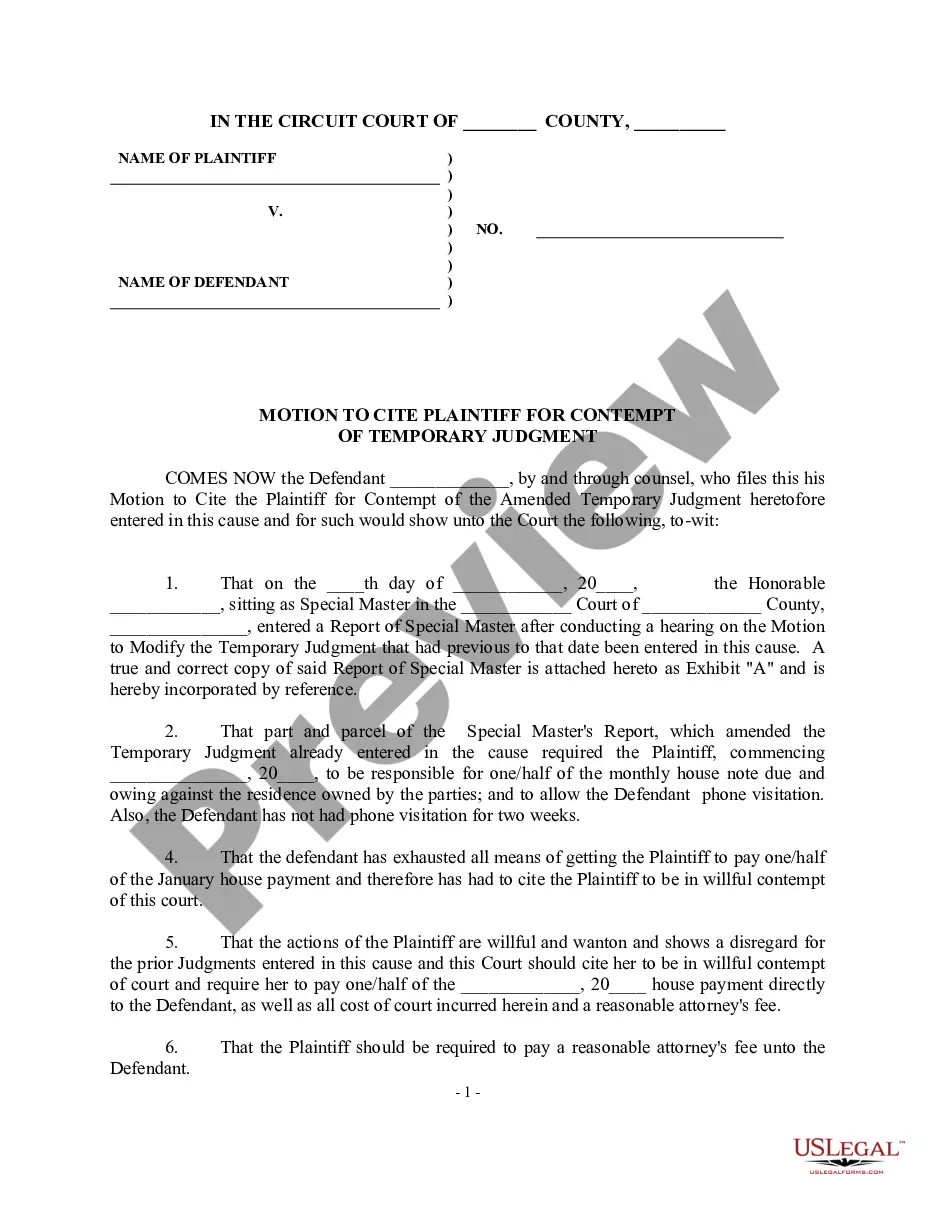
Motion for Order and Order to Show Cause Regarding Contempt Proceeding for Nonpayment of Alimony
Understanding this form
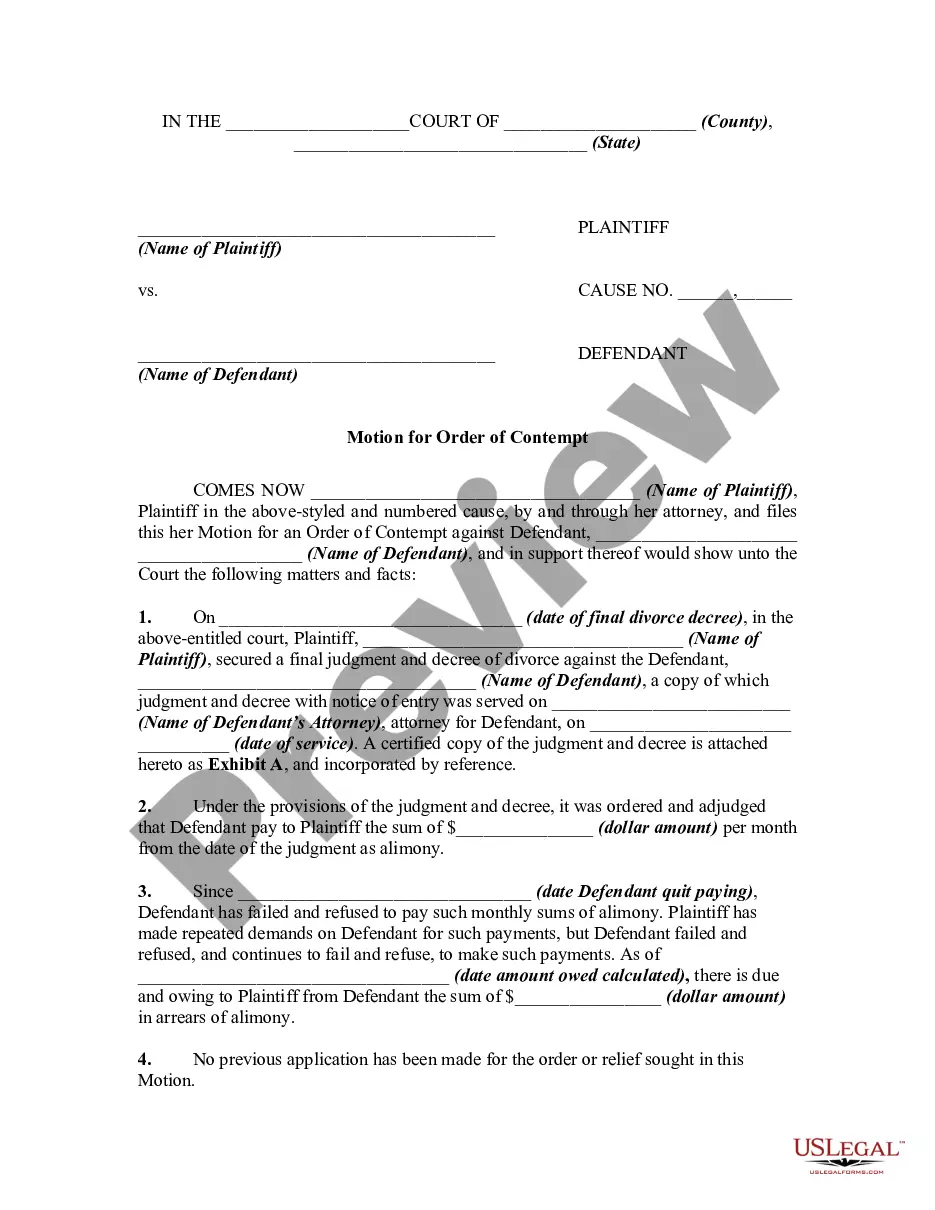
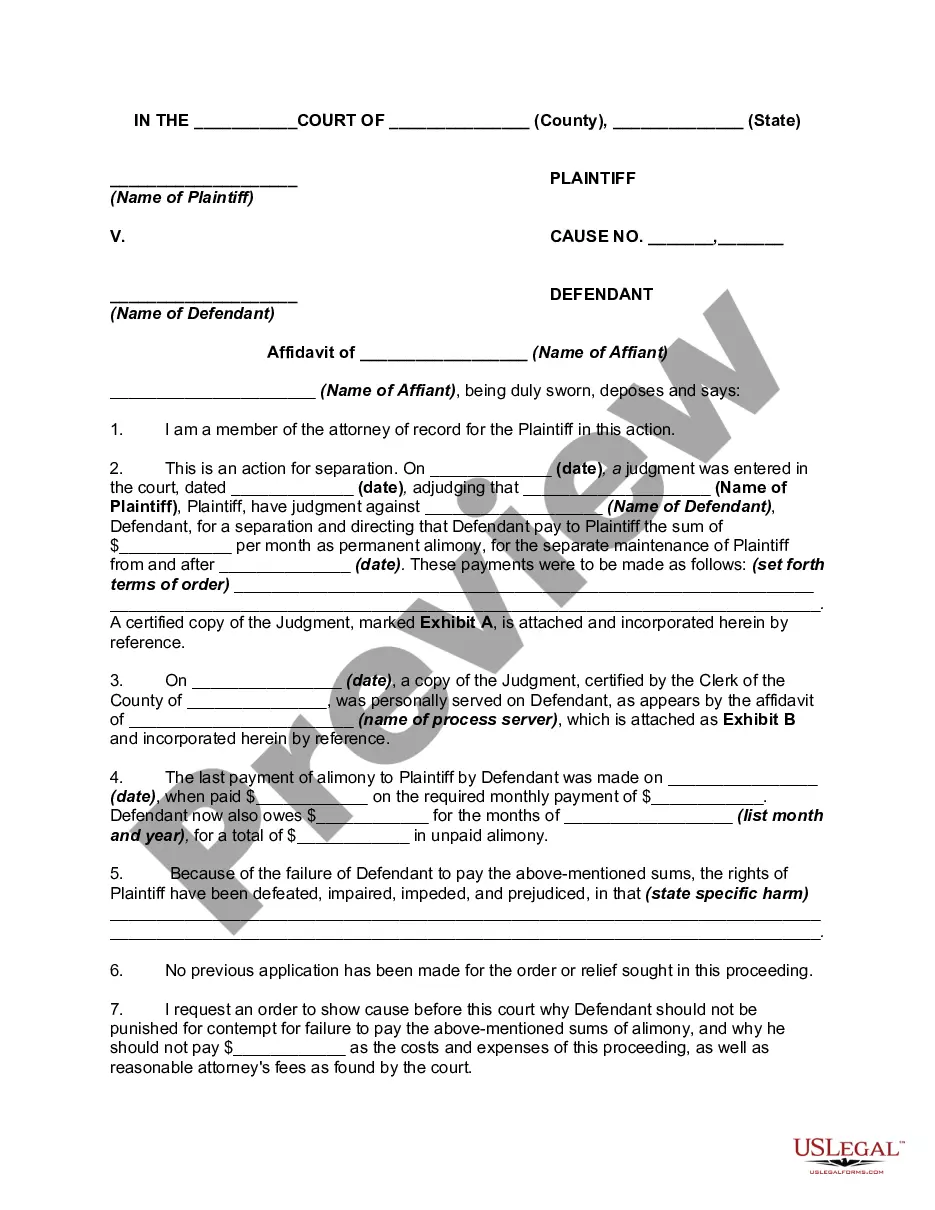
The Motion for Order and Order to Show Cause Regarding Contempt Proceeding for Nonpayment of Alimony is a legal document used to initiate contempt proceedings against a former spouse who has failed to make court-ordered alimony payments. This form allows the plaintiff to seek enforcement of a divorce decree by requesting that the court hold the defendant in contempt for their noncompliance. Unlike other enforcement mechanisms, this form specifically addresses issues related to alimony payments, ensuring that the needs of the receiving spouse are met.
What’s included in this form
- Name of the plaintiff and defendant.
- Details regarding the final divorce decree and notice of entry.
- Alimony payment amount and timeline.
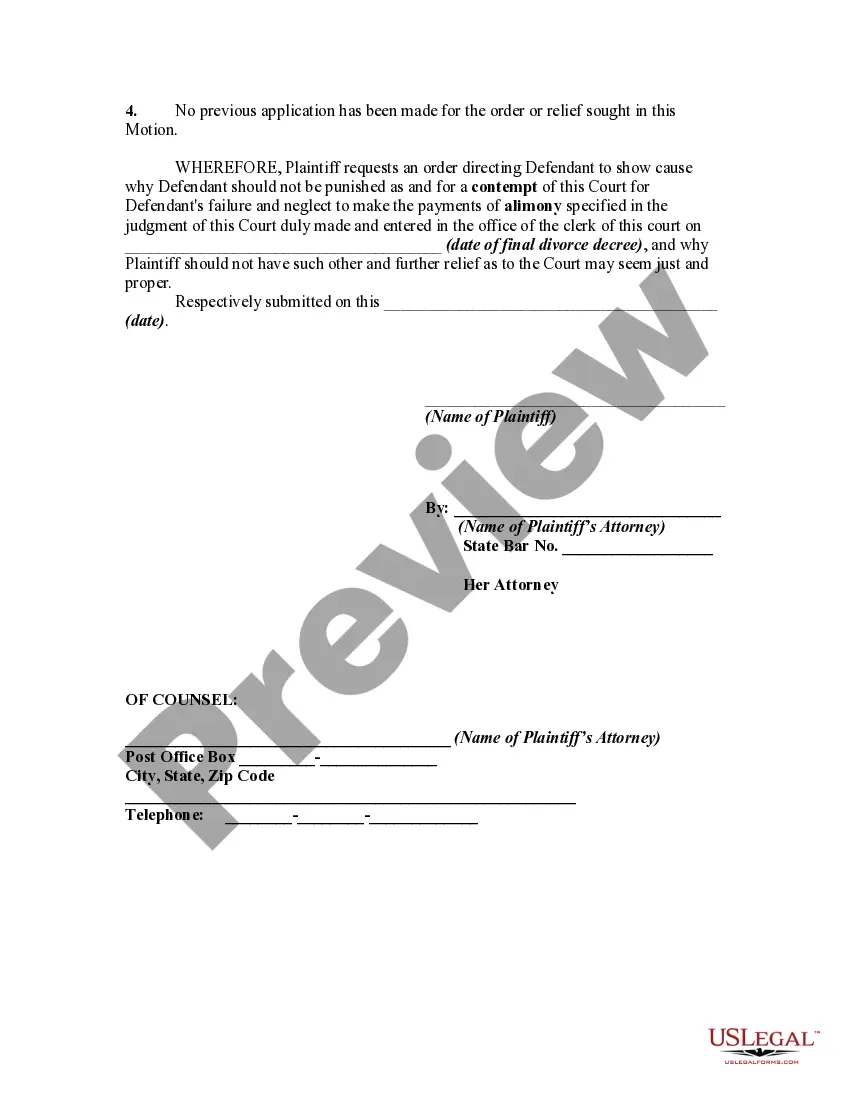
- Documentation of missed payments and total arrears owed.
- Request for the court to direct the defendant to show cause for contempt.
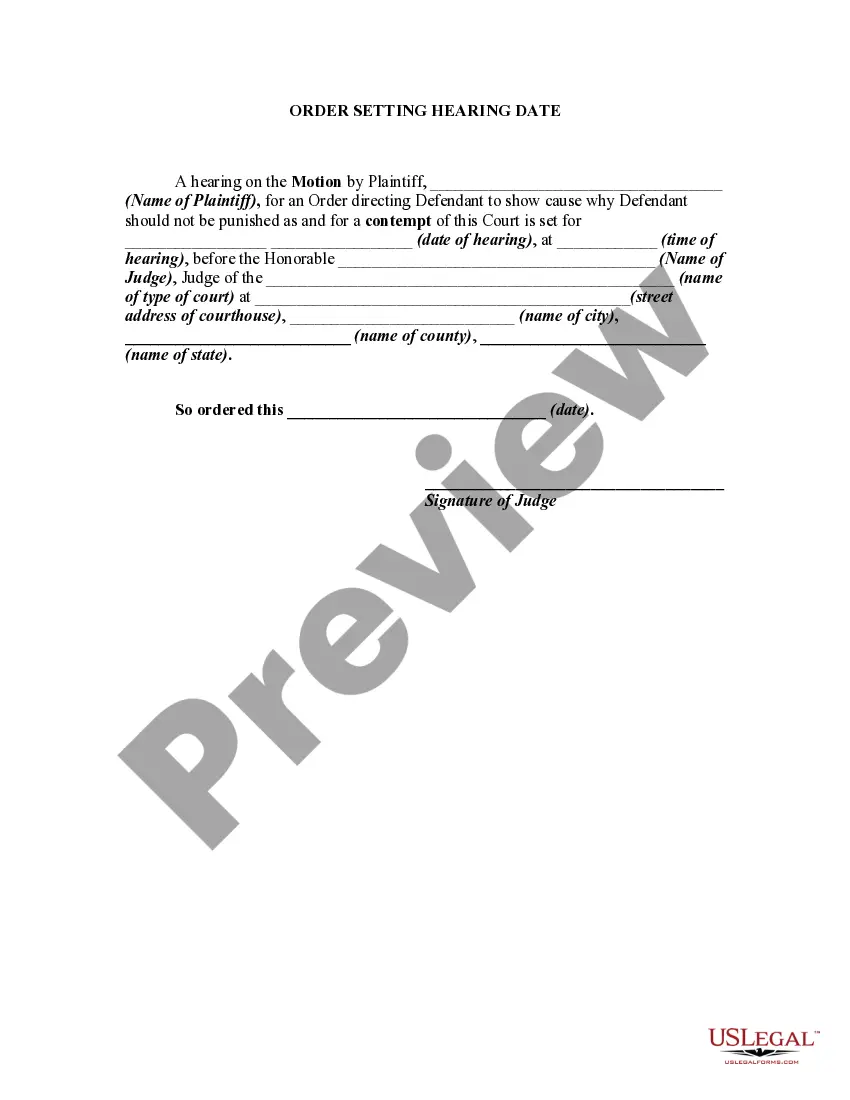
- Order setting a hearing date before a judge.
When this form is needed
This form is essential when a party who is entitled to receive alimony has not received the required payments as specified in their divorce decree. If the defendant has stopped making payments, and attempts to collect the due amounts have failed, this motion can be filed to compel the court to take action against the non-paying spouse.
Who should use this form
- Individuals who are recipients of court-ordered alimony.
- Those who have not received alimony payments despite having a valid divorce decree.
- Plaintiffs seeking enforcement of alimony orders through court intervention.
How to complete this form
- Identify the parties involved by entering the names of the plaintiff and defendant.
- Record the date of the final divorce decree and any relevant service dates.
- State the alimony payment amount and indicate when the defendant stopped making payments.
- Calculate the total amount in arrears and document any attempts to collect payments.
- Include the hearing date and the judge's name in the order section.
- Sign and date the document appropriately before filing with the court.
Notarization requirements for this form
This form usually doesn’t need to be notarized. However, local laws or specific transactions may require it. Our online notarization service, powered by Notarize, lets you complete it remotely through a secure video session, available 24/7.
Get your form ready online
Our built-in tools help you complete, sign, share, and store your documents in one place.
Make edits, fill in missing information, and update formatting in US Legal Forms—just like you would in MS Word.
Download a copy, print it, send it by email, or mail it via USPS—whatever works best for your next step.
Sign and collect signatures with our SignNow integration. Send to multiple recipients, set reminders, and more. Go Premium to unlock E-Sign.
If this form requires notarization, complete it online through a secure video call—no need to meet a notary in person or wait for an appointment.
We protect your documents and personal data by following strict security and privacy standards.

Make edits, fill in missing information, and update formatting in US Legal Forms—just like you would in MS Word.

Download a copy, print it, send it by email, or mail it via USPS—whatever works best for your next step.

Sign and collect signatures with our SignNow integration. Send to multiple recipients, set reminders, and more. Go Premium to unlock E-Sign.

If this form requires notarization, complete it online through a secure video call—no need to meet a notary in person or wait for an appointment.

We protect your documents and personal data by following strict security and privacy standards.
Avoid these common issues
- Failing to provide all required details regarding the divorce decree.
- Not calculating the total arrears accurately.
- Omitting the notice of entry or relevant documentation.
- Forgetting to sign the motion or submit it by the deadline.
Why use this form online
- Immediate access to legal form templates drafted by licensed attorneys.
- Ability to download and edit forms according to individual needs.
- Time-saving convenience of completing and filing forms from home.
- In-depth guidance on filling out legal documents correctly.
Looking for another form?







Form popularity
FAQ
Once a party has been served with a motion for contempt, they have twenty (20) days to answer or respond to the motion. Upon responding to a motion for contempt, a defendant may either assert a defense or purge the contempt by complying with the court's order and paying any past due support obligations.
The word contempt is used to describe the situation when an individual has intentionally disobeyed a court order. In family law, a finding of contempt is a way for the Court to enforce child support, spousal support, custody and visitation orders that a party has violated.
In California, a contempt proceeding in family law cases is initiated by the filing of an Order to Show Cause and Affidavit for Contempt with the Court. The person alleged of being contempt, the citee, is then served with a copy of the papers.
If a person is found to be in contempt, the court is able to impose sanctions, which may include the following: jail time (usually 1-30 days) ordering the party held in contempt to pay the money owed. ordering the party held in contempt to pay the other party's attorney's fees.
Contempt of court, often referred to simply as "contempt", is the offense of being disobedient to or disrespectful toward a court of law and its officers in the form of behavior that opposes or defies the authority, justice and dignity of the court.
There is a valid court order in effect. The other person knows about the court order. The facts show a plain violation of the order. You have given the person notice of the contempt hearing and a chance to be heard. Contempt is an appropriate remedy for the violation.
To file your papers, you must go to Clerk of Court's Suit Accounting office, located on the Third Floor of the Nineteenth Judicial District Courthouse, 300 North Boulevard, Baton Rouge, Louisiana. If you want to make other arrangements for filing, you should contact that office at (225) 389-3982.
A motion for contempt of court in a child custody context simply alleges that the ex violated the court's custody order. This can happen by them either doing or failing to do something. You must first serve the motion on your ex, and the ex will then be given a limited amount of time to respond.