Lis Pendens Notice in Connection with Action to Foreclose
About this form
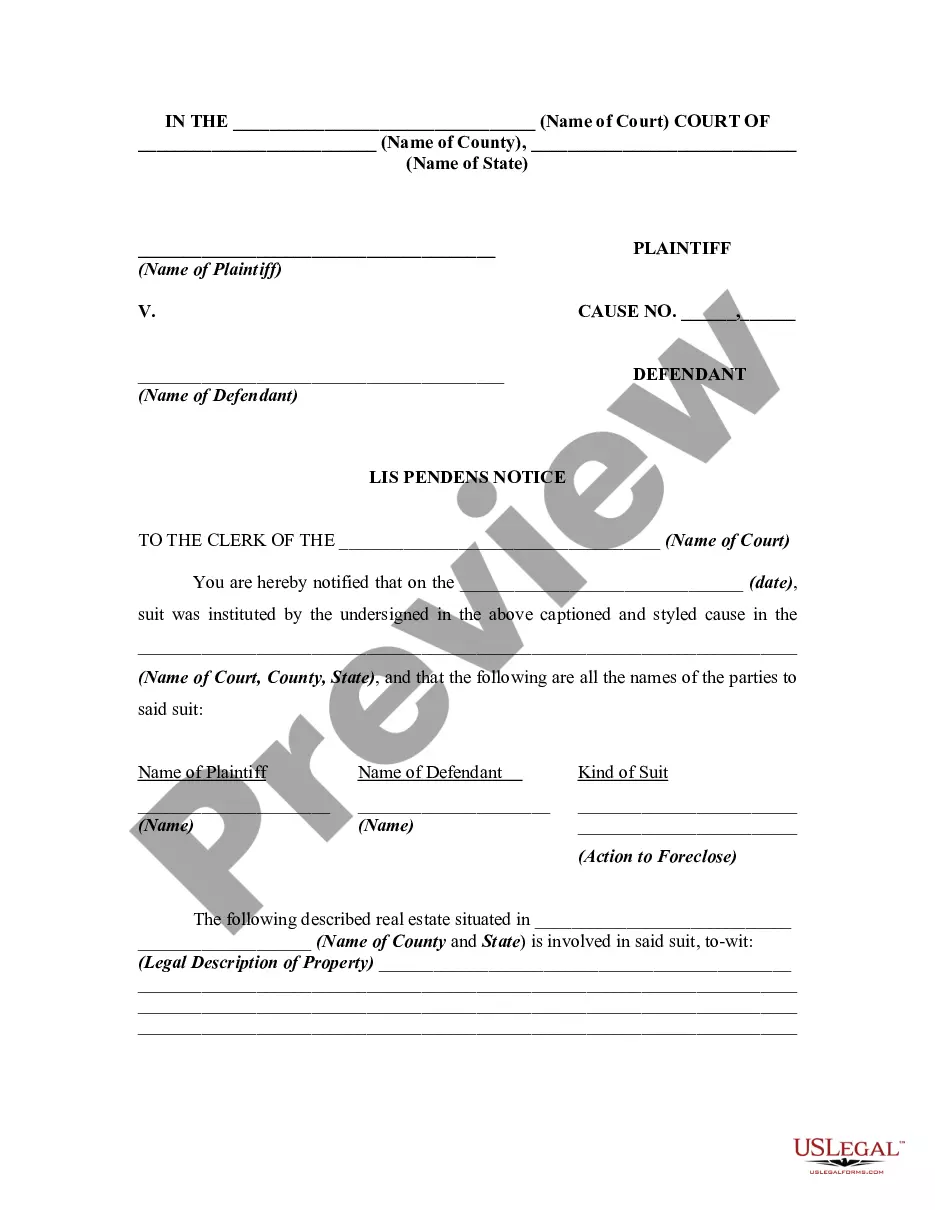
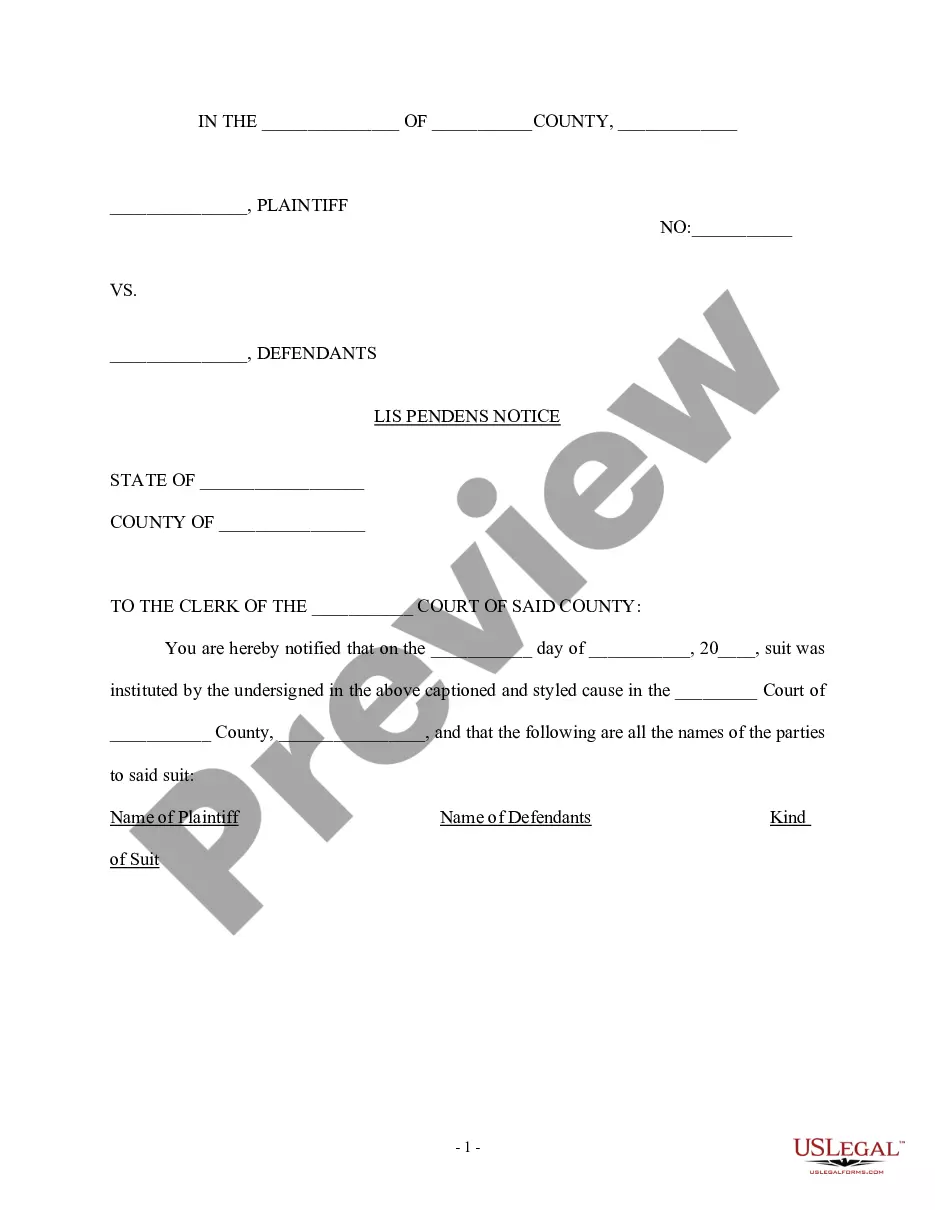
The Lis Pendens Notice in Connection with Action to Foreclose is a legal document that serves as a public notification that a lawsuit has been filed regarding the ownership or interest in a specific property. This form specifies that there is an active legal action that could affect the property title, distinguishing it from other legal notices by focusing specifically on foreclosures. Filing this notice warns potential buyers and lenders and helps preserve the plaintiff's rights in the lawsuit.
Main sections of this form
- Names of the plaintiff and defendant involved in the legal action.
- Case number and court details where the lawsuit is filed.
- Date of the lawsuit initiation.
- Legal description of the property that is the subject of the foreclosure action.
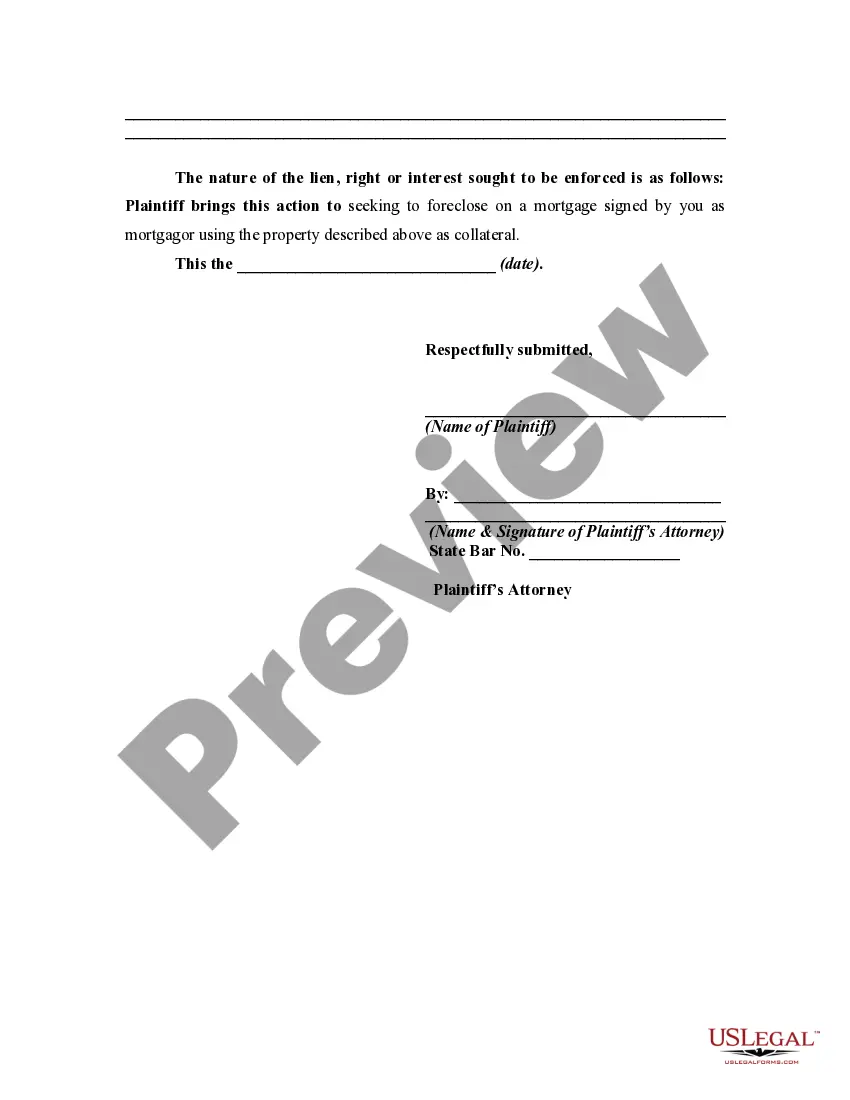
- Statement of the lien, right, or interest being enforced in the lawsuit.
- Signature and attorney information of the plaintiff.
When this form is needed
This form should be used when a lender or mortgagee is initiating foreclosure proceedings against a property owner. It is essential to file a Lis Pendens Notice to inform the public about the ongoing lawsuit, particularly potential buyers or financiers, and to protect the rights of the party initiating the foreclosure.
Who needs this form
- Mortgage lenders and financial institutions seeking to initiate foreclosure.
- Property owners facing foreclosure to understand their rights.
- Real estate attorneys assisting clients with foreclosure processes.
Steps to complete this form
- Identify the parties involved by entering the names of the plaintiff and defendant.
- Specify the case number and name of the court where the lawsuit is filed.
- Enter the date when the lawsuit was initiated.
- Provide a legal description of the property involved in the foreclosure.
- State the particular interest that is being enforced through the lawsuit.
- Ensure the form is signed by the plaintiff and their attorney, including the attorney's state bar number.
Does this form need to be notarized?
This form does not typically require notarization unless specified by local law. However, it's always advisable to check with local regulations to ensure compliance with any specific notarization requirements.
Get your form ready online
Our built-in tools help you complete, sign, share, and store your documents in one place.
Make edits, fill in missing information, and update formatting in US Legal Forms—just like you would in MS Word.
Download a copy, print it, send it by email, or mail it via USPS—whatever works best for your next step.
Sign and collect signatures with our SignNow integration. Send to multiple recipients, set reminders, and more. Go Premium to unlock E-Sign.
If this form requires notarization, complete it online through a secure video call—no need to meet a notary in person or wait for an appointment.
We protect your documents and personal data by following strict security and privacy standards.

Make edits, fill in missing information, and update formatting in US Legal Forms—just like you would in MS Word.

Download a copy, print it, send it by email, or mail it via USPS—whatever works best for your next step.

Sign and collect signatures with our SignNow integration. Send to multiple recipients, set reminders, and more. Go Premium to unlock E-Sign.

If this form requires notarization, complete it online through a secure video call—no need to meet a notary in person or wait for an appointment.

We protect your documents and personal data by following strict security and privacy standards.
Typical mistakes to avoid
- Failing to include a complete legal description of the property.
- Not signing the form or not including the attorney's signature and bar number.
- Incorrectly naming the parties involved in the lawsuit.
- Not filing or recording the form in accordance with local requirements.
Benefits of completing this form online
- Convenient access to downloadable templates available anytime.
- Editable forms to customize according to specific legal situations.
- Reliability as forms are drafted by licensed attorneys, ensuring legal compliance.
Looking for another form?

Form popularity
FAQ
A Lis Pendens is filed with the County Recorder in the county where the piece of property that the law suit involves is located. When any document is recorded with the County Recorder, it puts the world on notice of its contents.
The requirements for filing a lis pendens are codified in the Texas Property Code. Only after a lawsuit has been filed, may a party to the action who is seeking affirmative relief file a lis pendens with the county clerk in the county where the property is located.
Prepare the documents. Prepare the Complaint along with Summons, Case Information Sheet, Civil Case Cover Sheet, and Notice of Action Pending. File with the Court. Get a Judge's approval. Serve the Notice. Record the Notice.
A LIS PENDENS IS NOT A LAWSUIT A Lis Pendens is filed with the County Recorder in the county where the piece of property that the law suit involves is located. When any document is recorded with the County Recorder, it puts the world on notice of its contents.
The doctrine of lis pendens literally means pending suit, and lis pendens notices are the machinery whereby a party with an unrecorded or unperfected claim to real property can put third persons interested in the property on notice of the claim or interest.