Instruction to Jury that Plaintiff Under no Duty to Receive Back Property
Overview of this form
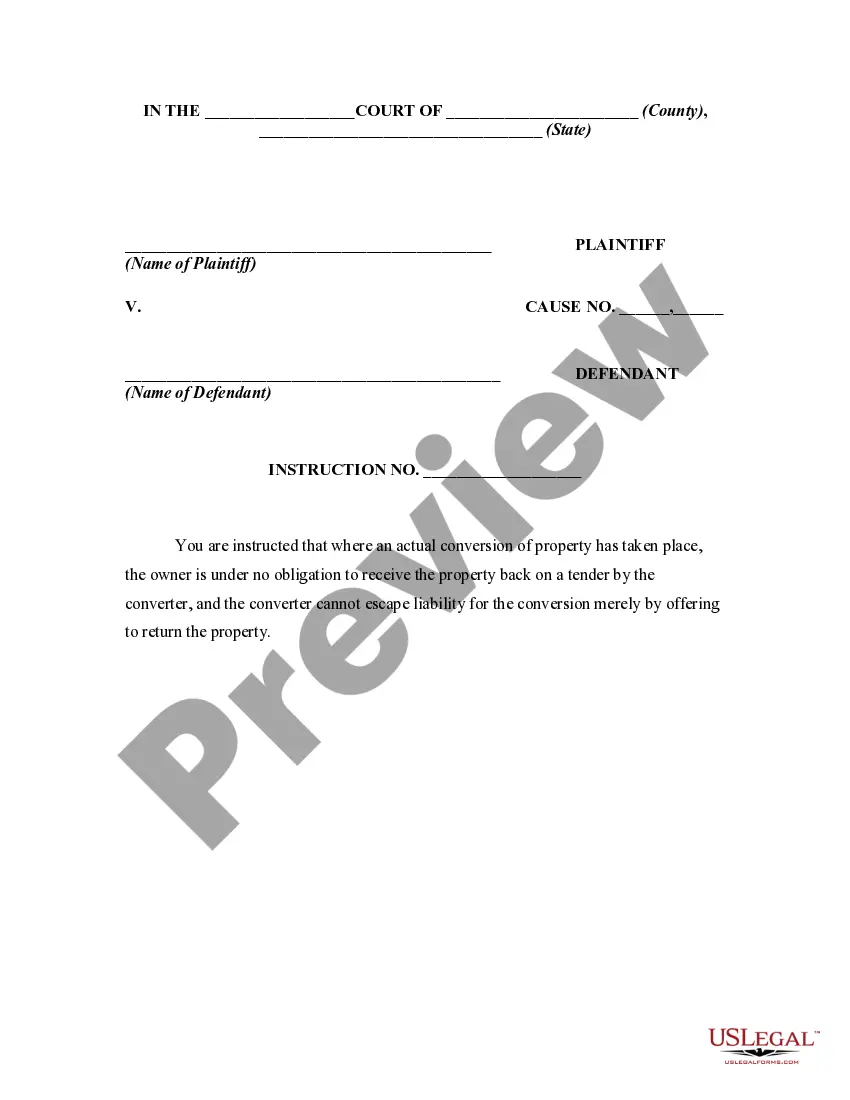
This form, titled "Instruction to Jury that Plaintiff Under No Duty to Receive Back Property," serves as a directive for a jury in civil cases involving conversion. Its main purpose is to clarify that if a defendant wrongfully takes and keeps property without the owner's consent, the owner is not required to accept the return of that property. This instruction is essential in distinguishing the legal obligations of a property owner during a conversion claim, emphasizing that liability doesn't solely depend on the offer to return the property.
What’s included in this form
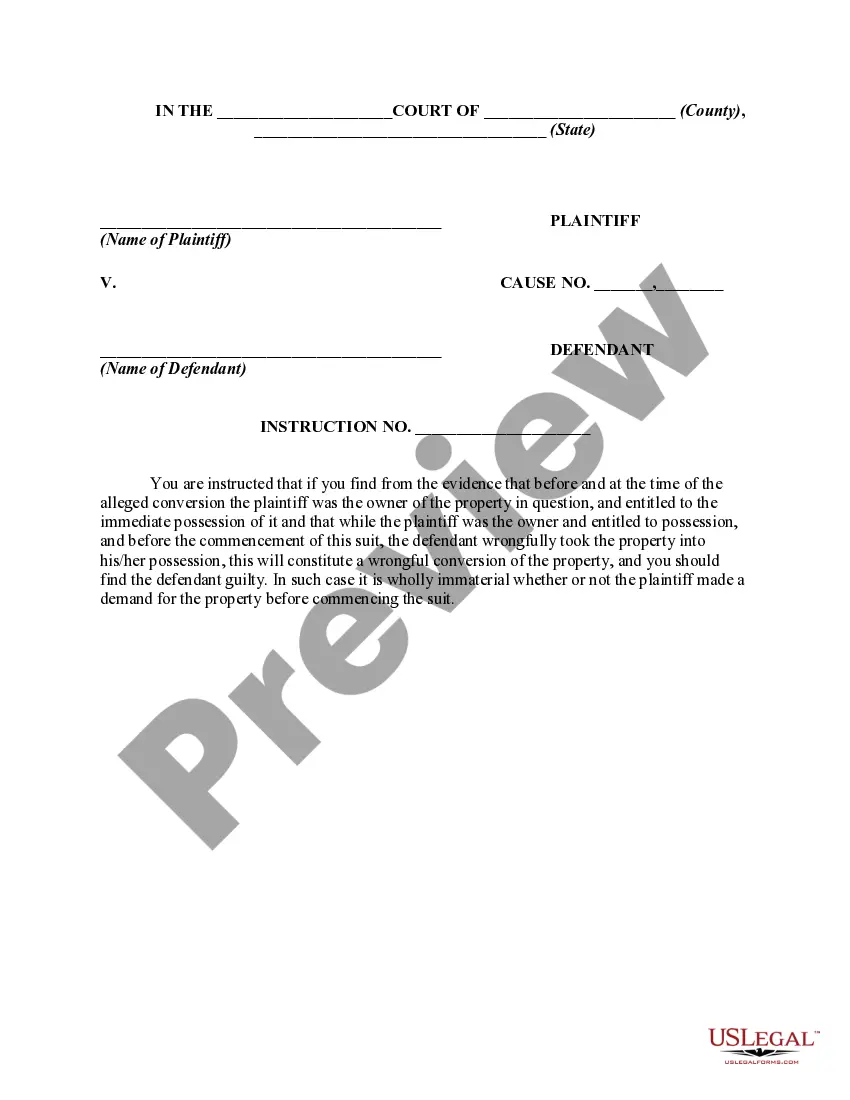
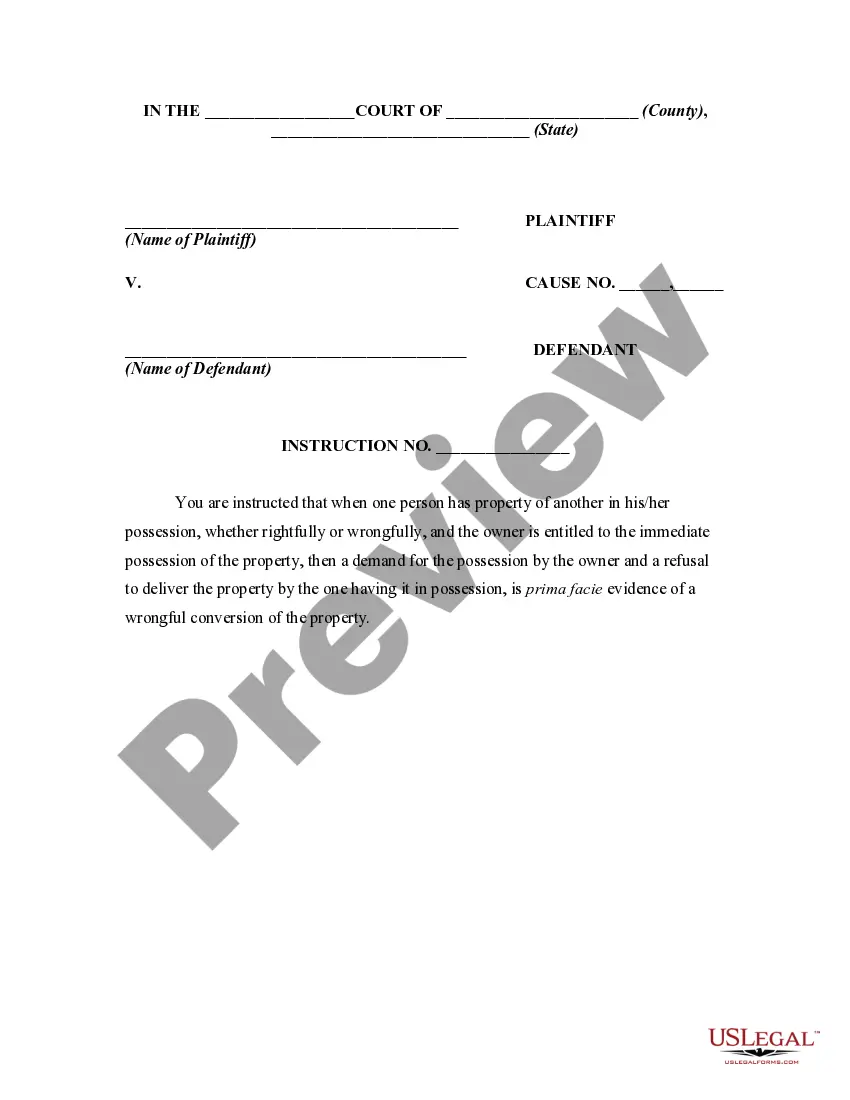
- Case title indicating the plaintiff and defendant names.
- Cause number associated with the case.
- Instruction section detailing the jury's obligations regarding the conversion of property.
- Clear statement that the owner is under no obligation to accept the return of converted property.
When to use this form
This form is used in situations where an owner of personal property seeks legal recourse against a party who has wrongfully taken their property. It is particularly relevant in civil cases where conversion is claimed, and the jury needs guidance on the owner's rights concerning the return of their property. This instruction can help clarify the legal implications for the jury, particularly when assessing damages or determining liability in a conversion case.
Who this form is for
- Property owners who have had their belongings unlawfully taken and wish to pursue a legal claim.
- Attorneys representing plaintiffs in civil conversion cases.
- Juries in civil cases related to personal property disputes requiring guidance on the law regarding conversion.
Instructions for completing this form
- Identify the names of the plaintiff and defendant at the top of the form.
- Fill in the case number related to the action.
- Detail the instruction number for jury reference.
- Ensure the instruction clearly states the owner's rights regarding the return of converted property.
- Review the instruction for clarity before presenting it to the jury.
Is notarization required?
This form usually doesn’t need to be notarized. However, local laws or specific transactions may require it. Our online notarization service, powered by Notarize, lets you complete it remotely through a secure video session, available 24/7.
Get your form ready online
Our built-in tools help you complete, sign, share, and store your documents in one place.
Make edits, fill in missing information, and update formatting in US Legal Forms—just like you would in MS Word.
Download a copy, print it, send it by email, or mail it via USPS—whatever works best for your next step.
Sign and collect signatures with our SignNow integration. Send to multiple recipients, set reminders, and more. Go Premium to unlock E-Sign.
If this form requires notarization, complete it online through a secure video call—no need to meet a notary in person or wait for an appointment.
We protect your documents and personal data by following strict security and privacy standards.

Make edits, fill in missing information, and update formatting in US Legal Forms—just like you would in MS Word.

Download a copy, print it, send it by email, or mail it via USPS—whatever works best for your next step.

Sign and collect signatures with our SignNow integration. Send to multiple recipients, set reminders, and more. Go Premium to unlock E-Sign.

If this form requires notarization, complete it online through a secure video call—no need to meet a notary in person or wait for an appointment.

We protect your documents and personal data by following strict security and privacy standards.
Avoid these common issues
- Failing to clearly identify parties involved in the case.
- Not referencing the correct case number.
- Omitting critical legal language that defines conversion.
- Presenting the instruction to the jury without proper context.
Benefits of using this form online
- Accessible anytime with the ability to download and print the form as needed.
- Edit the form easily to fit specific case details and requirements.
- Reliable forms drafted by licensed attorneys to ensure compliance with legal standards.
Looking for another form?

Form popularity
FAQ
When there are insufficient jurors voting one way or the other to deliver either a guilty or not guilty verdict, the jury is known as a hung jury or it might be said that jurors are deadlocked. The judge may direct them to deliberate further, usually no more than once or twice.
Yes, a jury can make reasonable inferences in arriving at a verdict .
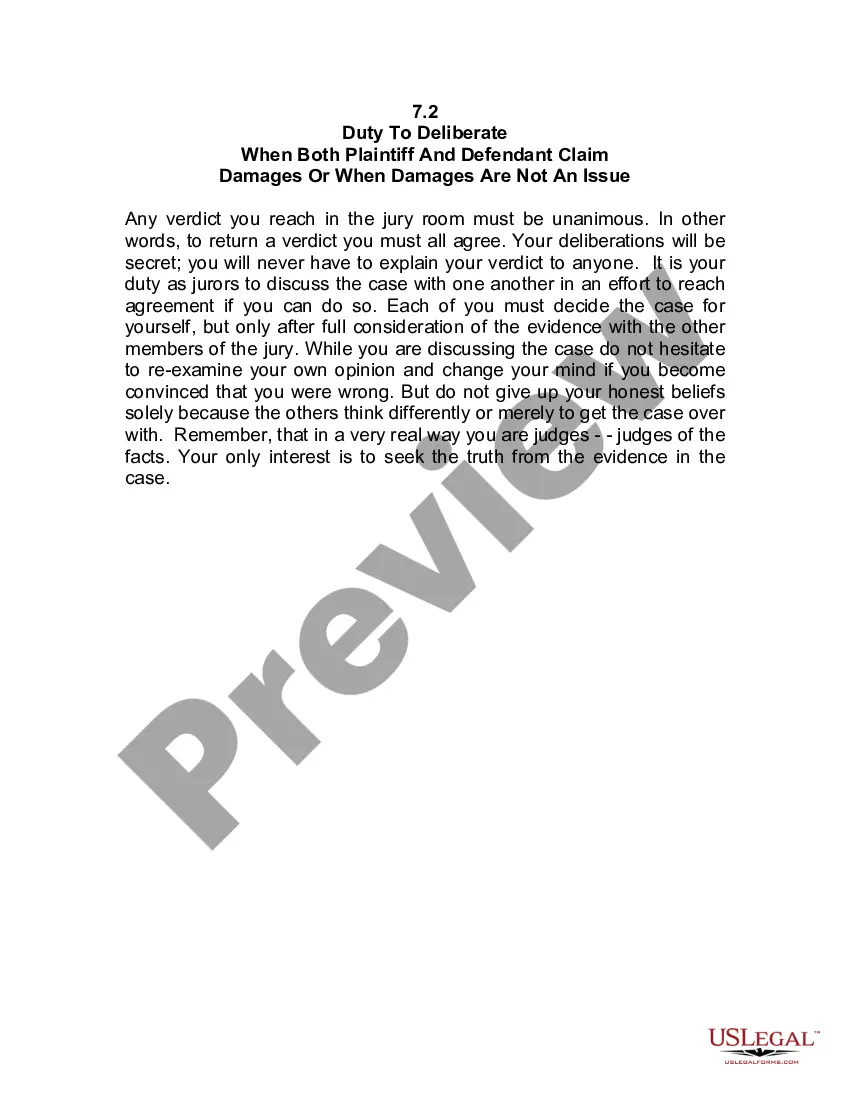
No. In fact, you can't even discuss the case with your fellow jurors until the jury deliberations at the end of the trial. Nor can you talk to the lawyers, wit- nesses or anyone else connected to the case.
In most civil cases, six jurors sit to hear a matter, although there may be as many as 12 jurors.In a civil trial, five out of six jurors are needed to return a verdict in favor of one party or the other. When 12 jurors deliberate in a civil trial, 10 jurors are needed to return a verdict.
Instructions to the Jury The judge instructs the jury about the relevant laws that should guide its deliberations. (In some jurisdictions, the court may instruct the jury at any time after the close of evidence. This sometimes occurs before closing arguments.) The judge reads the instructions to the jury.
In a civil trial, a judge or jury examines the evidence to decide whether, by a "preponderance of the evidence," the defendant should be held legally responsible for the damages alleged by the plaintiff.
When a jury is needed for a trial, the group of qualified jurors is taken to the courtroom where the trial will take place. The judge and the attorneys then ask the potential jurors questions to determine their suitability to serve on the jury, a process called voir dire.
In a criminal case, the verdict must be unanimous. In a civil case, only three-fourths of the jurors must agree on their verdict.
In federal court, the jury decides the verdict. It's the judge's job to act as referee, ruling on issues of law before and during the trial. Federal judges keep up to date on many laws and rules such as: Federal Laws.