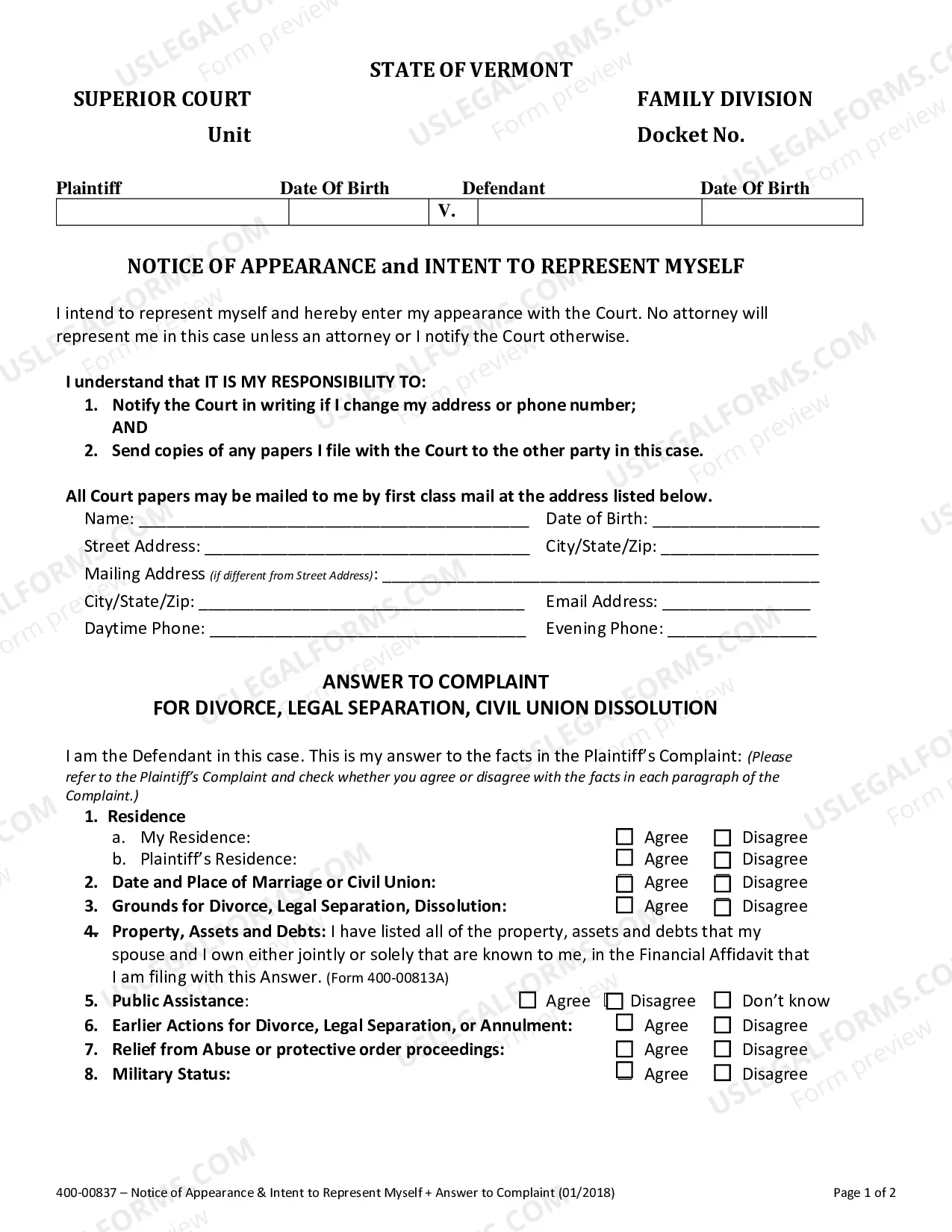
Guaranty of Payment of Rent under Lease Agreement
Overview of this form
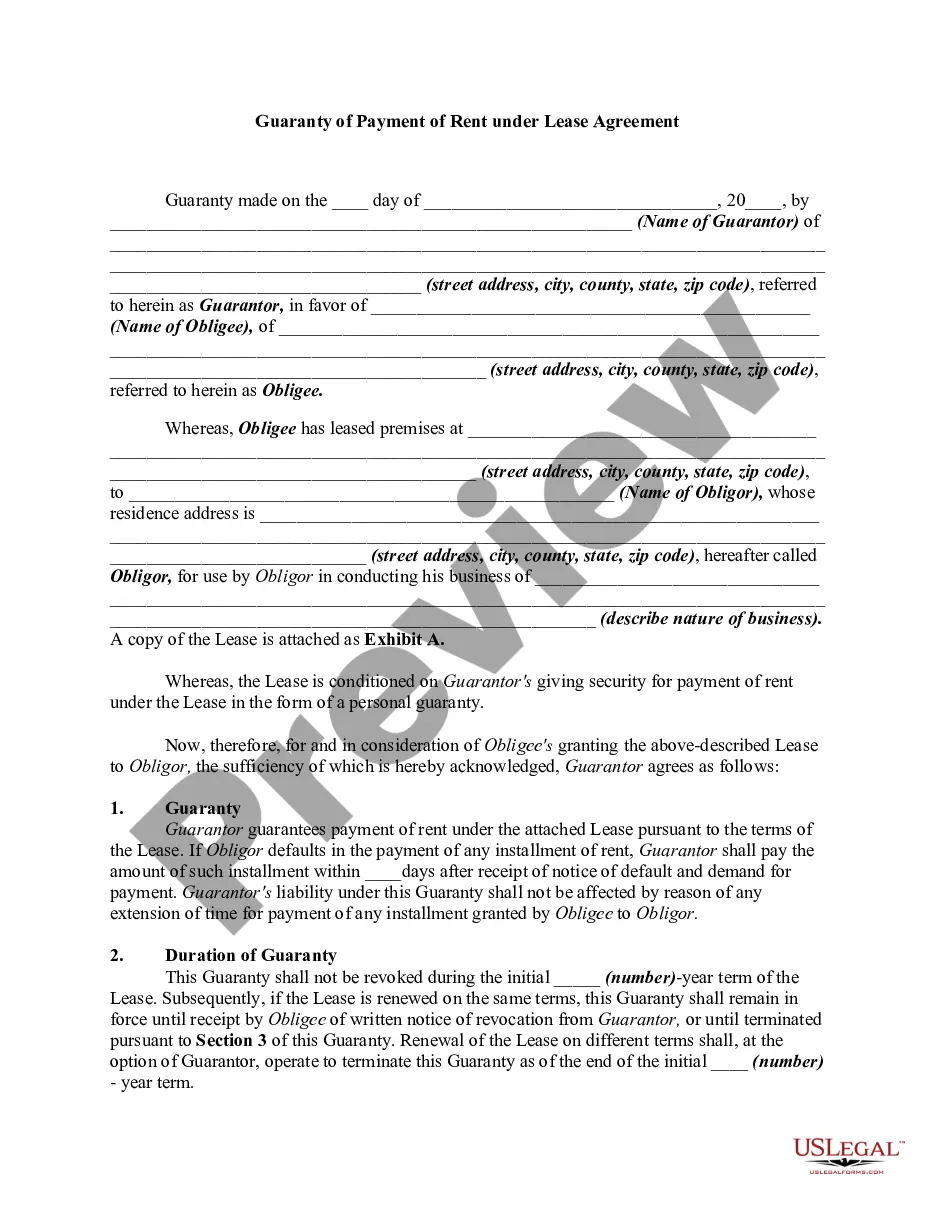
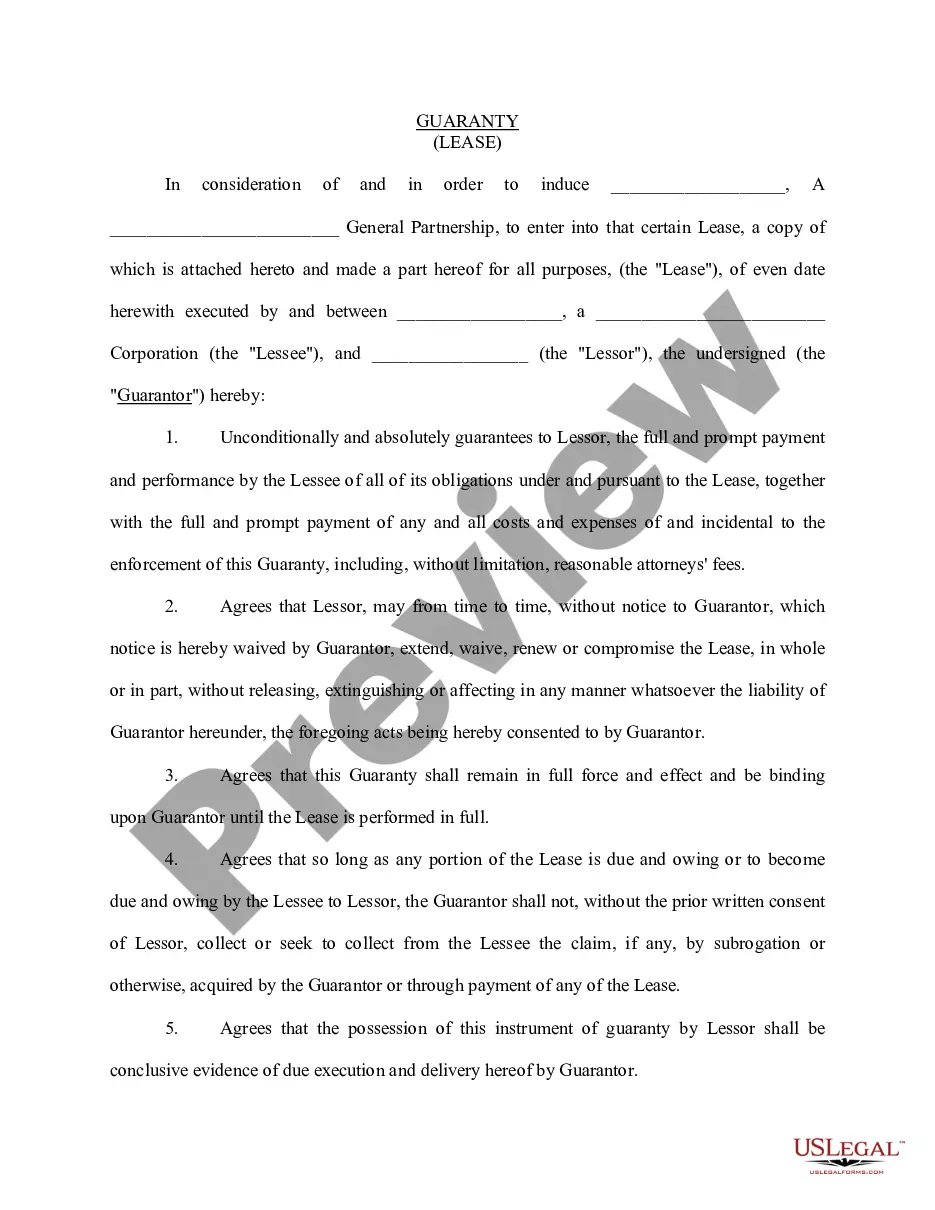
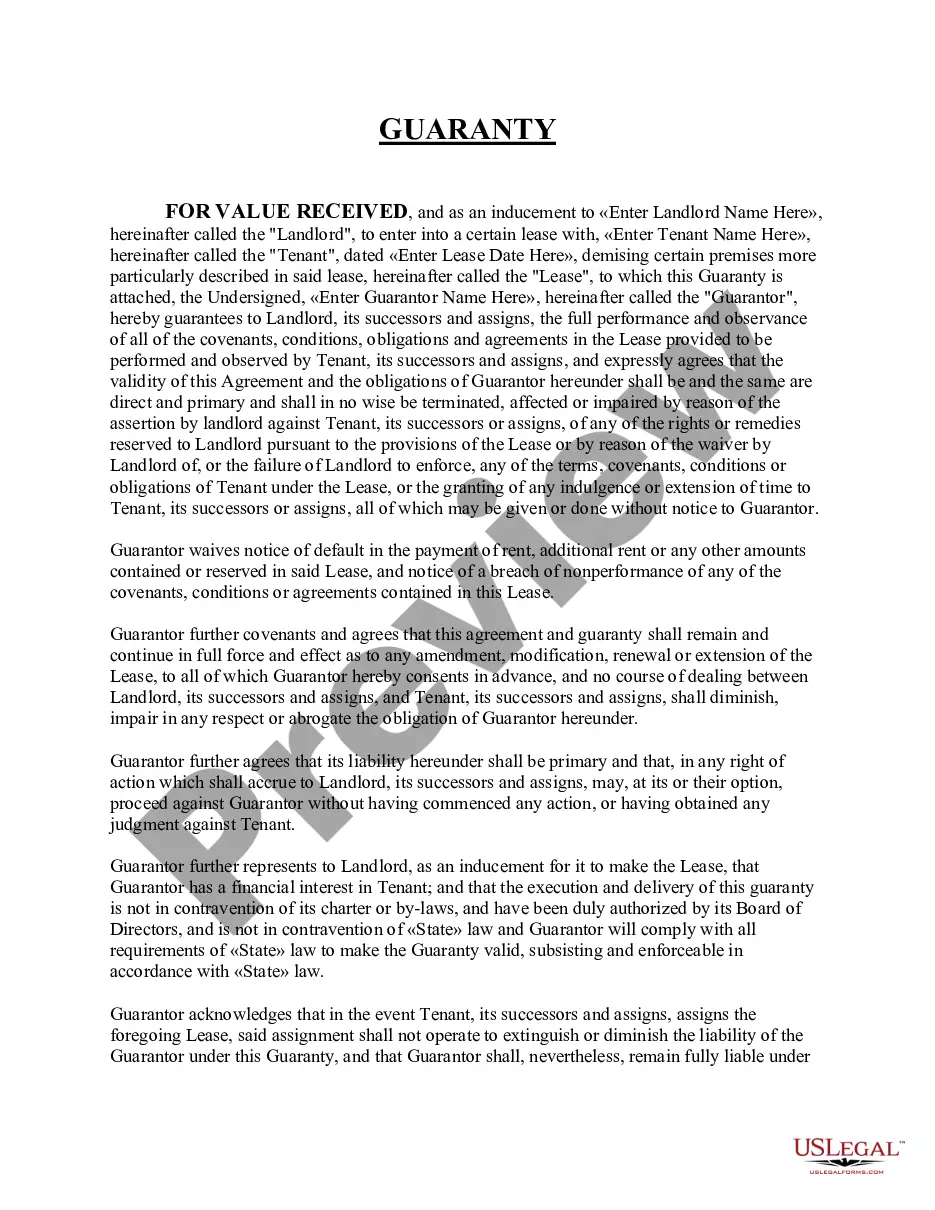
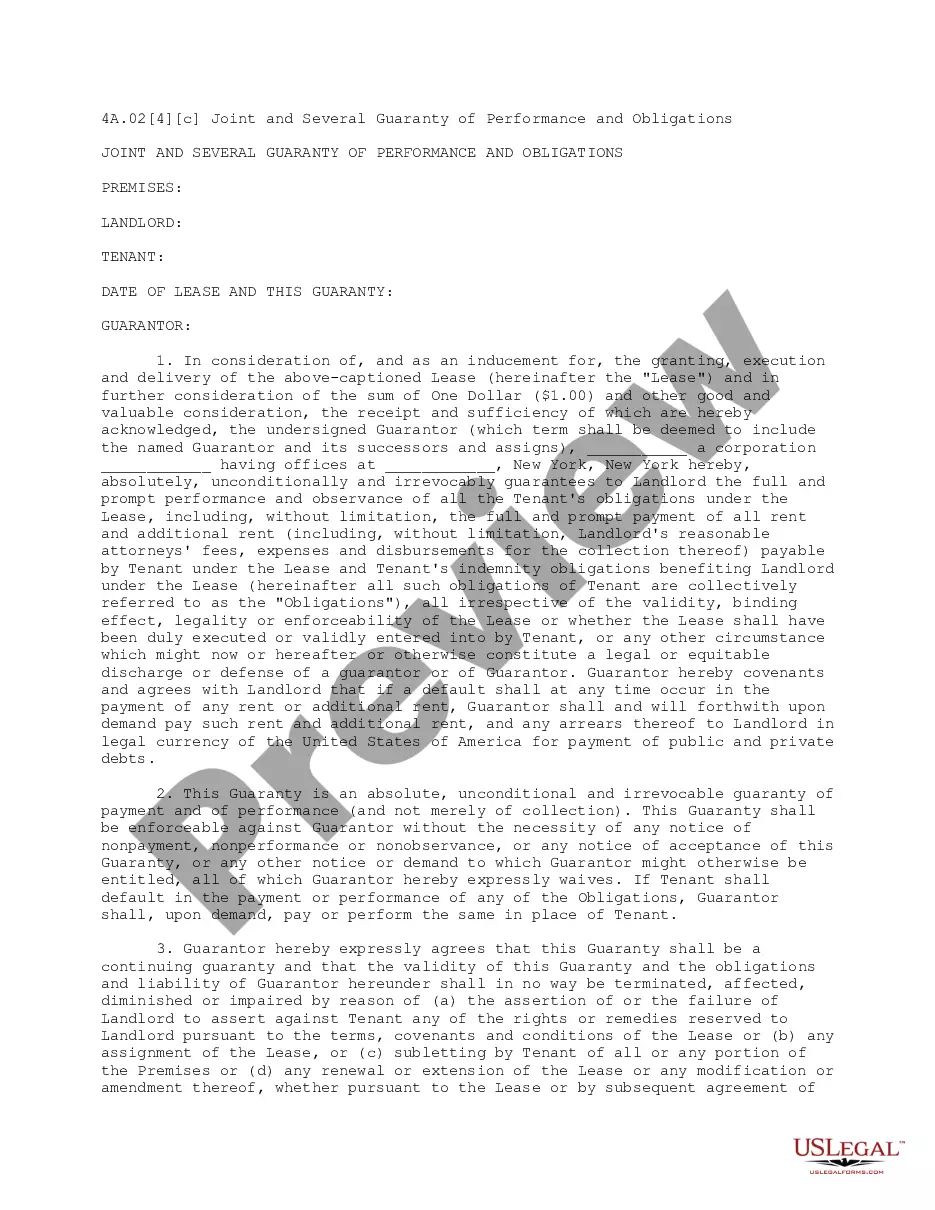
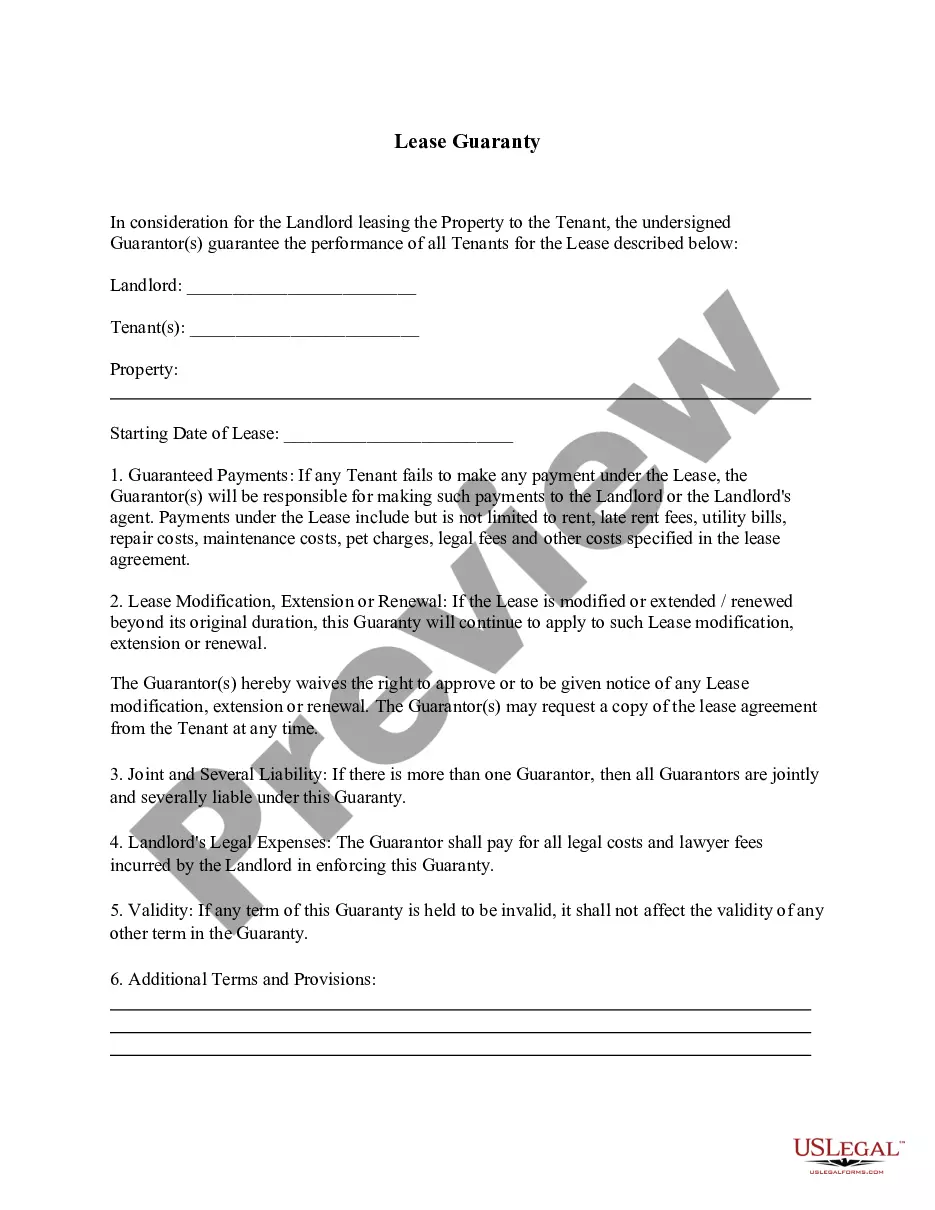
The Guaranty of Payment of Rent under Lease Agreement is a legal document in which one party, known as the guarantor, agrees to cover the rent obligations of another party, known as the obligor, in the event of default. This form helps landlords ensure that they receive rent payments, even if the tenant fails to pay. Unlike other agreements, this guaranty specifically addresses rent payment under a lease agreement and serves as added security for landlords during the rental period.
Form components explained
- Identification of the guarantor, obligor, and obligee.
- Details of the leased premises and the nature of the business conducted by the obligor.
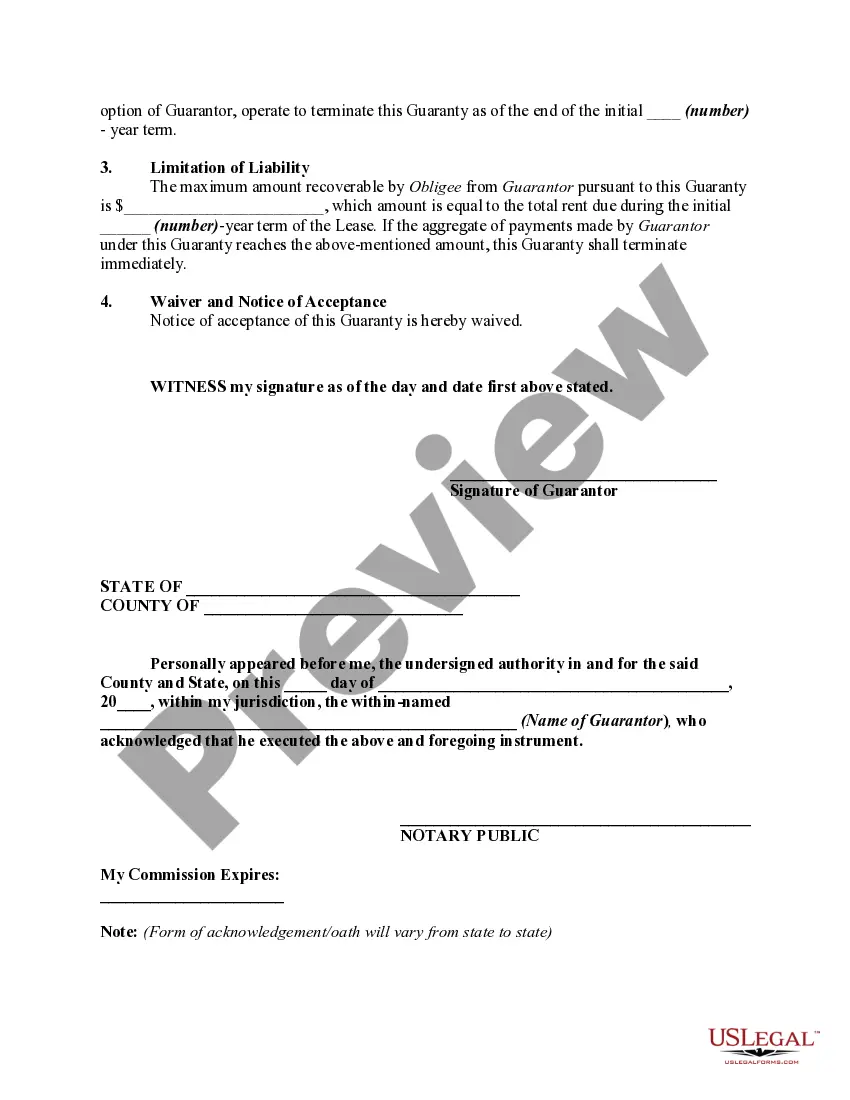
- Specific terms of the guaranty, including the duration and limitations of liability.
- Conditions under which the guarantor must make payments if the obligor defaults.
- Waiver of notice of acceptance by the guarantor.
- Notarization requirements for legal validity.
When to use this document
This form should be used when a landlord requires additional security for rent payments under a lease agreement. It is needed in situations where the tenant's creditworthiness or financial stability raises concerns, or when the landlord simply wants the assurance that rent will be paid even if the tenant defaults. It is particularly useful in commercial real estate leases but can also apply to residential situations where the risk of default is a concern.
Who this form is for
The following individuals or entities should consider using this form:
- Landlords seeking additional security for rent payments.
- Property managers responsible for leasing agreements.
- Anyone leasing commercial or residential property to a tenant with uncertain payment history.
- Guarantors willing to assume responsibility for another tenantâs rental payments.
How to prepare this document
- Identify the parties involved by entering the names and addresses of the guarantor, obligor, and obligee.
- Specify the property being leased and provide the address.
- Enter the date of the agreement and details about the nature of the obligor's business.
- Fill in any specific terms regarding the guaranty, including duration and limitation of liability.
- Ensure all parties sign the document and include the notarization if required by your state.
Notarization guidance
Yes, this form must be notarized to be legally valid. Notarization confirms the identity of the signer and the voluntary nature of the agreement. US Legal Forms provides integrated online notarization services, allowing you to complete this process securely via video call.
Get your form ready online
Our built-in tools help you complete, sign, share, and store your documents in one place.
Make edits, fill in missing information, and update formatting in US Legal Forms—just like you would in MS Word.
Download a copy, print it, send it by email, or mail it via USPS—whatever works best for your next step.
Sign and collect signatures with our SignNow integration. Send to multiple recipients, set reminders, and more. Go Premium to unlock E-Sign.
If this form requires notarization, complete it online through a secure video call—no need to meet a notary in person or wait for an appointment.
We protect your documents and personal data by following strict security and privacy standards.

Make edits, fill in missing information, and update formatting in US Legal Forms—just like you would in MS Word.

Download a copy, print it, send it by email, or mail it via USPS—whatever works best for your next step.

Sign and collect signatures with our SignNow integration. Send to multiple recipients, set reminders, and more. Go Premium to unlock E-Sign.

If this form requires notarization, complete it online through a secure video call—no need to meet a notary in person or wait for an appointment.

We protect your documents and personal data by following strict security and privacy standards.
Avoid these common issues
- Failing to properly identify all parties involved.
- Leaving out important terms, such as the duration or liability limits.
- Not having the document notarized when required.
- Not reviewing state-specific laws that may affect the guaranty.
- Using vague language that can lead to misunderstandings.
Benefits of using this form online
- Convenience: Complete the form from anywhere at any time.
- Editability: Easily make changes to fit your specific needs.
- Reliability: Forms are drafted by licensed attorneys to ensure legal validity.
- Accessibility: Downloadable format allows for secure storage and printing.
Legal use & context
- This form acts as a safeguard for landlords and is enforceable under applicable contract laws.
- It is subject to interpretation based on contract law principles, validating its significance in leasing agreements.
- Ensuring proper execution and notarization can prevent disputes regarding enforceability.
Key takeaways
- The Guaranty of Payment of Rent is essential for securing landlord interests.
- Correct completion and notarization are vital for the document's enforceability.
- Understanding state-specific requirements can enhance the document's effectiveness.
Looking for another form?

Form popularity
FAQ
This rent guaranty provides security for landlords by making a guarantor responsible for paying rent if the tenant defaults. The document names a third party who agrees to cover rent, providing assurance beyond the tenant’s promise in the lease and helping ensure timely payments even if the obligor misses obligations.
It means a third party, the guarantor, promises to pay rent if the tenant (the obligor) fails to do so. The form lists the guarantor’s information, the obligee (landlord), the obligor (tenant), and sets out the guarantee terms, including payment timelines and what happens on default.
It is a written agreement where a guarantor agrees to pay rent and fulfill other lease obligations if the tenant defaults. The form identifies the guarantor, the obligee, and the obligor, and it describes the guarantee terms, duration, and the liability cap that limits the guarantor’s exposure.
The guarantee duration is stated in the form, showing how long the guaranty is valid and whether renewal terms apply. It also references the Limitation of Liability, outlining the maximum amount the guarantor may owe.
For example, a guarantor signs the guaranty agreeing to pay rent for the lease term and any approved extensions, up to the stated liability limit. If the tenant defaults, the guarantor is responsible for overdue rent under the Guarantee Terms.
This form adds a named guarantor and explicit Guaranty Terms, Duration, and Limitation of Liability, giving the landlord extra protection beyond the tenant’s promises. A standard lease lacks these security provisions and does not identify a guarantor or set a liability cap.