Suggestion for Writ of Garnishment
What this document covers
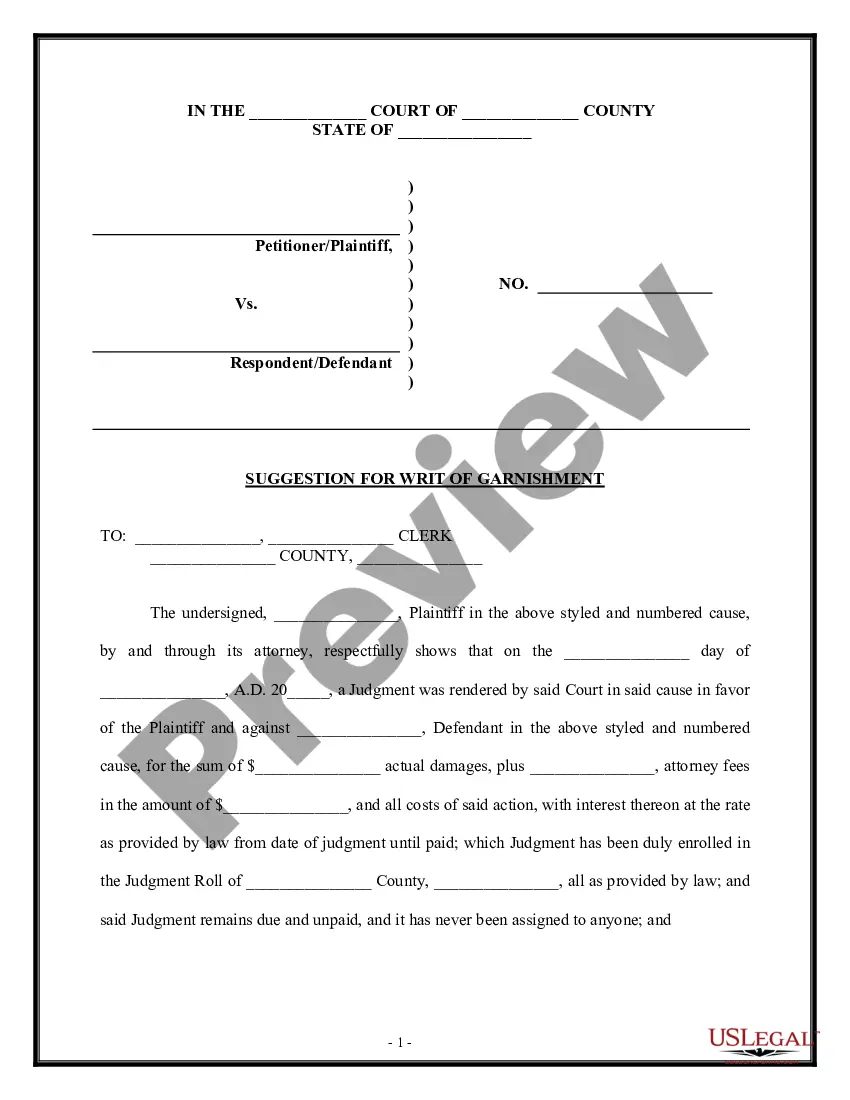
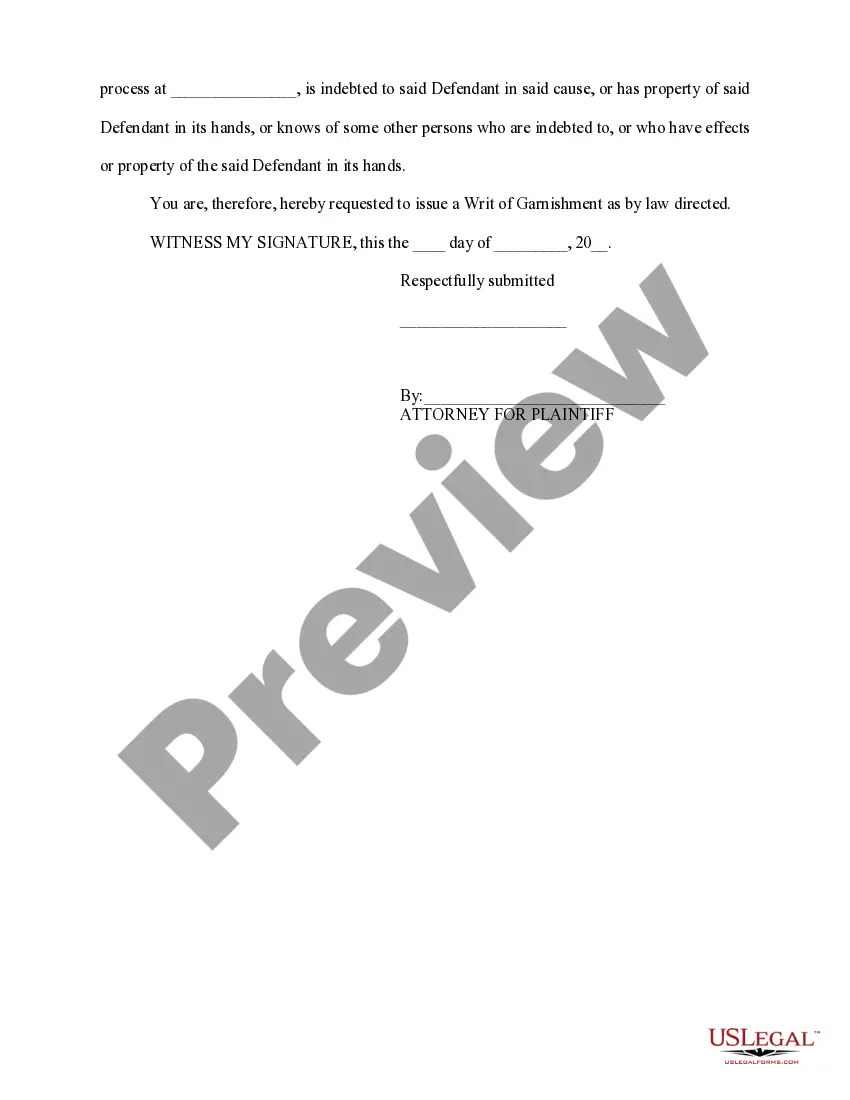
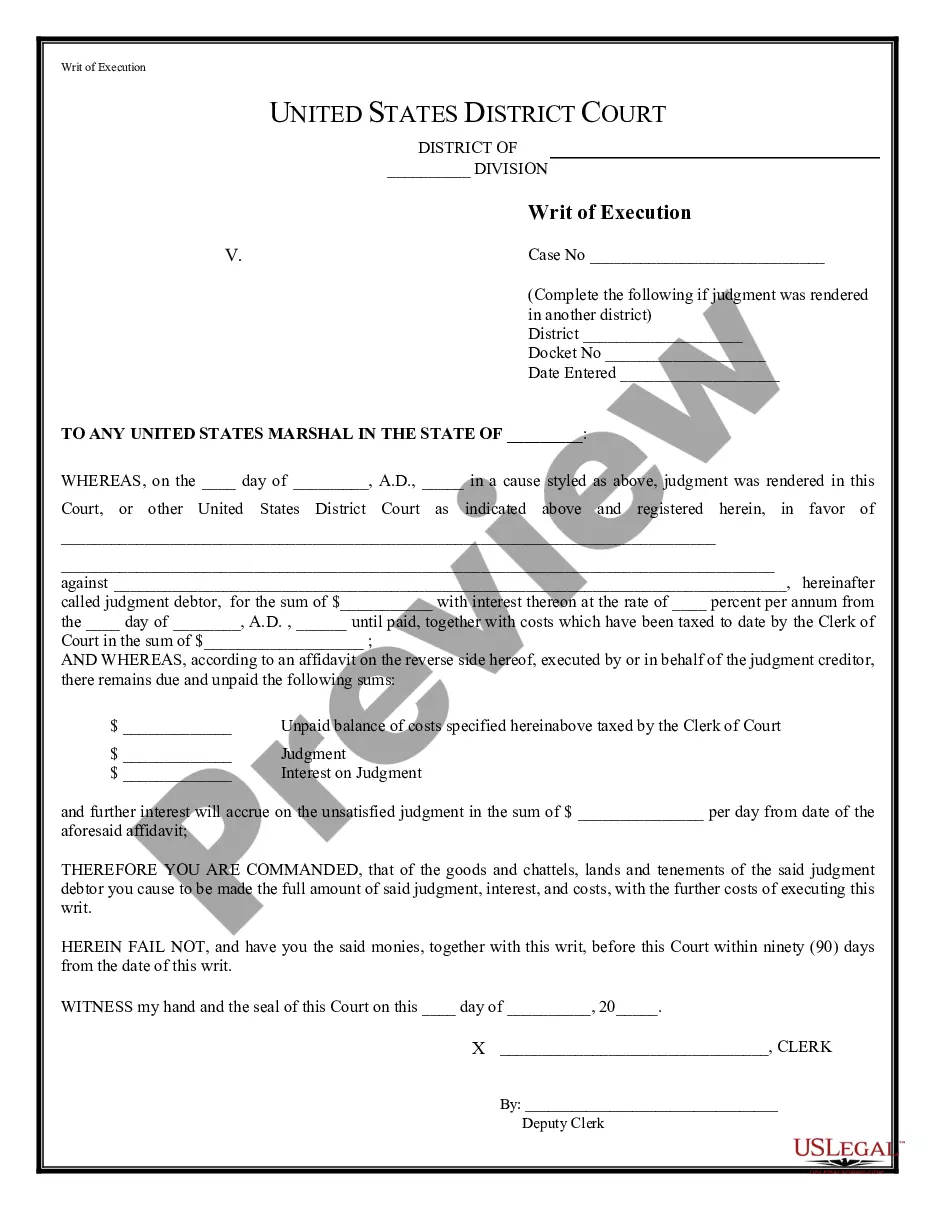
The Suggestion for Writ of Garnishment is a legal document used by a plaintiff to request the court to initiate garnishment proceedings against a defendant's property or accounts. This form is essential when the defendant has failed to satisfy a judgment, allowing the plaintiff to collect the owed funds directly from the defendantâs creditors or financial institutions. This form specifically addresses requests for garnishment, differentiating it from other collection methods that may not involve court-directed actions against third parties.
Key parts of this document
- Identification of the plaintiff and defendant involved in the judgment.
- Details regarding the garnishee, which may include a creditor or bank that holds the defendant's assets.
- The amount stated in the judgment that is owed by the defendant.
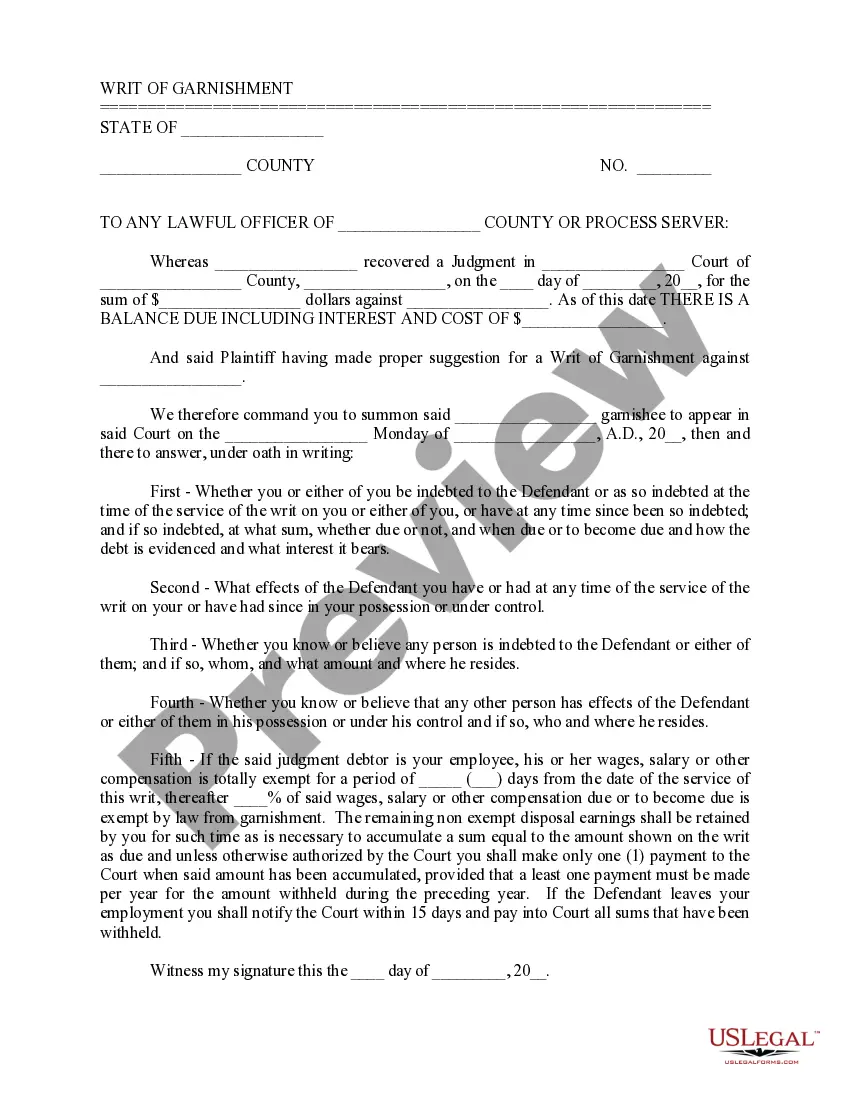
- Instructions for the garnishee on how to respond to the court.
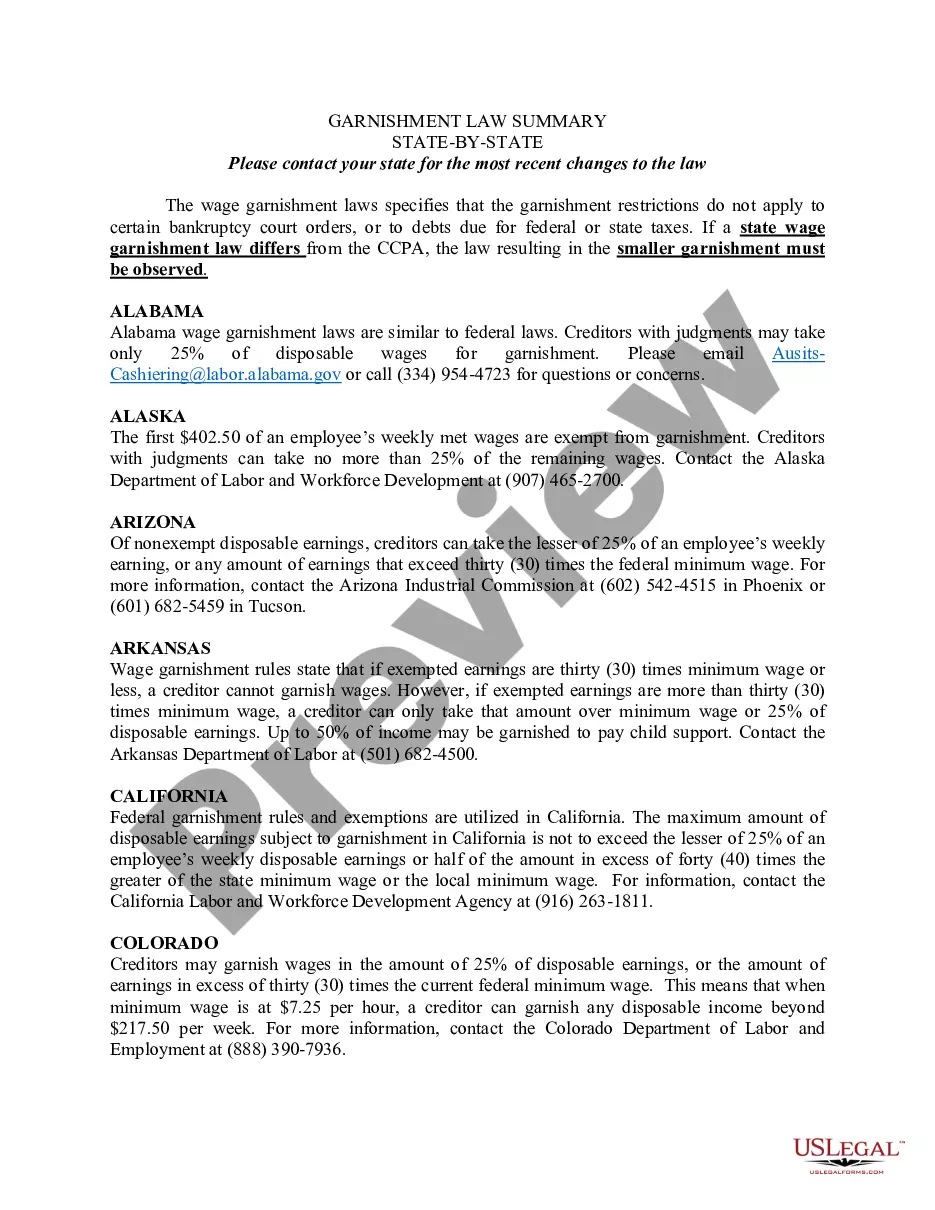
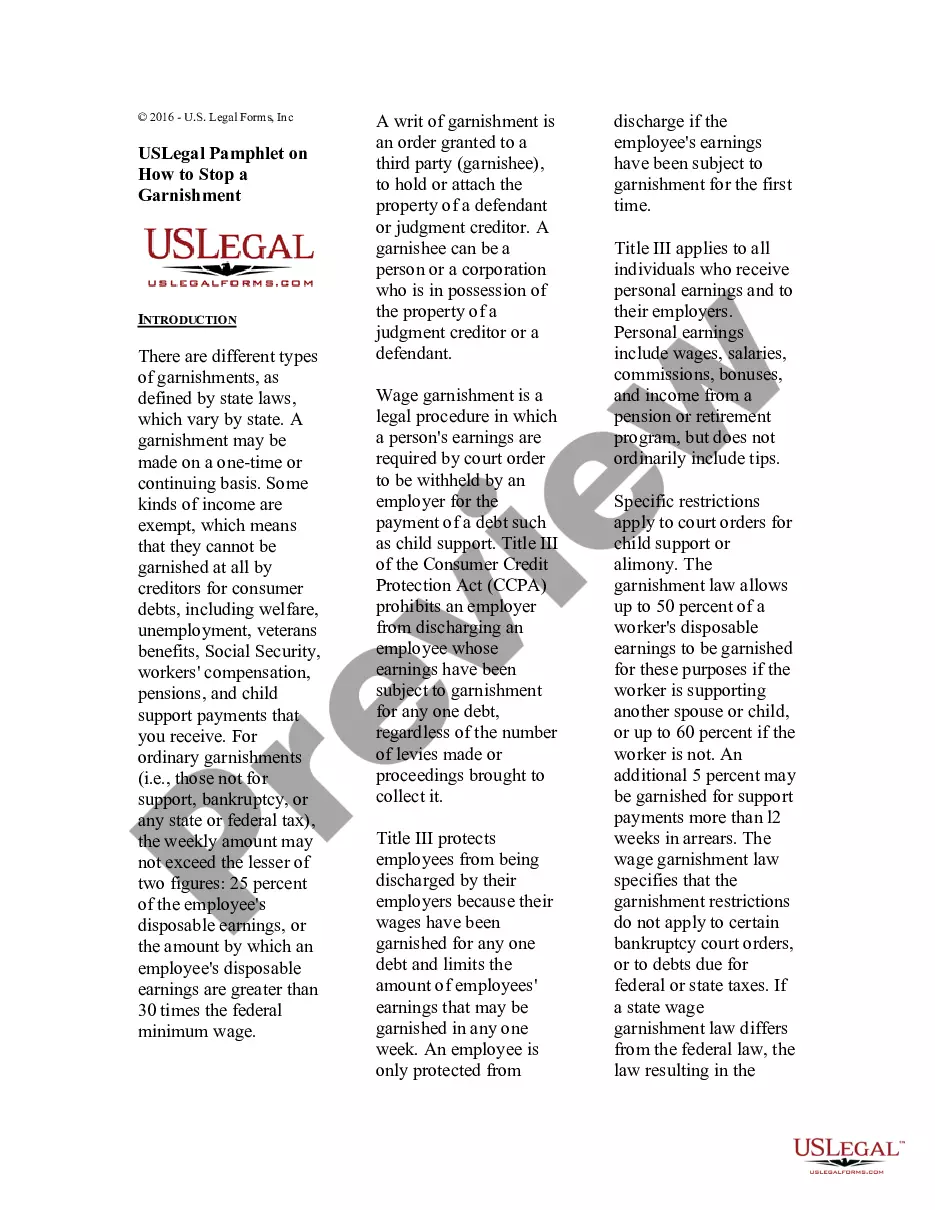
- Exemption details outlining the portions of wages that may be protected from garnishment.

Common use cases
This form should be utilized when a plaintiff has secured a legal judgment against a defendant and needs to initiate garnishment to collect the outstanding debt. Common scenarios include when employers hold wages, banks have funds in accounts, or third parties owe money to the defendant. It's a necessary step in enforcing the judgment when the defendant cannot pay directly.
Who should use this form
- Plaintiffs holding a judgment against a defendant for unpaid debts.
- Legal representatives acting on behalf of plaintiffs.
- Creditors seeking to collect on outstanding financial obligations via garnishment.
Completing this form step by step
- Identify the parties involved: Enter the names of the plaintiff, defendant, and garnishee.
- Specify the amount owed: Clearly state the total judgment amount due, including any interest and costs.
- Complete the garnishee details: Include the garnishee's name and address for service of process.
- Provide exemption information: Indicate any applicable exemptions concerning wages or other compensation.
- Sign and date the form: Ensure the plaintiff or their attorney provides a signature and the date of submission.
Notarization requirements for this form
This form does not typically require notarization unless specified by local law. It is advised to check the specific requirements of the jurisdiction to ensure compliance with any legal standards.
Get your form ready online
Our built-in tools help you complete, sign, share, and store your documents in one place.
Make edits, fill in missing information, and update formatting in US Legal Forms—just like you would in MS Word.
Download a copy, print it, send it by email, or mail it via USPS—whatever works best for your next step.
Sign and collect signatures with our SignNow integration. Send to multiple recipients, set reminders, and more. Go Premium to unlock E-Sign.
If this form requires notarization, complete it online through a secure video call—no need to meet a notary in person or wait for an appointment.
We protect your documents and personal data by following strict security and privacy standards.

Make edits, fill in missing information, and update formatting in US Legal Forms—just like you would in MS Word.

Download a copy, print it, send it by email, or mail it via USPS—whatever works best for your next step.

Sign and collect signatures with our SignNow integration. Send to multiple recipients, set reminders, and more. Go Premium to unlock E-Sign.

If this form requires notarization, complete it online through a secure video call—no need to meet a notary in person or wait for an appointment.

We protect your documents and personal data by following strict security and privacy standards.
Typical mistakes to avoid
- Failing to provide complete and accurate information about the garnishee.
- Not including the current amount owed, including interest and costs.
- Neglecting to adhere to state-specific formatting or procedural rules.
- Forgetting to sign the form before submission.
Benefits of using this form online
- Convenience of completing the form from anywhere, at any time.
- Editability allows for easy corrections and ensure accuracy before submission.
- Reliability of using templates drafted by licensed attorneys for legality.
Legal use & context
- The Suggestion for Writ of Garnishment is legally enforceable once the court issues the writ.
- Non-compliance by the garnishee can lead to legal penalties.
- This form does not guarantee that funds will be recovered but allows for legal action to pursue them.
Looking for another form?








Form popularity
FAQ
The Suggestion for Writ of Garnishment is a legal document filed by a plaintiff who has obtained a judgment against a defendant, requesting the court issue a garnishment order to collect the owed amount from the defendant's property or wages. Use this form after a judgment is entered and garnishment is appropriate to collect what is owed.
Not directly. The Suggestion for Writ of Garnishment is used to request that the court issue a writ of garnishment after a judgment, and it does not set terms for payment plans or stopping garnishment. Negotiations would involve separate procedures or agreements outside this form, which includes sections about the plaintiff, defendant, judgment amount, and the writ request.
Negotiating a wage garnishment is not addressed by this form. The form's purpose is to request the court issue a writ of garnishment based on a judgment, and it details the plaintiff, defendant, judgment amount, and the writ request, along with garnishee instructions. For negotiation strategies, consult an attorney.
Stopping garnishment is not covered by this form. The Suggestion for Writ of Garnishment is focused on requesting a writ based on a judgment. If stopping the garnishment is needed, a separate legal approach or counsel should be sought, as the form itself does not provide steps for removal.
Reversing a garnishment is not described by this form. The document is intended to request a writ of garnishment after judgment, and it includes sections for the plaintiff, defendant, judgment amount, the writ request, and garnishee instructions. Consult an attorney for any reversal or relief options.
It is designed specifically to request that the court issue a garnishment order to collect the owed amount after a judgment, focusing on garnishment proceedings rather than general debt collection methods. The form includes sections for the plaintiff and defendant, judgment amount, the writ request, and garnishee instructions.