Notice of Lien of Jeweler for Repairs and Public Sale
What this document covers
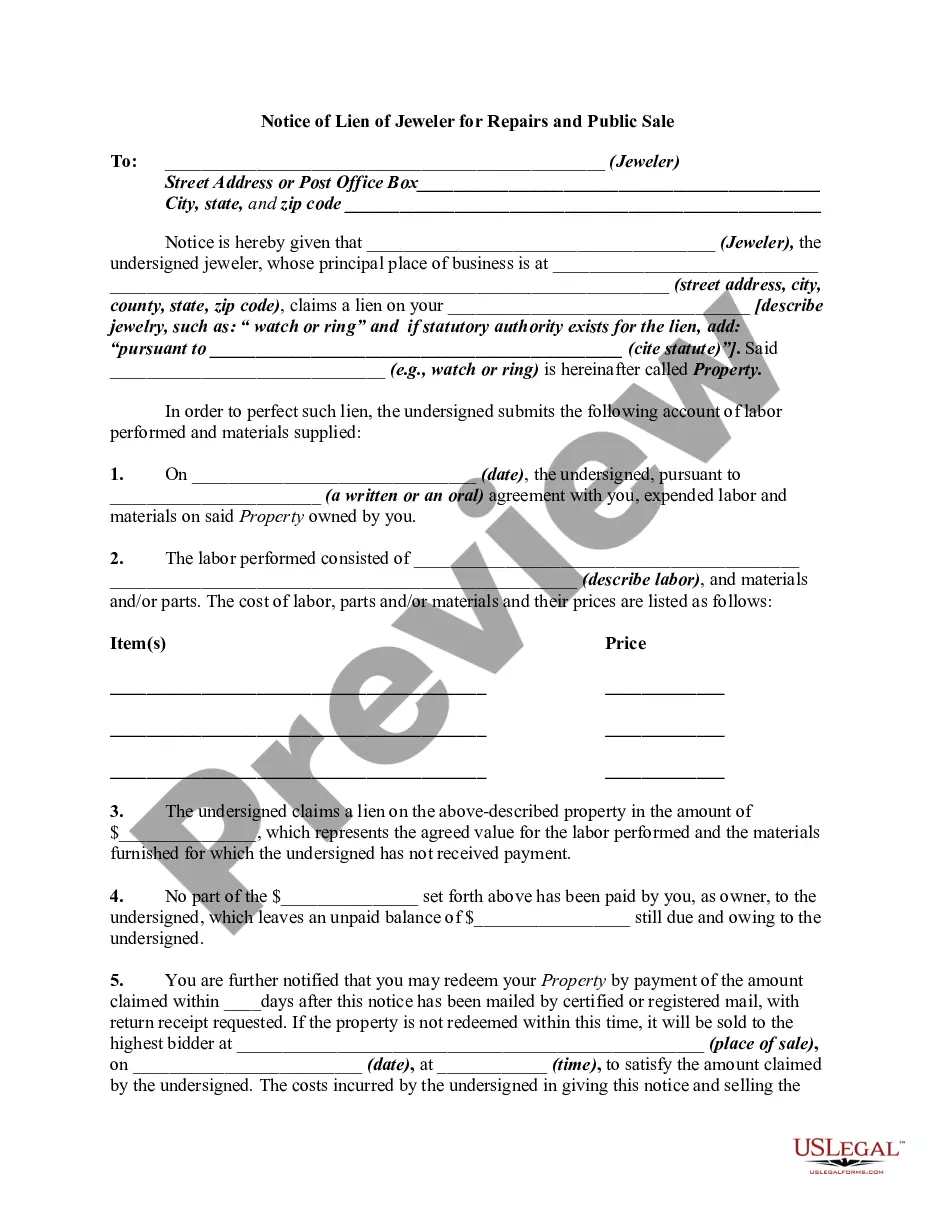
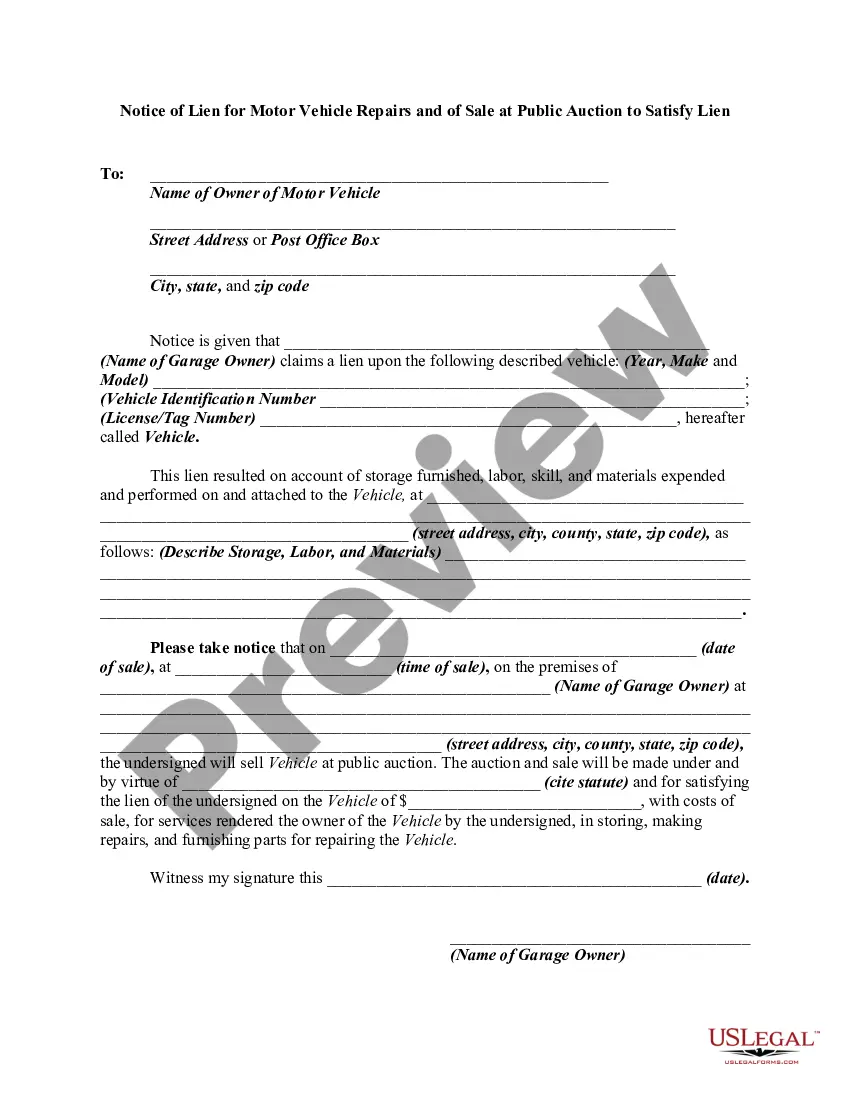
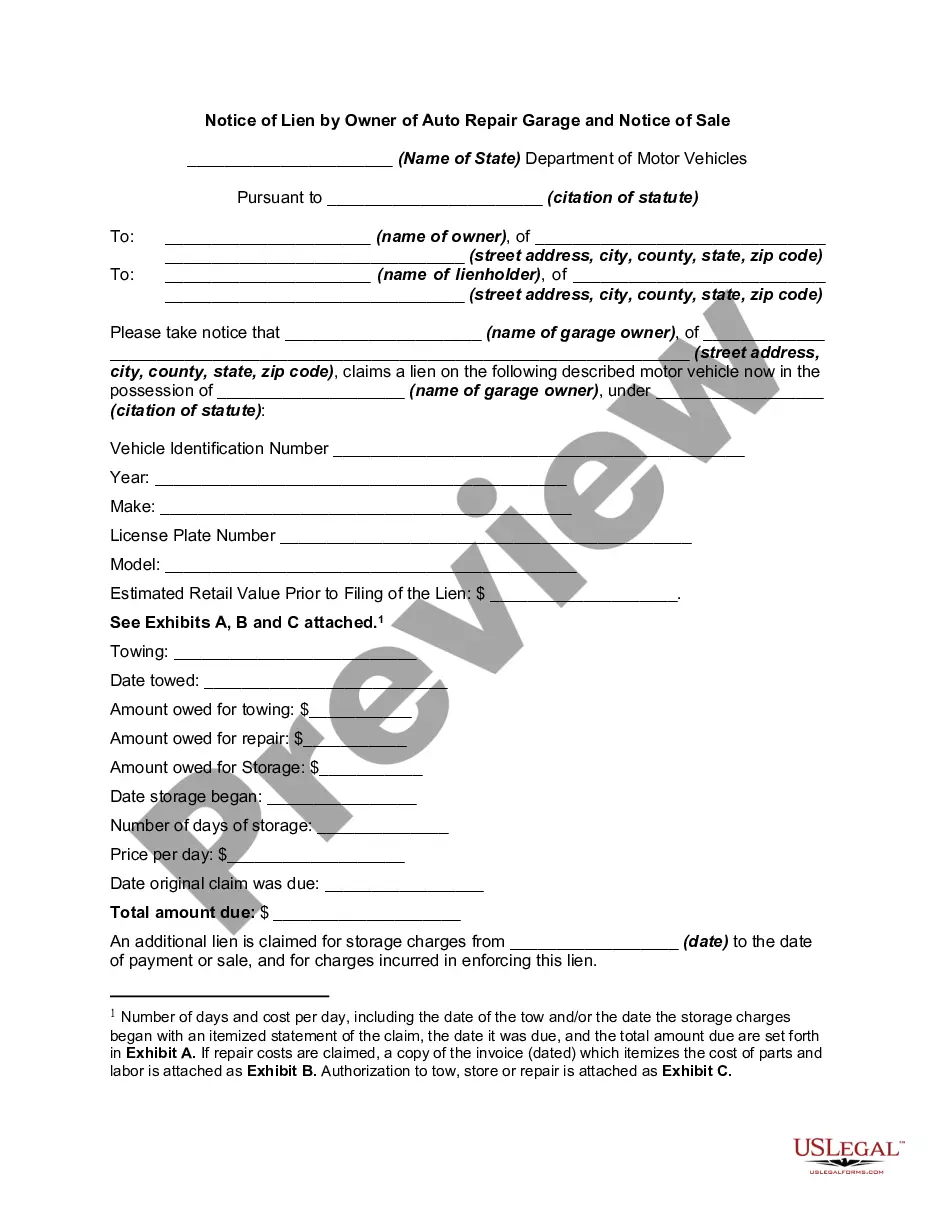
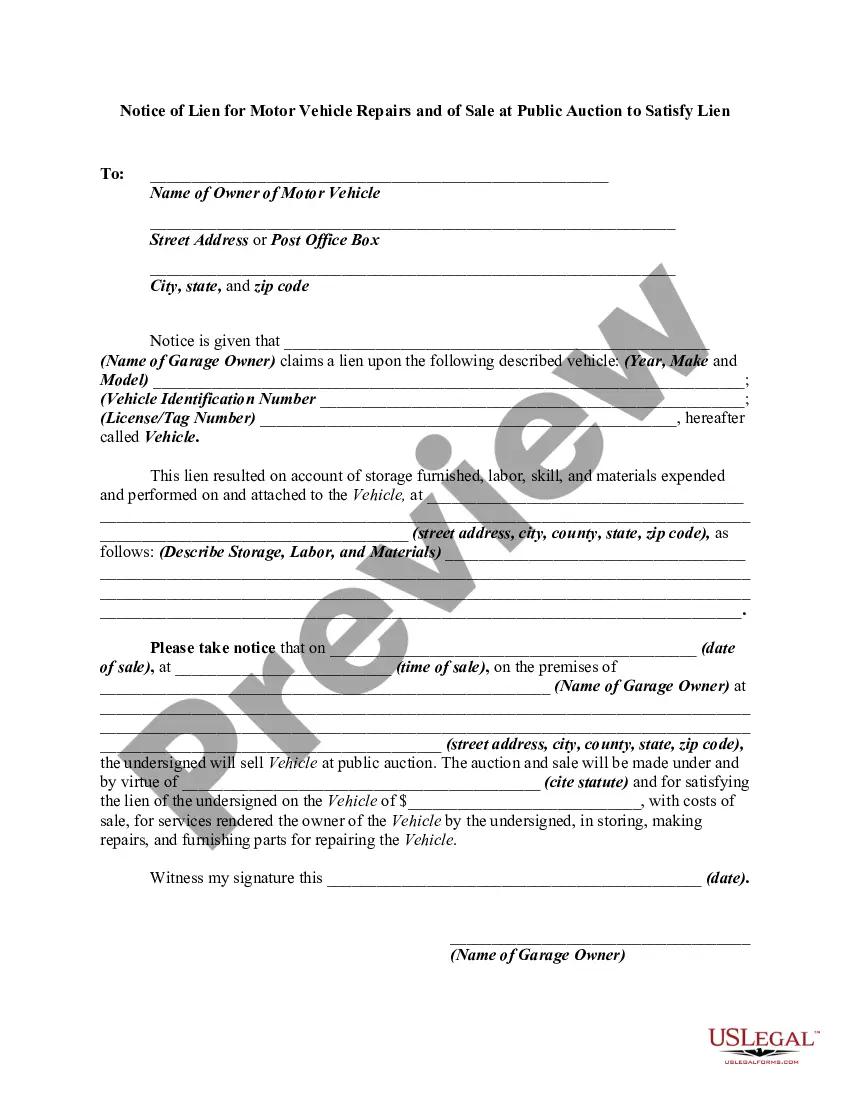
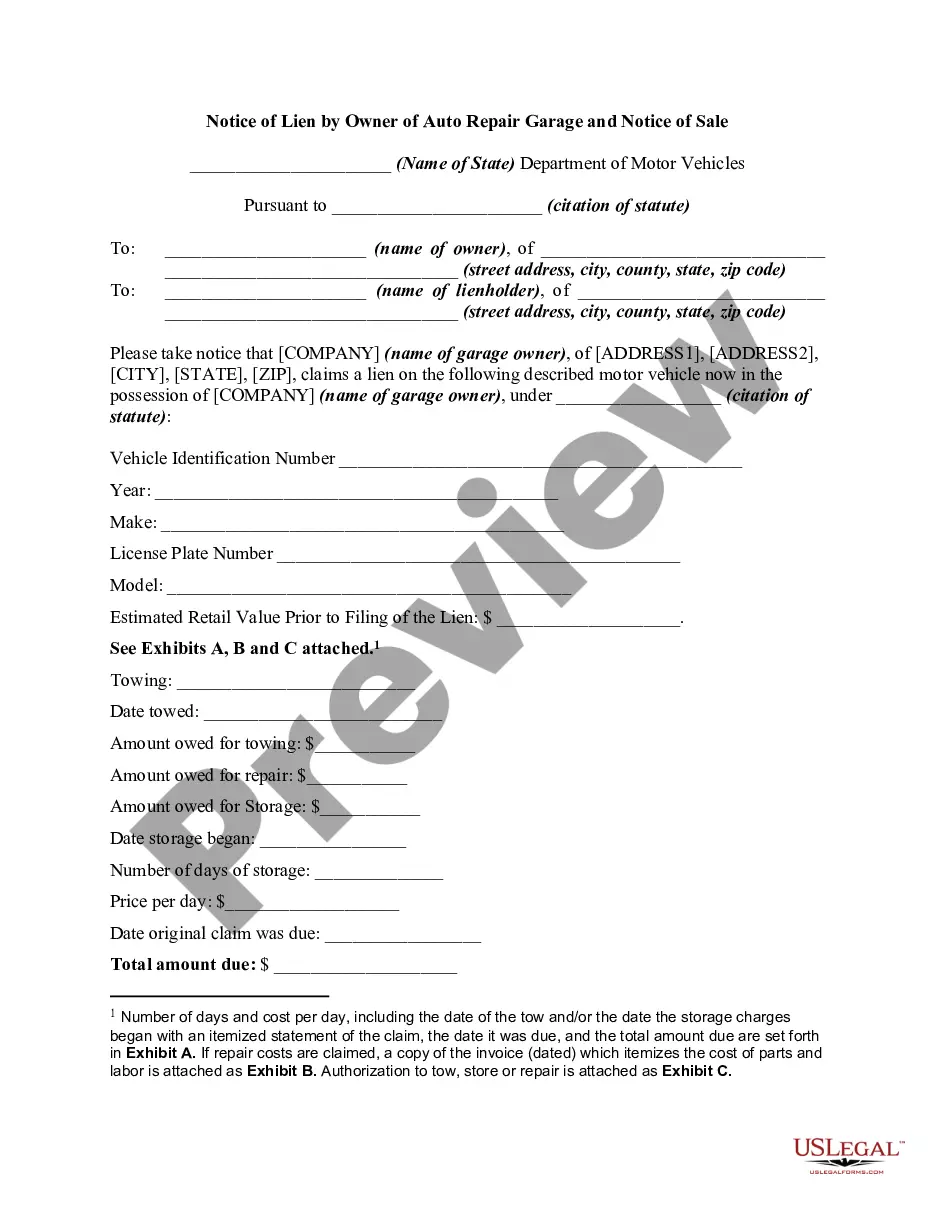
The Notice of Lien of Jeweler for Repairs and Public Sale is a legal document that allows a jeweler to claim a lien on jewelry they have repaired. This form serves to inform the owner about the unpaid labor and materials used for the jewelry's repair and outlines the jeweler's right to sell the property if payment is not received. Unlike other lien forms, this one is specifically tailored for jewelry repairs and complies with applicable state laws regarding lien rights in the jewelry industry.
What’s included in this form
- The names and addresses of both the jeweler and the jewelry owner.
- A description of the jewelry for which the lien is claimed.
- The account of labor performed and materials supplied, including costs.
- The total amount due that represents the unpaid balance.
- Redemption terms, specifying how and when the owner can reclaim their property.
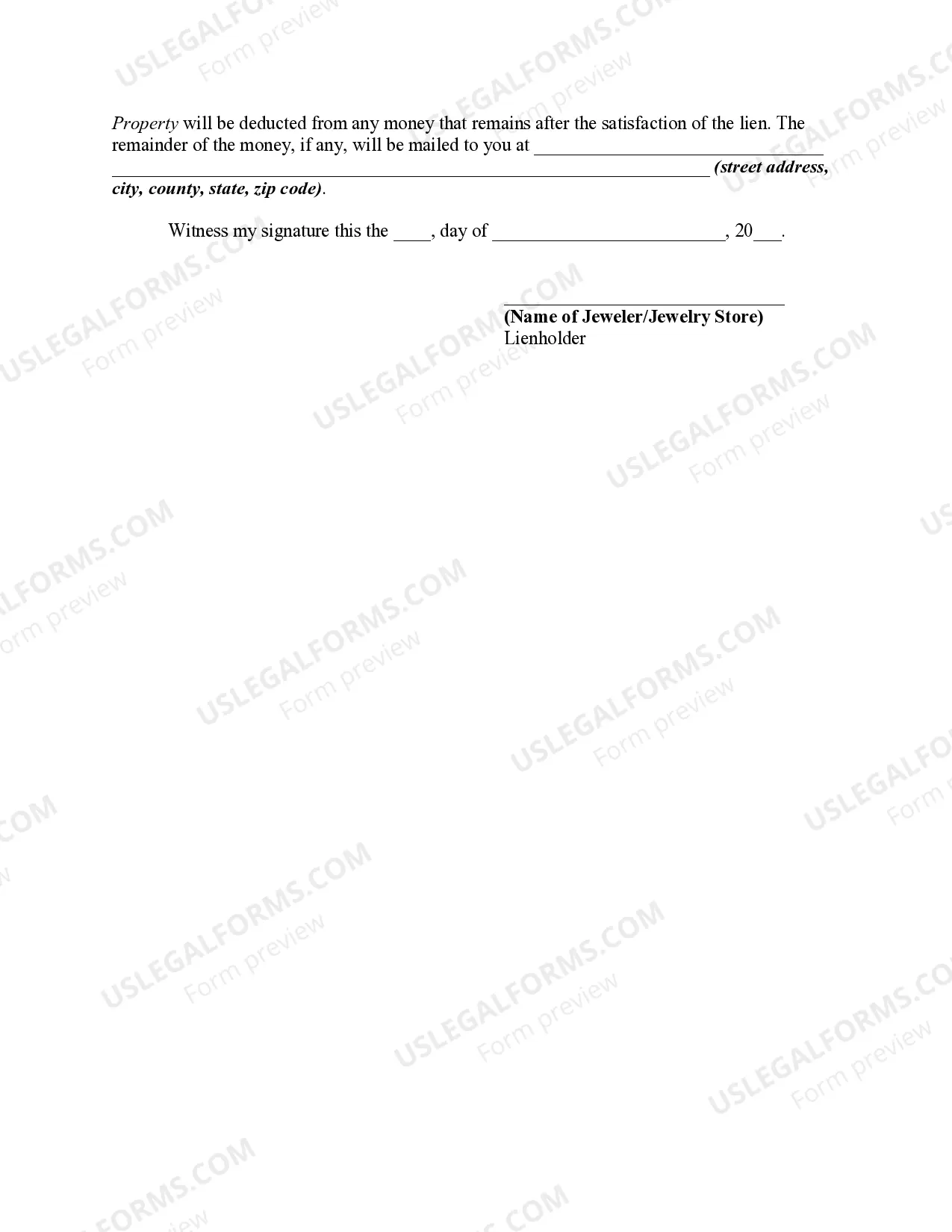
- Details regarding the public sale of the property if payment is not made.
When to use this document
This form is used when a jeweler has completed repair work on a piece of jewelry but has not received payment from the owner. It may be necessary when the jeweler wants to secure their payment by notifying the owner of their lien rights and the potential sale of the jewelry to recover the owed amount. It is particularly relevant in situations where the jeweler needs to take formal action to claim their fees for the services rendered.
Who should use this form
This form is intended for:
- Jewelers or jewelry repair businesses seeking to enforce a lien on unpaid repairs.
- Individuals who own jewelry that has been repaired but not paid for.
- Legal representatives of jewelers needing to document their lien and the conditions of property sale.
How to complete this form
- Fill in the jeweler's name and contact information at the top of the form.
- Provide a detailed description of the jewelry that is subject to the lien.
- Document the date of the repair and the terms of the agreement.
- List the labor performed and materials provided along with their costs.
- Specify the total amount due and the payment terms for redeeming the property.
- Sign and date the form to finalize the notice of lien.
Does this form need to be notarized?
This form does not typically require notarization to be legally valid. However, some jurisdictions or document types may still require it. US Legal Forms provides secure online notarization powered by Notarize, available 24/7 for added convenience.
Get your form ready online
Our built-in tools help you complete, sign, share, and store your documents in one place.
Make edits, fill in missing information, and update formatting in US Legal Forms—just like you would in MS Word.
Download a copy, print it, send it by email, or mail it via USPS—whatever works best for your next step.
Sign and collect signatures with our SignNow integration. Send to multiple recipients, set reminders, and more. Go Premium to unlock E-Sign.
If this form requires notarization, complete it online through a secure video call—no need to meet a notary in person or wait for an appointment.
We protect your documents and personal data by following strict security and privacy standards.

Make edits, fill in missing information, and update formatting in US Legal Forms—just like you would in MS Word.

Download a copy, print it, send it by email, or mail it via USPS—whatever works best for your next step.

Sign and collect signatures with our SignNow integration. Send to multiple recipients, set reminders, and more. Go Premium to unlock E-Sign.

If this form requires notarization, complete it online through a secure video call—no need to meet a notary in person or wait for an appointment.

We protect your documents and personal data by following strict security and privacy standards.
Typical mistakes to avoid
- Failing to accurately describe the jewelry, which can lead to disputes.
- Not providing complete contact information for both parties.
- Forgetting to mention the specific statute that supports the lien.
- Neglecting to specify payment deadlines, leading to confusion.
Why complete this form online
- Convenience of downloading and filling out the form from anywhere.
- Easy access to state-specific versions to ensure legal compliance.
- Editability allows for quick modifications based on unique circumstances.
- Reliability in terms of having a professionally drafted document.
Looking for another form?








Form popularity
FAQ
Can a lien be placed on your property without you knowing? Yes, it happens. Sometimes a court decision or settlement results in a lien being placed on a property, and for some reason the owner doesn't know about it initially.
Remove and destroy the license plates. Submit a completed Notice of Transfer and Release of Liability (REG 138) to the department within five days of the sale. Complete a Certification of Lien Sale for Vehicles Valued $4,000 or Less (REG 168A).
In a mortgage foreclosure, any judgment liens that were recorded after the mortgage will be wiped out by the foreclosure. Any surplus funds after the foreclosing lender's debt has been paid off will be distributed to other creditors holding junior liens, like second mortgages and judgment lienholders.
A lien is a legal right or claim against a property by a creditor. Liens are commonly placed against property, such as homes and cars, so creditors, such as banks and credit unions, can collect what is owed to them. Liens can also be removed, giving the owner full and clear title to the property.
There are two different types of liens that an individual may have over real property: specific and general. A specific lien is granted only with respect to a particular asset. In foreclosure, the specific asset is the real property that is subject to the foreclosure.
A lien sale is the sale of the claimor a holdplaced on an asset to satisfy an unpaid debt. Typically, lien sales are conducted as public auctions, and the lien is on real estate, automobiles, and other personal property.
A car lien sale is the process by which the lien holder notifies all interested parties that a vehicle may be sold if a debt is not paid off by the lien sale date. On the date of the lien sale, the lien holder sells the vehicle to the highest bidder.
A lien is a lender's claim for repayment that is registered against a car. Lenders and garages have the right to place a lien on your car. Liens stay registered on the car until the debt has been paid in full and the lien has been removed.
A lien is a claim or legal right against assets that are typically used as collateral to satisfy a debt. A lien could be established by a creditor or a legal judgement. A lien serves to guarantee an underlying obligation, such as the repayment of a loan.