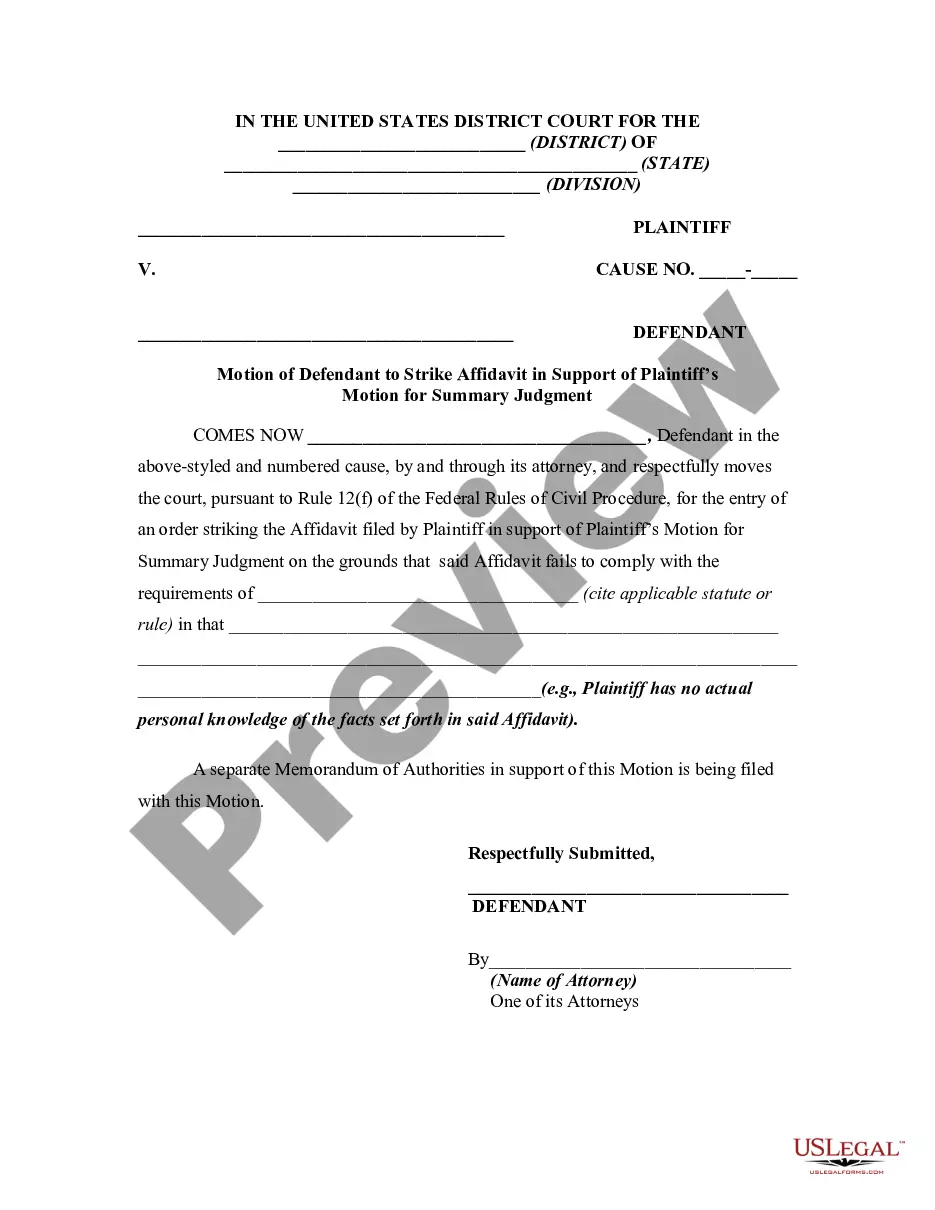
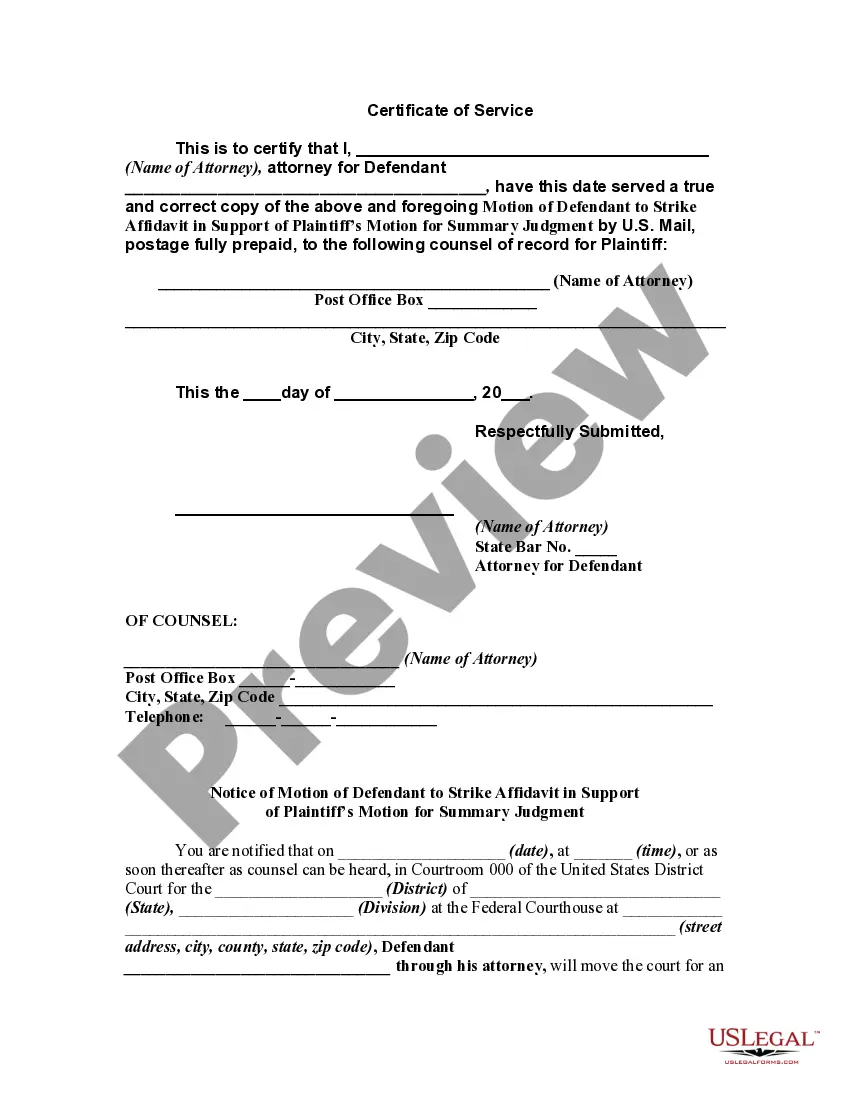
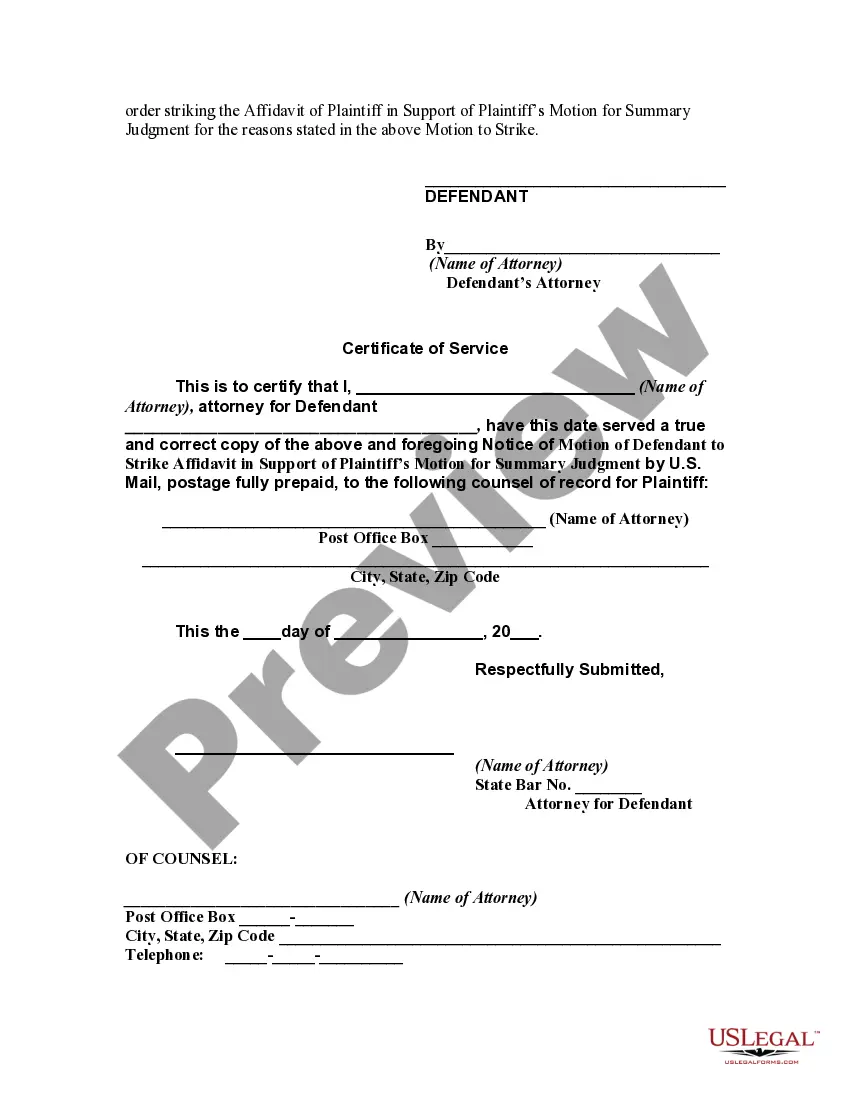
Motion of Defendant to Strike Affidavit in Support of Plaintiffs Motion for Summary Judgment and Notice of Motion to Strike
Overview of this form
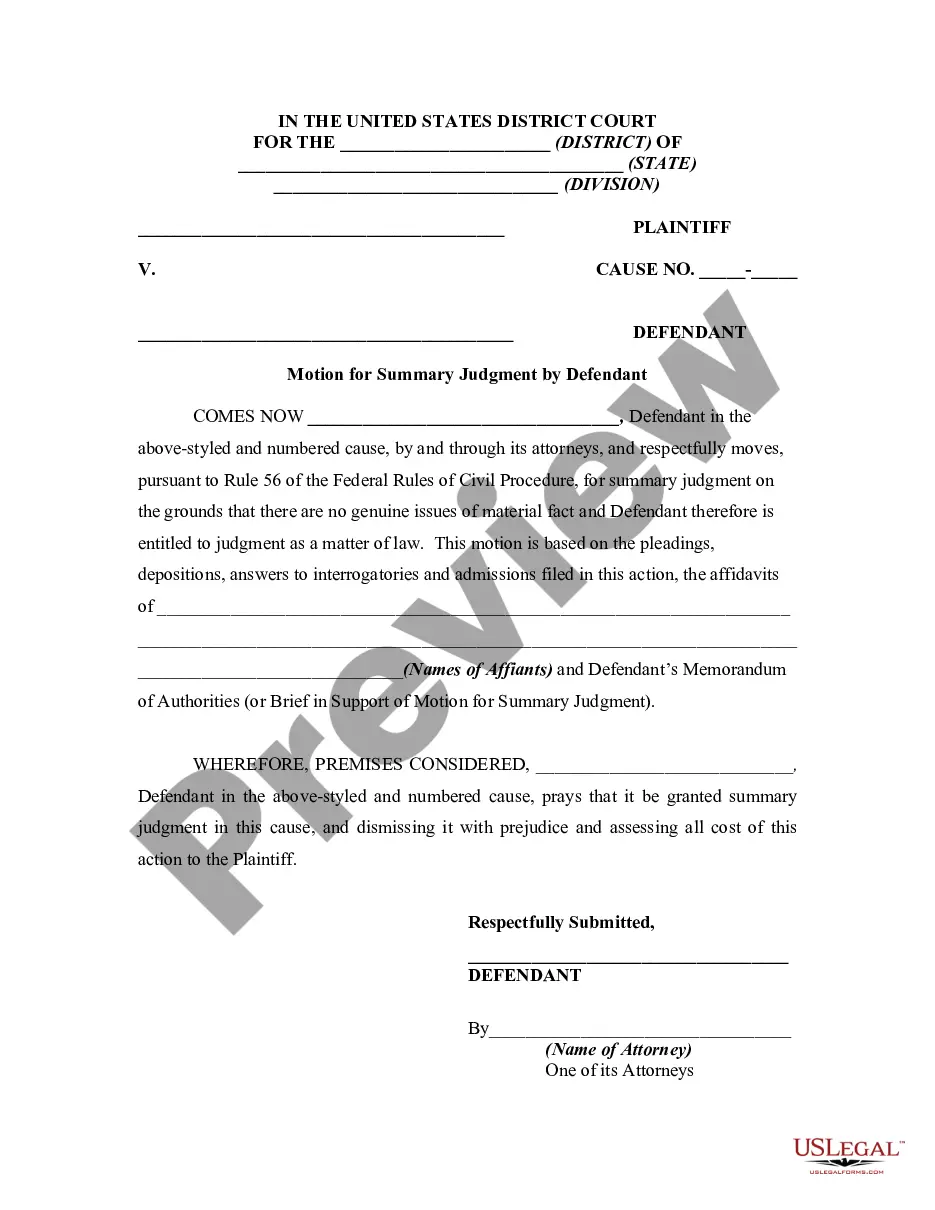
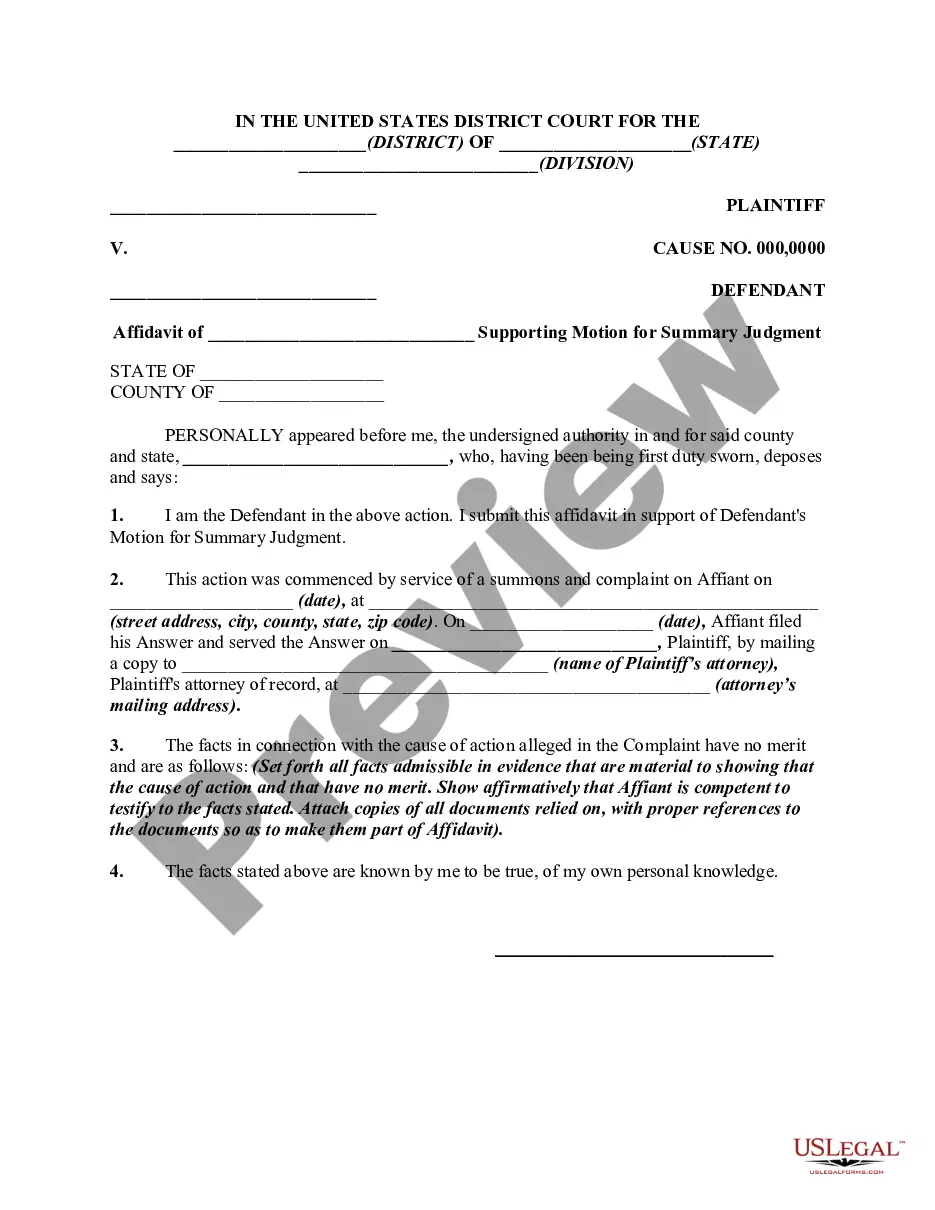
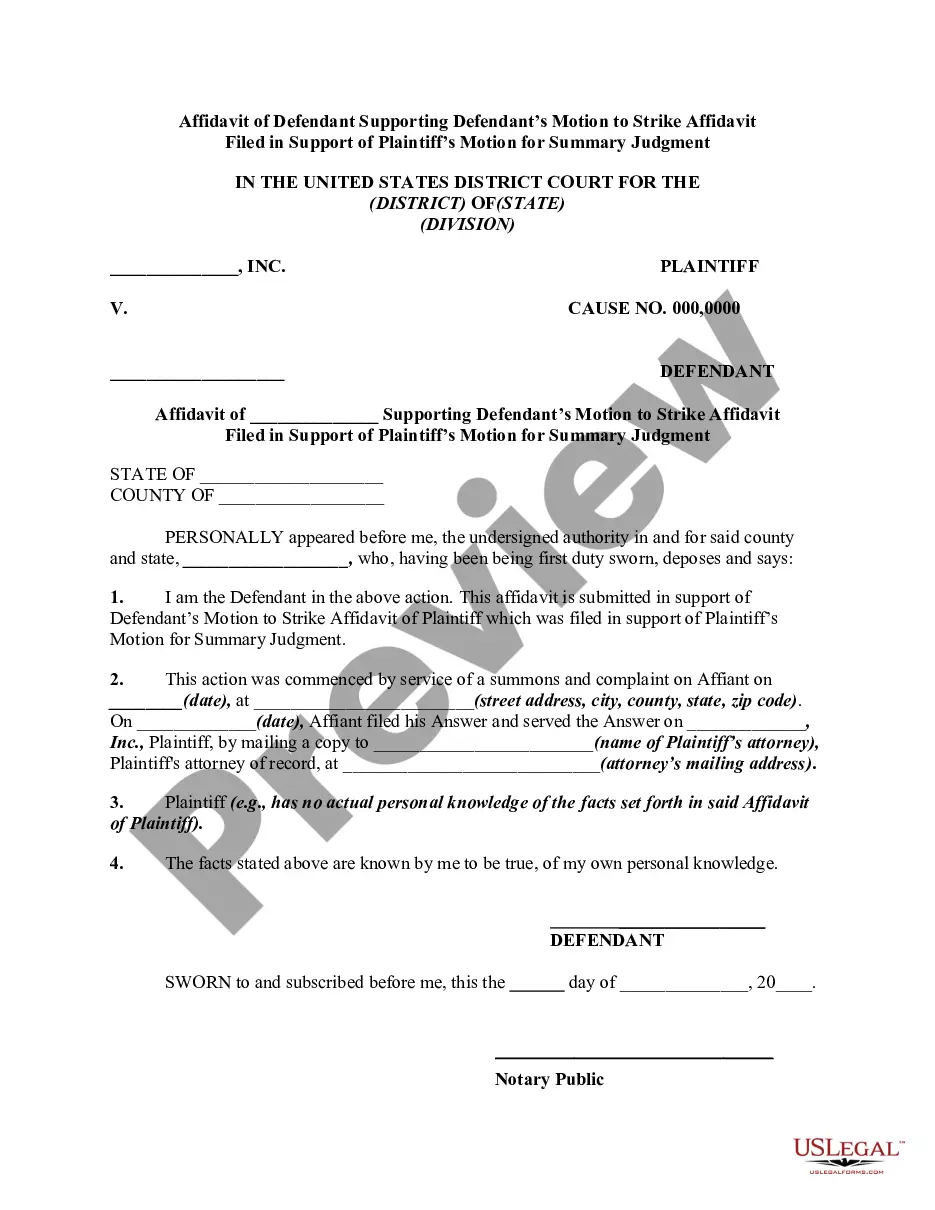
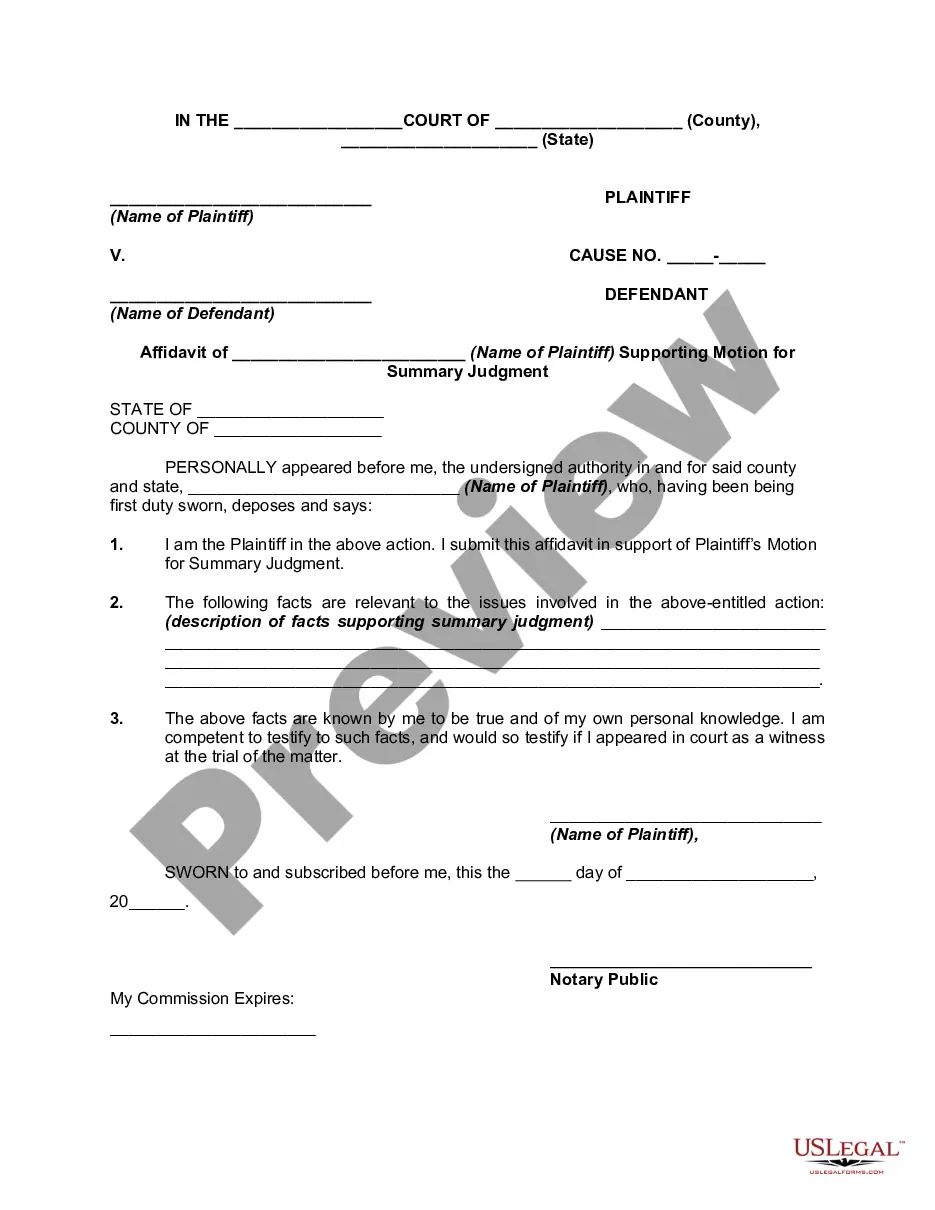
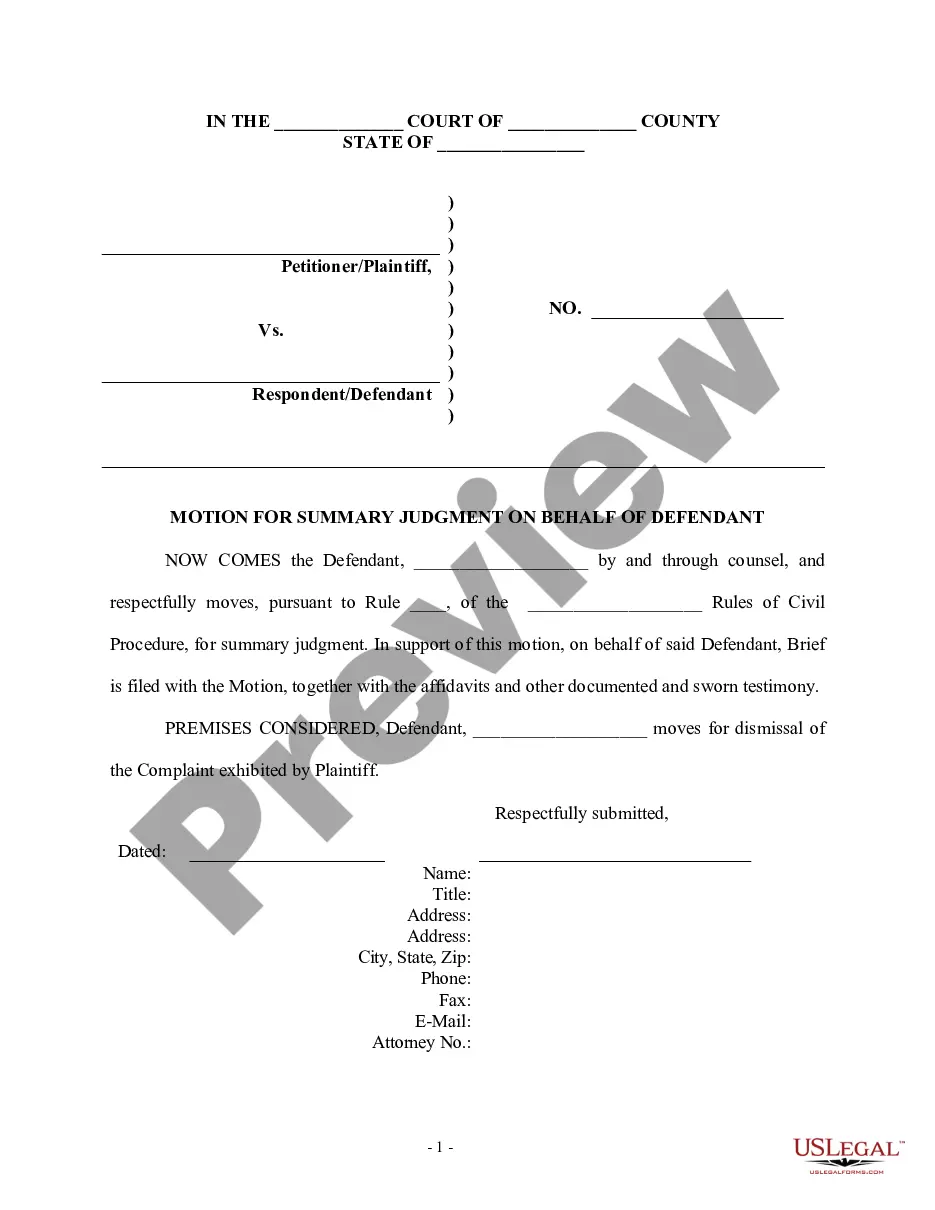
The Motion of Defendant to Strike Affidavit in Support of Plaintiffs Motion for Summary Judgment is a legal document used in court to challenge the validity of an affidavit submitted by the plaintiff. This motion requests the court to remove the affidavit on specific grounds, which may include insufficient evidence or lack of proper formatting. It is crucial for ensuring that only valid evidence is considered in a motion for summary judgment, differing from other motions in its focus on procedural compliance and the integrity of supporting documents.
Main sections of this form
- Case title and court jurisdiction
- Identification of the Defendant and their attorney
- Specific grounds for striking the affidavit
- Proposed date and time for the motion hearing
- Certification of service to notify opposing counsel

Situations where this form applies
This form is typically used when a defendant seeks to contest an affidavit submitted in support of a plaintiff's motion for summary judgment. It is particularly applicable when the affidavit is alleged to lack the necessary evidence, is based on hearsay, or does not comply with legal standards outlined by the jurisdiction.
Who needs this form
- Defendants involved in a civil lawsuit
- Attorneys representing defendants in summary judgment motions
- Parties who need to challenge the admissibility of affidavits in court
How to complete this form
- Identify the defendant and provide their legal representation details.
- Clearly state the legal basis for the motion to strike the affidavit.
- Indicate the proposed date and time for the court hearing.
- Complete the certification of service to notify the plaintiff's attorney.
- Sign and date the motion to ensure its validity.
Is notarization required?
This form does not typically require notarization unless specified by local law. However, it is advisable to check local court requirements to ensure compliance.
Get your form ready online
Our built-in tools help you complete, sign, share, and store your documents in one place.
Make edits, fill in missing information, and update formatting in US Legal Forms—just like you would in MS Word.
Download a copy, print it, send it by email, or mail it via USPS—whatever works best for your next step.
Sign and collect signatures with our SignNow integration. Send to multiple recipients, set reminders, and more. Go Premium to unlock E-Sign.
If this form requires notarization, complete it online through a secure video call—no need to meet a notary in person or wait for an appointment.
We protect your documents and personal data by following strict security and privacy standards.

Make edits, fill in missing information, and update formatting in US Legal Forms—just like you would in MS Word.

Download a copy, print it, send it by email, or mail it via USPS—whatever works best for your next step.

Sign and collect signatures with our SignNow integration. Send to multiple recipients, set reminders, and more. Go Premium to unlock E-Sign.

If this form requires notarization, complete it online through a secure video call—no need to meet a notary in person or wait for an appointment.

We protect your documents and personal data by following strict security and privacy standards.
Common mistakes to avoid
- Failing to provide sufficient grounds for striking the affidavit.
- Submitting the motion after the deadline set by the court.
- Not serving the motion to the opposing counsel properly.
Why use this form online
- Easy and quick access to download a professionally drafted motion.
- Edit and customize the form according to specific case requirements.
- Secure and reliable source for legal documents, drafted by licensed attorneys.
Looking for another form?










Form popularity
FAQ
It is a civil-procedure form used by a defendant to challenge an affidavit submitted to support a plaintiff’s motion for summary judgment. The form asks the court to strike that affidavit on listed grounds, and it includes a proposed hearing date and time plus a certification of service to notify opposing counsel. It helps ensure only admissible evidence is considered in MSJ proceedings.
A motion to strike is a formal request to remove a document or portion of evidence from consideration. In this form, it targets an affidavit accompanying a plaintiff’s motion for summary judgment, asking the court to excise that affidavit if it is not admissible or fails to meet required grounds.
Yes. A motion for summary judgment can be supported by affidavits and other admissible evidence, but the defendant may file this form to strike a plaintiff’s affidavit if it is alleged to be inadmissible or improperly presented. The form provides space to specify the grounds for striking the affidavit.
Common grounds include a lack of a genuine dispute of material fact and entitlement to judgment as a matter of law. This form focuses on contests to the plaintiff’s supporting affidavit, helping ensure any ground cited for striking the affidavit is properly documented before a decision on the MSJ is made.
Filing for summary judgment can be risky if the record shows factual disputes; even if a motion seems strong, the court may deny MSJ and proceed to trial. This form helps defend against improper affidavits but also adds procedural steps, including proposed hearing dates and service certifications, that may affect timing.
This form targets an affidavit in support of a plaintiff’s motion for summary judgment, not a generic strike. It includes a notice of motion, a proposed hearing date, and a certification of service, and it requires identifying the specific grounds for striking the affidavit within a summary-judgment context.