US Legal's Survivor's Guide to A Death in the Family
What is this form?
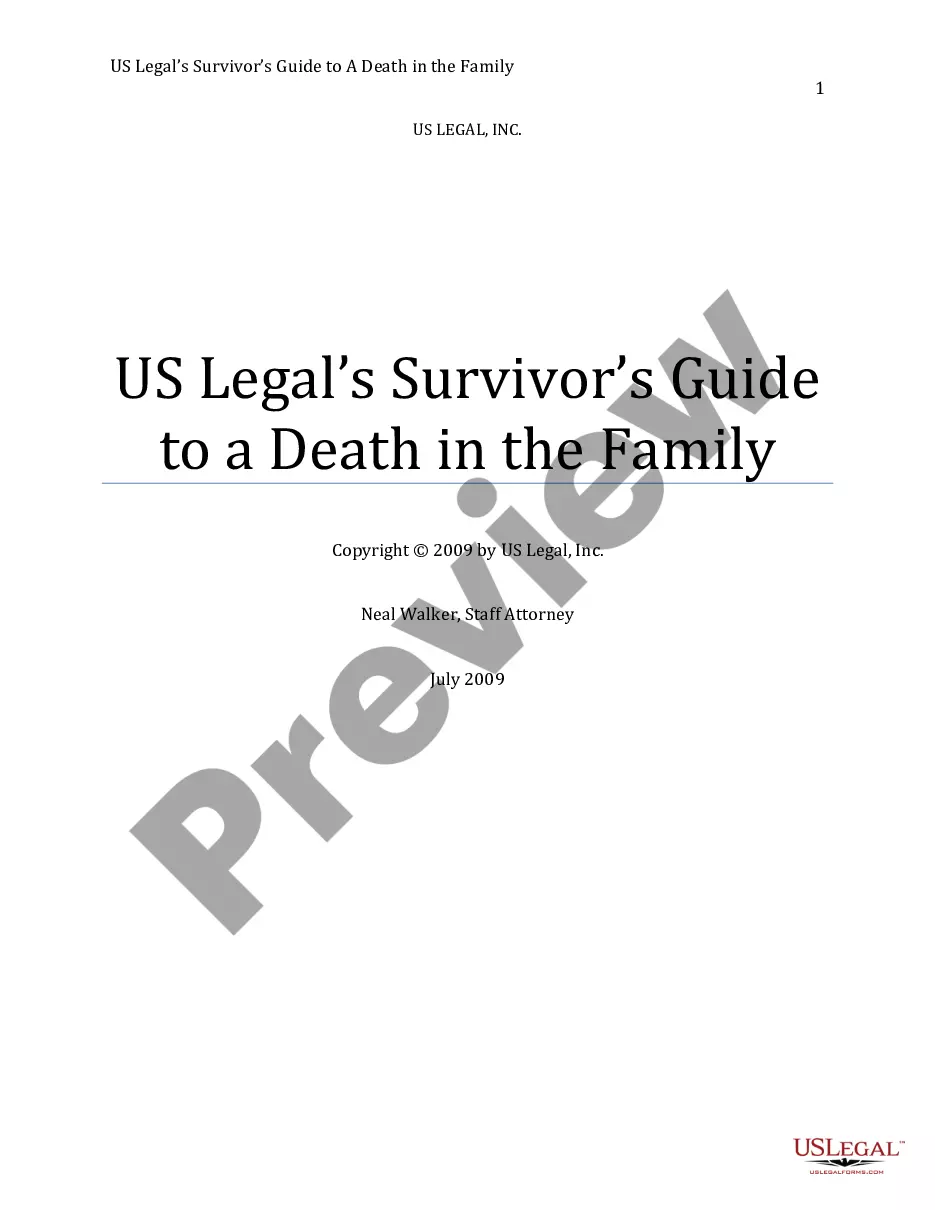
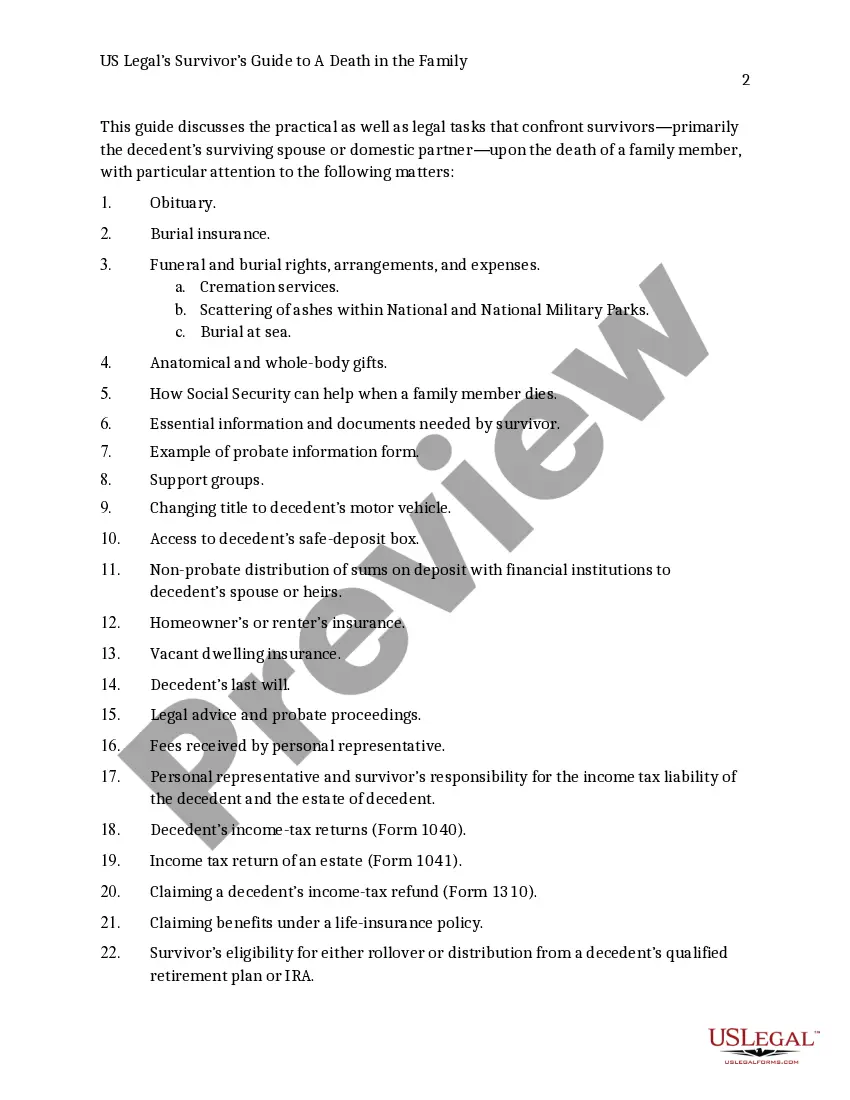
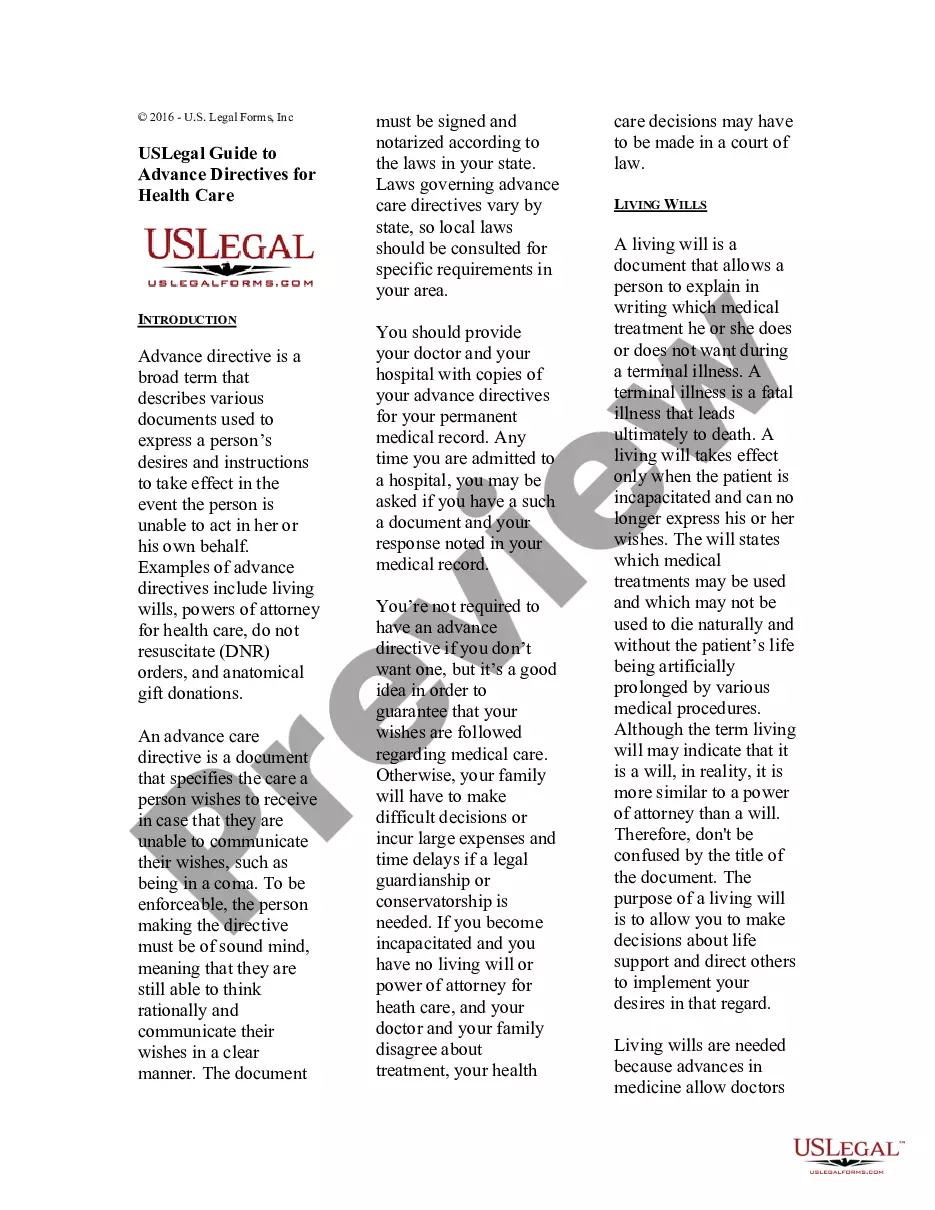
The Survivor's Guide to a Death in the Family is a comprehensive resource designed to assist those navigating the complexities that arise after the loss of a loved one. This guide addresses various essential topics, including funeral arrangements, legal obligations, and financial considerations. Unlike traditional legal forms, this guide serves as a practical manual for survivors, offering clear explanations and step-by-step assistance during a challenging time.
Main sections of this form
- Guidelines for burial rights and funeral arrangements
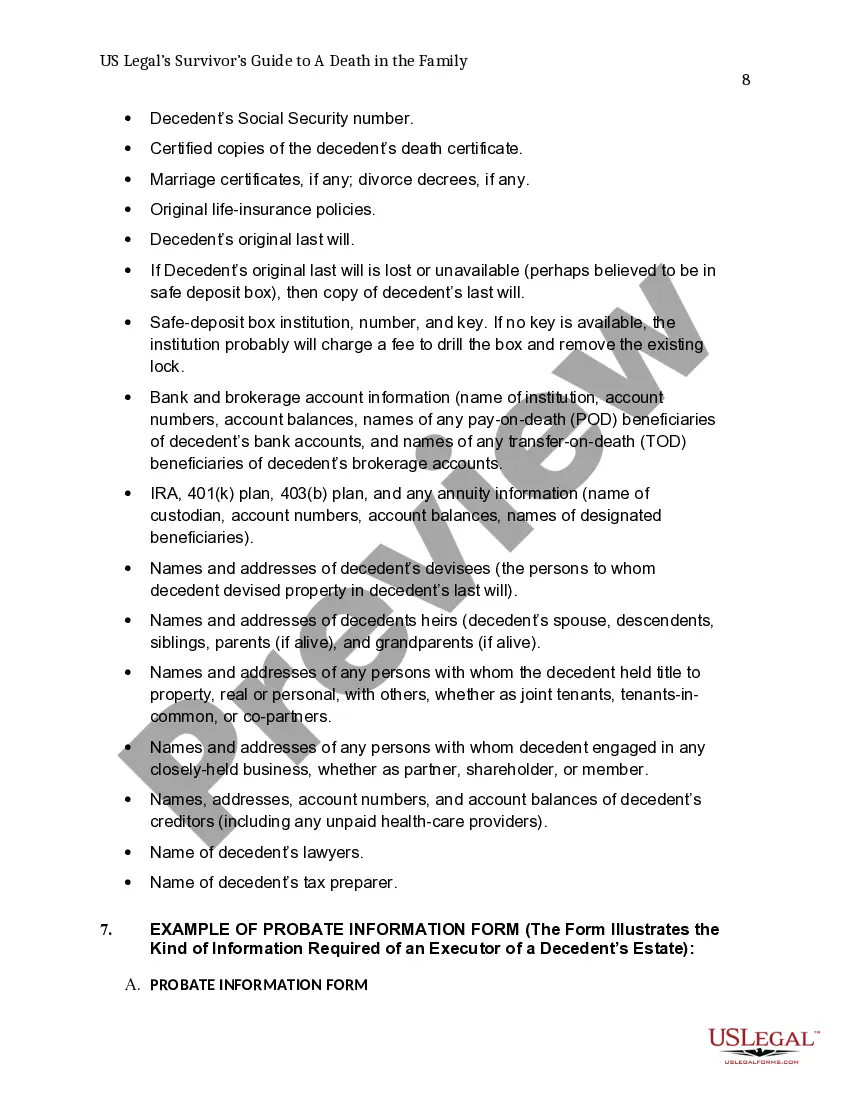
- Information required to access essential documents and assets
- Processing Social Security benefits for survivors
- Steps to claiming life insurance benefits
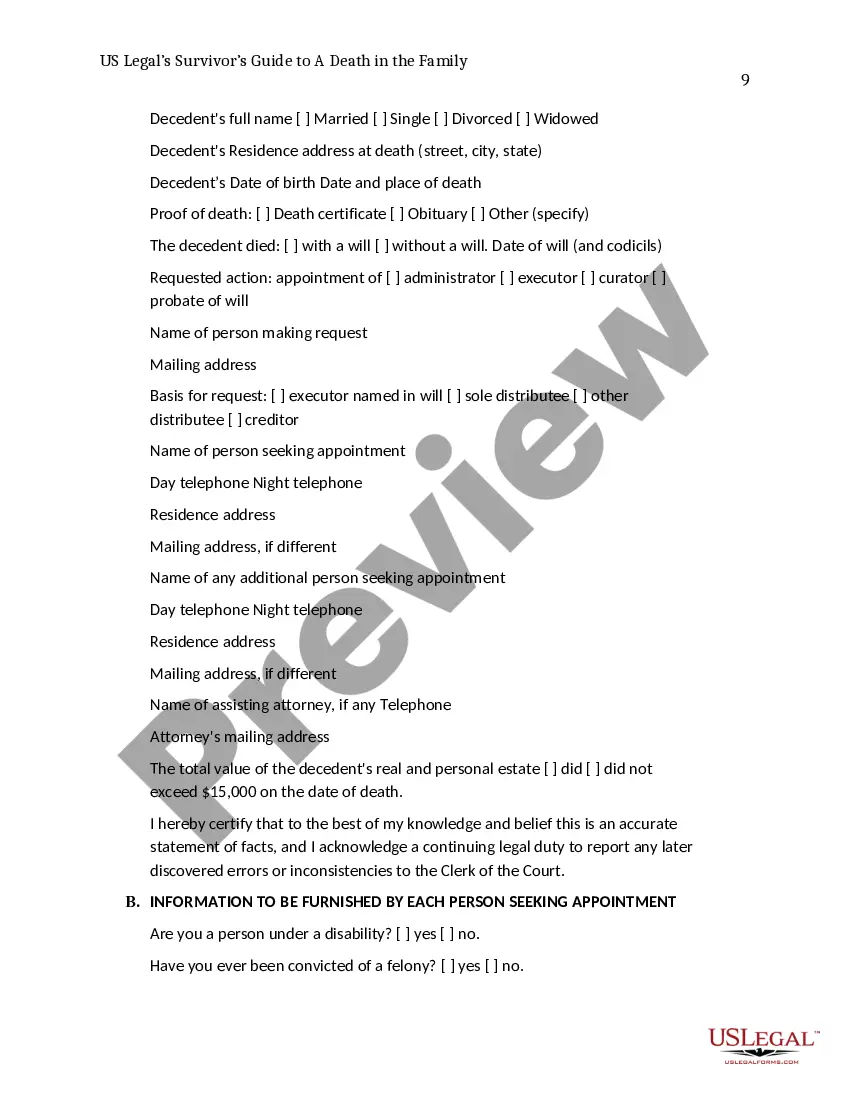
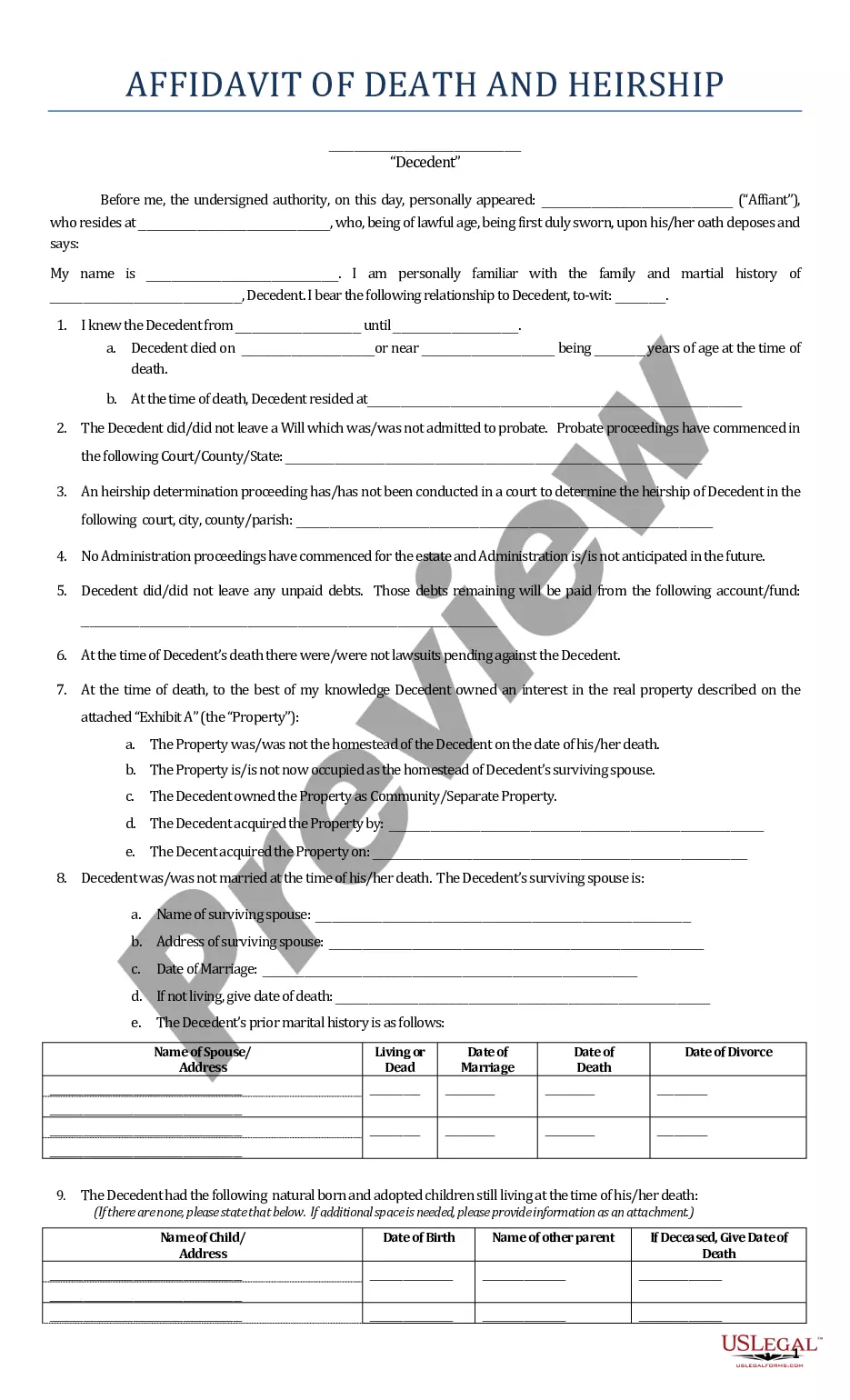
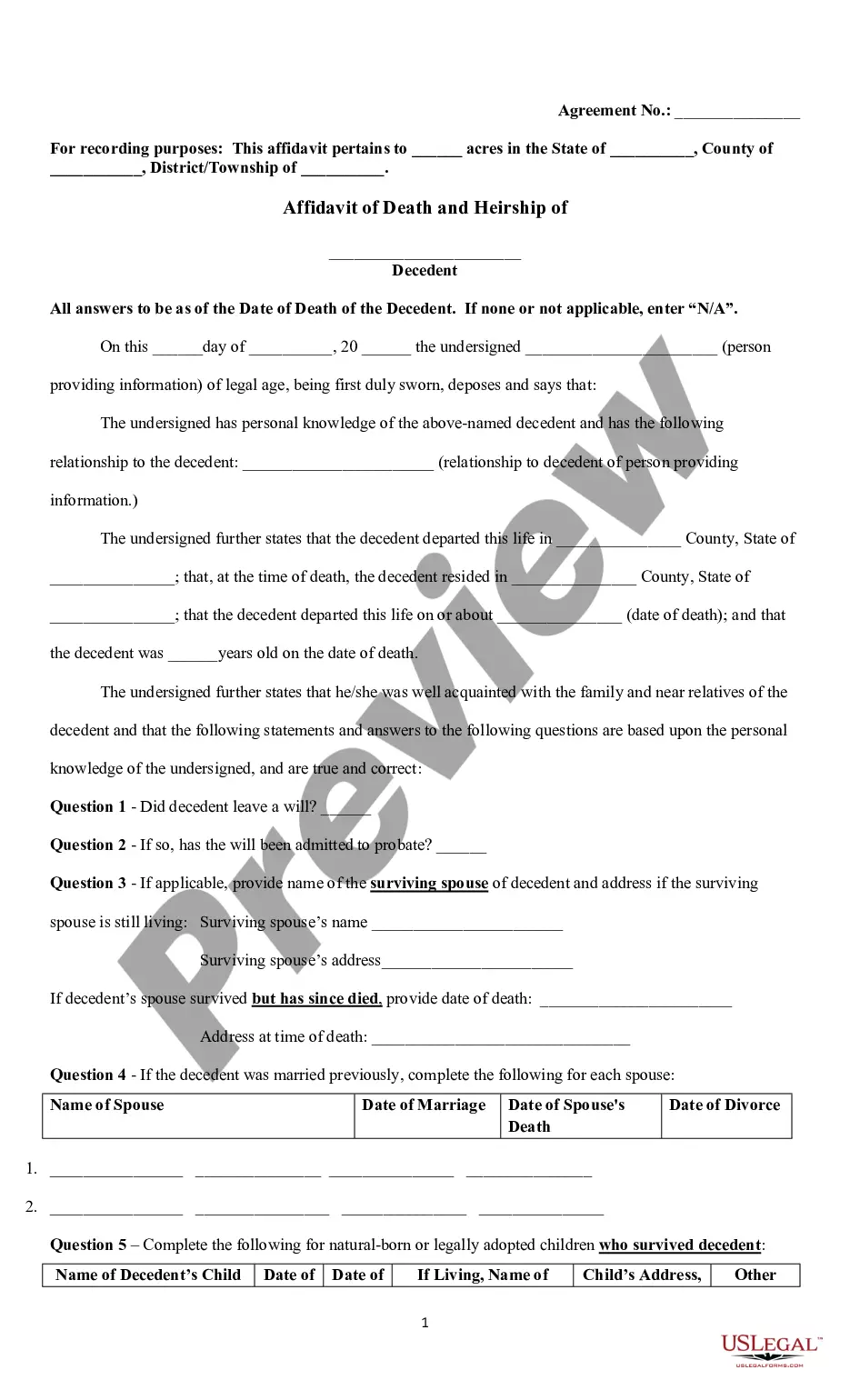
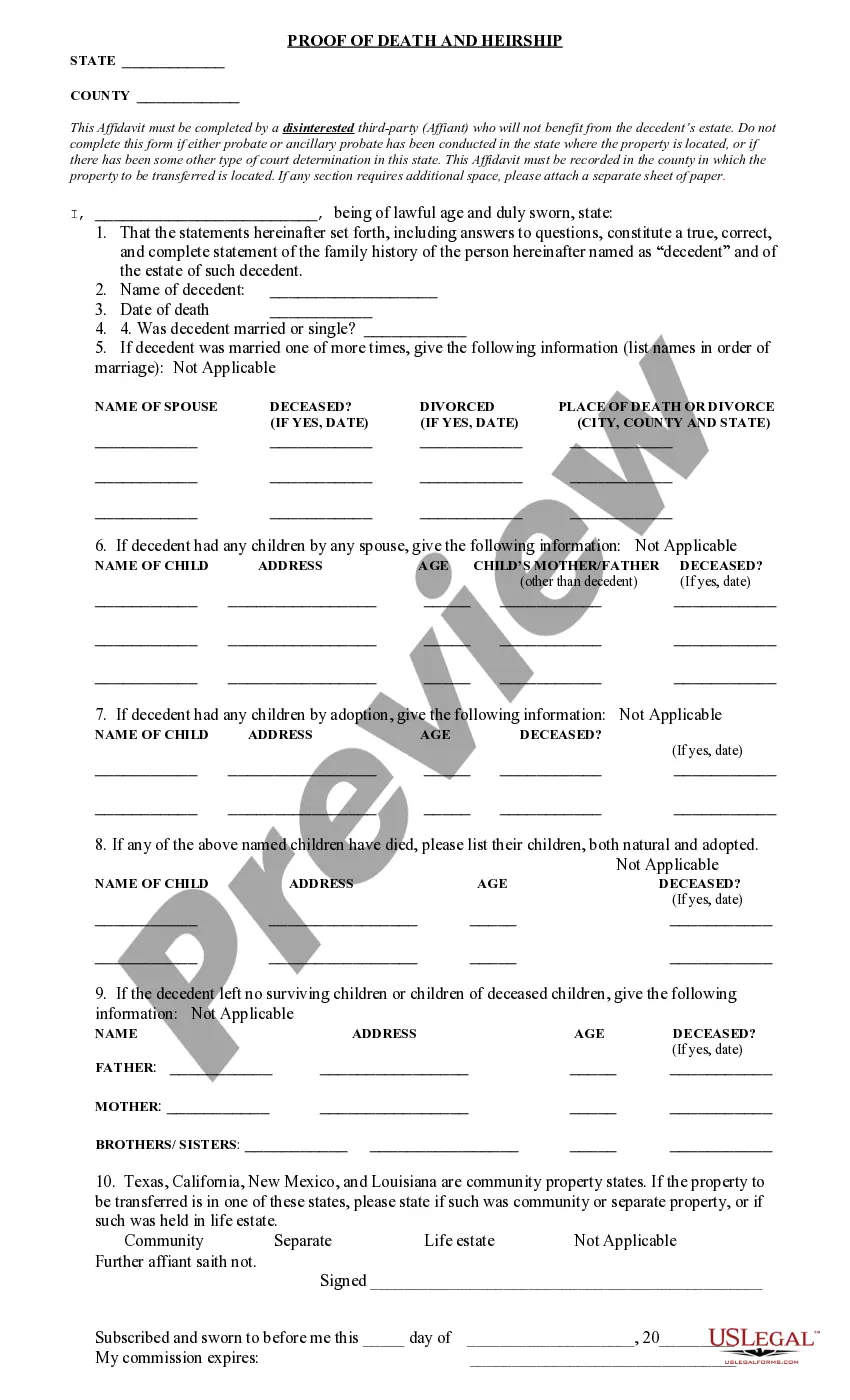
- Details about managing the decedent's estate and probate proceedings
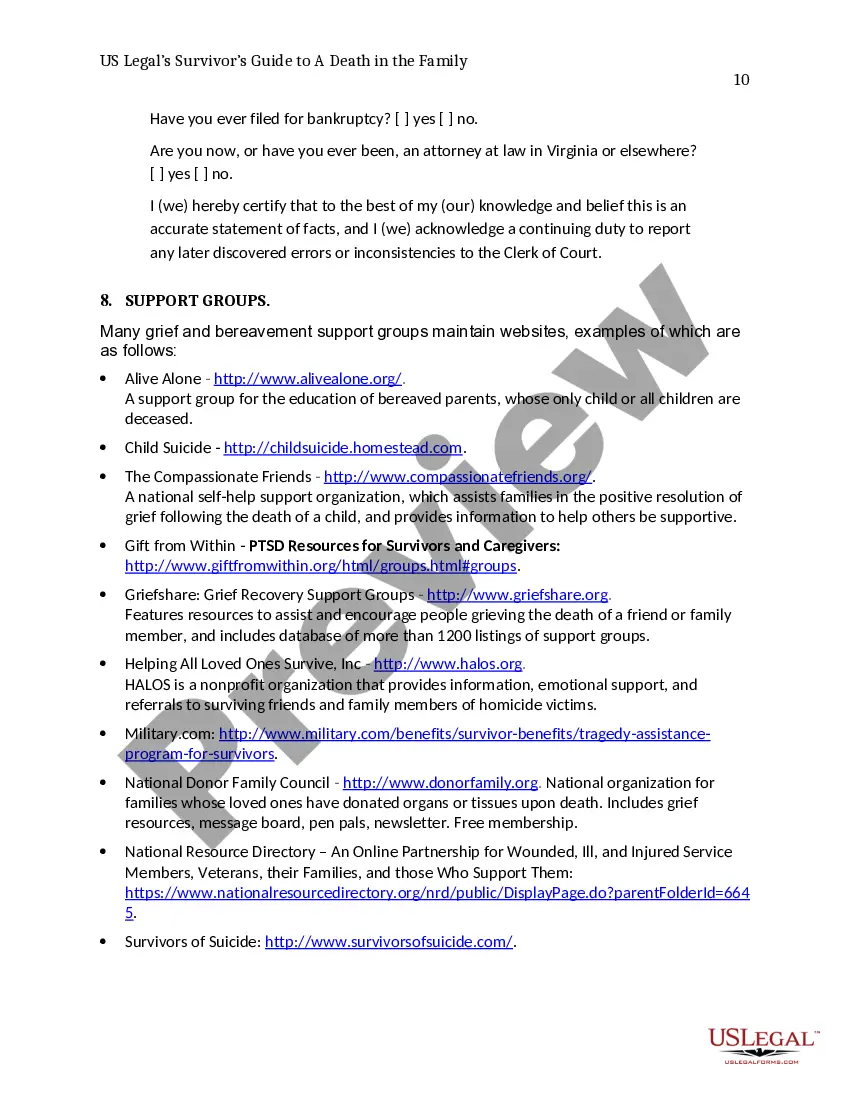
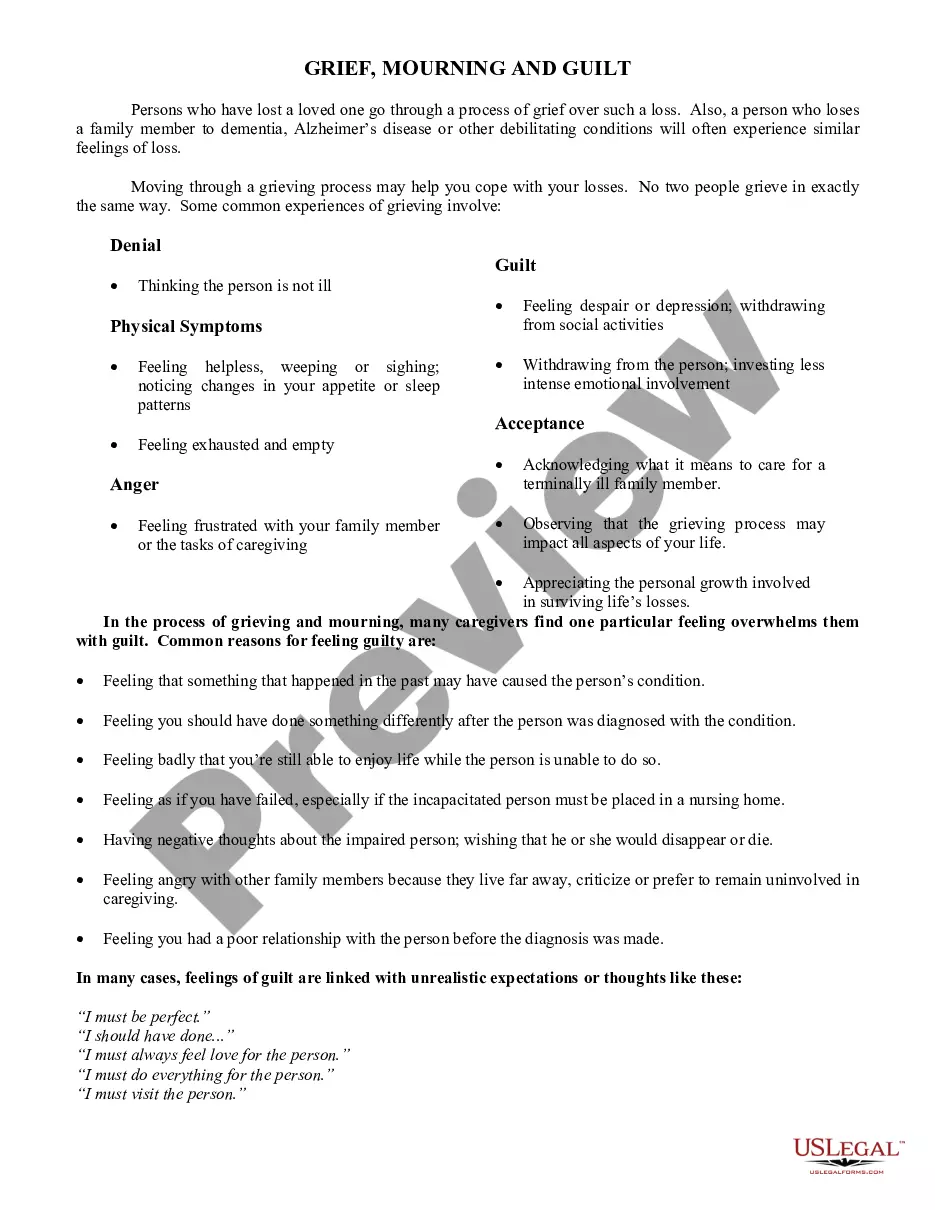
- Resources for grief support and assistance


When this form is needed
This guide should be utilized when a family member or loved one has passed away. It is essential for survivors who need to manage the ensuing legal and financial responsibilities, as well as for those seeking emotional support during the grieving process. Whether you are a spouse, parent, sibling, or friend, this guide will provide you with the necessary steps and information to navigate this difficult time.
Who this form is for
- Widows and widowers coping with the loss of their spouse
- Parents who have lost a child and need guidance on legal matters
- Siblings and relatives assisting the immediate family
- Anyone responsible for managing the deceased's estate and debts
Instructions for completing this form
- Gather necessary information such as the deceased's personal and financial documents.
- Review and understand the burial and funeral arrangements to respect the deceased's wishes.
- Contact Social Security to report the death and inquire about potential survivor benefits.
- Communicate with insurance companies to file any necessary claims for life insurance benefits.
- Consult with an attorney to address probate proceedings and estate management tasks.
Is notarization required?
This form usually doesn’t need to be notarized. However, local laws or specific transactions may require it. Our online notarization service, powered by Notarize, lets you complete it remotely through a secure video session, available 24/7.
Get your form ready online
Our built-in tools help you complete, sign, share, and store your documents in one place.
Make edits, fill in missing information, and update formatting in US Legal Forms—just like you would in MS Word.
Download a copy, print it, send it by email, or mail it via USPS—whatever works best for your next step.
Sign and collect signatures with our SignNow integration. Send to multiple recipients, set reminders, and more. Go Premium to unlock E-Sign.
If this form requires notarization, complete it online through a secure video call—no need to meet a notary in person or wait for an appointment.
We protect your documents and personal data by following strict security and privacy standards.

Make edits, fill in missing information, and update formatting in US Legal Forms—just like you would in MS Word.

Download a copy, print it, send it by email, or mail it via USPS—whatever works best for your next step.

Sign and collect signatures with our SignNow integration. Send to multiple recipients, set reminders, and more. Go Premium to unlock E-Sign.

If this form requires notarization, complete it online through a secure video call—no need to meet a notary in person or wait for an appointment.

We protect your documents and personal data by following strict security and privacy standards.
Avoid these common issues
- Failing to notify Social Security promptly about the deceased's passing.
- Not gathering all legal documents related to the estate, such as wills and life insurance policies.
- Overlooking deadlines for filing taxes or probate actions.
- Not seeking legal guidance when necessary, leading to errors in managing the estate.
Why complete this form online
- Immediate access to vital information when you need it most.
- Downloadable format allows for easy filling out and record-keeping.
- Convenience of having all relevant topics addressed in one document.
- Ability to refer back to the guide as new questions arise during the process.
Legal use & context
- Utilizing this guide supports legal compliance in managing estate affairs.
- Understanding entitlement to benefits and responsibilities in probate enhances clarity during a difficult time.
- The guide serves as a roadmap to help mitigate legal complexities associated with loss.
Quick recap
- The guide offers essential support for survivors dealing with the aftermath of a death.
- It covers a wide range of topics from legal obligations to emotional resources.
- Having the right information can significantly ease the burden during a difficult time.
Looking for another form?

Form popularity
FAQ
Get a legal pronouncement of death. Tell friends and family. Find out about existing funeral and burial plans. Make funeral, burial or cremation arrangements. Secure the property. Provide care for pets. Forward mail. Notify your family member's employer.
Do you need a solicitor Many executors and administrators act without a solicitor. However, if the estate is complicated, it is best to get legal advice. You should always get legal advice if, for example: the terms of a will are not clear.
When a family member or friend has died, it is important to notify various government agencies, banks, creditors and credit reporting agencies of the death. To reduce the risk of identity theft, these notifications should be made promptly after the death.
Always try to have two people present to make the notification. Ideally, the persons would be a law enforcement officer, in uniform, and the medical examiner or other civilian such as a chaplain, victim service counselor, family doctor, clergy person, or close friend. A female/male team often is advantageous.
Immediate Actions. Death at Home: If the death is unexpected, telephone the police on 000. Making Funeral Arrangements. Financial and Grief Support. Work Out Details of the Estate. Notify Relevant Authorities. Apply for Probate or Letters of Administration. Close Accounts, Collect Assets, Pay Debts & Distribute Estate.
Get a legal pronouncement of death. Arrange for transportation of the body. Notify the person's doctor or the county coroner. Notify close family and friends. Handle care of dependents and pets. Call the person's employer, if he or she was working.
If the deceased person is an account holder of a joint savings or transaction account (excluding loans and credit cards), the funds in the account generally will not form part of the Deceased Estate, and when this is the case the joint account holder will usually be able to continue to operate the account.
If the eligible surviving spouse or child is not currently receiving benefits, they must apply for this payment within two years of the date of death. For more information about this lump-sum payment, contact your local Social Security office or call 1-800-772-1213 ( TTY 1-800-325-0778).
If the death occurs at home and was expected, call your doctor who will issue a Doctor's Certificate of Cause of Death 2705 If the death occurs at home and was unexpected, call the police. Depending on the circumstances, the Coroner may be required to conduct a post-mortem to determine the cause of death. 2705