Answer by Natural Mother Denying Consent to Adopt or Abandonment and Alleging that Consent not Freely Given
About this form
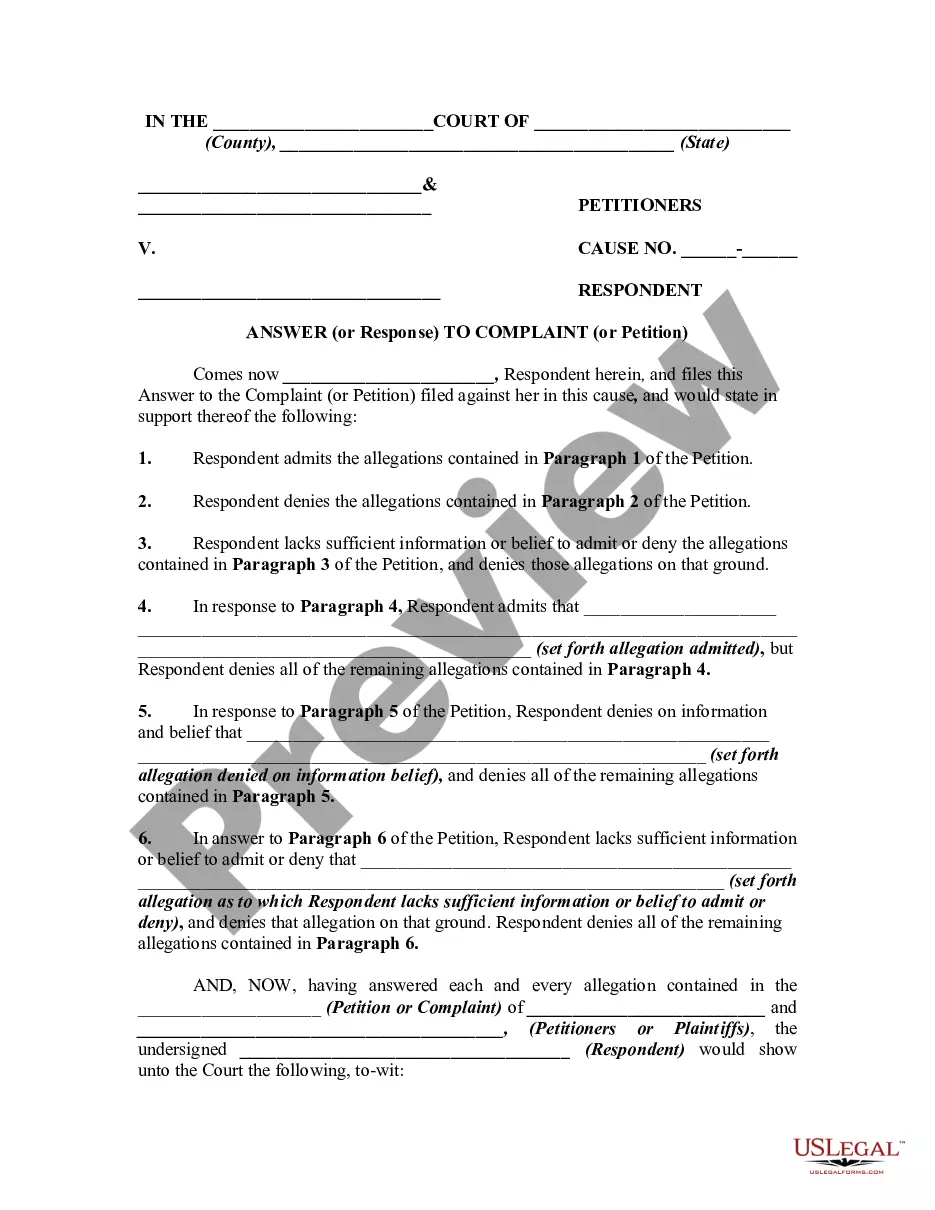
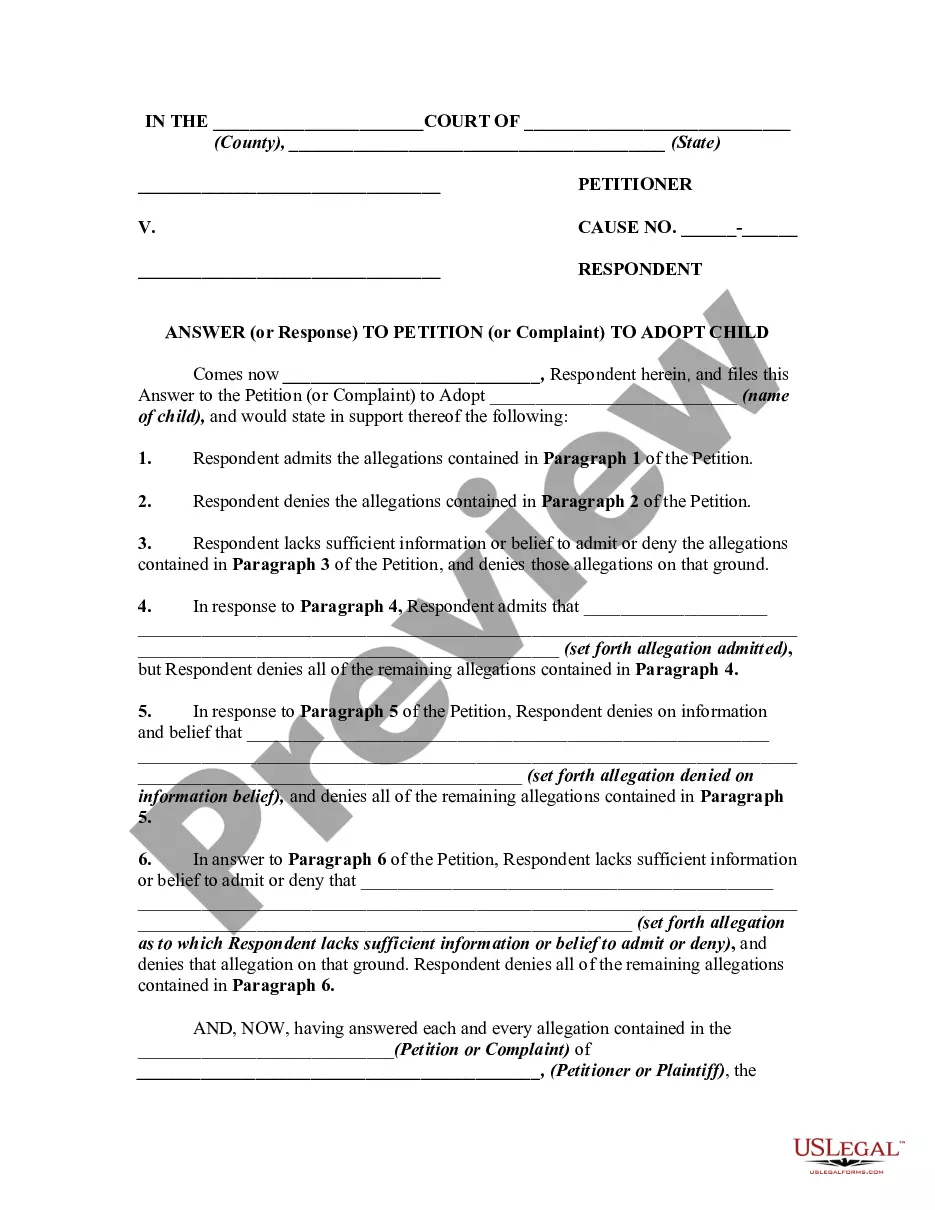
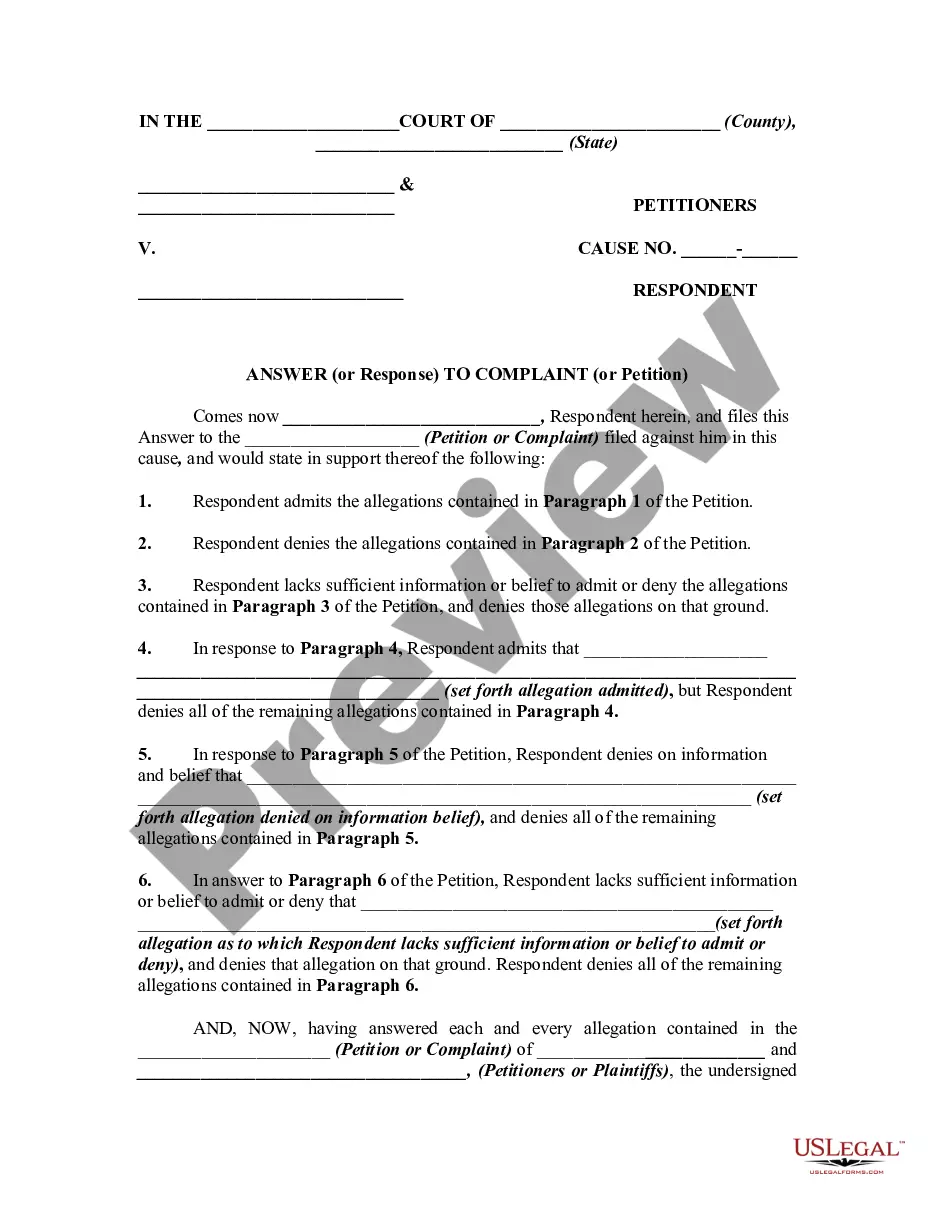
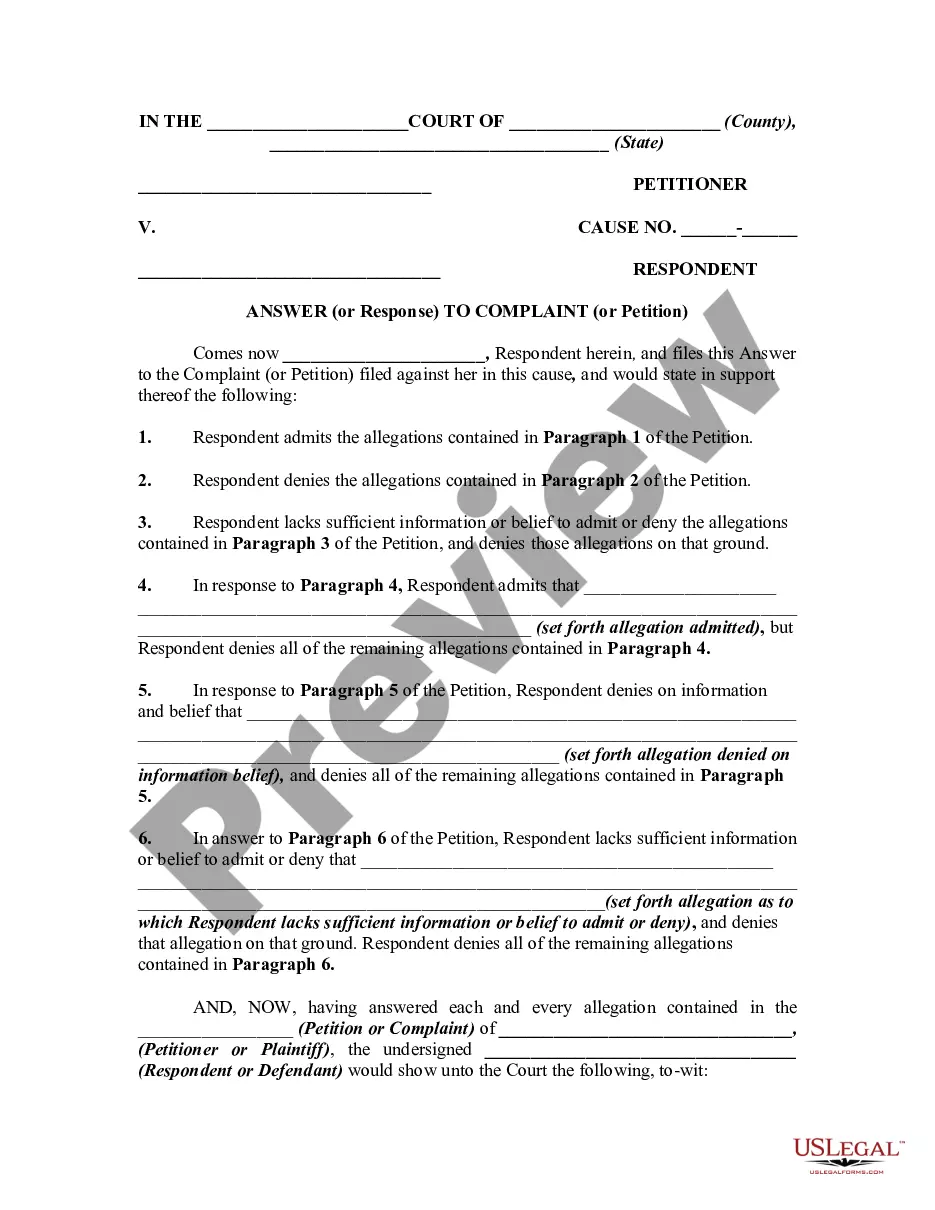
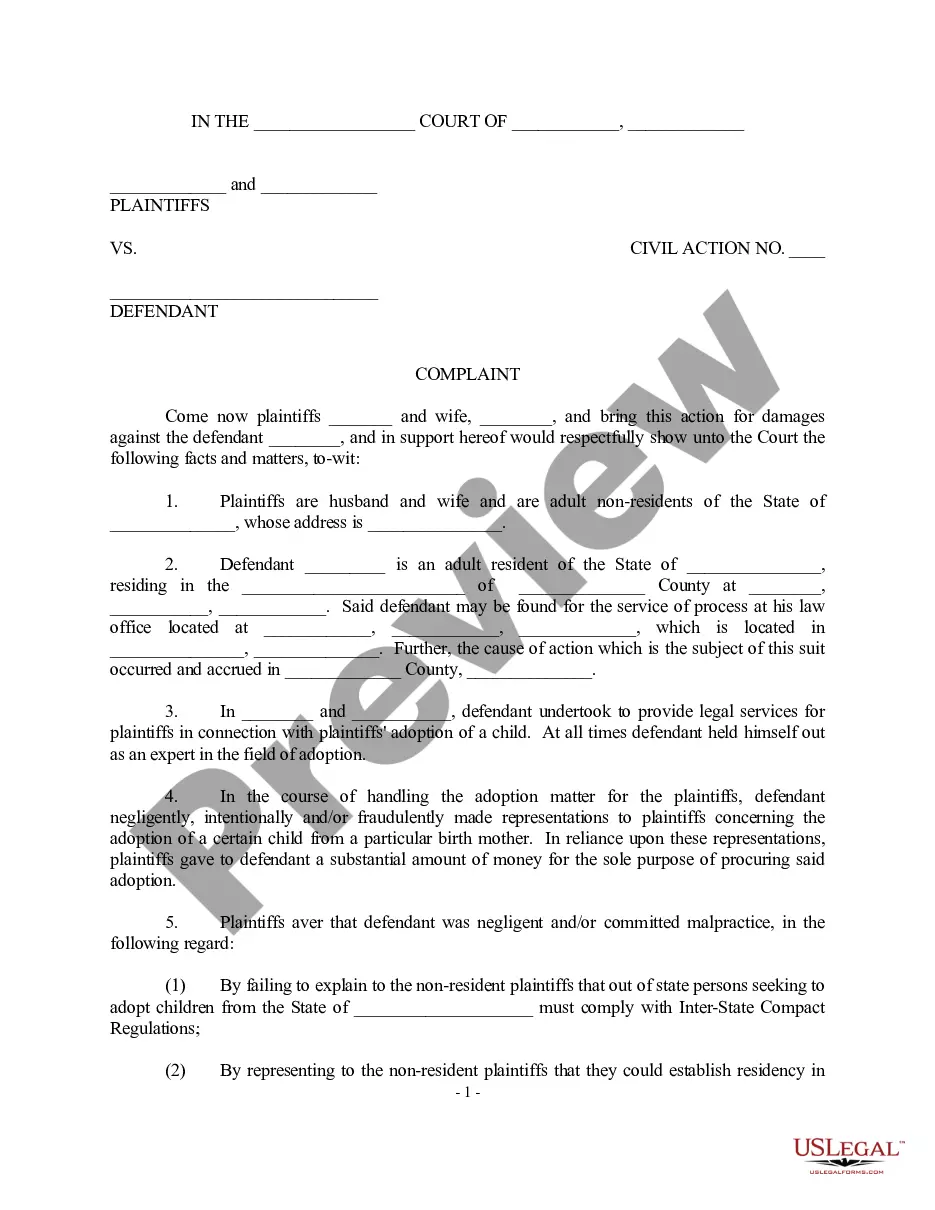
This form is a legal response issued by a natural mother denying consent to the adoption of her child. It serves to counter a complaint or petition for adoption, specifically asserting that consent to the adoption was not freely given, and addressing any allegations of abandonment. This is distinct from other adoption forms, as it specifically focuses on denying consent and challenging the legal basis for the adoption attempt.
What’s included in this form
- Identification of the parties involved, including the petitioners and the respondent.
- Admissions and denials of allegations outlined in the adoption petition.
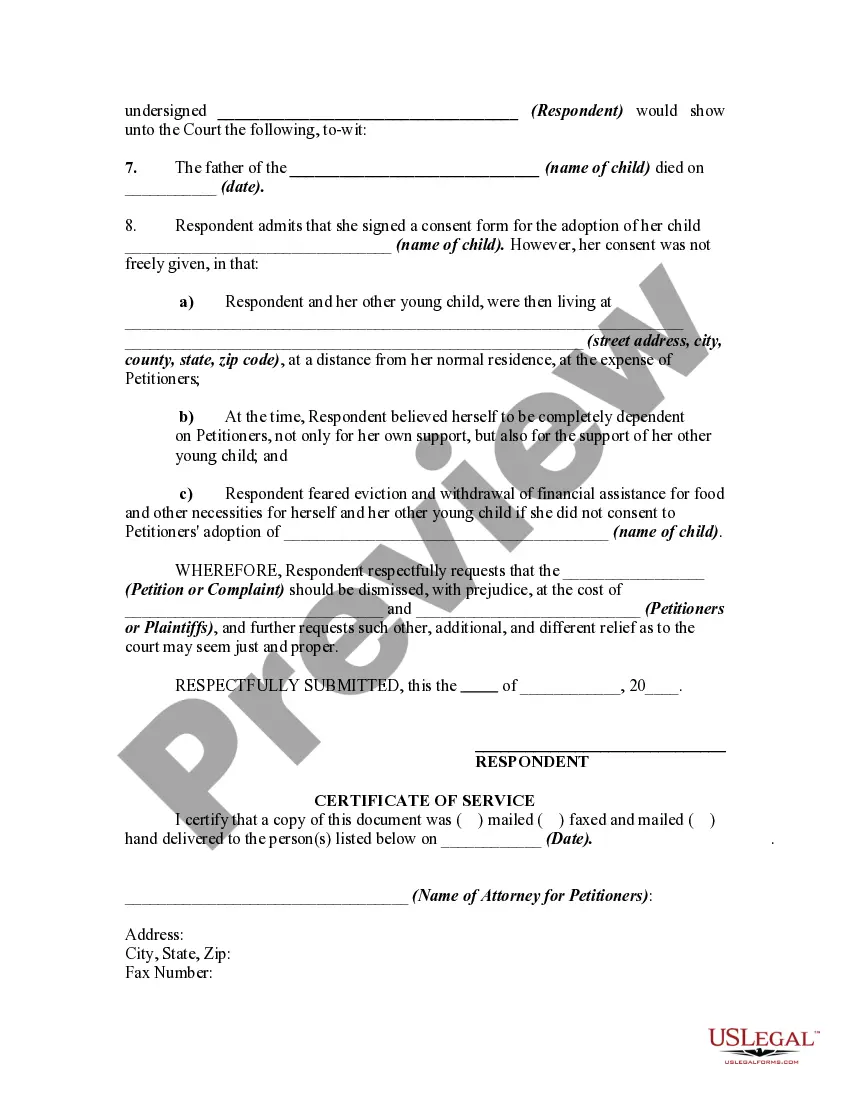
- Details regarding the circumstances under which consent was allegedly given.
- Request for dismissal of the adoption petition along with elaboration on specific claims.
- Certification of service, indicating to whom a copy of the response was sent.
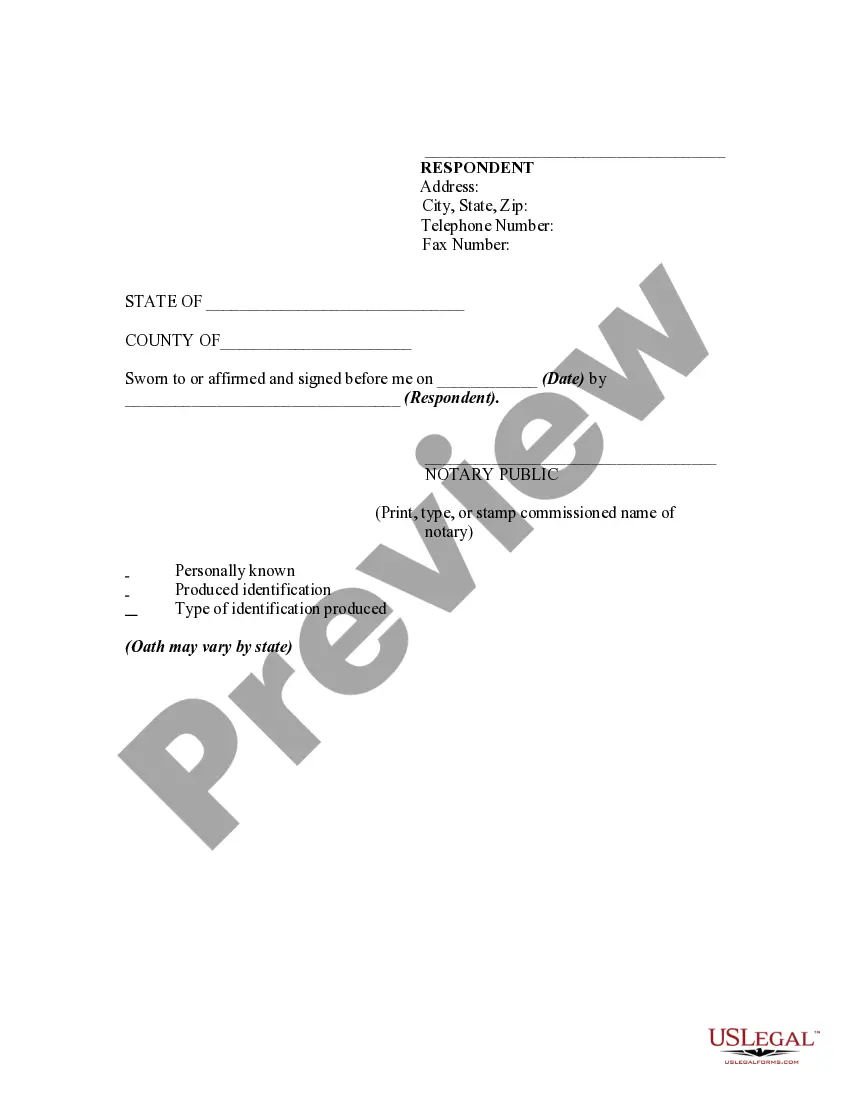
- Notary section for formal validation of the document.
When to use this document
This form should be used by a natural mother who has received a petition for the adoption of her child and wishes to formally deny consent to that adoption. It is applicable in scenarios where the mother believes that any prior consent was obtained under pressure or under circumstances that rendered it involuntary, such as financial dependency or coercion.
Intended users of this form
- Natural mothers who are contesting an adoption petition.
- Individuals who believe they were pressured into consenting to an adoption.
- Parents seeking to assert their legal rights regarding the custody and wellbeing of their child.
- Respondents in legal proceedings where adoption is being contested within the family court system.
Steps to complete this form
- Begin by writing the names of the petitioners and entering the case number at the top of the form.
- Clearly state your responses to each allegation listed in the petition, indicating whether you admit, deny, or lack information about each claim.
- Detail the circumstances surrounding your consent, explaining why it was not freely given.
- Finish with your request for the court to dismiss the adoption petition.
- Sign and date the form, ensuring you include any necessary notary information.
Is notarization required?
This document requires notarization to meet legal standards. US Legal Forms provides secure online notarization powered by Notarize, allowing you to complete the process through a verified video call, available 24/7.
Get your form ready online
Our built-in tools help you complete, sign, share, and store your documents in one place.
Make edits, fill in missing information, and update formatting in US Legal Forms—just like you would in MS Word.
Download a copy, print it, send it by email, or mail it via USPS—whatever works best for your next step.
Sign and collect signatures with our SignNow integration. Send to multiple recipients, set reminders, and more. Go Premium to unlock E-Sign.
If this form requires notarization, complete it online through a secure video call—no need to meet a notary in person or wait for an appointment.
We protect your documents and personal data by following strict security and privacy standards.

Make edits, fill in missing information, and update formatting in US Legal Forms—just like you would in MS Word.

Download a copy, print it, send it by email, or mail it via USPS—whatever works best for your next step.

Sign and collect signatures with our SignNow integration. Send to multiple recipients, set reminders, and more. Go Premium to unlock E-Sign.

If this form requires notarization, complete it online through a secure video call—no need to meet a notary in person or wait for an appointment.

We protect your documents and personal data by following strict security and privacy standards.
Common mistakes to avoid
- Failing to address each allegation in the order presented in the petition.
- Not providing sufficient details in your explanations of why consent was not freely given.
- Omitting required signatures or failing to have the document notarized, if necessary.
- Submitting the form without proper certification of service to the petitioners.
Why use this form online
- Convenience of downloading and filling out the form from anywhere.
- Editability allows you to customize the form to fit your specific situation easily.
- Access to templates that are reliable and drafted by licensed attorneys, ensuring legal compliance.
Looking for another form?

Form popularity
FAQ
State laws differ about what is needed for a parent to be deemed to have abandoned a child. Generally, there needs to be a period of time during which the parent does not have any contact with the child and does not pay child support. In most states, the period of time is one year, but this varies.
Therapy. Seek out the help of a mental health professional, such as a therapist or counselor. They can help you overcome fears of being abandoned. Self-care. People with abandonment issues may benefit from self-care.
Abandon means to give up or discontinue any further interest in something because of discouragement, weariness, distaste, or the like: to abandon one's efforts. Relinquish implies being or feeling compelled to give up something one would prefer to keep: to relinquish a long-cherished desire.
Giving too much or being overly eager to please. Jealousy in your relationship or of others. Trouble trusting your partner's intentions. Feeling insecure about your relationship. Having difficulty in feeling intimate emotionally. Needing to control or be controlled by your partner.
Abandoned child syndrome is a proposed behavioral or psychological condition that is said to result from the loss of one or both parents. Abandonment may be physical or emotional; that is, the parent may abandon the child by failing to be present in their life, or by withholding affection, nurturing, or stimulation.
Abandonment is a feeling of disconnectedness, rejection, and neediness. The aftermath of this type of trauma generates a looming fear of not only losing connection with the people you love, but being forced to fend for yourself.
Child abandonment occurs when a parent, guardian, or person in charge of a child either deserts a child without any regard for the child's physical health, safety or welfare and with the intention of wholly abandoning the child, or in some instances, fails to provide necessary care for a child living under their roof.
Always wanting to please others (being a people pleaser) giving too much in relationships. an inability to trust others. pushing others away to avoid rejection. feeling insecure in romantic partnerships and friendships. codependency.
We may be unhappy, but can't put our finger on what it is. People tend to think of abandonment as something physical, like neglect. A loss of physical closeness due to death, divorce, or illness can be felt as an emotional abandonment as well.