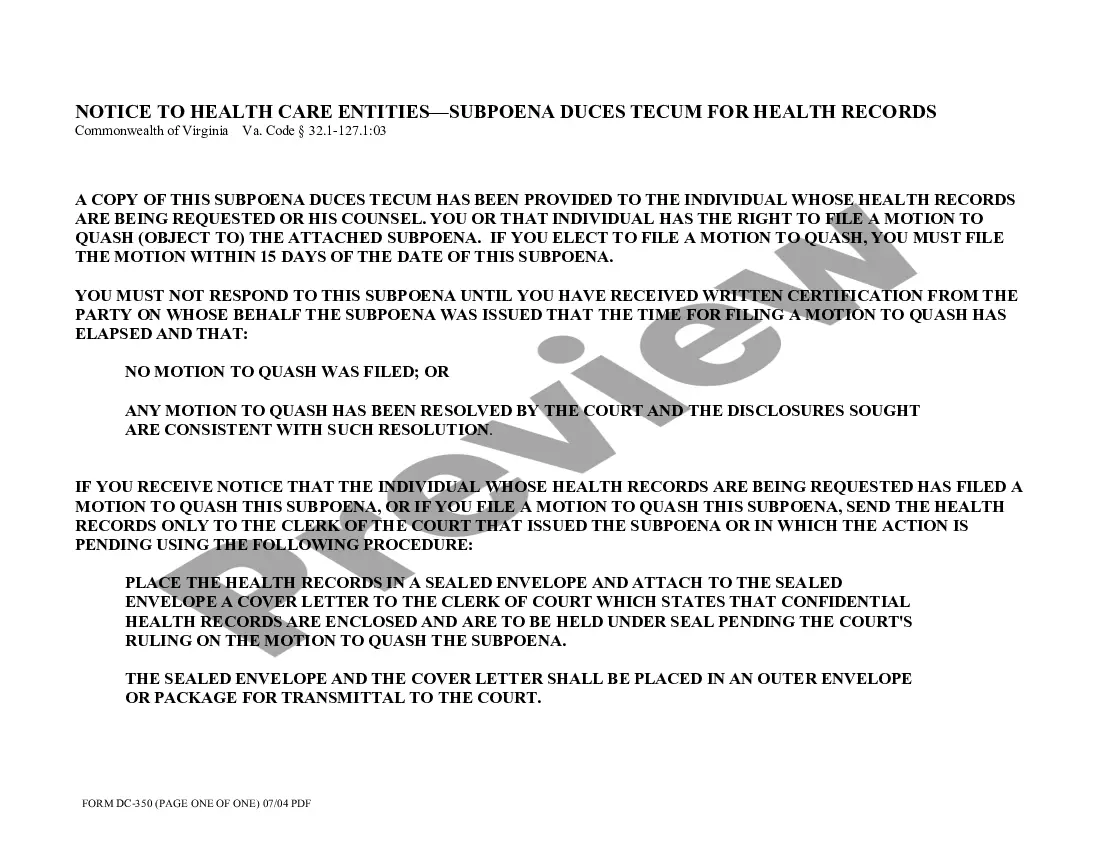
Complaint for Loss of Property Left for Repair
Understanding this form
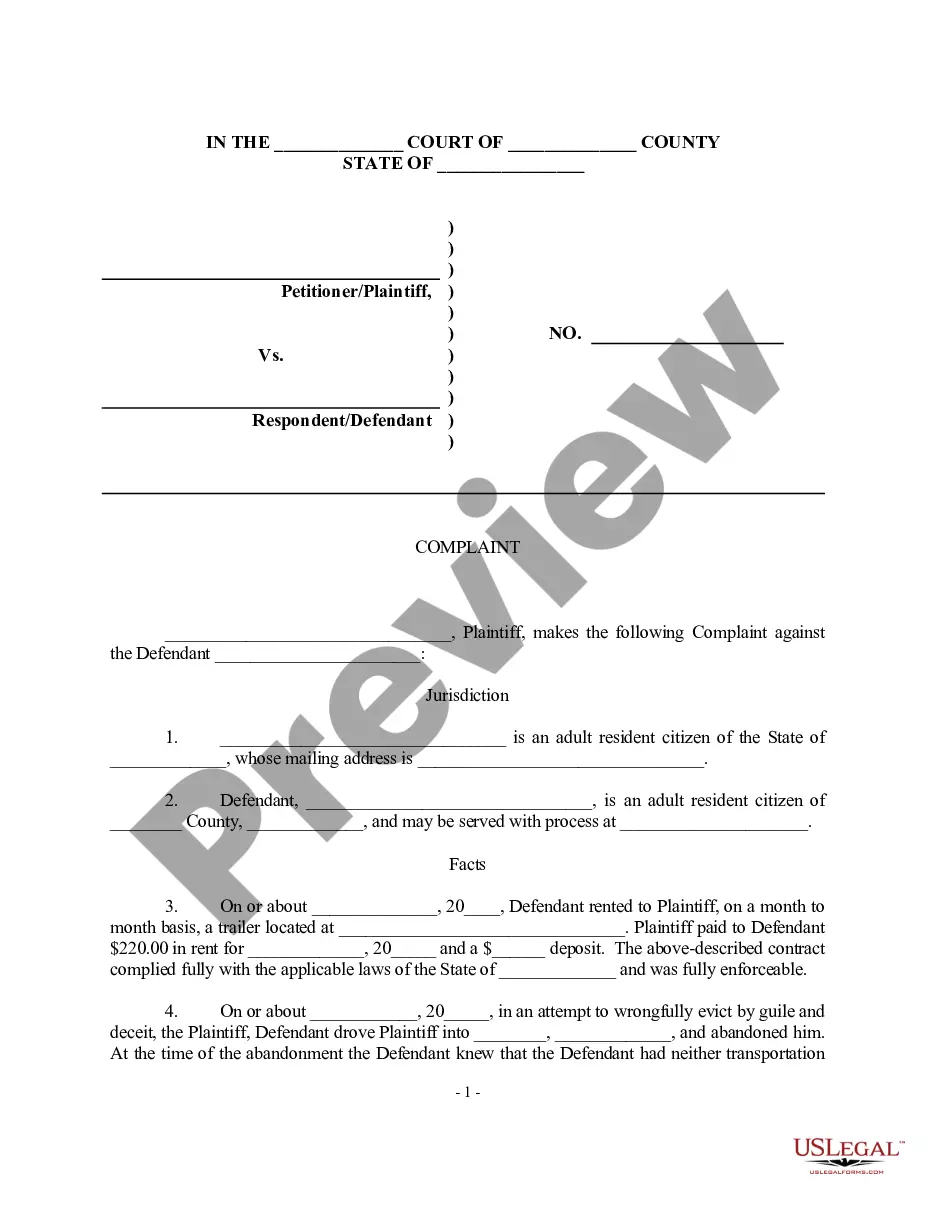
The Complaint for Loss of Property Left for Repair is a legal document used by individuals to file a formal complaint against a repair business that has failed to return property, such as a vehicle, after repair. This form allows you to seek damages for the loss and to enumerate your claims clearly. It is specifically designed for situations where a repair service has not fulfilled their obligations regarding property owned by the client, differentiating it from other forms of complaint that may address different legal issues.
Main sections of this form
- Identification of the parties involved, including the Plaintiff and Defendant.
- Description of the property (e.g., vehicle) provided for repair.
- Details surrounding the agreement for repair and the implied duty of care.
- Timeline of events leading to the complaint, including dates of service and requests for return.
- Specifying the damages incurred due to the failure to return the property.
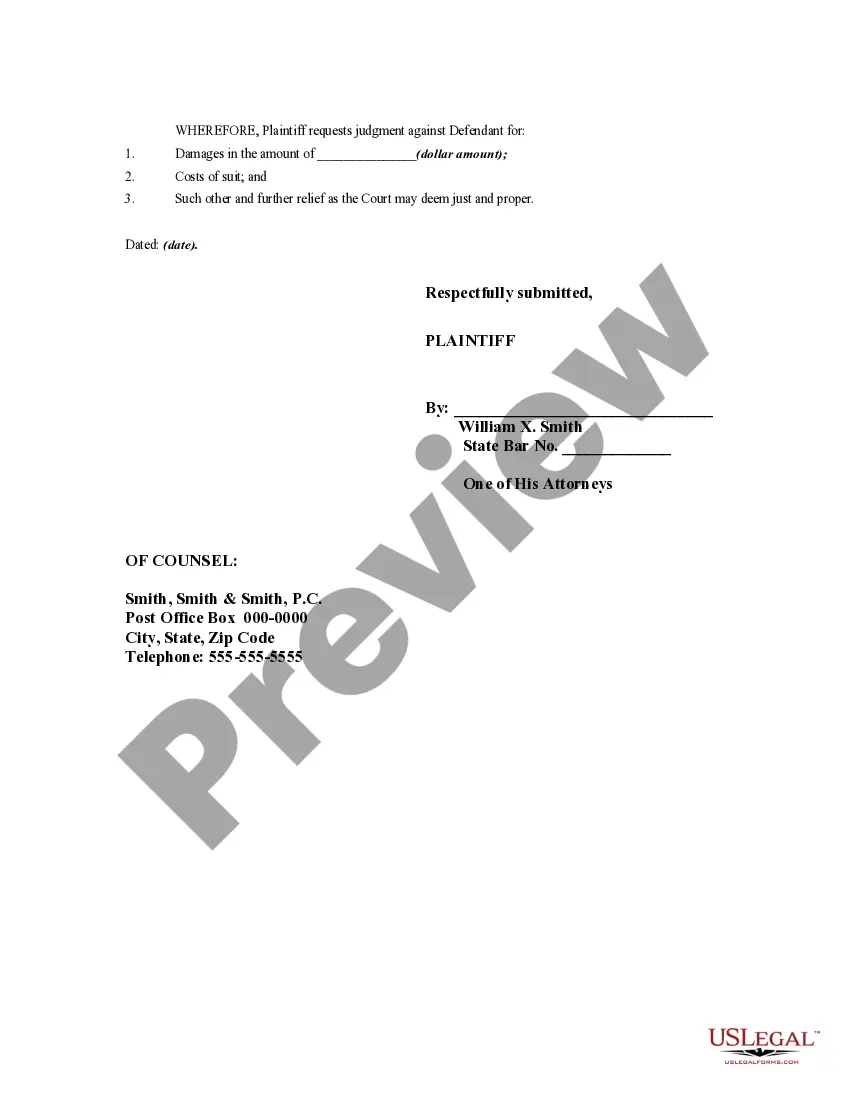
- Request for remedies, including monetary damages and costs.


When to use this document
This form should be used when a customer has left property, such as a vehicle, at a repair facility and has not received it back in a reasonable time frame. Situations may include instances where the repair has been completed, but the repair shop refuses to return the property, or cases where the property is lost or damaged while in the shop's care. It serves as a formal warning to the repair business and initiates legal proceedings if necessary.
Who should use this form
- Individuals who have left their property, particularly automobiles, with a repair shop.
- Property owners seeking to recover their items after a failed agreement with a repair business.
- Anyone who has incurred damages as a result of the repair business's refusal to return property.
Instructions for completing this form
- Identify the parties: Fill in the Plaintiff and Defendant names and contact details.
- Specify the property: Clearly describe the property left for repair, including value.
- Detail the timeline: Include dates when property was left and when it was requested back.
- State damages: Calculate and enter the amount of damages incurred due to the loss.
- Sign and date: Ensure the form is signed by the Plaintiff and dated appropriately.
Does this form need to be notarized?
Notarization is not commonly needed for this form. However, certain documents or local rules may make it necessary. Our notarization service, powered by Notarize, allows you to finalize it securely online anytime, day or night.
Get your form ready online
Our built-in tools help you complete, sign, share, and store your documents in one place.
Make edits, fill in missing information, and update formatting in US Legal Forms—just like you would in MS Word.
Download a copy, print it, send it by email, or mail it via USPS—whatever works best for your next step.
Sign and collect signatures with our SignNow integration. Send to multiple recipients, set reminders, and more. Go Premium to unlock E-Sign.
If this form requires notarization, complete it online through a secure video call—no need to meet a notary in person or wait for an appointment.
We protect your documents and personal data by following strict security and privacy standards.

Make edits, fill in missing information, and update formatting in US Legal Forms—just like you would in MS Word.

Download a copy, print it, send it by email, or mail it via USPS—whatever works best for your next step.

Sign and collect signatures with our SignNow integration. Send to multiple recipients, set reminders, and more. Go Premium to unlock E-Sign.

If this form requires notarization, complete it online through a secure video call—no need to meet a notary in person or wait for an appointment.

We protect your documents and personal data by following strict security and privacy standards.
Common mistakes to avoid
- Failing to include all necessary parties involved in the case.
- Not specifying the exact value of the property, which can impact damage claims.
- Submitting the form without proper signatures or dates.
- Neglecting to provide sufficient details about the timeline of events leading to the complaint.
Advantages of online completion
- Convenience of downloading the form from anywhere at any time.
- Ability to edit and tailor the form to fit specific details of your case easily.
- Access to correctly formatted legal documentation that adheres to jurisdictional requirements.
Legal use & context
This form is legally enforceable in relevant jurisdictions and serves as a foundational document to initiate a lawsuit for property recovery. It is advisable to seek legal counsel to understand local laws concerning such complaints fully.
Summary of main points
- The Complaint for Loss of Property Left for Repair is essential for addressing the failure of a repair service to return property.
- Completing the form accurately is crucial for successfully pursuing damages.
- Ensure compliance with any local laws and requirements before submission.
Looking for another form?
Form popularity
FAQ
The left property affects the horizontal position of a positioned element. This property has no effect on non-positioned elements. If position: absolute; or position: fixed; - the left property sets the left edge of an element to a unit to the left of the left edge of its nearest positioned ancestor.
When position is set to absolute or fixed , the left property specifies the distance between the element's left edge and the left edge of its containing block.When position is set to relative , the left property specifies the distance the element's left edge is moved to the right from its normal position.
California- California tenants have 18 days to recover abandoned property. Tenant must pay storage costs.
Property remaining on premises is considered abandoned after (1) a tenant has been absent for at least 30 days without explanation or (2) at least 15 days have passed since the tenant was supposed to pay rent and it appears to the landlord that he has vacated the premises.
If you personally deliver the notice to the tenant, then you must store the abandoned property for at least 15 days. If you mail the notice to the tenant (including email), then you must store the property for at least 18 days from the date the notice was mailed (see Cal.
If position: absolute; or position: fixed; - the left property sets the left edge of an element to a unit to the left of the left edge of its nearest positioned ancestor. If position: relative; - the left property sets the left edge of an element to a unit to the left/right of its normal position.
Left is the position of your entire element, margin-left is the amount of your left margin. For example if your are not in a normal document flow, your left margin is not going to let anything occupy that space.
The left property in CSS is used to specify the horizontal position of a positioned element. It has no effect on non-positioned elements. Note: If position property is absolute or fixed, the left property specifies the distance between the element left edge and the left edge of its containing block.