Warrant for Distraint of Tenant's Personality to Secure Payment of Rent
About this form
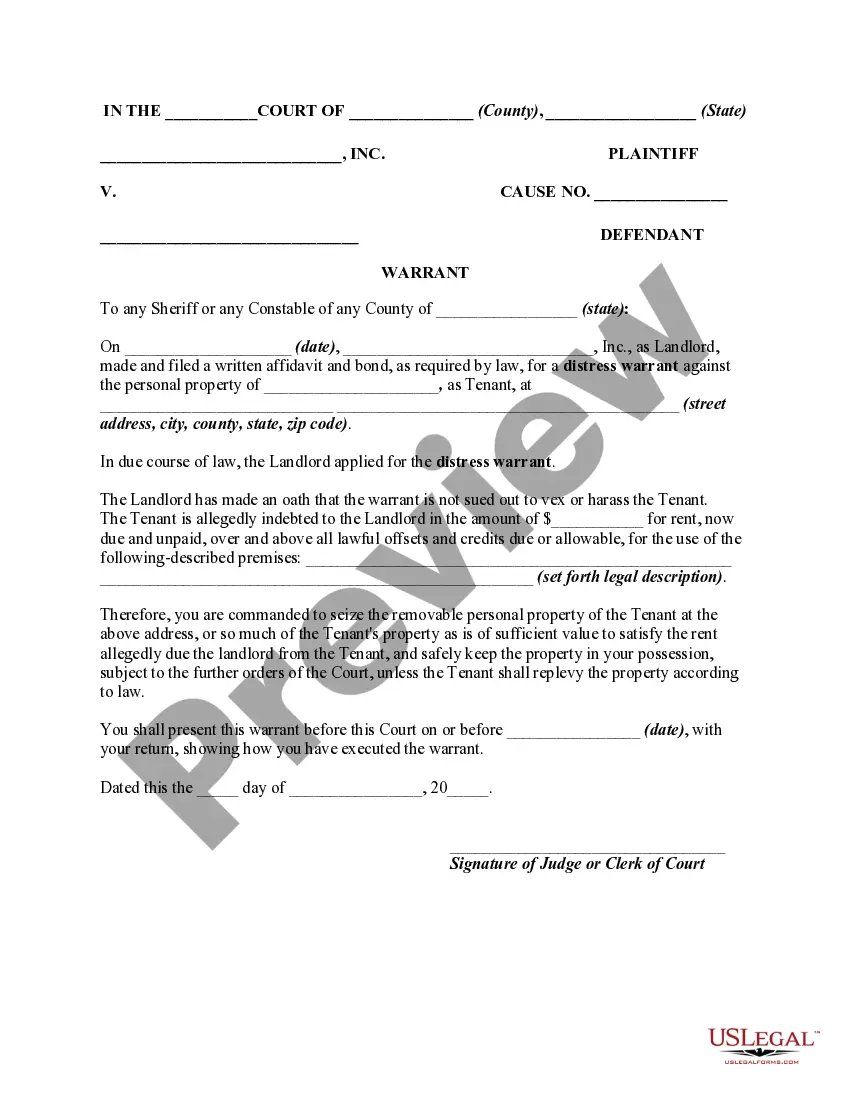
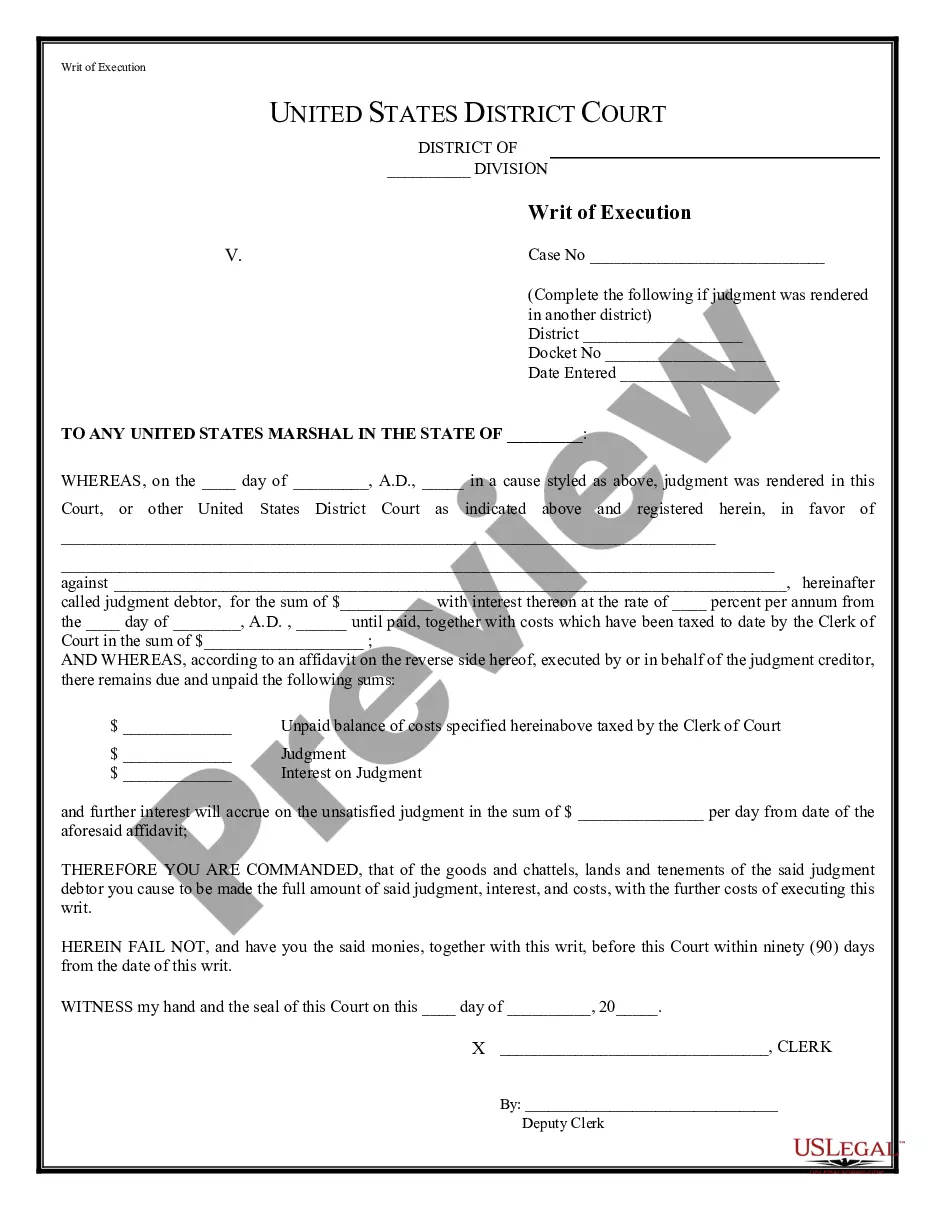
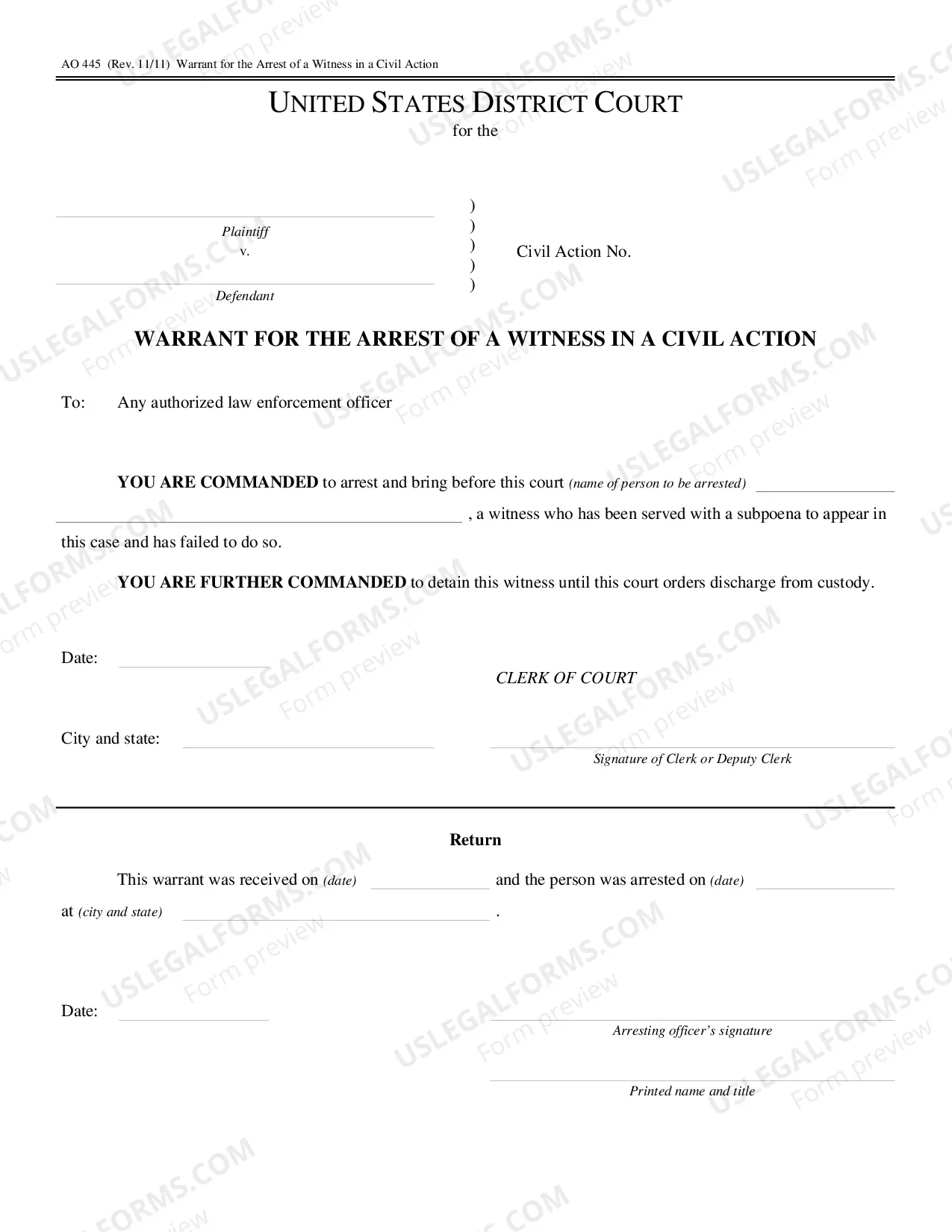
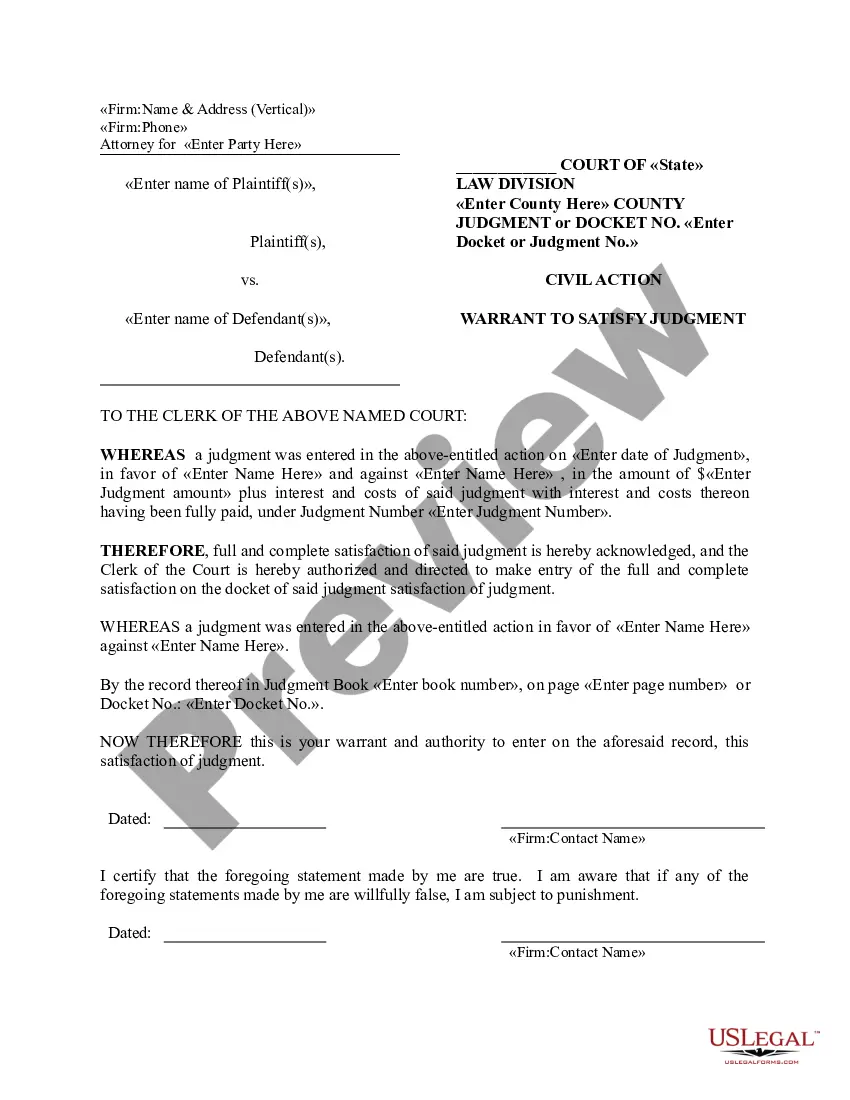
The Warrant for Distraint of Tenant's Personality to Secure Payment of Rent is a legal document used to enforce a lien on a tenant's personal property in relation to a commercial lease. This form allows landlords to recover unpaid rent by seizing a tenant's removable personal possessions when they fail to fulfill their rental obligations. Unlike general eviction notices, this warrant specifically targets personal property as a means to secure outstanding payments.
Key parts of this document
- Identification of the plaintiff and defendant, including their names and business designations.
- Date of the warrant issuance and legal affirmation by the landlord.
- Details of the tenant's indebtedness, including the amount owed and any applicable offset or credit.
- Description of the premises involved, providing a legal reference for the lease.
- Instructions for law enforcement on the execution of the warrant and return to the court.
When to use this form
This form is required when a landlord has a valid claim against a tenant for unpaid rent and needs to seize the tenant's personal property to ensure payment. It is typically used when prior efforts to obtain rent payment have failed, and the landlord seeks a legal remedy to recover losses due to nonpayment.
Who can use this document
- Commercial landlords seeking to enforce their rights against a tenant.
- Property management companies acting on behalf of landlords.
- Landlords with tenants in commercial lease agreements who have failed to pay rent.
How to complete this form
- Identify the parties involved by filling in the landlord's and tenant's names and addresses.
- Add the date of the warrant issuance and the cause number for record-keeping.
- State the amount owed by the tenant for unpaid rent, along with any relevant offsets.
- Provide a legal description of the leased property for clarity and reference.
- Ensure the judge or clerk signs and dates the form to validate it.
Does this form need to be notarized?
This form usually doesn’t need to be notarized. However, local laws or specific transactions may require it. Our online notarization service, powered by Notarize, lets you complete it remotely through a secure video session, available 24/7.
Get your form ready online
Our built-in tools help you complete, sign, share, and store your documents in one place.
Make edits, fill in missing information, and update formatting in US Legal Forms—just like you would in MS Word.
Download a copy, print it, send it by email, or mail it via USPS—whatever works best for your next step.
Sign and collect signatures with our SignNow integration. Send to multiple recipients, set reminders, and more. Go Premium to unlock E-Sign.
If this form requires notarization, complete it online through a secure video call—no need to meet a notary in person or wait for an appointment.
We protect your documents and personal data by following strict security and privacy standards.

Make edits, fill in missing information, and update formatting in US Legal Forms—just like you would in MS Word.

Download a copy, print it, send it by email, or mail it via USPS—whatever works best for your next step.

Sign and collect signatures with our SignNow integration. Send to multiple recipients, set reminders, and more. Go Premium to unlock E-Sign.

If this form requires notarization, complete it online through a secure video call—no need to meet a notary in person or wait for an appointment.

We protect your documents and personal data by following strict security and privacy standards.
Mistakes to watch out for
- Failing to accurately fill in the names and addresses of the tenant and landlord.
- Not providing a complete description of the property in question.
- Omitting the required signatures of judicial officials.
- Incorrectly calculating the amount owed, including offsets or credits.
Advantages of online completion
- Convenience of downloading and completing the form from your own device.
- Editability allows for customizing the document to fit your specific scenario.
- Reliability of professionally drafted forms ensuring legal compliance.
- Time-saving with quick access to the necessary legal documents.
Summary of main points
- The Warrant for Distraint secures unpaid rent through the seizure of a tenantâs personal property.
- Proper completion of the form is crucial for its enforceability and effectiveness.
- State laws may vary, so it is essential to comply with local regulations.
- This form serves as a tool for landlords facing nonpayment issues in a commercial lease context.
Looking for another form?
Form popularity
FAQ
The best way to protect your security deposit is to document the condition of your rental unit before move-in. You can do this by taking careful inventory of the condition of the rental unit using a renter's inspection worksheet. Be sure to record any existing damage and check all appliances to be sure they work.
Be on time. Make an impression. Have references. Write a great cover letter. Be prepared. Be straight up. Follow up. Find a renters insurance policy to protect your belongings.
Provide all relevant documents. You'll need the following documents for your rental application: Have a completed set of documentation for all applicants. Write a cover letter. Prove you can pay the rent. Get your references ready. Secure a guarantor.
Get organized before you start searching. Provide verifiable references. Submit a resume with your application. Address problems and offer solutions. Treat the inspection as an interview.
In Alberta, most landlords require a tenant to pay a security deposit or damage deposit before moving in. A security deposit is a one-time only payment and cannot be more than one month's rent.Landlords must pay tenants interest on security deposits. The rate of interest is determined by a government regulation.
A security deposit is any money a landlord takes from a tenant other than the advance payment of rent. The security deposit serves to protect the landlord if the tenant breaks or violates the terms of the lease or rental agreement. It may be used to cover damage to the property, cleaning, key replacement, or back rent.
3. Nonpayment of rent: A landlord may keep all or part of a tenant security deposit to cover unpaid rent. 4. Tenant breaks the lease: If a tenant breaks his or her lease, the landlord can keep all or part of the security deposit, depending on the terms of the lease and the applicable state laws.
All states allow landlords to collect a security deposit when a tenant moves in and hold it until the tenant leaves. The general purpose of a security deposit is to assure that a tenant pays rent when due and keeps the rental unit in good condition.
When dealing with a rental agreement, a security deposit is a lump sum of money paid upfront by your tenant before their move-in date. This deposit ensures that the cost of any damage that has been discovered at the end of the lease agreement will be paid for.