Officers Bonus in form of Stock Issuance - Resolution Form
What this document covers
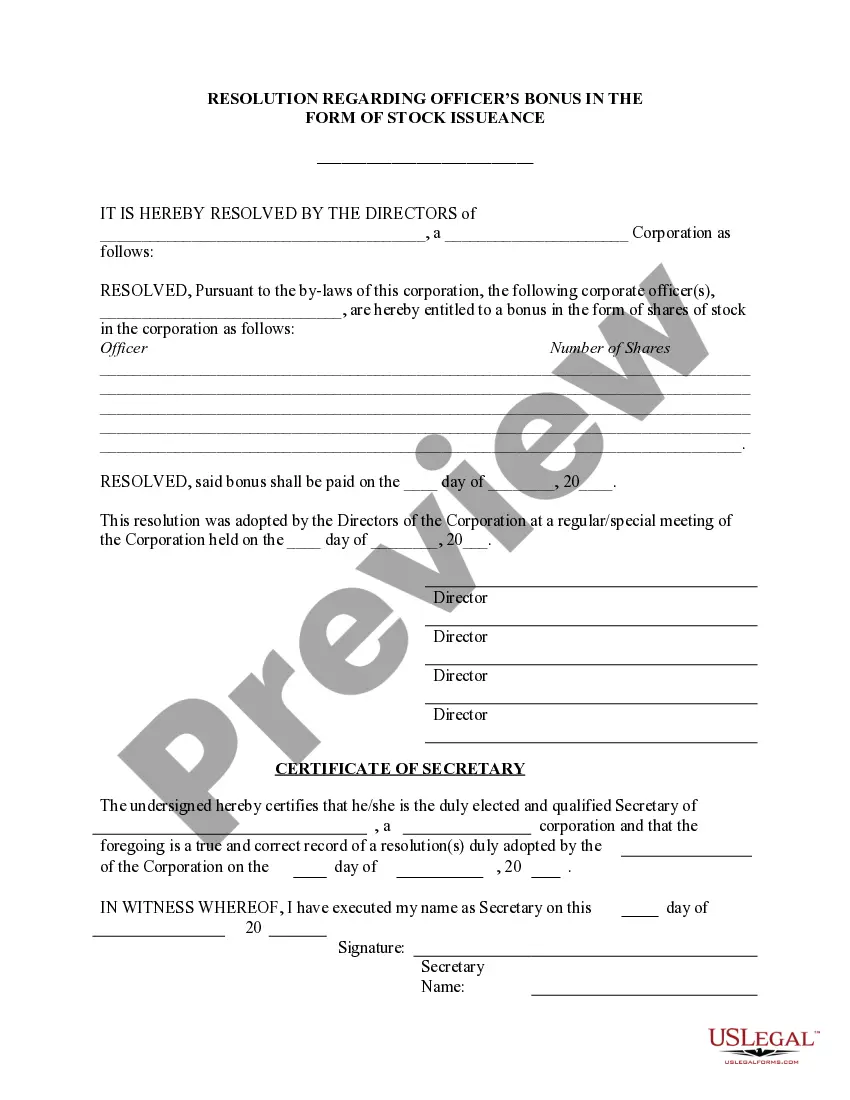
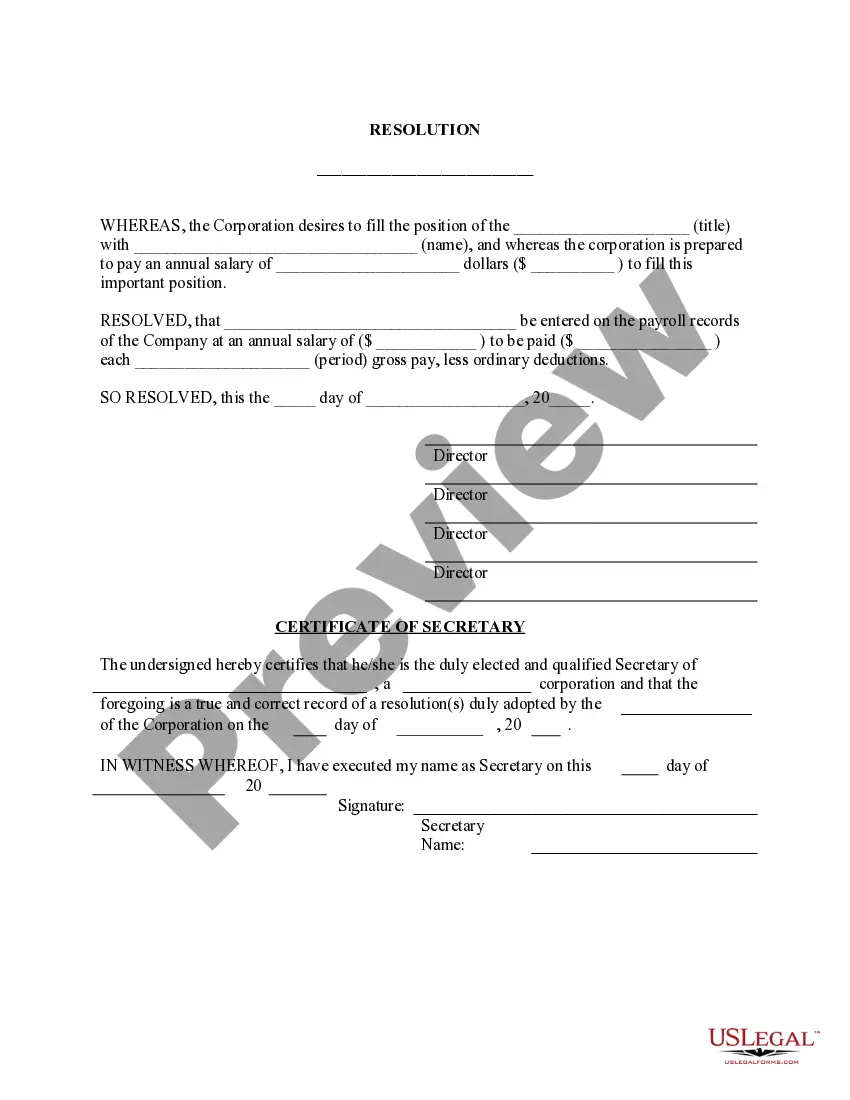
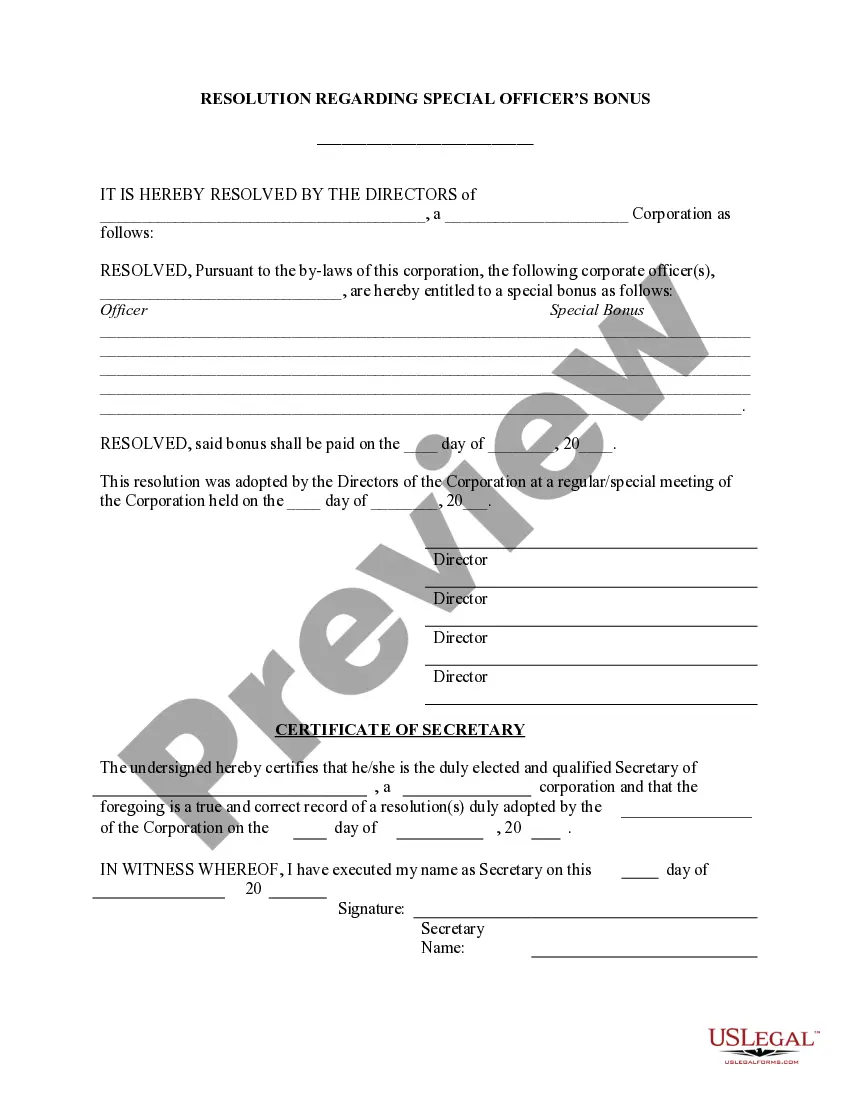
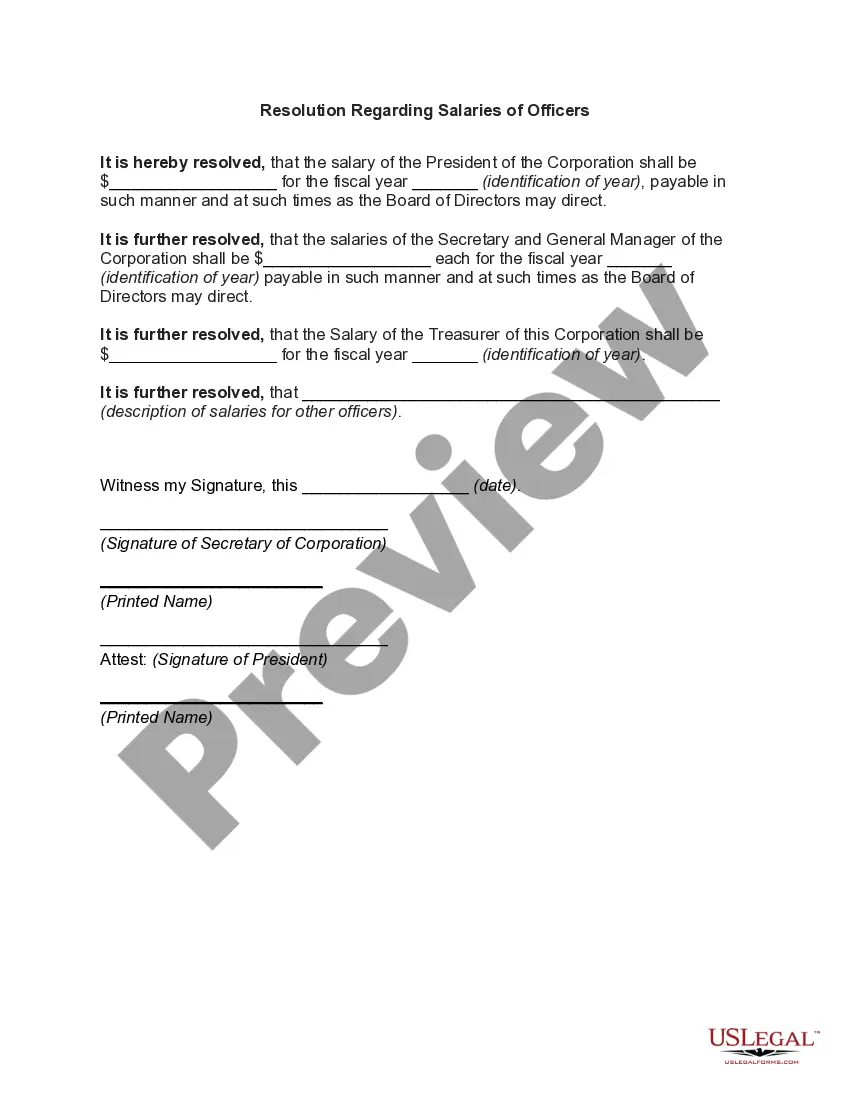
The Officers Bonus in the Form of Stock Issuance - Resolution Form is a legal document that enables a corporation's directors to authorize bonuses for corporate officers in the form of stock shares. This form is distinct from other compensation agreements as it specifically pertains to stock issuances, providing a means for companies to reward their officers while aligning their interests with the company's performance.
What’s included in this form
- Corporate Information: Identifies the corporation by name and type.
- Bonus Authorization: Names the corporate officer(s) entitled to the bonus.
- Number of Shares: Specifies the exact number of stock shares granted as a bonus.
- Payment Date: Indicates when the bonus shares will be issued.
- Meeting Documentation: Records the meeting where the resolution was adopted.
- Secretary Certification: Confirms the accuracy of the resolution's record.
Situations where this form applies
This form is essential when a corporationâs board of directors wishes to reward its officers with company stock. It is particularly useful during annual performance reviews or after achieving specific milestones. Securing a formal resolution ensures transparency and compliance with corporate governance standards.
Intended users of this form
- Corporate directors who want to authorize stock bonuses.
- Corporate officers eligible for bonuses in stock form.
- Companies aiming to improve officer retention and align incentives with shareholder interests.
Completing this form step by step
- Identify the corporation by filling in its name and type.
- List the names of the corporate officers who will receive the stock bonus.
- Specify the number of shares awarded to each officer.
- Enter the date on which the bonus will be granted.
- Record the date of the board meeting where the resolution is adopted.
- Have the Secretary sign and print their name to certify the resolution.
Does this document require notarization?
This form does not typically require notarization unless specified by local law. Always check your state's requirements to ensure compliance.
Get your form ready online
Our built-in tools help you complete, sign, share, and store your documents in one place.
Make edits, fill in missing information, and update formatting in US Legal Forms—just like you would in MS Word.
Download a copy, print it, send it by email, or mail it via USPS—whatever works best for your next step.
Sign and collect signatures with our SignNow integration. Send to multiple recipients, set reminders, and more. Go Premium to unlock E-Sign.
If this form requires notarization, complete it online through a secure video call—no need to meet a notary in person or wait for an appointment.
We protect your documents and personal data by following strict security and privacy standards.

Make edits, fill in missing information, and update formatting in US Legal Forms—just like you would in MS Word.

Download a copy, print it, send it by email, or mail it via USPS—whatever works best for your next step.

Sign and collect signatures with our SignNow integration. Send to multiple recipients, set reminders, and more. Go Premium to unlock E-Sign.

If this form requires notarization, complete it online through a secure video call—no need to meet a notary in person or wait for an appointment.

We protect your documents and personal data by following strict security and privacy standards.
Common mistakes
- Failing to specify the exact number of shares awarded.
- Not keeping a copy of the resolution for corporate records.
- Neglecting to follow proper corporate meeting procedures when adopting the resolution.
- Inaccurate entry of the meeting date or payment date.
Why complete this form online
- Quick access to a professionally drafted legal document.
- The ability to easily modify the form to fit specific needs.
- Time-saving with instant downloadable options.
- Peace of mind knowing the form is created in compliance with legal standards.
Legal use & context
- This form is key for documenting stock bonuses, which can have tax implications.
- Proper use helps prevent disputes over compensation in the future.
- Ensures that all corporate actions are recorded for compliance and governance purposes.
What to keep in mind
- The form allows directors to grant stock bonuses to corporate officers.
- Essential for documenting decisions made during board meetings.
- Helps align the interests of officers with the corporationâs performance.
Looking for another form?









Form popularity
FAQ
A primary stock offering is the first time a security or bond is floated or sold to the public. As a result, a company raises the capital they need to grow and expand. The process a company follows to offers its shares for sale is known as an Initial Public Offering also known as an IPO.
Stock issuance is considered to be the most successful and advantageous way for a company to raise funds. While bonds and loans are predicated on fixed returns for investors or lenders spread across a specific time period, stocks provide investors with the right to ownership and the unguaranteed potential for profit.
It's rare that a company assigns par value to a stock, but if they are required to by state law, then you would calculate stock issuance by multiplying the par value by the number of shares issued. For example, if a company issues 100 common stocks for a par value of $1, the calculation is 100 x $1 = $100.
Issued shares are the subset of authorized shares that have been sold to and held by the shareholders of a company, regardless of whether they are insiders, institutional investors, or the general public (as shown in the company's annual report).
Money an organization derives through share issuance is not revenue. The corporation makes money by selling goods or providing services, not through cash inflows from investors.
Money you receive from issuing stock increases the equity of the company's stockholders.The result equals the total amount you receive from the stock issuance, and the total increase to the Stockholder's Equity account.
In essence, issuing stock is a way for a company's owners to sell their ownership control to the general public. In return, they receive money that may eliminate the need to borrow funds.
Common Stock Offering MeaningCommon stocks are ordinary shares that companies issue as an alternative to selling debt or issuing a different class of shares known as preferred stock. The first time that a company issues a public offering of common stock, it does so via an initial public offering.
When companies issue additional shares, it increases the number of common stock being traded in the stock market. For existing investors, too many shares being issued can lead to share dilution. Share dilution occurs because the additional shares reduce the value of the existing shares for investors.