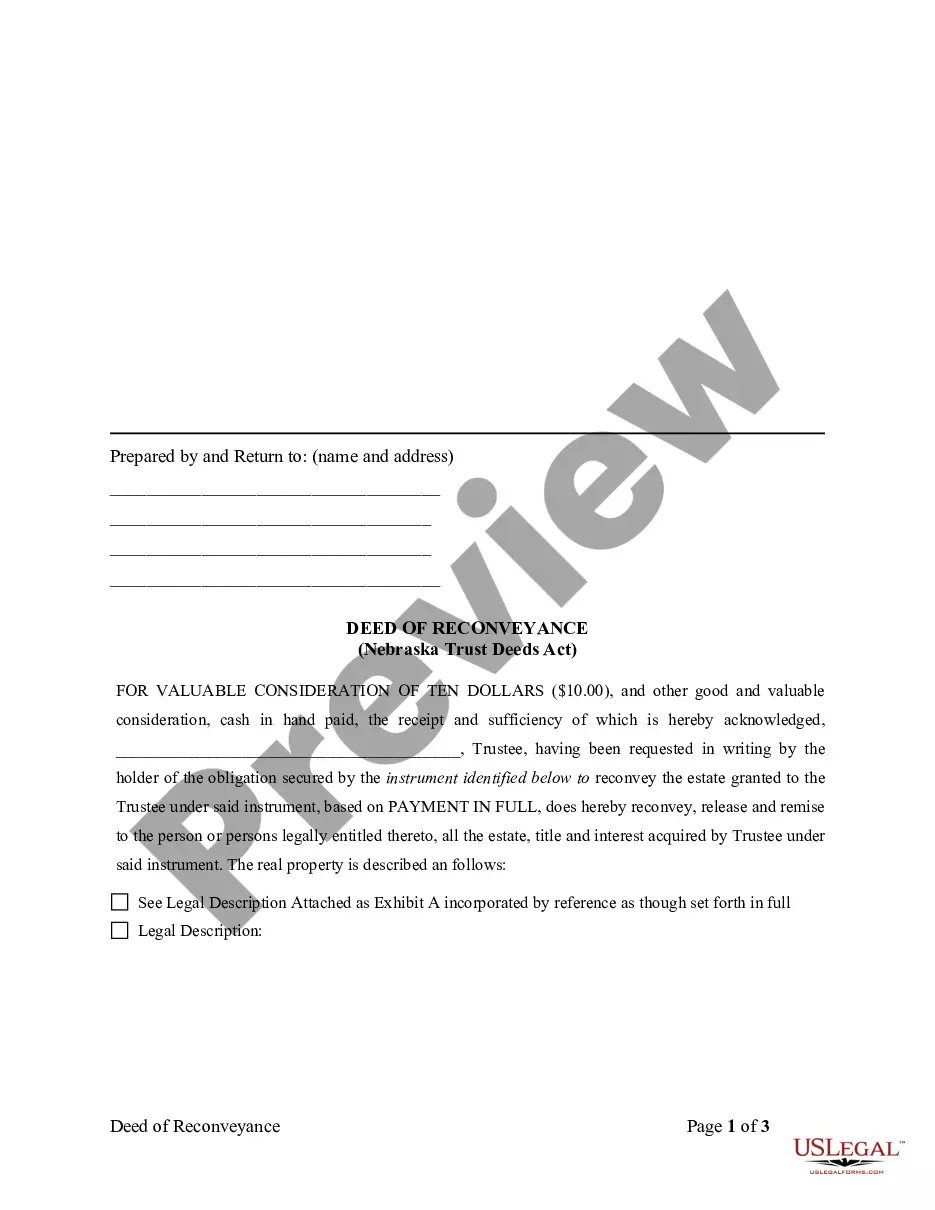
Demand Promissory Note
Overview of this form
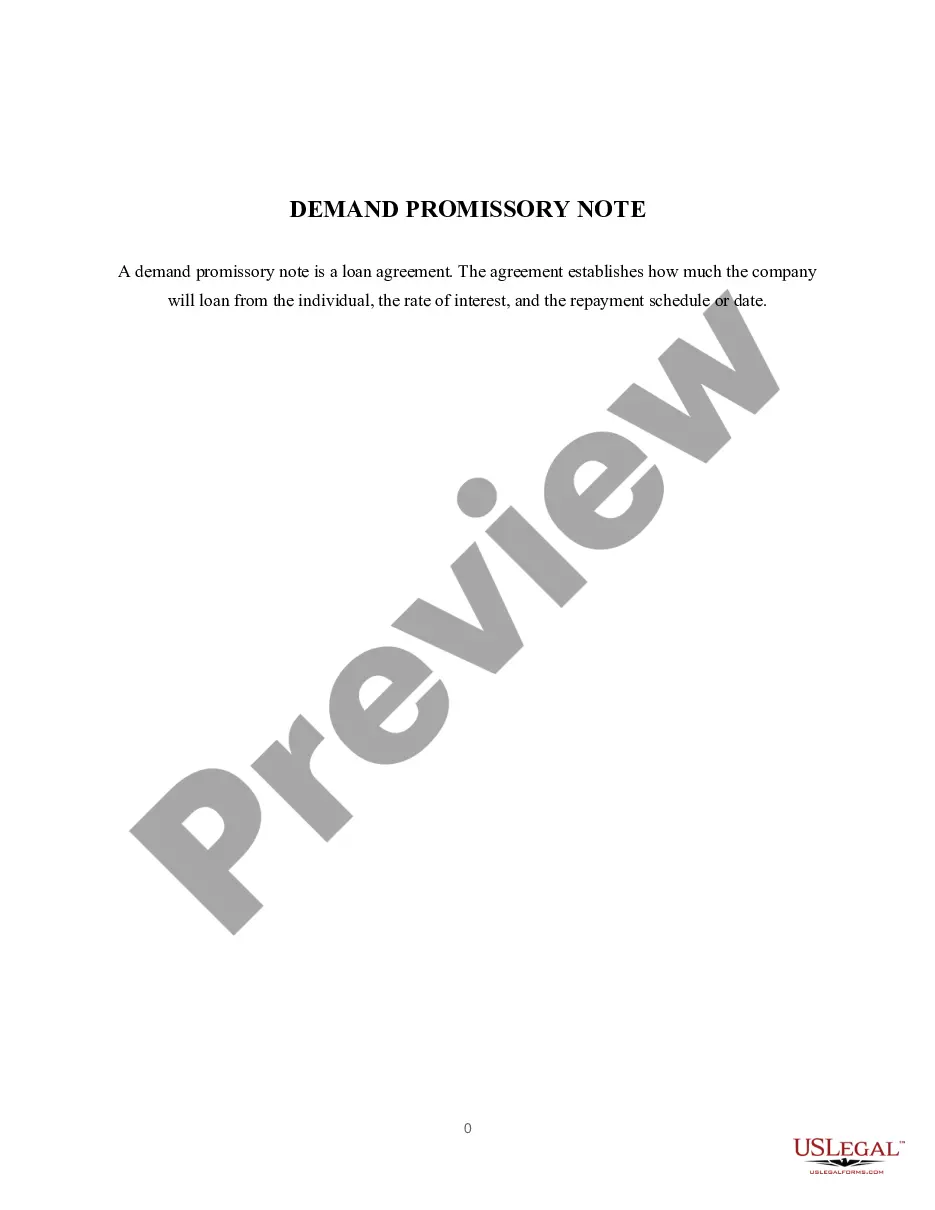
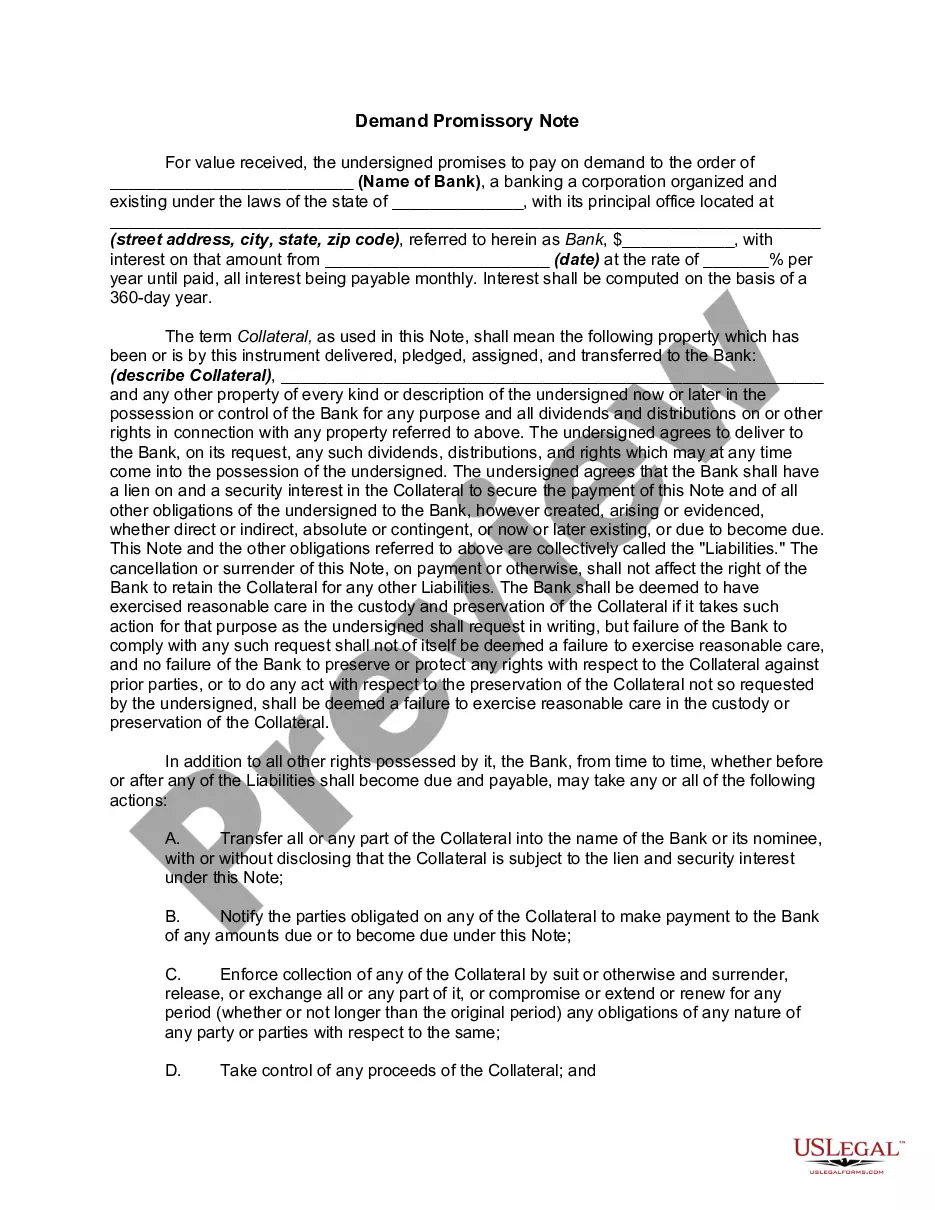
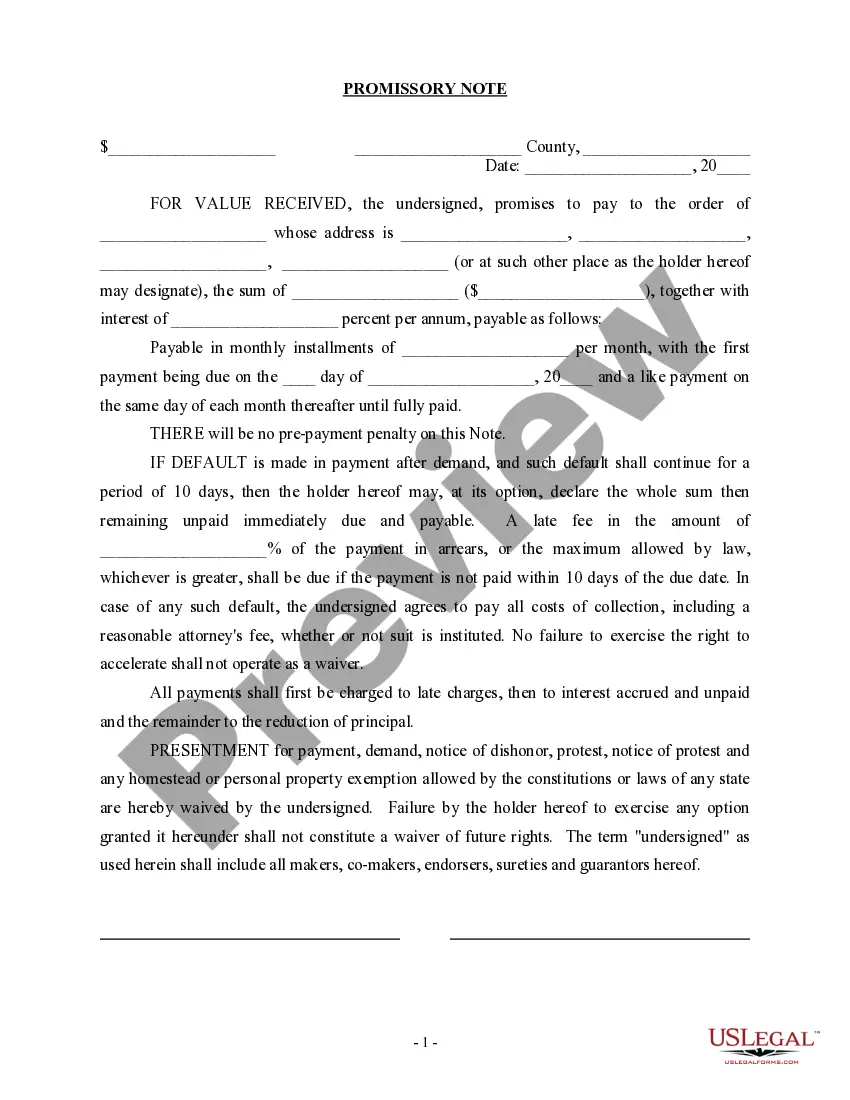
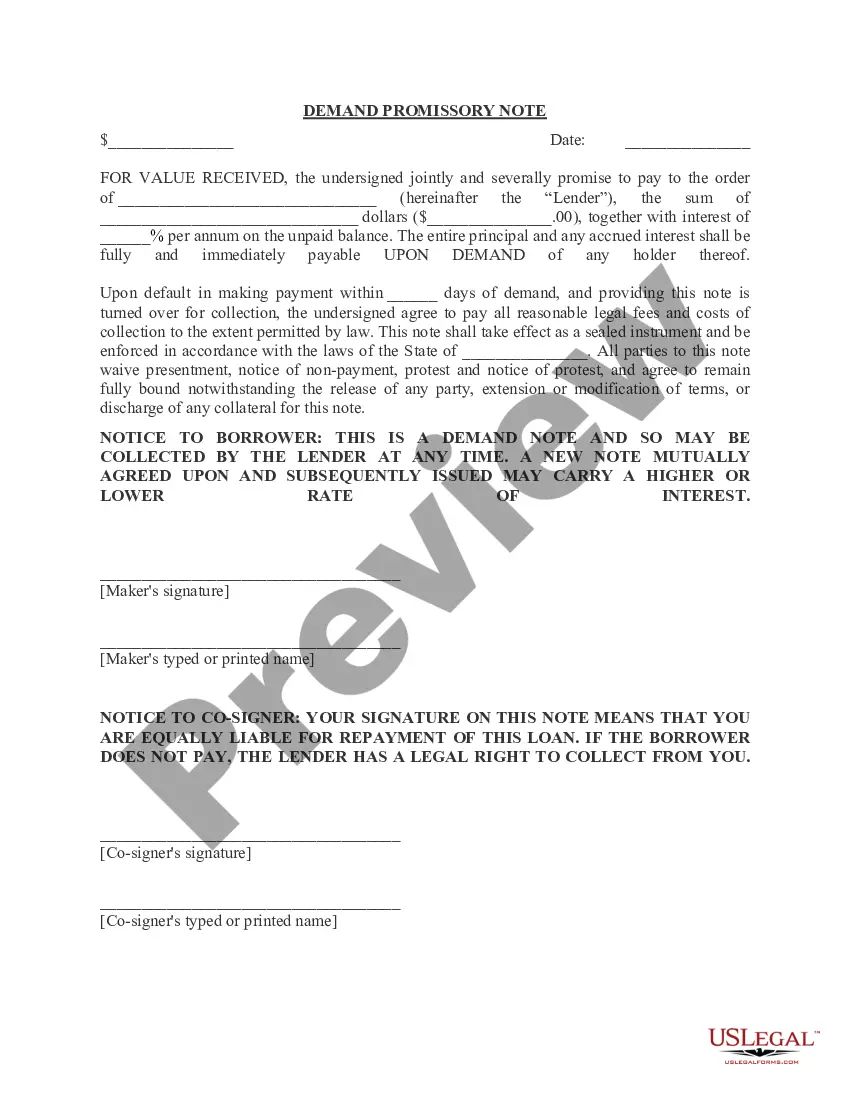
A demand promissory note is a legal document that outlines a loan agreement between a lender and a borrower. This form specifies the amount being borrowed, the interest rate applicable, and the repayment schedule. Unlike a regular promissory note, a demand promissory note allows the lender to request repayment at any time without needing to wait for a specified loan maturity date. It is essential for establishing the terms of a loan and ensuring both parties are clear about their obligations.
Form components explained
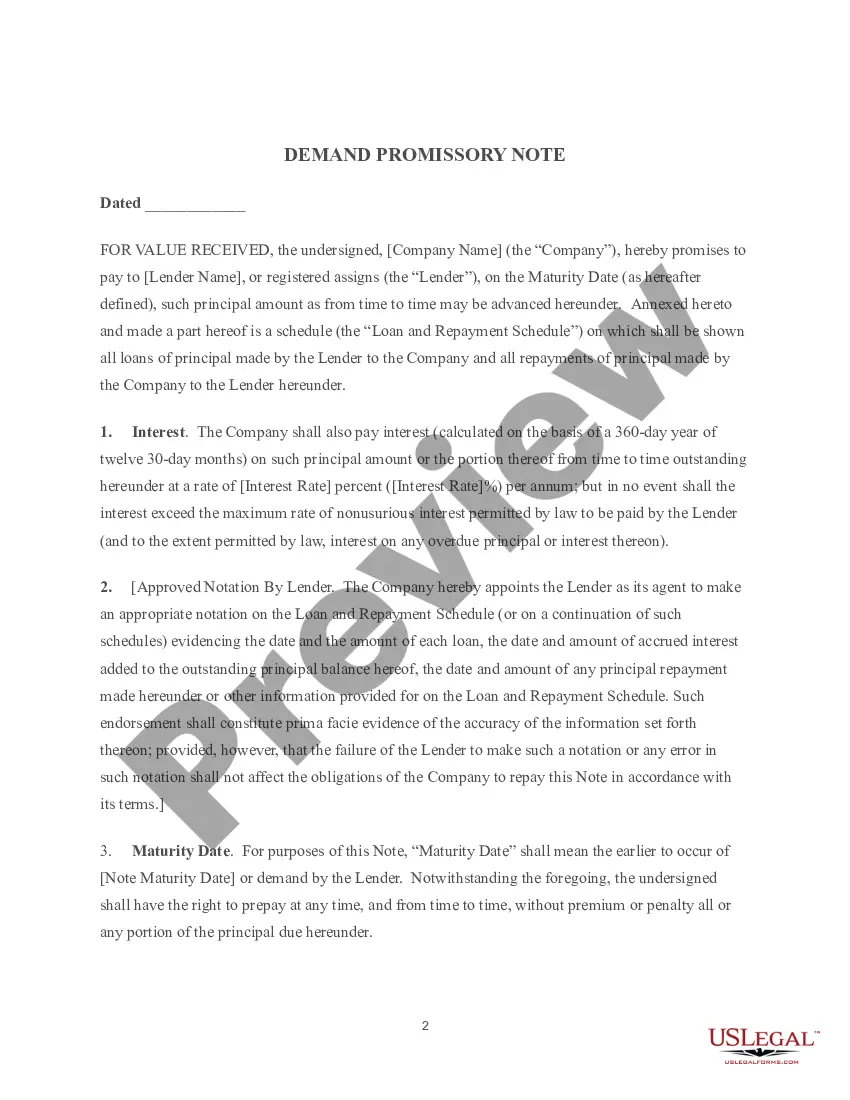
- Principal Amount: The total amount borrowed by the company.
- Interest Rate: The annual rate applied to the borrowed amount.
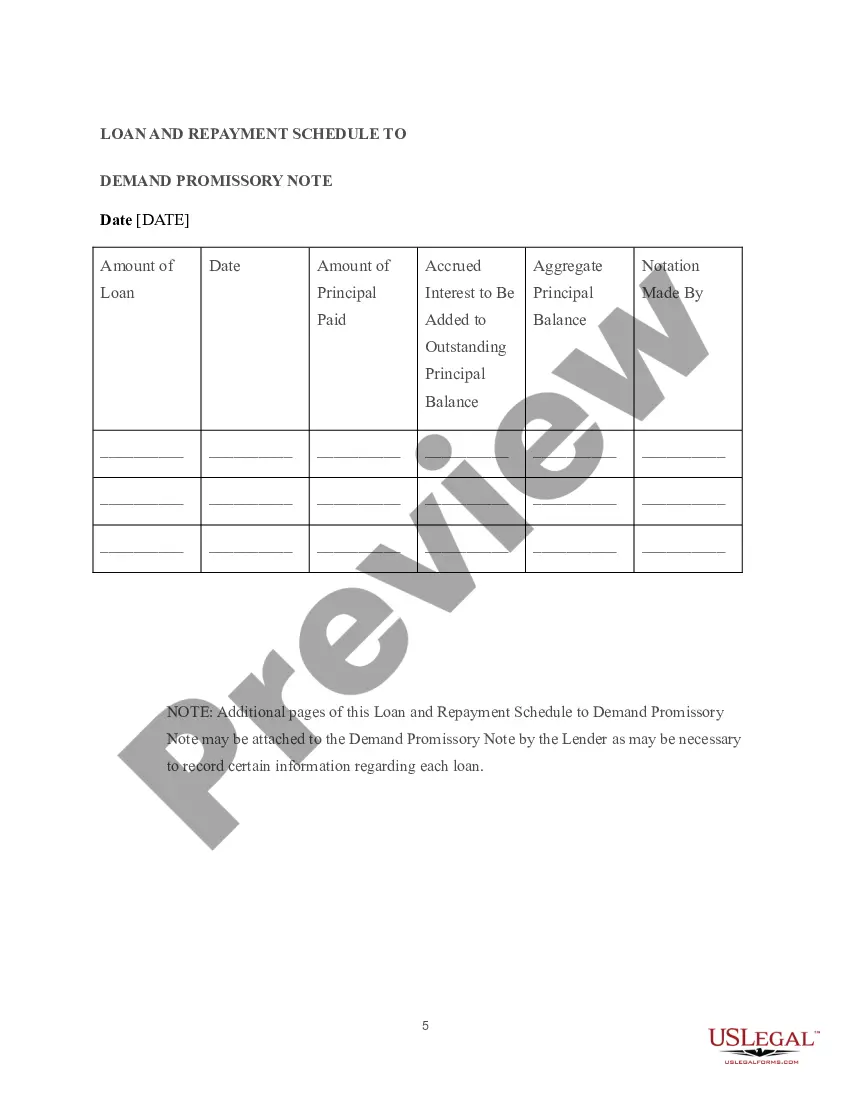
- Loan and Repayment Schedule: A detailed account of all loans made and repayments received.
- Maturity Date: The date the lender can demand repayment.
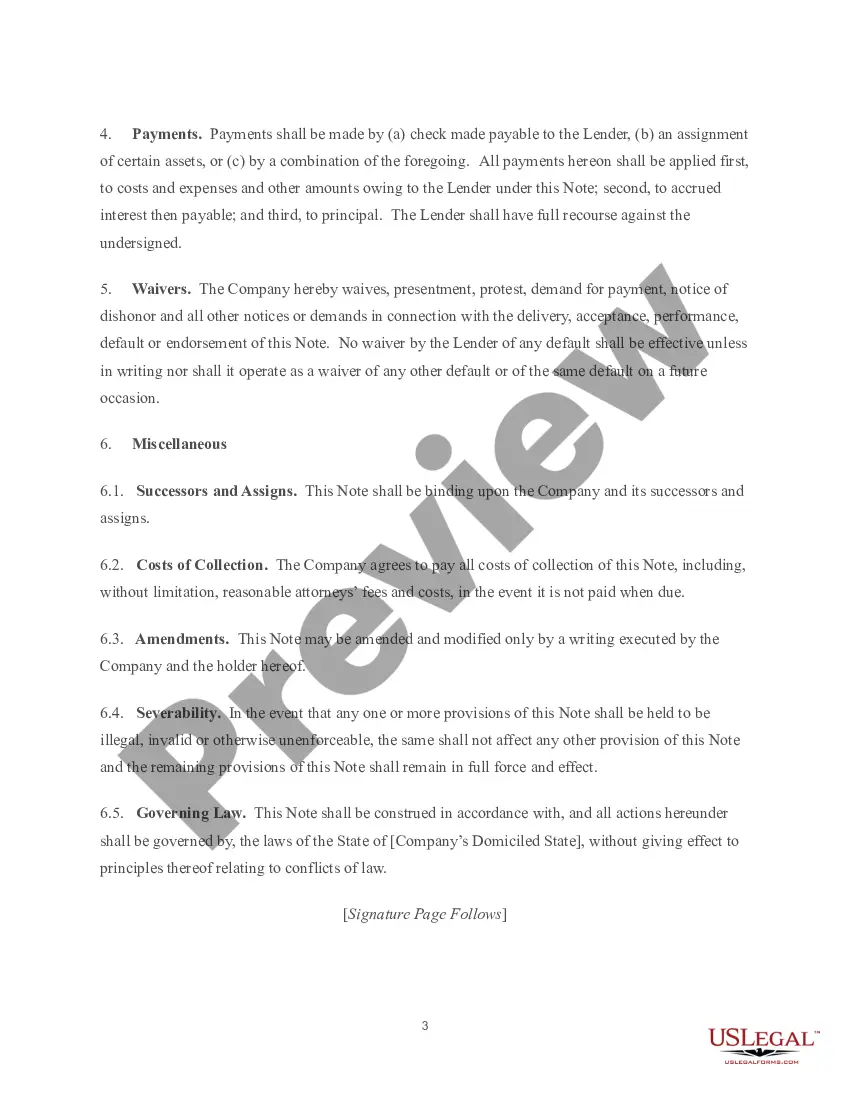
- Payment Methods: Specifies how payments can be made (e.g., check, asset assignment).
- Waivers: Legal acknowledgments by the company regarding specific notifications and defaults.
When to use this form
This form should be used when a company needs to borrow money from an individual or another entity and wants to formalize the terms of the loan. It is particularly useful when the lender wants the flexibility to demand repayment at any time. Common scenarios include startup funding, bridging loans, or any situation where immediate access to cash is required but strict repayment terms arenât yet established.
Who needs this form
This demand promissory note is suitable for:
- Businesses seeking a flexible loan agreement.
- Individuals lending money to a business.
- Companies wanting to formalize loan terms with clear repayment schedules.
- Investors interested in documenting loans to companies.
How to complete this form
- Enter the date of the agreement at the top of the document.
- Provide the full legal name of the company borrowing the money and the lender's name.
- Specify the amount of loan and the interest rate in the designated sections.
- Complete the loan and repayment schedule with relevant details of each transaction.
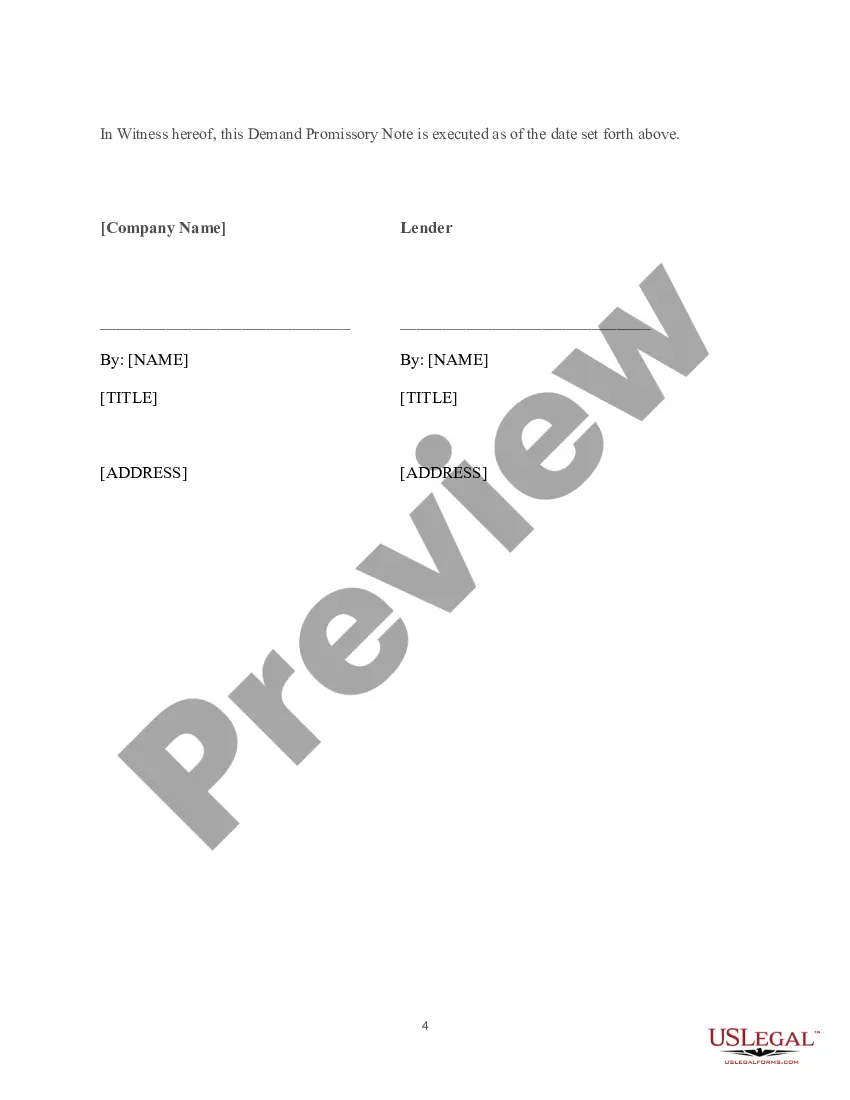
- Ensure both parties sign and date the document to validate the agreement.
Notarization requirements for this form
This form does not typically require notarization unless specified by local law. However, notarization can add an additional layer of authenticity and may be advisable for larger sums or to increase the enforceability of the note.
Get your form ready online
Our built-in tools help you complete, sign, share, and store your documents in one place.
Make edits, fill in missing information, and update formatting in US Legal Forms—just like you would in MS Word.
Download a copy, print it, send it by email, or mail it via USPS—whatever works best for your next step.
Sign and collect signatures with our SignNow integration. Send to multiple recipients, set reminders, and more. Go Premium to unlock E-Sign.
If this form requires notarization, complete it online through a secure video call—no need to meet a notary in person or wait for an appointment.
We protect your documents and personal data by following strict security and privacy standards.

Make edits, fill in missing information, and update formatting in US Legal Forms—just like you would in MS Word.

Download a copy, print it, send it by email, or mail it via USPS—whatever works best for your next step.

Sign and collect signatures with our SignNow integration. Send to multiple recipients, set reminders, and more. Go Premium to unlock E-Sign.

If this form requires notarization, complete it online through a secure video call—no need to meet a notary in person or wait for an appointment.

We protect your documents and personal data by following strict security and privacy standards.
Typical mistakes to avoid
- Failing to specify the interest rate, leading to confusion over financial obligations.
- Not providing a complete loan and repayment schedule, which can complicate record-keeping.
- Not signing the document, making it unenforceable.
- Ignoring state-specific requirements that could render the document invalid.
- Overlooking the clauses regarding waivers, which can affect what notices must be provided.
Why complete this form online
- Immediate access to legal documents crafted by licensed attorneys.
- Easy customization to meet your specific needs.
- Downloadable formats for convenient printing and storage.
- Reduced time spent in legal consultation, promoting efficiency.
- Assurance of compliance with current legal standards and practices.
Looking for another form?

Form popularity
FAQ
A promissory note payable on demand is a way to get repaid when you loan money to someone. It is a document that states the terms of the loan and includes the ?payable on demand? notation on it. This means that you can demand full payment of the loan at any time you deem necessary.
A demand (or due on demand) promissory note is a note that you as the lender, or holder, can collect on at any time. In other words, the loan comes due whenever you decide to ask for the money, whether the borrower is making regular payments or not.
There are two types of promissory notes often used to evidence a loan or debt. One type is referred to as ?demand? promissory note because the note is payable at any time on demand by the lender. The other type is ?with distinguishing characteristics.? A demand note is theoretically due from the moment it is executed.
A promissory note can become invalid if it excludes A) the total sum of money the borrower owes the lender (aka the amount of the note) or B) the number of payments due and the date each increment is due.
While the statute of limitations on an action in an obligation, liability, or contract is four years, Commercial Code Section 3118(a) gives a statute of limitations of six years for an action to be enforced on the party to pay their promissory note. This time period starts from the due date that's listed on the note.
A promissory note must include the date of the loan, the dollar amount, the names of both parties, the rate of interest, any collateral involved, and the timeline for repayment. When this document is signed by the borrower, it becomes a legally binding contract.