Letter from Known Imposter to Creditor Accepting Responsibility for Accounts, Charges or Debits
Understanding this form
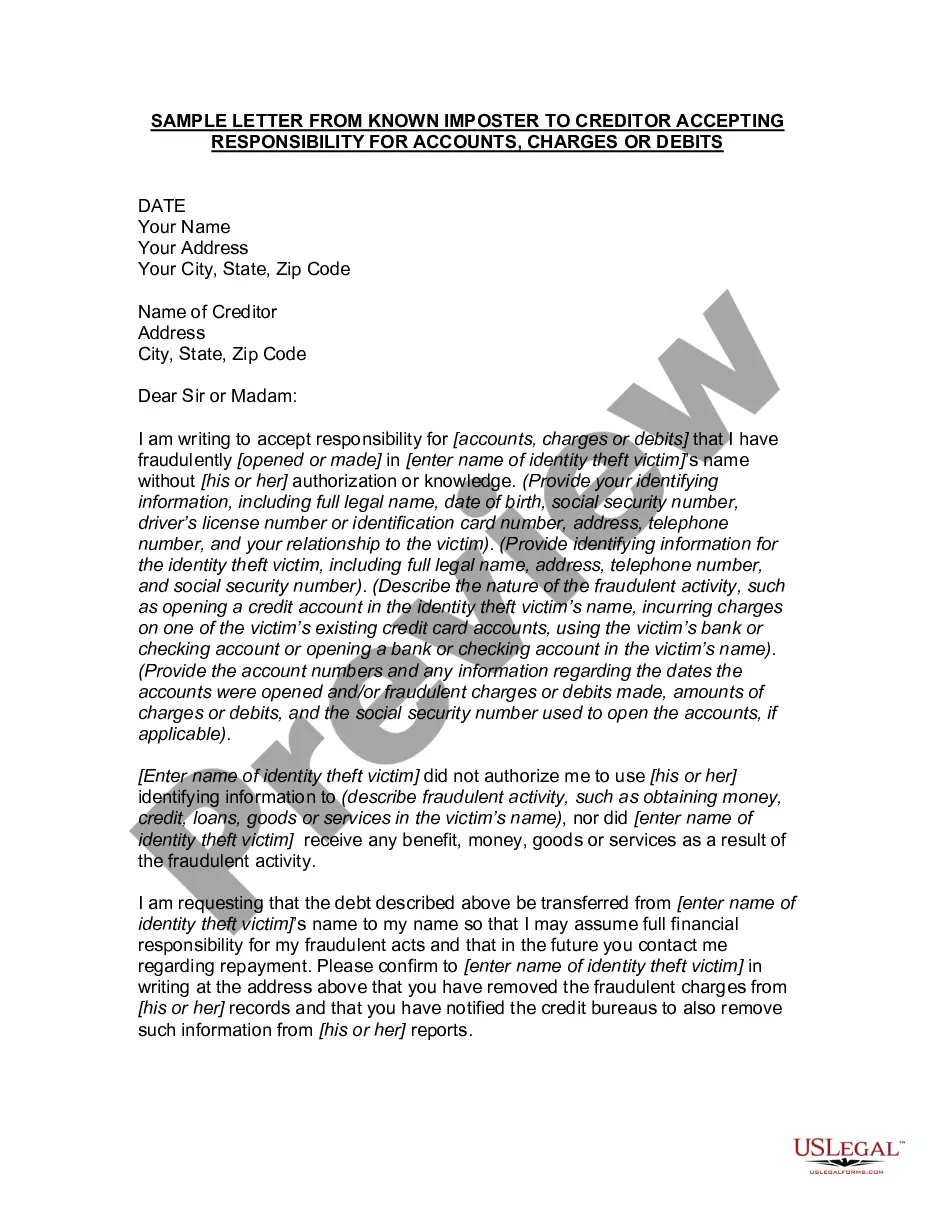
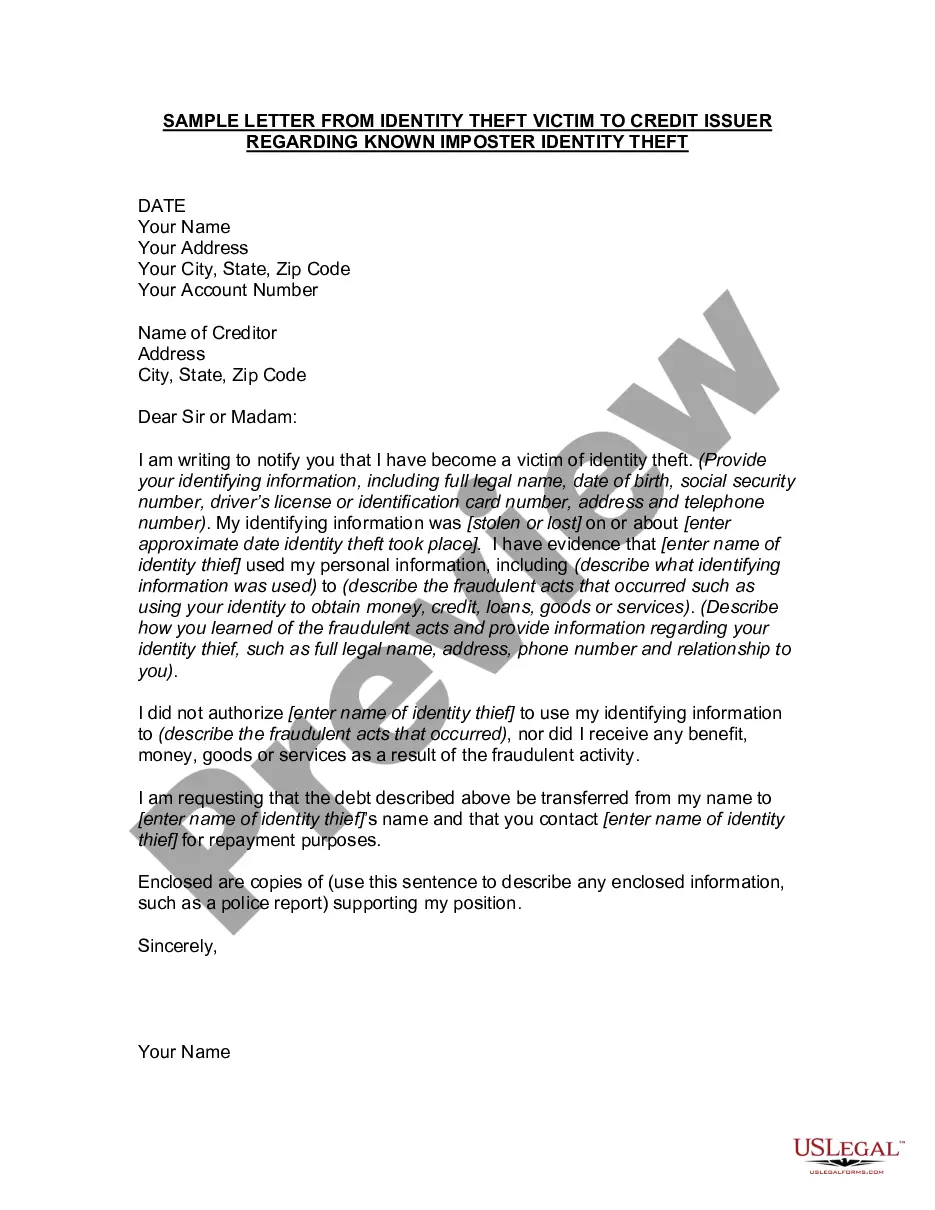
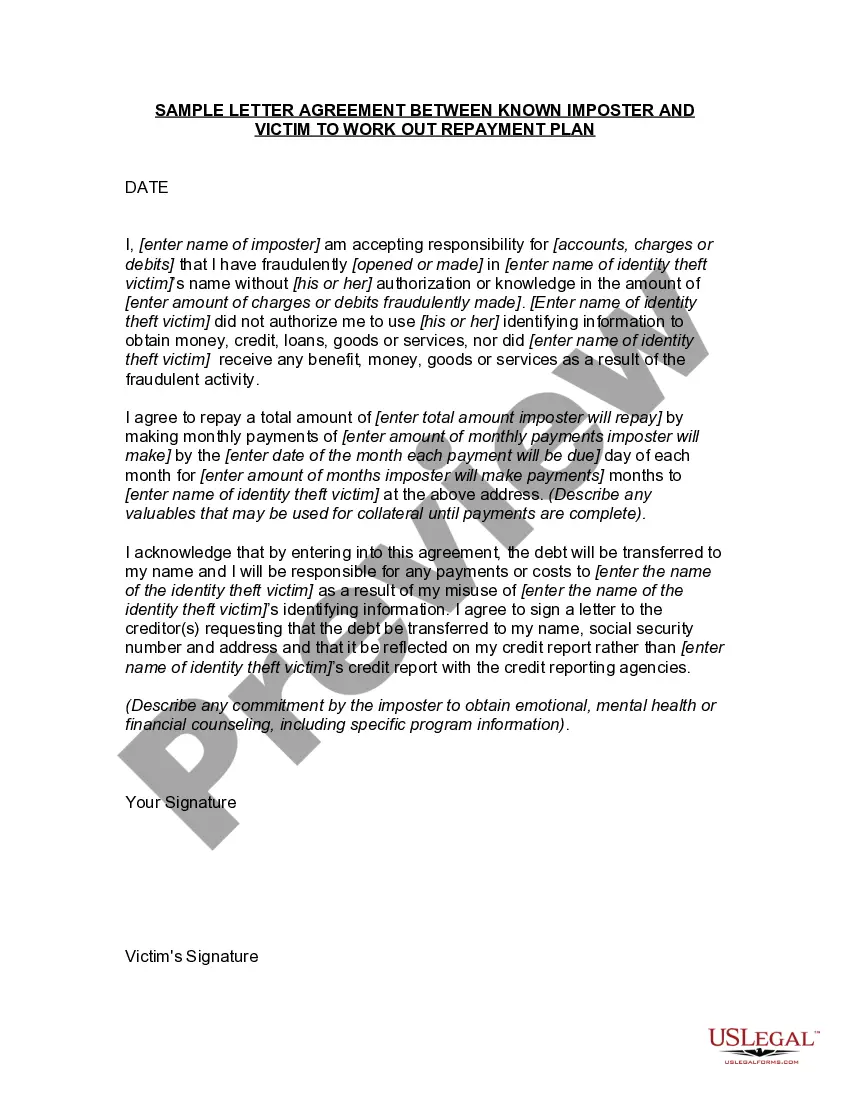
The Letter from Known Imposter to Creditor Accepting Responsibility for Accounts, Charges or Debits is a legal document used by individuals who have committed identity theft. This form allows the imposter to accept responsibility for fraudulent accounts and charges made in the name of a victim of identity theft. By using this letter, the imposter requests that the creditor transfer these debts to their name and provide written confirmation to the victim of the fraudulent removal from their records. This document differs from other forms of debt dispute letter, as it specifically addresses the situation of identity theft directly from the imposter's perspective.
What’s included in this form
- Date of the letter
- Your name and address
- Creditor's name and address
- Acceptance of responsibility for fraudulent actions
- Identification details for both the imposter and the identity theft victim
- Description of the fraudulent activity
- Request for debt transfer to the imposter's name
- Confirmation request for the victim
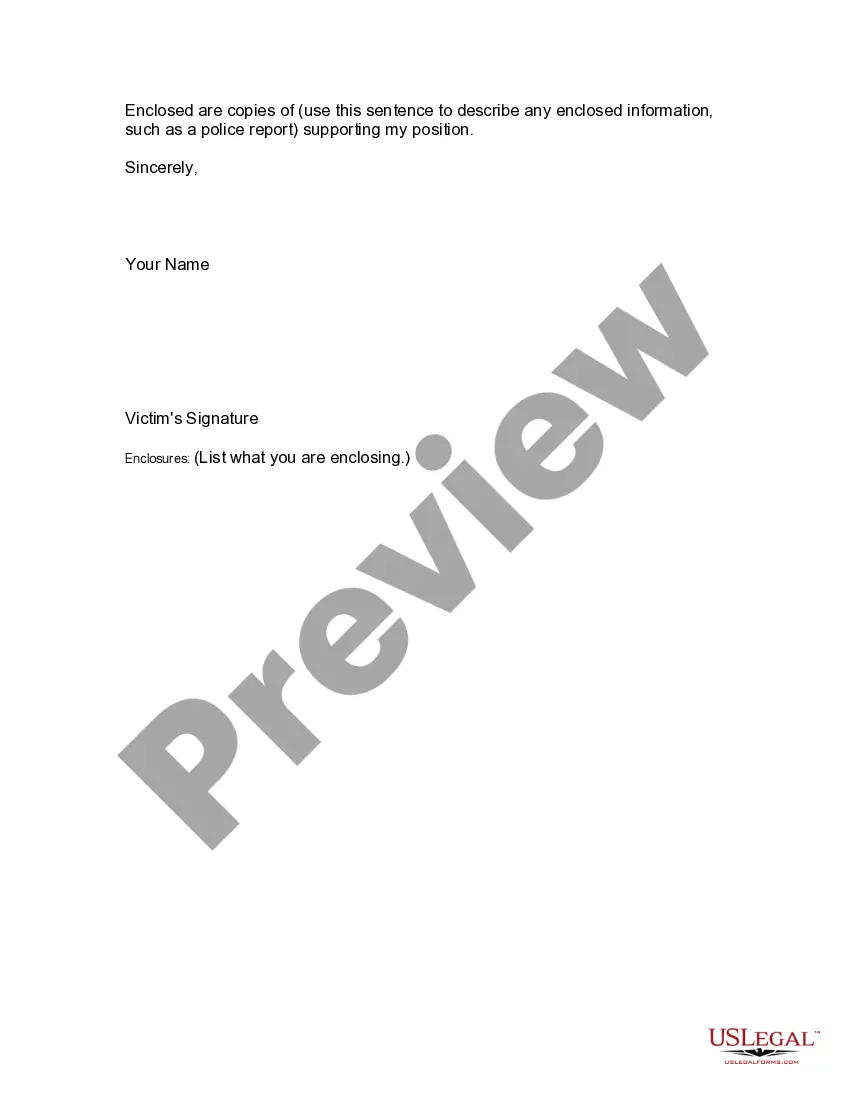
- Attachments such as a police report, if applicable
When to use this document
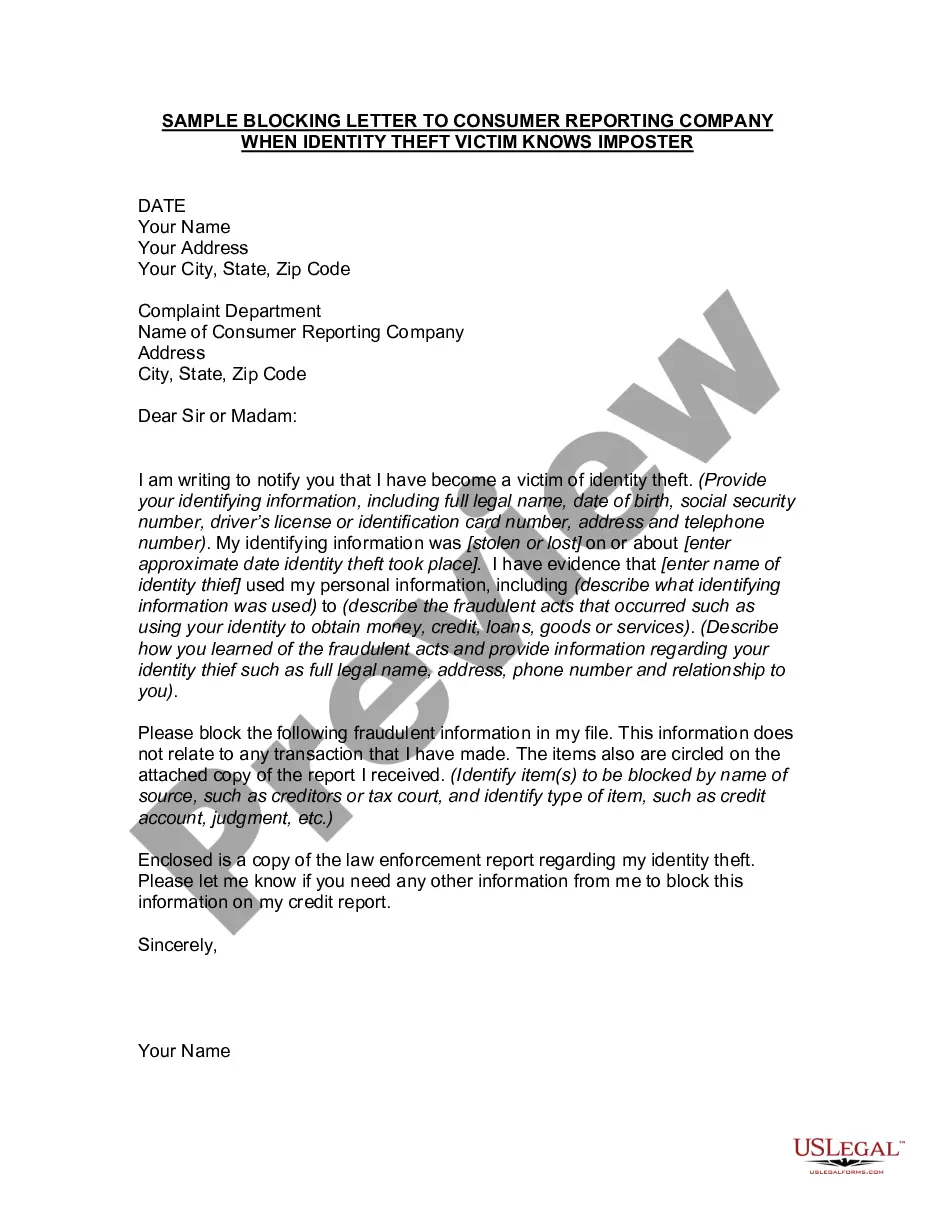
This form should be used when an individual has engaged in fraudulent activities such as opening accounts or incurring charges in the name of another person without their consent. It is particularly relevant in cases where the imposter acknowledges their wrongdoing and takes steps to rectify the situation by assuming financial responsibility for the debts. Using this letter can help facilitate the process of having the fraudulent information removed from the victim's credit reports.
Intended users of this form
- Individuals who have committed identity theft and wish to accept responsibility
- The identity theft victim who wants to ensure fraudulent debts are canceled
- Creditors who require documentation to process fraudulent activity claims
How to complete this form
- Fill in the date at the top of the letter.
- Enter your full name and address, followed by the creditor's information.
- Clearly state your acceptance of responsibility for the fraudulent activity.
- Provide the identification details for both yourself and the identity theft victim.
- Describe the fraudulent actions and list the relevant account details.
- Request the creditor to transfer the debt and confirm the removal of charges from the victim's records.
Is notarization required?
This form usually doesn’t need to be notarized. However, local laws or specific transactions may require it. Our online notarization service, powered by Notarize, lets you complete it remotely through a secure video session, available 24/7.
Get your form ready online
Our built-in tools help you complete, sign, share, and store your documents in one place.
Make edits, fill in missing information, and update formatting in US Legal Forms—just like you would in MS Word.
Download a copy, print it, send it by email, or mail it via USPS—whatever works best for your next step.
Sign and collect signatures with our SignNow integration. Send to multiple recipients, set reminders, and more. Go Premium to unlock E-Sign.
If this form requires notarization, complete it online through a secure video call—no need to meet a notary in person or wait for an appointment.
We protect your documents and personal data by following strict security and privacy standards.

Make edits, fill in missing information, and update formatting in US Legal Forms—just like you would in MS Word.

Download a copy, print it, send it by email, or mail it via USPS—whatever works best for your next step.

Sign and collect signatures with our SignNow integration. Send to multiple recipients, set reminders, and more. Go Premium to unlock E-Sign.

If this form requires notarization, complete it online through a secure video call—no need to meet a notary in person or wait for an appointment.

We protect your documents and personal data by following strict security and privacy standards.
Avoid these common issues
- Failing to provide complete identification details.
- Not including necessary documentation, such as police reports.
- Ambiguous or unclear descriptions of the fraudulent activity.
- Neglecting to request written confirmation from the creditor.
Why use this form online
- Easy access to a professionally drafted legal document.
- Editable to fit your specific circumstances.
- Quick downloading process, allowing for immediate use.
- Guided format to ensure all necessary information is included.
Legal use & context
- This document serves as an acknowledgment of wrongdoing and facilitates the resolution of identity theft cases.
- Using this form helps protect the victim's credit history by formally addressing fraudulent activities.
- It is advisable to retain copies of this document and any related correspondence for personal records.
Quick recap
- This form is crucial for individuals wishing to take responsibility for identity theft.
- Requires detailed information regarding fraudulent activity and identification.
- Should be used to help clear the victim's credit record.
- It is essential to include all relevant documentation to support your claims.
Looking for another form?

Form popularity
FAQ
For the name and contact information of the original creditor. why the collector believes you own the debt in the first place. for a record of all owners of the debt. the amount and age of the debt (including an account number if you're able). under what authority the collector has to collect.
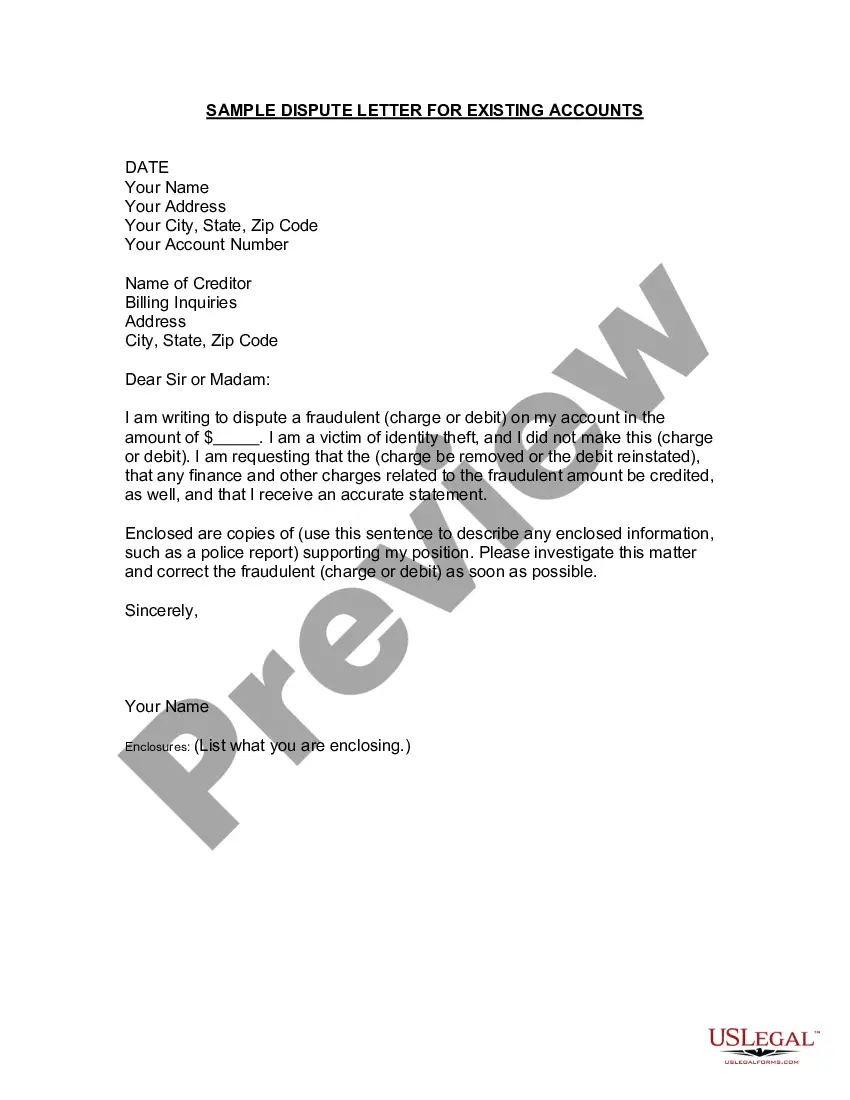
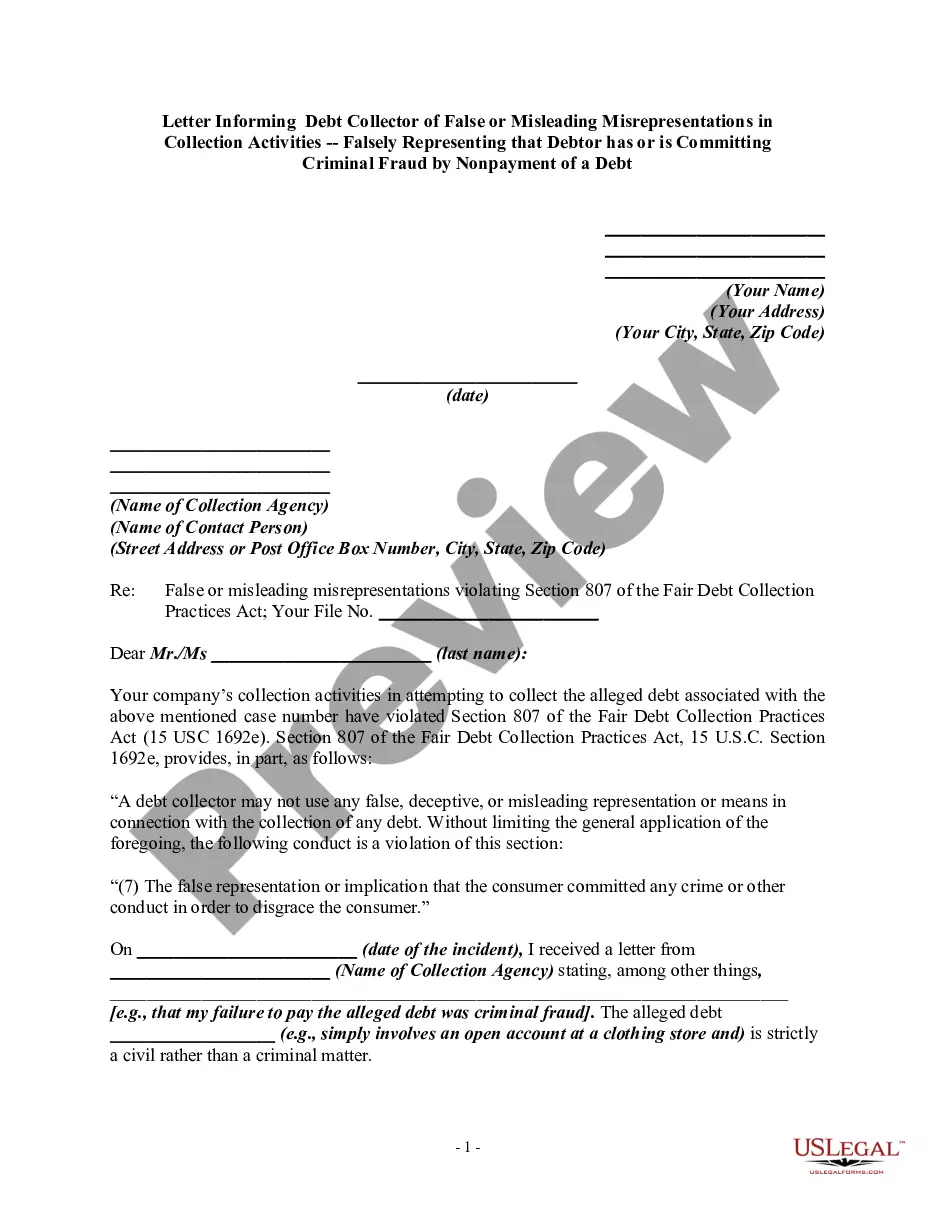
If you believe any account information is incorrect, you should dispute the information to have it either removed or corrected. If, for example, you have a collection or multiple collections appearing on your credit reports and those debts do not belong to you, you can dispute them and have them removed.
Know What to Include A demand letter should include the name of the creditor, the amount owed, action required, debt reference, deadline, and the consequences. Ensure you include all these details so your letter is not only compliant with the FDCPA, but also practical.
Your full name and address. The collections agency's name and address. A request for the amount of the debt claimed to be owed. A request for the name of the original creditor. A request for the judgment information (if applicable) A request for proof of the company's license.
I am responding to your contact about a debt you are attempting to collect. You contacted me by phone/mail, on date. You identified the debt as any information they gave you about the debt. Please stop all communication with me and with this address about this debt.
Dispute the error with the credit bureau. Report the collections account and ask to have it removed from your credit report. 2feff Provide copies of any evidence you have proving the debt doesn't belong to you. Even if the debt belongs to you, that doesn't mean the collector is legally able to collect from you.
A proof of debt is the document on which a creditor submits details of its claim.A proof of debt may be submitted for two purposes: (i) to enable the creditor to vote on matters relating to the insolvency process; and (ii) to entitle the creditor to receive a dividend distribution from the insolvent estate.
Know Your Rights! RIGHT TO DISPUTE THE DEBT: Within 30 DAYS of receiving notice of the debt from the debt collector, you can send a letter to the debt collector disputing the debt and requesting the name and contact information of the original creditor.
The name 623 dispute method refers to section 623 of the Fair Credit Reporting Act (FCRA). The method allows you to dispute a debt directly with the creditor in question as long as you have already filed your complaint with the credit bureau and completed their process.