Checklist for Remedying Identity Theft of Deceased Persons
What this document covers
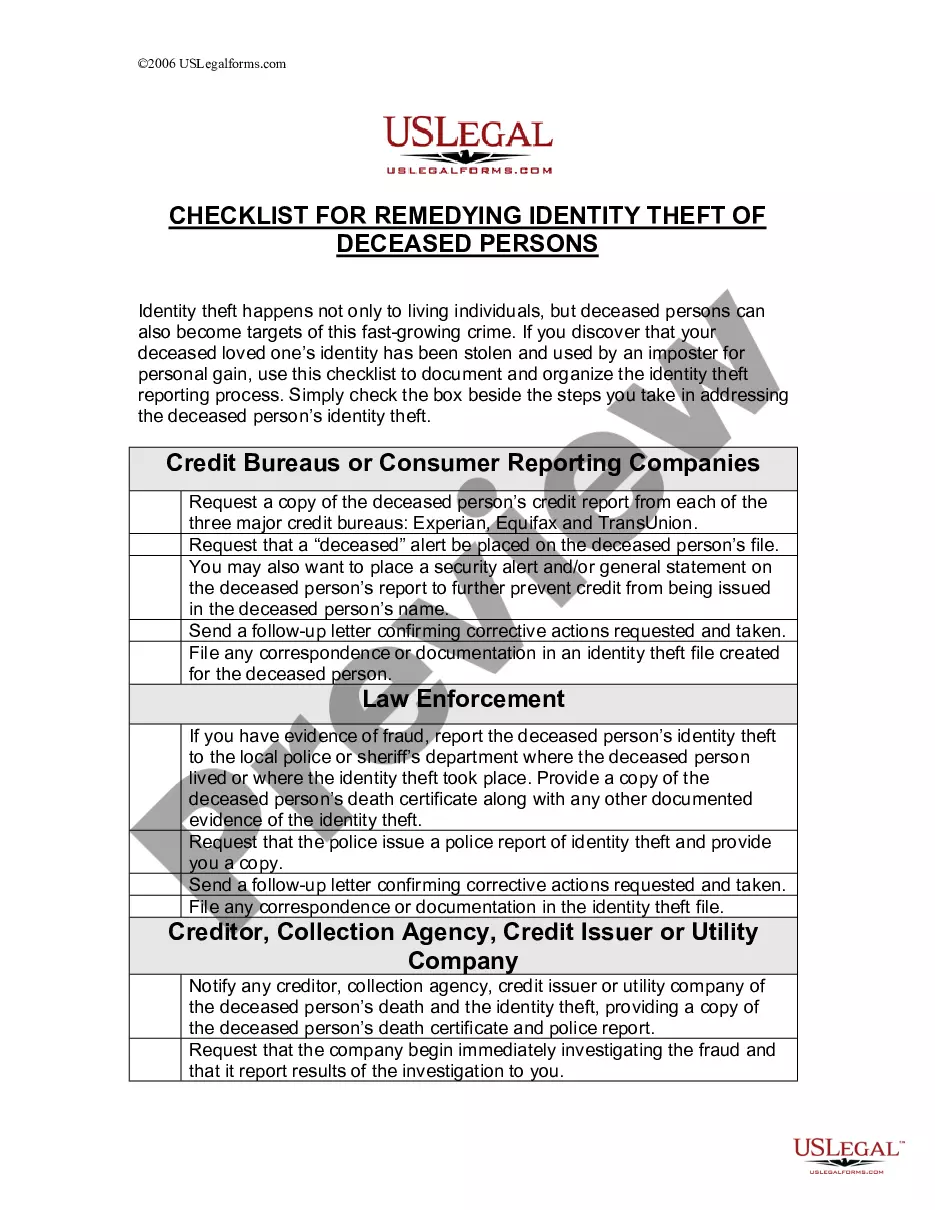
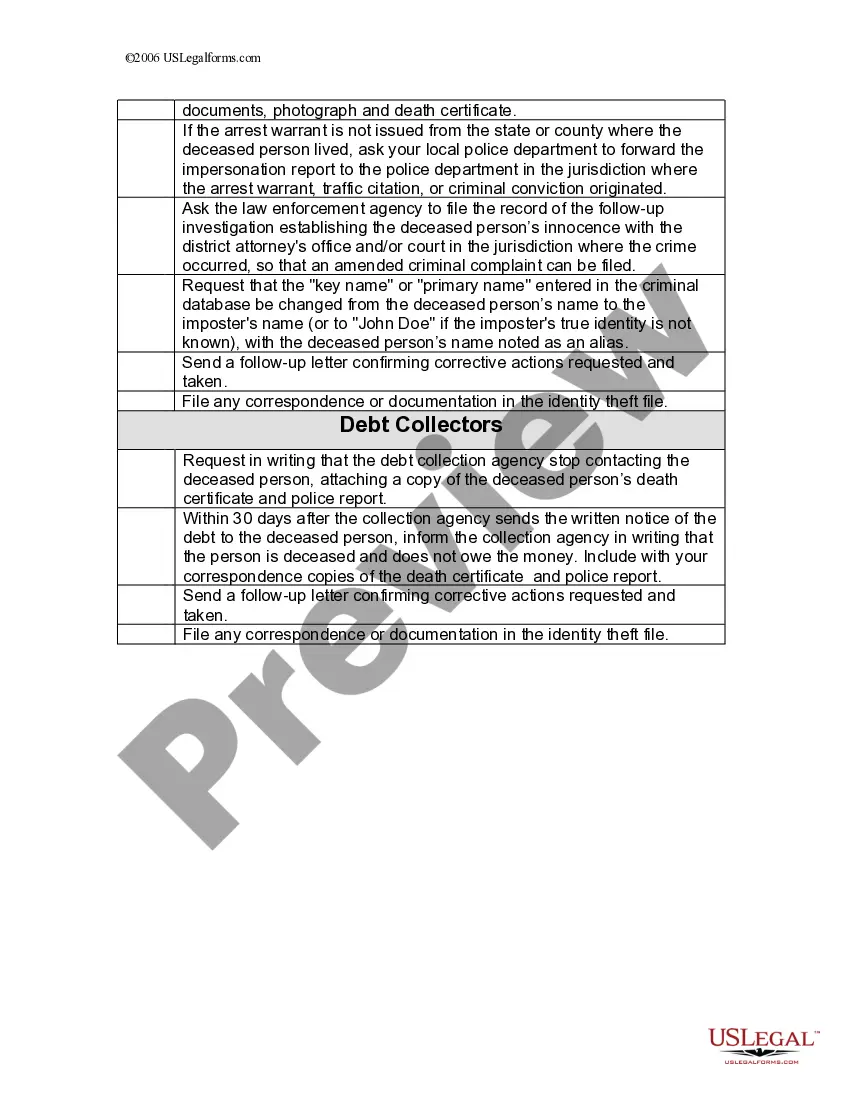
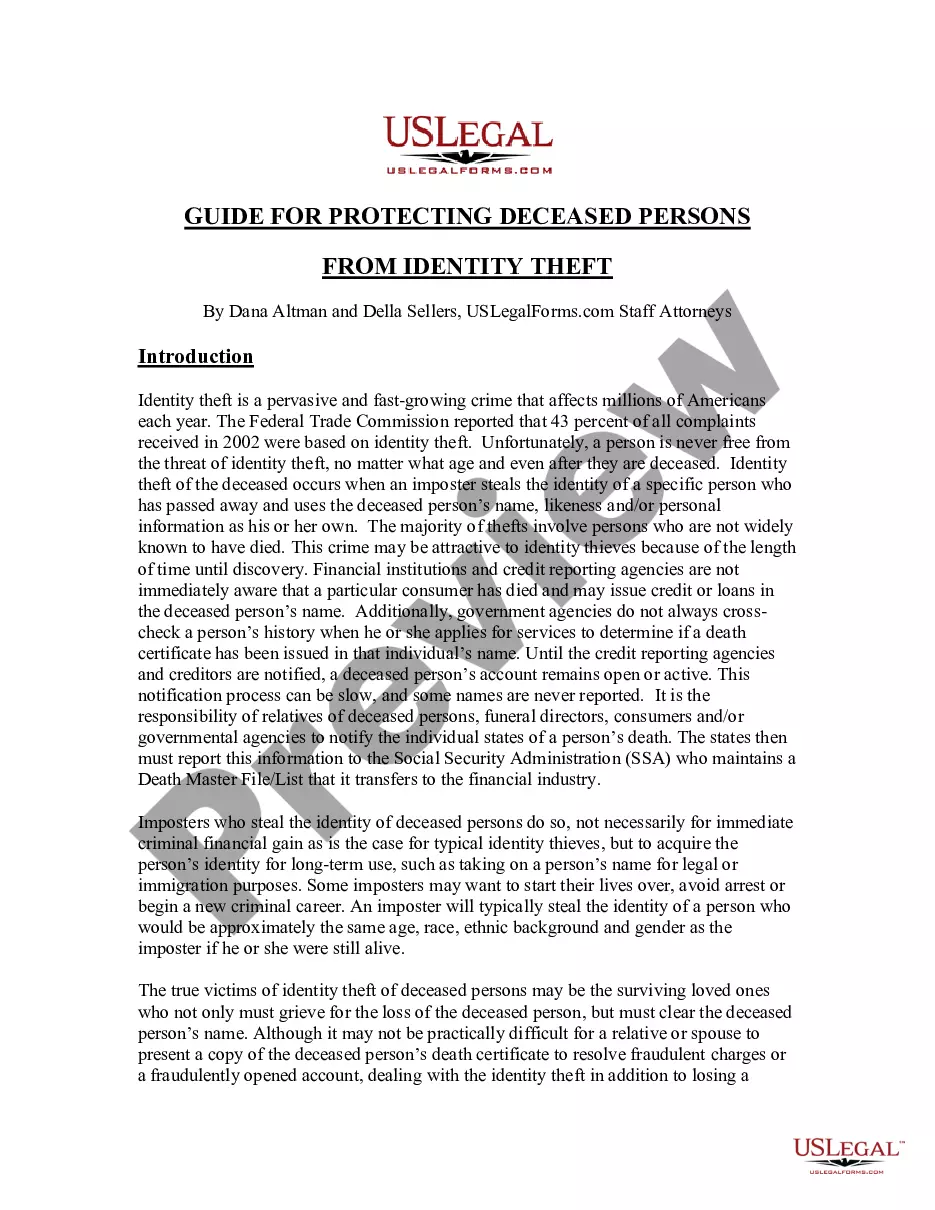
The Checklist for Remedying Identity Theft of Deceased Persons is a useful tool designed to help families navigate the complex process of addressing identity theft incidents involving deceased individuals. Unlike regular identity theft forms, this checklist specifically caters to situations where a deceased person's identity has been compromised, enabling users to document vital steps and actions required to report the theft effectively.
Form components explained
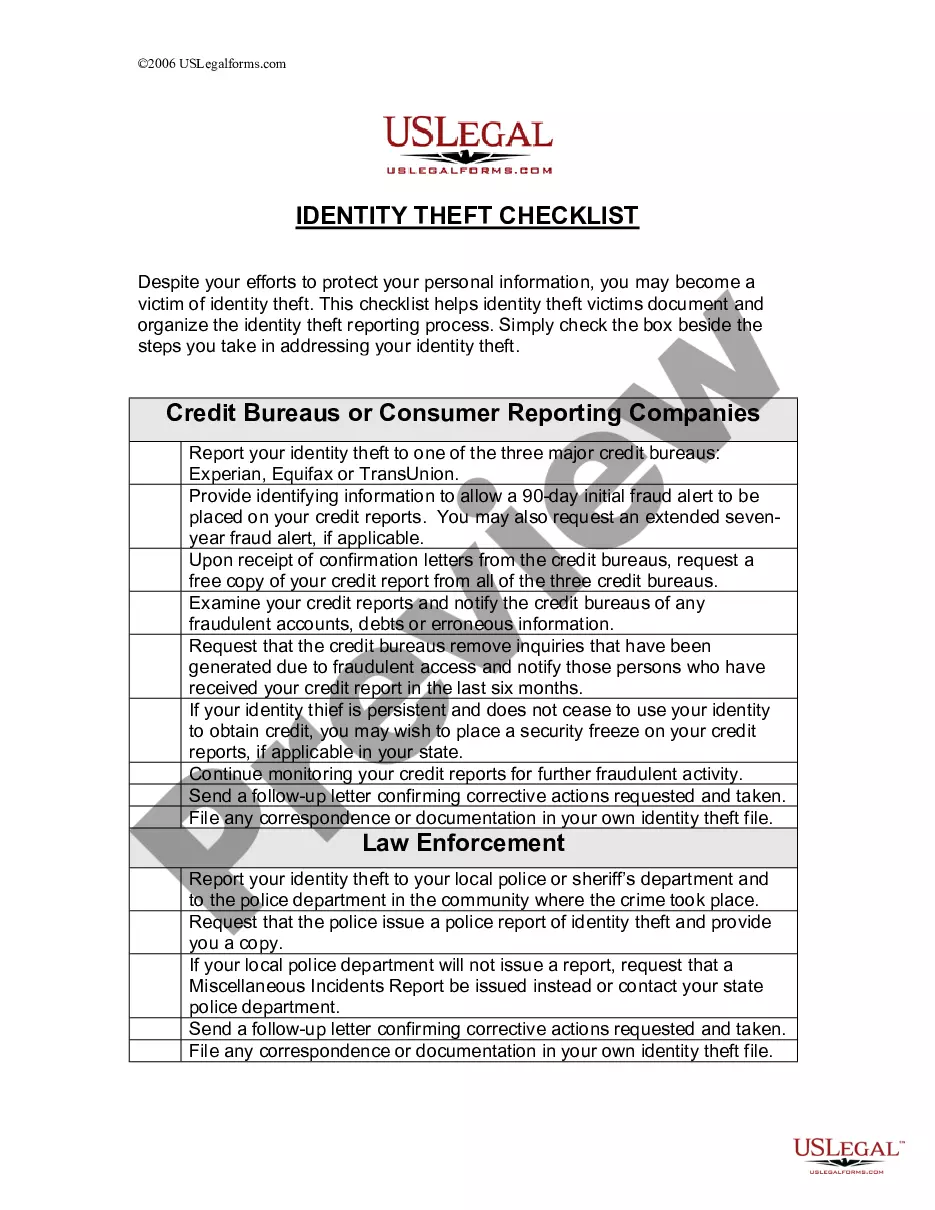
- Steps to request credit reports from major bureaus and place alerts on files.
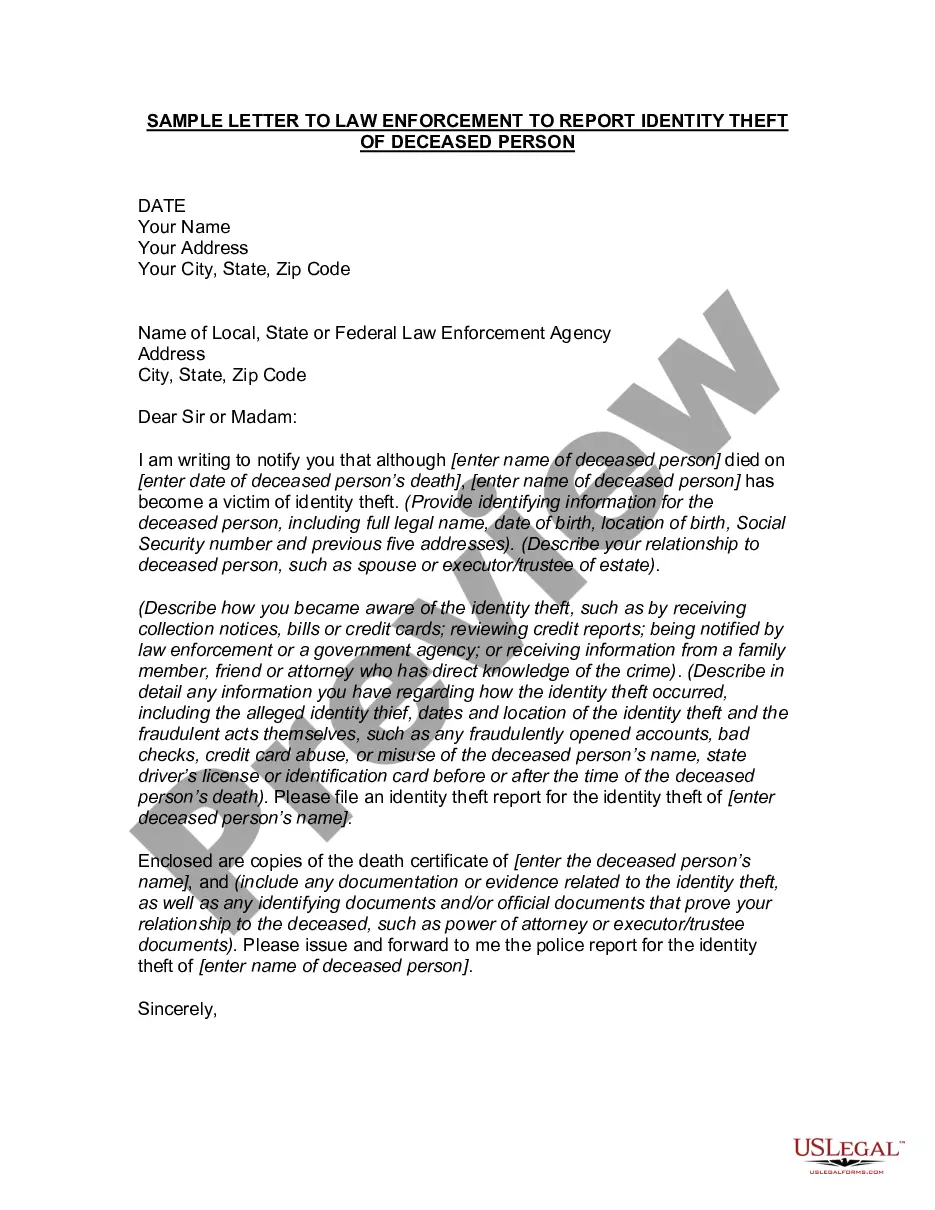
- Guidelines for reporting identity theft to law enforcement and obtaining police reports.
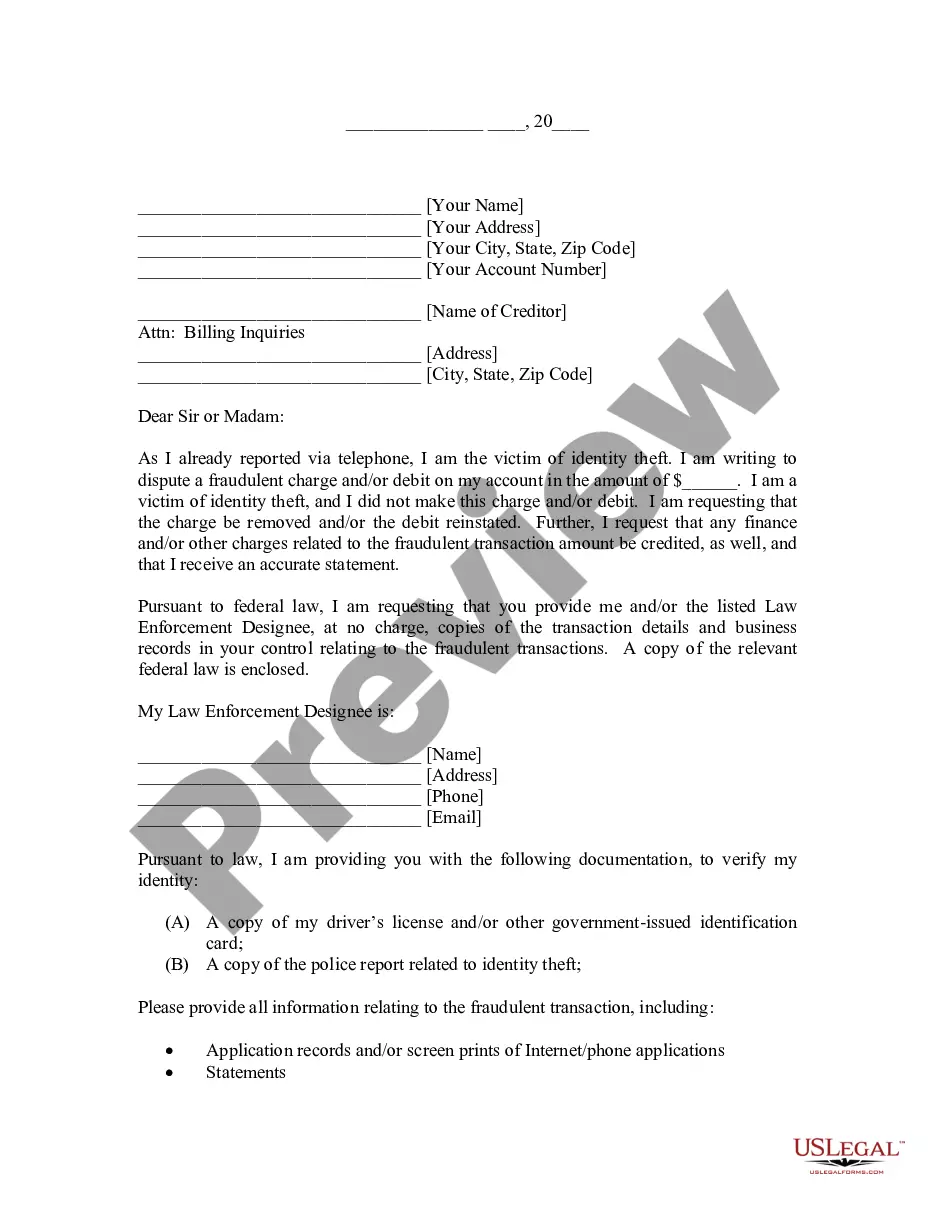
- Instructions on notifying creditors and utility companies, including required documentation.
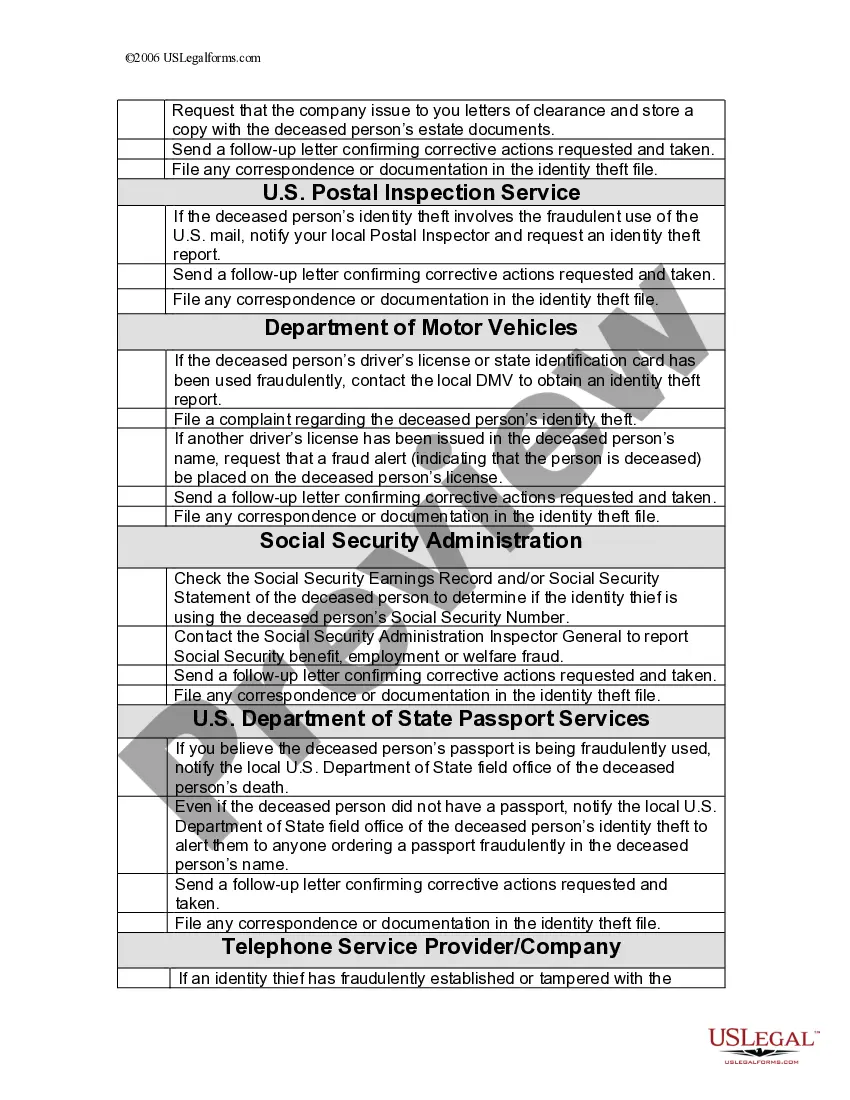
- Details on involving the U.S. Postal Inspection Service for mail-related fraud.
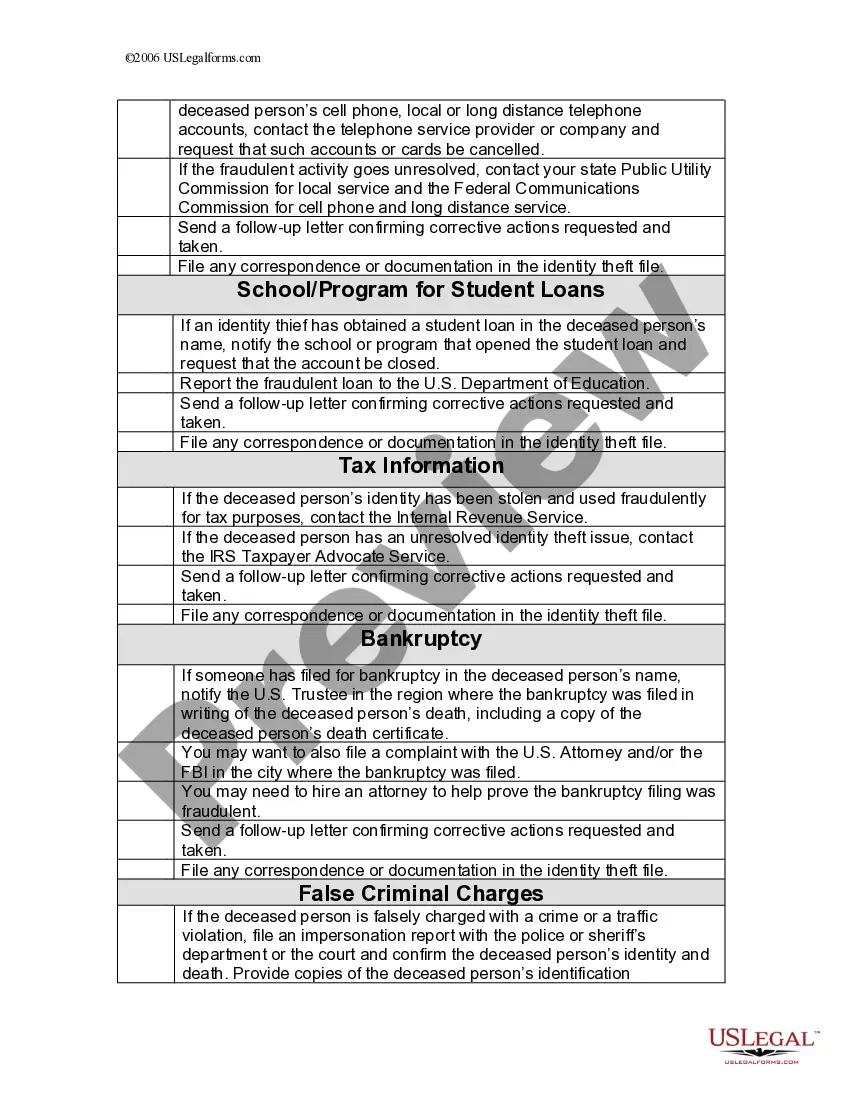
- How to check for fraudulent use of Social Security numbers and handle related issues with the Social Security Administration.
- Steps to cancel fraudulent accounts with telephone service providers and report to financial institutions.
Situations where this form applies
This form should be used when a family member discovers that a deceased person's identity has been misused for financial gain. Common situations include receiving unexpected bills in the deceased person's name, being contacted by debt collectors, or discovering new accounts opened fraudulently. Utilizing this checklist helps to ensure all necessary steps are systematically addressed to resolve the identity theft and protect the estate of the deceased.
Who this form is for
- Family members or executors of the estate of the deceased.
- Legal representatives handling the deceased's affairs.
- Individuals monitoring for identity theft in the context of a deceased loved one.
How to complete this form
- Begin by checking off the necessary steps as you complete each action on the checklist.
- Request credit reports from Experian, Equifax, and TransUnion, and establish alerts on the deceased person's files.
- File a police report if there is evidence of identity theft, providing all required documents.
- Notify relevant creditors and utility companies about the identity theft, supplying a death certificate and police report.
- Follow up with letters to confirm actions taken and keep copies of all documentation for your records.
Does this form need to be notarized?
This form usually doesn’t need to be notarized. However, local laws or specific transactions may require it. Our online notarization service, powered by Notarize, lets you complete it remotely through a secure video session, available 24/7.
Get your form ready online
Our built-in tools help you complete, sign, share, and store your documents in one place.
Make edits, fill in missing information, and update formatting in US Legal Forms—just like you would in MS Word.
Download a copy, print it, send it by email, or mail it via USPS—whatever works best for your next step.
Sign and collect signatures with our SignNow integration. Send to multiple recipients, set reminders, and more. Go Premium to unlock E-Sign.
If this form requires notarization, complete it online through a secure video call—no need to meet a notary in person or wait for an appointment.
We protect your documents and personal data by following strict security and privacy standards.

Make edits, fill in missing information, and update formatting in US Legal Forms—just like you would in MS Word.

Download a copy, print it, send it by email, or mail it via USPS—whatever works best for your next step.

Sign and collect signatures with our SignNow integration. Send to multiple recipients, set reminders, and more. Go Premium to unlock E-Sign.

If this form requires notarization, complete it online through a secure video call—no need to meet a notary in person or wait for an appointment.

We protect your documents and personal data by following strict security and privacy standards.
Common mistakes
- Not keeping detailed records of all communications and documents submitted.
- Failing to file police reports, which can hinder fraud investigations.
- Overlooking specific agencies needing notification, like the Social Security Administration.
Benefits of completing this form online
- The checklist is easily downloadable and can be customized for personal needs.
- It provides structured guidance that simplifies the identity theft resolution process.
- The form can be accessed at any time, ensuring you can act promptly when necessary.
Main things to remember
- This form helps organize the steps needed to combat identity theft of a deceased individual.
- It is crucial to act quickly and methodically in reporting and managing reported incidents.
- Maintaining records is essential for resolving issues effectively and ensuring closure for the estate.
Looking for another form?


Form popularity
FAQ
When a Social Security beneficiary dies, the death is usually reported to SSA by a family member, a funeral home, or a government agency. Whoever does the reporting, according to SSA, the death should be reported as soon as possible.
An identity thief's use of a deceased person's Social Security number may create problems for family members.Sometimes delays in reporting can provide time for identity thieves to collect enough personal information to open credit accounts or take other fraudulent actions using the deceased's information.
Scammers are using the recently deceased to open new credit cards. Death and taxes go together we know that.Evidence is mounting that identity thieves are using personal information from the recently deceased to open new credit cards under the dead person's name. It's ghoulish, all right, but it's also stoppable.
The Social Security Administration (www.ssa.gov) does not reappoint a Social Security number to someone else after the original owner's death. The SSA estimates that there are enough new number combinations to last well into the next SEVERAL generations.
An identity thief's use of a deceased person's Social Security number may create problems for family members.Sometimes delays in reporting can provide time for identity thieves to collect enough personal information to open credit accounts or take other fraudulent actions using the deceased's information.
For joint accounts, remove the deceased's name. Report the death to Social Security by calling 800-772-1213. Contact the department of motor vehicles to cancel the deceased's driver's license, to prevent duplicates from being issued to fraudsters.
Identity theft can victimize the dead. Identity thieves can strike even after death.The file contains the following information: Social Security number, name, date of birth, date of death, state of last known residence, and zip code of last lump sum payment.
Identity Theft of a Deceased PersonIdentity thieves can get personal information about deceased individuals by reading obituaries, stealing death certificates, or searching genealogy websites that sometimes provide death records from the Social Security Death Index.
Limit the amount of personal information you share about the deceased in newspaper and online obituaries. Notify the Social Security Administration of the death. Send the IRS a copy of the death certificate so that the agency can note that the person is deceased.