Declaration of Website Owner of Copyrights, Trademarks and Patents
What this document covers
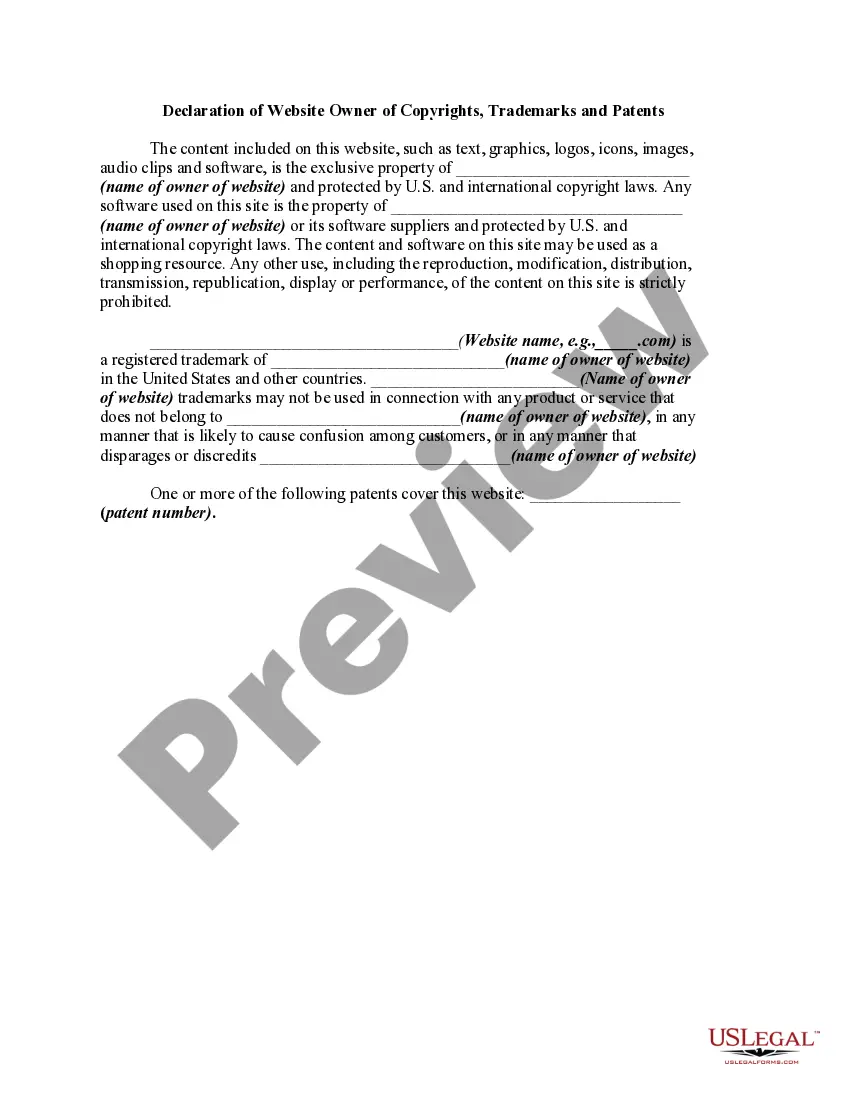
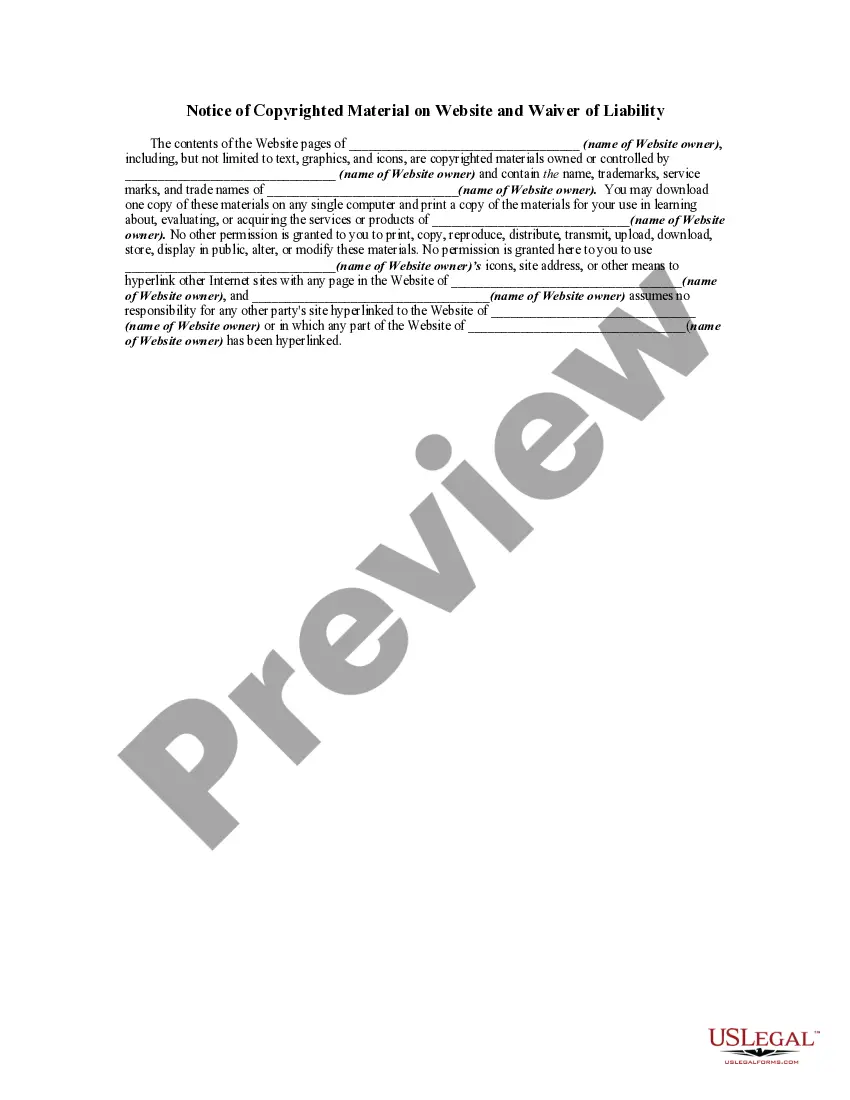
The Declaration of Website Owner of Copyrights, Trademarks and Patents is a legal document that establishes the ownership of intellectual property associated with a website. This form provides website owners the ability to formally declare their rights to copyrights, trademarks, and patents, ensuring that users are informed about the ownership and usage limitations of the content found on the site. It is important for those who want to protect their online intellectual property from unauthorized use or distribution.
Key parts of this document
- Identification of the owner of the website and their contact details.
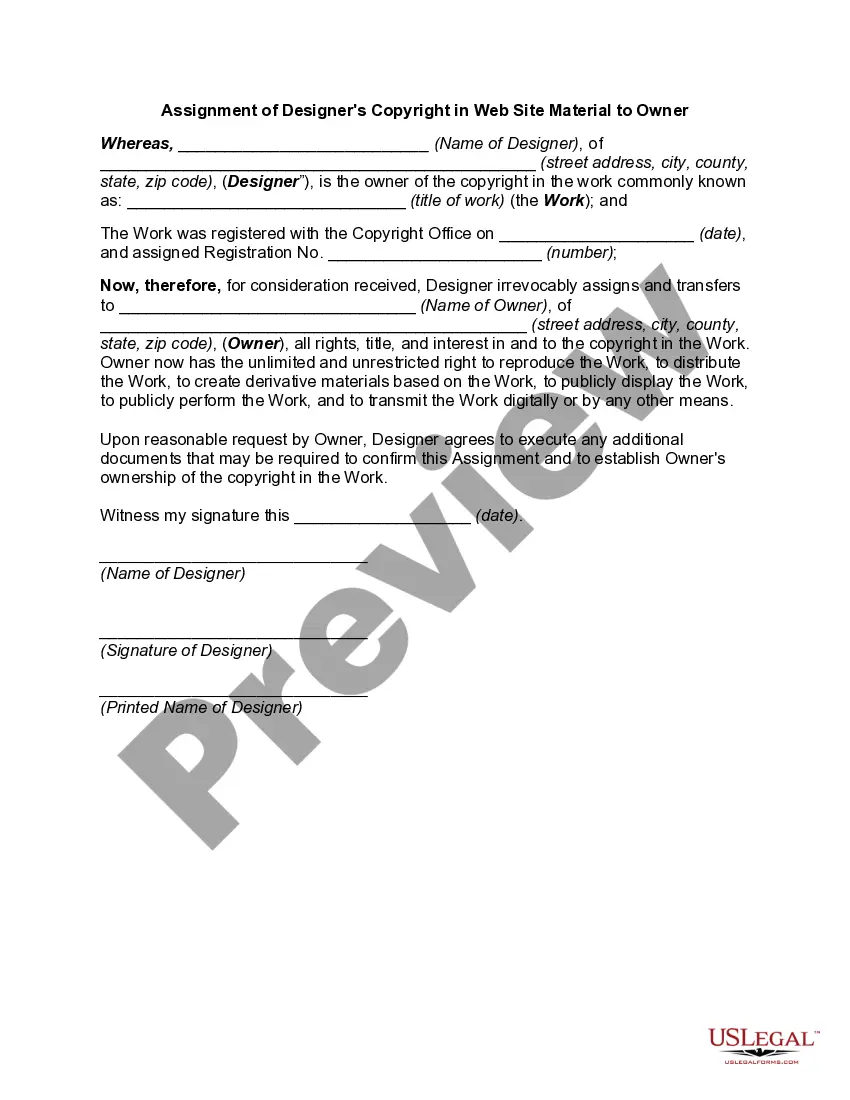
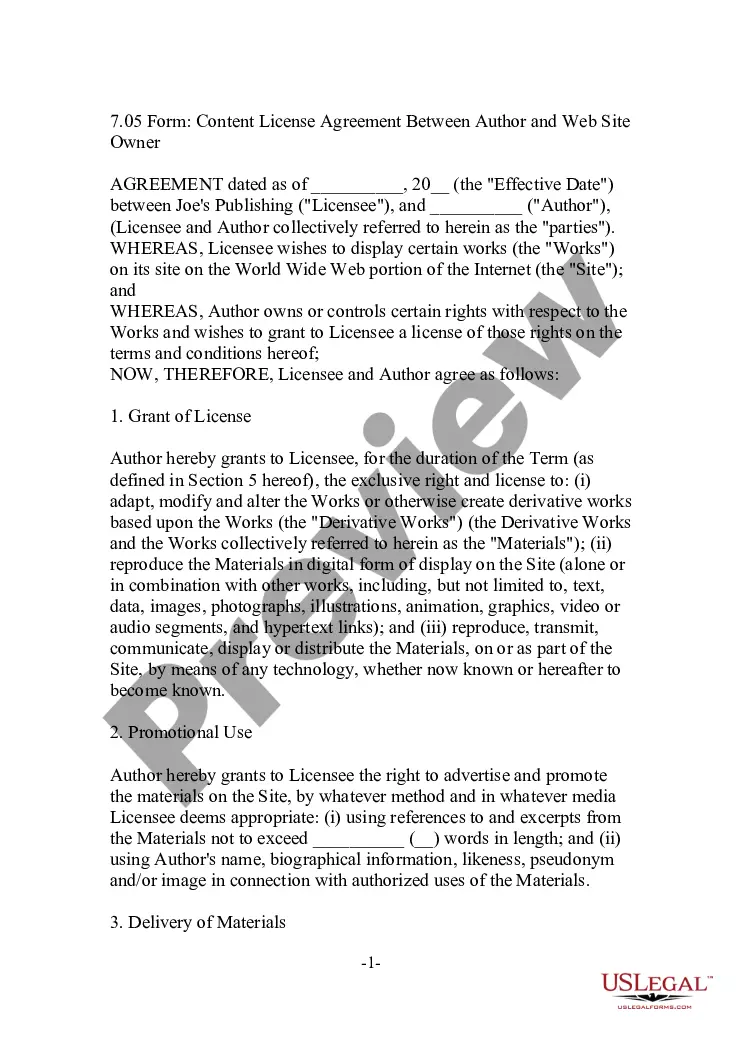
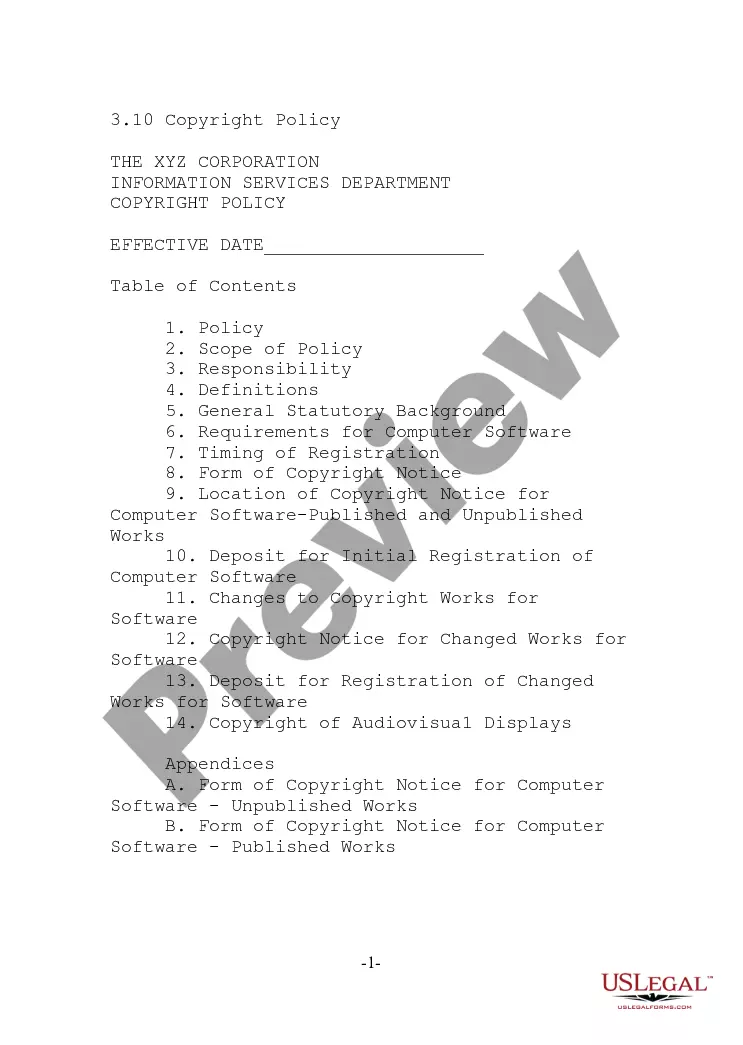
- A statement of ownership regarding copyrights on texts, graphics, logos, and software.
- Details about trademarks associated with the website and their proper usage.
- Declaration of any patents that cover the content or features of the website.
- Terms that prohibit unauthorized reproduction or use of the website content.
When to use this document
This form should be used by website owners who wish to formally declare their intellectual property rights. It is particularly useful when creating a new website, updating existing website content, or when encountering issues related to copyright infringement or trademark disputes. By using this form, owners can clearly communicate their rights to users and potential infringers.
Intended users of this form
- Website owners looking to protect their intellectual property.
- Businesses that operate online and want to assert their copyrights and trademarks.
- Content creators who publish original materials on their websites.
- Individuals planning to register their website under a business entity.
Steps to complete this form
- Identify and enter the name of the owner of the website.
- List all copyrighted materials the website contains, including text, graphics, and software.
- Provide the trademark name and ensure it is registered in the appropriate jurisdiction.
- Document any relevant patent numbers associated with the website content or features.
- Review the terms and conditions related to the use of your website content to ensure clarity.
Does this document require notarization?
This form does not typically require notarization unless specified by local law. It is advisable to verify your specific stateâs requirements to ensure compliance.
Get your form ready online
Our built-in tools help you complete, sign, share, and store your documents in one place.
Make edits, fill in missing information, and update formatting in US Legal Forms—just like you would in MS Word.
Download a copy, print it, send it by email, or mail it via USPS—whatever works best for your next step.
Sign and collect signatures with our SignNow integration. Send to multiple recipients, set reminders, and more. Go Premium to unlock E-Sign.
If this form requires notarization, complete it online through a secure video call—no need to meet a notary in person or wait for an appointment.
We protect your documents and personal data by following strict security and privacy standards.

Make edits, fill in missing information, and update formatting in US Legal Forms—just like you would in MS Word.

Download a copy, print it, send it by email, or mail it via USPS—whatever works best for your next step.

Sign and collect signatures with our SignNow integration. Send to multiple recipients, set reminders, and more. Go Premium to unlock E-Sign.

If this form requires notarization, complete it online through a secure video call—no need to meet a notary in person or wait for an appointment.

We protect your documents and personal data by following strict security and privacy standards.
Common mistakes to avoid
- Failing to clearly identify all copyrighted materials.
- Not registering trademarks before listing them in the declaration.
- Leaving out critical patent numbers or details.
- Using ambiguous language that may complicate ownership claims.
Benefits of using this form online
- Convenience of quick download and completion from any location.
- Editability allows for easy updates to ownership details as needed.
- Reliability through professionally drafted content designed by licensed attorneys.
Legal use & context
- This form provides legal documentation of ownership and helps establish rights in case of disputes.
- It is enforceable within applicable jurisdictions, aligning with both U.S. and international copyright laws.
- Proper use of this declaration can aid in defending against unauthorized use of your intellectual property.
Quick recap
- The form protects your rights as a website owner regarding your intellectual property.
- Use this declaration to clearly state ownership and usage rights for website content.
- Ensure that all relevant copyright, trademark, and patent information is accurately included.
Looking for another form?









Form popularity
FAQ
Trademark applications and registrations are public records. Individuals and private companies may use this public information to create third-party access to these records.
The process of trademarking your domain name is relatively simple. You will first conduct a trademark search to ensure that there is no other company trademark that conflicts with your own. A trademark search can be conducted on the U.S. Patent and Trademark Office (USPTO) website.
Interestingly, you do not need a federally registered trademark to prevent a competing business from using your business name in its website address.Federally registering your trademark makes it easier for you to enforce your rights as a trademark owner because you will automatically be presumed to own the mark.
Although you cannot register a domain name that someone else has already registered, almost all registrars will accept domain names for registration that are similar to existing names.
Web Pages Cannot Typically Function as Trademarks Trademarks are visual in nature, but not everything that may be seen or presented to the eye can be a trademark. A trademark is a word or words, a symbol, a device, or a combination of these things used to identify the source of a product or service.
If you own a trademark, you own the right to its domain.In addition, if the domain name was registered but is unused, contact the original owner of the domain to legally transfer ownership.
Before you apply, you should search the USPTO's trademark database (Trademark Electronic Search System, or TESS) to see if any trademark has already been registered or applied for that is: Similar to your trademark. Used on related products or for related services, and.
A trademark is any word, name, symbol, device, or combination thereof adopted and used or intended for use in commerce to identify and distinguish goods from those goods manufactured or sold by others. Examples: "Big Mac" for McDonald's hamburgers; "Air Jordan" for Nike shoes; and "Mustang" for Ford automobiles.
Before you apply, you should search the USPTO's trademark database (Trademark Electronic Search System, or TESS) to see if any trademark has already been registered or applied for that is: Similar to your trademark. Used on related products or for related services, and.