Mutual Release of Claims
Understanding this form
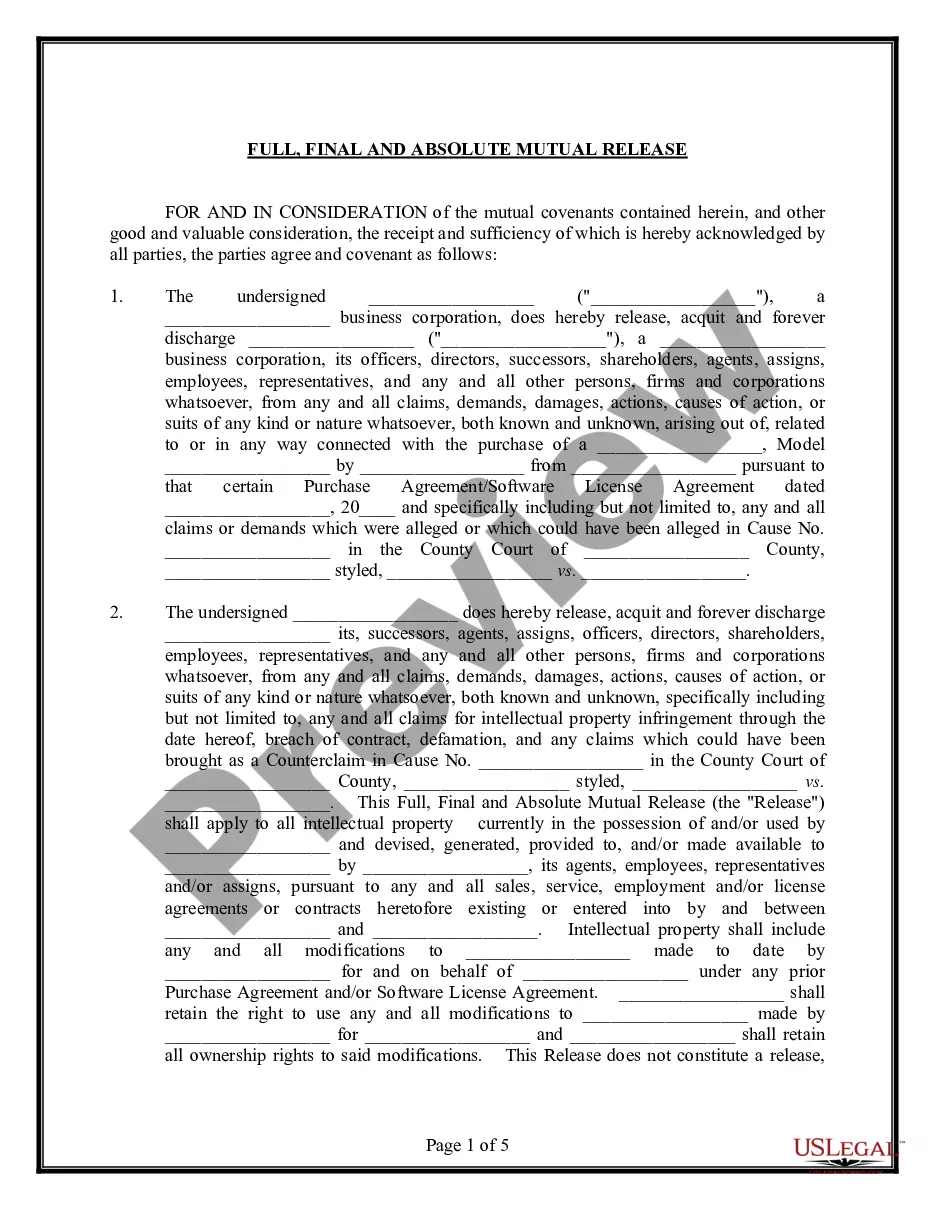
The Mutual Release of Claims is a legal document that facilitates the final resolution between two parties by releasing each other from any claims that may arise from specific occurrences. Unlike other agreements that may address ongoing obligations, this form ensures that both parties agree to waive any future legal claims related to the specified matter. It is designed to provide clarity and finality to relationships that have reached a dispute resolution stage, allowing both sides to move forward without lingering liability concerns.
Main sections of this form
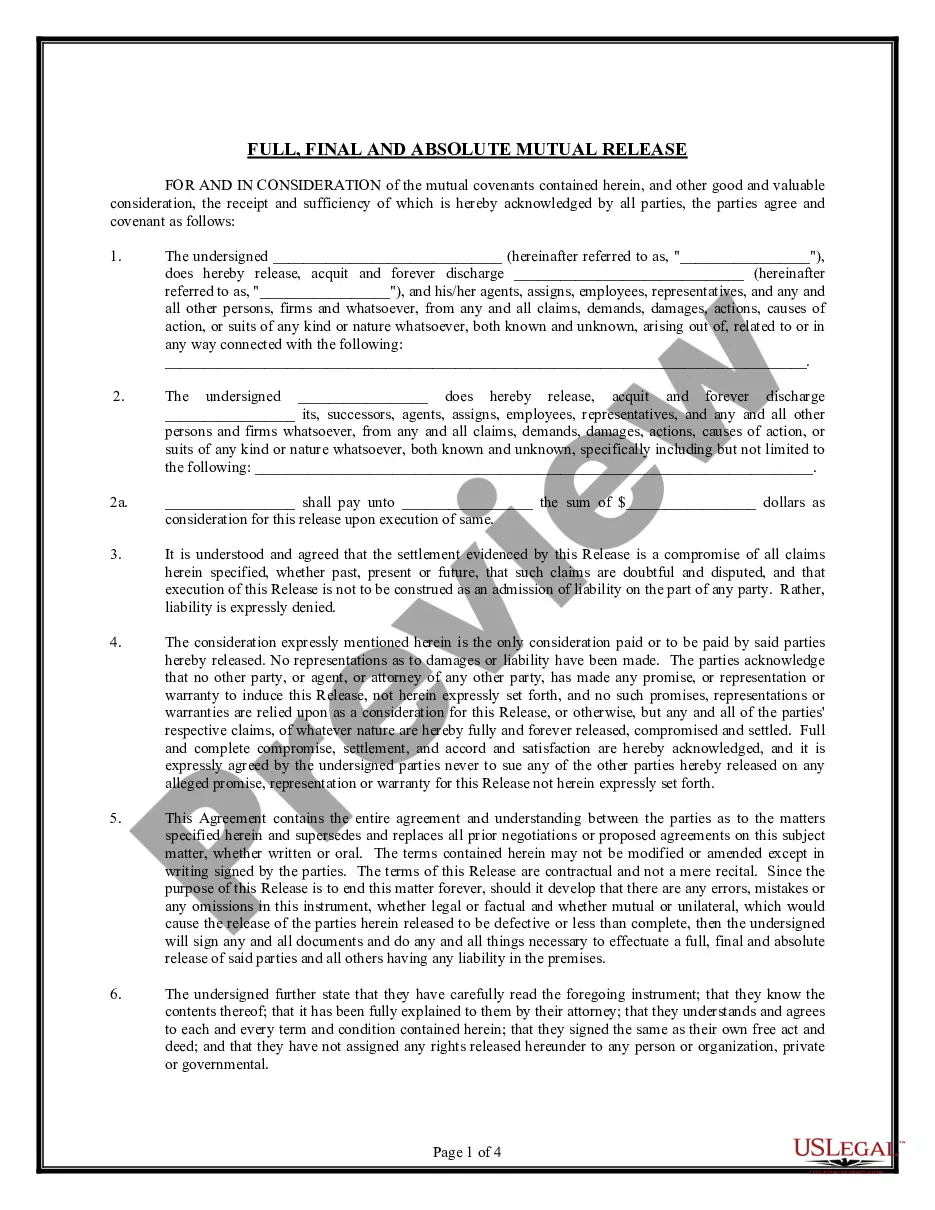
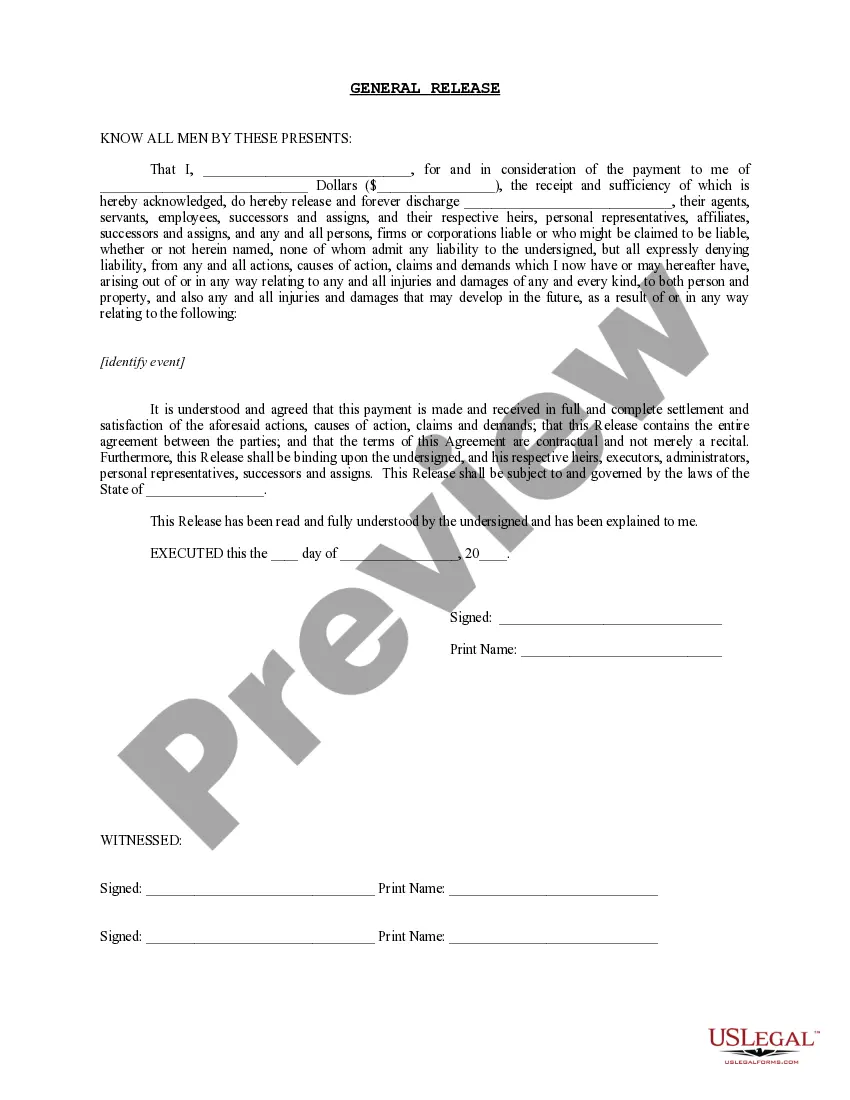
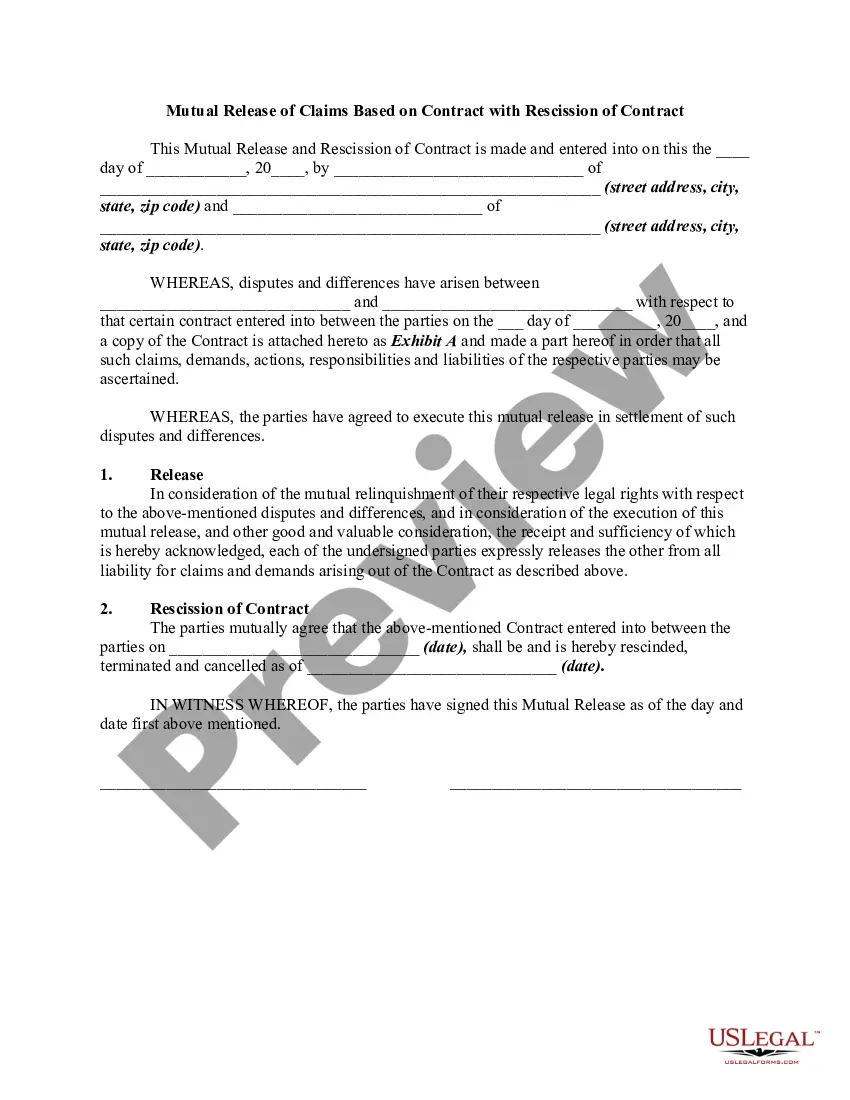
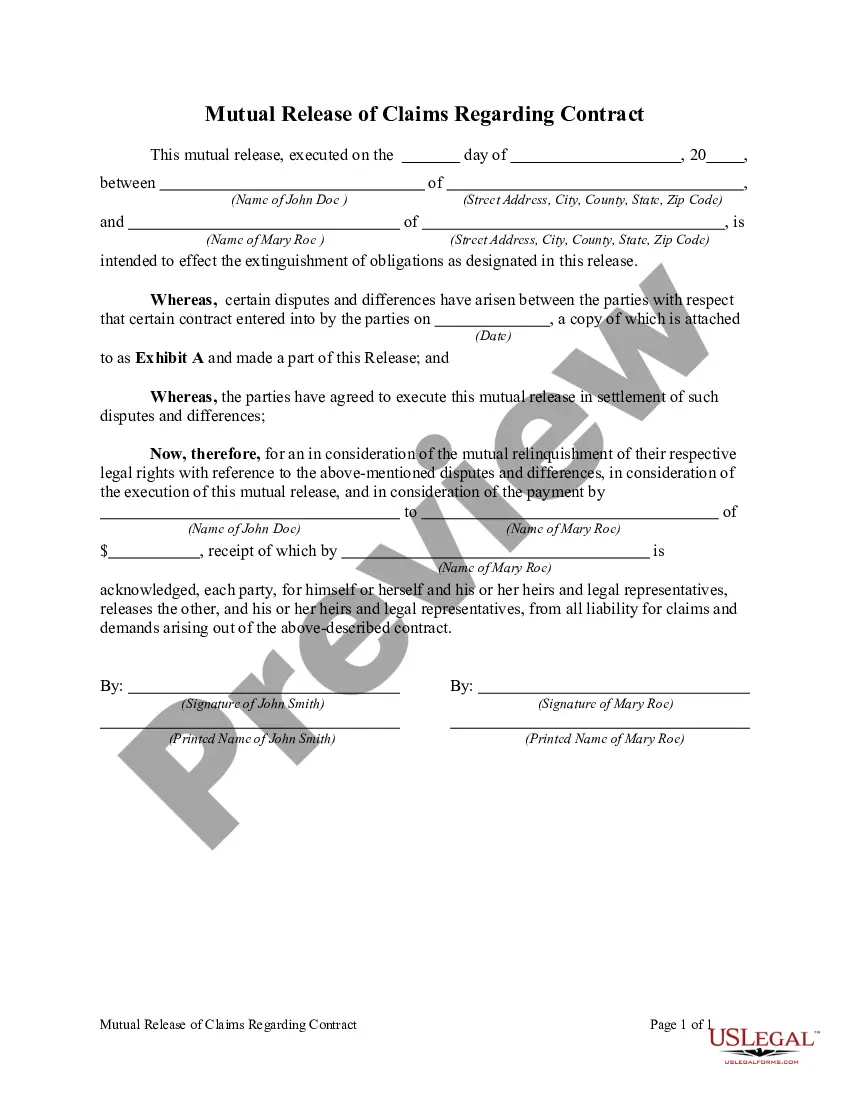
- Release of claims: Each party releases the other from all known and unknown claims related to the specified occurrence.
- Consideration: The form identifies the monetary amount or other benefits exchanged as part of the agreement.
- Dispute acknowledgment: It states that the claims are in dispute, and execution does not imply admission of liability.
- Entire agreement clause: The document serves as the complete agreement between the parties, superseding prior negotiations.
- Governing law: The form specifies the jurisdiction whose laws will govern the agreement.
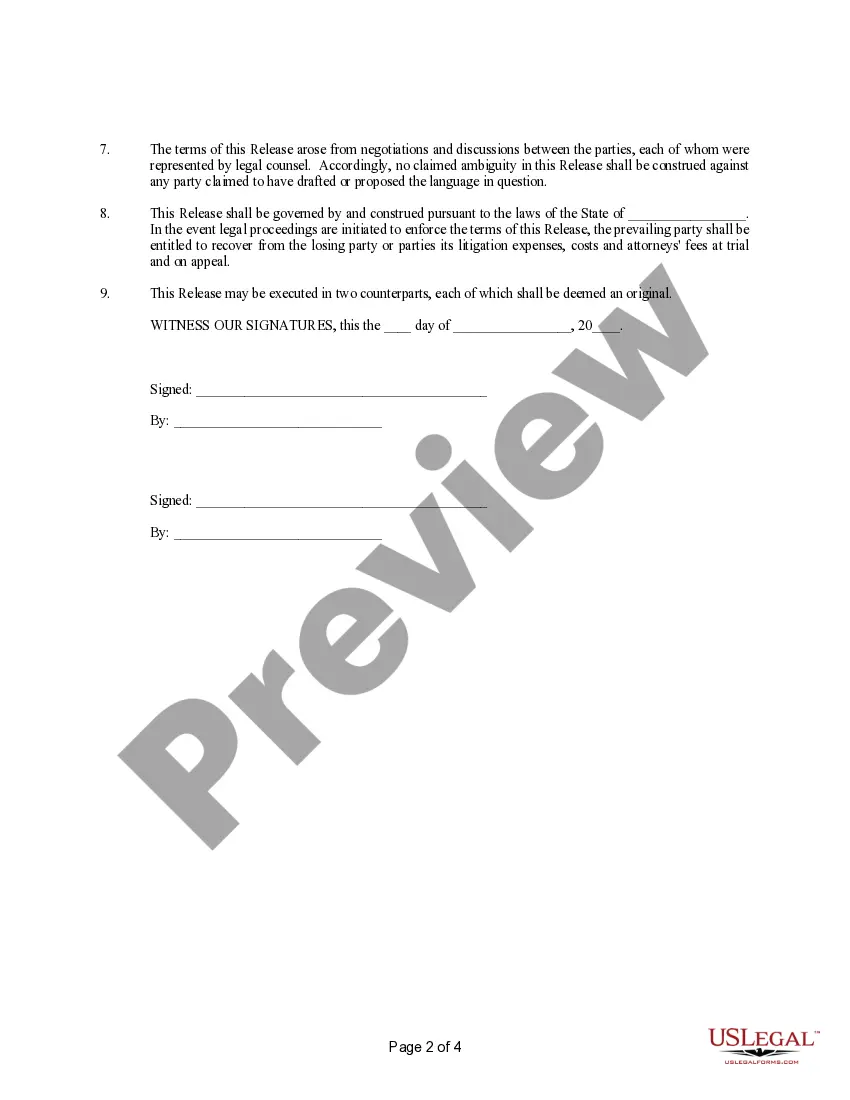
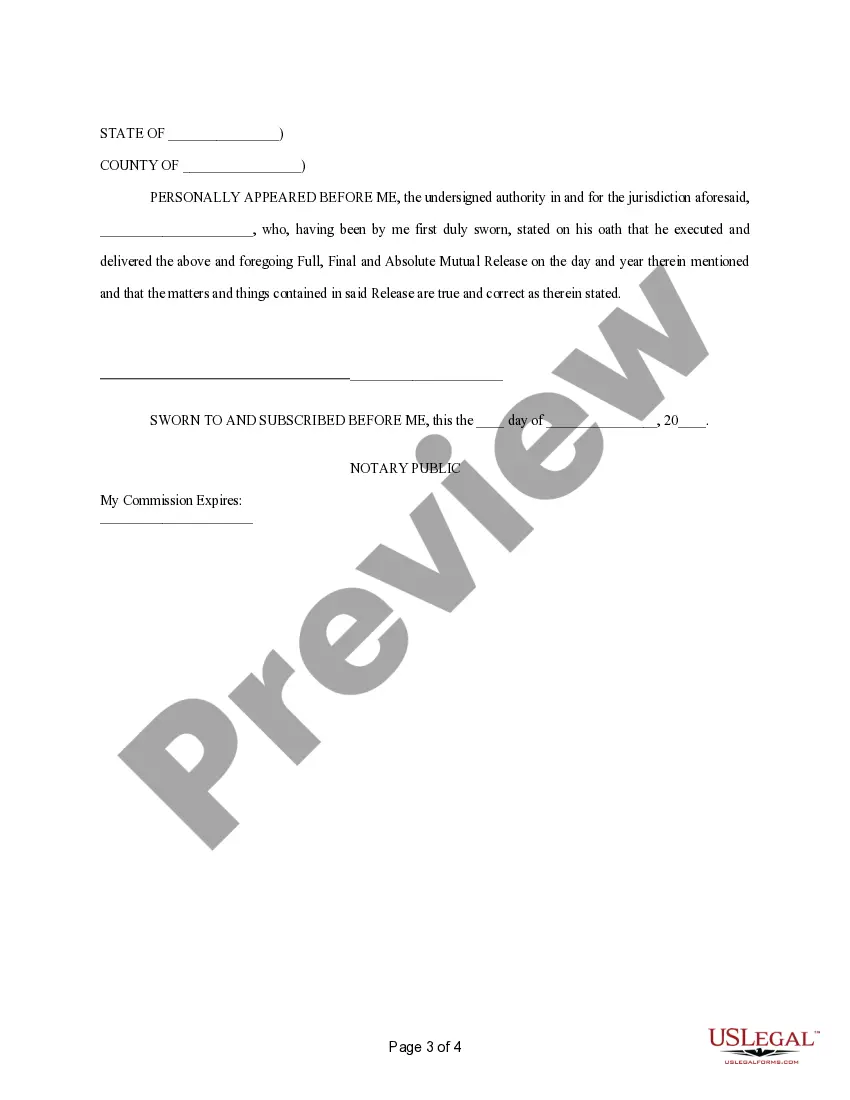
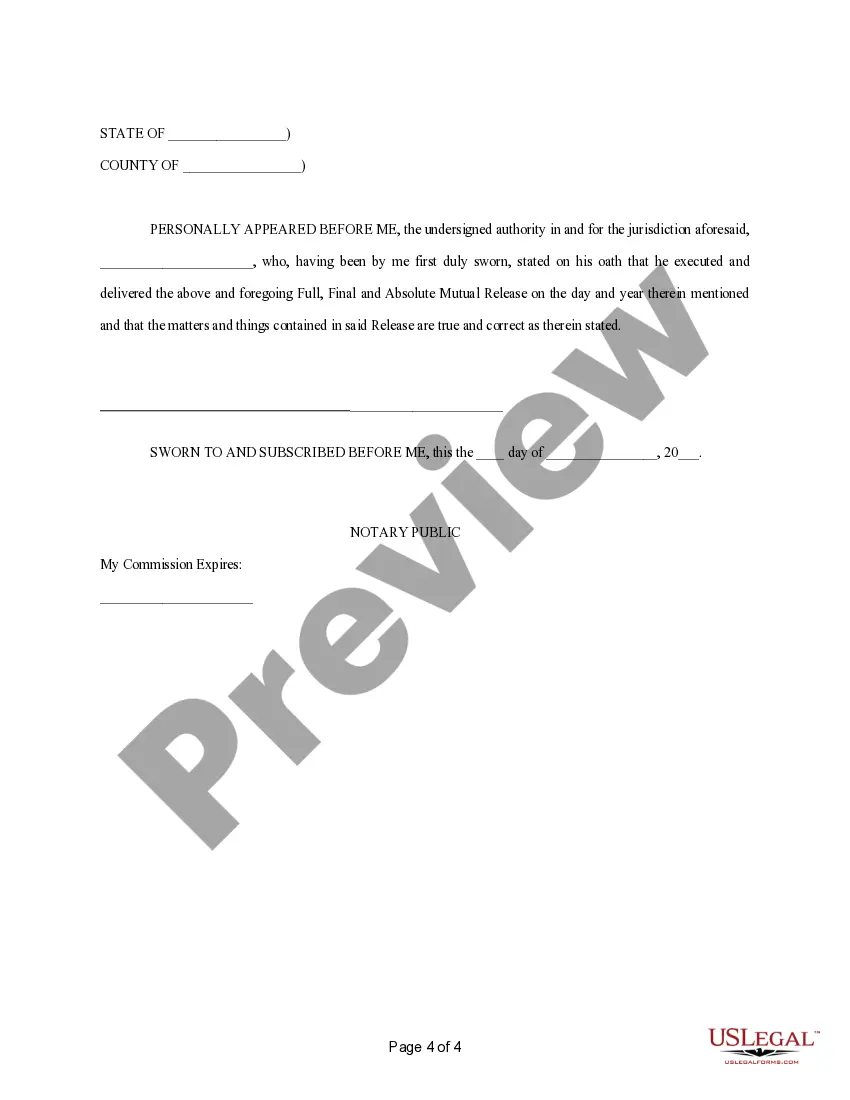
- Execution requirements: The document includes spaces for signatures and notarization, confirming the authenticity of the agreement.
When to use this form
This form is useful in various scenarios, including but not limited to:
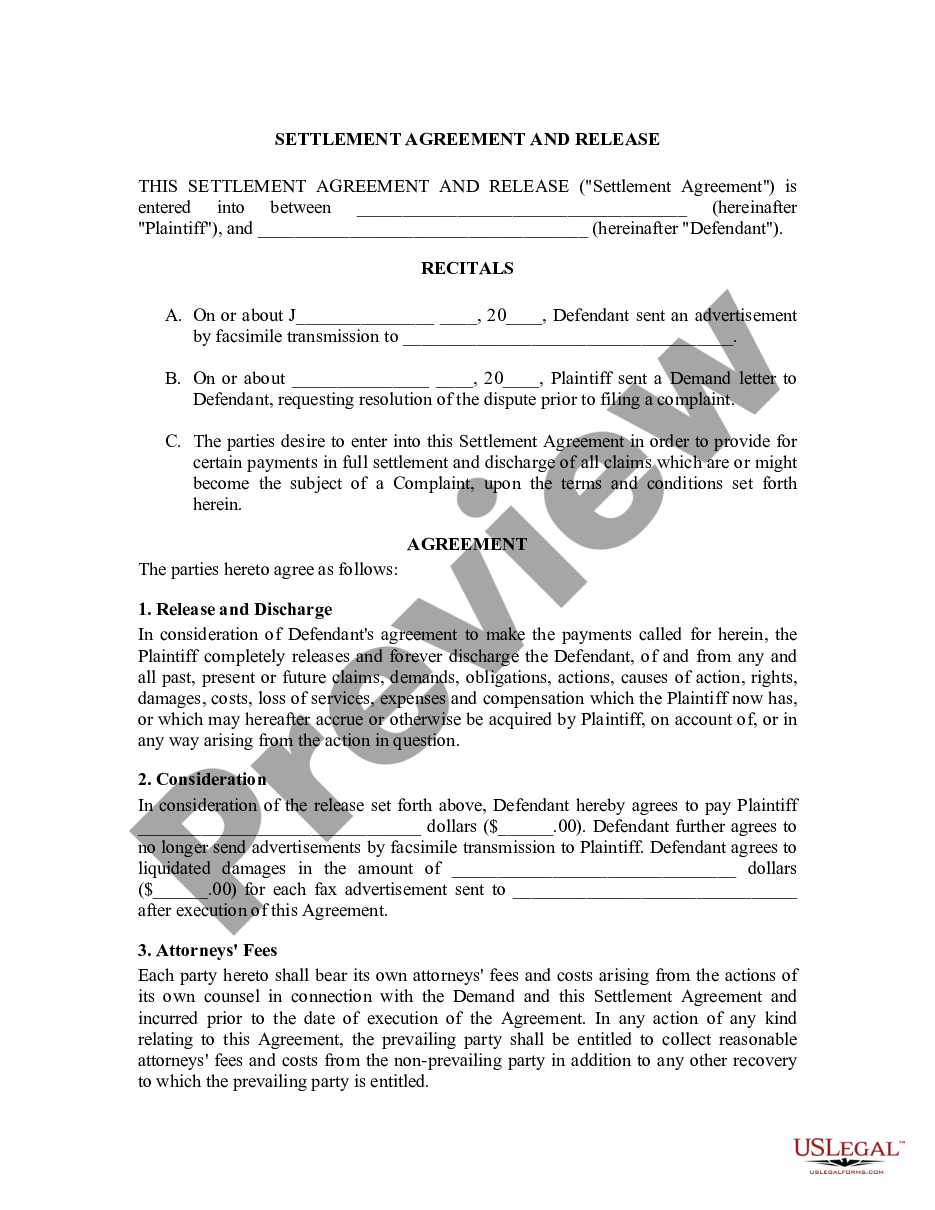
- Settling disputes after an accident or incident, preventing future claims.
- Finalizing negotiations between parties involved in a commercial disagreement.
- Resolving issues between business partners who wish to dissolve their relationship amicably.
Who this form is for
- Individuals or organizations involved in legal disputes that require resolution.
- Parties looking to settle their claims without proceeding to court.
- Business partners or associates who wish to officially sever their professional ties.
How to complete this form
- Identify the parties involved and provide their full names in the designated areas.
- Enter the specific occurrence or issue that led to the mutual release of claims.
- Determine the consideration amount being exchanged and fill in the appropriate figure.
- Ensure both parties sign the document in the presence of a notary public, if necessary.
- Retain copies of the signed form for each party's records.
Notarization requirements for this form
This form needs to be notarized to ensure legal validity. US Legal Forms provides secure online notarization powered by Notarize, allowing you to complete the process through a verified video call, available anytime.
Get your form ready online
Our built-in tools help you complete, sign, share, and store your documents in one place.
Make edits, fill in missing information, and update formatting in US Legal Forms—just like you would in MS Word.
Download a copy, print it, send it by email, or mail it via USPS—whatever works best for your next step.
Sign and collect signatures with our SignNow integration. Send to multiple recipients, set reminders, and more. Go Premium to unlock E-Sign.
If this form requires notarization, complete it online through a secure video call—no need to meet a notary in person or wait for an appointment.
We protect your documents and personal data by following strict security and privacy standards.

Make edits, fill in missing information, and update formatting in US Legal Forms—just like you would in MS Word.

Download a copy, print it, send it by email, or mail it via USPS—whatever works best for your next step.

Sign and collect signatures with our SignNow integration. Send to multiple recipients, set reminders, and more. Go Premium to unlock E-Sign.

If this form requires notarization, complete it online through a secure video call—no need to meet a notary in person or wait for an appointment.

We protect your documents and personal data by following strict security and privacy standards.
Mistakes to watch out for
- Failing to fully identify the claims being released, leading to ambiguity.
- Not including a signature or not having the form notarized when required by state law.
- Assuming that verbal agreements are sufficient without proper documentation.
Benefits of using this form online
- Convenience of downloading and completing the form at your own pace.
- Access to legal templates drafted by licensed attorneys, ensuring reliability.
- Editable format allowing customization to meet specific needs.
Legal use & context
- Mutual releases are legally binding and enforceable documents when properly executed.
- They prevent future claims related to the specified event or circumstances described in the form.
- Understanding the terms and implications of the release is essential to avoid waiving critical rights.
What to keep in mind
- The Mutual Release of Claims is essential for resolving disputes and preventing future liability.
- Accurate completion and notarization of the form are crucial for its enforceability.
- Clarity on the claims being released helps avoid future misunderstandings.
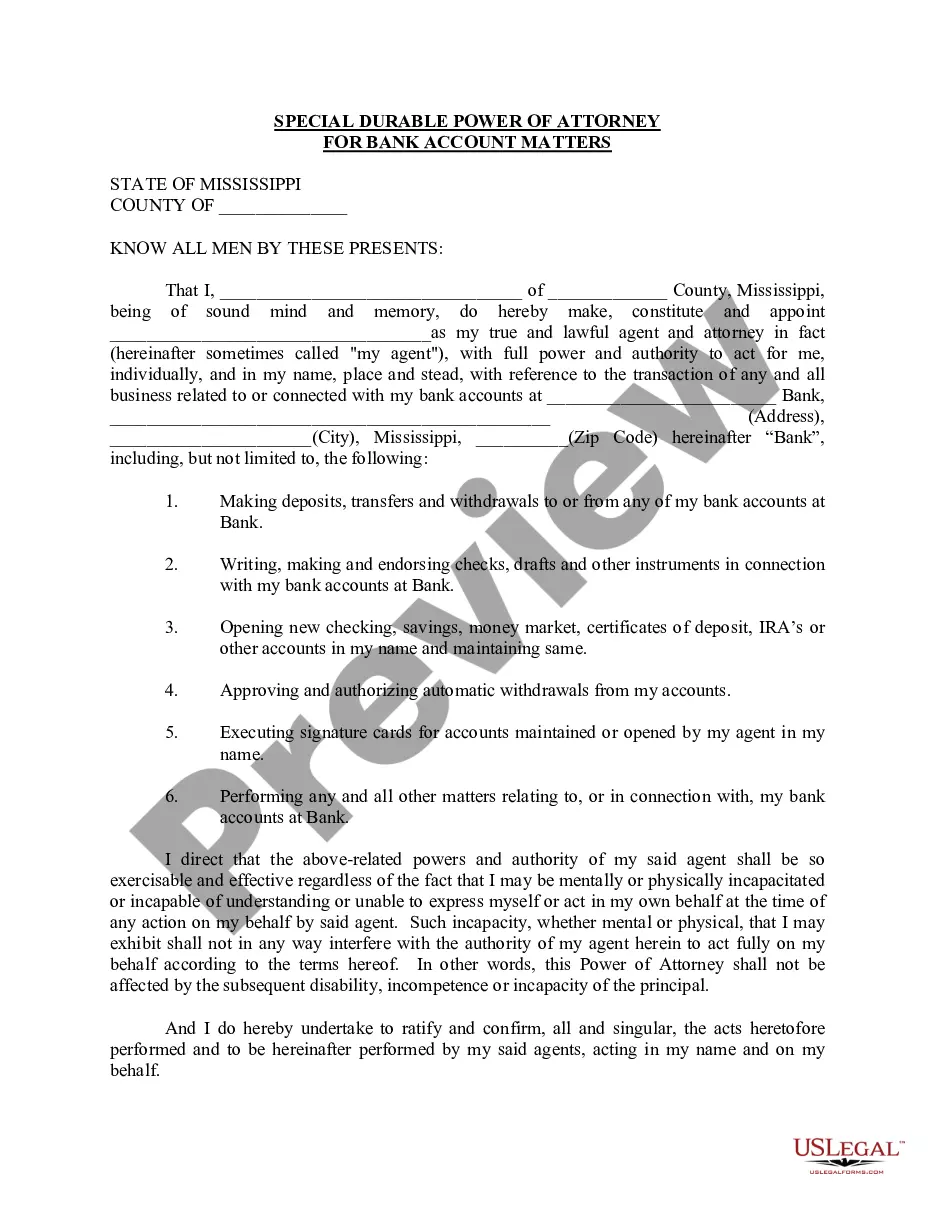
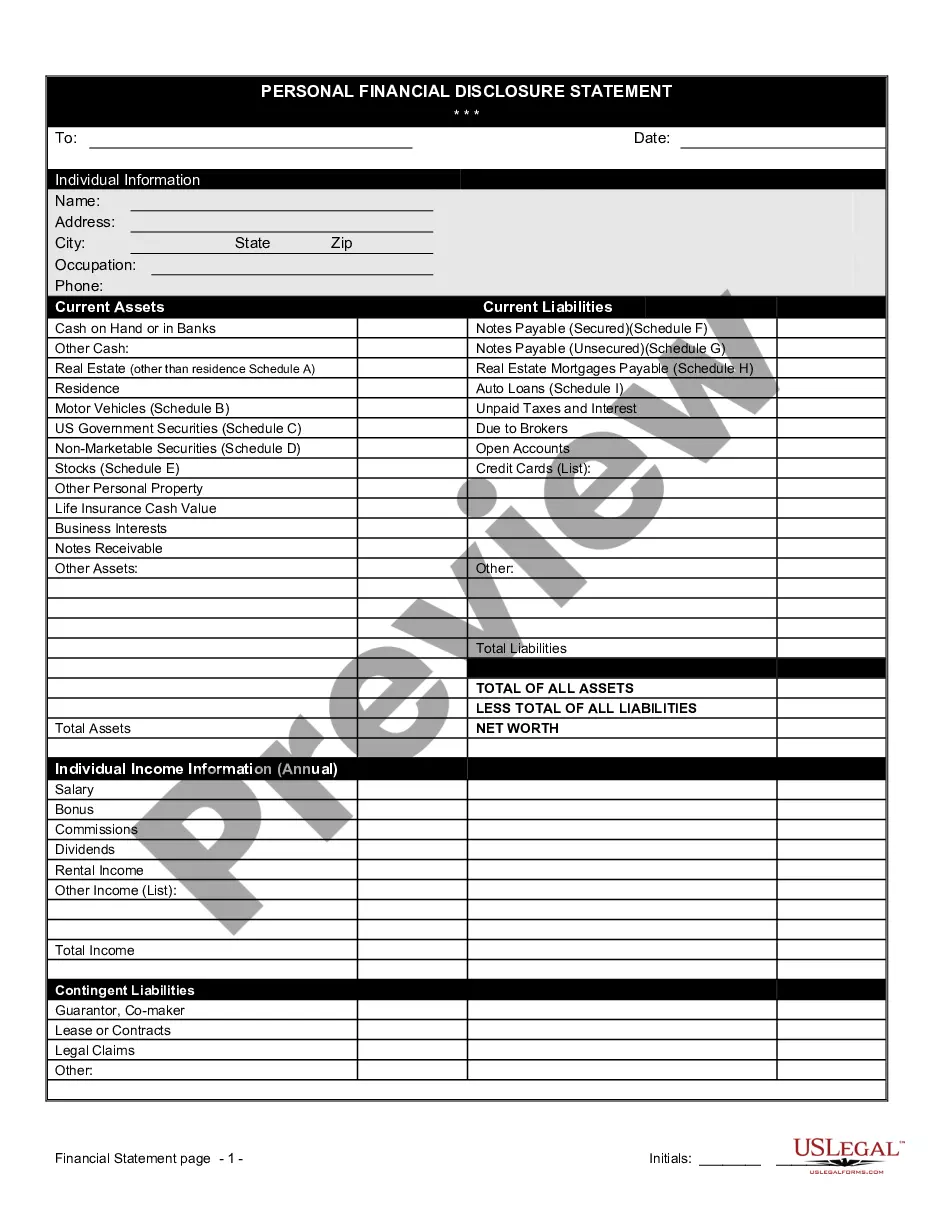
Looking for another form?

Form popularity
FAQ
A Mutual Release Agreement is a straightforward document that allows you to settle disputes quickly and professionally. No matter what your dispute, a Mutual Release Agreement allows both parties to agree to drop all claims and get out of the contract.
Whether you can sue after signing a release depends on the facts, the wording of the release, and your state's law, among other things. A court will first look to whether you specifically gave up your right to bring a discrimination, harassment, or retaliation claim in the release. If so, you may be out of luck.
A written contract in which one or more parties agree to give up legal causes of action against the other party in exchange for adequate consideration (that is, something of value to which the party releasing the legal claims is not already entitled).
Lawyers call an agreement to settle a dispute a "release," because in exchange for some act (often the payment of money), one person gives up (or releases) his or her claim against another.
When Should I Sign a Release of All Claims Form? You should only sign a release of all claims form if you have hired an experienced California car accident attorney to represent you in your claim. In many cases, it may be possible to settle the claim with the insurance company without the need to file a lawsuit.
There is now a document called the mutual release whenever a purchase agreement does not go to closing. If the deal falls apart because of inspection, mortgage, or any issue the buyer and seller must sign and agree on who gets the earnest money. BOTH PARTIES MUST AGREE AND SIGN the mutual release.
The release of claims is an agreement between an employer and a worker whose employment has been terminated. Employees typically sign the document in return for a severance package. The release is meant to limit potential litigation for reasons such as discrimination.
A Release Agreement, also sometimes called a Release Form or a Waiver, is a document that is used when one party needs to release the other from liability - in other words, Release Agreements are normally signed after there has been some sort of incident that damages one party (the damage can be physical or financial