Letter of Intent or Memorandum of Understanding - General Form regarding a Business Transaction being Negotiated
What is this form?
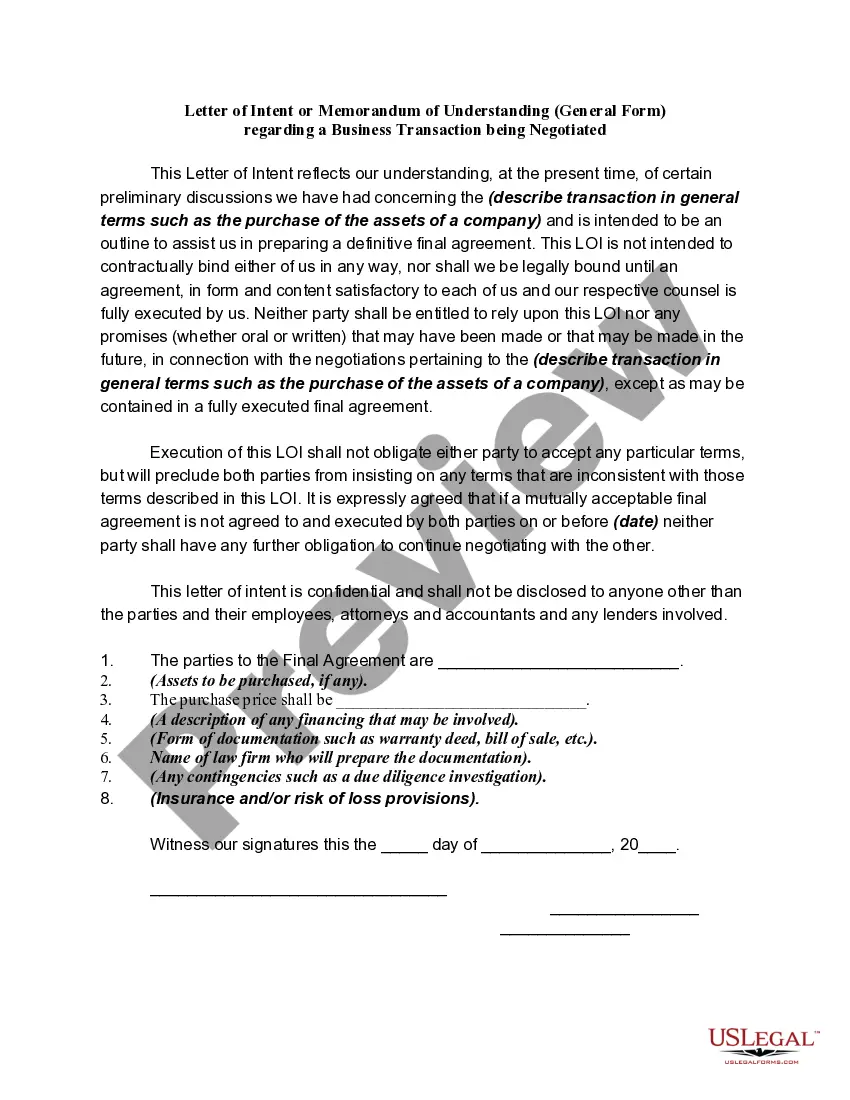
A Letter of Intent or Memorandum of Understanding is a document that outlines preliminary agreements or understandings between parties involved in a business transaction. Unlike a legally binding contract, this form serves as an outline to clarify essential business terms and align the parties on key contractual understandings prior to drafting a final agreement. It is often used to foster constructive negotiations by outlining crucial details such as monetary terms, contingencies, and risk allocation without creating enforceable obligations.
What’s included in this form
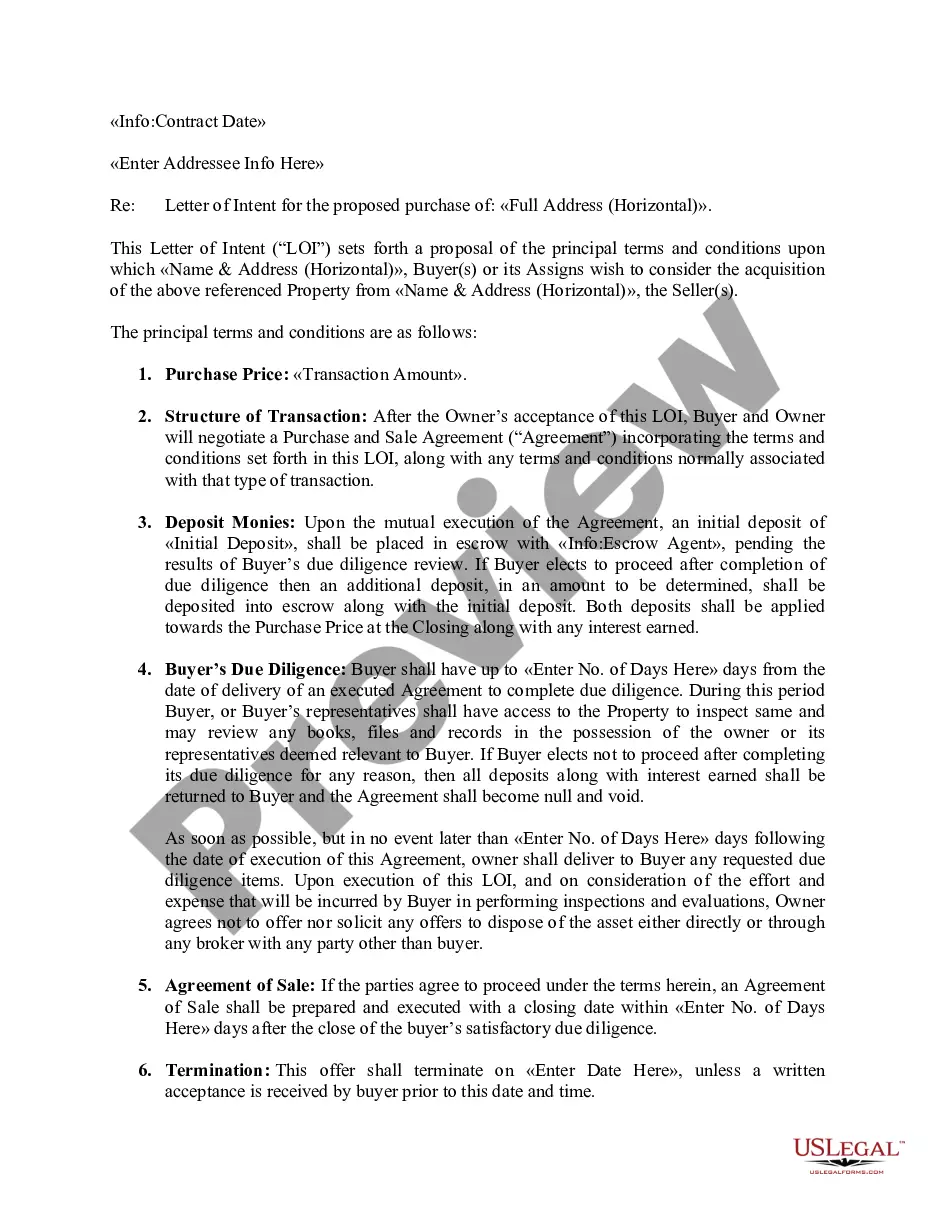
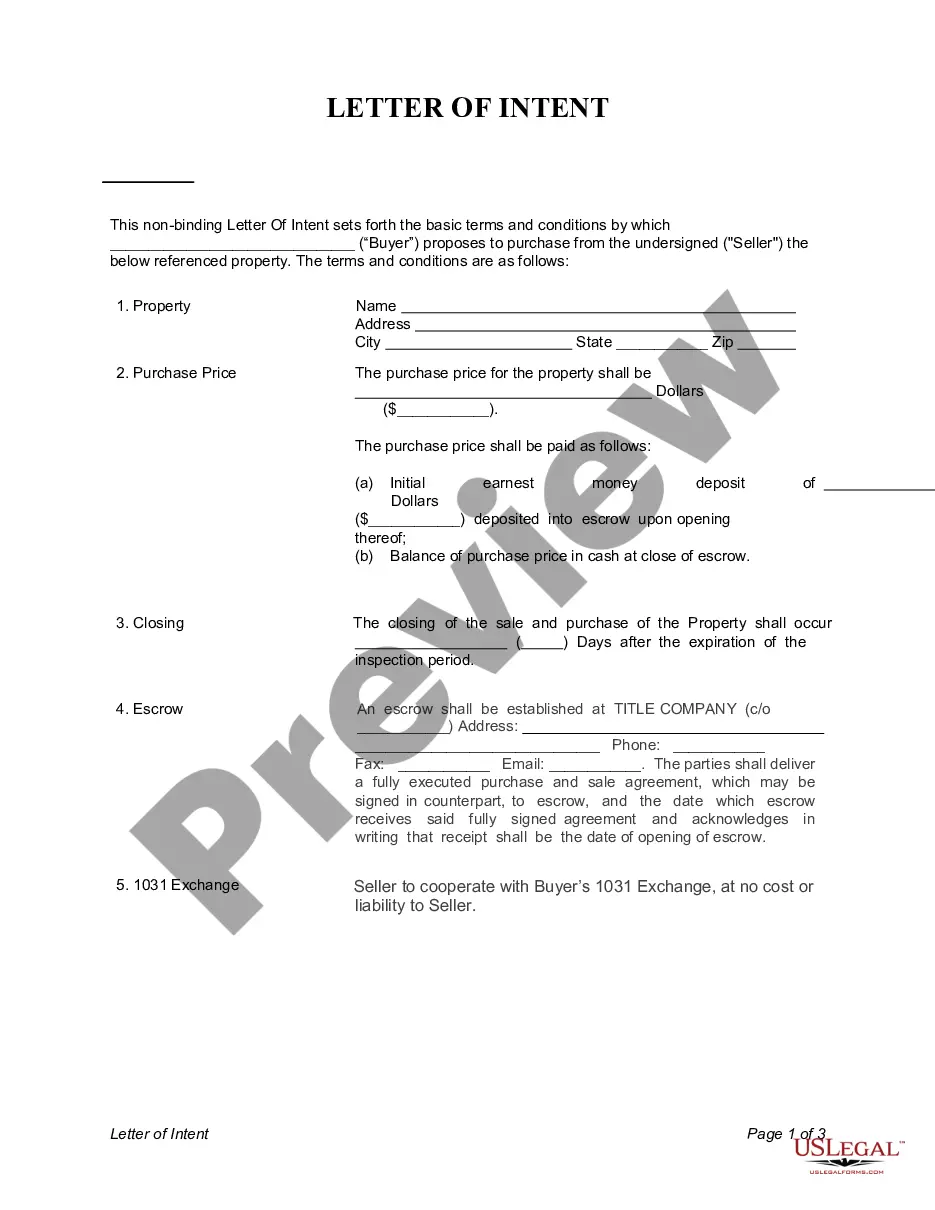
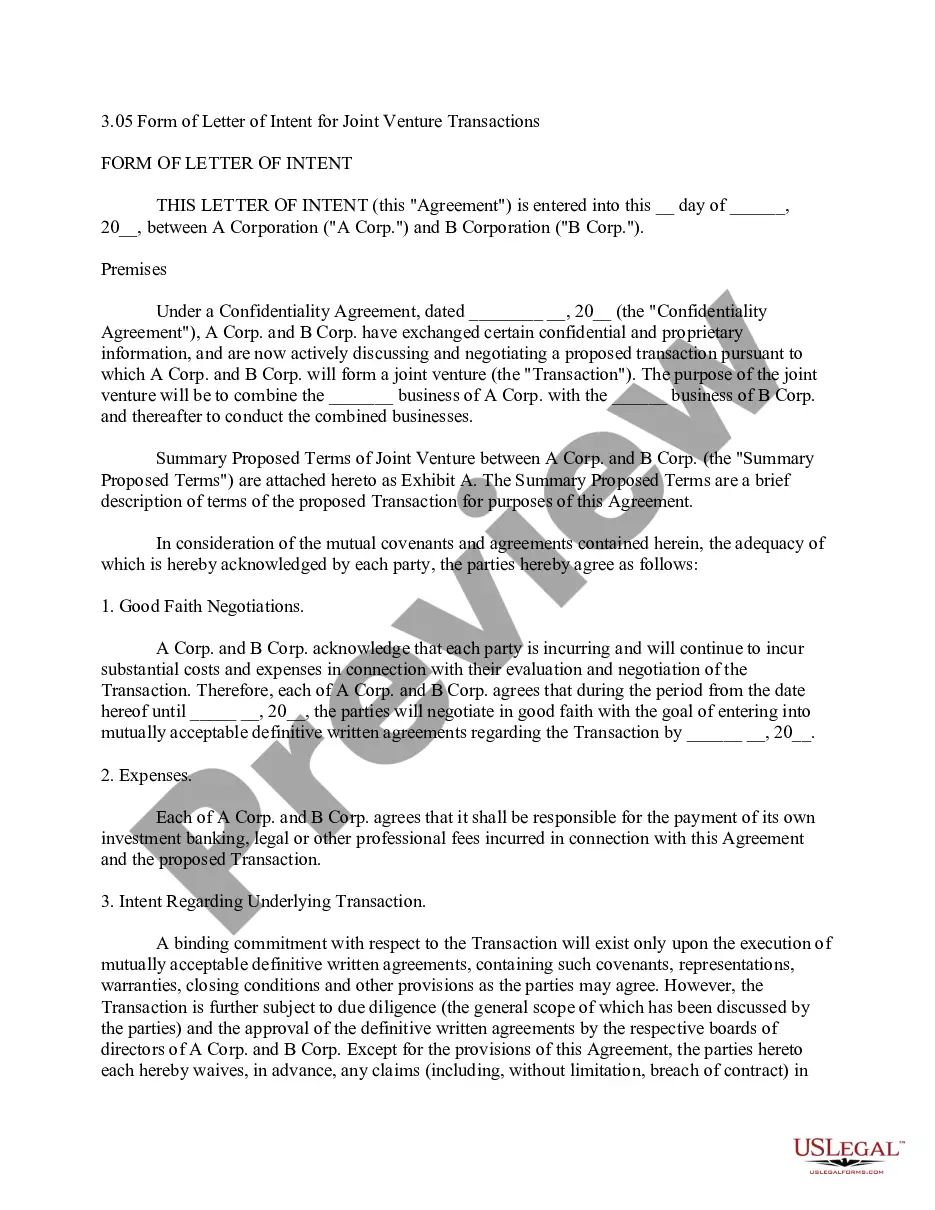
- Description of the parties involved in the transaction.
- General description of the assets to be purchased.
- Specified purchase price for the transaction.
- Outline of any financing arrangements involved.
- Types of documentation required for the agreement.
- Identification of the law firm responsible for preparing documentation.
- Details regarding contingencies, such as due diligence investigations.
- Provisions for insurance and risk of loss.
Situations where this form applies
This form is useful when two or more parties are in the early stages of negotiating a business transaction. It can be employed when discussing the purchase of assets or the formation of partnerships, helping to outline major terms before a formal agreement is drafted. Utilizing a Letter of Intent ensures that all parties are aligned and understand their commitments, setting the groundwork for successful negotiations.
Who this form is for
This form is primarily intended for:
- Business owners negotiating acquisitions or partnerships.
- Individuals involved in discussions regarding significant financial transactions.
- Attorneys representing clients in business negotiations.
- All parties wanting to establish a clear understanding before drafting final documents.
Completing this form step by step
- Identify and enter the names of all parties involved in the transaction.
- Describe the assets to be purchased in general terms.
- Specify the purchase price clearly.
- Outline any financing arrangements that may affect the transaction.
- Indicate the form of documentation required for the final agreement.
- Obtain signatures from all parties and include the date of execution.
Is notarization required?
Notarization is generally not required for this form. However, certain states or situations might demand it. You can complete notarization online through US Legal Forms, powered by Notarize, using a verified video call available anytime.
Get your form ready online
Our built-in tools help you complete, sign, share, and store your documents in one place.
Make edits, fill in missing information, and update formatting in US Legal Forms—just like you would in MS Word.
Download a copy, print it, send it by email, or mail it via USPS—whatever works best for your next step.
Sign and collect signatures with our SignNow integration. Send to multiple recipients, set reminders, and more. Go Premium to unlock E-Sign.
If this form requires notarization, complete it online through a secure video call—no need to meet a notary in person or wait for an appointment.
We protect your documents and personal data by following strict security and privacy standards.

Make edits, fill in missing information, and update formatting in US Legal Forms—just like you would in MS Word.

Download a copy, print it, send it by email, or mail it via USPS—whatever works best for your next step.

Sign and collect signatures with our SignNow integration. Send to multiple recipients, set reminders, and more. Go Premium to unlock E-Sign.

If this form requires notarization, complete it online through a secure video call—no need to meet a notary in person or wait for an appointment.

We protect your documents and personal data by following strict security and privacy standards.
Mistakes to watch out for
- Failing to clearly define the terms and conditions being negotiated.
- Not including all parties involved in the transaction.
- Using vague language that can lead to misinterpretations.
- Neglecting to outline financing options or contingencies.
Why use this form online
- Convenience of accessing and downloading the form anytime.
- Editability allows users to customize the document to fit their specific transaction.
- Reliability ensured by forms drafted by licensed attorneys.
Legal use & context
- A Letter of Intent is not a legally binding contract, but it establishes a framework for the negotiation process.
- It is important that the LOI states it is non-binding to avoid misinterpretation of the parties' intentions.
- Once fully executed, it serves as a reference for drafting the definitive agreement.
Summary of main points
- A Letter of Intent outlines preliminary terms between negotiating parties.
- This form is key for setting expectations and clarifying terms before a formal contract.
- It allows for constructive dialogue without the risk of binding commitments before a final agreement.
Looking for another form?
Form popularity
FAQ
Identify the parties: It should specify the name of the parties between whom memorandum of understanding is being signed. Purpose: It should clearly specify the purpose and the goals for which the memorandum is being signed.
Buyers generally prepare the letter of intent. Generally, however, the party that prepares the letter of intent has the upper hand. He or she can decide: What matters will be addressed in the letter of intent.
Introduction. Use the first one or two sentences of your letter to formally introduce yourself. This section should include your name, a brief explanation of your current experience level and your reason for writing. For example, if you are a recent graduate, include information about your degree and areas of study.
A letter of intent (LOI) is a document that someone uses in order to declare their intent to do something, such as make a purchase, apply for a job or education program, or to clarify points in a business transaction. They are written in letter format, and signed by one party (the party writing it).
Salutation. Begin with a professional salutation. Body Paragraph 1: Introduction. Body Paragraph 2: Highlight Relevant Skills. Body Paragraph 3: Call to Action. Closing. Use the appropriate format. When sending an email, include a clear subject line. Research the company.
Dates. When the MOU will start and when it will end. Contact information. Contact information for all parties involved. Name of project. Contributions. Other contributions.
An MOU should clearly state the following: what parties are involved, the context of the agreement, the proposed date of when the agreement will become effective, the contact details of all relevant parties, the broad purpose of the agreement, what each party is hoping to achieve, as well as a space for all necessary
Write the introduction. Describe the transaction and timeframes. List contingencies. Go through due diligence. Include covenants and other binding agreements. State that the agreement is nonbinding. Include a closing date.