General Right-of-Way Instrument
What this document covers
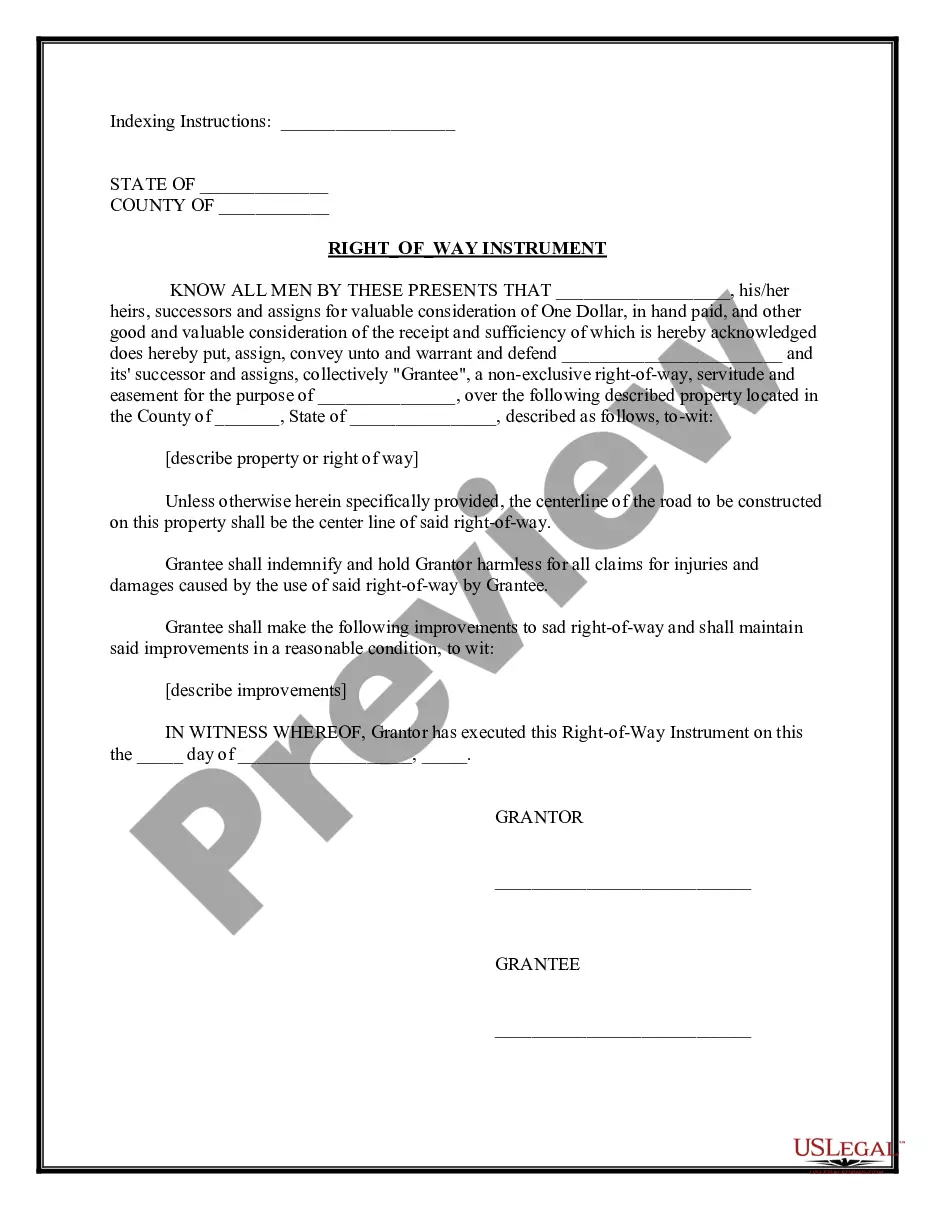
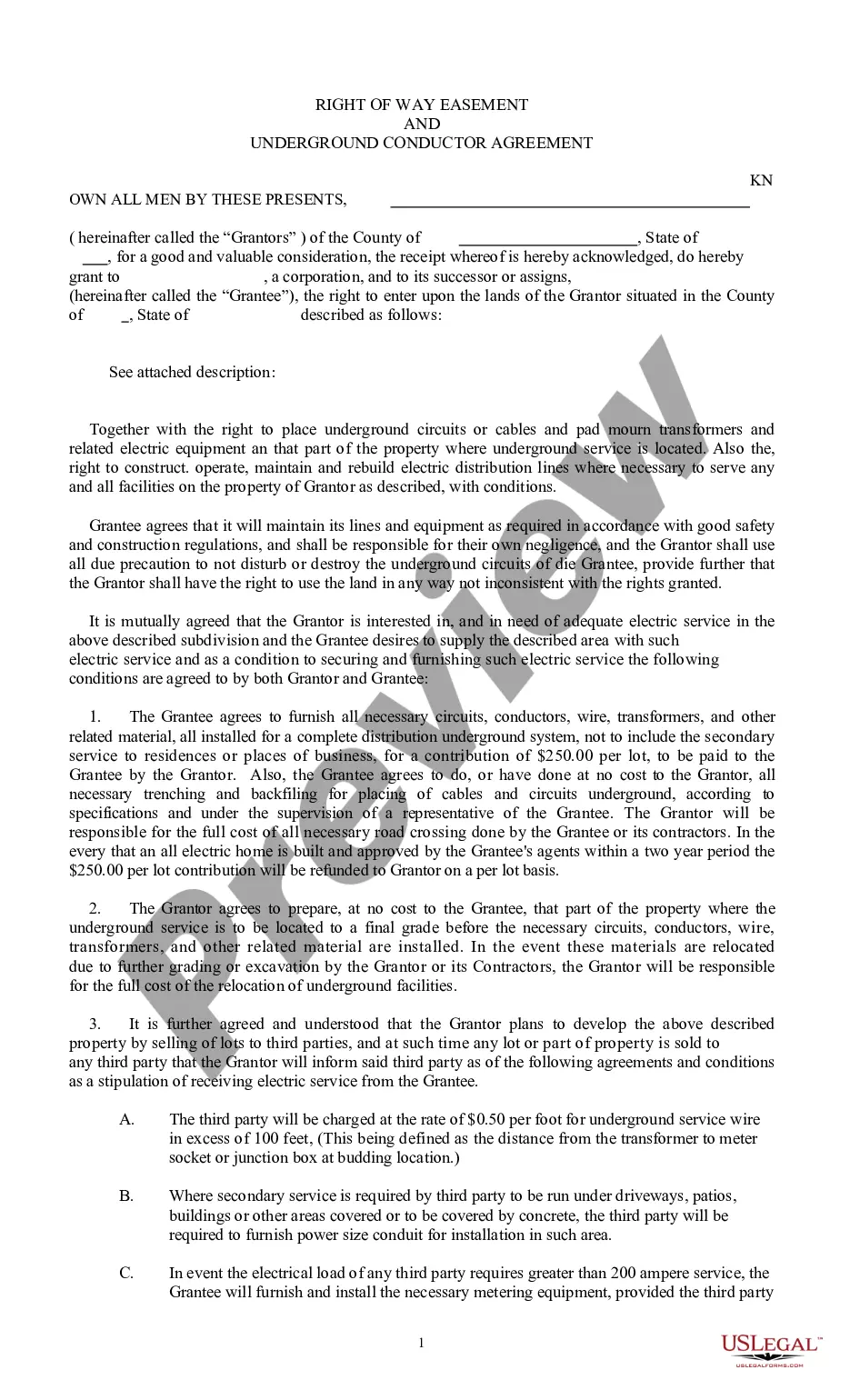
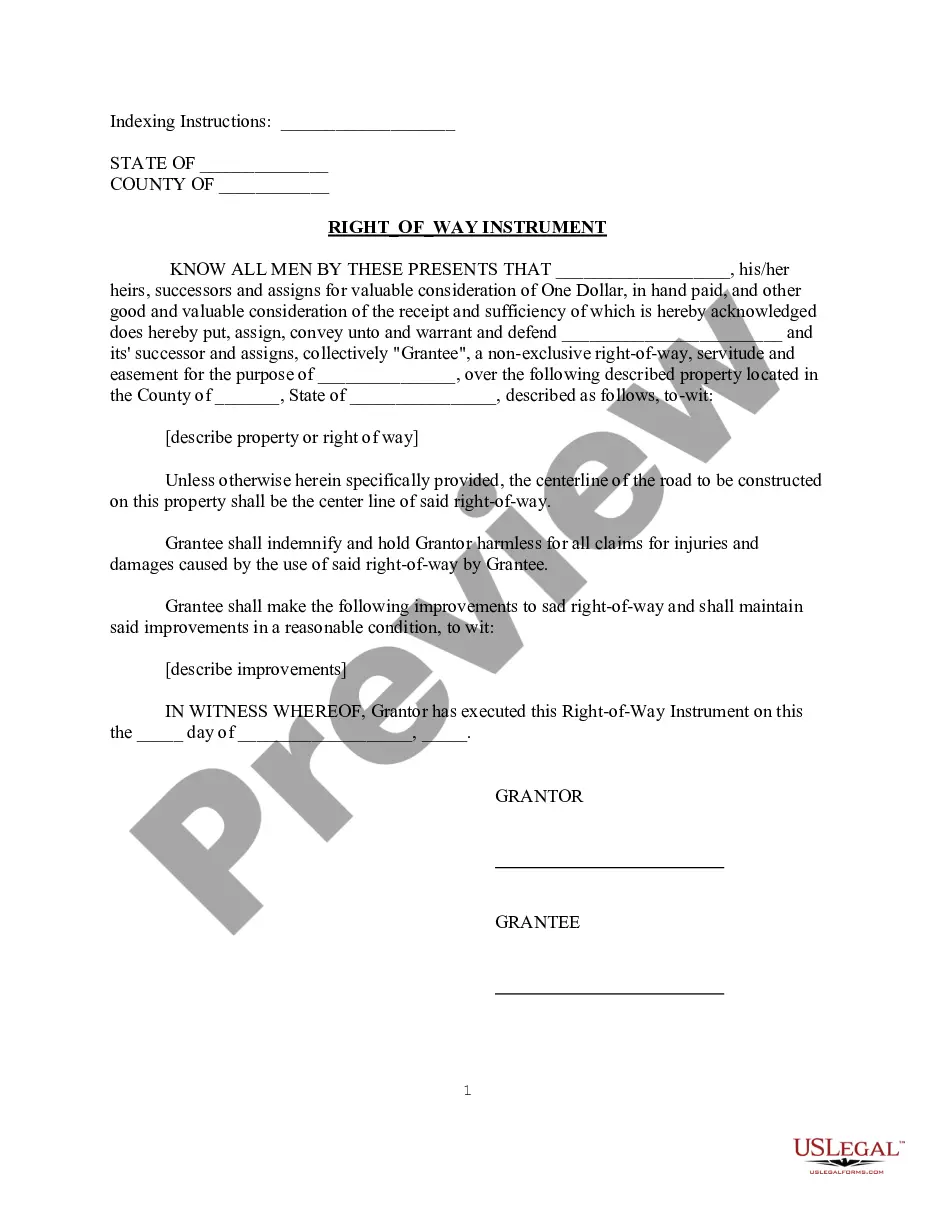
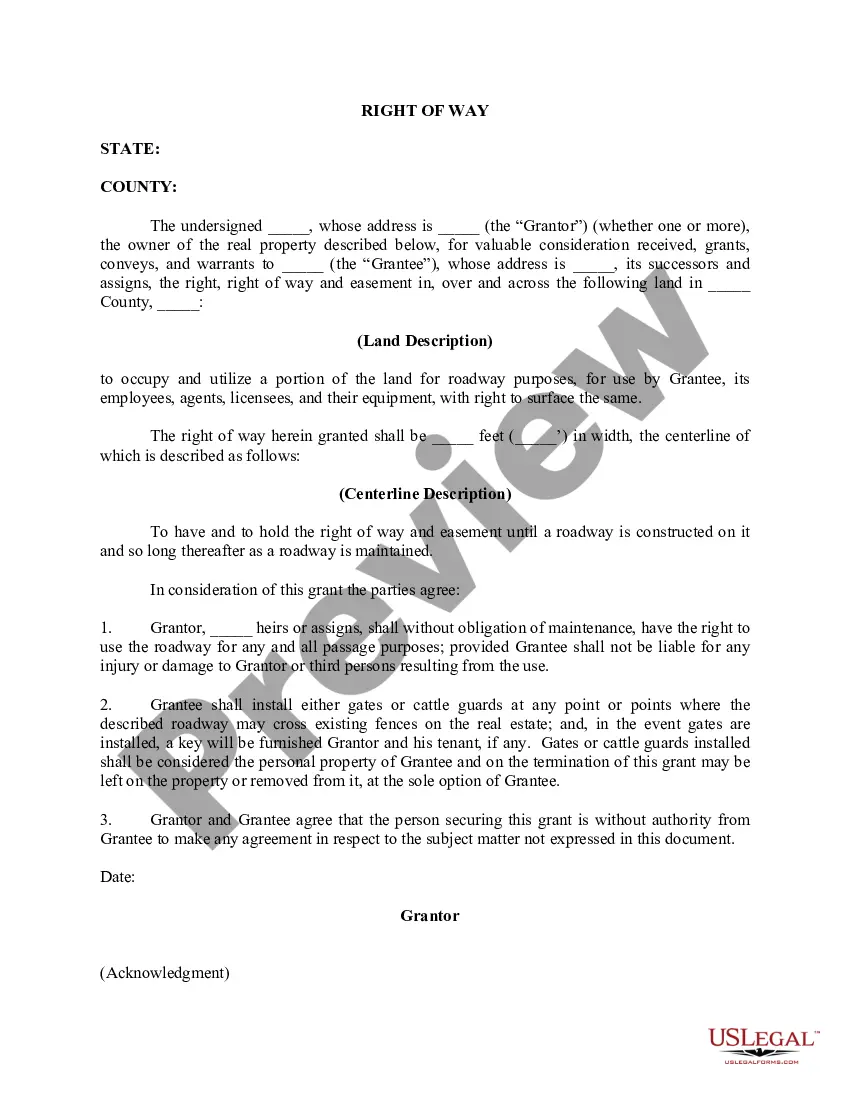
The General Right-of-Way Instrument is a legal document that grants one party the right to use a specific portion of another party's property. This form establishes a non-exclusive easement, allowing for various uses such as utility access, maintenance paths, or agricultural needs. Unlike other property agreements, this right-of-way instrument focuses specifically on usage rights rather than ownership transfer.
Form components explained
- Identification of Grantor and Grantee parties involved in the agreement.
- Description of the property subject to the right-of-way easement.
- Specific purposes for which the right-of-way is granted.
- Indemnification clause protecting the Grantor from claims related to the use of the easement.
- Requirements for maintenance and improvements on the right-of-way by the Grantee.
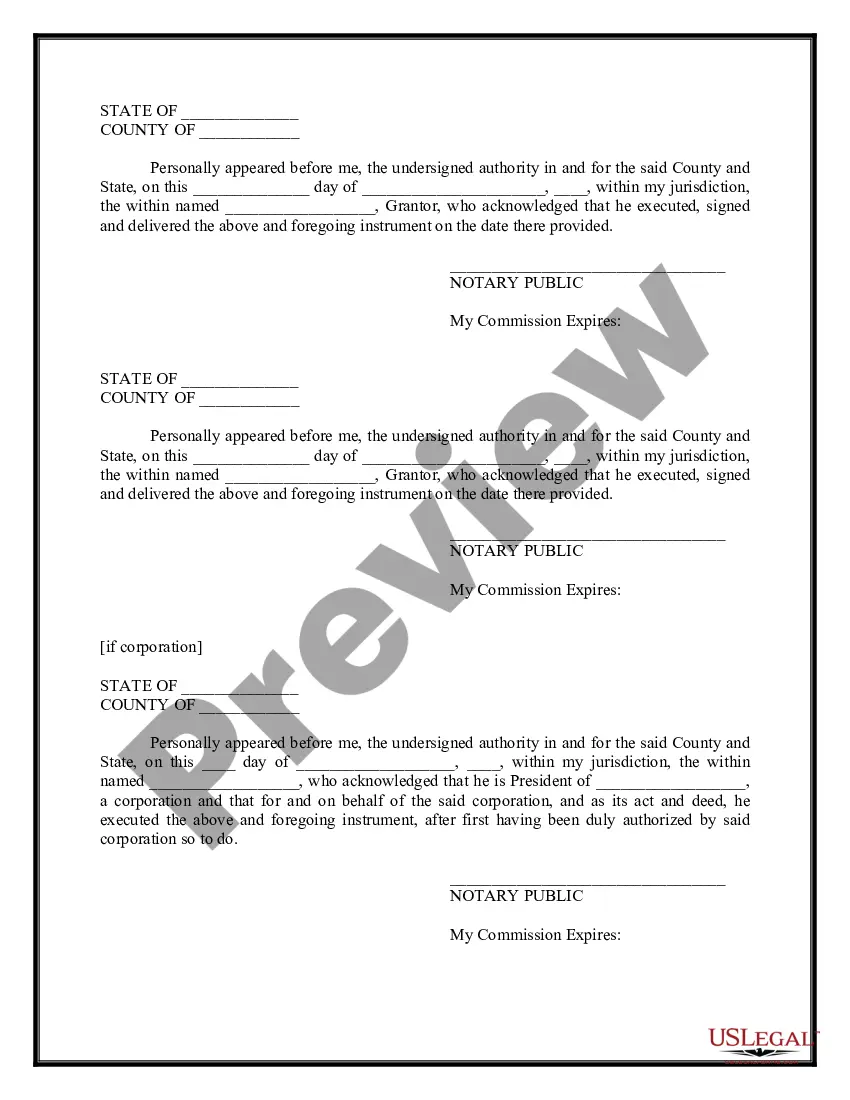
- Execution section including signatures of Grantor and Grantee and provision for notarization.

When to use this document
This form is beneficial when a property owner needs to grant access rights to another party for specific purposes, such as utility companies requiring access for maintenance, landowners permitting access to agricultural fields, or even neighbors needing a path for ingress and egress across private property. It can also be used in cases where landowners need to facilitate access to shared resources like water sources.
Who should use this form
- Property owners (Grantors) looking to allow usage of their land.
- Businesses or individuals (Grantees) requiring access for utility, maintenance, or agricultural purposes.
- Attorneys or legal representatives drafting easement agreements for clients.
- Developers needing to establish access for construction or land development projects.
How to prepare this document
- Identify the parties involved by providing names for the Grantor and Grantee.
- Specify the legal description of the property where the right-of-way will be established.
- Clearly detail the purpose for which the right-of-way is granted.
- Include any necessary terms regarding improvements and maintenance of the right-of-way.
- Ensure all parties sign the document and have it witnessed or notarized if required.
Does this form need to be notarized?
To make this form legally binding, it must be notarized. Our online notarization service, powered by Notarize, lets you verify and sign documents remotely through an encrypted video session.
Get your form ready online
Our built-in tools help you complete, sign, share, and store your documents in one place.
Make edits, fill in missing information, and update formatting in US Legal Forms—just like you would in MS Word.
Download a copy, print it, send it by email, or mail it via USPS—whatever works best for your next step.
Sign and collect signatures with our SignNow integration. Send to multiple recipients, set reminders, and more. Go Premium to unlock E-Sign.
If this form requires notarization, complete it online through a secure video call—no need to meet a notary in person or wait for an appointment.
We protect your documents and personal data by following strict security and privacy standards.

Make edits, fill in missing information, and update formatting in US Legal Forms—just like you would in MS Word.

Download a copy, print it, send it by email, or mail it via USPS—whatever works best for your next step.

Sign and collect signatures with our SignNow integration. Send to multiple recipients, set reminders, and more. Go Premium to unlock E-Sign.

If this form requires notarization, complete it online through a secure video call—no need to meet a notary in person or wait for an appointment.

We protect your documents and personal data by following strict security and privacy standards.
Common mistakes
- Failing to provide a clear legal description of the property.
- Not specifying the intended use of the right-of-way, leading to potential disputes.
- Omitting signatures from either party or failing to notarize the document when required.
- Using vague language that doesn't clearly define rights or responsibilities of either party.
Why complete this form online
- Convenient access to legal forms that are easy to download and fill out.
- Editability allows users to customize terms to fit specific needs.
- Reliability of professionally drafted forms by licensed attorneys, ensuring legal compliance.
Legal use & context
- The General Right-of-Way Instrument creates a legal right for the Grantee without transferring property ownership.
- It establishes obligations for both parties, particularly concerning the use and maintenance of the easement.
- Filing or recording the easement with local authorities may be necessary to protect interests and provide public notice.
Looking for another form?
Form popularity
FAQ
When you yield the right of way to another vehicle, you are letting them go before you in the traffic situation.If you reach the intersection at the same time, the driver on the left should yield the right of way. Pedestrians must always be yielded the right of way at intersections and crosswalks.
Public rights of way can come into existence through creation (either by legal order or by an agreement made with the landowner) or dedication by the landowner (either expressly or by presumption or by deemed dedication following 20 years' public use).
Generally once an easement or right of way has arisen it will continue indefinitely unless it is extinguished or released.
A right of way is an easement that allows someone to travel through your property to get to another location.If property ownership is transferred through sale or other legal methods, a new easement agreement must be made. Appurtenant easements are attached to the property, not the individual.
1 : the legal right to pass over someone else's land. 2 : the right of some traffic to go before other traffic. right-of-way.
An easement, right of way or profit can be expressly released by deed. Once this has been done then it is extinguished and cannot be revived. An easement, right of way or profit can be sometimes impliedly released by the owner's actions or in rare cases by the owner's inaction.
The right of way is the total land area acquired for the construction of the roadway. Its width should be enough to accommodate all the elements of the roadway cross section, any future widening of the road and any public utility facilities that will be installed along the roadway.
Right of Way. An easement is the right to use another person's land for a stated purpose. It can involve a general area of the property or a specific portion. A right of way is an easement that allows someone to travel through your property to get to another location.
Easements can be created in a variety of ways. They can be created by an express grant, by implication, by necessity, and by adverse possession.An easement can be terminated if it was created by necessity and the necessity ceases to exist, if the servient land is destroyed, or if it was abandoned.