Right of Way
About this form
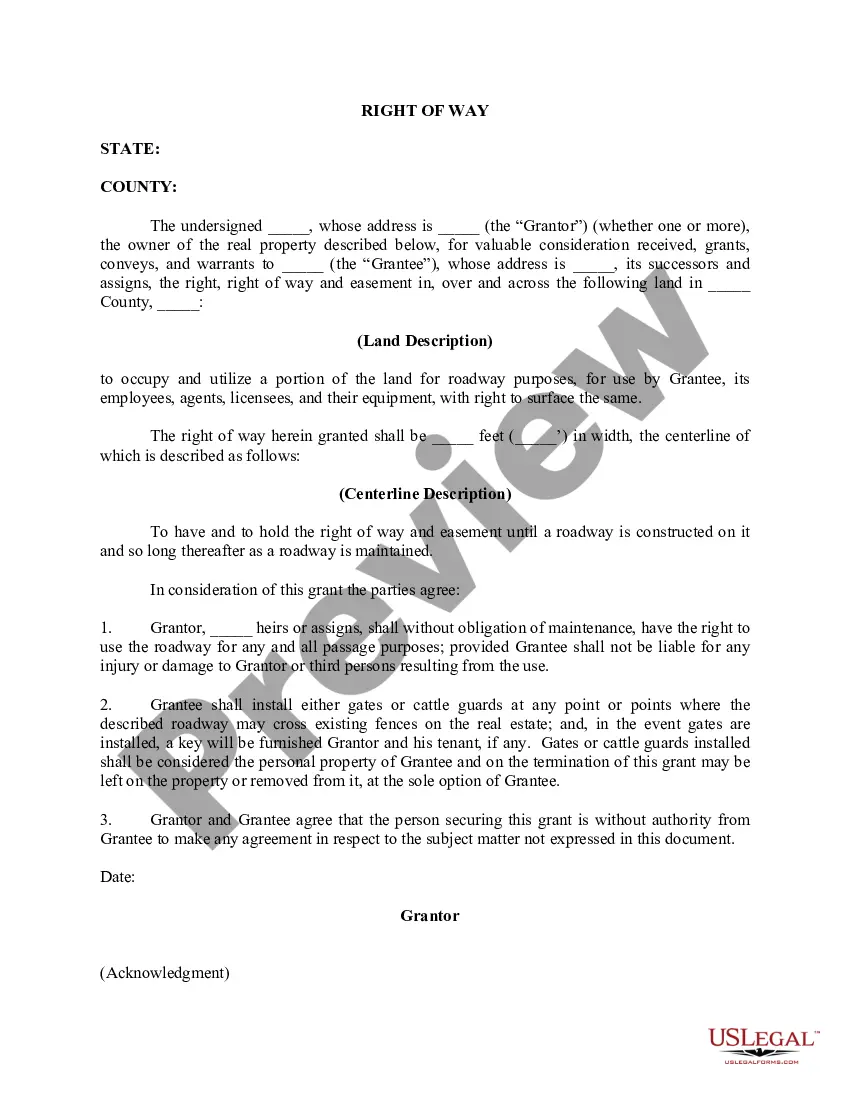
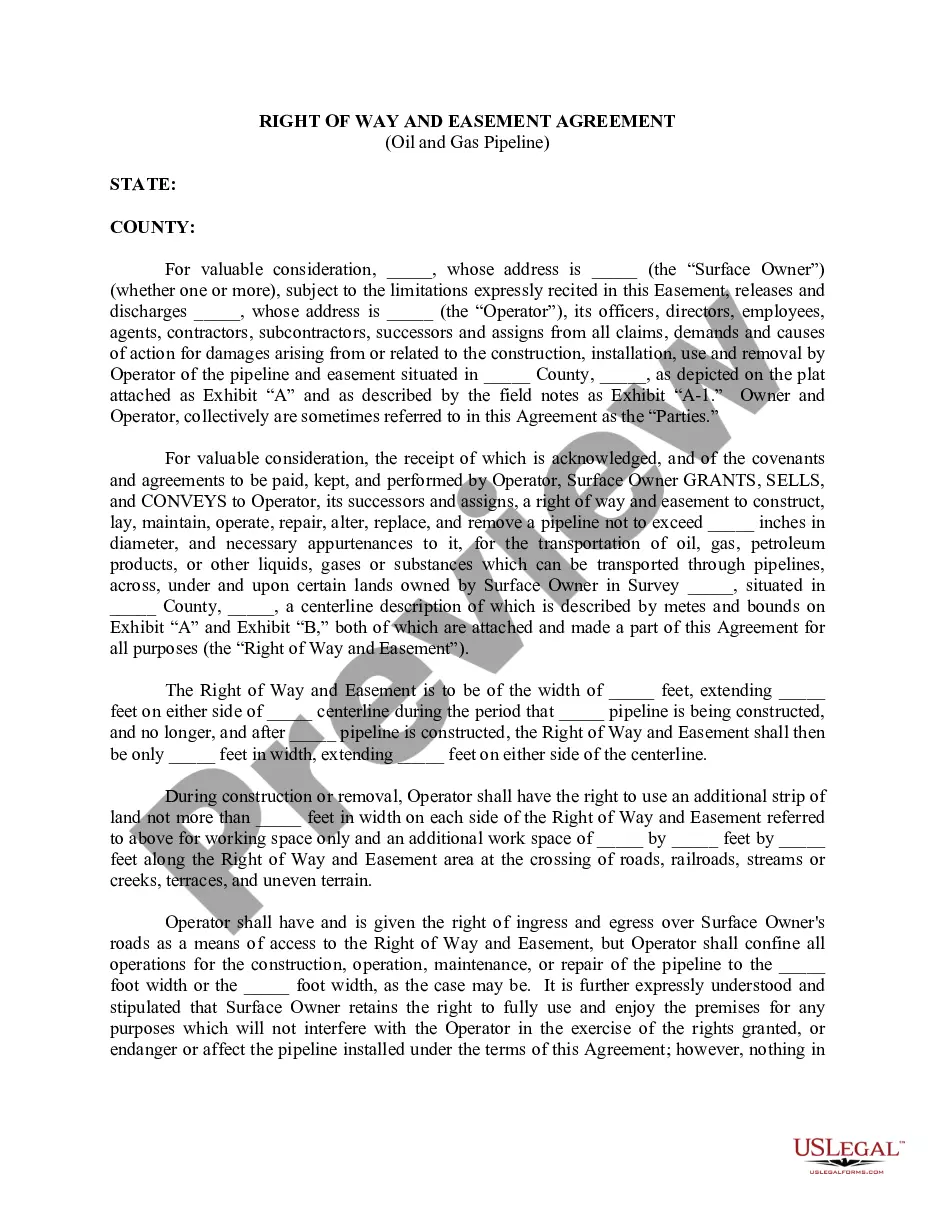
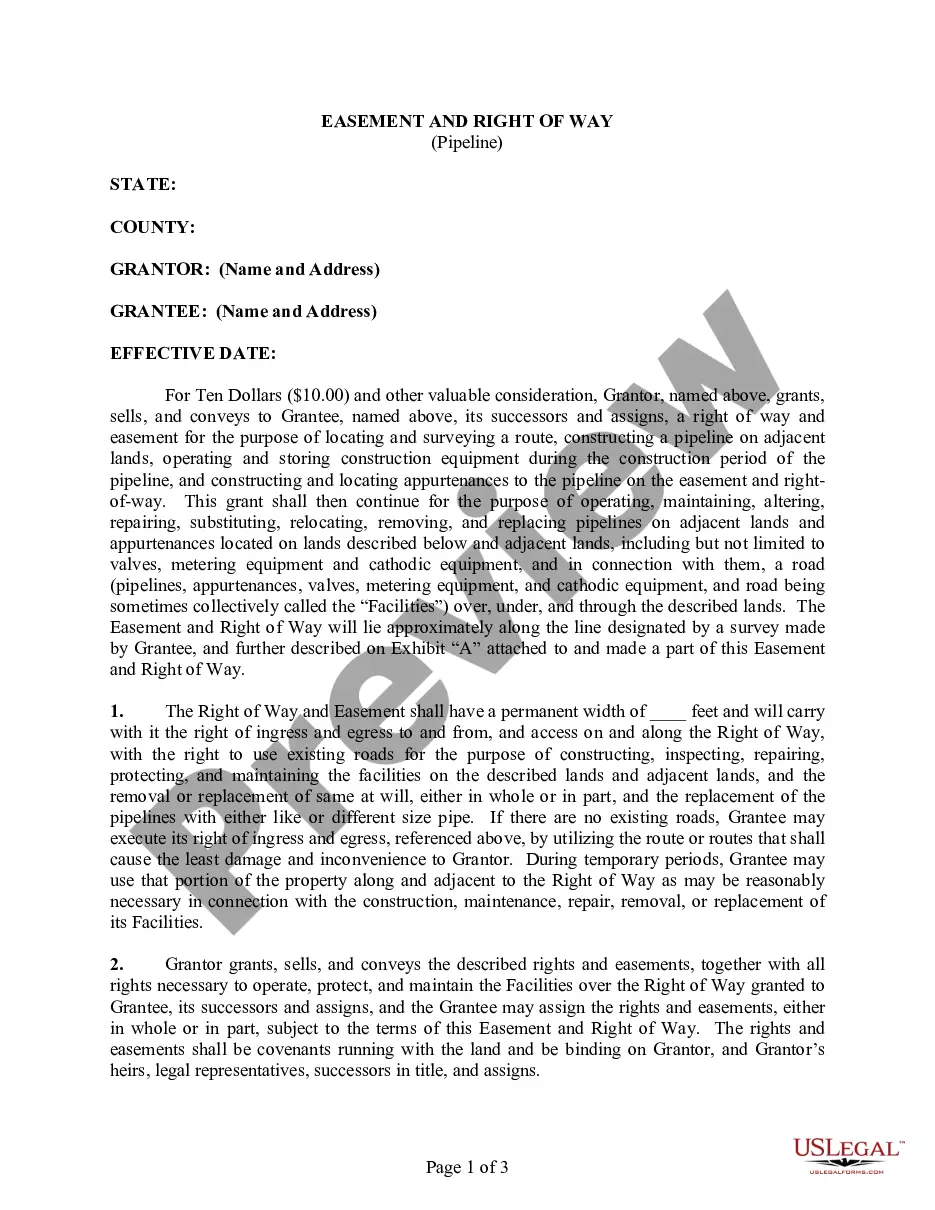
The Right of Way form is a legal document that grants a party (the Grantee) the right to use a specified portion of land for roadway purposes. This form defines the rights and responsibilities of both the landowner (the Grantor) and the Grantee, distinguishing it from other easement forms that may not specify roadway use. It is essential for formalizing access to land, ensuring clarity and legal protection for both parties involved.
Main sections of this form
- Identification of the Grantor and Grantee.
- Detailed description of the land being granted for the right of way.
- Specification of the width and centerline of the right of way.
- Terms regarding the maintenance of the roadway and usage rights.
- Clauses about the installation of gates or cattle guards.
When to use this form
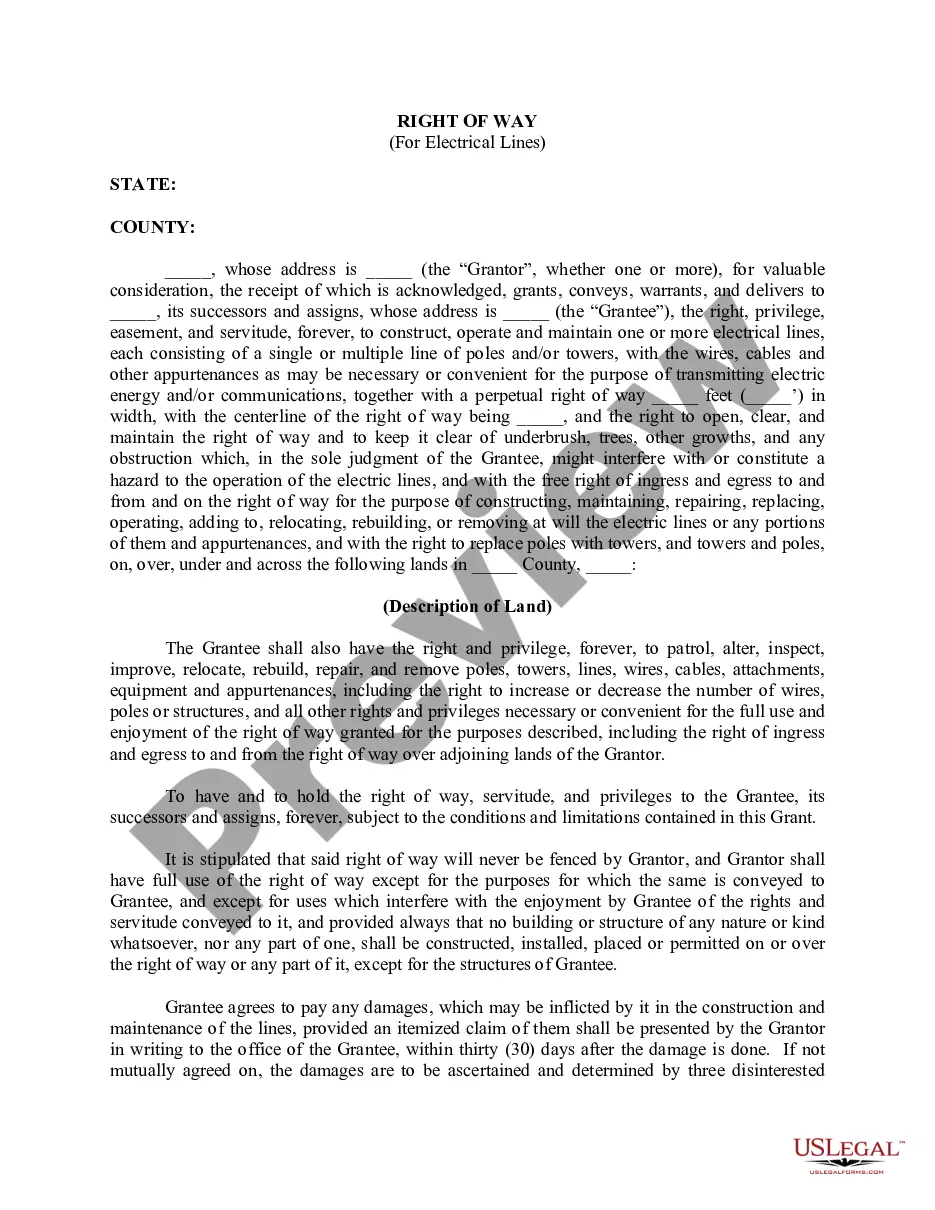
This form is necessary when a landowner wants to legally grant another party the right to use a portion of their property for roadway access. Typical scenarios include construction projects requiring access across private land, utility companies needing to install lines, or agricultural operations that require passage through a neighbor's property. It helps ensure that all parties are aware of their rights and obligations.
Intended users of this form
- Landowners looking to grant roadway access across their property.
- Contractors or construction companies needing legal access for projects.
- Utility companies requiring easement to install services.
- Agricultural operations needing to cross private land for access.
How to prepare this document
- Identify the Grantor (the landowner) and the Grantee (the party receiving the right of way).
- Provide a detailed description of the land being granted and the width of the right of way.
- Define the centerline of the right of way to clearly outline the usage area.
- Enter the terms regarding maintenance and rights related to the road usage.
- Include any provisions for gates or cattle guards if applicable.
Does this form need to be notarized?
This form needs to be notarized to ensure legal validity. US Legal Forms provides secure online notarization powered by Notarize, allowing you to complete the process through a verified video call, available anytime.
Get your form ready online
Our built-in tools help you complete, sign, share, and store your documents in one place.
Make edits, fill in missing information, and update formatting in US Legal Forms—just like you would in MS Word.
Download a copy, print it, send it by email, or mail it via USPS—whatever works best for your next step.
Sign and collect signatures with our SignNow integration. Send to multiple recipients, set reminders, and more. Go Premium to unlock E-Sign.
If this form requires notarization, complete it online through a secure video call—no need to meet a notary in person or wait for an appointment.
We protect your documents and personal data by following strict security and privacy standards.

Make edits, fill in missing information, and update formatting in US Legal Forms—just like you would in MS Word.

Download a copy, print it, send it by email, or mail it via USPS—whatever works best for your next step.

Sign and collect signatures with our SignNow integration. Send to multiple recipients, set reminders, and more. Go Premium to unlock E-Sign.

If this form requires notarization, complete it online through a secure video call—no need to meet a notary in person or wait for an appointment.

We protect your documents and personal data by following strict security and privacy standards.
Common mistakes to avoid
- Failing to clearly describe the land or the right of way width.
- Not specifying who is responsible for maintenance of the roadway.
- Omitting critical details about the rights and limits of use for both parties.
- Neglecting to satisfy state-specific legal requirements.
Advantages of online completion
- Immediate access to a professionally drafted legal document.
- Editable and downloadable format for convenience.
- Time-saving compared to consulting a lawyer for a custom document.
- Ensures compliance with legal standards, reducing the risk of errors.
Looking for another form?

Form popularity
FAQ
An easement, right of way or profit can be expressly released by deed. Once this has been done then it is extinguished and cannot be revived. An easement, right of way or profit can be sometimes impliedly released by the owner's actions or in rare cases by the owner's inaction.
In the most general sense, right of way means who has the legal right to go first on the road. If you or another driver fails to yield the right of way, you risk colliding with each other, cyclists, or pedestrians.
In legal terms, the "easement" is the right to use the property, while the "right of way" is the portion of your property affected by the easement. Right-of-way easements are typically written into the deed of a property, meaning all future owners of the land are bound by them.
Can an easement or right-of-way be removed from the title? Yes. An easement or right-of-way may be removed with the consent of the holder of the agreement or by judge's order. An argument for removal must be based upon proof that the easement or right-of-way is no longer needed.
An easement, right of way or profit can be expressly released by deed. Once this has been done then it is extinguished and cannot be revived. An easement, right of way or profit can be sometimes impliedly released by the owner's actions or in rare cases by the owner's inaction.
A Any substantial interference with a right of way is a nuisance in common law. The owner of the right (known as the dominant owner) can apply to court for an injunction and damages if the landowner (or servient owner) blocks it.
A: Firstly you should establish whether there is any legal right of way to the property.With an easement your mother may insist your neighbour removes the fence obstructing her right of way. That access has been blocked for two years is likely to be irrelevant. Easements can also be abandoned.
It is well established that for a gate to be an obstruction to a private right of way it must substantially interfere with the right of way.The installation of an electronic gate that is operate by a fob or code is often but not always a substantial interference with a right of way.