Iowa Guaranty Attachment to Lease for Guarantor or Cosigner
Understanding this form
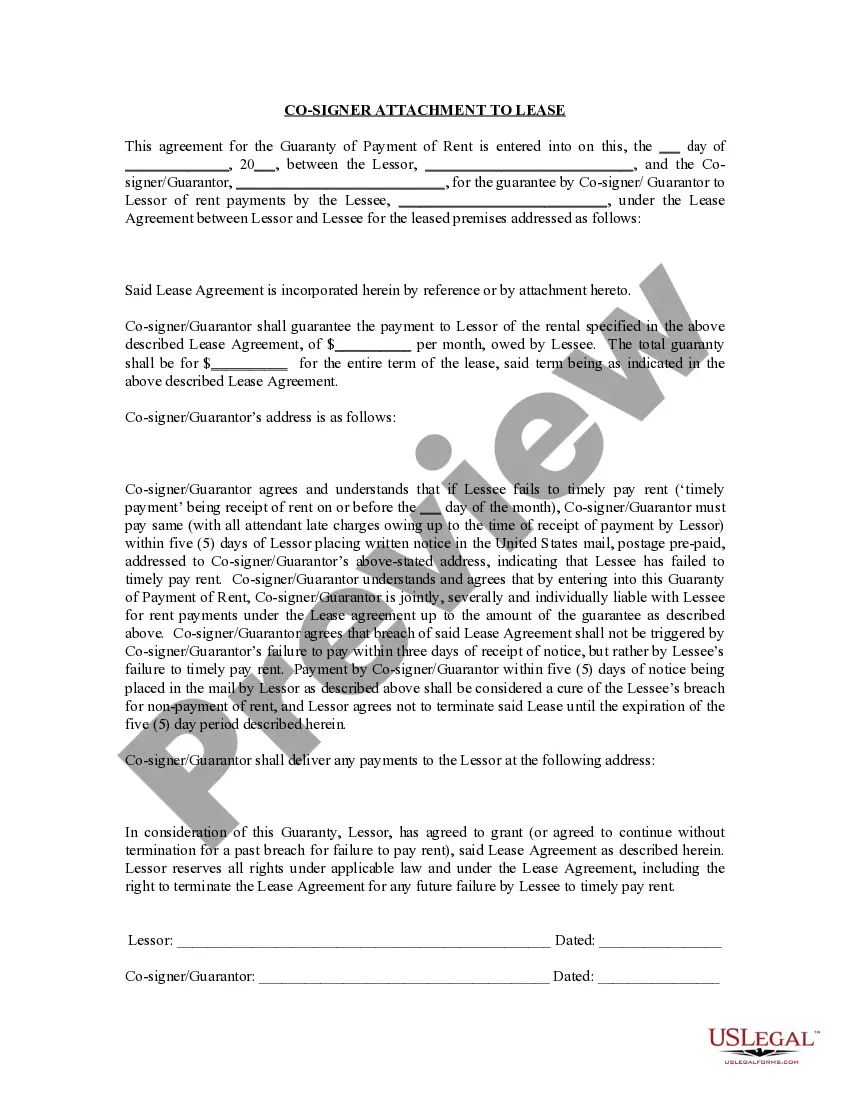
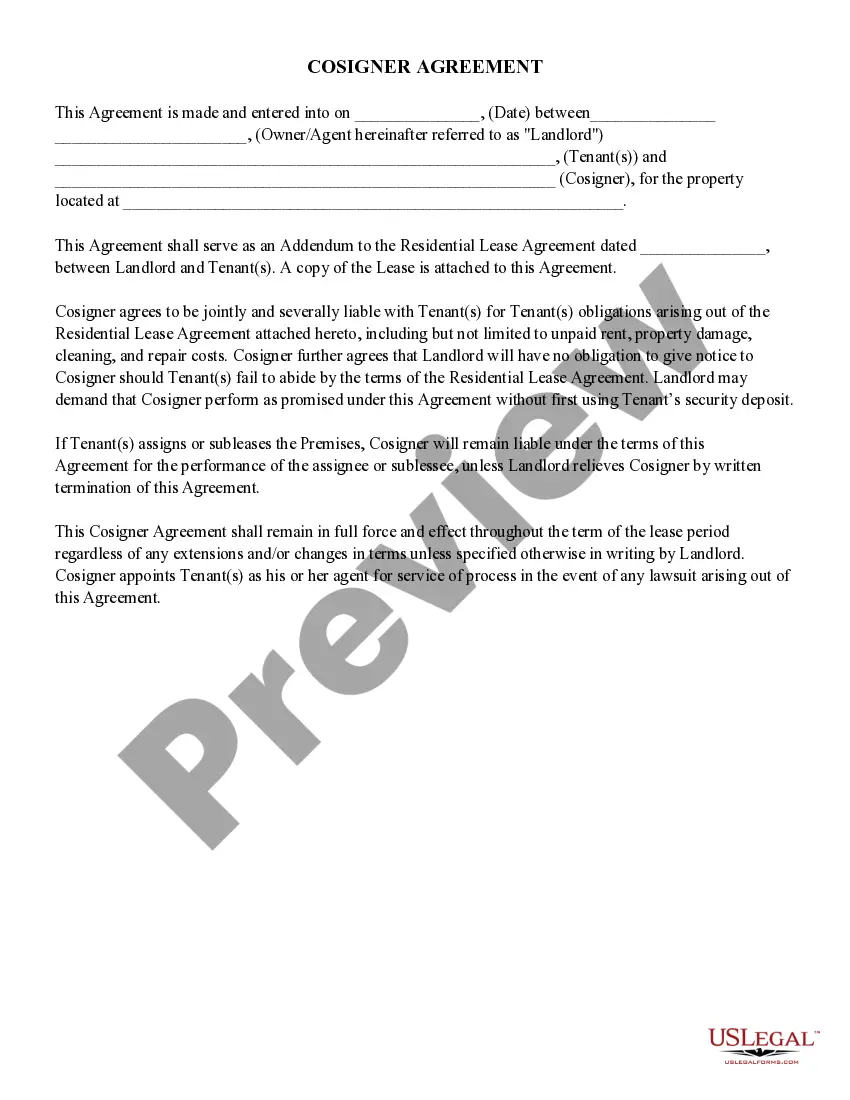
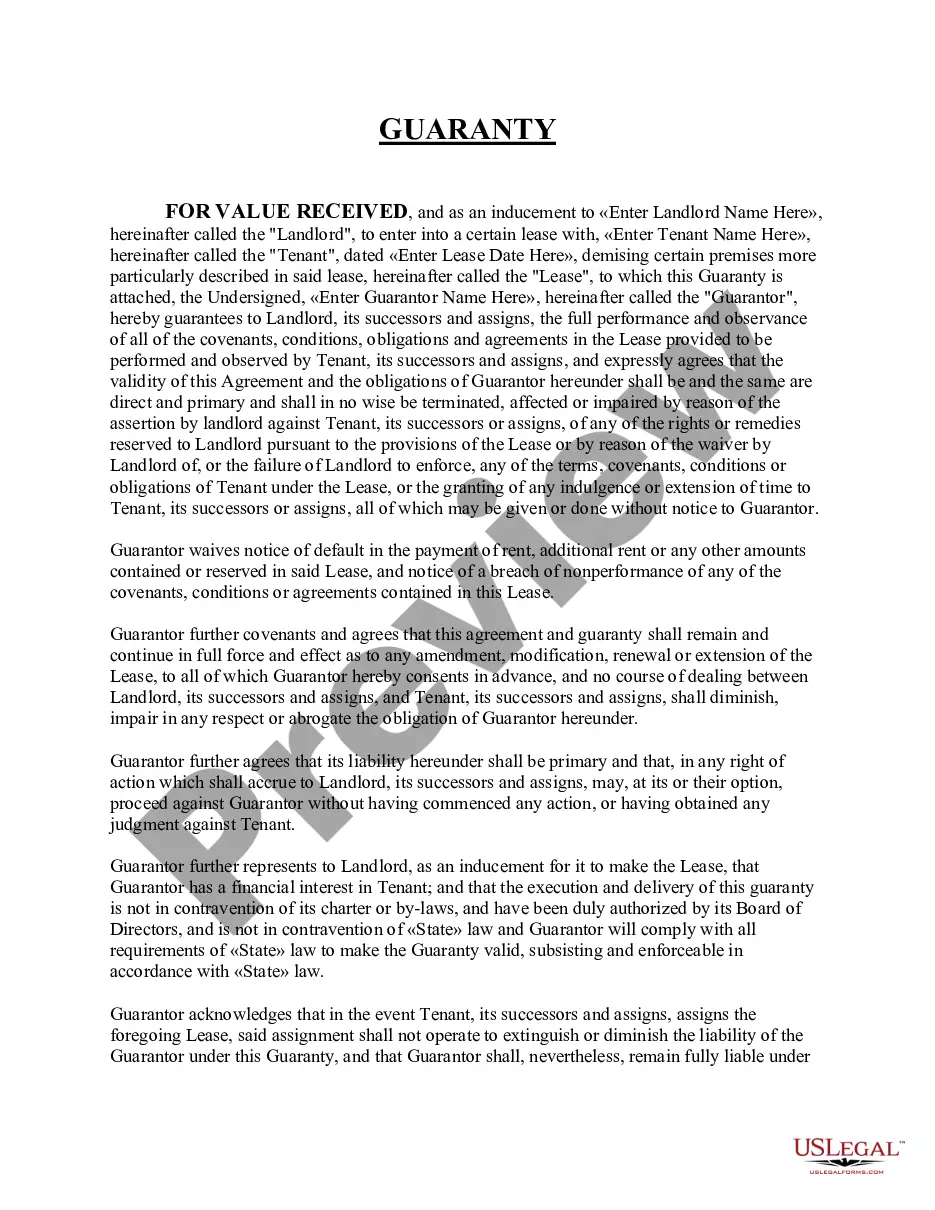
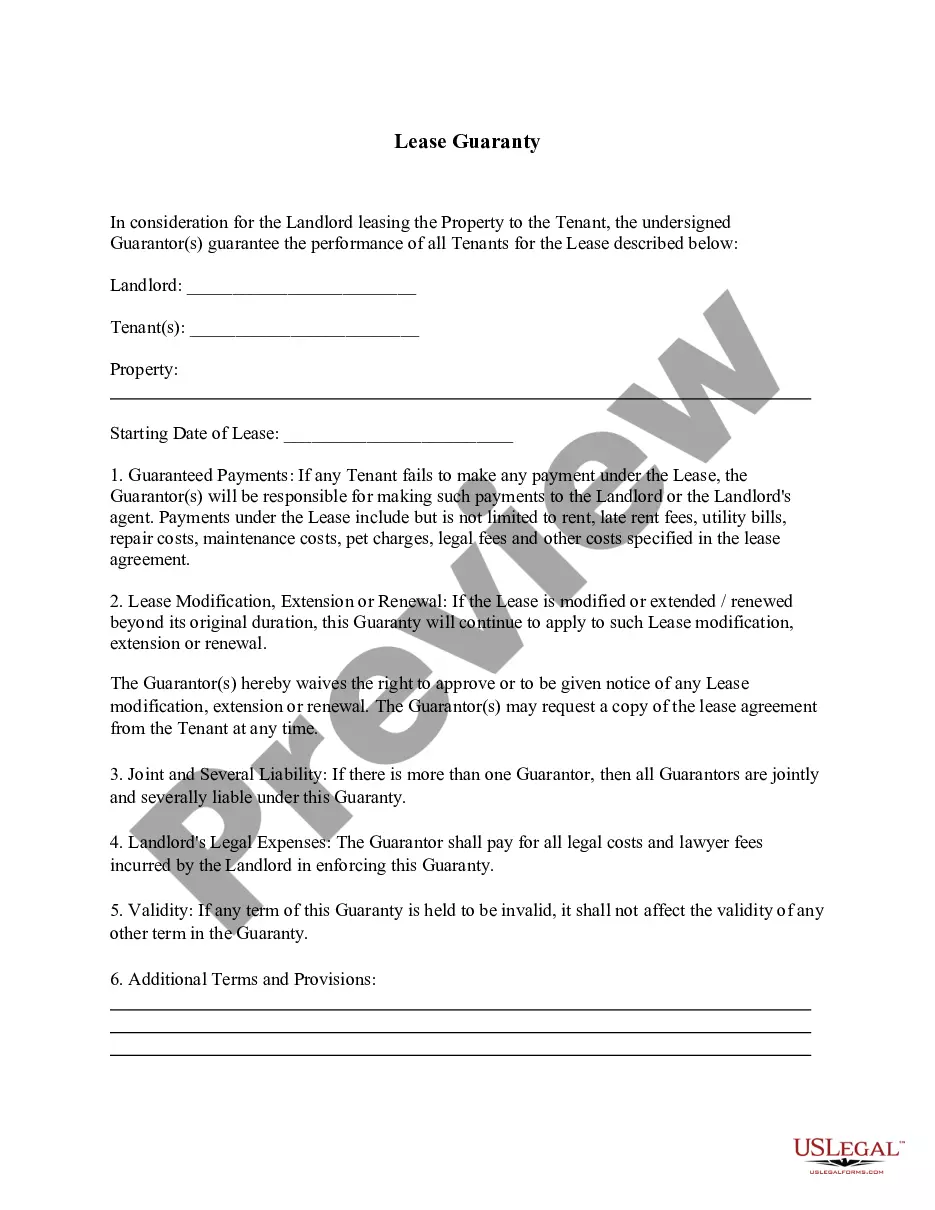
The Guaranty Attachment to Lease for Guarantor or Cosigner is a legal document that enables a third party to co-sign a lease agreement. This form holds the guarantor responsible for ensuring the payment of rent if the main tenant fails to do so. Unlike regular lease agreements, this attachment specifically outlines the guarantor's obligations and serves as an assurance to the landlord for rent payments.
Key parts of this document
- Guarantor's address: Indicates where the guarantor resides.
- Lessor's name: The name of the landlord or property owner.
- Dated signature fields: Spaces for both the lessor and guarantor to sign and date the form.
When this form is needed
This form is necessary when a tenant lacks sufficient credit or income to qualify for a lease on their own. It is commonly used in rental situations where the landlord requires additional security against potential non-payment of rent. If a friend or family member is willing to guarantee the lease, this document formalizes that agreement.
Intended users of this form
- Tenants looking for a lease but lacking sufficient credit history or income.
- Friends or family members willing to act as guarantors for a tenant.
- Landlords who want additional security for rental agreements.
Steps to complete this form
- Identify the parties involved: Clearly state the lessor and the guarantor's names and addresses.
- Specify the property: Include details about the rental property covered by the lease.
- Enter dates: Fill in the date of the agreement for both parties.
- Obtain signatures: Both the lessor and guarantor must sign and date the document to make it legally binding.
Does this form need to be notarized?
Notarization is generally not required for this form. However, certain states or situations might demand it. You can complete notarization online through US Legal Forms, powered by Notarize, using a verified video call available anytime.
Get your form ready online
Our built-in tools help you complete, sign, share, and store your documents in one place.
Make edits, fill in missing information, and update formatting in US Legal Forms—just like you would in MS Word.
Download a copy, print it, send it by email, or mail it via USPS—whatever works best for your next step.
Sign and collect signatures with our SignNow integration. Send to multiple recipients, set reminders, and more. Go Premium to unlock E-Sign.
If this form requires notarization, complete it online through a secure video call—no need to meet a notary in person or wait for an appointment.
We protect your documents and personal data by following strict security and privacy standards.

Make edits, fill in missing information, and update formatting in US Legal Forms—just like you would in MS Word.

Download a copy, print it, send it by email, or mail it via USPS—whatever works best for your next step.

Sign and collect signatures with our SignNow integration. Send to multiple recipients, set reminders, and more. Go Premium to unlock E-Sign.

If this form requires notarization, complete it online through a secure video call—no need to meet a notary in person or wait for an appointment.

We protect your documents and personal data by following strict security and privacy standards.
Mistakes to watch out for
- Failing to include the full legal names and addresses of all parties.
- Not obtaining signatures from both the guarantor and lessor.
- Leaving blank spaces that should be filled in, such as dates or specific property details.
Advantages of online completion
- Convenience: Access the form anytime and download it at your convenience.
- Editability: Modify the template easily to suit your specific needs.
- Reliability: Ensure the form is drafted based on current legal standards and practices.
Key takeaways
- The Guaranty Attachment to Lease formalizes a third party's commitment to cover unpaid rent.
- Use this form when tenants may not qualify for a lease independently.
- Make sure that all parties sign and date the document for it to be effective.
Looking for another form?
Form popularity
FAQ
Whether to be a co-applicant or a guarantor depends on your situation and willingness to share responsibility. A co-applicant joins the lease and has equal liabilities, while a guarantor takes on the risk of covering rent without being on the lease. If you want to maintain a degree of separation from the lease, acting as a guarantor may be more suitable. Explore the Iowa Guaranty Attachment to Lease for Guarantor or Cosigner to understand your options.
A guarantor generally needs to complete a guarantor application form, which often requests personal information, financial details, and employment verification. They may also need to review and sign an Iowa Guaranty Attachment to Lease for Guarantor or Cosigner. Completing these documents helps establish their financial responsibility in ensuring the lease obligations are met. Being thorough increases the likelihood of approval.
When writing a guarantor agreement, include essential details like the guarantor's full name, the lease terms, and their specific obligations. Additionally, incorporating the Iowa Guaranty Attachment to Lease for Guarantor or Cosigner adds legal weight to the document. Clearly state the terms to prevent any misunderstandings. This written format helps ensure that everyone knows their rights and responsibilities.
An addendum to a co-signer lease is a document that outlines specific terms and responsibilities for the co-signer. It typically details the obligations, payment processes, and rights of the co-signer concerning the lease. This helps incorporate the Iowa Guaranty Attachment to Lease for Guarantor or Cosigner and ensures all parties are clear on their commitments. Including this addendum solidifies the agreement between tenant and co-signer.
To list a guarantor on a lease, you should create a dedicated section within the lease documents that includes their name, contact information, and signature. Many landlords also require the Iowa Guaranty Attachment to Lease for Guarantor or Cosigner as part of this process. This document formalizes their commitment and ensures they understand their responsibilities. Including this information clearly helps avoid any confusion in the future.
Including a guarantor in a lease is a straightforward process. You can add a section specifying the guarantor's responsibilities and liabilities in the lease agreement or utilize a specific Iowa Guaranty Attachment to Lease for Guarantor or Cosigner. This ensures clarity regarding the guarantor's obligations. Always communicate these details with the landlord and involved parties.
signer guarantor agreement combines elements of both cosigning and guaranteeing. This document is used to establish that one party will be liable if the tenant does not fulfill their lease obligations. Utilizing the Iowa Guaranty Attachment to Lease for Guarantor or Cosigner can provide clarity on the roles and responsibilities of each party. Therefore, it is vital to understand this agreement to mitigate any potential conflicts.
Yes, you can add a guarantor to a lease, but it often requires the landlord's approval. Incorporating the Iowa Guaranty Attachment to Lease for Guarantor or Cosigner into your agreement ensures that all parties understand their responsibilities. This step protects both the tenant and the landlord by clearly outlining the guarantees involved. Always consult with the landlord to make sure they accept this addition.
Landlords might prefer to avoid cosigners due to the added complexity they bring to lease agreements. Cosigners share responsibility, which could complicate matters if disputes arise. Landlords often favor the clarity that comes with an Iowa Guaranty Attachment to Lease for Guarantor or Cosigner, as it clearly defines who is accountable for the lease, minimizing potential conflicts.
The decision between a cosigner and a guarantor depends on your individual needs. A cosigner typically shares responsibility for the lease, while a guarantor generally backs the lease without being equally liable. This distinction makes the Iowa Guaranty Attachment to Lease for Guarantor or Cosigner crucial for understanding your specific obligations. Evaluate your situation carefully to choose the suitable option.