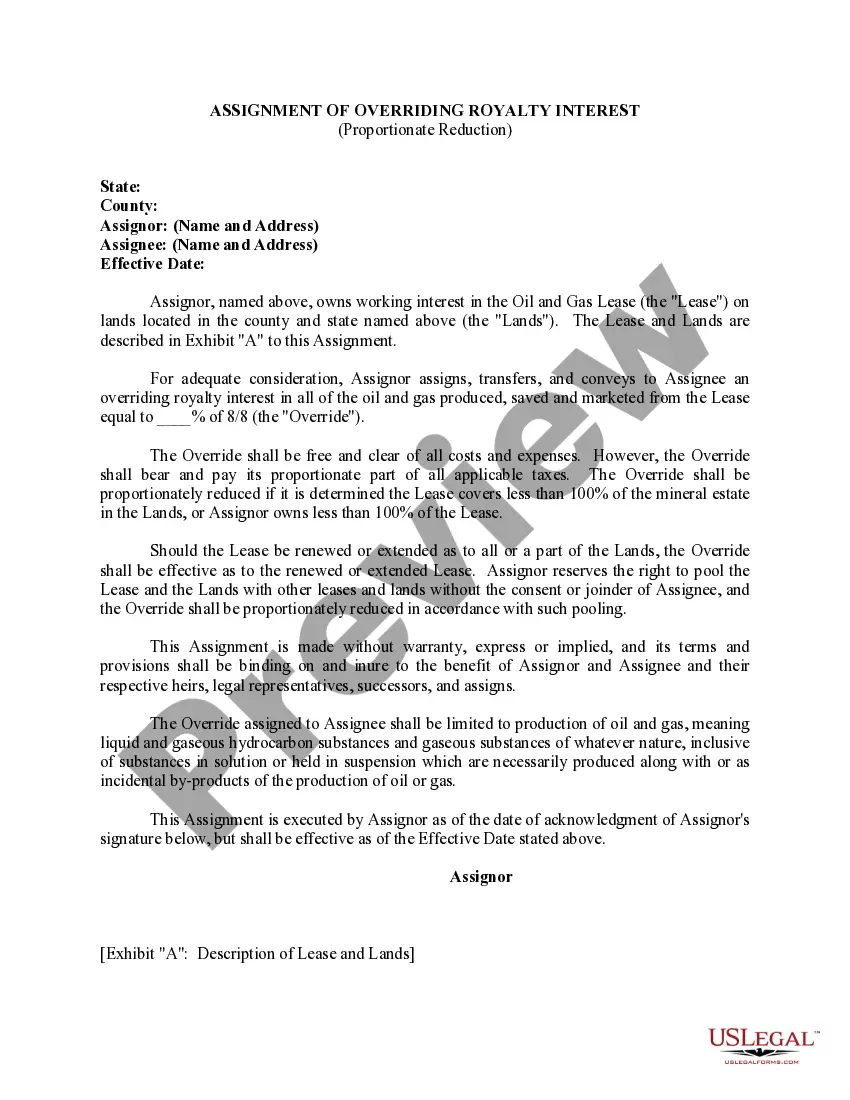
Roommate Agreement
What is this form?
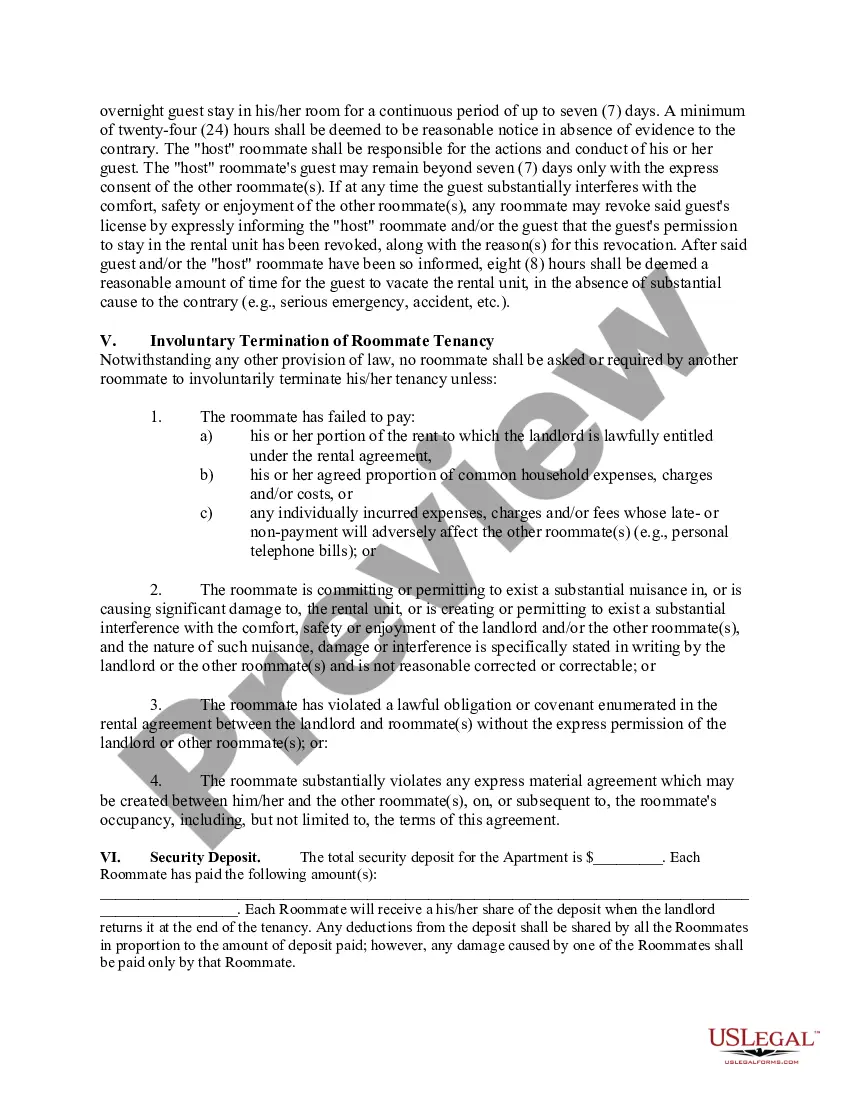
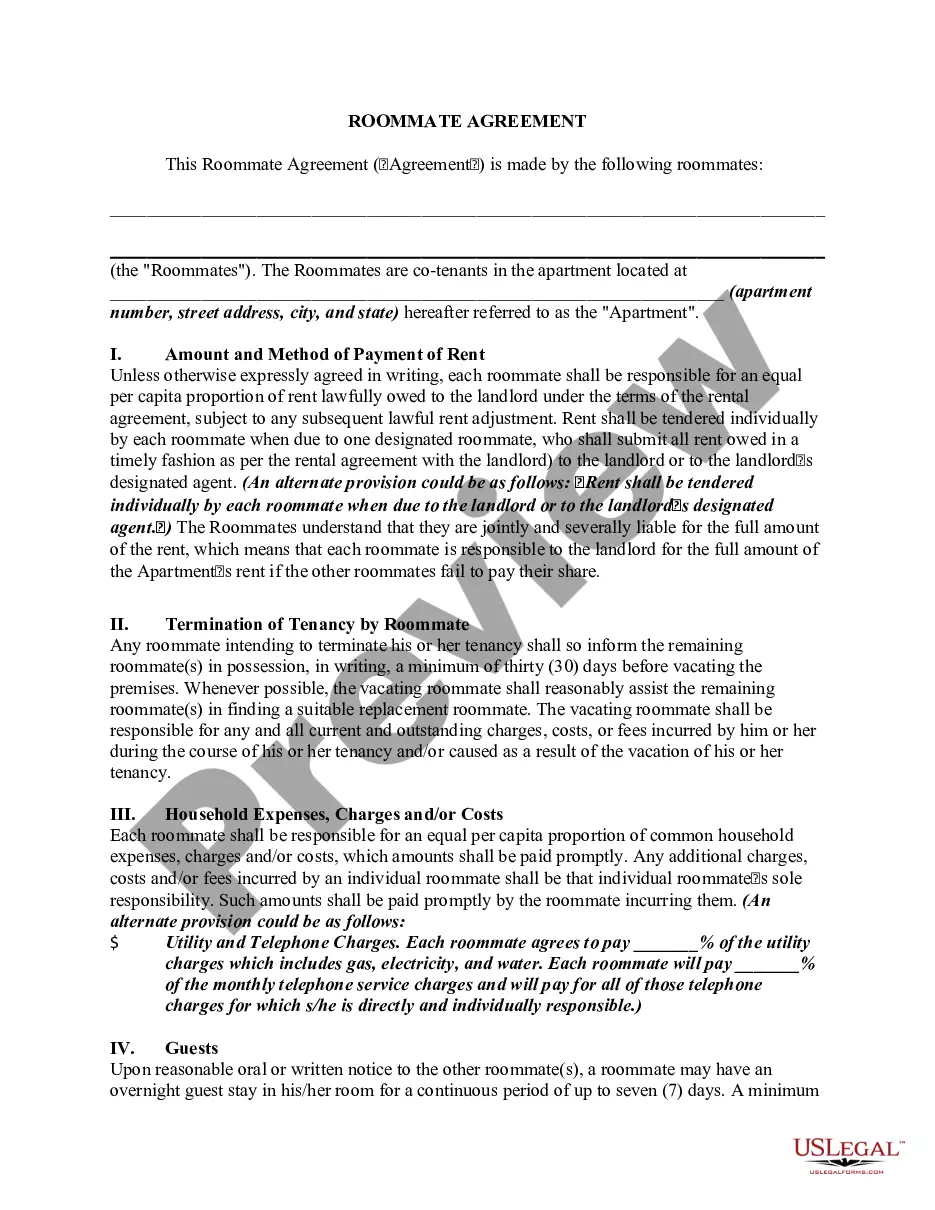
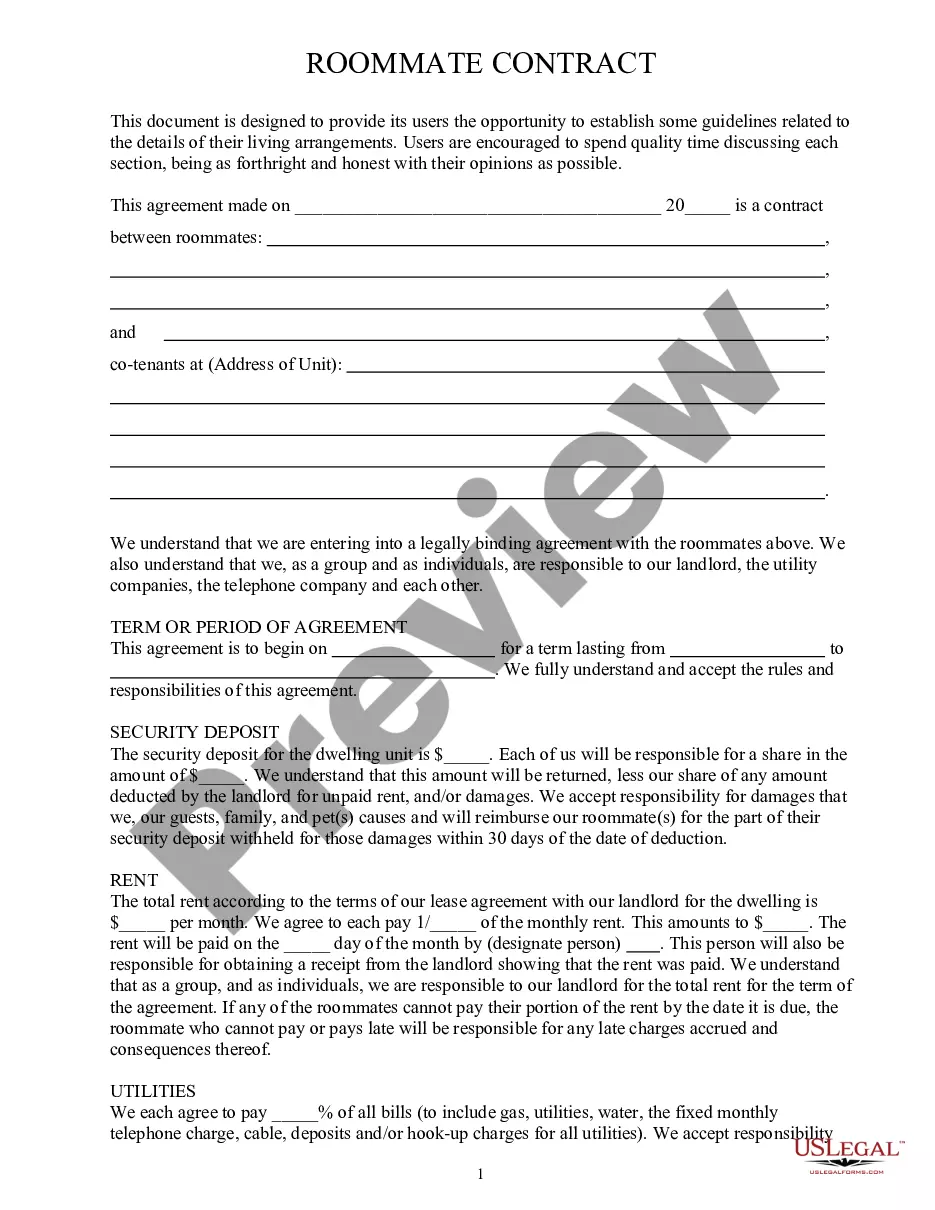
The Roommate Agreement is a legal document created to outline the responsibilities and agreements between individuals sharing living space. This form is tailored for both school roommates and those sharing expenses for other reasons, helping to prevent misunderstandings and conflicts. Unlike a rental lease, this agreement is solely focused on the relationship between roommates concerning shared bills, household rules, and tenancy conditions.
Main sections of this form
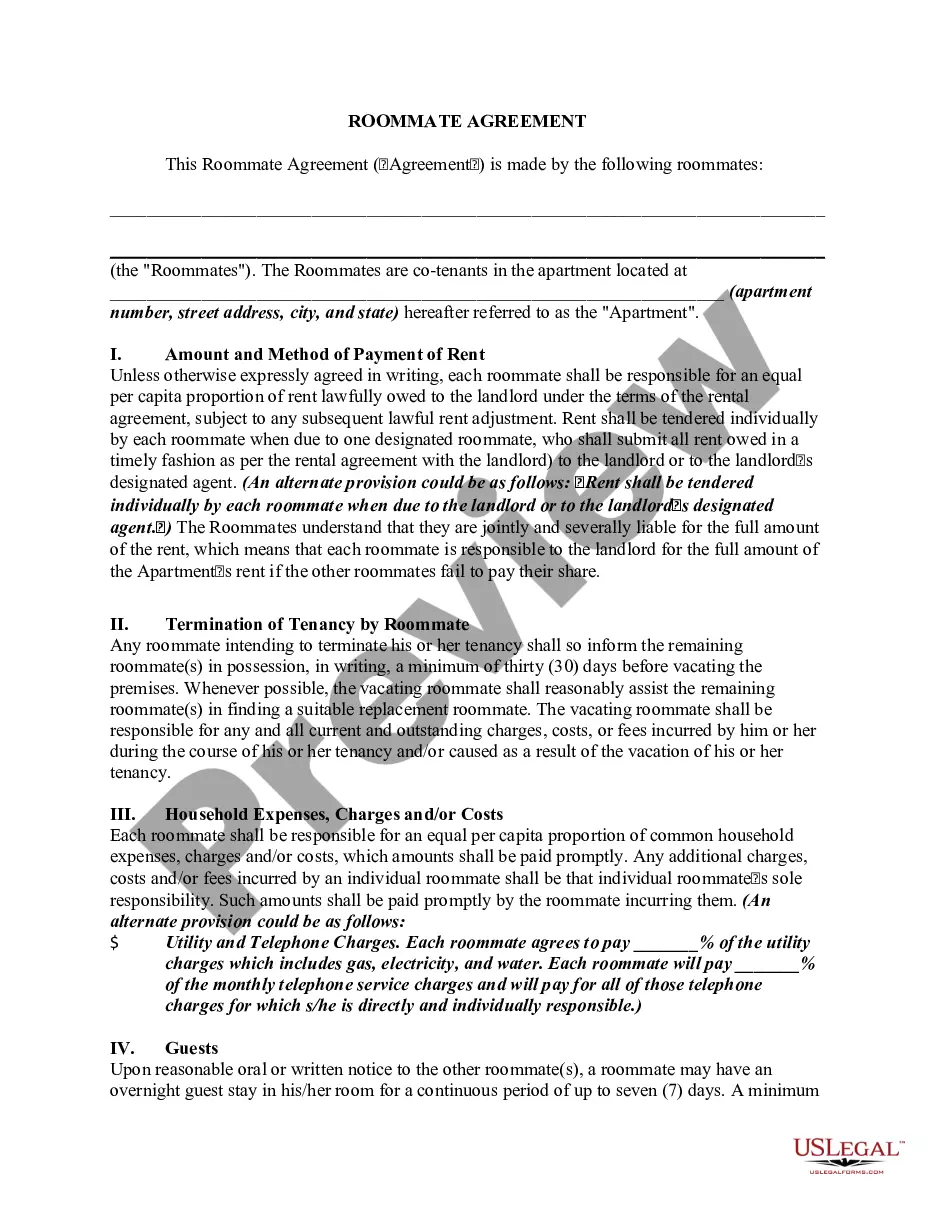
- Rent responsibilities, detailing each roommate's share and payment methods.
- Notification process for terminating the tenancy and finding replacements.
- Agreement on household expenses, including utilities and other shared costs.
- Policies on guests, including notice and duration rules.
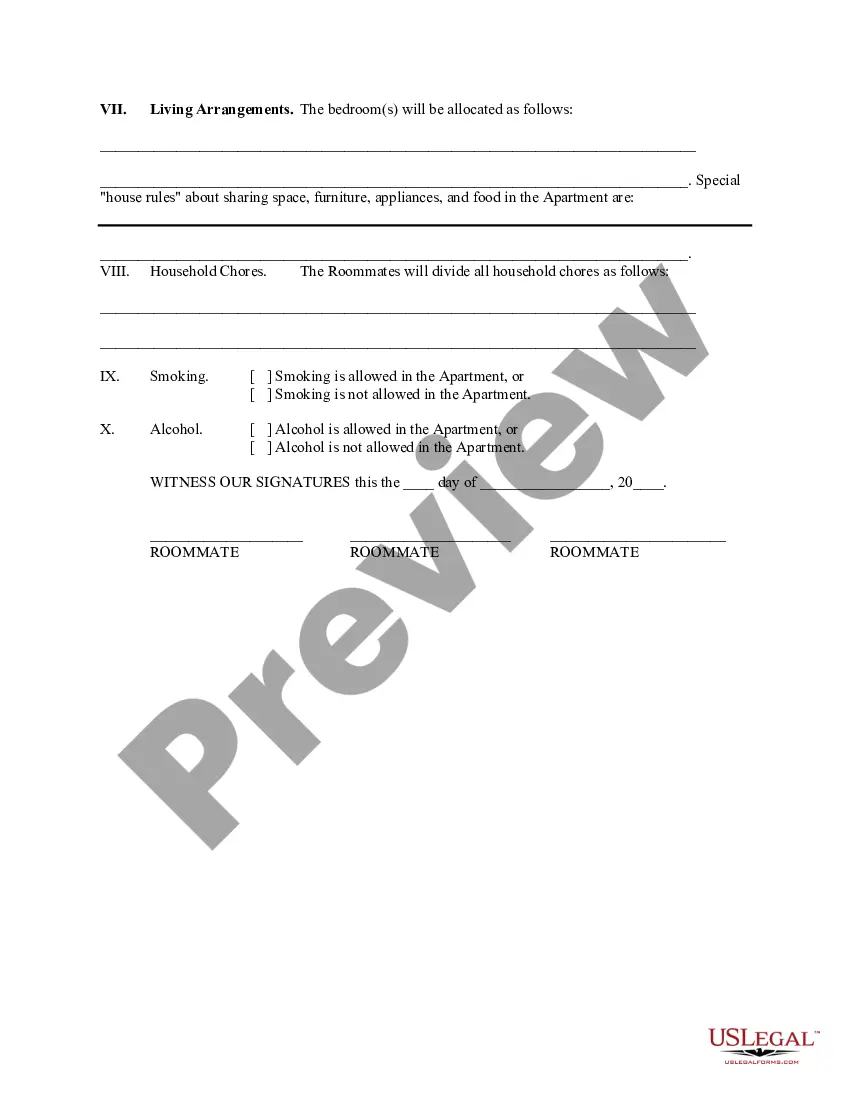
- Specific clauses about smoking and alcohol consumption within the apartment.
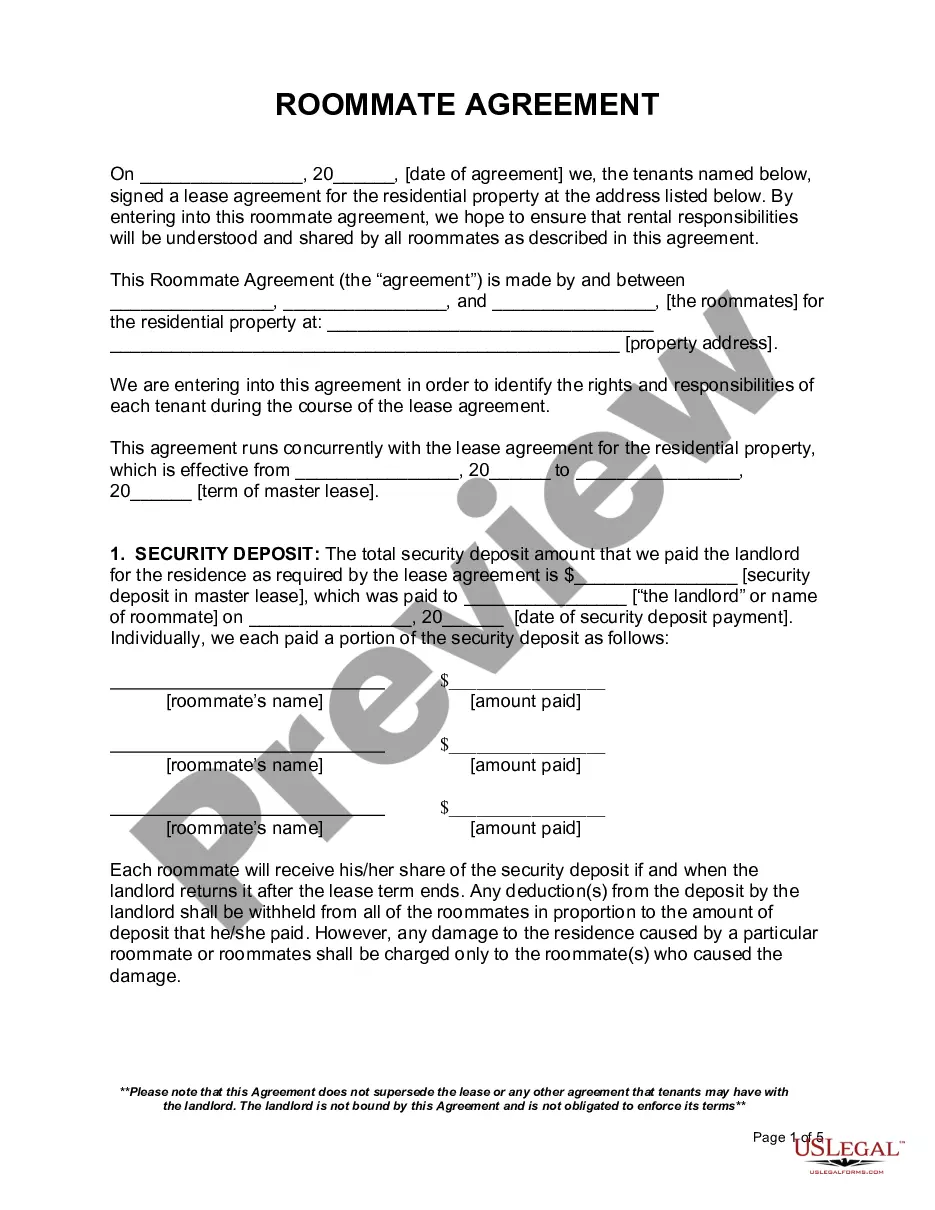
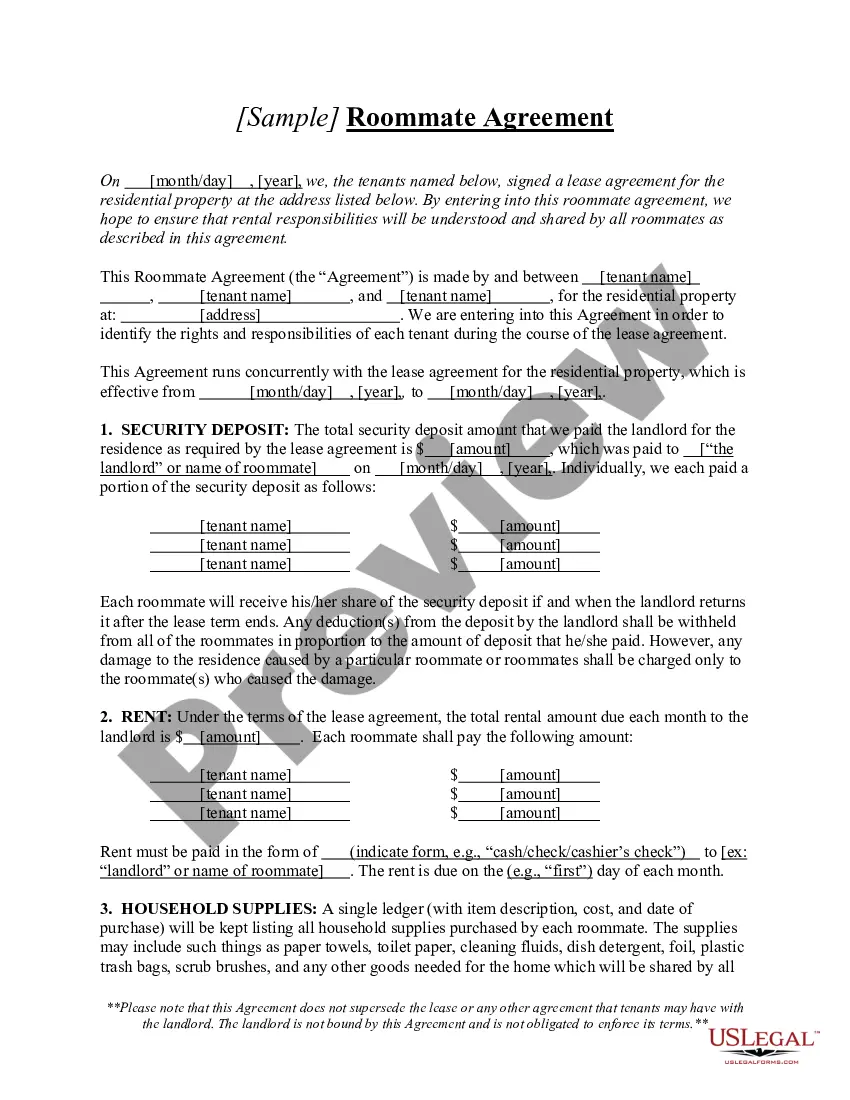
- Security deposit handling and distribution upon tenancy termination.
- Division of household chores and responsibilities.

When this form is needed
This form is ideal when entering a shared living arrangement, whether for college students in dorms or friends renting an apartment together. It can be used when roommates want to set clear expectations for financial contributions, household responsibilities, and behavioral norms to foster a harmonious living environment.
Who can use this document
- Individuals sharing an apartment or house.
- College students sharing dormitory spaces.
- Friends or family members entering a co-living arrangement.
- People seeking to establish clear terms to avoid conflicts with roommates.
How to complete this form
- Identify all the roommates involved and provide their names.
- Specify the apartment address where the roommates will reside.
- Outline the payment method for rent and other shared expenses.
- Detail any house rules, including those on guests, smoking, and alcohol.
- Agree on the division of chores and responsibilities.
- Sign and date the agreement to formalize the terms.
Notarization requirements for this form
This form does not typically require notarization unless specified by local law. It is generally sufficient for the roommates to sign the agreement to make it legally binding.
Get your form ready online
Our built-in tools help you complete, sign, share, and store your documents in one place.
Make edits, fill in missing information, and update formatting in US Legal Forms—just like you would in MS Word.
Download a copy, print it, send it by email, or mail it via USPS—whatever works best for your next step.
Sign and collect signatures with our SignNow integration. Send to multiple recipients, set reminders, and more. Go Premium to unlock E-Sign.
If this form requires notarization, complete it online through a secure video call—no need to meet a notary in person or wait for an appointment.
We protect your documents and personal data by following strict security and privacy standards.
Make edits, fill in missing information, and update formatting in US Legal Forms—just like you would in MS Word.
Download a copy, print it, send it by email, or mail it via USPS—whatever works best for your next step.
Sign and collect signatures with our SignNow integration. Send to multiple recipients, set reminders, and more. Go Premium to unlock E-Sign.
If this form requires notarization, complete it online through a secure video call—no need to meet a notary in person or wait for an appointment.
We protect your documents and personal data by following strict security and privacy standards.
Mistakes to watch out for
- Not detailing the payment schedule for rent and utilities.
- Forgetting to outline household rules and expectations.
- Neglecting to provide written notice for tenancy termination.
- Failing to specify the division of chores, leading to conflicts.
- Assuming verbal agreements are sufficient without written confirmation.
Why complete this form online
- Convenient download and instant access to the form.
- Editability allows users to customize sections to fit their specific living situations.
- Reliability as it is drafted by licensed attorneys to ensure legal compliance.
- Easy to share with all roommates for agreement prior to signing.
Quick recap
Key Takeaways:
- A Roommate Agreement establishes clear roles and responsibilities among shared tenants.
- Addresses issues like rent payment, household duties, and guest policies.
- It is important for preventing misunderstandings and legal conflicts.
- Completing the agreement thoughtfully can lead to a more harmonious living situation.
Looking for another form?



Form popularity
FAQ
Establish some basic rules. Don't borrow without asking. Respect the other person's space. Follow the Golden Rule. Be respectful when inviting guests. Clean up your own messes. Keep your hands off the other person's food. Respect the need for quiet time.
Yes, someone can live with the tenant without being on the lease. However, it is important to distinguish the difference between a guest and a long-term guest.
Start the agreement by writing the names of both roommates and the complete address of the residence, including the unit number of the apartment if you are living in an apartment building. Agree on the division of the rent payment. Specify the exact amount of rent each roommate will pay each month.
A roommate agreement is a legally binding document that you and whomever you share your living space with will sign.A rental agreement between roommates is separate from the lease agreement and doesn't include the landlord.
If you're a month-to-month tenant, give the required amount of written notice (usually 30 days) immediately. If you have a lease, let the landlord know in writing that you plan to move because you cannot afford the rent without your cotenant.
A roommate agreement is a legally binding document that you and whomever you share your living space with will sign. It spells out how you will split bills, share items or food, use and maintain common areas and eventually move out.
If you and your roommate are both named on the lease, you are considered co-tenants and both pay rent to the landlord. You cannot evict a co-tenant.If your roommate is not paying rent, doing something illegal in the unit, or damaging the apartment, your landlord may step in to evict them for you.
Assuming that your roommate agreement otherwise is legally sufficient, it does not need to be notarized to be legally binding.
Even if your roommate is a co-tenant, having a roommate agreement is wise because it explains what's allowed, what's not allowed, and who's responsible for certain payments. A roommate agreement is also important because, if your roommate vacates early, it can help you avoid having to pay all of the rent and utilities.