Roommate Agreement for Friends
Overview of this form
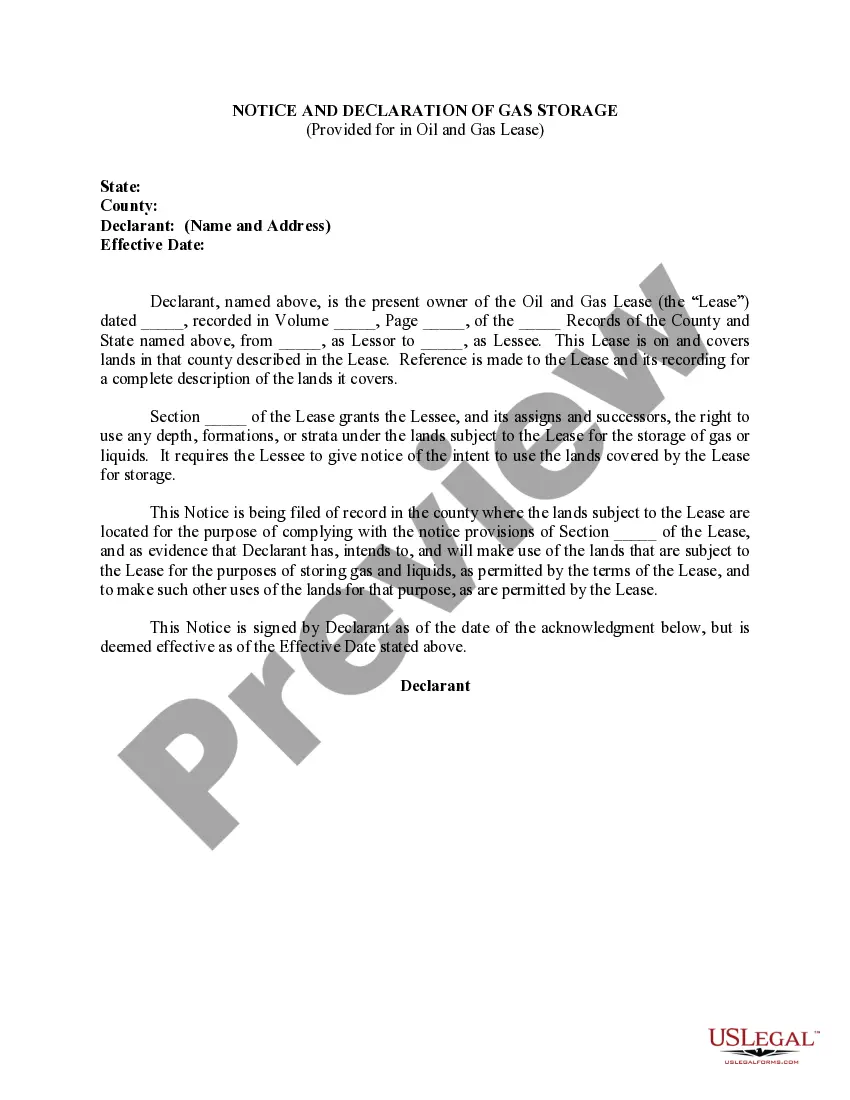
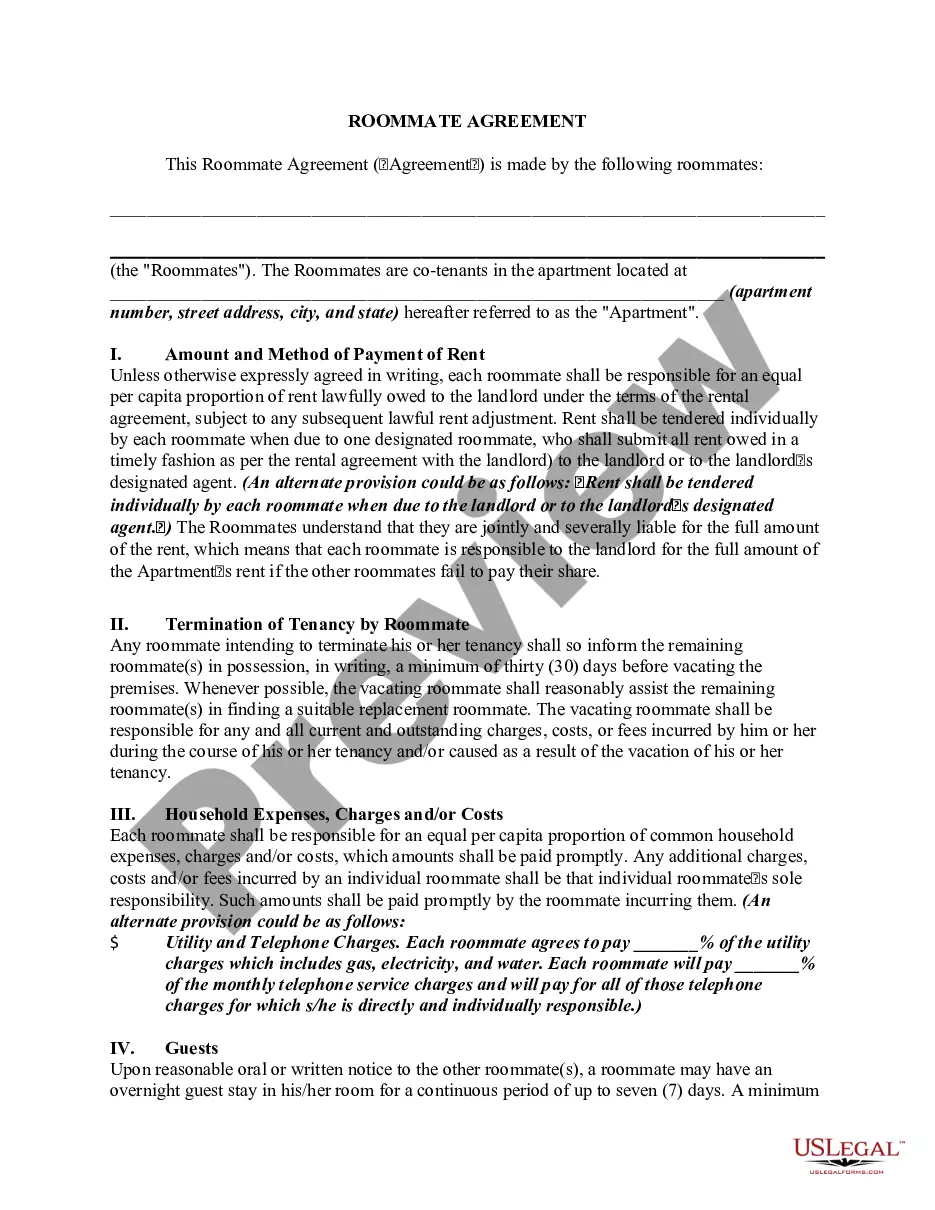
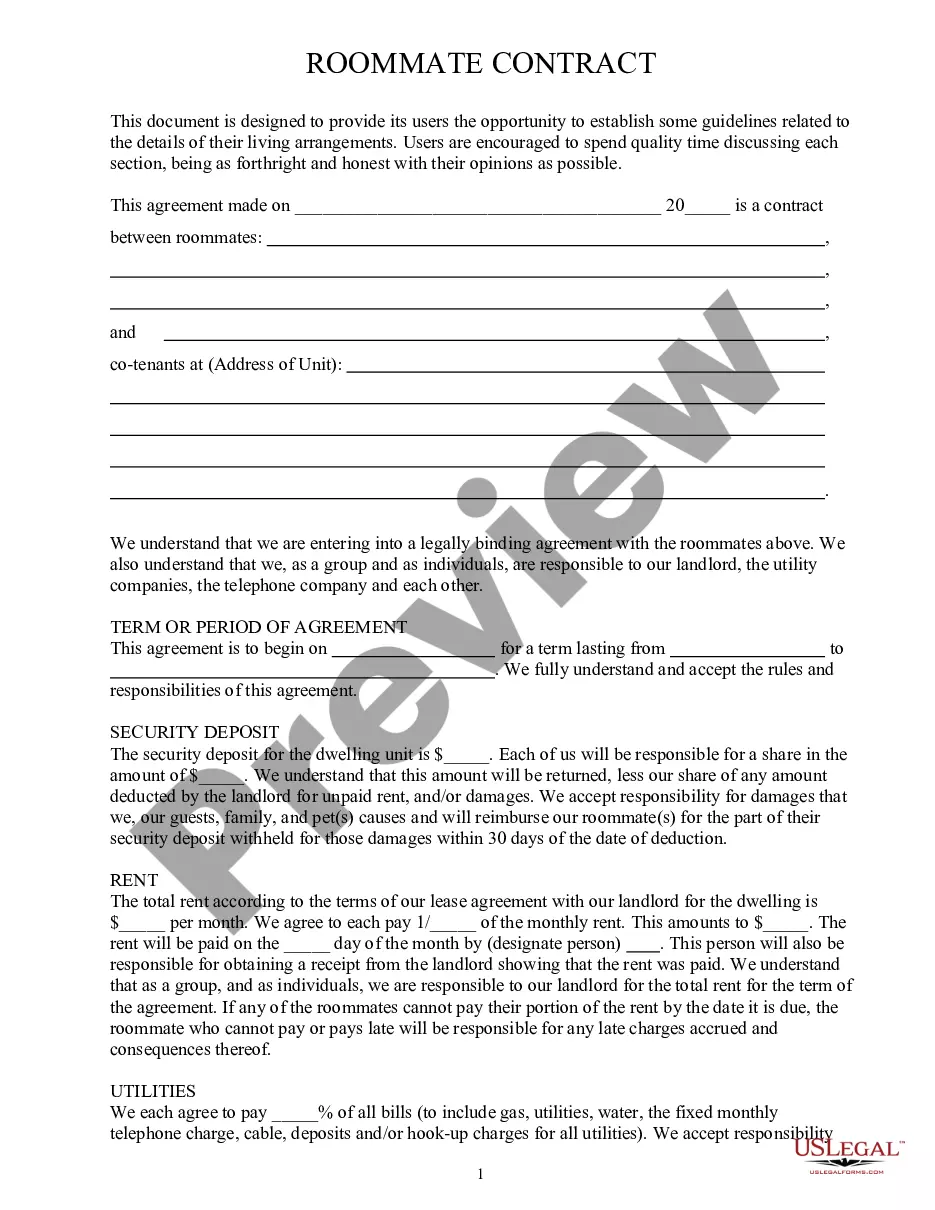
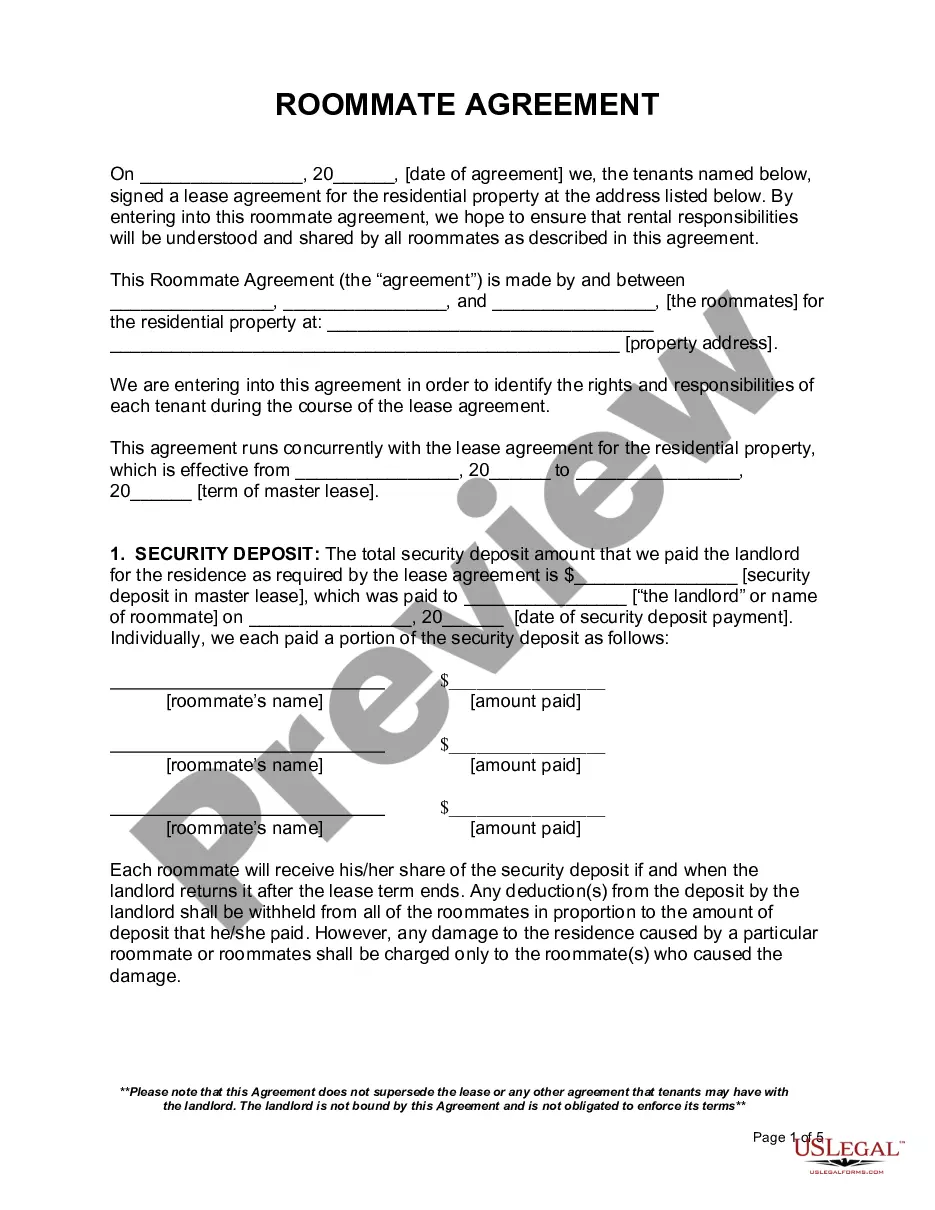
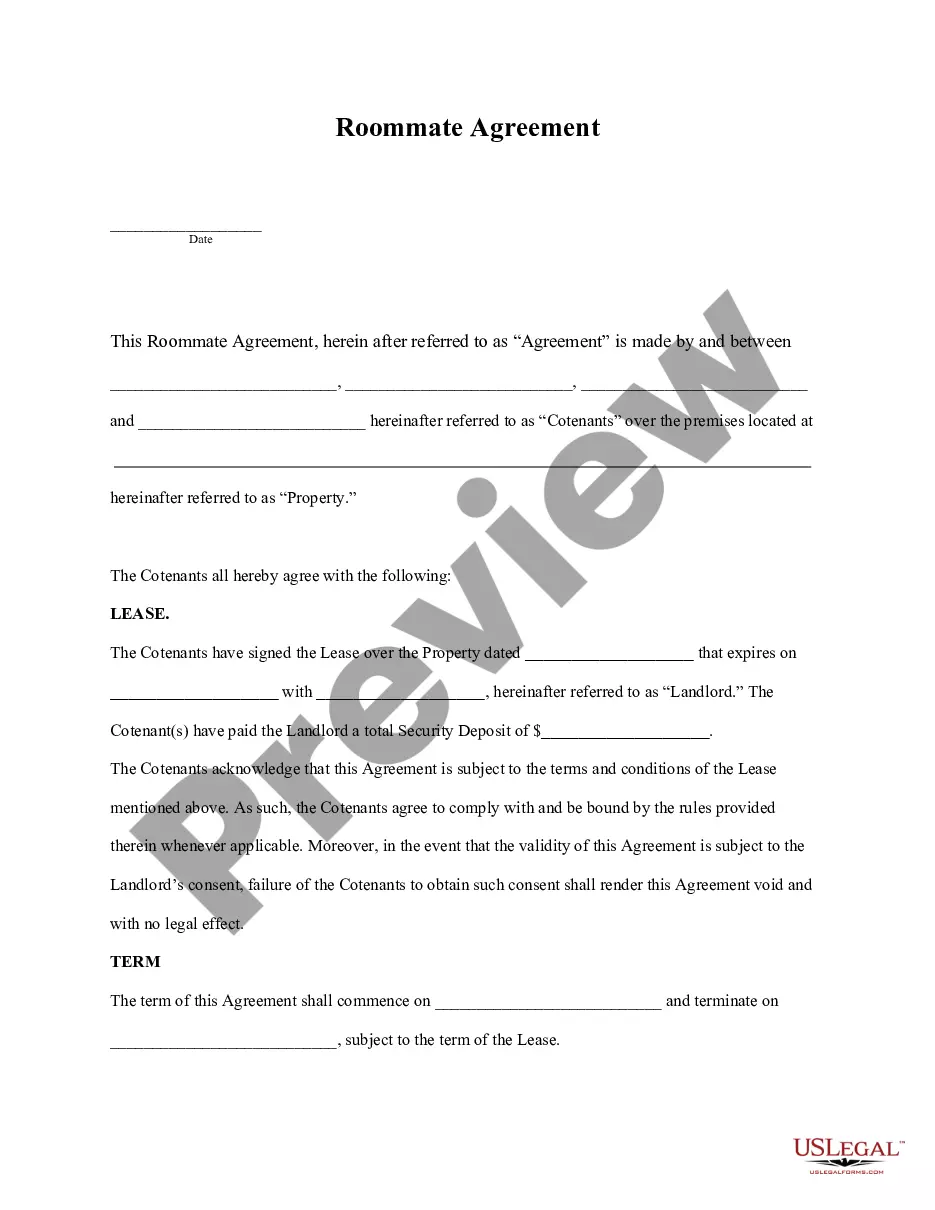
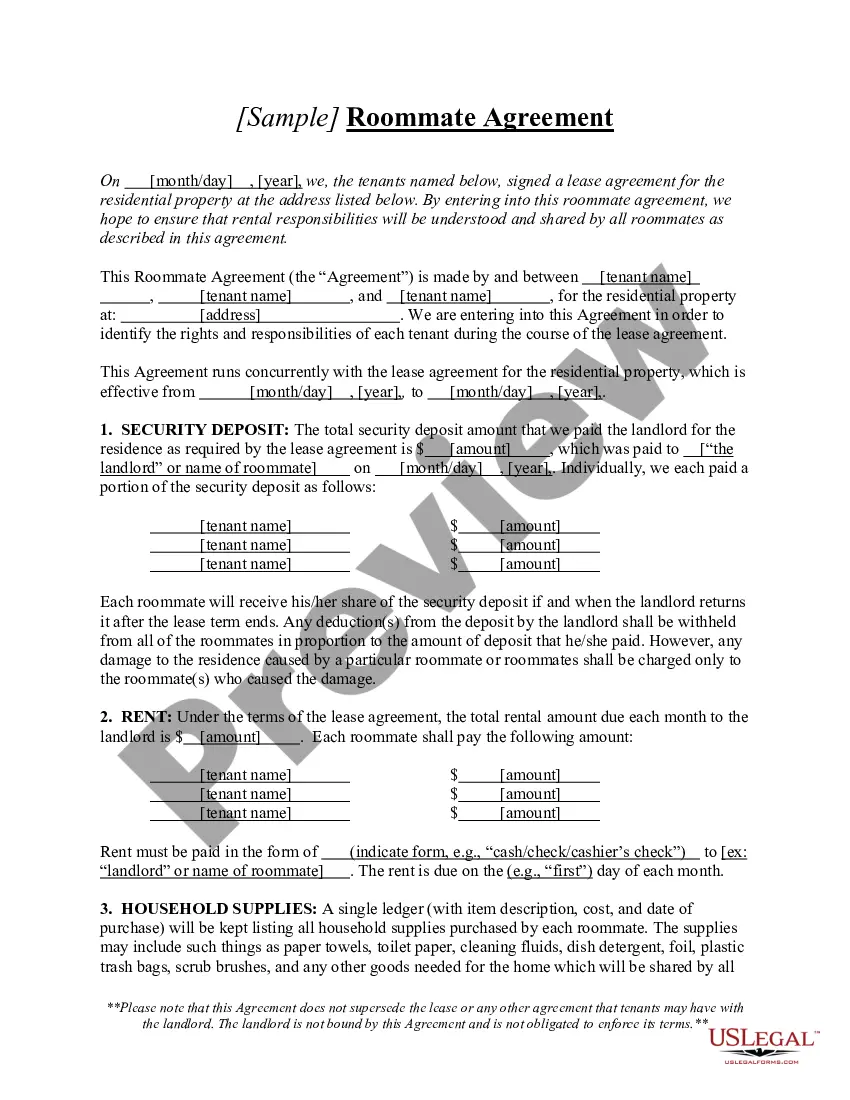
The Roommate Agreement for Friends is a legal document that outlines the responsibilities and expectations of individuals sharing living space, like college roommates or friends cohabiting. This form helps prevent misunderstandings by detailing payment obligations, household responsibilities, and rules regarding guests. Unlike single-occupancy rental agreements, this form is specifically tailored for multi-occupancy situations where individuals need to agree upon various aspects of living together.
What’s included in this form
- Rent responsibilities: Details the amount and method of rent payment and joint liability for the total rent.
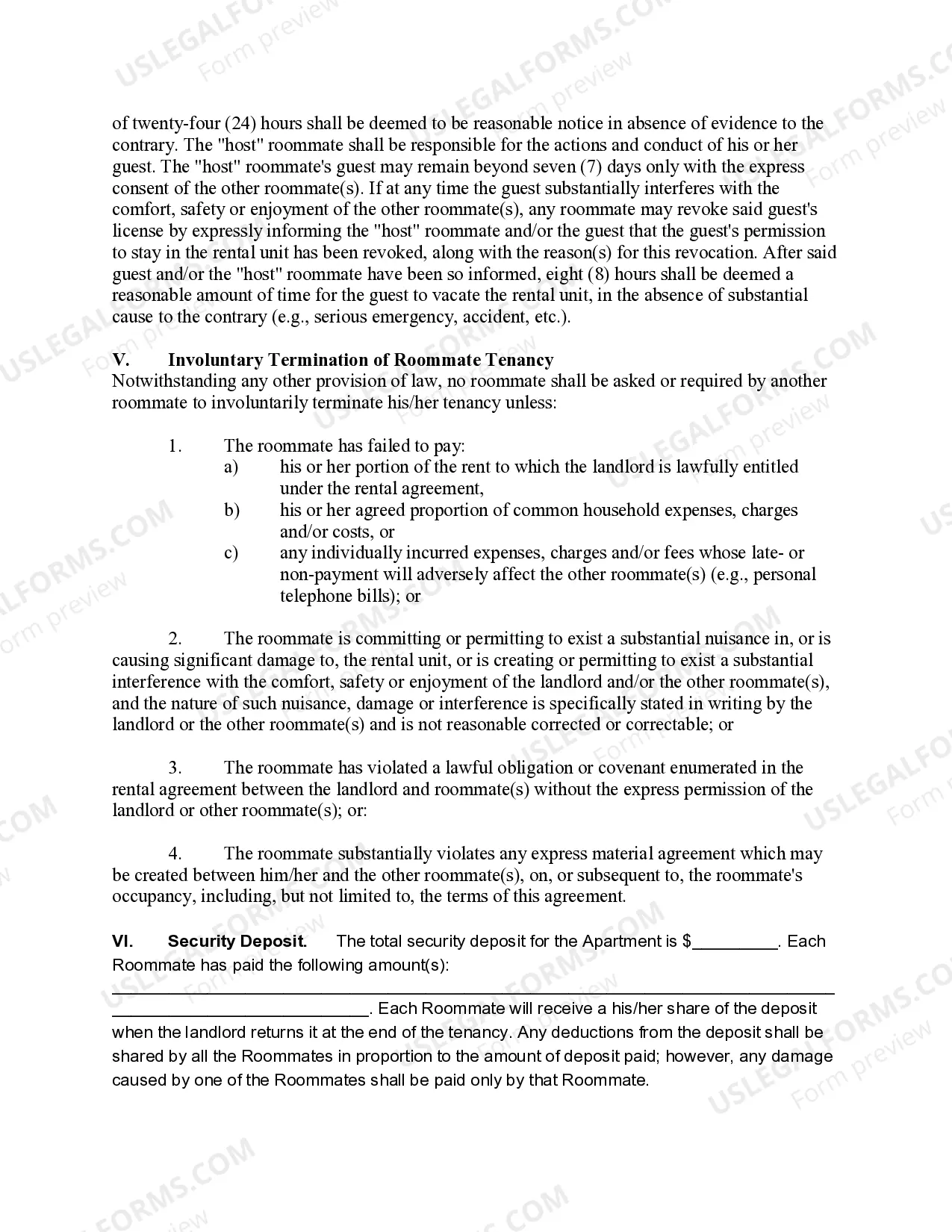
- Termination notice: Specifies the process and notice period required for a roommate to vacate the premises.
- Household expenses: Outlines shared expenses and individual responsibilities for utility payments.
- Guest policy: Describes rules for having guests and the process for handling issues with guests.
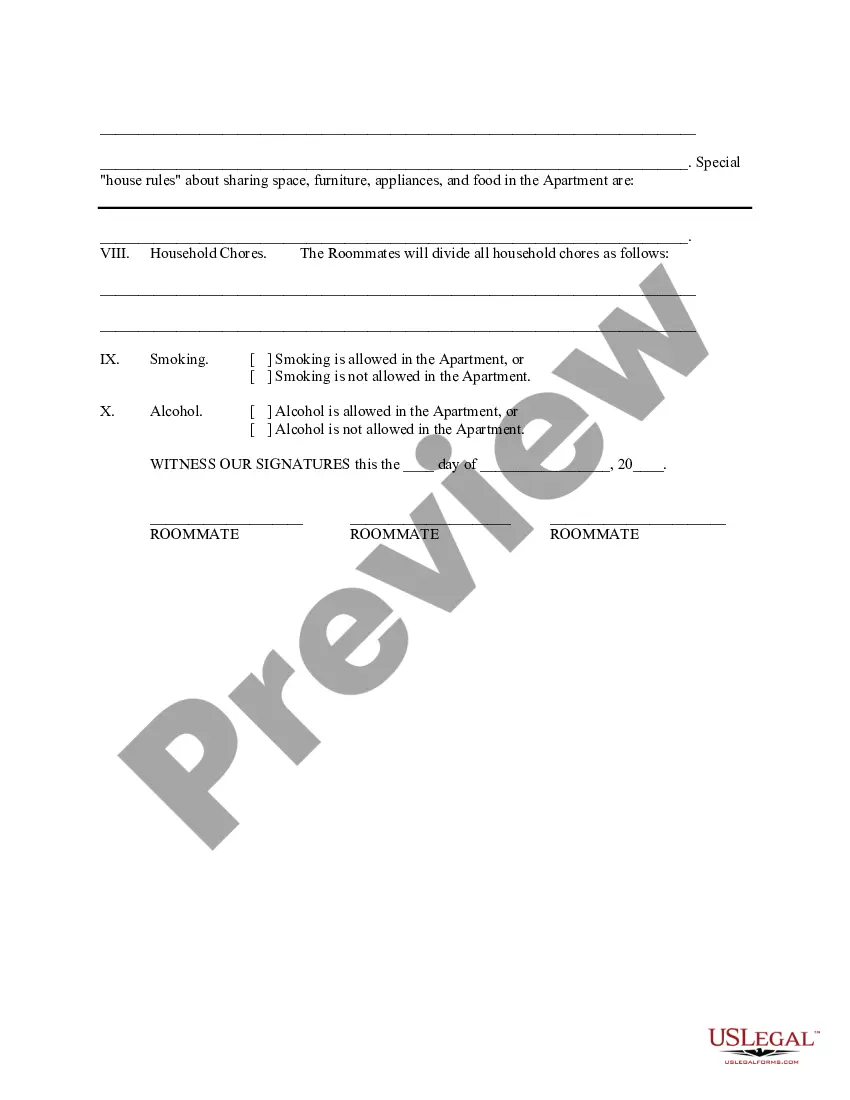
- Living arrangements: Allocates bedroom assignments and special rules about shared spaces.
- Chore division: Details how household chores will be divided among roommates.

Situations where this form applies
This form is useful in various situations, including when friends decide to live together to share rent and utilities, when college students room with each other, or when individuals are looking for a clear understanding of household responsibilities. It can help avoid disputes by clarifying each roommate's obligations from the outset.
Who should use this form
This form is intended for:
- Friends planning to share living space.
- College students needing to establish guidelines for apartment living.
- Individuals looking for a clear agreement on shared responsibilities and expenses in a rental situation.
Completing this form step by step
- Identify the parties: Enter the names of all roommates involved in the agreement.
- Specify the property: Fill in the complete address of the apartment being rented.
- Outline financial responsibilities: Clearly state the amount of rent and how utilities will be shared.
- Detail living arrangements: Allocate bedrooms and any special rules for shared spaces.
- Agree on guest policies: Decide and document how guests will be handled.
- Sign and date: All parties should sign the form to make it legally binding.
Does this form need to be notarized?
This form does not typically require notarization to be legally valid. However, some jurisdictions or document types may still require it. US Legal Forms provides secure online notarization powered by Notarize, available 24/7 for added convenience.
Get your form ready online
Our built-in tools help you complete, sign, share, and store your documents in one place.
Make edits, fill in missing information, and update formatting in US Legal Forms—just like you would in MS Word.
Download a copy, print it, send it by email, or mail it via USPS—whatever works best for your next step.
Sign and collect signatures with our SignNow integration. Send to multiple recipients, set reminders, and more. Go Premium to unlock E-Sign.
If this form requires notarization, complete it online through a secure video call—no need to meet a notary in person or wait for an appointment.
We protect your documents and personal data by following strict security and privacy standards.

Make edits, fill in missing information, and update formatting in US Legal Forms—just like you would in MS Word.

Download a copy, print it, send it by email, or mail it via USPS—whatever works best for your next step.

Sign and collect signatures with our SignNow integration. Send to multiple recipients, set reminders, and more. Go Premium to unlock E-Sign.

If this form requires notarization, complete it online through a secure video call—no need to meet a notary in person or wait for an appointment.

We protect your documents and personal data by following strict security and privacy standards.
Common mistakes to avoid
- Failing to specify payment methods for rent and utilities.
- Not outlining a clear process for replacing a vacating roommate.
- Neglecting to include consequences for non-compliance with house rules or financial responsibilities.
Benefits of completing this form online
- Convenience: Downloadable format allows quick access and easy sharing among roommates.
- Customizability: Easily modify sections to suit specific situations or preferences.
- Cost-effective: Saves time and money by providing an affordable solution for establishing agreements.
Legal use & context
- This agreement establishes clear expectations among roommates, which can help in resolving disputes amicably.
- Enforcement of this agreement may vary based on local landlord-tenant laws and cannot supersede any terms set forth in the lease with the landlord.
- Having a written agreement can strengthen one's legal position in case of disputes involving roommates or landlords.
Looking for another form?

Form popularity
FAQ
Assuming that your roommate agreement otherwise is legally sufficient, it does not need to be notarized to be legally binding.
Even if your roommate is a co-tenant, having a roommate agreement is wise because it explains what's allowed, what's not allowed, and who's responsible for certain payments. A roommate agreement is also important because, if your roommate vacates early, it can help you avoid having to pay all of the rent and utilities.
Start the agreement by writing the names of both roommates and the complete address of the residence, including the unit number of the apartment if you are living in an apartment building. Agree on the division of the rent payment. Specify the exact amount of rent each roommate will pay each month.
Standard rental and lease agreements often state: Guests may stay a maximum of 14 days in a six-month period or 7 nights consecutively on the property. Any guest residing on the property for more than 14 days in a six-month period or spending more than 7 nights consecutively will be considered a tenant.
A roommate agreement is a legally binding document that you and whomever you share your living space with will sign.A rental agreement between roommates is separate from the lease agreement and doesn't include the landlord.
Establish House Rules from the Start. Talk about preferences from the start. Communication is Key. One thing that can complicate any living situation is lack of communication. Compromise. Food/Shopping/Household Supplies. Cleanliness/Cleaning Responsibilities. Community/Personal Property. Study Hours/Sleeping. Guests/Visitors.
The Name/s of All the Tenants Who Will be Renting the Room. Limitations of the Tenancy. Terms of the Occupancy. Rental Fees. Security Deposits and Other Fees. Arrangement on Maintenance and Repairs. Owner's Entry to the Property.
The price of rent. Splitting bills: Who pays what and when? Moving out early. How the security deposit will be handled. Roommates who have pets (or want one) Lay out your schedules on paper. When private time should be respected. Guests and significant others.