Grievance Pursuant to a Union Contract
What this document covers
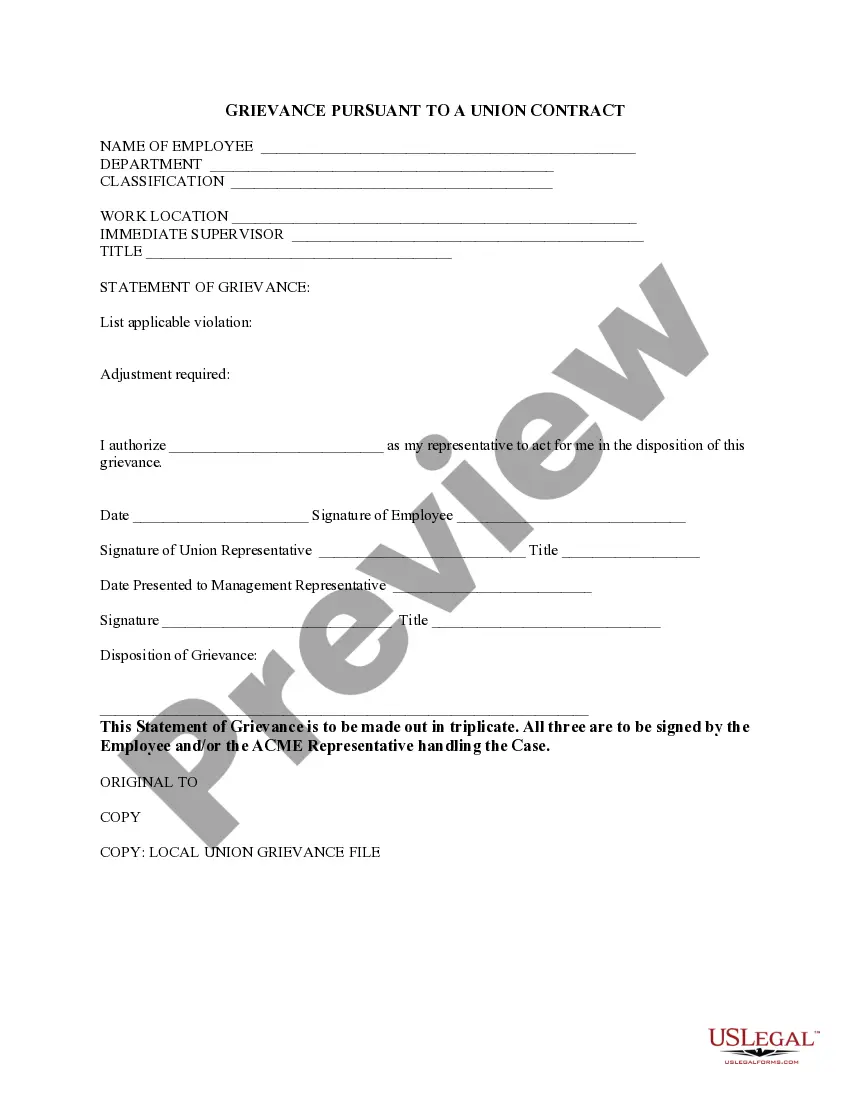
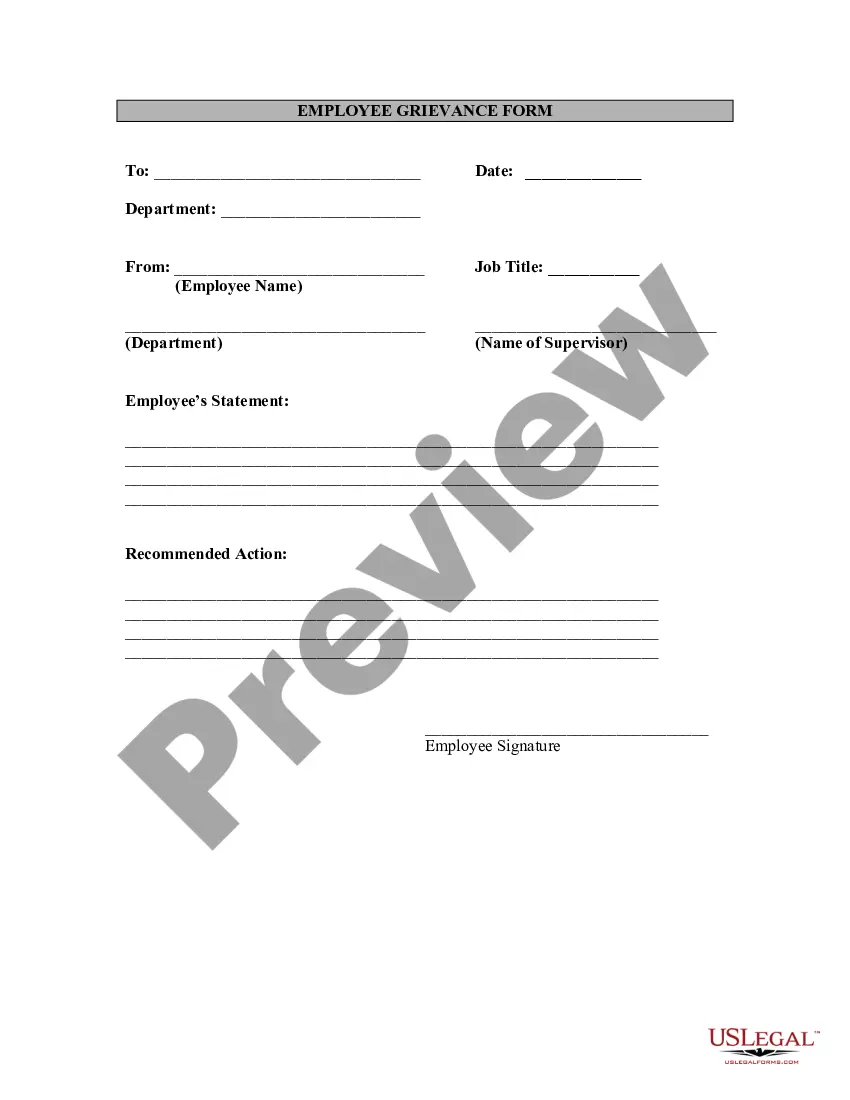
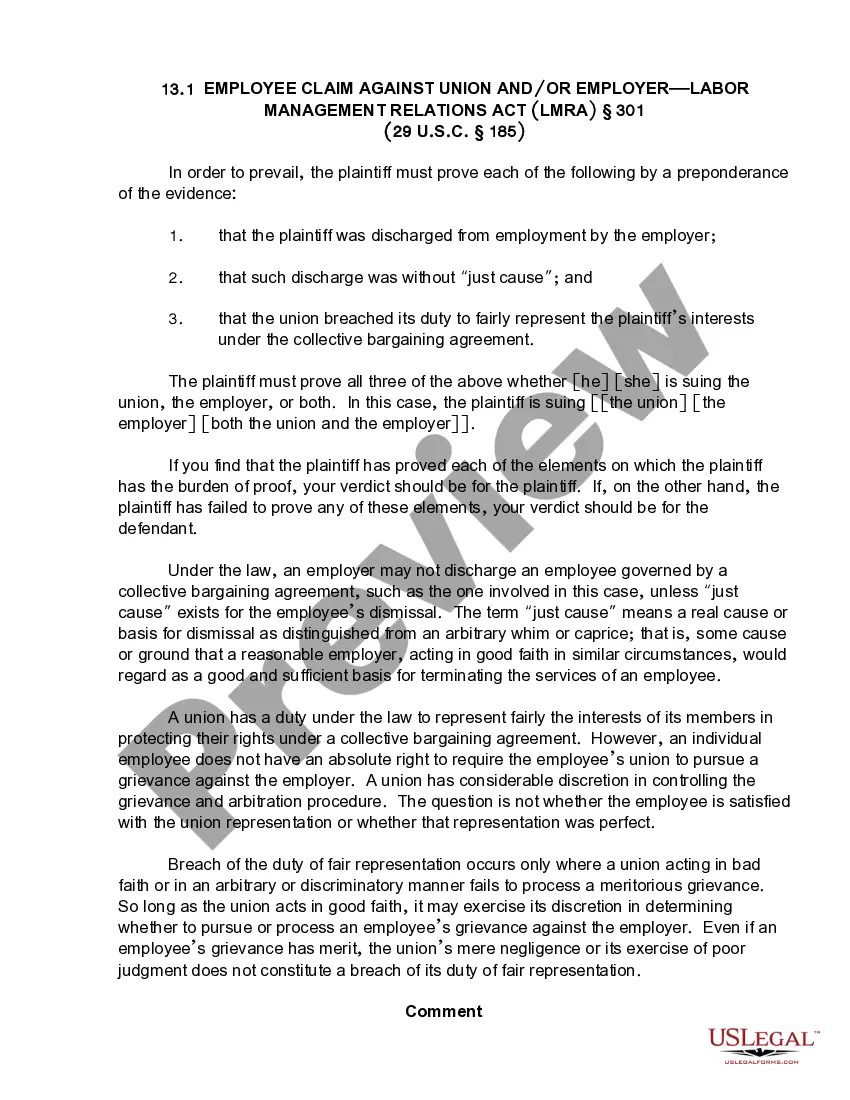
The Grievance Pursuant to a Union Contract form is a legal document used by employees to formally raise complaints about violations of their union contract. This grievance form serves to outline specific breaches by the employer, such as contract violations, past practices, or legal infractions. By using this form, employees can ensure their grievances are documented systematically, which differs from informal complaint procedures.
Key components of this form
- Name and details of the employee raising the grievance.
- Department, classification, and work location of the employee.
- Immediate supervisor's name and title.
- Statement of grievance, including violations and adjustments required.
- Authorization section to appoint a representative.
- Signatures of the employee, union representative, and management.

When to use this document
This form should be used when an employee believes there has been a breach of their union contract. Common scenarios for using this form include unjust disciplinary actions, improper changes to work schedules, or violations of workplace laws. It is crucial to document the grievance to initiate the appropriate resolution process outlined in the union contract.
Who this form is for
- Union members who feel their contract rights have been violated.
- Employees facing unjust disciplinary measures.
- Workers disputing contract interpretations regarding wages, hours, or seniority.
- Representatives of a union assisting members in filing grievances.
How to prepare this document
- Fill in the employee's name, department, classification, and work location.
- Provide the name and title of the immediate supervisor.
- Clearly state the grievance by listing specific violations and the adjustments sought.
- Authorize a representative to act on your behalf if desired.
- Gather signatures from the employee, union representative, and relevant management personnel.
Does this form need to be notarized?
This form does not typically require notarization to be legally valid. However, some jurisdictions or document types may still require it. US Legal Forms provides secure online notarization powered by Notarize, available 24/7 for added convenience.
Get your form ready online
Our built-in tools help you complete, sign, share, and store your documents in one place.
Make edits, fill in missing information, and update formatting in US Legal Forms—just like you would in MS Word.
Download a copy, print it, send it by email, or mail it via USPS—whatever works best for your next step.
Sign and collect signatures with our SignNow integration. Send to multiple recipients, set reminders, and more. Go Premium to unlock E-Sign.
If this form requires notarization, complete it online through a secure video call—no need to meet a notary in person or wait for an appointment.
We protect your documents and personal data by following strict security and privacy standards.

Make edits, fill in missing information, and update formatting in US Legal Forms—just like you would in MS Word.

Download a copy, print it, send it by email, or mail it via USPS—whatever works best for your next step.

Sign and collect signatures with our SignNow integration. Send to multiple recipients, set reminders, and more. Go Premium to unlock E-Sign.

If this form requires notarization, complete it online through a secure video call—no need to meet a notary in person or wait for an appointment.

We protect your documents and personal data by following strict security and privacy standards.
Common mistakes to avoid
- Failing to clearly specify the violations in the statement of grievance.
- Not obtaining all necessary signatures before submitting the form.
- Submitting the form to the wrong management representative.
Why complete this form online
- Accessible for immediate download, allowing prompt action.
- Editable to customize the grievance details as needed.
- Reliable formats to ensure compliance with union and legal expectations.
Legal use & context
- This form is crucial for documenting grievances to protect employee rights.
- Completing and filing this form timely ensures adherence to contractual obligations regarding grievance procedures.
- Understanding local labor laws can be essential, as violations may also fall under legal protections.
Key takeaways
- The Grievance Pursuant to a Union Contract form is essential for addressing contract violations.
- Accurate completion and submission of this form can lead to effective resolution of workplace disputes.
- Always check union agreements and state laws for any additional requirements.
Looking for another form?









Form popularity
FAQ
Grievance resulting from management policies include: Grievance resulting from working conditions include:
Listen carefully to the facts from the worker. Listening is a lot harder than most people realize. Test for a grievance. You already know the five tests for a grievance. Investigate thoroughly. Write the grievance. Present the grievance in a firm but polite manner.
Individual grievance. One person grieves that a management action has violated their rights under the collective agreement. Group grievance. A group grievance complains that management action has hurt a group of individuals in the same way. Policy or Union grievance.
In a union workplace, a grievance usually refers to the employer not complying with the terms of the collective bargaining agreement. A violation of this agreement can involve failing to provide required pay or not maintaining safe work conditions.
Bullying and harassment. Discrimination. Workplace health and safety. Work environment. Relationships in the workplace. Organisational changes. Terms and conditions of employment.
Informal action. If the grievance is relatively minor, the employer should have a discussion with the employee to see if it can be resolved informally. Investigation. As soon as possible after receiving a grievance, the employer should carry out an investigation. Grievance meeting. Decision. Appeal.
An individual grievance is a complaint that an action by management has violated the rights of an individual as set out in the collective agreement or law, or by some unfair practice. Examples of this type of grievance include: discipline, demotion, classification disputes, denial of benefits, etc.
Contact your union rep or call TDU before taking group action.) Generally speaking, it's easier to resolve grievances at a lower level in the grievance procedure. Take action early and target the people who have the ability to settle the issue.
A grievance is a formal complaint that is raised by an employee towards an employer within the workplace.Workplaces that have trade union representation often file a grievance with an employer on behalf of an individual employees request.