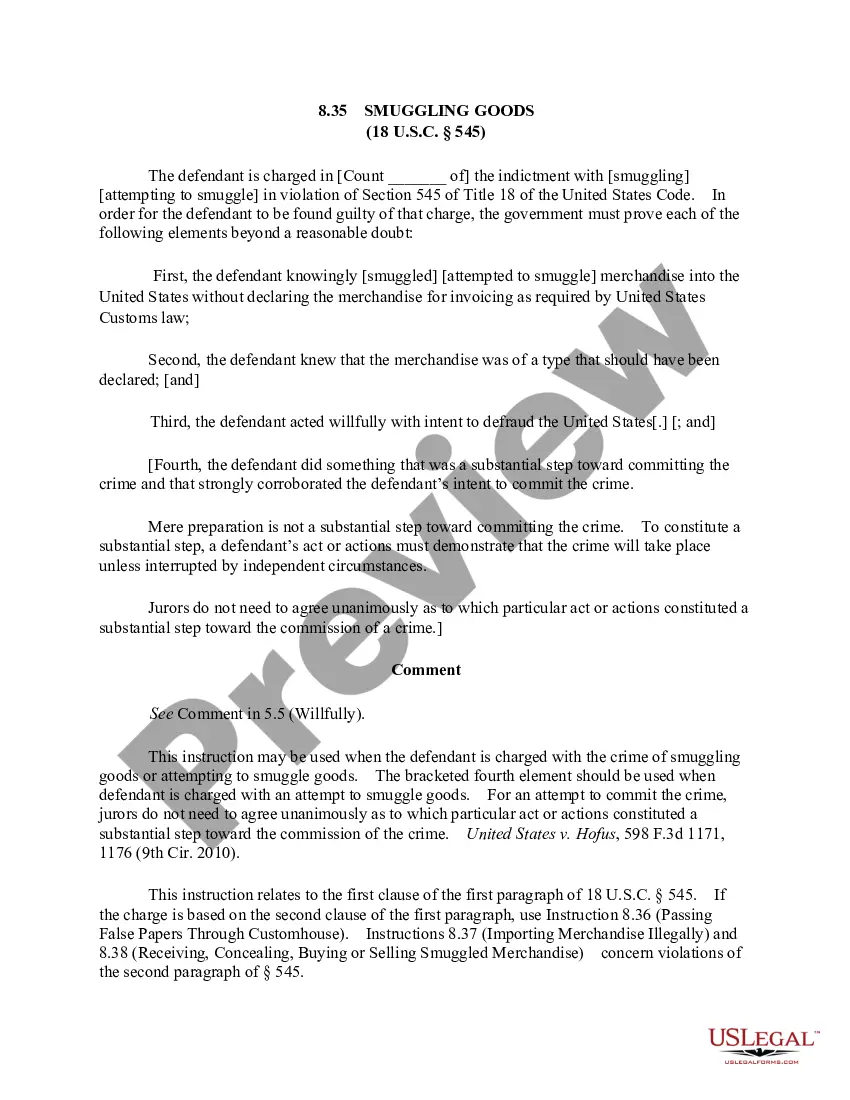
Medicaid Income Trust Form
What is this form?
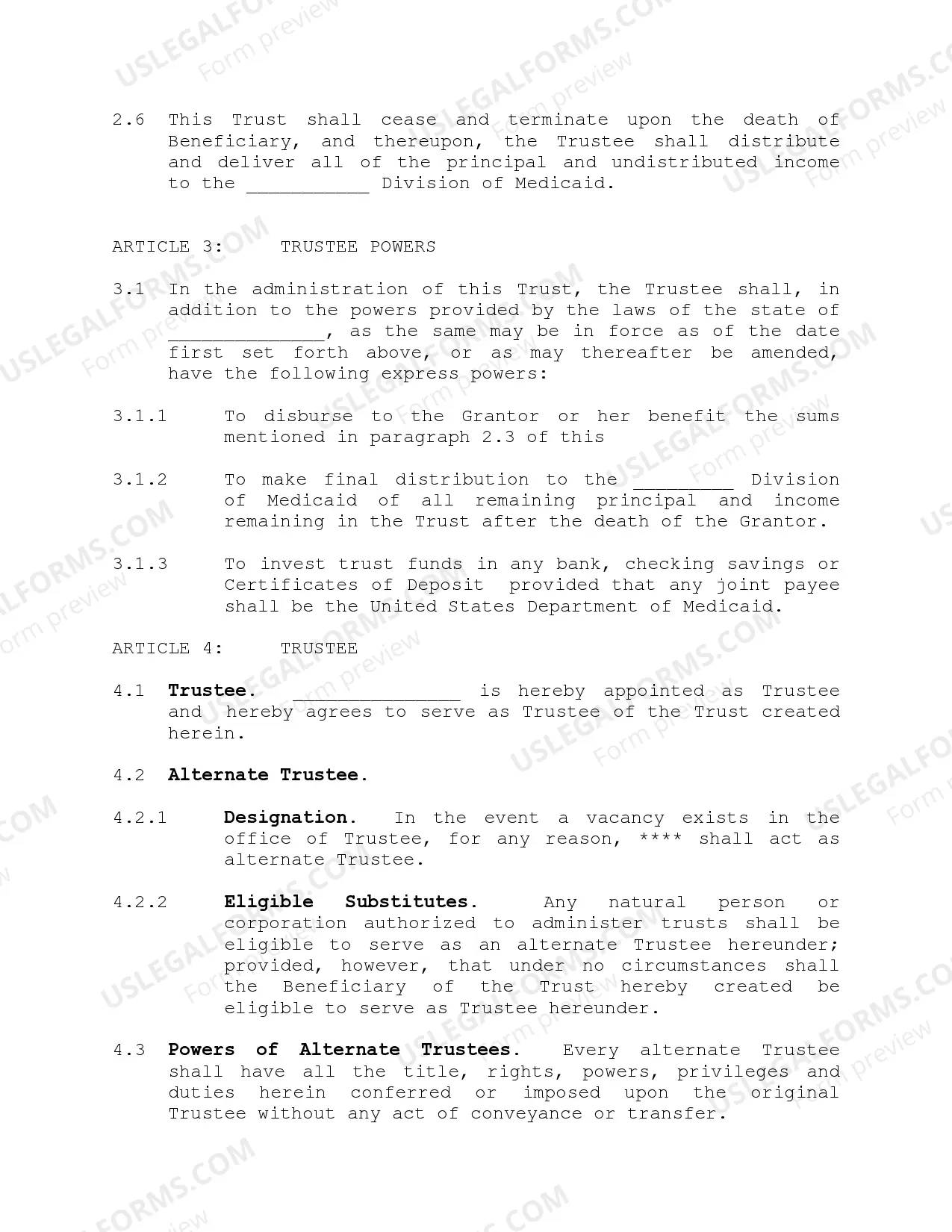
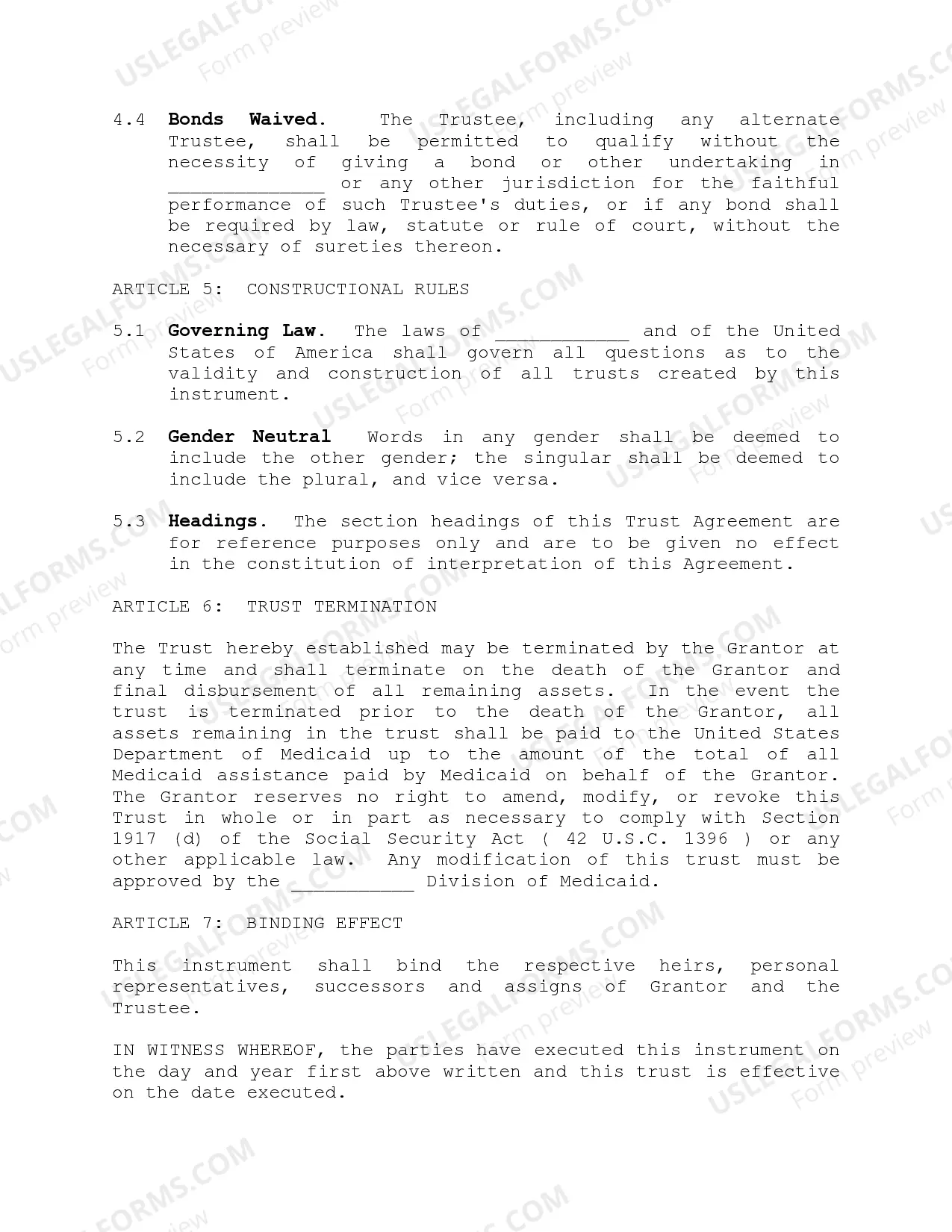
The Medicaid Income Trust Form is a legal document that establishes an income trust for individuals seeking Medicaid benefits. This trust allows the grantor to direct income to the trustee, who manages the assets in accordance with Medicaid regulations. Unlike other trusts, the Medicaid Income Trust specifically addresses the requirements set forth by the Social Security Act, ensuring that all income received is properly accounted for, making it distinct and crucial for Medicaid applicants.
Form components explained
- Creation of trust detailing trust property and initial assets.
- Provisions for additions to the trust, specifying income sources.
- Trustee powers, including distributions and handling trust funds.
- Management and disposition instructions for the trust estate.
- Termination clauses upon the grantor's death.



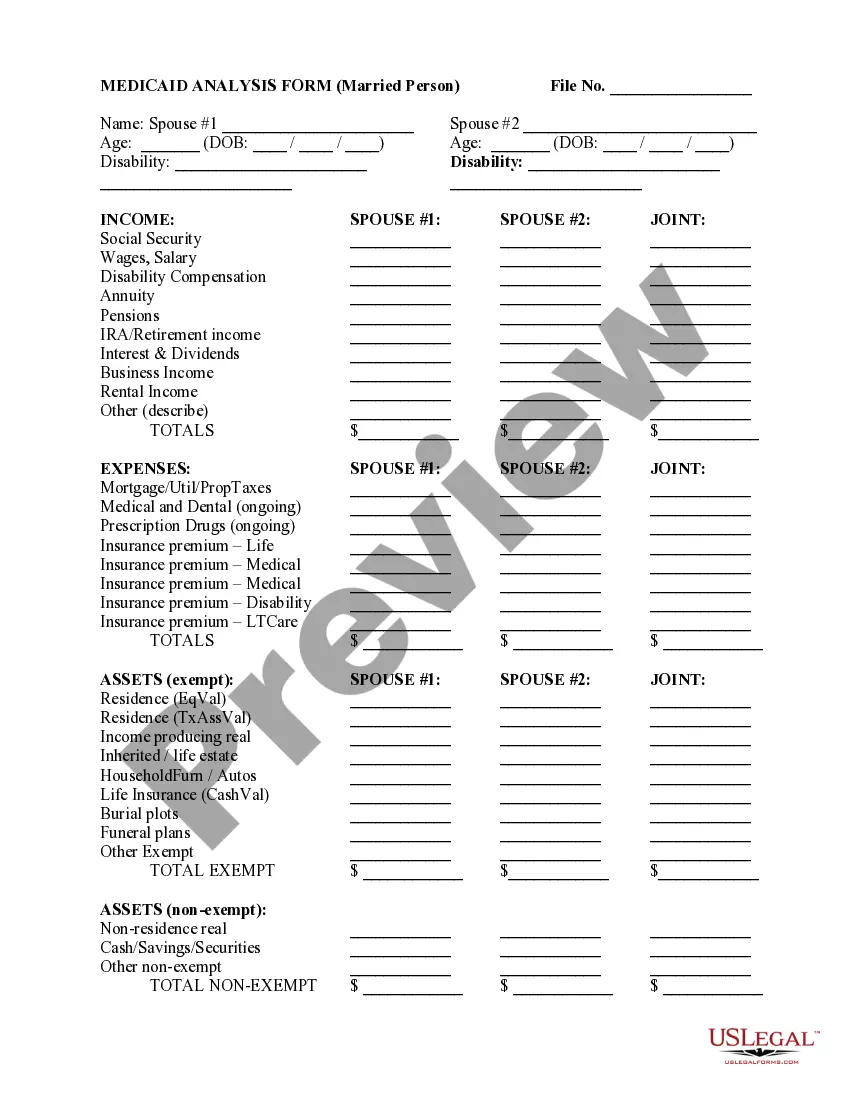
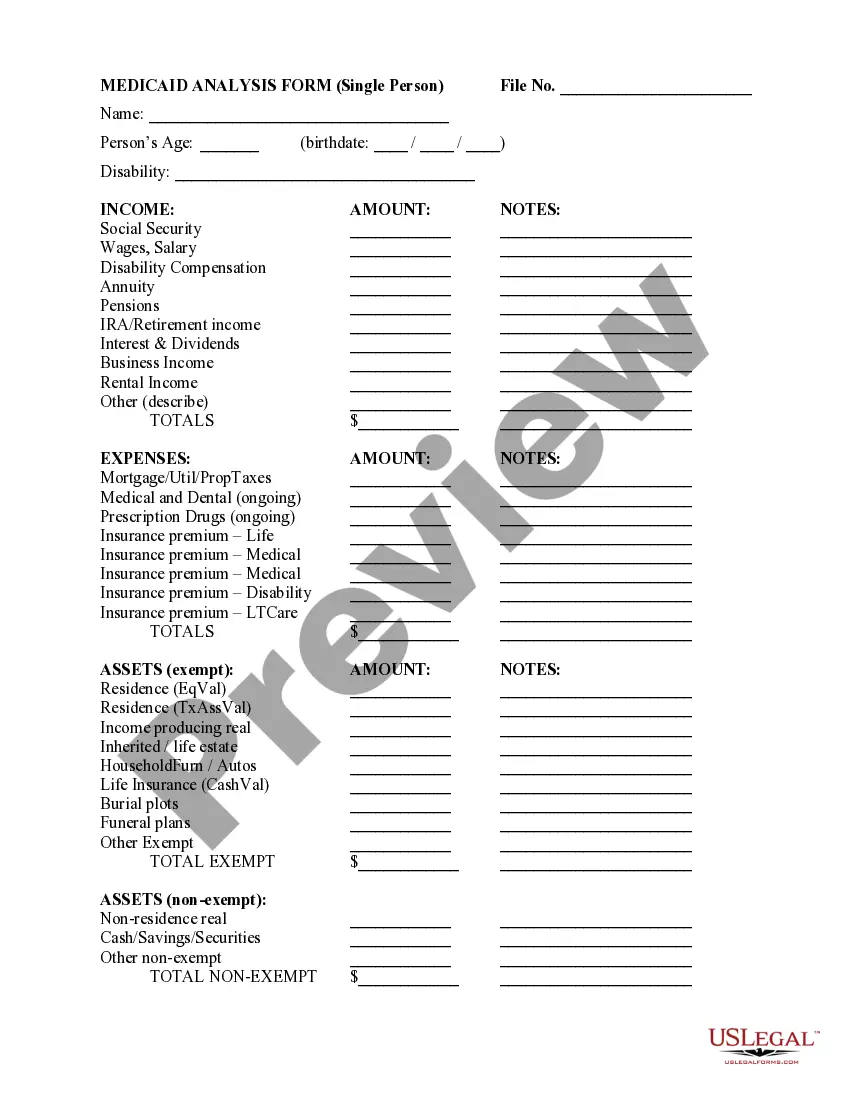
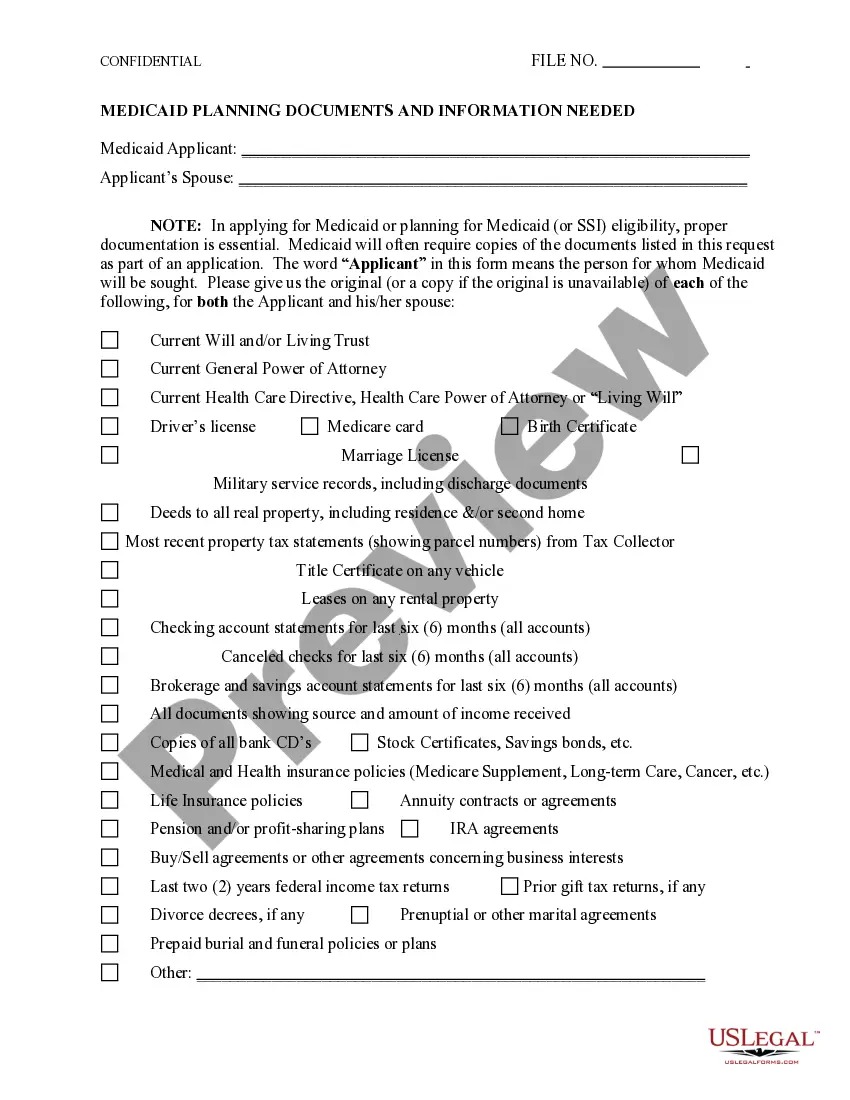
When to use this form
This form is essential for individuals who want to establish an income trust to manage their finances while applying for Medicaid. It is particularly useful when the grantor's income may exceed Medicaid limits and needs to be structured to qualify for benefits. Use this trust agreement to ensure compliance with Medicaid requirements, especially when planning for long-term care or medical expenses.
Who needs this form
- Individuals applying for Medicaid benefits.
- Persons who want to protect their income while qualifying for long-term care.
- Family members planning for the care of elderly relatives.
Completing this form step by step
- Identify the grantor and trustee by providing their names and addresses.
- Specify the trust property by detailing the income sources to be included in the trust.
- Outline the management instructions, including how income will be distributed and reported.
- Define termination conditions, especially regarding the beneficiaryâs passing.
- Collect necessary signatures from both the grantor and trustee on the designated lines.
Is notarization required?
This form does not typically require notarization unless specified by local law. However, it is recommended to verify if notarization is needed based on the jurisdiction where the trust will be executed.
Get your form ready online
Our built-in tools help you complete, sign, share, and store your documents in one place.
Make edits, fill in missing information, and update formatting in US Legal Forms—just like you would in MS Word.
Download a copy, print it, send it by email, or mail it via USPS—whatever works best for your next step.
Sign and collect signatures with our SignNow integration. Send to multiple recipients, set reminders, and more. Go Premium to unlock E-Sign.
If this form requires notarization, complete it online through a secure video call—no need to meet a notary in person or wait for an appointment.
We protect your documents and personal data by following strict security and privacy standards.

Make edits, fill in missing information, and update formatting in US Legal Forms—just like you would in MS Word.

Download a copy, print it, send it by email, or mail it via USPS—whatever works best for your next step.

Sign and collect signatures with our SignNow integration. Send to multiple recipients, set reminders, and more. Go Premium to unlock E-Sign.

If this form requires notarization, complete it online through a secure video call—no need to meet a notary in person or wait for an appointment.

We protect your documents and personal data by following strict security and privacy standards.
Typical mistakes to avoid
- Incomplete identification of the grantor or trustee.
- Failing to specify all income sources to be included in the trust.
- Overlooking the annual accounting requirement to Medicaid.
- Not stating specific termination conditions clearly.
Benefits of using this form online
- Convenience of downloading and completing the form at your own pace.
- Easy edits to tailor the form to your specific needs.
- Access to forms reviewed by licensed attorneys for reliability.
Legal use & context
- This form helps ensure that the grantor's income is utilized in a manner compliant with Medicaid regulations.
- It is essential for maintaining eligibility while managing trust assets responsibly.
- Ensure the trust is executed correctly to avoid legal disputes or disqualification from benefits.
Summary of main points
- The Medicaid Income Trust Form is crucial for managing income to maintain Medicaid eligibility.
- Clearly define the roles and powers of all parties involved in the trust.
- Be aware of local laws that may influence the trust's implementation and function.
Looking for another form?








Form popularity
FAQ
What Is A Qualified Income Trust (QIT)? If an individual's income is over the limit to qualify for Medicaid long-term care services (including nursing home care), a Qualified Income Trust (QIT) allows an individual to become eligible by placing income into an account each month that the individual needs Medicaid.
Once a Qualified Income Trust (QIT) has been prepared and signed, the Trustee must establish and maintain a separate bank account in the name of the QIT. The account can be established at any banking institution.The bank can make a copy of the Trust, but you should not relinquish possession of the original Trust.
If an individual's income is over the limit to qualify for Medicaid long-term care services (including nursing home care), a Qualified Income Trust (QIT) allows an individual to become eligible by placing income into an account each month that the individual needs Medicaid.
Once a Qualified Income Trust (QIT) has been prepared and signed, the Trustee must establish and maintain a separate bank account in the name of the QIT. The account can be established at any banking institution. Prior to going the bank to open the account, it is a good idea to call your bank and make an appointment.
An income trust will hold income-producing assets. It is typically managed by a trustee on behalf of a trustor who seeks to pass on the assets to a beneficiary. The terms of the trust fund are designated by the trustor and managed by the trustee.
Some Medicaid professionals include the cost of establishing this type of trust as a package deal with other Medicaid planning services. However, on average, solely setting up a QIT runs approximately $400 to $500, but may run as high as $1,000 or $2,000.
Does the Qualified Income Trust Need a Taxpayer Identification Number?However, In Part 21, Chapter 7, Section 13 of Assigning Employer Identification Numbers (EINs), the IRS specifically provides that If the trust is a Miller type of trust, do not assign an EIN. Instead, inform the trustee that he/she must 2026
Set up properly, an irrevocable Medicaid trust protects your assets from a Medicaid spend down. It allows you to qualify for long-term care at the same time. It also means your assets can pass down to your spouse and children when you die. That is, if it is so stated in the terms of the trust.
What Is A Qualified Income Trust (QIT)? If an individual's income is over the limit to qualify for Medicaid long-term care services (including nursing home care), a Qualified Income Trust (QIT) allows an individual to become eligible by placing income into an account each month that the individual needs Medicaid.