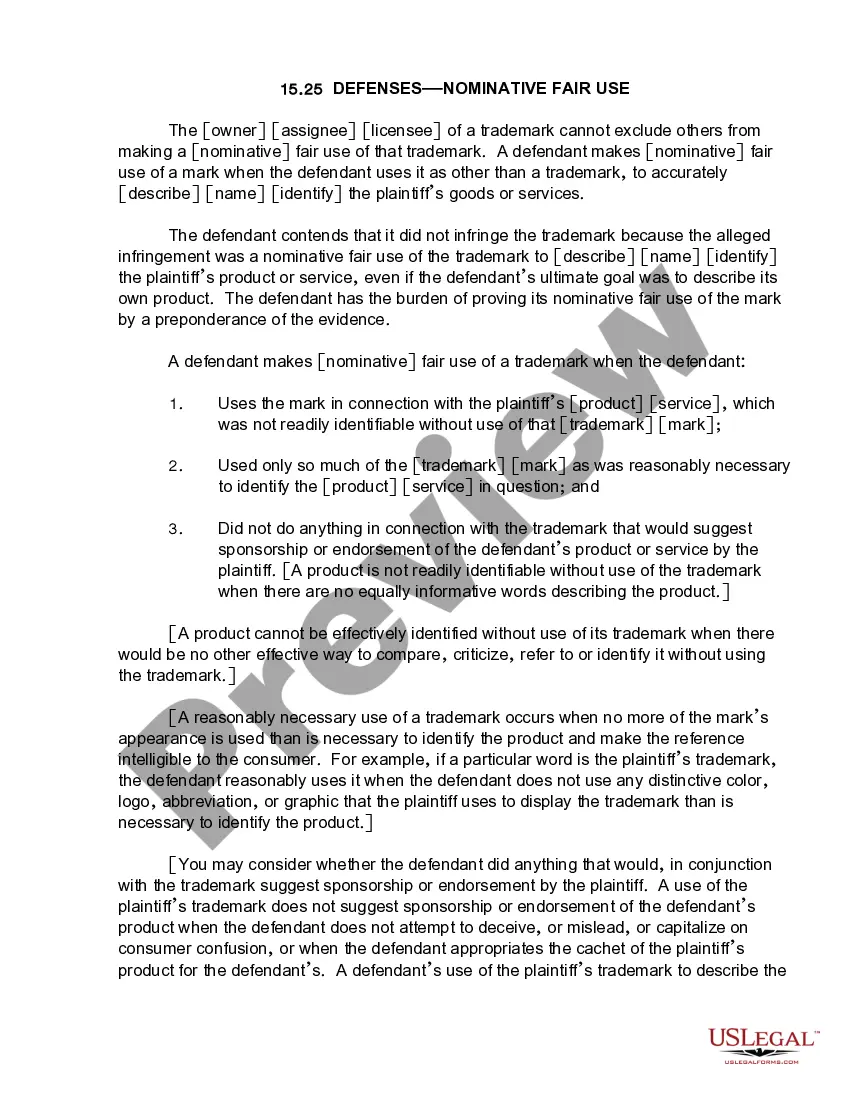
15.25 Defenses-Nominative Fair Use
Is notarization required?
In most cases, this form does not require notarization. However, some jurisdictions or signing circumstances might. US Legal Forms offers online notarization powered by Notarize, accessible 24/7 for a quick, remote process.
Get your form ready online
Our built-in tools help you complete, sign, share, and store your documents in one place.
Make edits, fill in missing information, and update formatting in US Legal Forms—just like you would in MS Word.
Download a copy, print it, send it by email, or mail it via USPS—whatever works best for your next step.
Sign and collect signatures with our SignNow integration. Send to multiple recipients, set reminders, and more. Go Premium to unlock E-Sign.
If this form requires notarization, complete it online through a secure video call—no need to meet a notary in person or wait for an appointment.
We protect your documents and personal data by following strict security and privacy standards.

Make edits, fill in missing information, and update formatting in US Legal Forms—just like you would in MS Word.

Download a copy, print it, send it by email, or mail it via USPS—whatever works best for your next step.

Sign and collect signatures with our SignNow integration. Send to multiple recipients, set reminders, and more. Go Premium to unlock E-Sign.

If this form requires notarization, complete it online through a secure video call—no need to meet a notary in person or wait for an appointment.

We protect your documents and personal data by following strict security and privacy standards.
Looking for another form?
Form popularity
FAQ
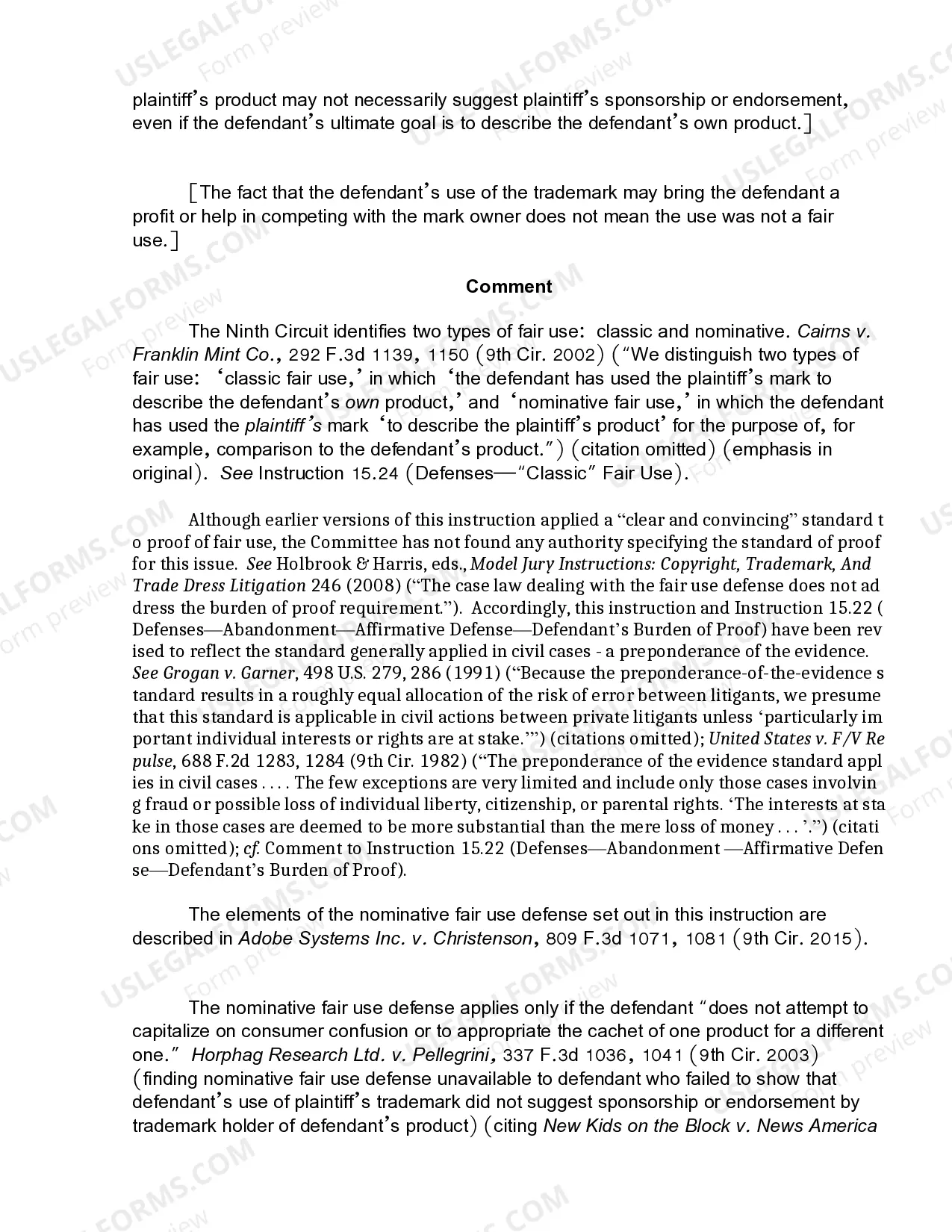
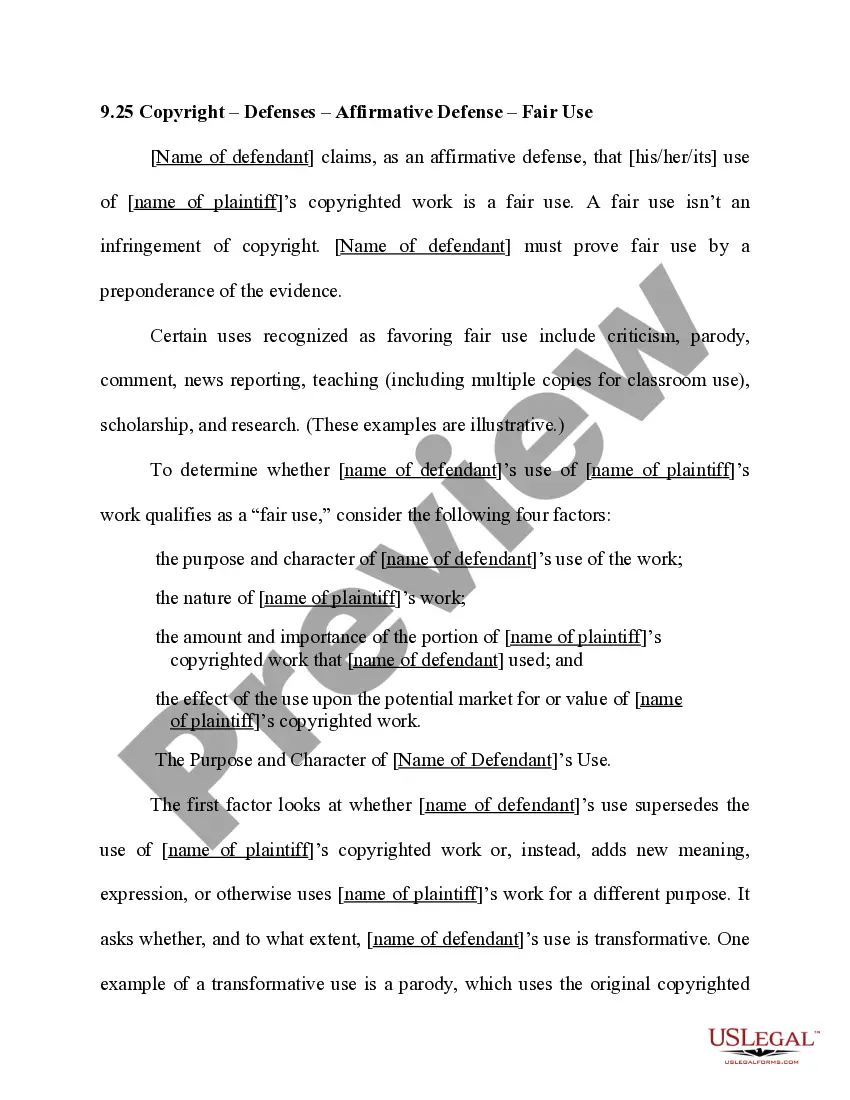
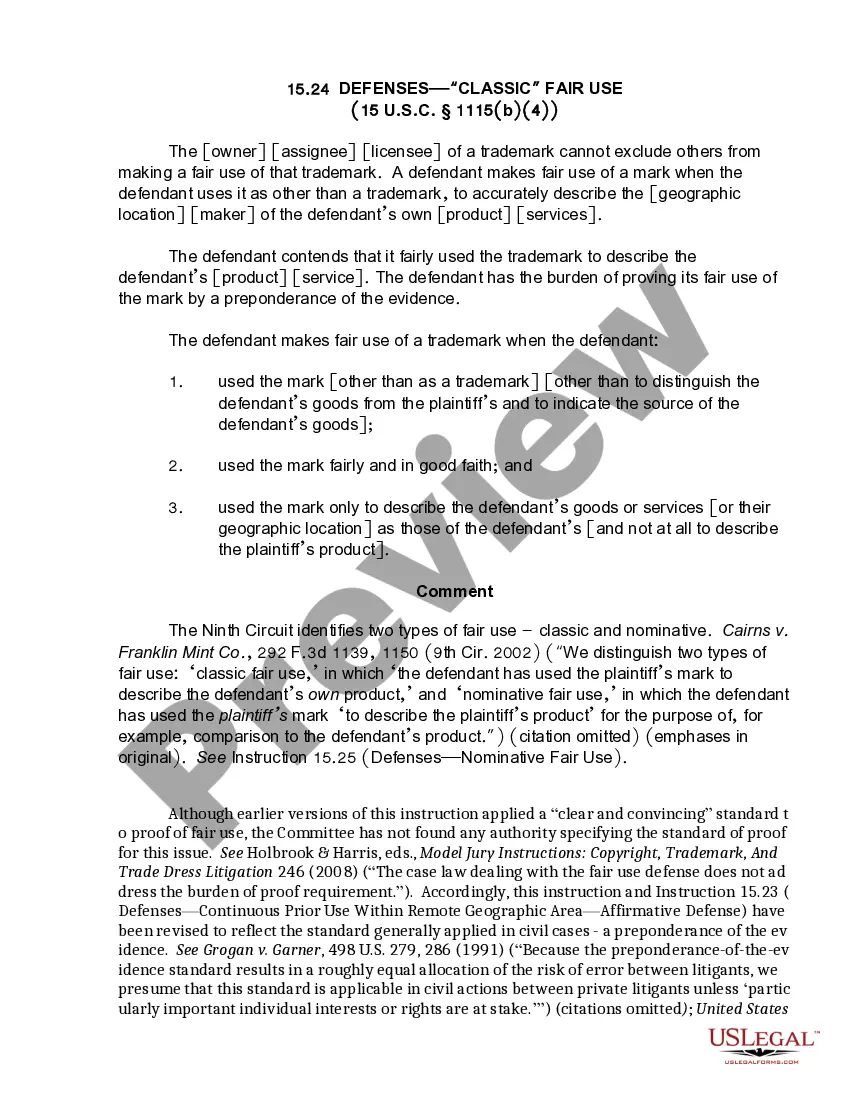
2002) (?We distinguish two types of fair use: 'classic fair use,' in which 'the defendant has used the plaintiff's mark to describe the defendant's own product,' and 'nominative fair use,' in which the defendant has used the plaintiff's mark 'to describe the plaintiff's product' for the purpose of, for example,
Thus, we recently reiterated that, in the trademark context, nominative use becomes nominative fair use when a defendant proves three elements: First, the plaintiff's product or service in question must be one not readily identifiable without use of the trademark; second, only so much of the mark or marks may be used
Nominative fair use permits use of another's trademark to refer to the trademark owner's goods and services associated with the mark.
Nominative fair use covers many occasions on which a party other than the trademark owner is using the mark another party to refer to genuine goods or services. An example of nominative fair use is when an auto repair shop advertises that it repairs BMWs and Hondas.
Nominative fair use permits use of another's trademark to refer to the trademark owner's goods and services associated with the mark.
Nominative fair use of a trademark occurs when a third party uses a company or individual's trademark to refer to the actual trademark owners or any products or services that owner produces.
The nominative fair use doctrine refers to the use of a protected trademark to describe or ?name? the protected trademark owner's goods or services, rather than describing one's own goods and services, which is the case in descriptive fair use.
Nominative fair use allows for using another's mark to name the owner's goods and services if they could not otherwise be easily identified. For instance, a media outlet might use a registered trademark name to report on an event or poll readers.