17.24 Copyright-Affirmative Defense-Copyright Misuse
Does this form need to be notarized?
This form usually doesn’t need to be notarized. However, local laws or specific transactions may require it. Our online notarization service, powered by Notarize, lets you complete it remotely through a secure video session, available 24/7.
Get your form ready online
Our built-in tools help you complete, sign, share, and store your documents in one place.
Make edits, fill in missing information, and update formatting in US Legal Forms—just like you would in MS Word.
Download a copy, print it, send it by email, or mail it via USPS—whatever works best for your next step.
Sign and collect signatures with our SignNow integration. Send to multiple recipients, set reminders, and more. Go Premium to unlock E-Sign.
If this form requires notarization, complete it online through a secure video call—no need to meet a notary in person or wait for an appointment.
We protect your documents and personal data by following strict security and privacy standards.

Make edits, fill in missing information, and update formatting in US Legal Forms—just like you would in MS Word.

Download a copy, print it, send it by email, or mail it via USPS—whatever works best for your next step.

Sign and collect signatures with our SignNow integration. Send to multiple recipients, set reminders, and more. Go Premium to unlock E-Sign.

If this form requires notarization, complete it online through a secure video call—no need to meet a notary in person or wait for an appointment.

We protect your documents and personal data by following strict security and privacy standards.
Looking for another form?
Form popularity
FAQ
For ?willful? infringement, a court may award up to $150,000 per work infringed. A court can also assess costs and attorneys' fees (Title 17, United States Code, Sections 504, 505).
The three basic elements of copyright: originality, creativity, and fixation. There are three basic elements that a work must possess in order to be protected by copyright in the US: Originality: To get a copyright, a work must be the original work of the author.
Innocent infringement is a potential defense where the infringer did not have notice of the copyright. The innocent infringer defense may be used when the defendant consciously and intentionally copies from the plaintiff's work, believing in good faith that his conduct does not constitute an infringement of copyright.
Innocence (proving there was no reason to believe the work was copyrighted) The use is with a license agreement in place (this can shift liability to the licensor) Abandonment (a claim that the owner failed to enforce it's rights, thereby abandoning the right) Misuse of copyright by the copyright owner.
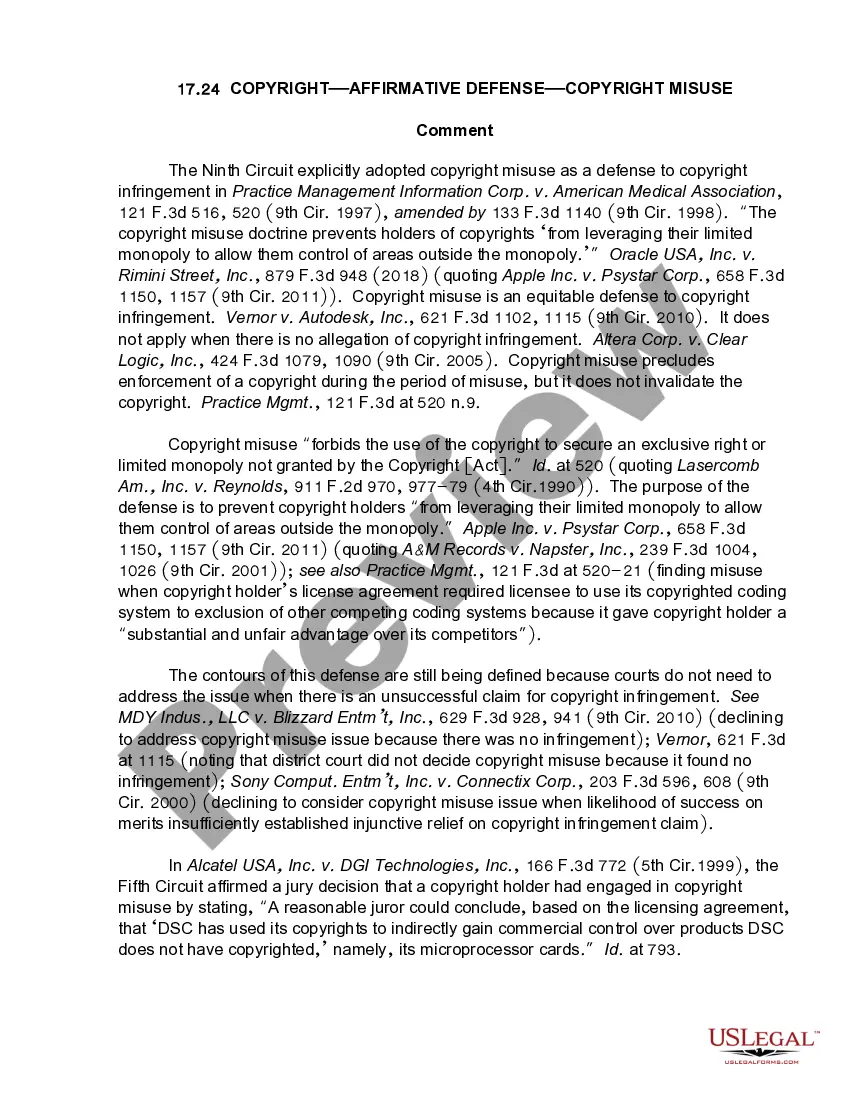
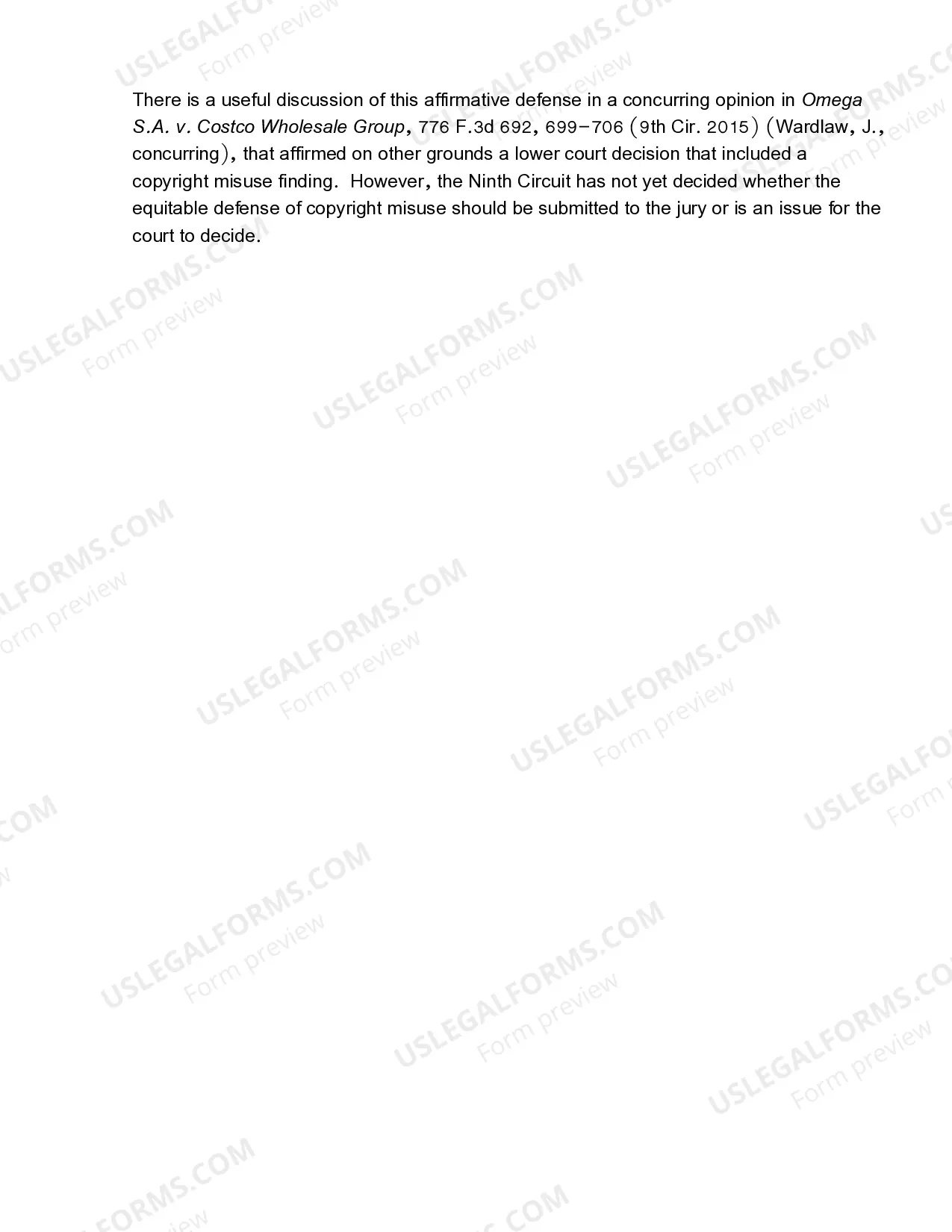
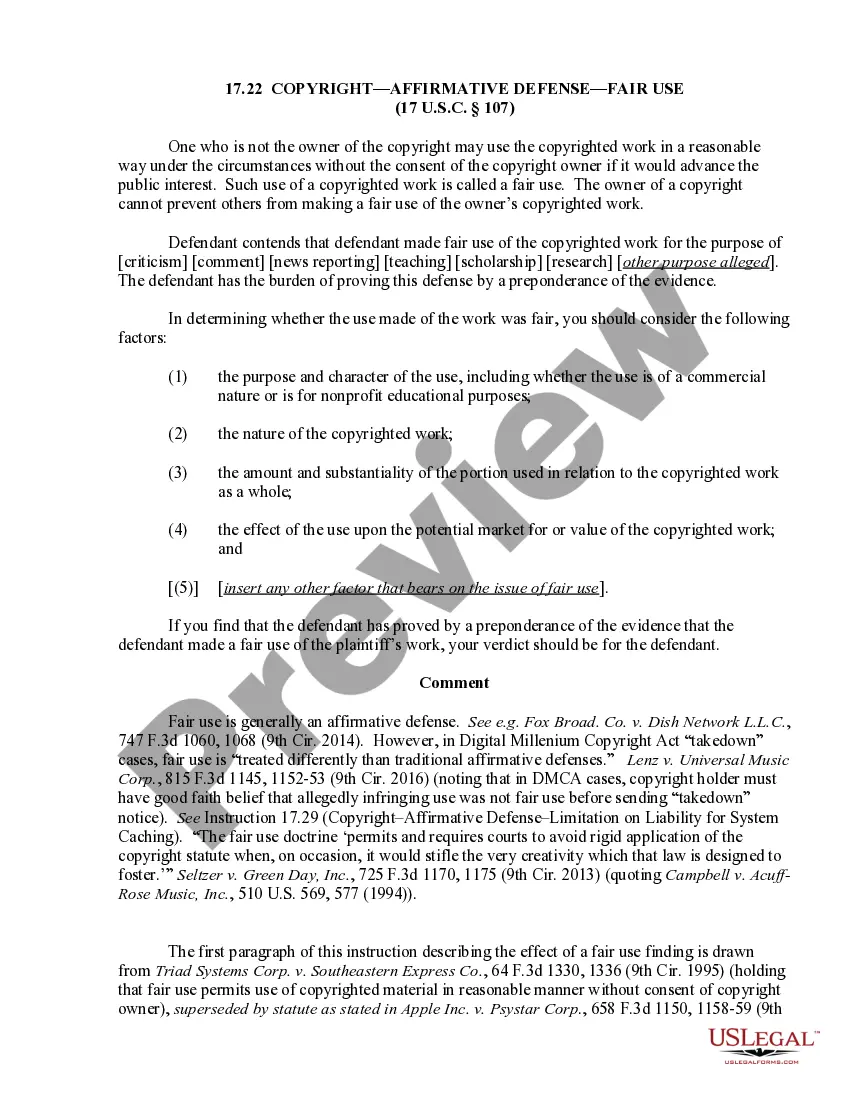
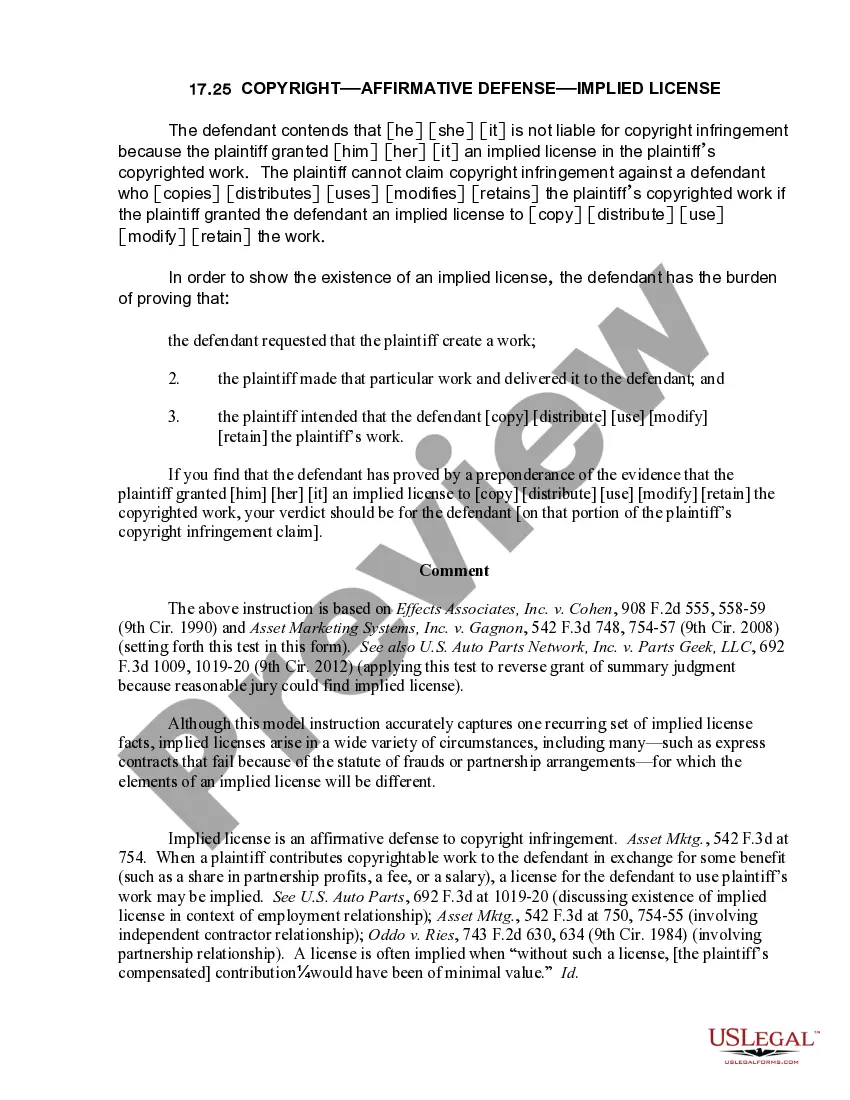
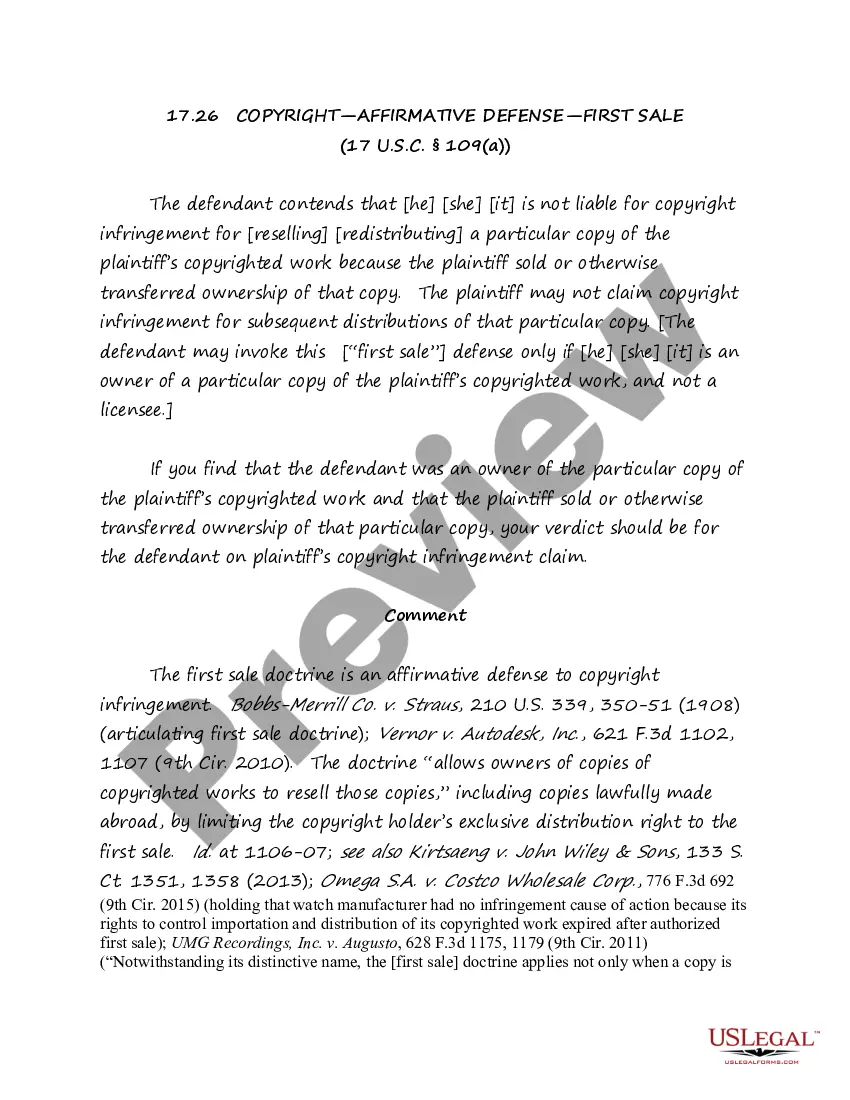
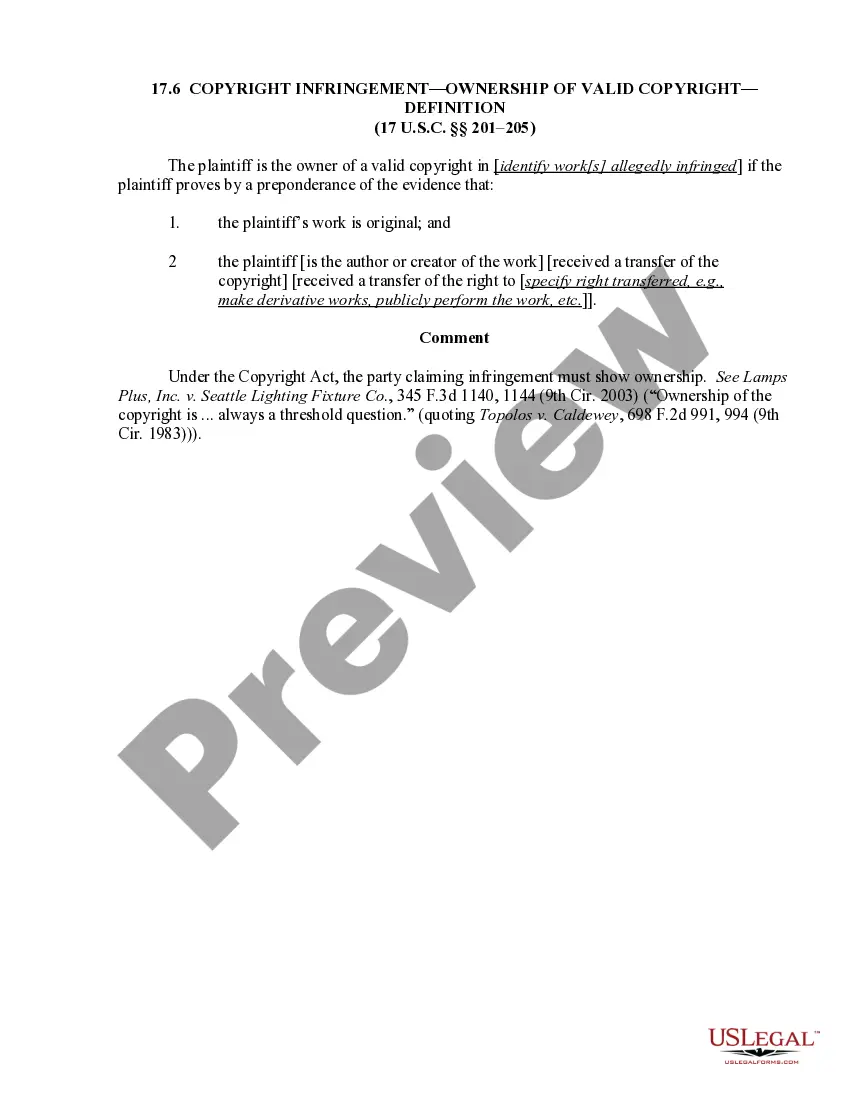
The misuse doctrine provides that the copyright holder engaged in abusive or improper conduct in exploiting or enforcing the copyright will be precluded from enforcing his rights against the infringer.
The elements in this instruction are explained in Instructions 17.6 (Copyright Infringement?Ownership of Valid Copyright?Definition), 17.14 (Copyright Infringement?Originality), and 17.17 (Copying?Access and Substantial Similarity). Copying and improper appropriation are issues of fact for the jury.
Under those guidelines, a prose work may be reproduced in its entirety if it is less than 2500 words in length.