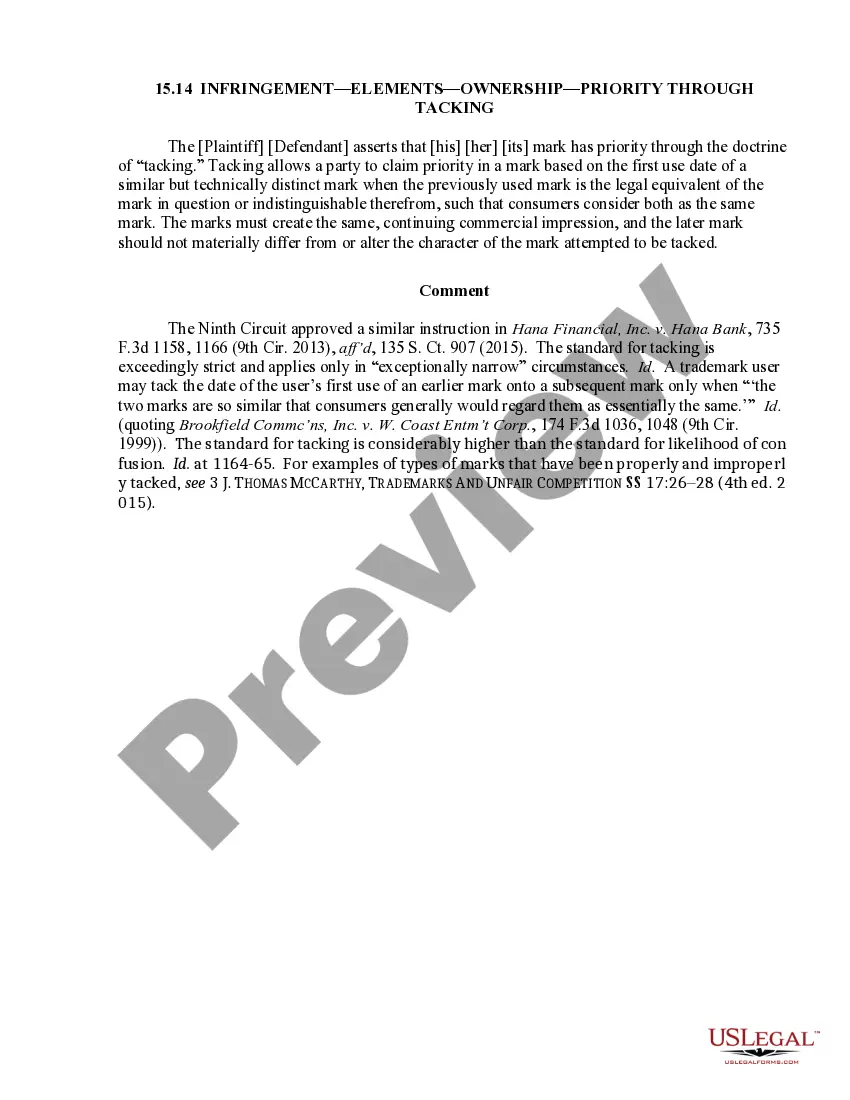
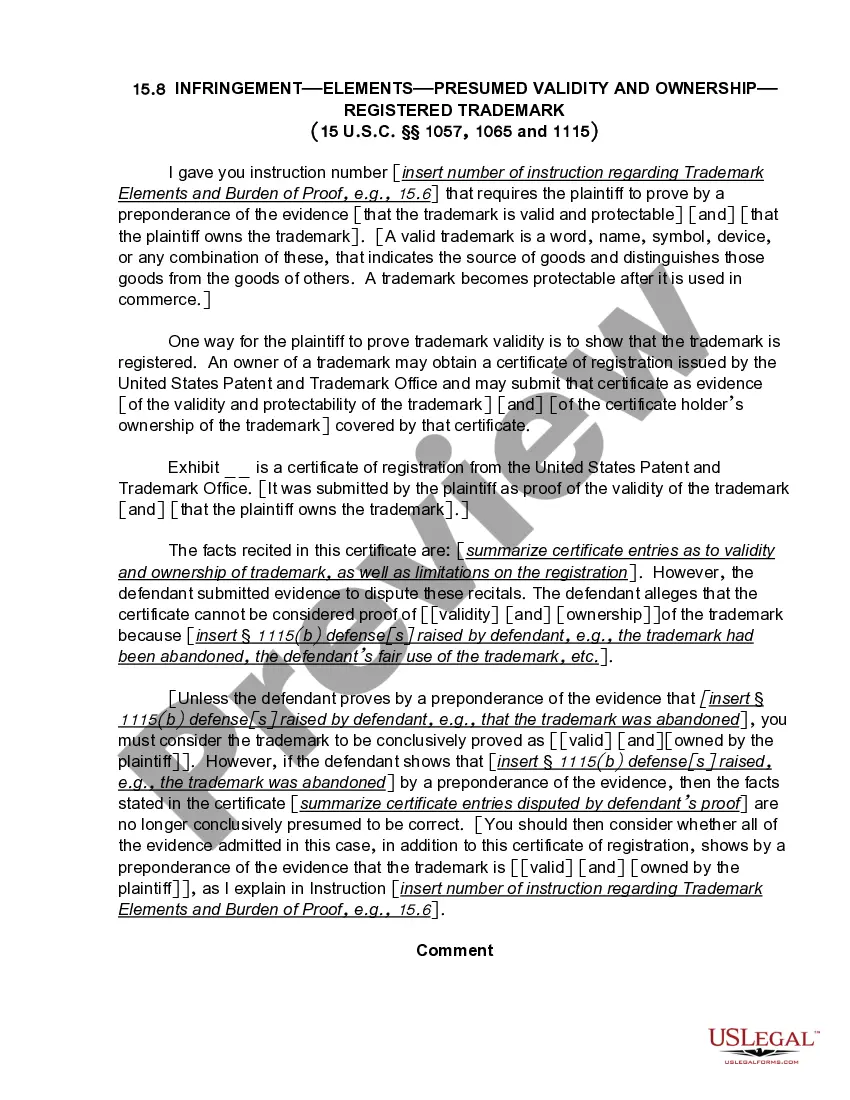
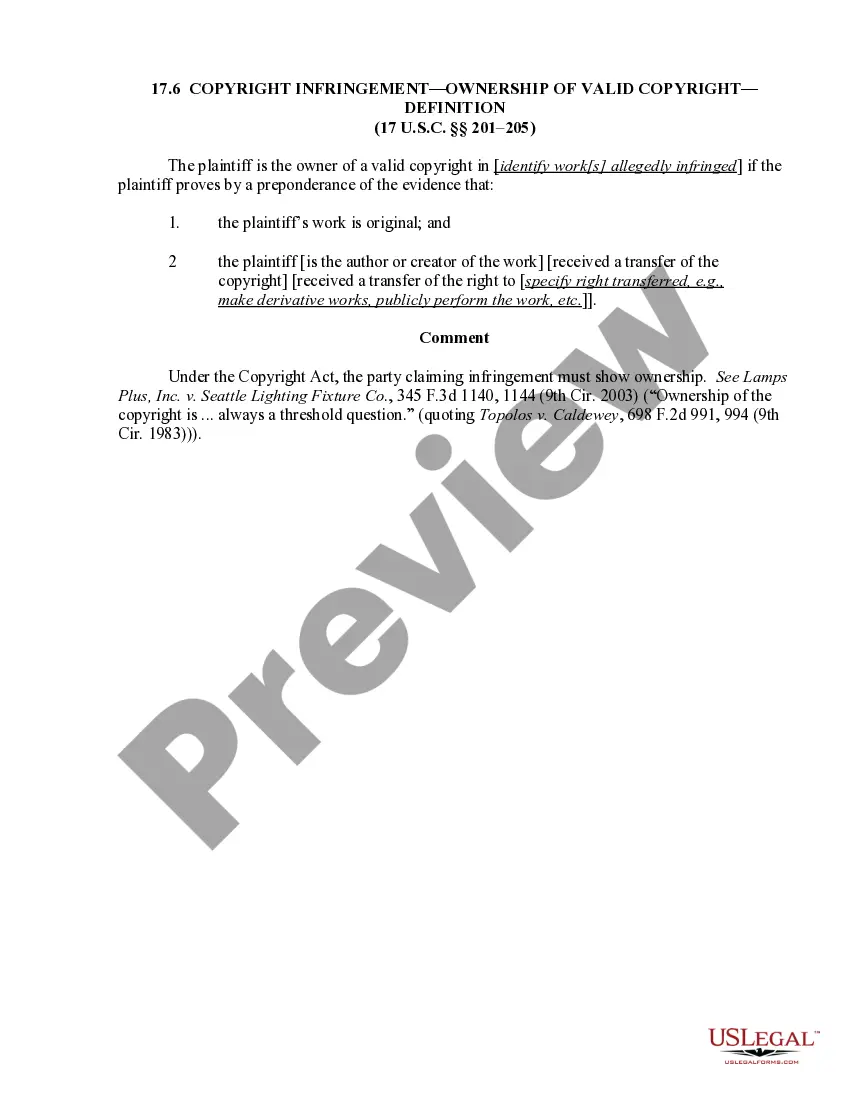
15.14 Infringement-Elements-Ownership-Priority Through Tacking
Does this document require notarization?
Notarization is not commonly needed for this form. However, certain documents or local rules may make it necessary. Our notarization service, powered by Notarize, allows you to finalize it securely online anytime, day or night.
Get your form ready online
Our built-in tools help you complete, sign, share, and store your documents in one place.
Make edits, fill in missing information, and update formatting in US Legal Forms—just like you would in MS Word.
Download a copy, print it, send it by email, or mail it via USPS—whatever works best for your next step.
Sign and collect signatures with our SignNow integration. Send to multiple recipients, set reminders, and more. Go Premium to unlock E-Sign.
If this form requires notarization, complete it online through a secure video call—no need to meet a notary in person or wait for an appointment.
We protect your documents and personal data by following strict security and privacy standards.

Make edits, fill in missing information, and update formatting in US Legal Forms—just like you would in MS Word.

Download a copy, print it, send it by email, or mail it via USPS—whatever works best for your next step.

Sign and collect signatures with our SignNow integration. Send to multiple recipients, set reminders, and more. Go Premium to unlock E-Sign.

If this form requires notarization, complete it online through a secure video call—no need to meet a notary in person or wait for an appointment.

We protect your documents and personal data by following strict security and privacy standards.
Looking for another form?
Form popularity
FAQ
The Ninth Circuit uses the two-part extrinsic/intrinsic test to determine whether a defendant's work is substantially similar to the plaintiff's. The first (extrinsic) prong requires an objective comparison of the elements in the two works that are protectable under copyright law.
At 361 (?To establish infringement, two elements must be proven: (1) ownership of a valid copyright, and (2) copying of constituent elements of the work that are original.?); see also Seven Arts Filmed Entm't Ltd. v. Content Media Corp., 733 F. 3d 1251, 1254 (9th Cir.
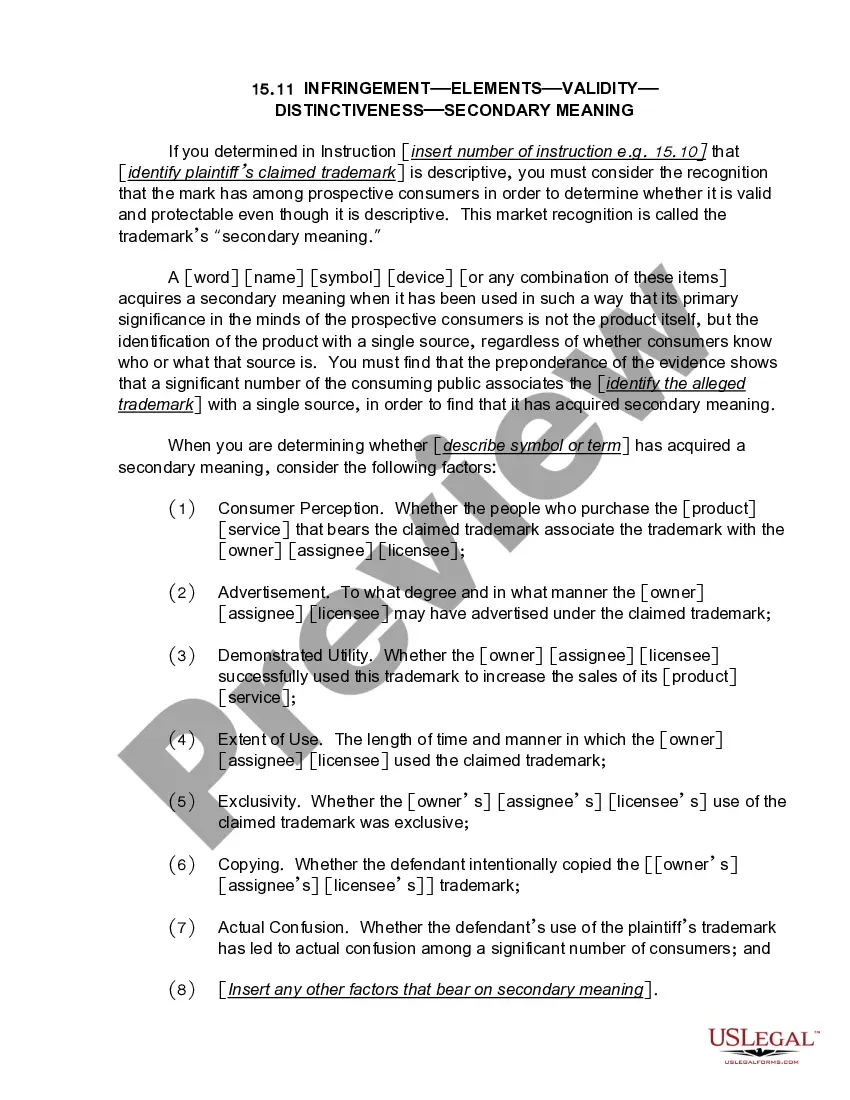
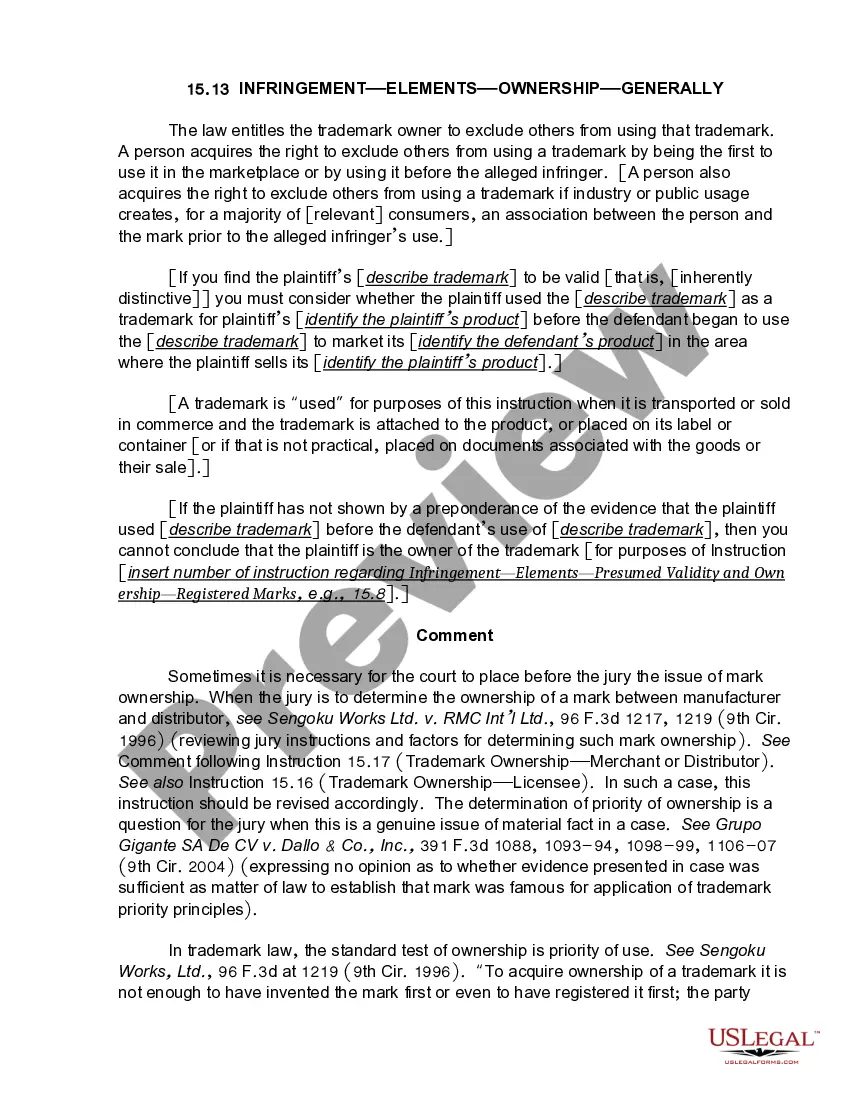
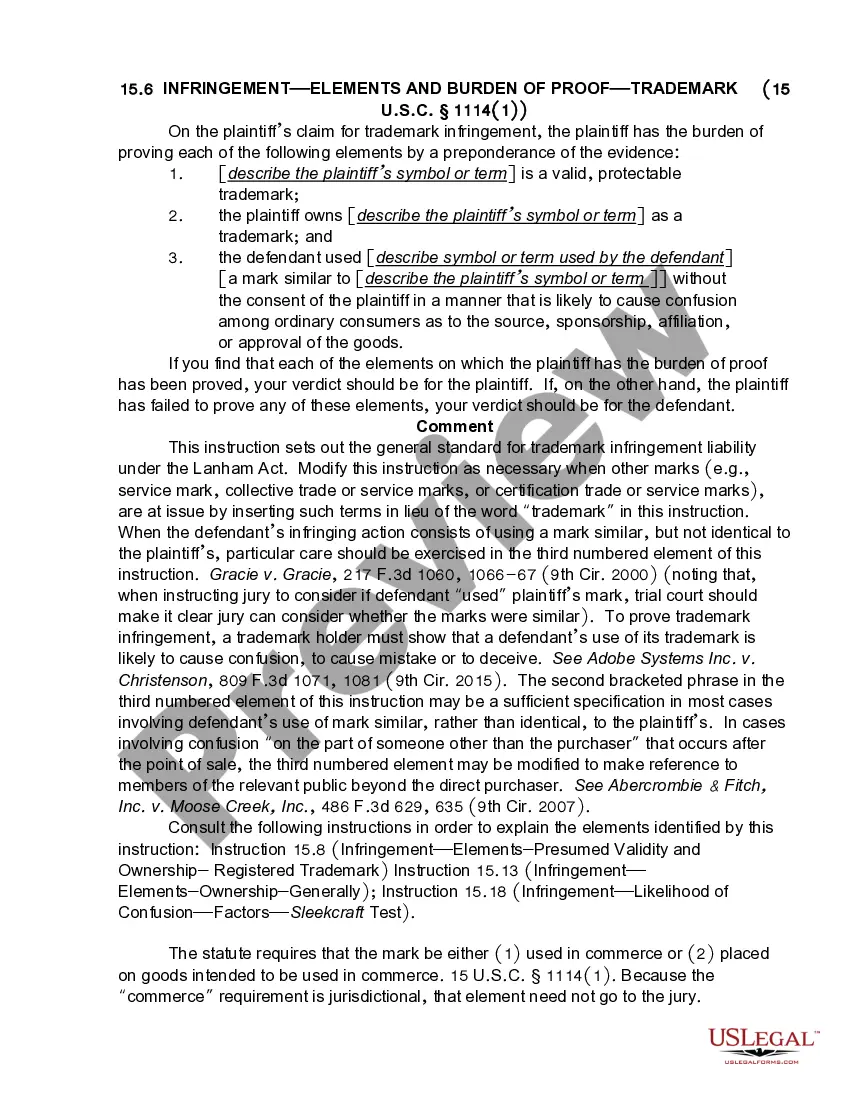
In a nutshell, a plaintiff in a trademark case has the burden of proving that the defendant's use of a mark has created a likelihood-of-confusion about the origin of the defendant's goods or services. To do this, the plaintiff should first show that it has developed a protectable trademark right in a trademark.
The plaintiff in a copyright infringement lawsuit has the burden of proving two elements: that they own a copyright, and that the defendant infringed it. To establish ownership of a valid copyright, a plaintiff must demonstrate that the work is original, and that it is subject to legal protection.
To prove copyright infringement, the plaintiff must prove (1) ownership of a valid copyright (usually through the showing of a certificate of registration); (2) the defendant has copied the worN; and (3) such copying constitutes unlawful appropriation.
The three basic elements of copyright: originality, creativity, and fixation. There are three basic elements that a work must possess in order to be protected by copyright in the US: Originality: To get a copyright, a work must be the original work of the author.