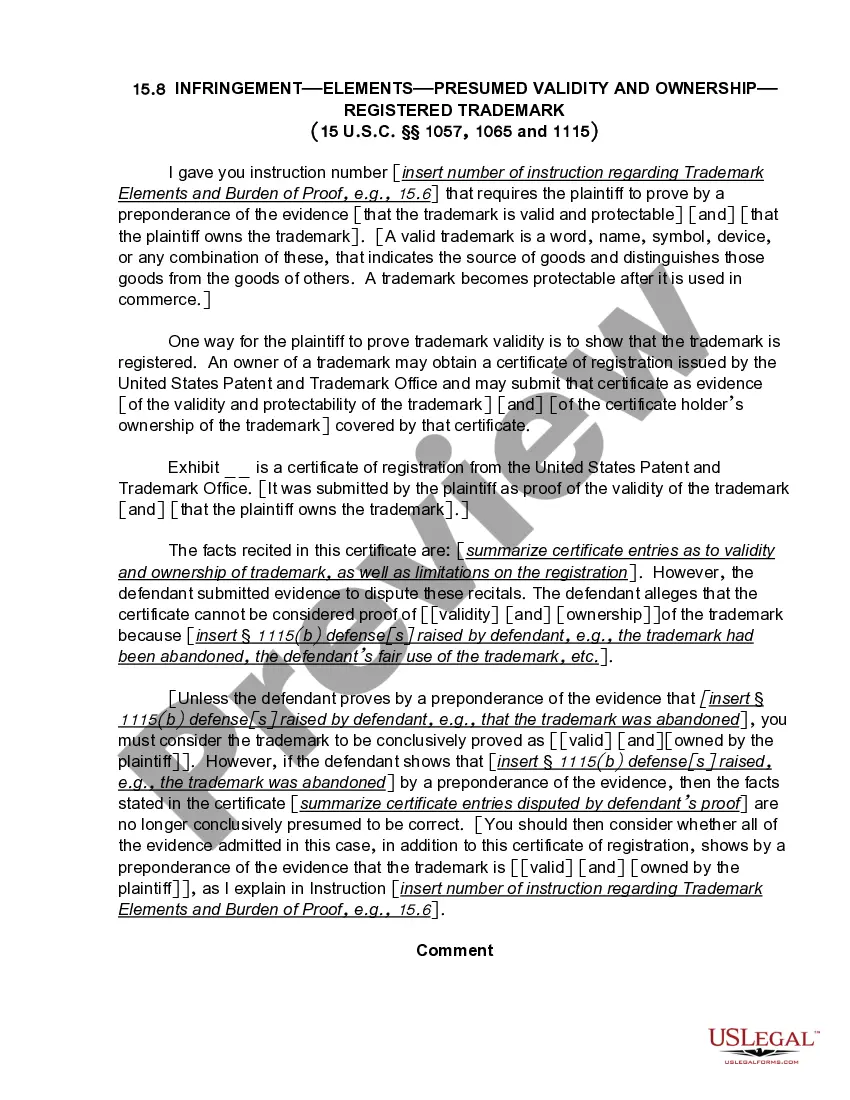
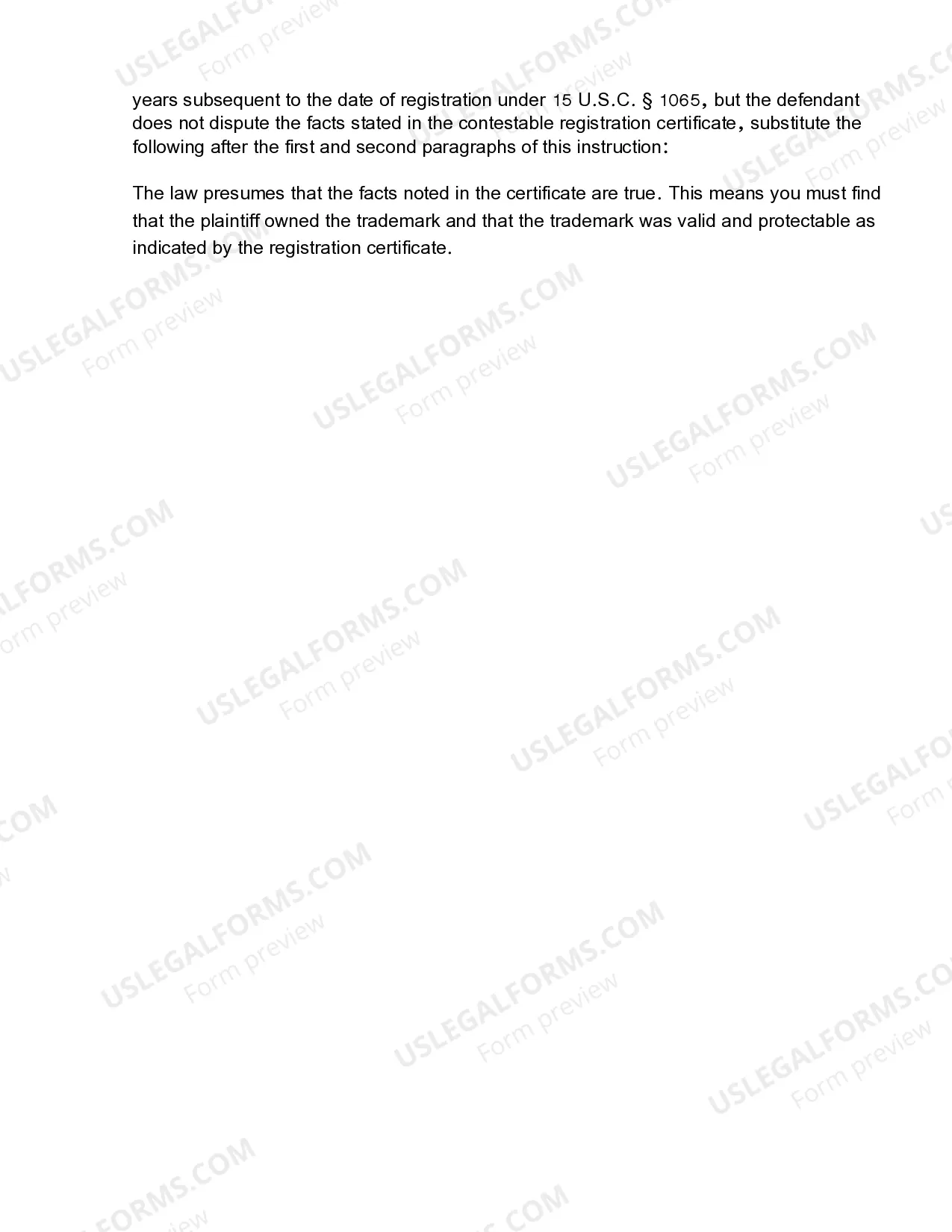
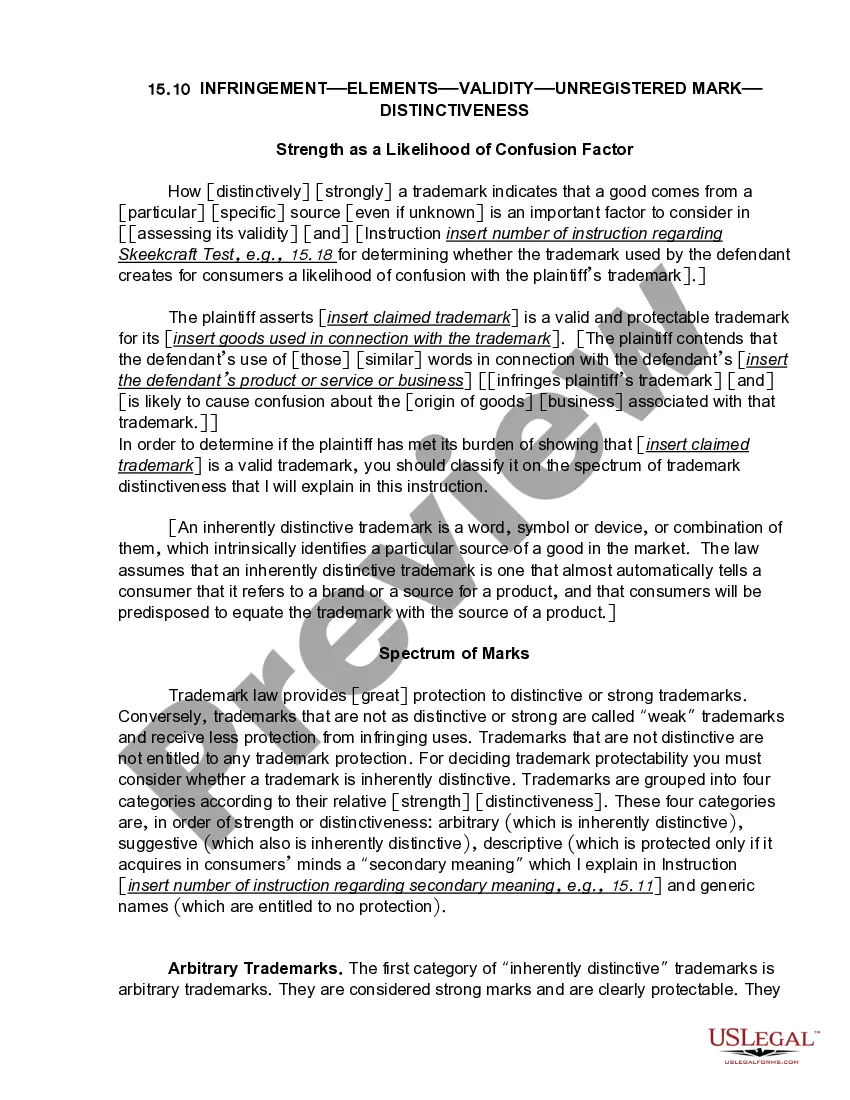
15.8 Infringement-Elements-Presumed Validity and Ownership-Registered Trademark
Does this form need to be notarized?
Notarization is not commonly needed for this form. However, certain documents or local rules may make it necessary. Our notarization service, powered by Notarize, allows you to finalize it securely online anytime, day or night.
Get your form ready online
Our built-in tools help you complete, sign, share, and store your documents in one place.
Make edits, fill in missing information, and update formatting in US Legal Forms—just like you would in MS Word.
Download a copy, print it, send it by email, or mail it via USPS—whatever works best for your next step.
Sign and collect signatures with our SignNow integration. Send to multiple recipients, set reminders, and more. Go Premium to unlock E-Sign.
If this form requires notarization, complete it online through a secure video call—no need to meet a notary in person or wait for an appointment.
We protect your documents and personal data by following strict security and privacy standards.

Make edits, fill in missing information, and update formatting in US Legal Forms—just like you would in MS Word.

Download a copy, print it, send it by email, or mail it via USPS—whatever works best for your next step.

Sign and collect signatures with our SignNow integration. Send to multiple recipients, set reminders, and more. Go Premium to unlock E-Sign.

If this form requires notarization, complete it online through a secure video call—no need to meet a notary in person or wait for an appointment.

We protect your documents and personal data by following strict security and privacy standards.
Looking for another form?
Form popularity
FAQ
Some other standard character format examples include: Under Armour. Twitter. It's finger lickin' good! Just do it. America runs on Dunkin'
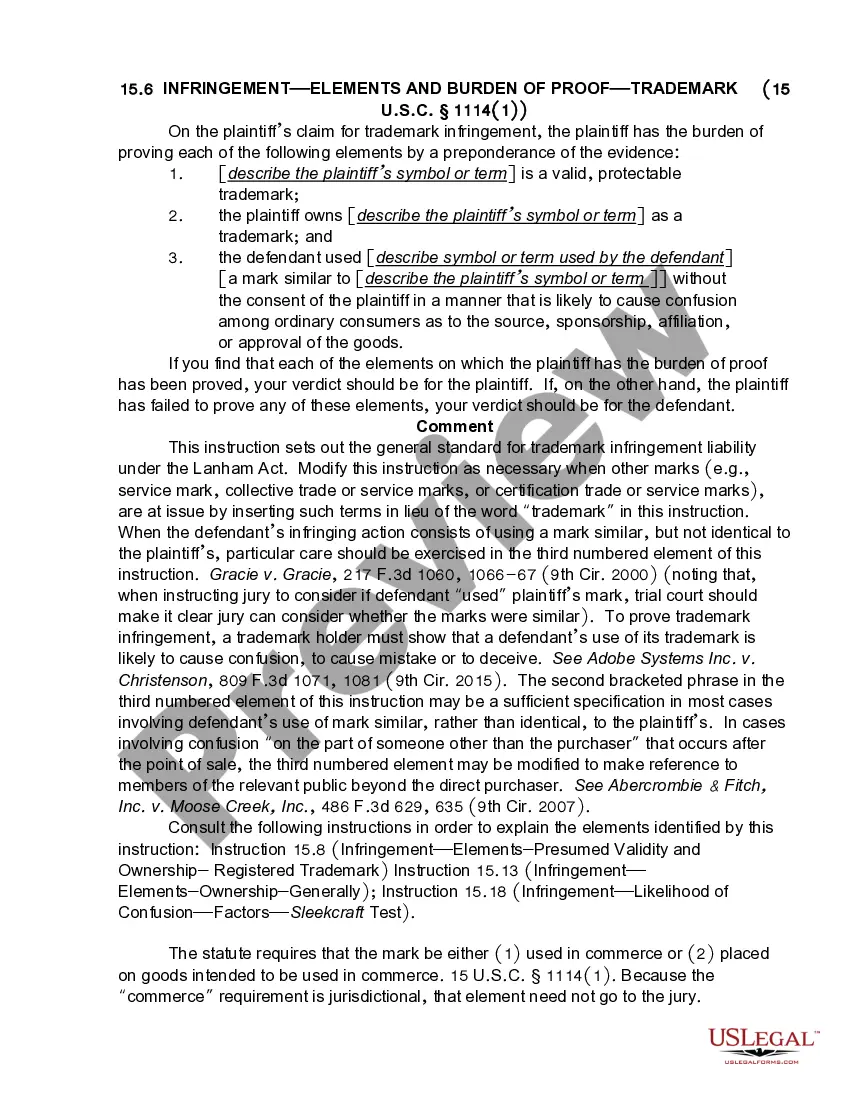
§ 1125(a), the plaintiff must demonstrate that (1) it has a valid and legally protectable mark; (2) it owns the mark; and (3) the defendant's use of the mark to identify goods or services causes a likelihood of confusion.
An example of infringing an owner's right of distribution would be if someone sells unlicensed copies of someone else's original work, such as a work of literature or art. For instance, an individual could not copy a famous musician's music and distribute copies of that music for monetary gain.
If, for example, you have a jewelry company with a trademarked name of Romantic Stones, and another company comes along and starts selling jewelry under the name Romantic Stones, you have a pretty clear-cut claim for trademark infringement on your hands.
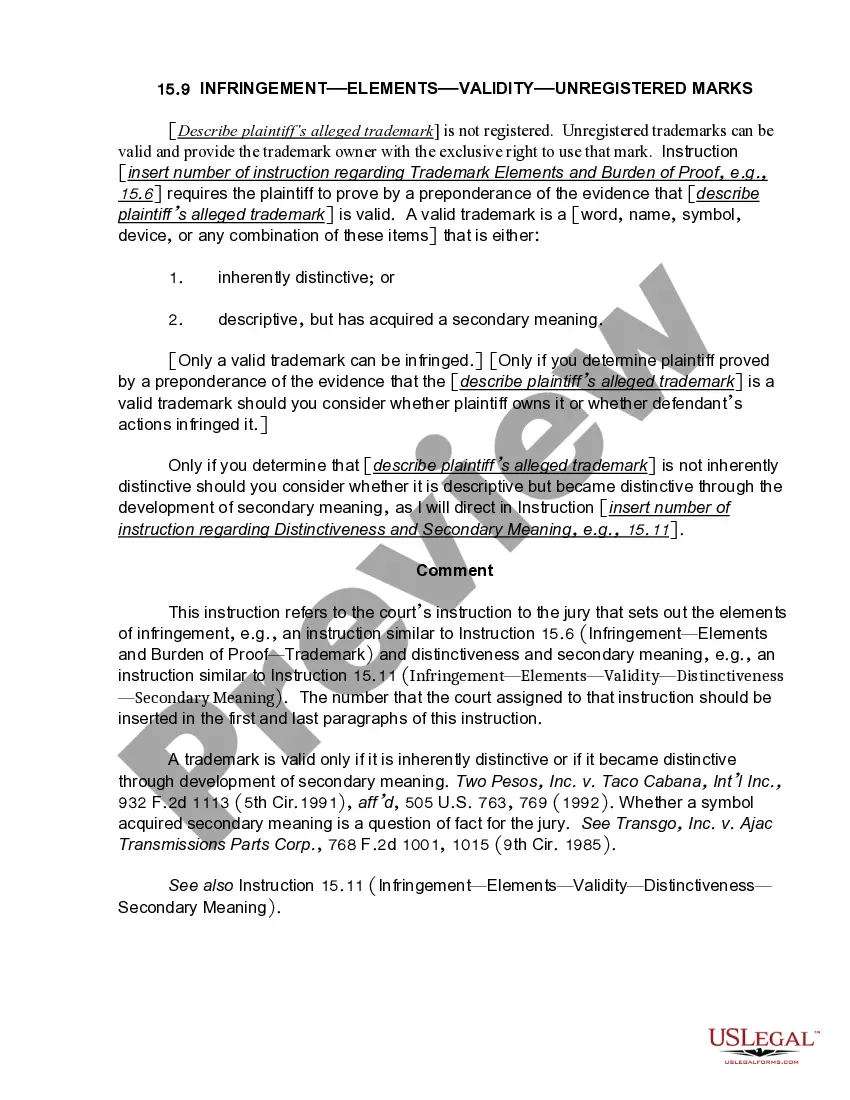
§ 1115(b). When a trademark has been registered, the defendant has the burden of proving that its registration is defective or subject to a defense. The defendant must show such defect or defense by a preponderance of the evidence.
§ 1125(a), the plaintiff must demonstrate that (1) it has a valid and legally protectable mark; (2) it owns the mark; and (3) the defendant's use of the mark to identify goods or services causes a likelihood of confusion.
To support a trademark infringement claim in court, a plaintiff must prove that it owns a valid mark, that it has priority (its rights in the mark(s) are "senior" to the defendant's), and that the defendant's mark is likely to cause confusion in the minds of consumers about the source or sponsorship of the goods or
Trademark infringement is the unauthorized use of a trademark or service mark on or in connection with goods and/or services in a manner that is likely to cause confusion, deception, or mistake about the source of the goods and/or services.