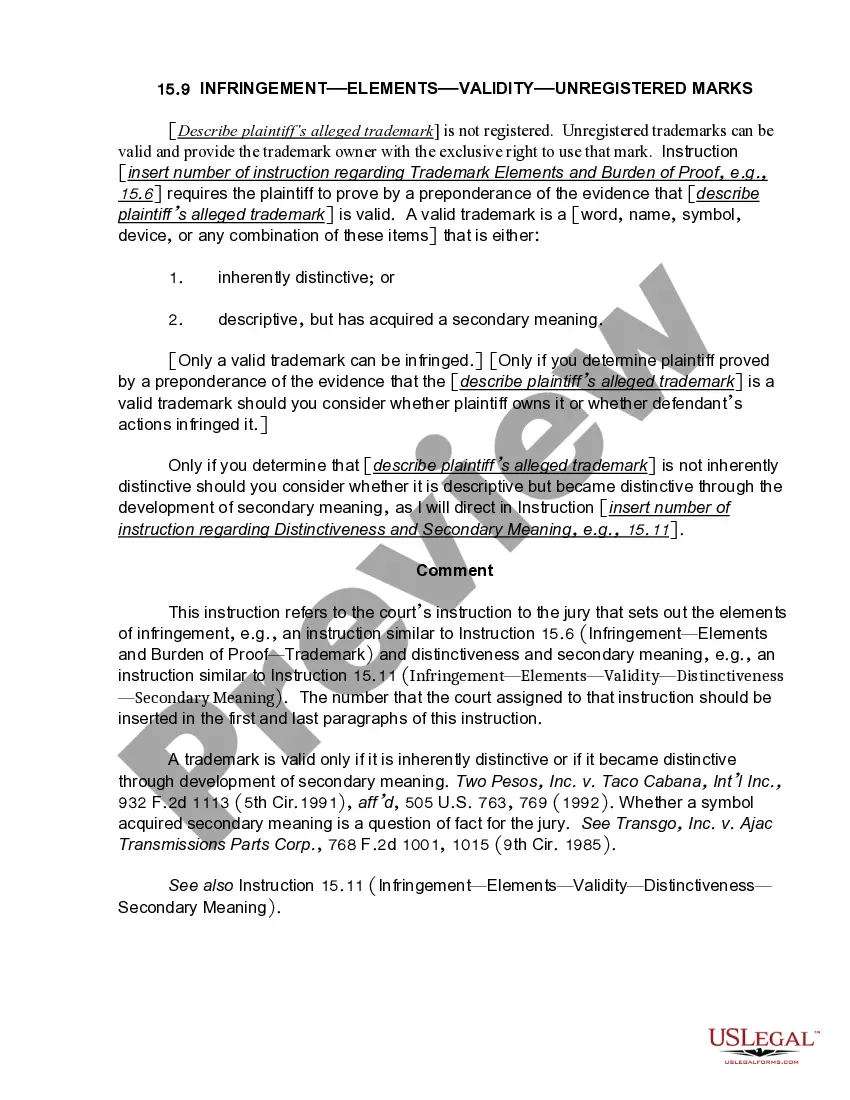
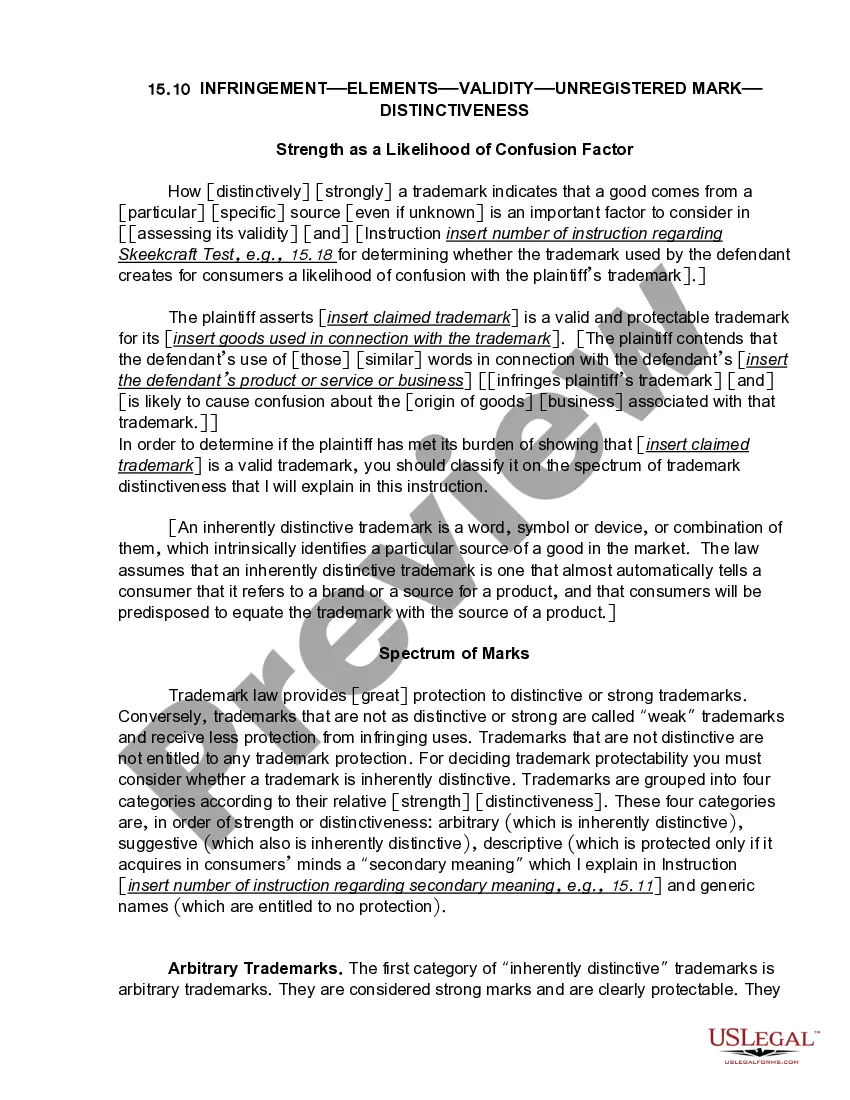
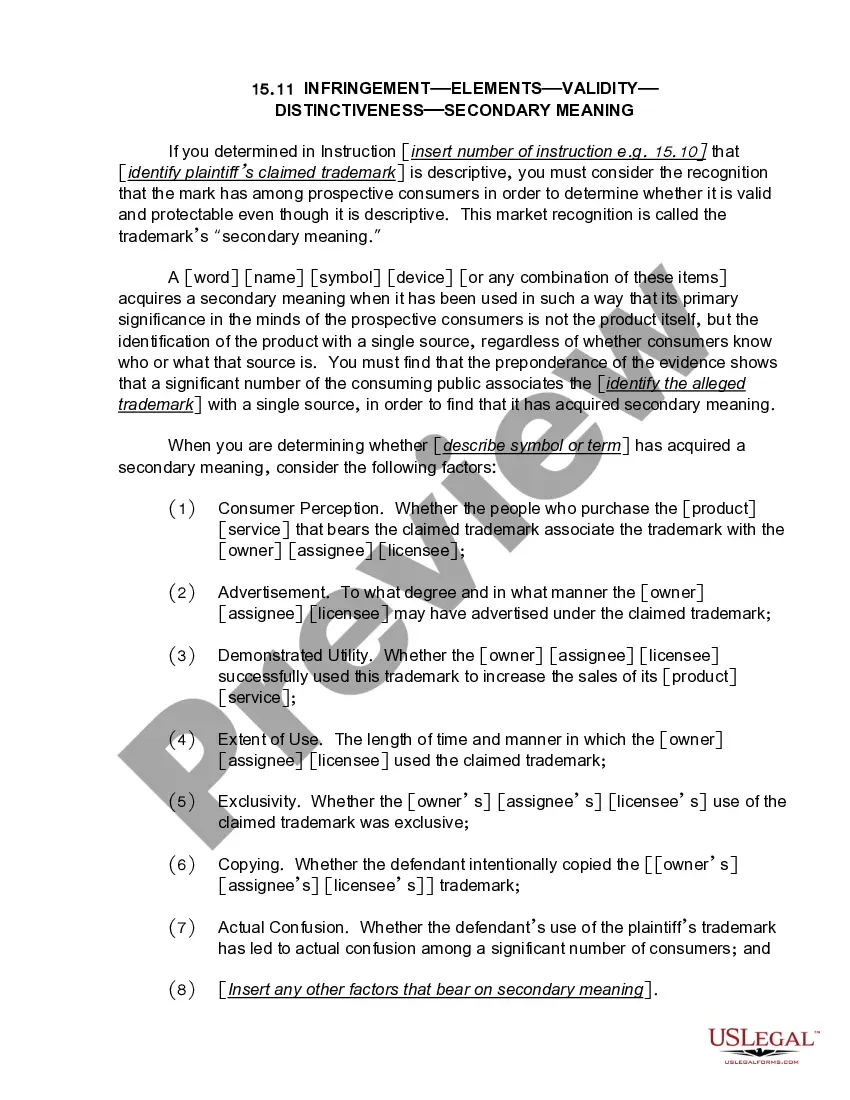
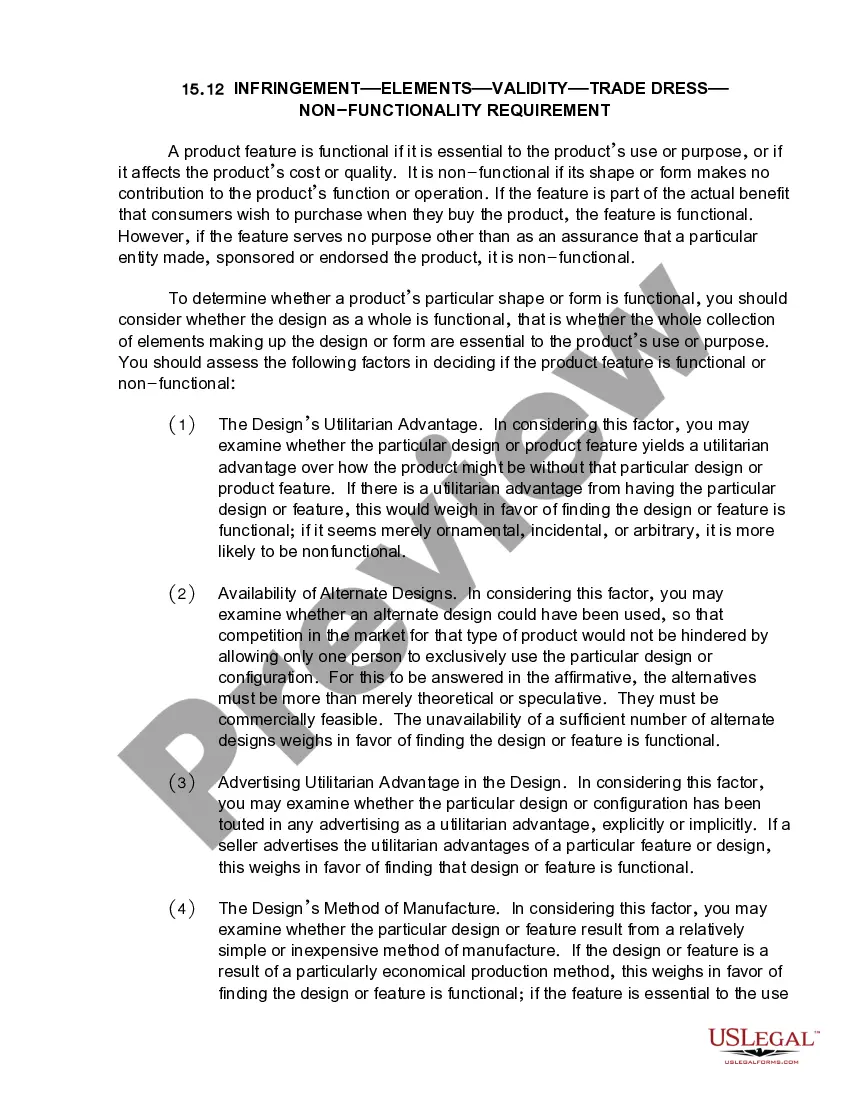
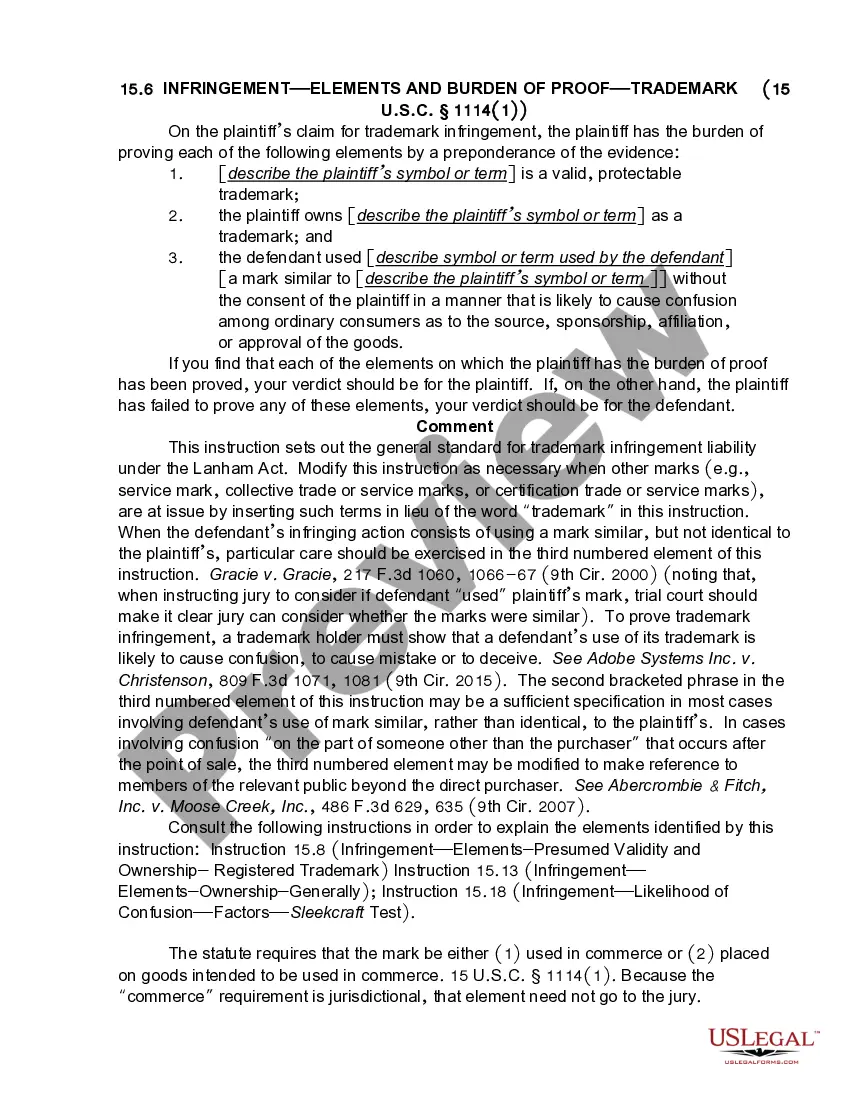
15.9 Infringement-Elements-Validity-Unregistered Marks
Notarization requirements for this form
This form does not typically require notarization to be legally valid. However, some jurisdictions or document types may still require it. US Legal Forms provides secure online notarization powered by Notarize, available 24/7 for added convenience.
Get your form ready online
Our built-in tools help you complete, sign, share, and store your documents in one place.
Make edits, fill in missing information, and update formatting in US Legal Forms—just like you would in MS Word.
Download a copy, print it, send it by email, or mail it via USPS—whatever works best for your next step.
Sign and collect signatures with our SignNow integration. Send to multiple recipients, set reminders, and more. Go Premium to unlock E-Sign.
If this form requires notarization, complete it online through a secure video call—no need to meet a notary in person or wait for an appointment.
We protect your documents and personal data by following strict security and privacy standards.

Make edits, fill in missing information, and update formatting in US Legal Forms—just like you would in MS Word.

Download a copy, print it, send it by email, or mail it via USPS—whatever works best for your next step.

Sign and collect signatures with our SignNow integration. Send to multiple recipients, set reminders, and more. Go Premium to unlock E-Sign.

If this form requires notarization, complete it online through a secure video call—no need to meet a notary in person or wait for an appointment.

We protect your documents and personal data by following strict security and privacy standards.
Looking for another form?
Form popularity
FAQ
While federal law does not require all trademarks to be registered in order to obtain legal protection, in order to file suit under the Lanham Act and receive the full benefit of a federally registered trademark. However, an unregistered trademark, also known as a common law trademark, is enforceable in state courts.
Under the Lanham Act, trademark infringement elements include (1) use (2) in commerce (3) of a registered mark that causes confusion. Common defenses include fair use, parody, and unclean hands.
You are not required to register your trademark, but where or whether you decide to register your trademark can determine the scope of your rights. Specifically, you can rely on common law rights or file for state, federal, or international trademark registration.
Unregistered trademarks are trademarks not registered under the Act. Unregistered trademarks can be used in relation to goods and services, but they will not possess legal benefits under the Act. However, unregistered trademarks can get protection under the common law.
An unregistered mark can only be enforced within the geographic area where it is used in commerce. The first user of the mark will have priority over other users. Much of the inquiry of infringement of unregistered marks revolve around the use element of infringement.
The lack of a federal registration means you will not have a presumption of ownership, but you can still sue an infringer for trademark infringement since the Lanham Act allows for lawsuits based on unregistered trademarks.
Trademark Violation § 1114, or an unregistered mark under 15 U.S.C. § 1125(a), the plaintiff must demonstrate that (1) the plaintiff has a valid and legally protectable mark; (2) the plaintiff owns the mark; and (3) the defendant's use of the mark to identify goods or services causes a likelihood of confusion.
An unregistered trademark or common law trademark is an enforceable mark created by a business or individual to signify or distinguish a product or service. It is legally different from a registered trademark granted by statute.