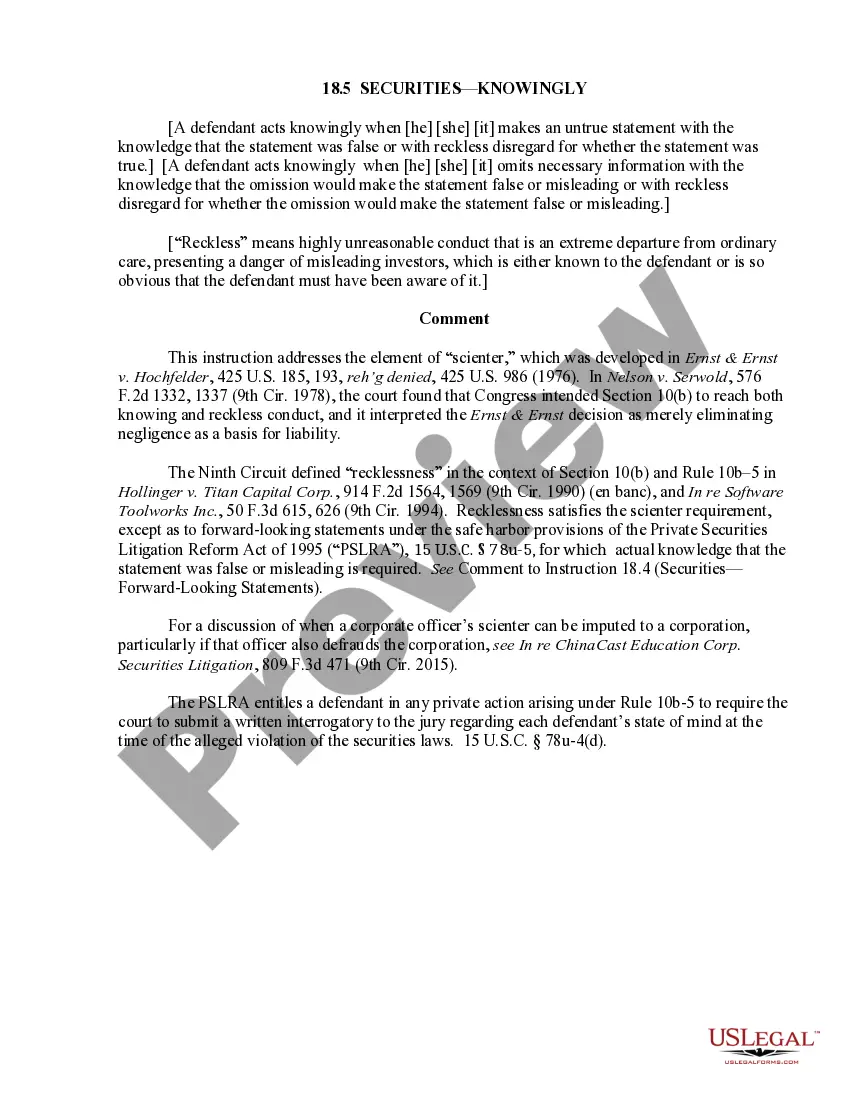
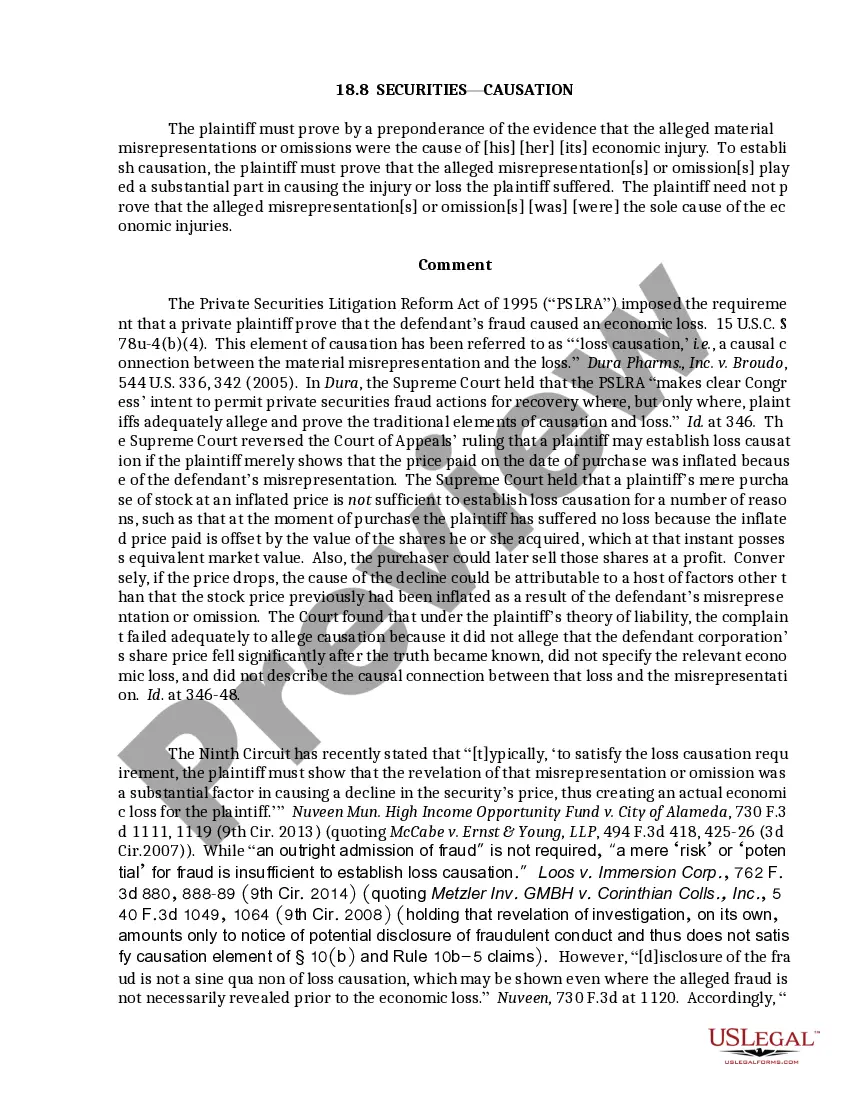
18.5 Securities-Knowingly
Does this form need to be notarized?
This form does not typically require notarization to be legally valid. However, some jurisdictions or document types may still require it. US Legal Forms provides secure online notarization powered by Notarize, available 24/7 for added convenience.
Get your form ready online
Our built-in tools help you complete, sign, share, and store your documents in one place.
Make edits, fill in missing information, and update formatting in US Legal Forms—just like you would in MS Word.
Download a copy, print it, send it by email, or mail it via USPS—whatever works best for your next step.
Sign and collect signatures with our SignNow integration. Send to multiple recipients, set reminders, and more. Go Premium to unlock E-Sign.
If this form requires notarization, complete it online through a secure video call—no need to meet a notary in person or wait for an appointment.
We protect your documents and personal data by following strict security and privacy standards.

Make edits, fill in missing information, and update formatting in US Legal Forms—just like you would in MS Word.

Download a copy, print it, send it by email, or mail it via USPS—whatever works best for your next step.

Sign and collect signatures with our SignNow integration. Send to multiple recipients, set reminders, and more. Go Premium to unlock E-Sign.

If this form requires notarization, complete it online through a secure video call—no need to meet a notary in person or wait for an appointment.

We protect your documents and personal data by following strict security and privacy standards.
Looking for another form?

Form popularity
FAQ
Standing. While not explicit in the language, courts have interpreted Rule 10b-5 to create a private civil cause of action and additionally allow the SEC to bring criminal enforcement actions. In order to bring a private right of action under Rule 10b-5, the plaintiff must have standing. In Blue Chip Stamps v.
First, the plaintiff must file the claim within two years of having discovered the facts that constitute the alleged violation. Second, the plaintiff must file the claim no more than five years after the violation occurred.
A rule under the Exchange Act making it unlawful to issue materially misleading statements or omissions, or use manipulative and deceptive devices, in connection with the sale or purchase of any security. Rule 10b-5 is the general anti-fraud provision of the federal securities laws.
Under the Securities Exchange Act of 1934 Section 10(b) there are two distinct timeframes for filing claims related to securities fraud: a two (2) year statute of limitations and a five (5) year statute of repose.
In SEC enforcement actions, with only rare exceptions, the applicable statute of limitations is ten years, beginning when the conduct giving rise to the claim occurred, not when it was discovered by authorities.
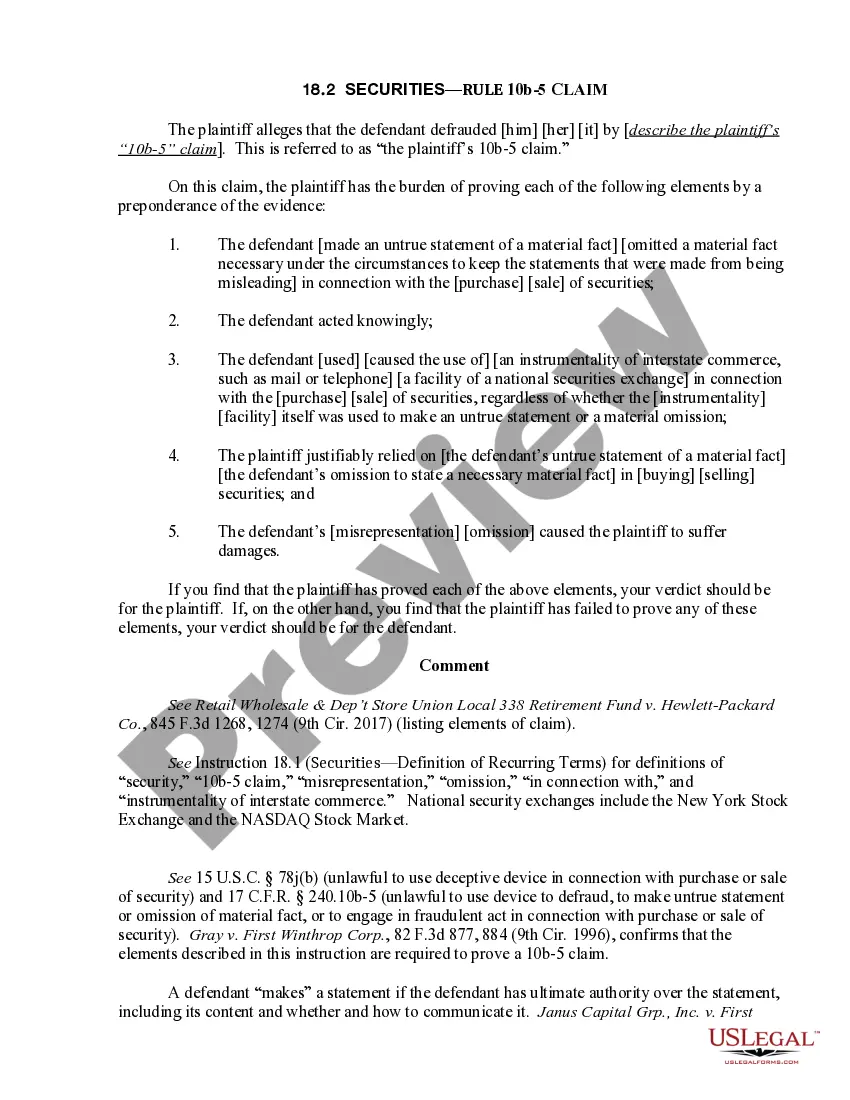
Section 10(b) makes it unlawful to ?use or employ, in connection with the purchase or sale of any security? a ?manipulative or deceptive device or contrivance in contravention of such rules and regulations as the SEC may prescribe.? 15 U.S.C. § 78j(b).