18.2 Securities-Rule 10b-5 Claim
Notarization guidance
This form usually doesn’t need to be notarized. However, local laws or specific transactions may require it. Our online notarization service, powered by Notarize, lets you complete it remotely through a secure video session, available 24/7.
Get your form ready online
Our built-in tools help you complete, sign, share, and store your documents in one place.
Make edits, fill in missing information, and update formatting in US Legal Forms—just like you would in MS Word.
Download a copy, print it, send it by email, or mail it via USPS—whatever works best for your next step.
Sign and collect signatures with our SignNow integration. Send to multiple recipients, set reminders, and more. Go Premium to unlock E-Sign.
If this form requires notarization, complete it online through a secure video call—no need to meet a notary in person or wait for an appointment.
We protect your documents and personal data by following strict security and privacy standards.

Make edits, fill in missing information, and update formatting in US Legal Forms—just like you would in MS Word.

Download a copy, print it, send it by email, or mail it via USPS—whatever works best for your next step.

Sign and collect signatures with our SignNow integration. Send to multiple recipients, set reminders, and more. Go Premium to unlock E-Sign.

If this form requires notarization, complete it online through a secure video call—no need to meet a notary in person or wait for an appointment.

We protect your documents and personal data by following strict security and privacy standards.
Looking for another form?

Form popularity
FAQ
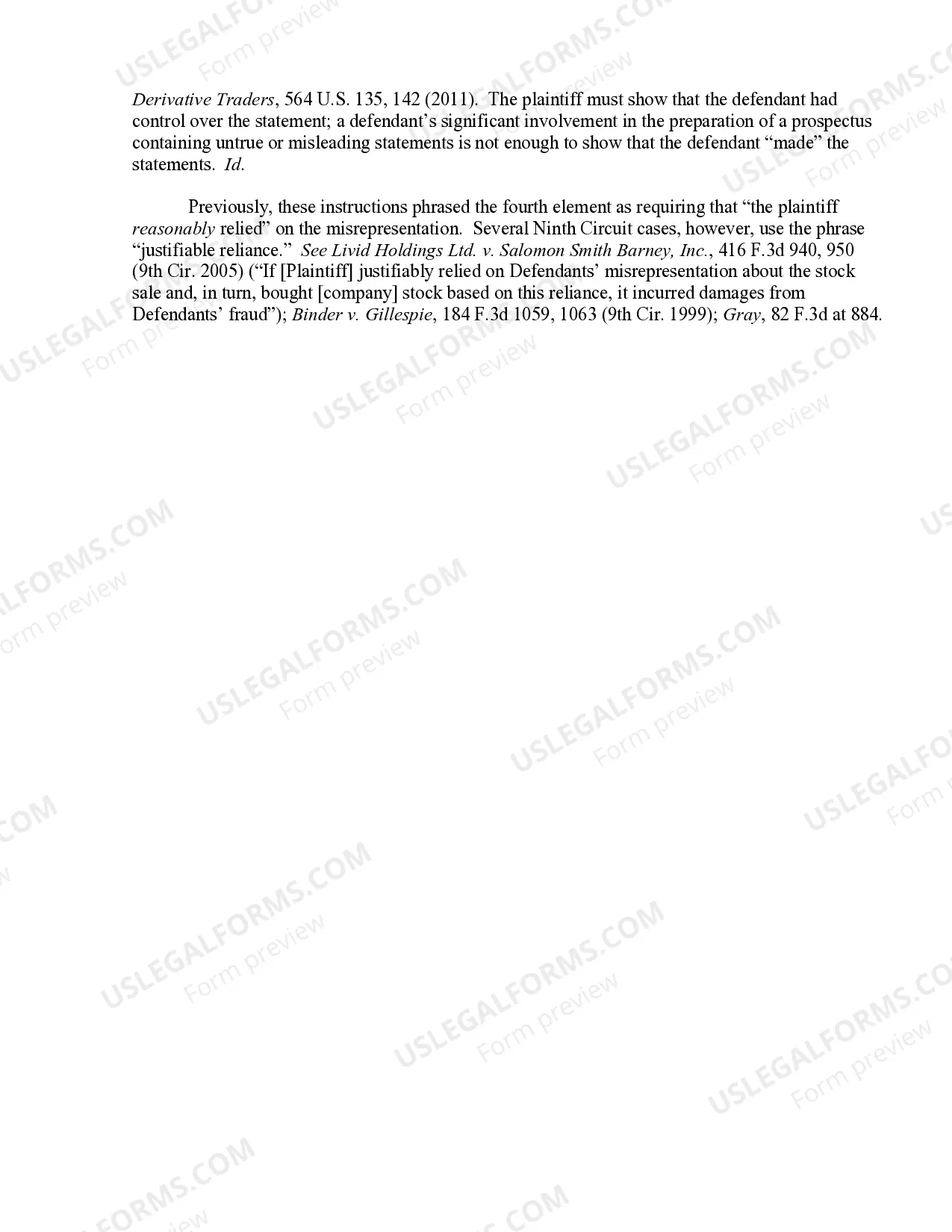
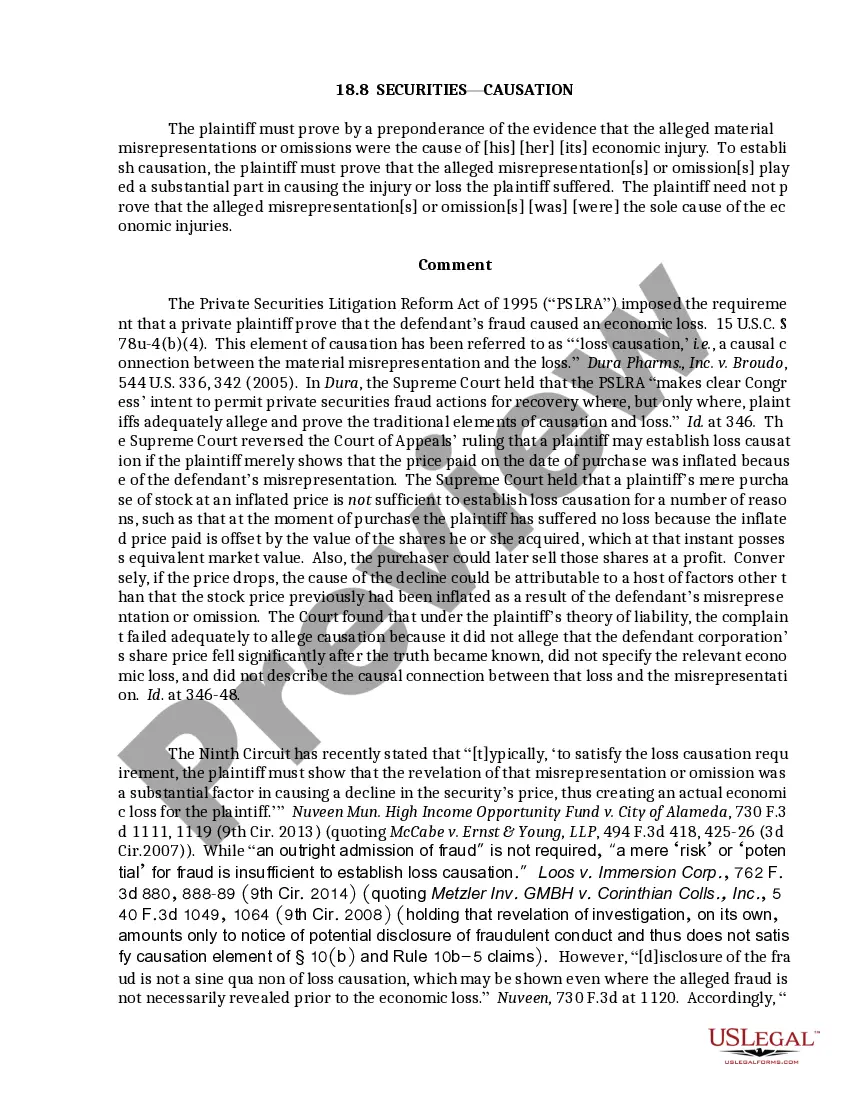
In summary, to recover under Rule 10(b)(5), a plaintiff, whether the SEC or a private plaintiff, must show that an individual trading in securities had an intent to deceive the purchaser. Intent to deceive may be inferred from a partial or untimely disclosure of important information.
Section 10(b) Courts have held that there is a private right of action to sue under 10b-5. Typically, only individuals who have actually bought or sold securities have standing to bring a 10b-5 claim.
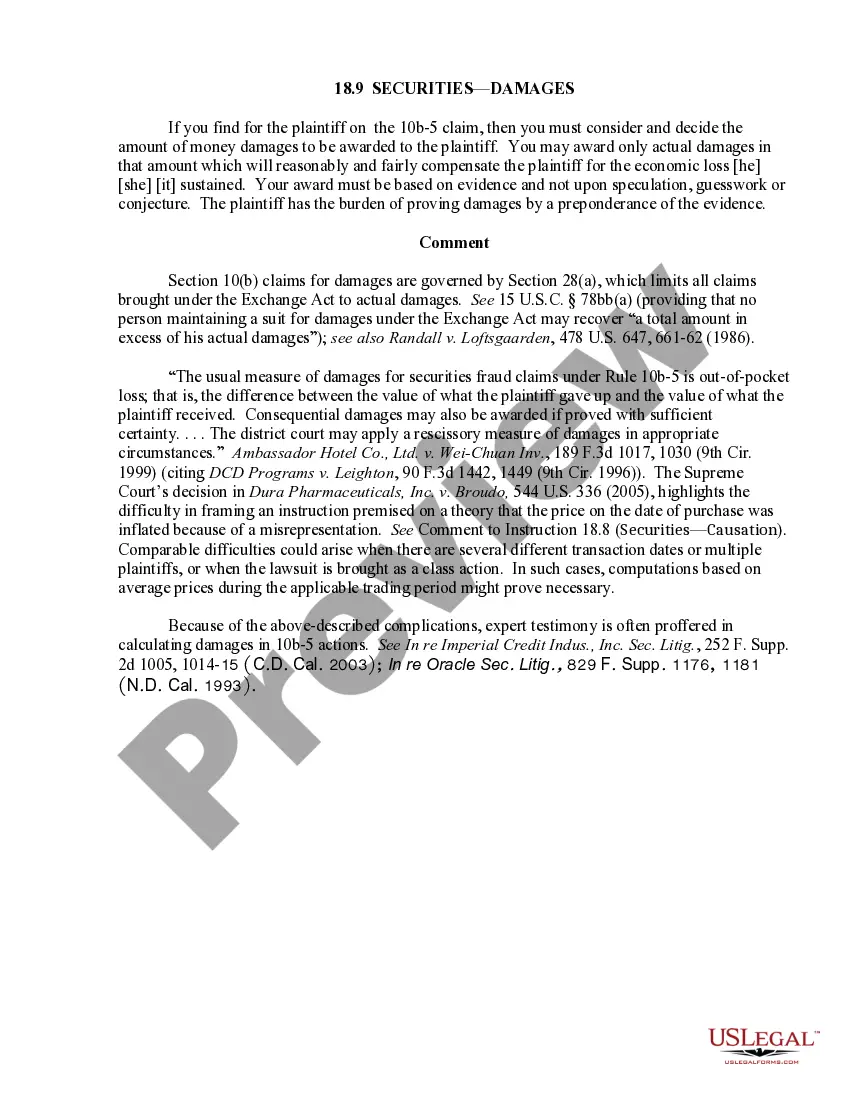
"The usual measure of damages for securities fraud claims under Rule 10b-5 is out-of-pocket loss; that is, the difference between the value of what the plaintiff gave up and the value of what the plaintiff received. Consequential damages may also be awarded if proved with sufficient certainty. . . .
"The usual measure of damages for securities fraud claims under Rule 10b-5 is out-of-pocket loss; that is, the difference between the value of what the plaintiff gave up and the value of what the plaintiff received.
See 17 CFR 240.10b-5(b). The penalties for insider trading are very severe. Individuals who are found guilty of this crime are subject to sentencing with a maximum of 20 years in federal prison. The fine can be up to $5,000,000 for an individual; $25,000,000 for a corporation.
In an SEC action under 10(b)(5), the civil penalty for gaining illegal profits with nonpublic information is three times the profits gained. The statute of limitation is 5 years from the wrongful transaction. Note: A purchaser may also be entitled to receive consequential damages from the purchase of securities.
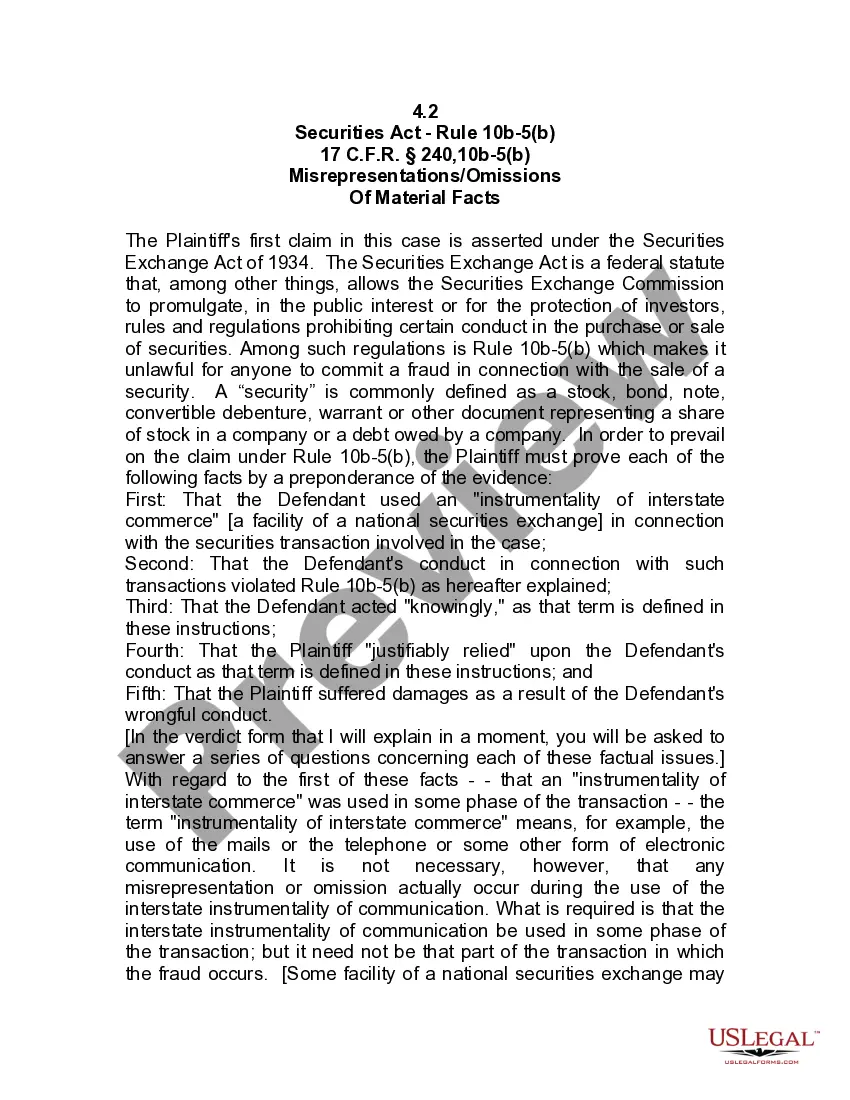
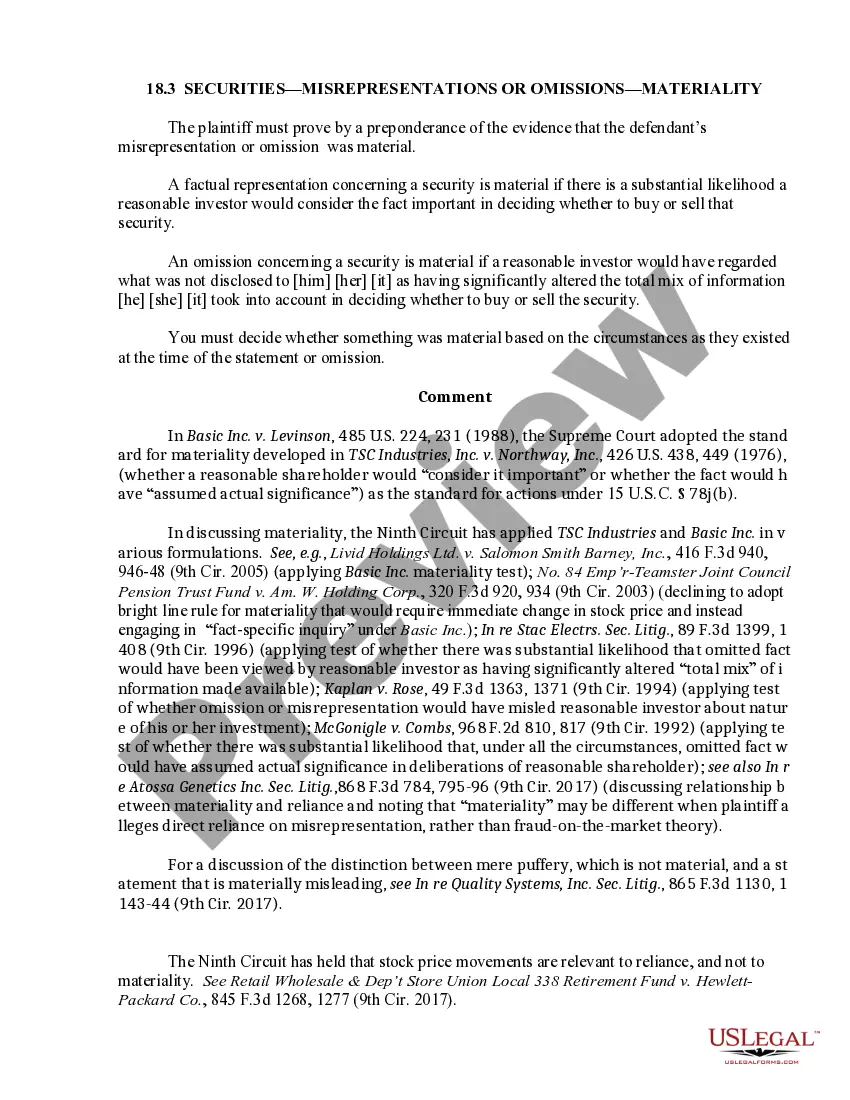
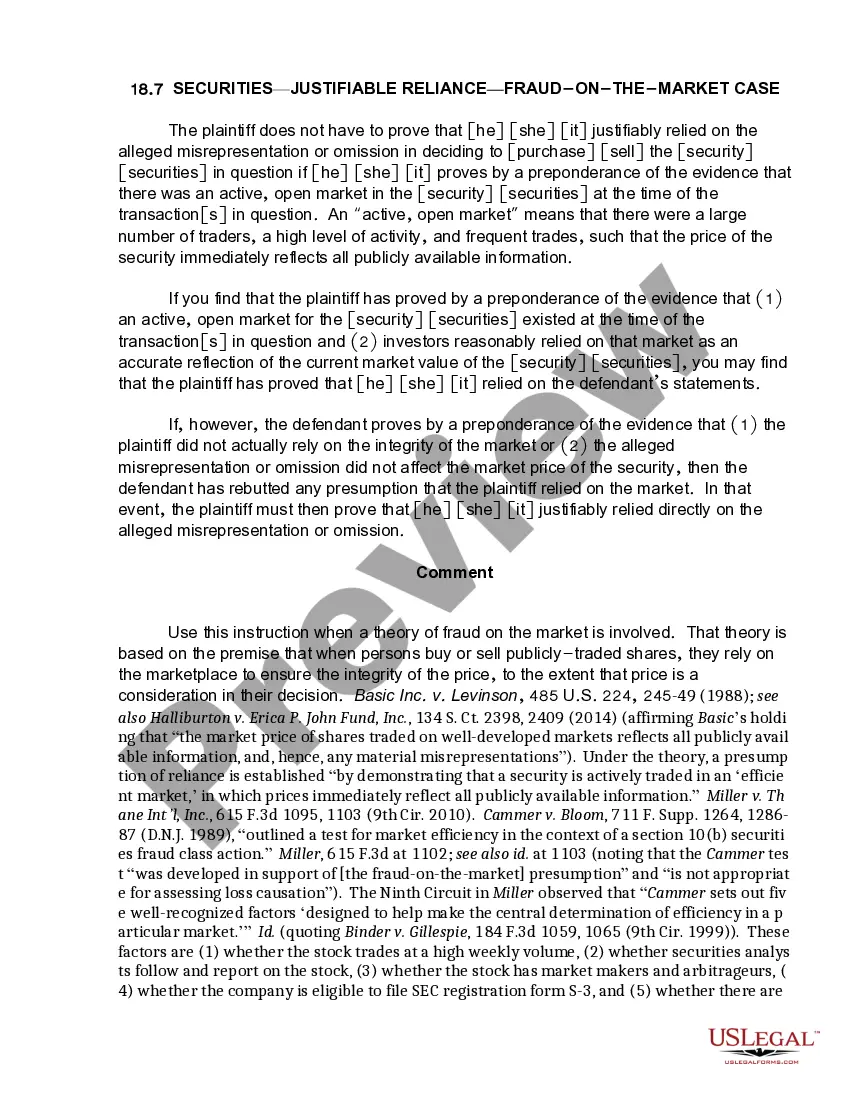
SEC Rule 10b-5, states that it is illegal for any person to defraud or deceive someone, including through the misrepresentation of material information, with respect to the sale or purchase of a security.