Notice of Service of Interrogatories - Discovery
Understanding this form
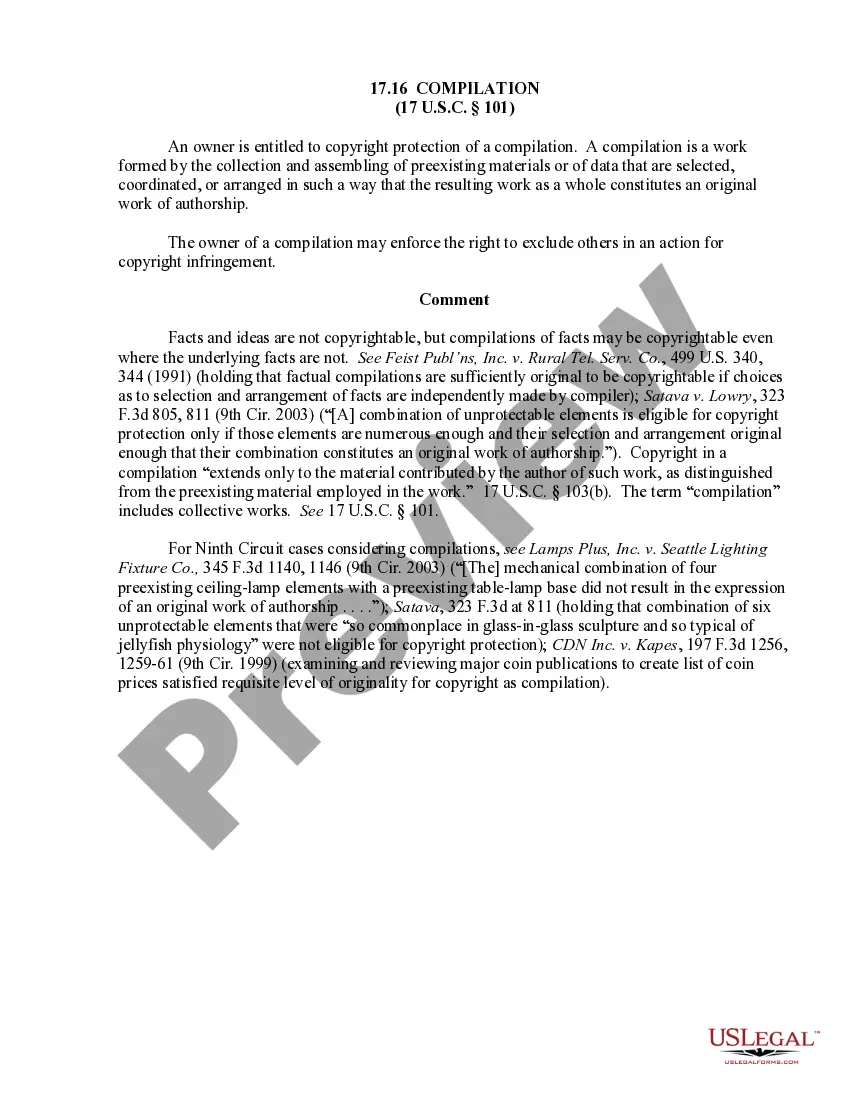
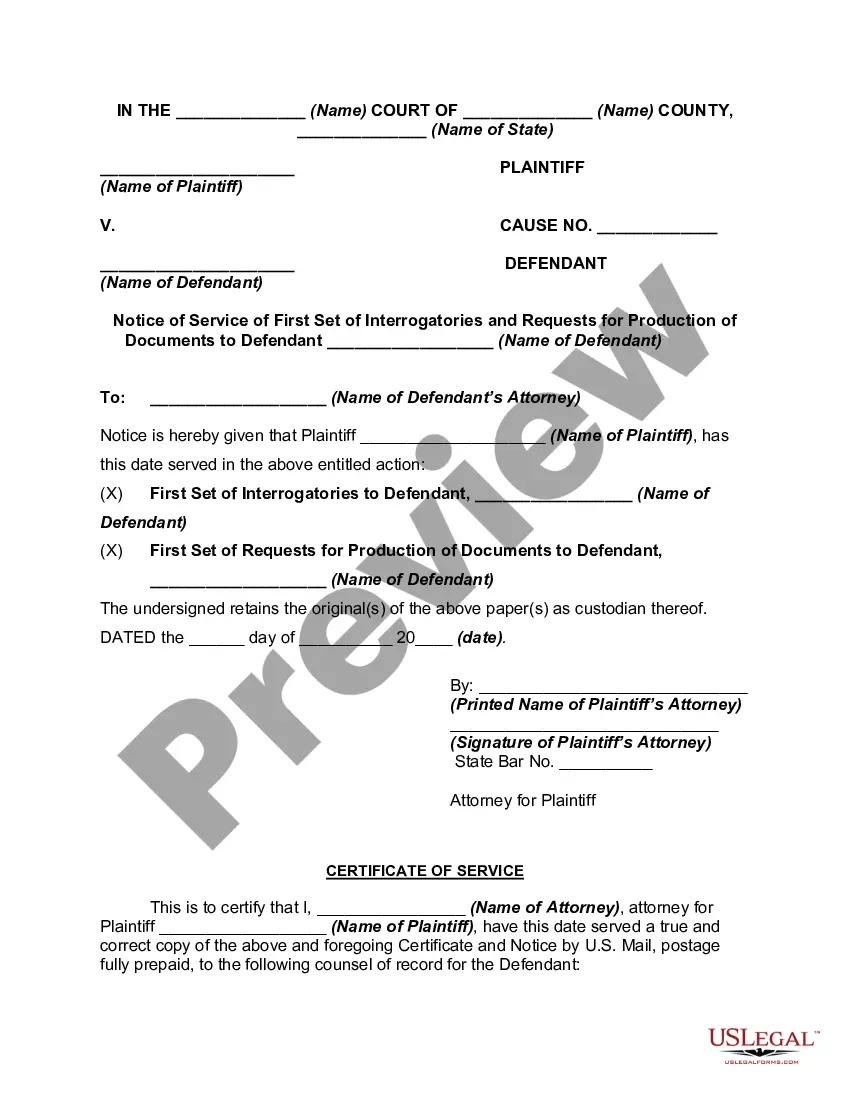
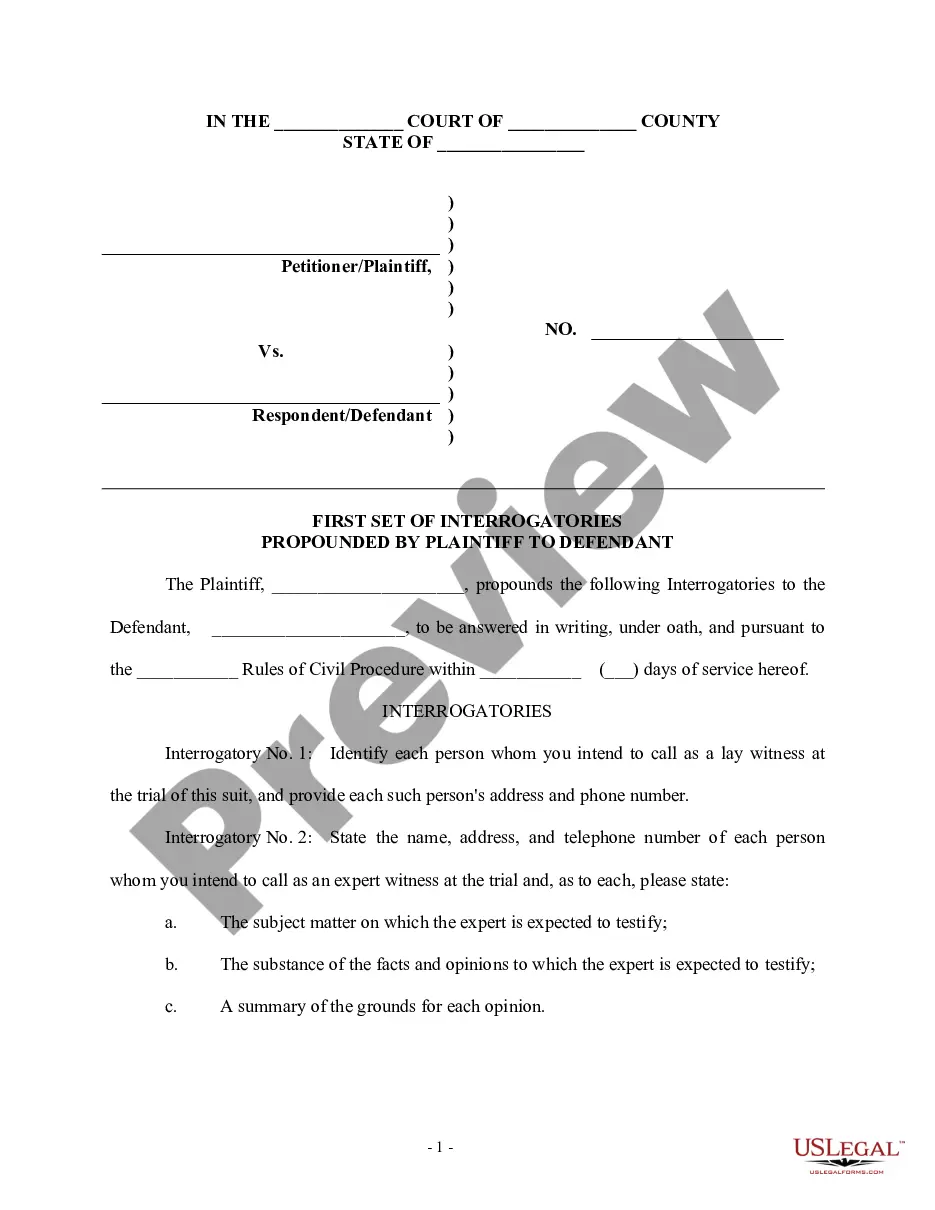
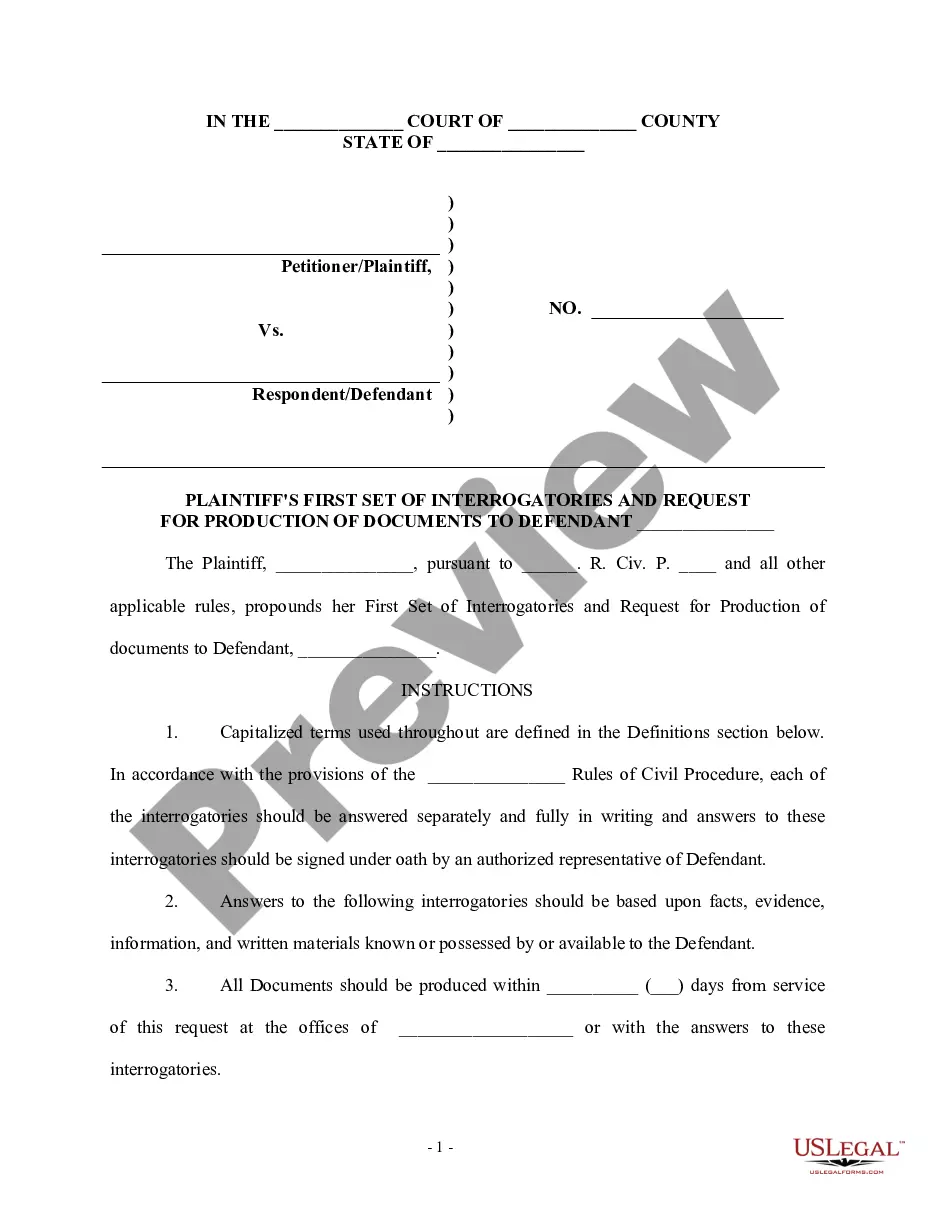
The Notice of Service of Interrogatories - Discovery serves as a formal notification from the Plaintiff to the Defendant regarding the service of interrogatories, second requests for production, responses to interrogatories, or responses to second requests for production. This form is essential in the discovery phase of litigation, as it ensures all parties are aware of the information being sought, setting it apart from other legal forms relating to interrogatories.
Main sections of this form
- Notice section indicating the type of documents served: interrogatories, second requests for production, or response documents.
- Signature lines for the attorney representing the Plaintiff, confirming service details.
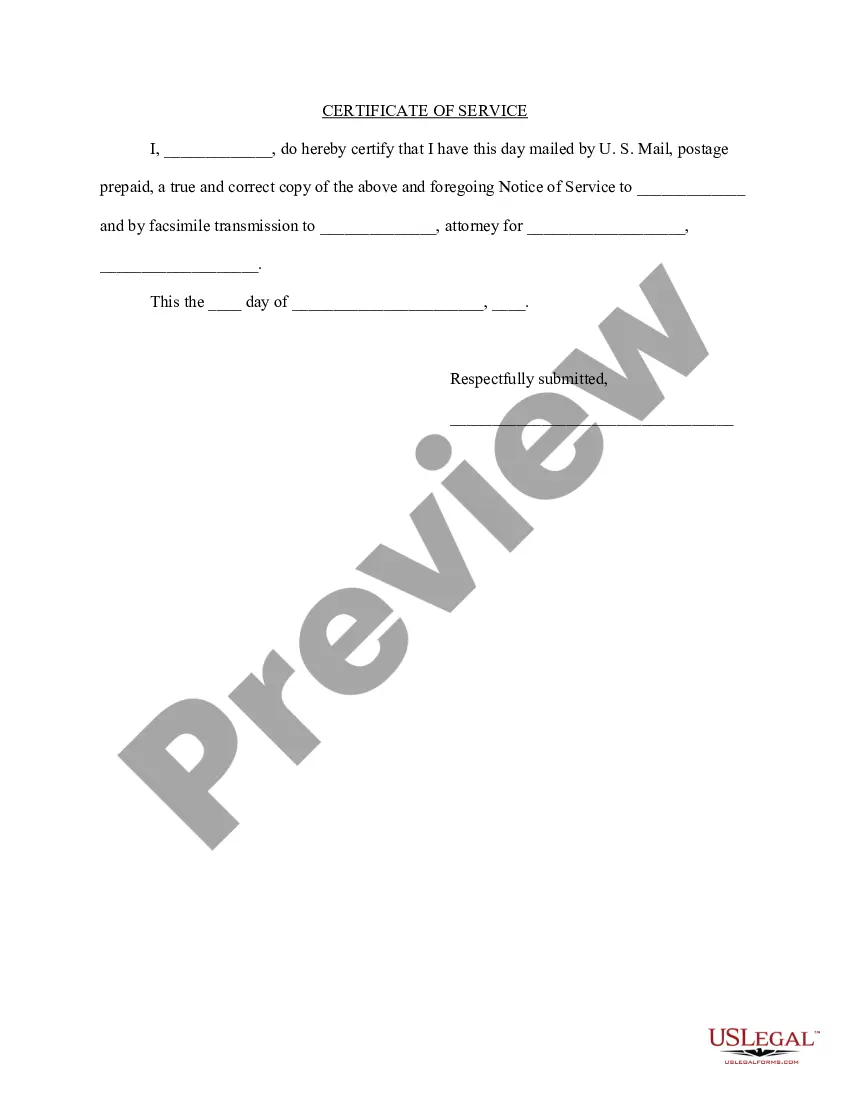
- Certificate of service section, ensuring proper notification to all counsel of record.


When to use this document
This form is necessary during the discovery phase of a lawsuit when the Plaintiff seeks to request information or documents from the Defendant. Use it when you wish to serve interrogatories for the first time, send second requests for production, or provide responses to previously submitted requests. It's important for maintaining transparency between parties and ensuring compliance with legal requirements.
Who should use this form
This form is intended for:
- Plaintiffs in civil litigation seeking to gather information from Defendants.
- Attorneys representing Plaintiffs in discovery matters.
- Legal representatives in various states looking to standardize their communication procedures regarding interrogatories.
Instructions for completing this form
- Identify and enter the name of the case at the top of the document.
- Check the appropriate box indicating the type of interrogatories or responses being served.
- Fill in the date of service and include the attorney's name and signature for the Plaintiff.
- Complete the certificate of service section, providing details of all parties notified.
- Make copies of the completed form to distribute to all relevant parties as indicated.
Is notarization required?
This form does not typically require notarization to be legally valid. However, some jurisdictions or document types may still require it. US Legal Forms provides secure online notarization powered by Notarize, available 24/7 for added convenience.
Get your form ready online
Our built-in tools help you complete, sign, share, and store your documents in one place.
Make edits, fill in missing information, and update formatting in US Legal Forms—just like you would in MS Word.
Download a copy, print it, send it by email, or mail it via USPS—whatever works best for your next step.
Sign and collect signatures with our SignNow integration. Send to multiple recipients, set reminders, and more. Go Premium to unlock E-Sign.
If this form requires notarization, complete it online through a secure video call—no need to meet a notary in person or wait for an appointment.
We protect your documents and personal data by following strict security and privacy standards.

Make edits, fill in missing information, and update formatting in US Legal Forms—just like you would in MS Word.

Download a copy, print it, send it by email, or mail it via USPS—whatever works best for your next step.

Sign and collect signatures with our SignNow integration. Send to multiple recipients, set reminders, and more. Go Premium to unlock E-Sign.

If this form requires notarization, complete it online through a secure video call—no need to meet a notary in person or wait for an appointment.

We protect your documents and personal data by following strict security and privacy standards.
Common mistakes
- Failing to check the appropriate boxes when indicating types of documents served.
- Not providing complete information in the certificate of service section.
- Missing the signature or date, which may invalidate the notice.
Benefits of completing this form online
- Convenience in accessing and downloading the form at any time.
- Editability allows for easy adjustments based on specific case needs.
- Reliability from professional legal templates drafted by licensed attorneys.
Key takeaways
- The Notice of Service of Interrogatories is crucial for notifying the Defendant of discovery requests.
- Correct completion of the form ensures legal compliance and effective communication between parties.
- This form is applicable across multiple states, with attention to local regulations.
Looking for another form?









Form popularity
FAQ
Personal/Corporate information of opposing party. Identifying information of witnesses. Contact information & background of expert witnesses. Insurance information.
Serving discovery simply means sending your verified discovery responses to the opposing sides. "Service" can be done by mail, personal delivery and sometimes fax or email.
An interrogatory is part of the discovery process before the trial.The interrogatory is considered to be conducted under oath. Any information provided on it will be seriously reviewed by the court and the lawyers involved. Your lawyer can ask any question that he or she wants on the form.
Interrogatories are a part of the "discovery" stage of a civil case.During discovery, the parties request and exchange information and documents. Interrogatories and depositions form the bulk of the discovery process. Unlike many legal documents, interrogatories do not need to be filed with the court.
Motions to Compel If a party doesn't respond to interrogatories or requests for production, then the party seeking those answers must file a motion to compel with the court. If the court grants the motion to compel, then the party who objected or failed to answer must then do so.
So, can you refuse to answer interrogatories? The answer is, no, you may not.That answer must either permit inspection of the requested information or object to the production of the information for a specific reason.
Your answers to the interrogatories should usually be short, clear, and direct and should answer only the question that is being asked. This is not the time to set out your entire case or defense to the other side. Take the time to make sure your answers are correct and truthful.
You must answer each interrogatory separately and fully in writing under oath, unless you object to it. You must explain why you object. You must sign your answers and objections.
The plaintiff must respond by the deadline. There are different ways to make sure you get each kind of discovery if the plaintiff does not give it to you by the deadline. If the plaintiff does not respond to the court order, then you can file a Motion to Dismiss and you may win your case.