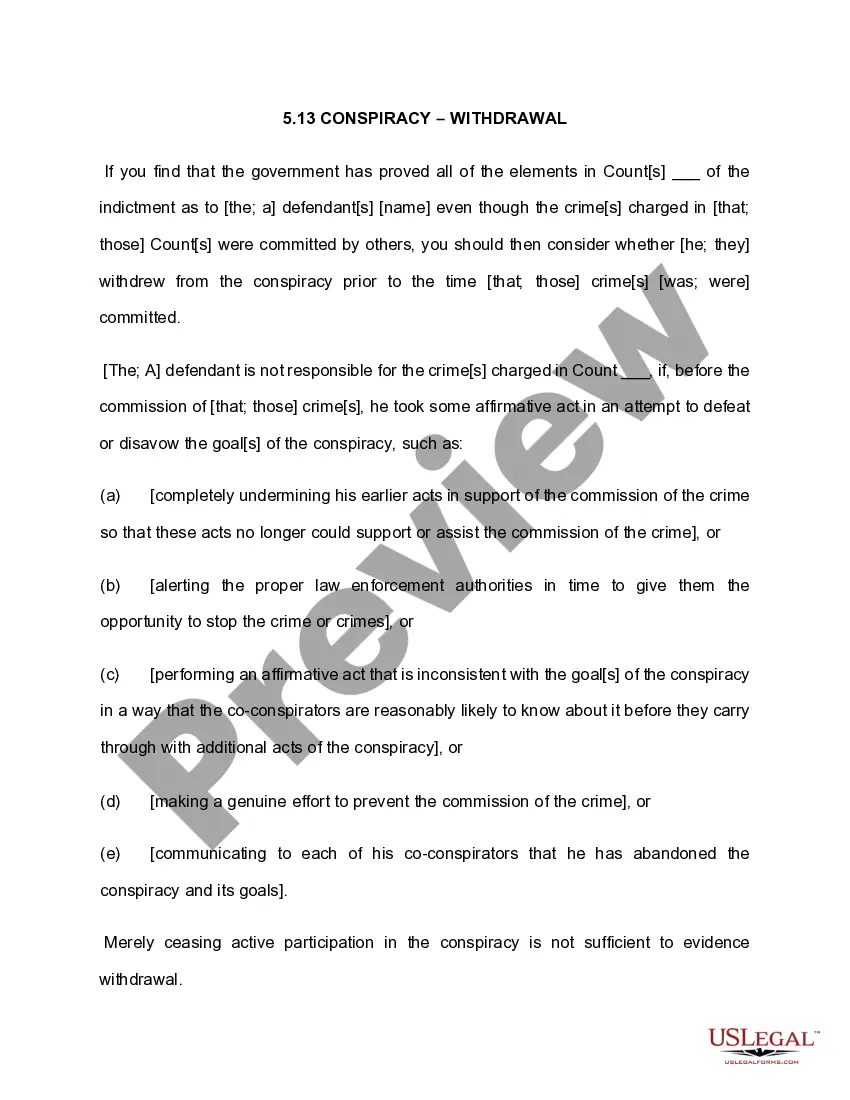
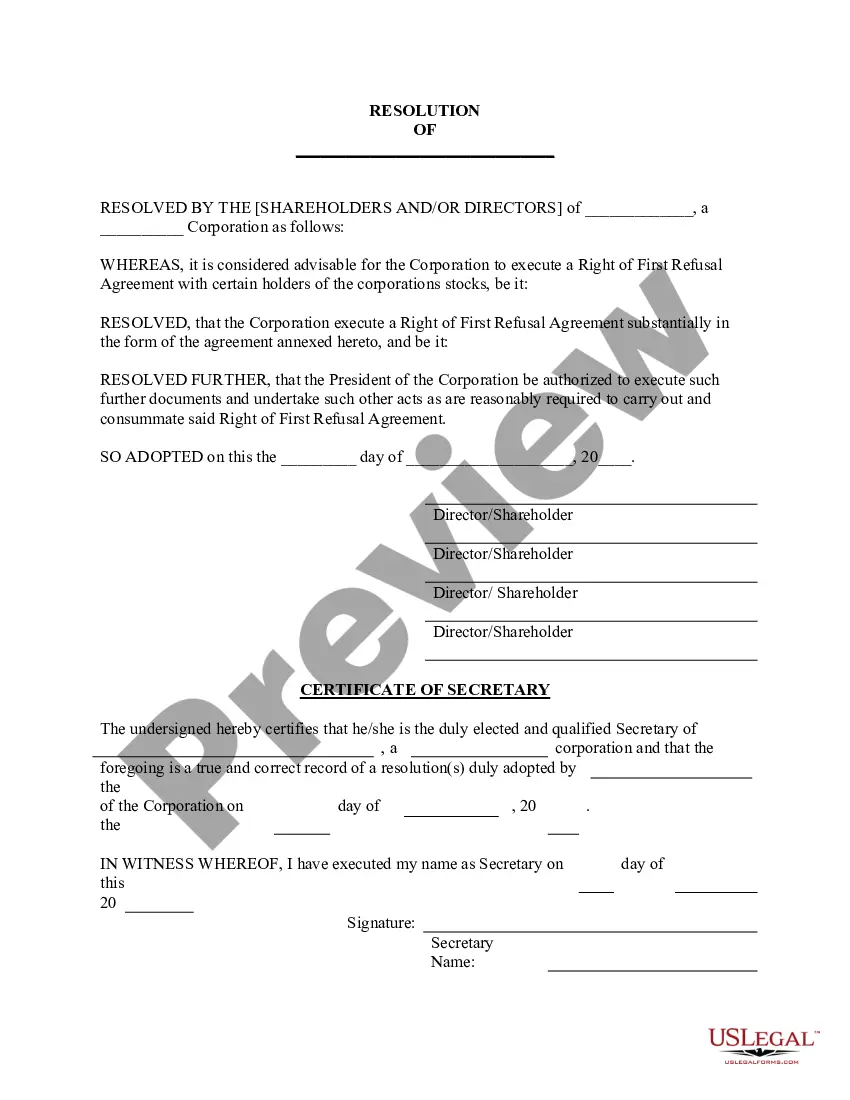
Demand Inspection of Books - Corporate Resolutions
Overview of this form
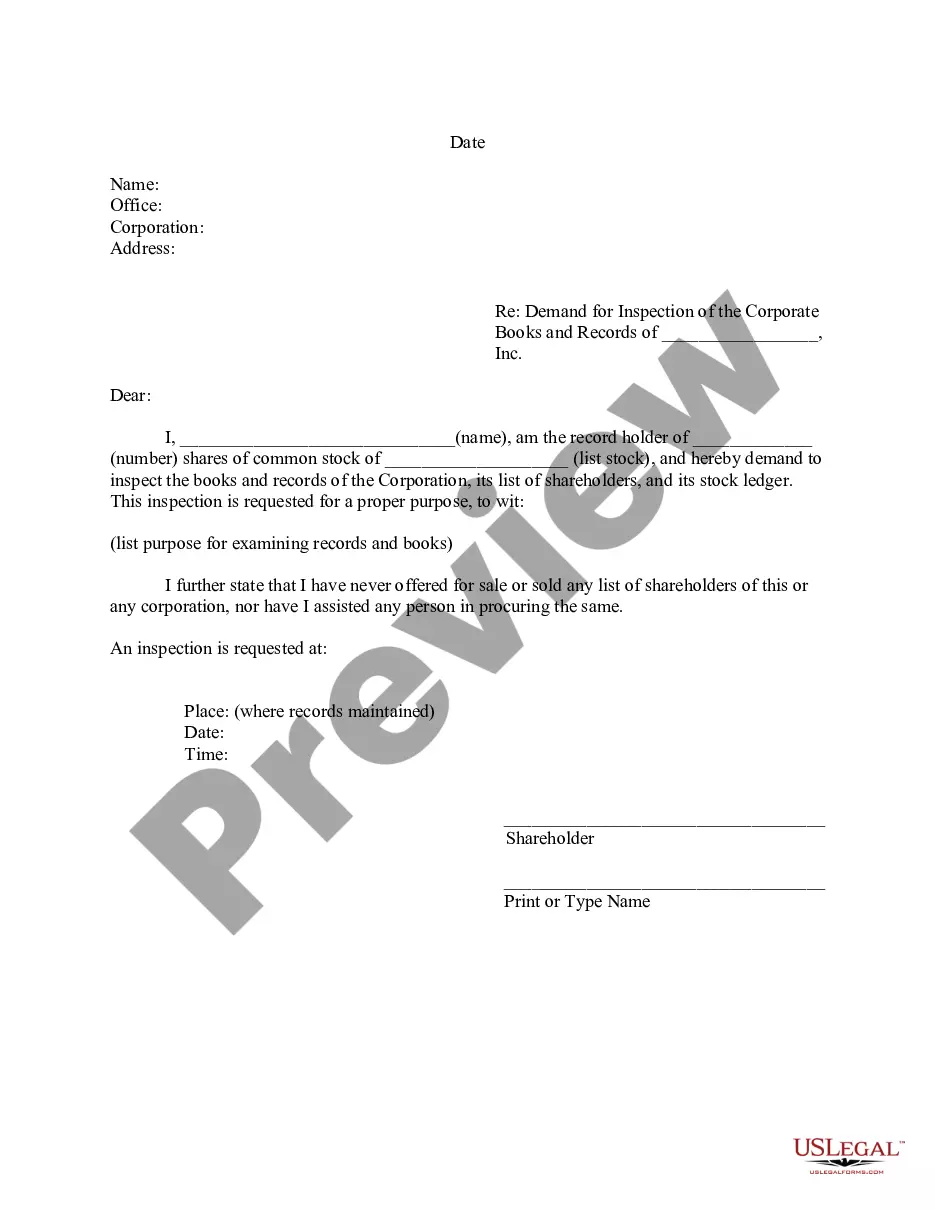
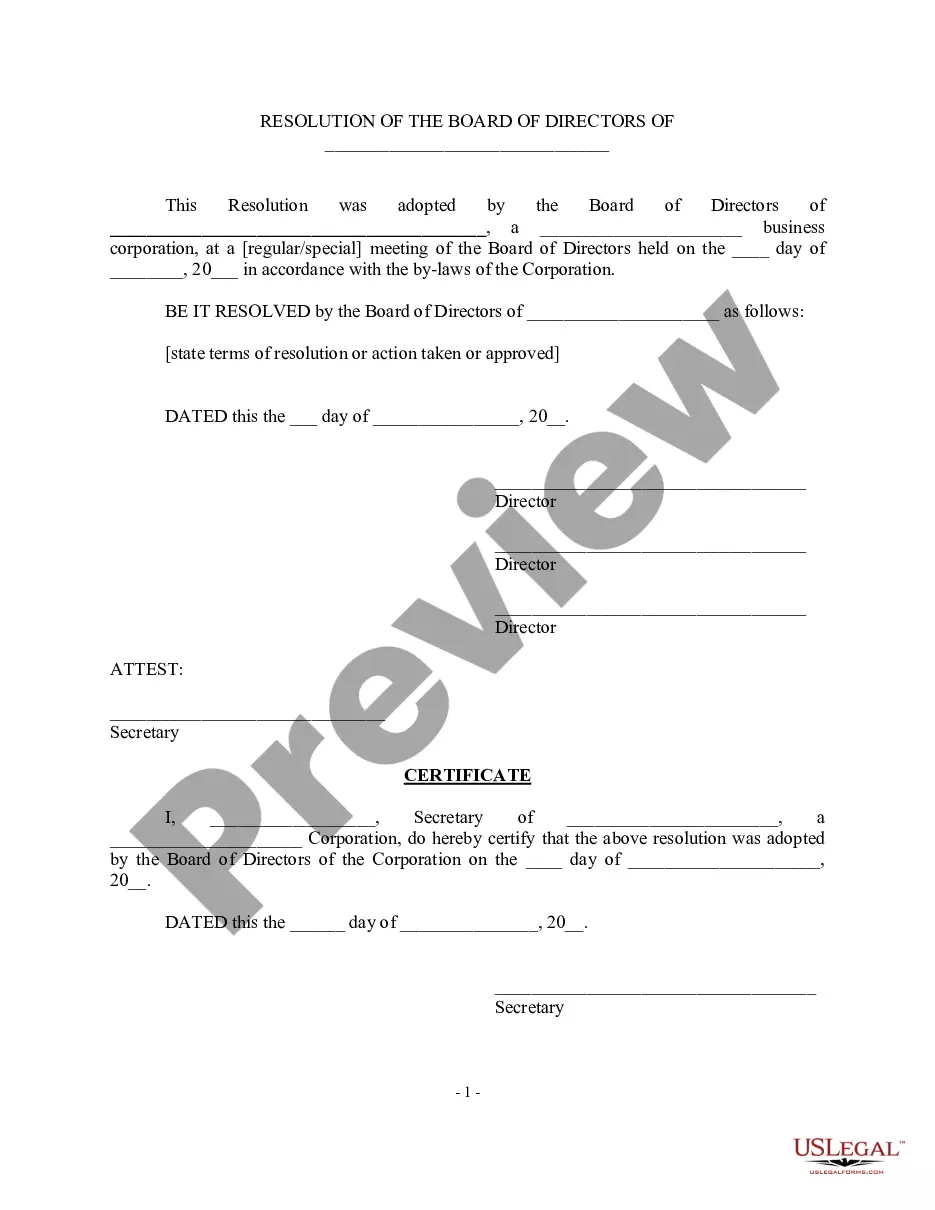
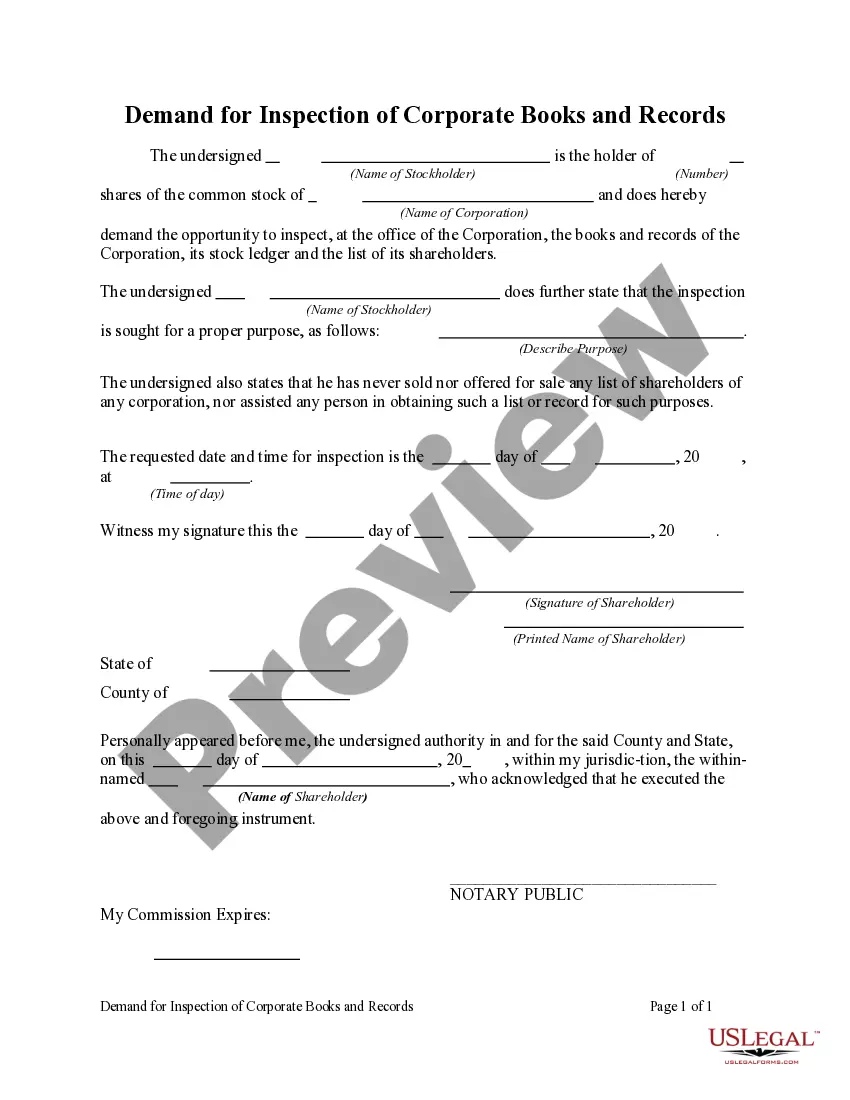
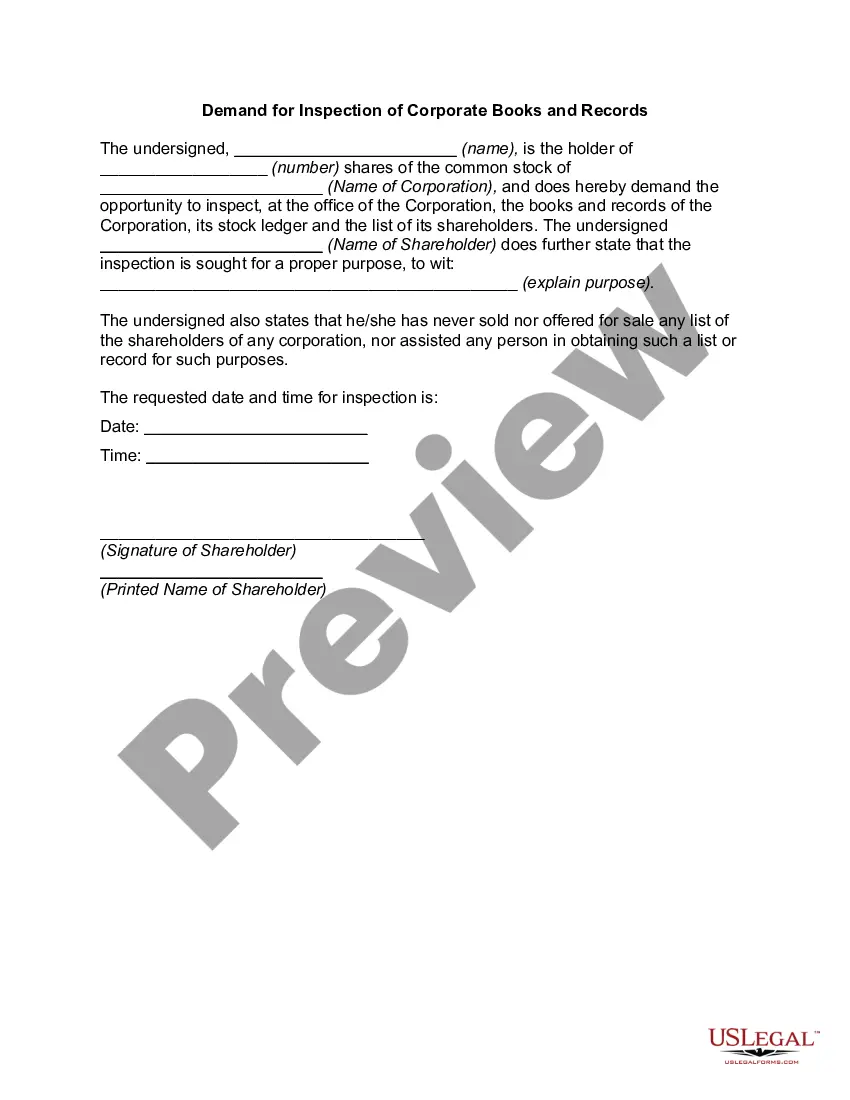
The Demand Inspection of Books - Corporate Resolutions form is a legal document that allows a shareholder to formally request access to the financial and operational records of a corporation. This form is essential for shareholders who wish to understand the inner workings of the company they have invested in, ensuring transparency and accountability. It is distinct from other shareholder rights documents as it specifically focuses on the inspection of corporate records.
Key components of this form
- Date of the request
- Shareholder's name and office
- Name and address of the corporation
- Details of shares owned by the shareholder
- Purpose of the inspection
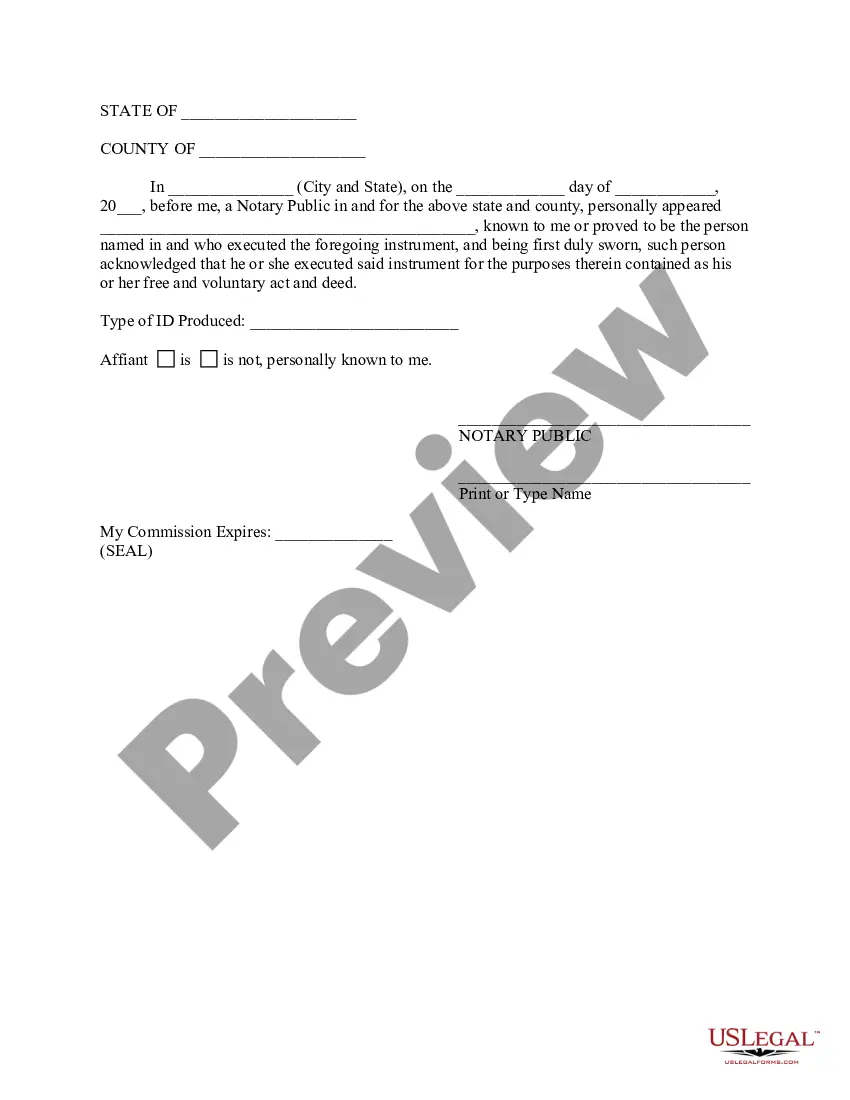
- Signature of the shareholder and notary acknowledgment

When this form is needed
This form should be used when a shareholder wants to inspect the records of a corporation to monitor its management and ensure that the corporation is being operated in the shareholders' best interests. It might apply in situations where there are concerns about financial mismanagement, decisions that require shareholder approval, or when a shareholder wants to verify information about the corporation's activities.
Who needs this form
- Shareholders of a corporation holding stock
- Individuals concerned about corporate governance
- Investors seeking transparency in financial affairs
- Members of a board of directors seeking to fulfill their fiduciary responsibilities
How to complete this form
- Enter the date and your name along with the corporation's details.
- Specify the number of shares you hold and the name of the corporation.
- Clearly state the purpose for which you are requesting to inspect the records.
- Indicate where and when you would like to conduct the inspection.
- Sign the form and get it notarized if required.
Notarization guidance
Notarization is required for this form to take effect. Our online notarization service, powered by Notarize, lets you verify and sign documents remotely through an encrypted video session, available 24/7.
Get your form ready online
Our built-in tools help you complete, sign, share, and store your documents in one place.
Make edits, fill in missing information, and update formatting in US Legal Forms—just like you would in MS Word.
Download a copy, print it, send it by email, or mail it via USPS—whatever works best for your next step.
Sign and collect signatures with our SignNow integration. Send to multiple recipients, set reminders, and more. Go Premium to unlock E-Sign.
If this form requires notarization, complete it online through a secure video call—no need to meet a notary in person or wait for an appointment.
We protect your documents and personal data by following strict security and privacy standards.

Make edits, fill in missing information, and update formatting in US Legal Forms—just like you would in MS Word.

Download a copy, print it, send it by email, or mail it via USPS—whatever works best for your next step.

Sign and collect signatures with our SignNow integration. Send to multiple recipients, set reminders, and more. Go Premium to unlock E-Sign.

If this form requires notarization, complete it online through a secure video call—no need to meet a notary in person or wait for an appointment.

We protect your documents and personal data by following strict security and privacy standards.
Common mistakes
- Failing to specify a clear purpose for the inspection, which can lead to rejection.
- Not providing adequate identification or proof of shareholding.
- Neglecting to sign the form properly.
- Overlooking the notary requirement, if applicable.
Benefits of using this form online
- Easy access to customizable templates for immediate use.
- Editable features allow for quick updates and personal adjustments.
- Reliable and legally compliant formats drafted by licensed attorneys.
- Time-saving as forms can be downloaded and utilized instantly.
Looking for another form?







Form popularity
FAQ
California law places strict limits on the number of discovery requests a party can make. In a limited civil case (cases less than $25,000) you may ask each party only 35 questions total, whether they are form interrogatories, special interrogatories, requests for admission, or requests for production.
Simply, an inspection demand is a list of categories of documents. Within each category the propounding family law attorney (attorney who sent the discovery request) describes the types of documents requested.It can contain a request for one document or it can contain a request for 80 categories of documents.
When responding to Requests for Admissions, remember to answer as follows: Admit: If any portion of the Request for Admission is true then you must admit to that portion of the request. You are also allowed to have a hybrid response admit the part of the request that is true while denying another part.
Update: The Amendments to the Federal Rules of Civil Procedure are now in effect.At the same time, unlike the new limits to Rule 33 interrogatories and Rule 36 requests for admission, the amendments do not limit the number of Rule 34 requests for production.
In a civil action, a request for admission is a discovery device that allows one party to request that another party admit or deny the truth of a statement under oath. If admitted, the statement is considered to be true for all purposes of the current trial.
Requests for production may be used to inspect and copy documents or tangible items held by another party. Although these requests are most commonly used to obtain copies of documents, they can also be used to test, measure, photograph, etc., any type of physical evidence in the other party's possession or control.
A request for production is a discovery device used to gain access to documents, electronic data, and physical items held by an opposing party in a legal matter. The aim is to gain insight into any relevant evidence that the opposing party holds.
If a request asks for a document, make a copy of the document; in your response, describe the document and say that a copy is attached; and attach a copy of the document to the responses you send back to the other side.
Requests for the Production of Documents are a discovery device used by a party to enable the individual to learn the facts that are the basis for, or support, a pleading with which he or she has been served by the opposing party.These documents might also be evidence in a hearing or a trial.