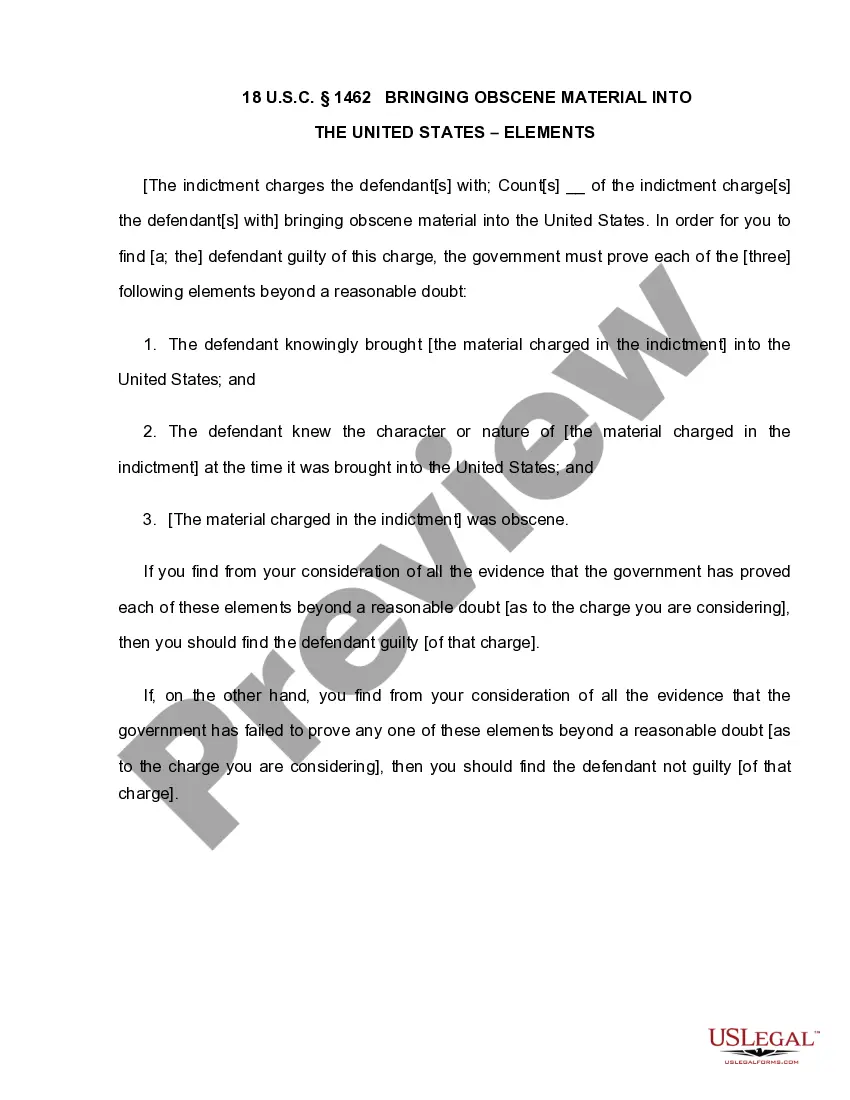
Change or Modification Agreement of Deed of Trust
What this document covers
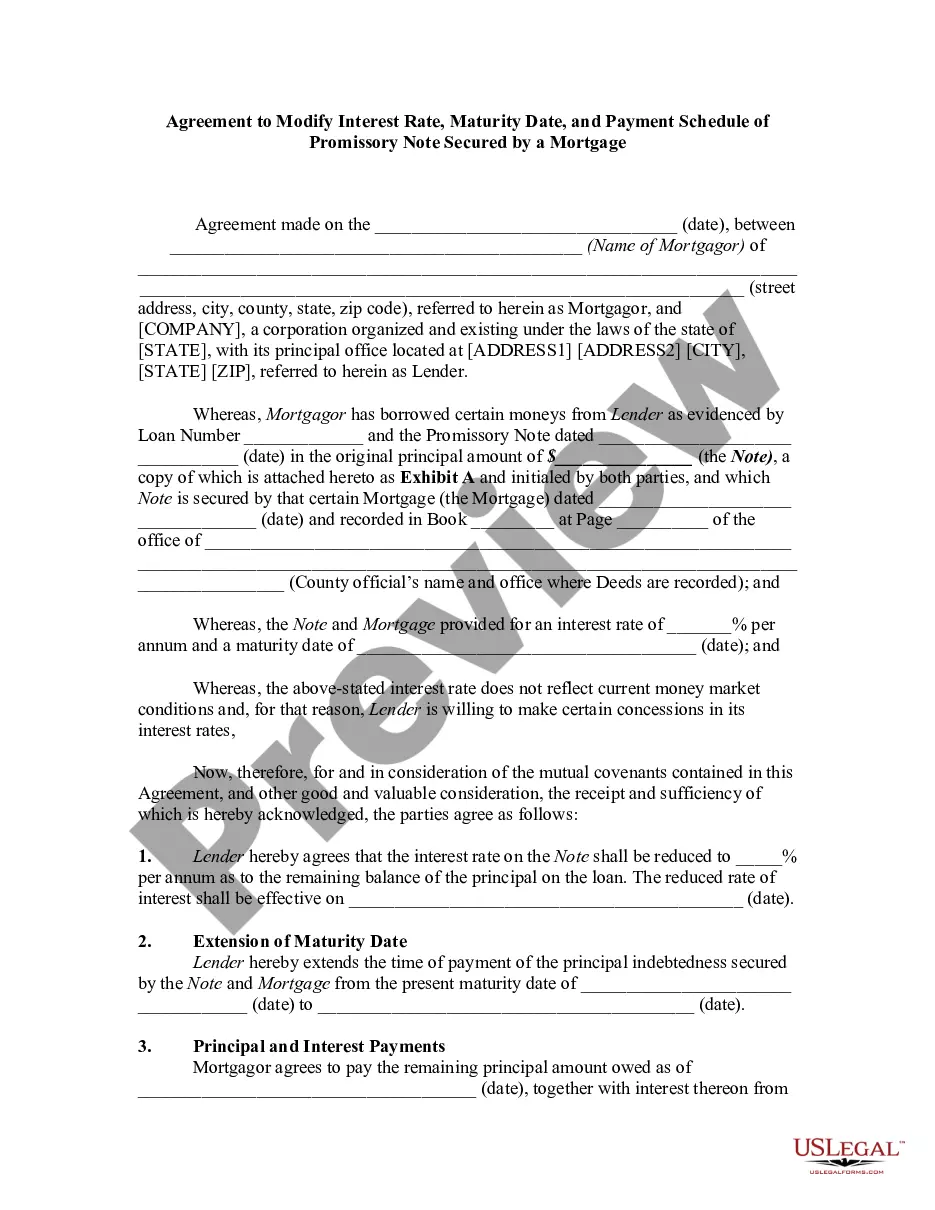
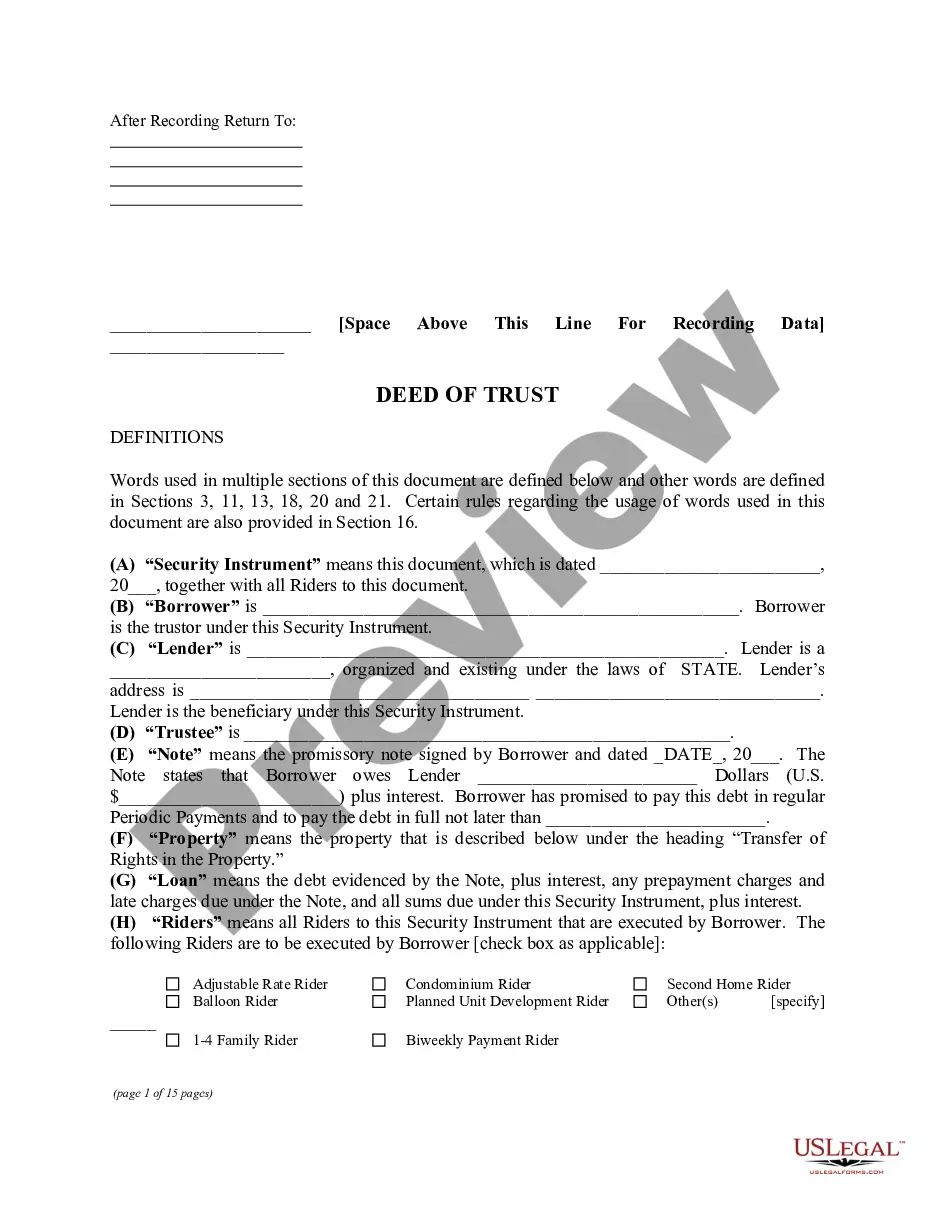
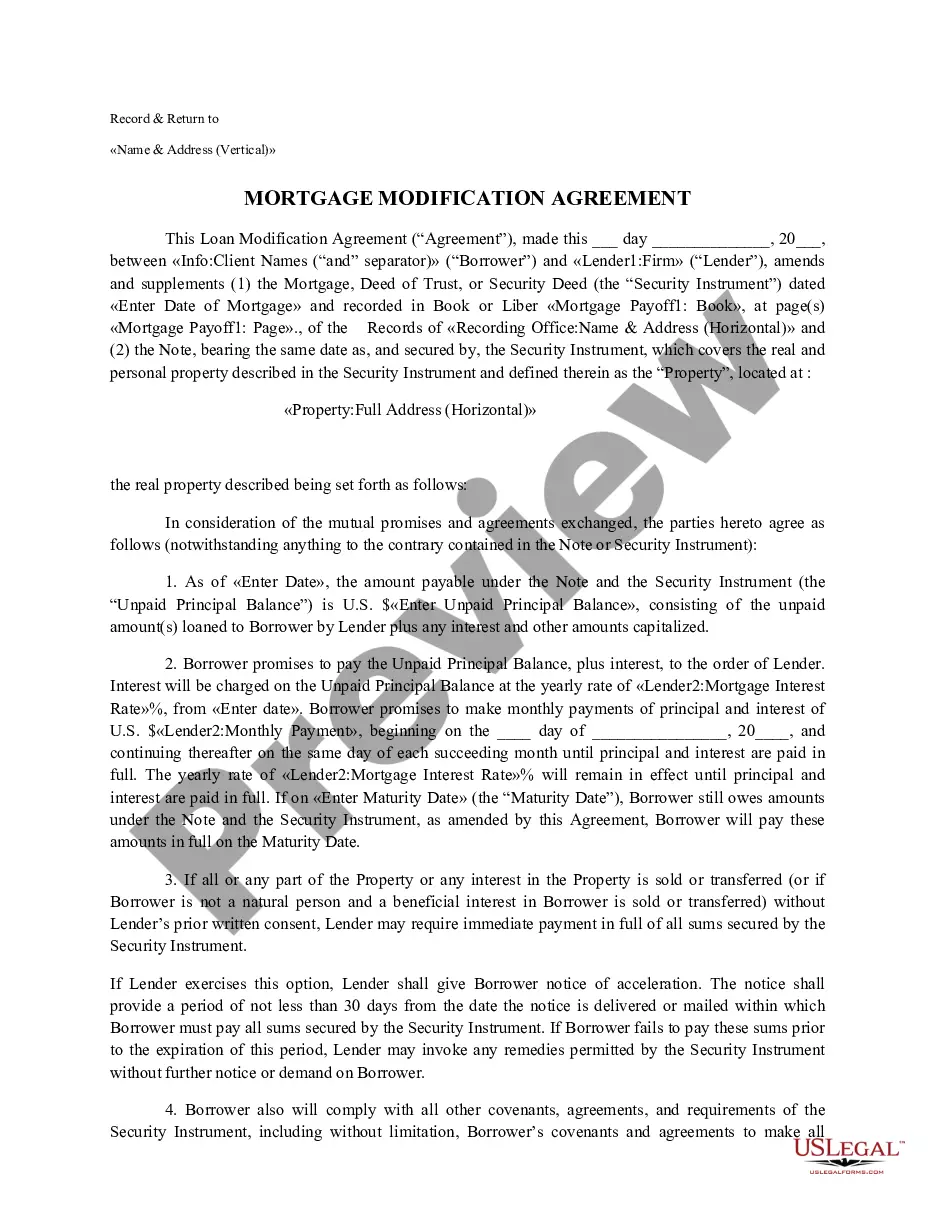
The Change or Modification Agreement of Deed of Trust is a legal document used to modify an existing deed of trust or mortgage. This form allows a borrower, co-grantor, and lender to agree on changes such as the renewal or extension of the lien, co-grantor liability, and specific note payment terms. Unlike a new mortgage, this modification adds terms to an existing agreement without the need for a complete reinvestment process.
What’s included in this form
- Identifies the parties involved, including the borrower, co-grantor, and lender.
- Details the original security instrument, including dates and amounts involved.
- Specifies the scope of modification, including renewal and extension of liens.
- Outlines co-grantor liability clauses for signatories who are not responsible for debt payments.
- Provides clear terms for note payments including principal, interest rates, and due dates.








When to use this document
This form is typically used when a borrower needs to modify the terms of their existing mortgage or deed of trust. Situations may include securing a debt with a new payment schedule, adjusting interest rates, or adding a co-grantor to the agreement. This modification is beneficial when the borrower anticipates changes in their repayment ability or needs to adjust the terms to align with current financial conditions.
Who should use this form
This form is suitable for:
- Borrowers seeking to amend their current mortgage terms.
- Co-grantors who wish to clarify their responsibilities regarding the secured debt.
- Lenders who need a legal document that reflects updated terms of the loan.
How to complete this form
- Identify the parties involved by entering the names and addresses of the borrower, co-grantor, and lender.
- Specify the property and security instrument by including the address and details regarding the original deed of trust.
- Fill out the agreed-upon modifications regarding lien renewal, payment terms, and interest rates.
- Obtain signatures from all parties present, ensuring that the document is signed in the correct sections.
- If required, finalize any necessary notarization to validate the agreement.
Notarization guidance
To make this form legally binding, it must be notarized. Our online notarization service, powered by Notarize, lets you verify and sign documents remotely through an encrypted video session.
Get your form ready online
Our built-in tools help you complete, sign, share, and store your documents in one place.
Make edits, fill in missing information, and update formatting in US Legal Forms—just like you would in MS Word.
Download a copy, print it, send it by email, or mail it via USPS—whatever works best for your next step.
Sign and collect signatures with our SignNow integration. Send to multiple recipients, set reminders, and more. Go Premium to unlock E-Sign.
If this form requires notarization, complete it online through a secure video call—no need to meet a notary in person or wait for an appointment.
We protect your documents and personal data by following strict security and privacy standards.

Make edits, fill in missing information, and update formatting in US Legal Forms—just like you would in MS Word.

Download a copy, print it, send it by email, or mail it via USPS—whatever works best for your next step.

Sign and collect signatures with our SignNow integration. Send to multiple recipients, set reminders, and more. Go Premium to unlock E-Sign.

If this form requires notarization, complete it online through a secure video call—no need to meet a notary in person or wait for an appointment.

We protect your documents and personal data by following strict security and privacy standards.
Avoid these common issues
- Not including all parties involved in the transaction.
- Failing to accurately specify the terms of the lien renewal or modification.
- Neglecting to sign the document in the required sections.
- Overlooking the notarization requirements, if applicable.
Benefits of using this form online
- Convenience of downloading and completing the form at your own pace.
- Editability to customize the agreement as needed for your specific situation.
- Access to templates drafted by licensed attorneys to ensure legal compliance.
- Time-saving by eliminating the need for in-person visits and paperwork.
Looking for another form?
Form popularity
FAQ
Re-recording of the original document. With corrections made in the body of the original document. A cover sheet detailing the changes. Must be re-signed and re-acknowledged. Correction Deed. A new deed reflecting the corrections/changes. Must meet all recording requirements of a deed.
1.01 It is extremely difficult to amend a trust deed since a trust by its inherent nature is irrevocable. Therefore, it is important to provide the amendment clauses in the trust deed itself.In the trust deed where there is no mention about amendment, the amendment has to be done with the permission of a civil court.
The first place to start is to review the trust deed to see how to amend the trust deed. You can only amend the trust if the terms of the trust deed allow it. Consent may be required by a custodian, appointor or other party to amend the trust deed, and if consent is not provided then the amendment cannot be made.
In most cases, a trustee cannot remove a beneficiary from a trust.However, if the trustee is given a power of appointment by the creators of the trust, then the trustee will have the discretion given to them to make some changes, or any changes, pursuant to the terms of the power of appointment.
Giving the wrong legal address for the property or the wrong amount of the debt can render the deed unenforceable. In some cases, the error is easy to fix, and the court will rule the deed is enforceable.
A deed of trust is a legal contract between a lender and a borrower to transfer some interest of the borrower's land to a trustee (see References 1).Like most other legal contracts, it can be modified through an amendment.
When intentions are clear, there's less room for anyone to go back on the agreement. In fact, it can be difficult to challenge a declaration of trust in court the only cases which tend to be represented are on the grounds of fraud or misrepresentation.
Contact the other parties involved in the deed of trust. Obtain the correct deed of trust modification form from the county courthouse. Make the required changes. Sign the modification and have it notarized.
...the trust deed and vide clauses 18 and 19, the trustees have been given power to amend, alter, change or modify the provisions of the trust deed with a condition mentioned therein.